🥾 Trail Stats – Mutnoye Lake Overnight
📍 Route: Vertical Alauddin Alpine Camp → Mutnoye Lake → Shepherd Homestead
📅 Dates Hiked: May 9–10, 2026
📏 Total Distance: 12.5 miles
⬆️ Total Ascent: 2,966 ft
⬇️ Total Descent: 3,448 ft
⛰ Highest Elevation: 11,578 ft
⏱ Moving Time: 6h 41m
🎒 Route Type: Overnight out-and-back / weather evacuation
⚠️ Difficulty: Hard
🥶 Conditions: Snow, sleet, heavy rain, sustained overnight winds
🏔 Region: Fann Mountains, Tajikistan
Our friends hiking chat started the normal chatter on Wednesday, trying to form a plan for the weekend. By the evening, it was looking like Mutnoye Lake would be the destination. Then, one by one, people started dropping out. A couple fell ill, several others couldn’t make it for one reason or another, and eventually there were just three of us still committed to going.
I had been up to this lake once before last October, though on that trip I only went up for the day before dropping back down to camp at much lower elevation near Alaudin. The basin surrounding Mutnoye is wild country. High alpine terrain. Glacial lakes. Towering granite walls. The kind of place that feels beautiful and slightly intimidating at the same time. Going up there to spend the night carried a sense of assured adventure with it.
There are some mountain trips where everything goes according to plan. Blue skies, summit photos, coffee beside alpine lakes, and a clean hike back out.
This was not one of those trips.
We found a car to the small town where the turnoff for Alaudin begins, and Victor had already arranged a driver to take us all the way up the long dirt road to Vertical Alauddin Alpine Camp. Even getting there feels like an expedition early in the season. The road cuts deep into the Fann Mountains beneath steep cliffs and avalanche chutes, climbing higher and rougher with every kilometer.
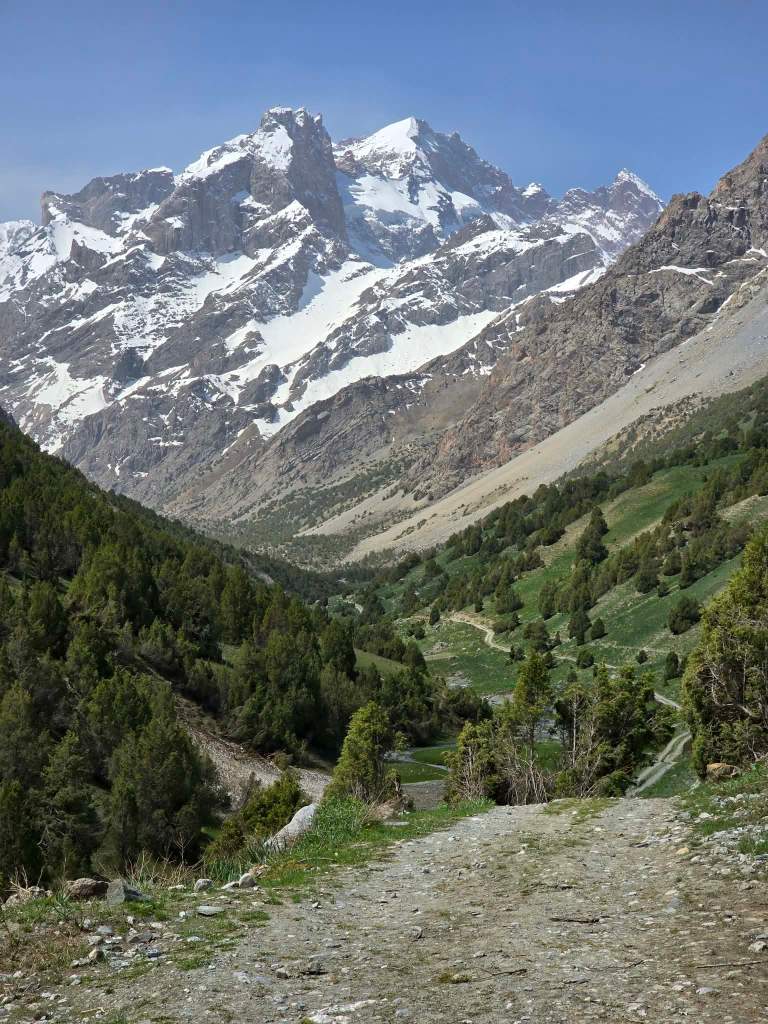
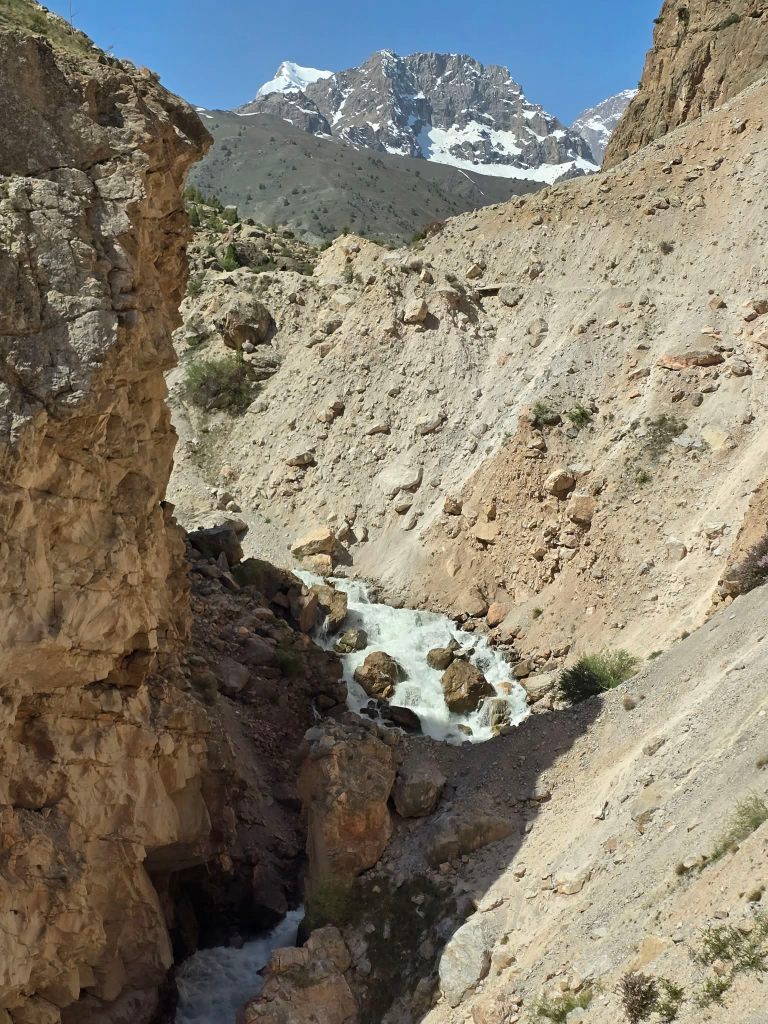
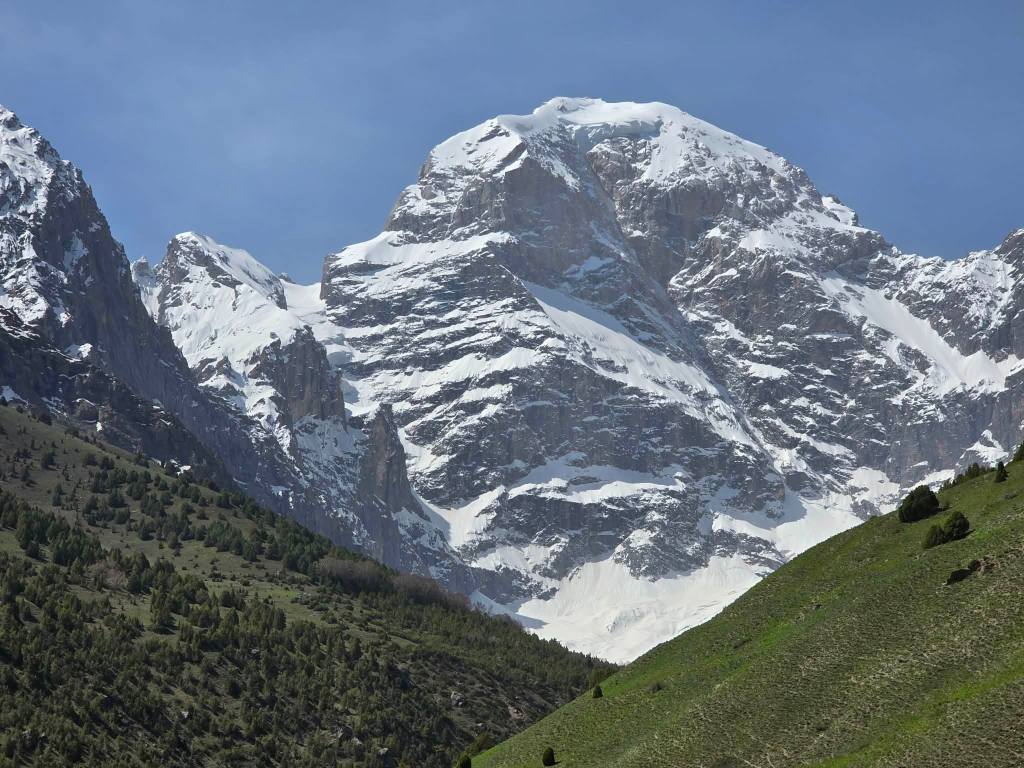
The weather, however, was absolutely perfect.
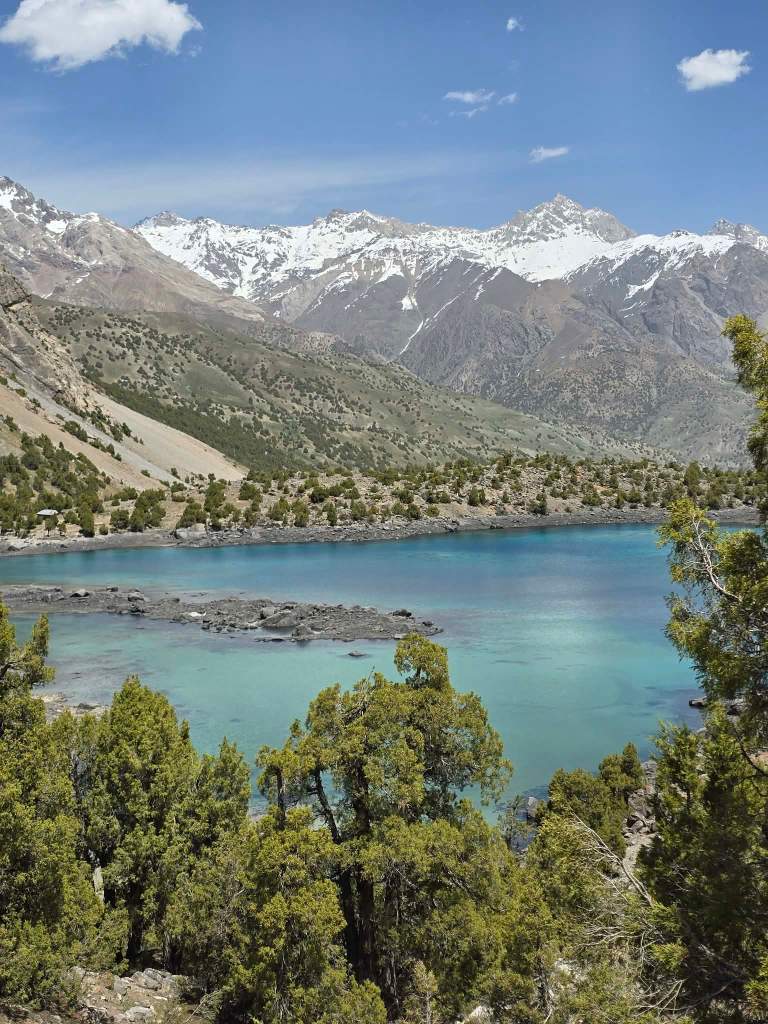
We meandered up the first section of trail passing the lower lakes before eventually emerging beside the turquoise waters of Alaudin itself. The water level was much lower than on previous trips I had made there, exposing rocky shoreline that normally sits underwater later in the season. We stopped just long enough to admire the scenery before continuing on toward the large waterfall that marks roughly the halfway point on the nearly 3,000-foot climb to Mutnoye Lake.
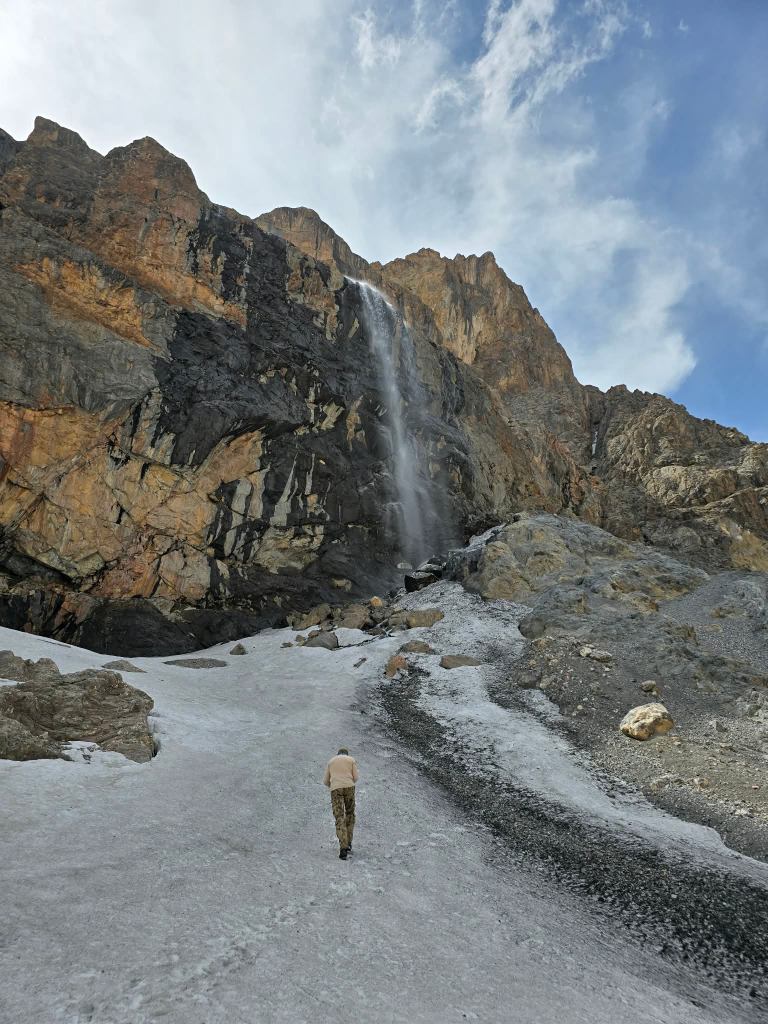
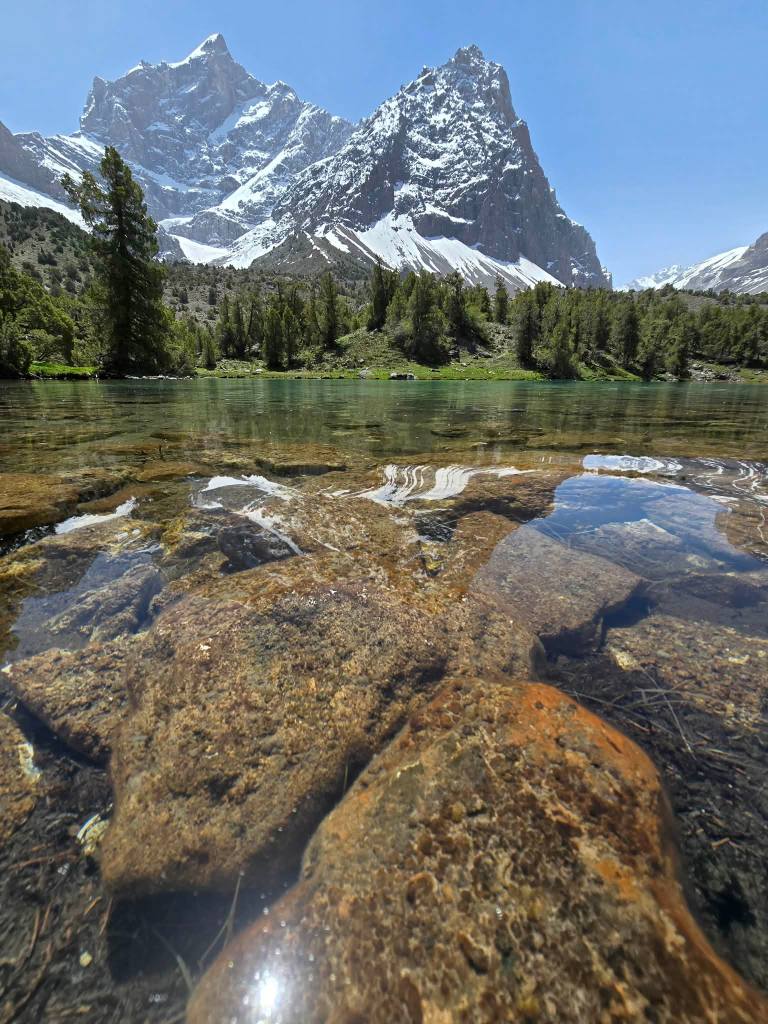
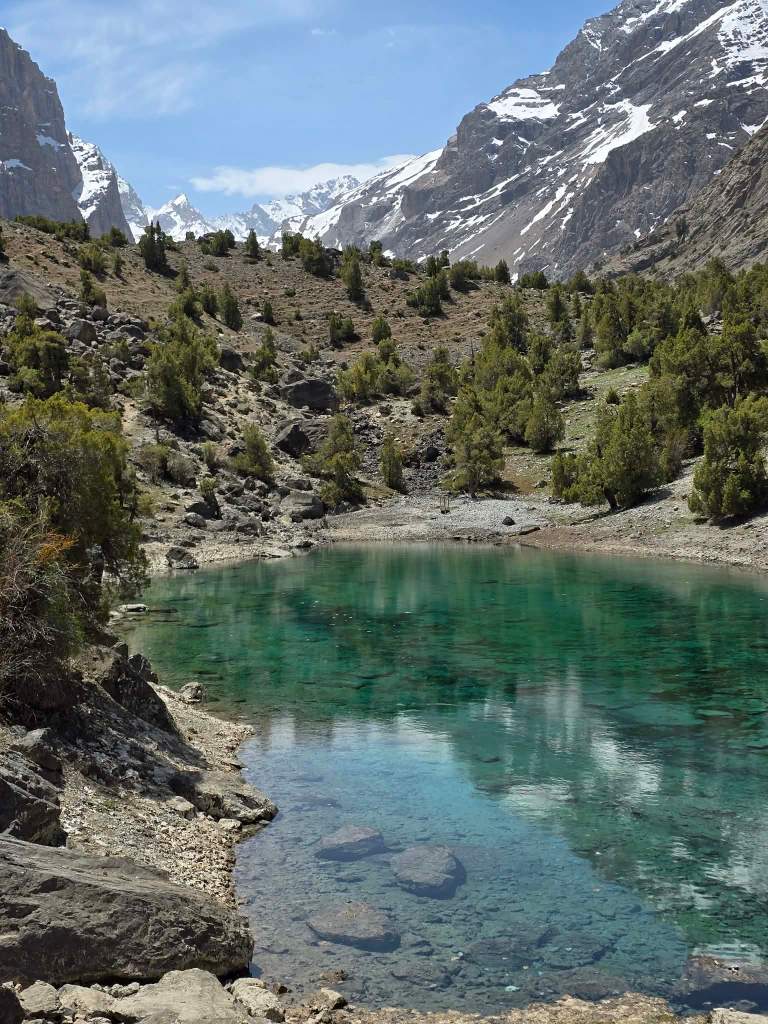
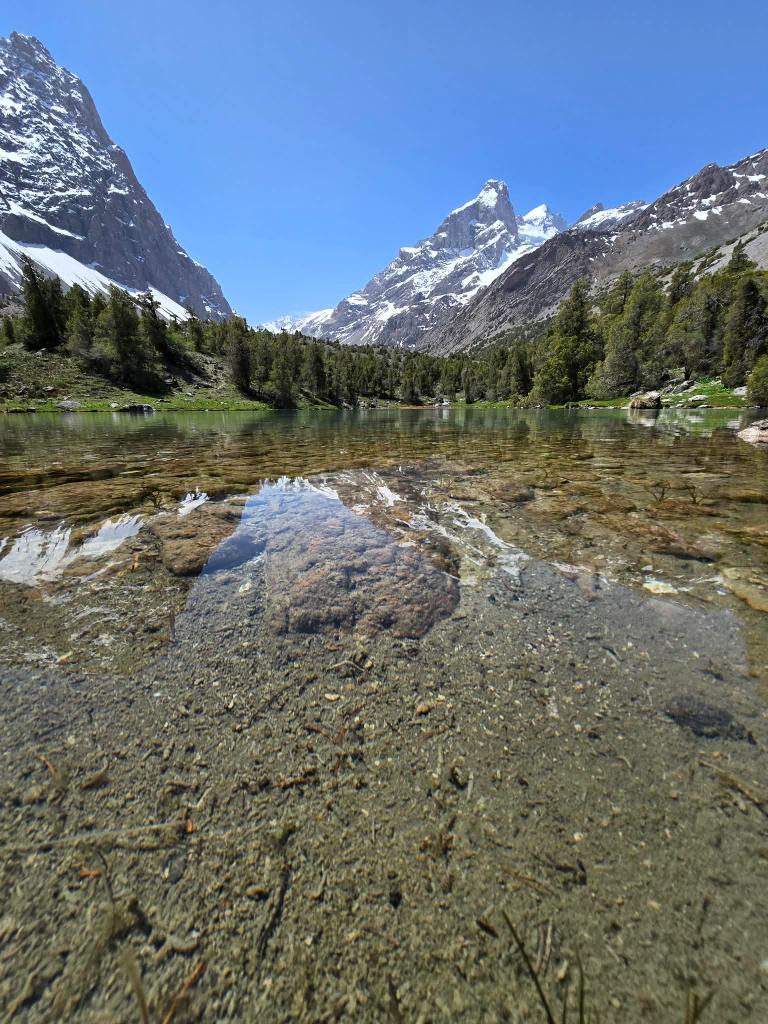
The higher we climbed, the more the landscape changed. Grass and shrubs began disappearing beneath lingering snowfields. The valley narrowed into a rugged alpine basin surrounded by enormous peaks still locked firmly in winter. Somewhere above us stood the massive walls beneath Chimtarga, the highest peak in the Fann Mountains, while nearby giants like Energia Peak, Zamok Peak, and Bodkhona loomed over the surrounding valleys and glaciers.
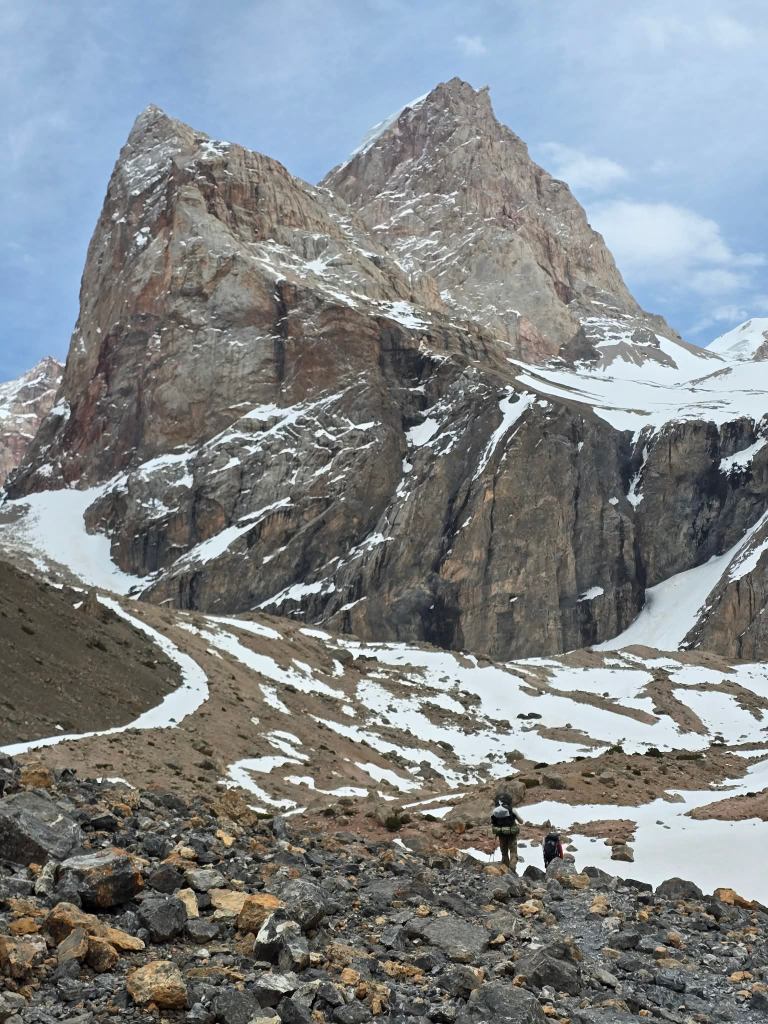
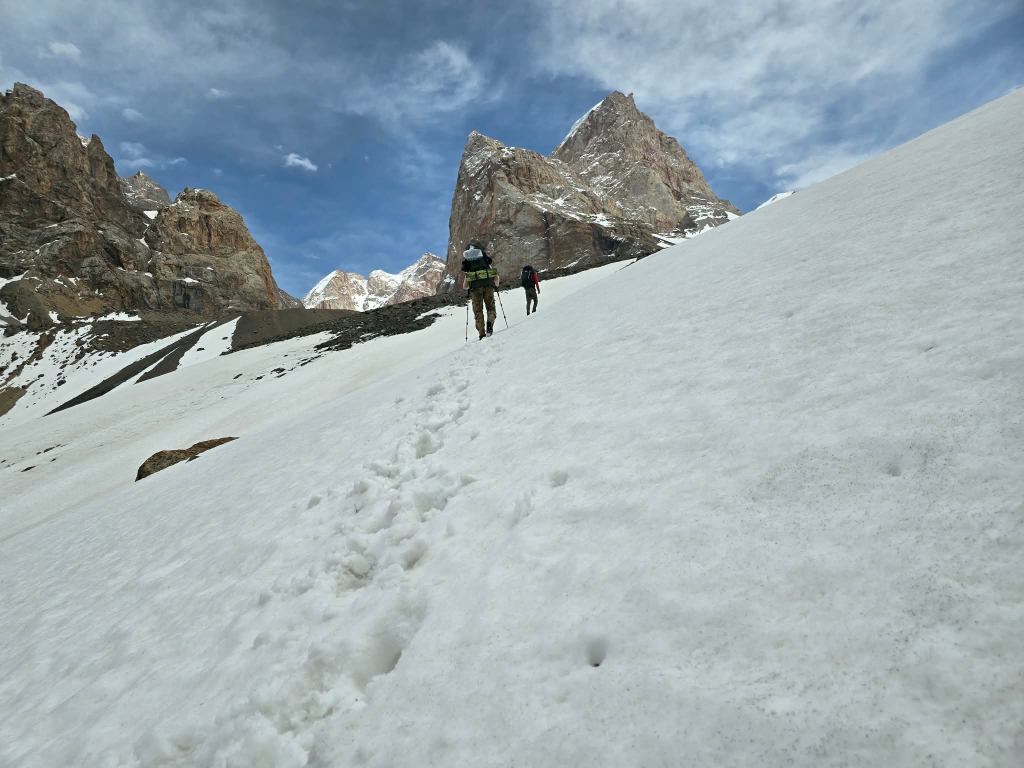
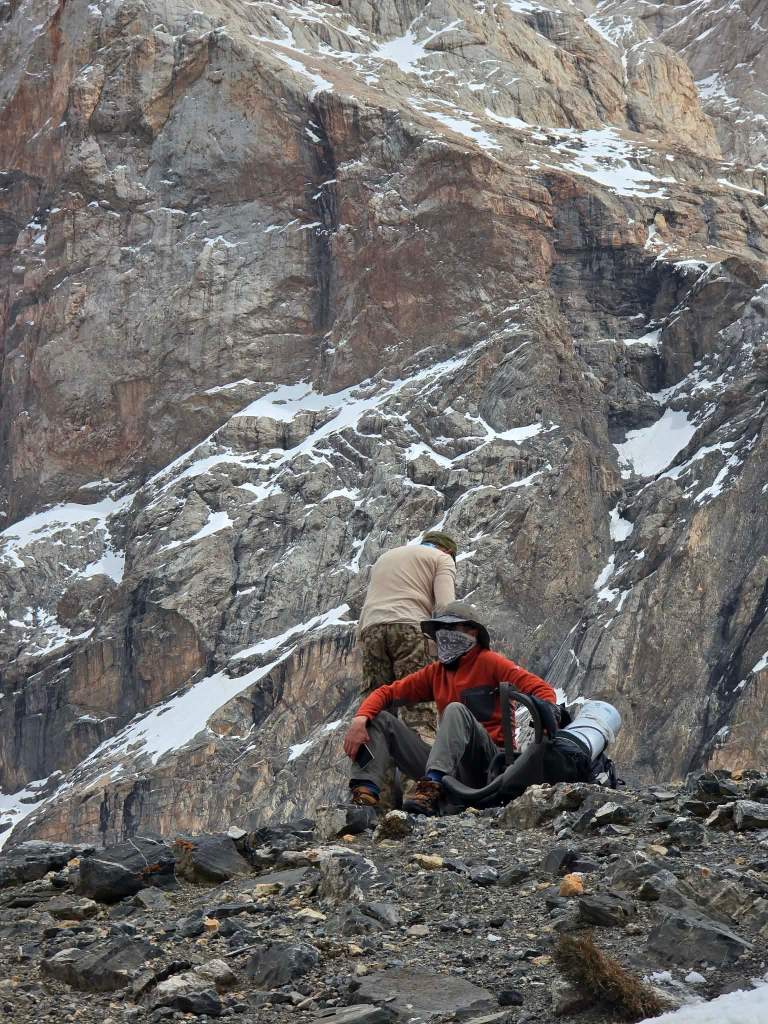
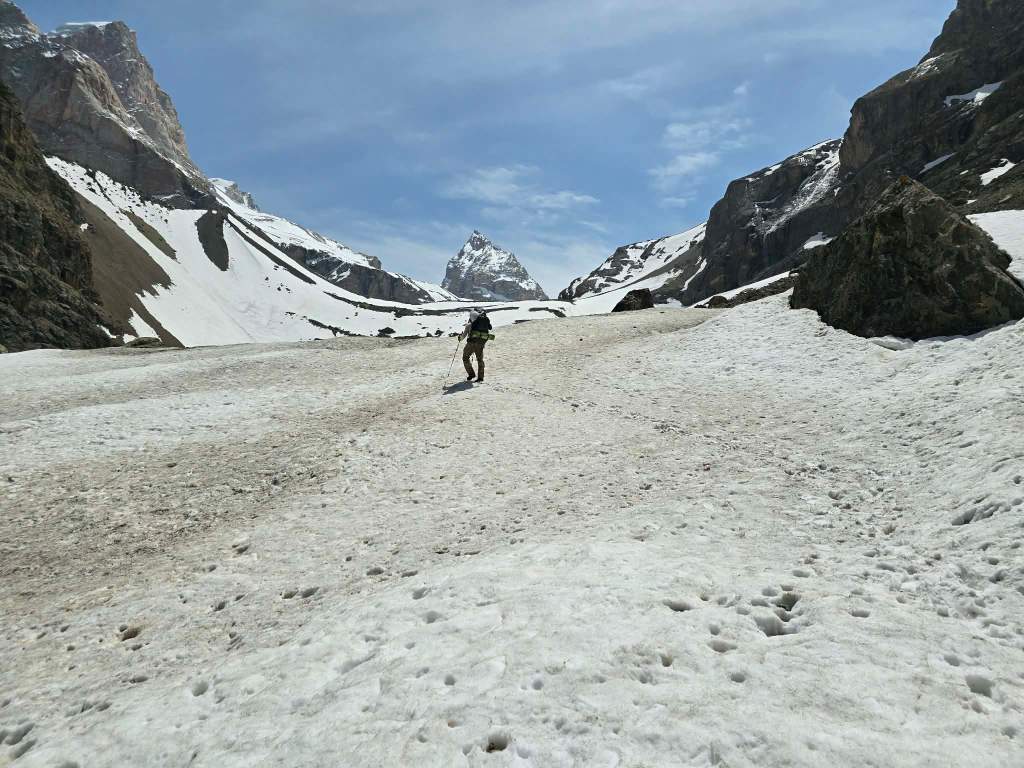
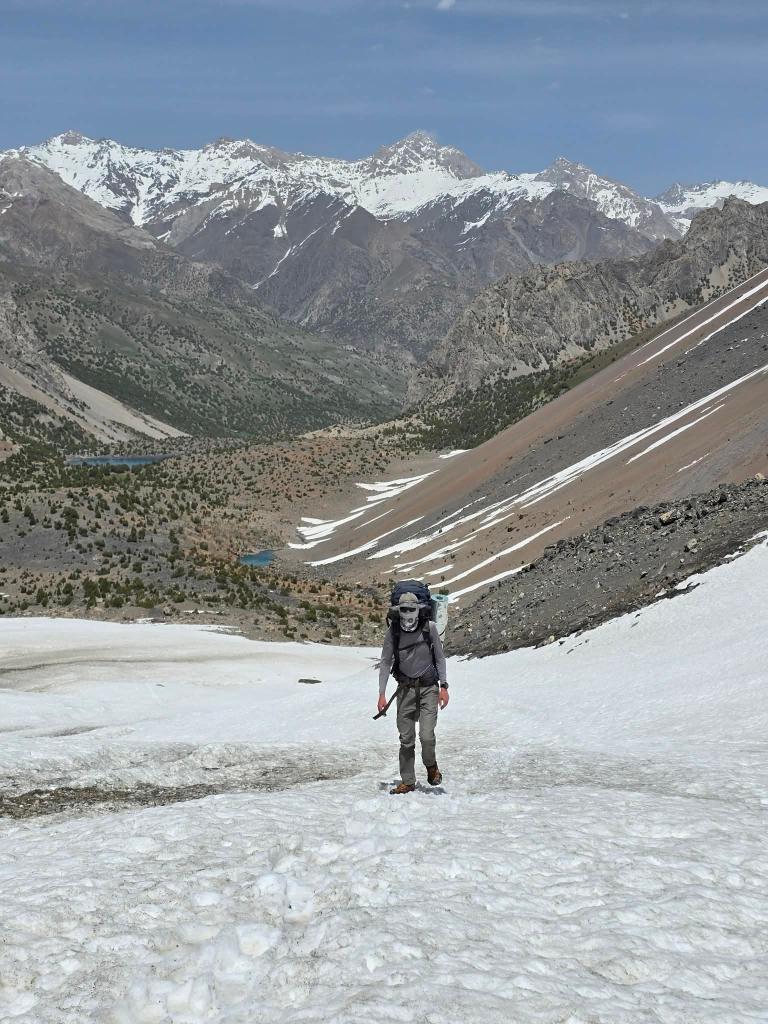
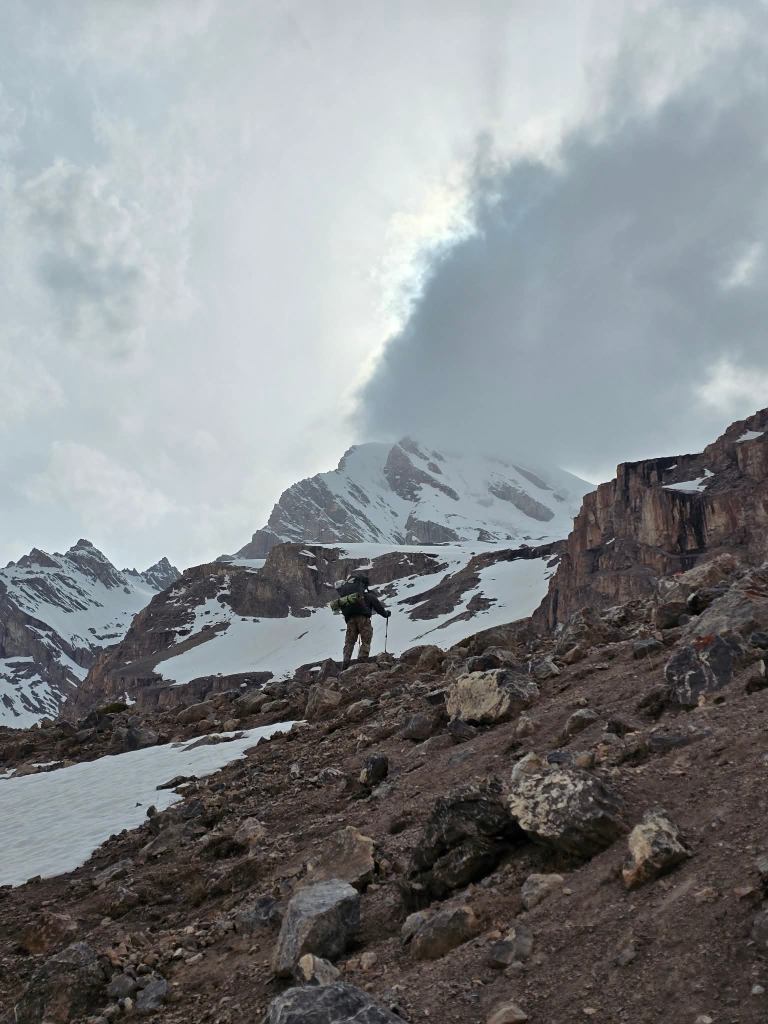
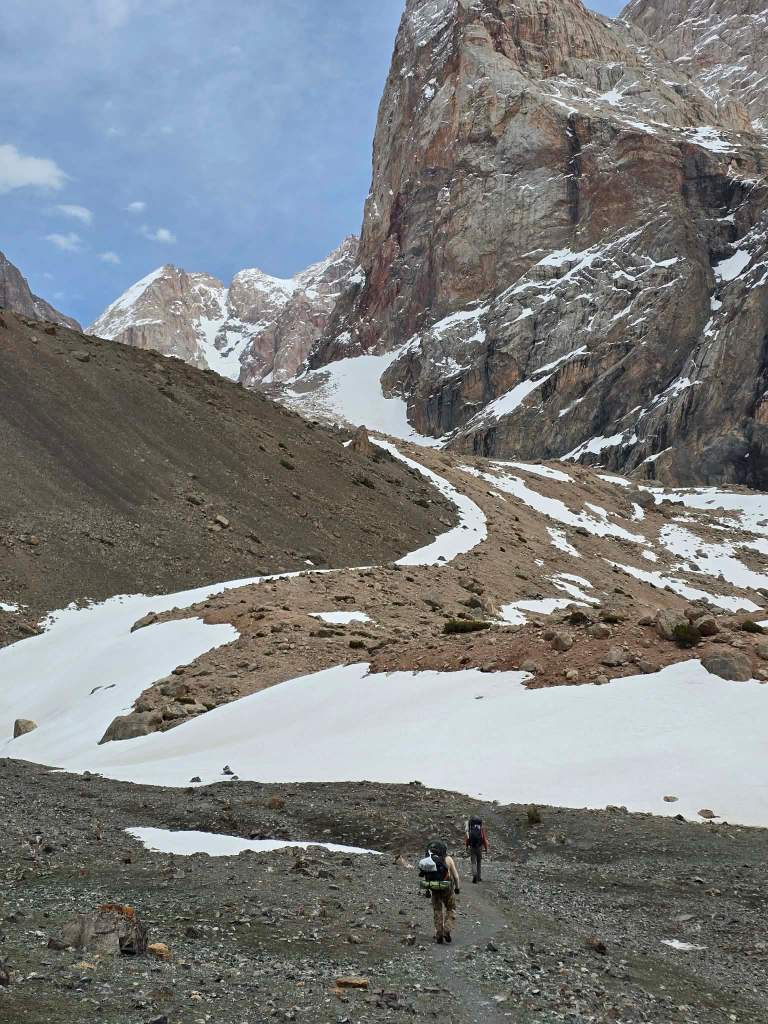
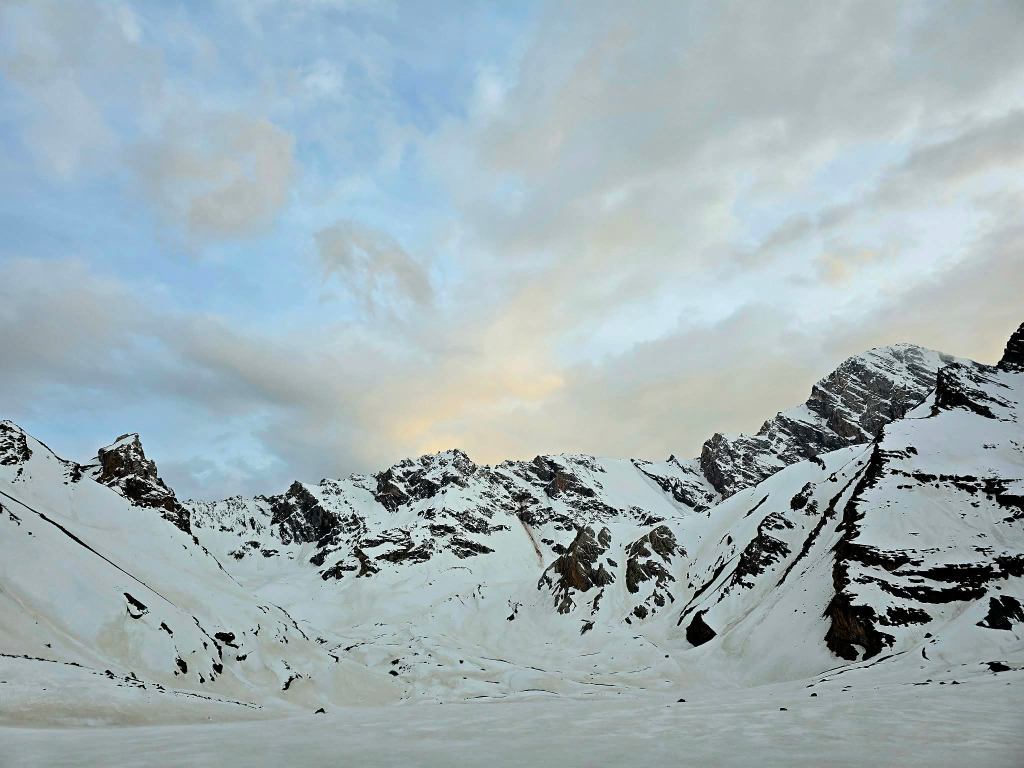
By the time we finally reached Mutnoye Lake, the entire basin was still frozen solid.
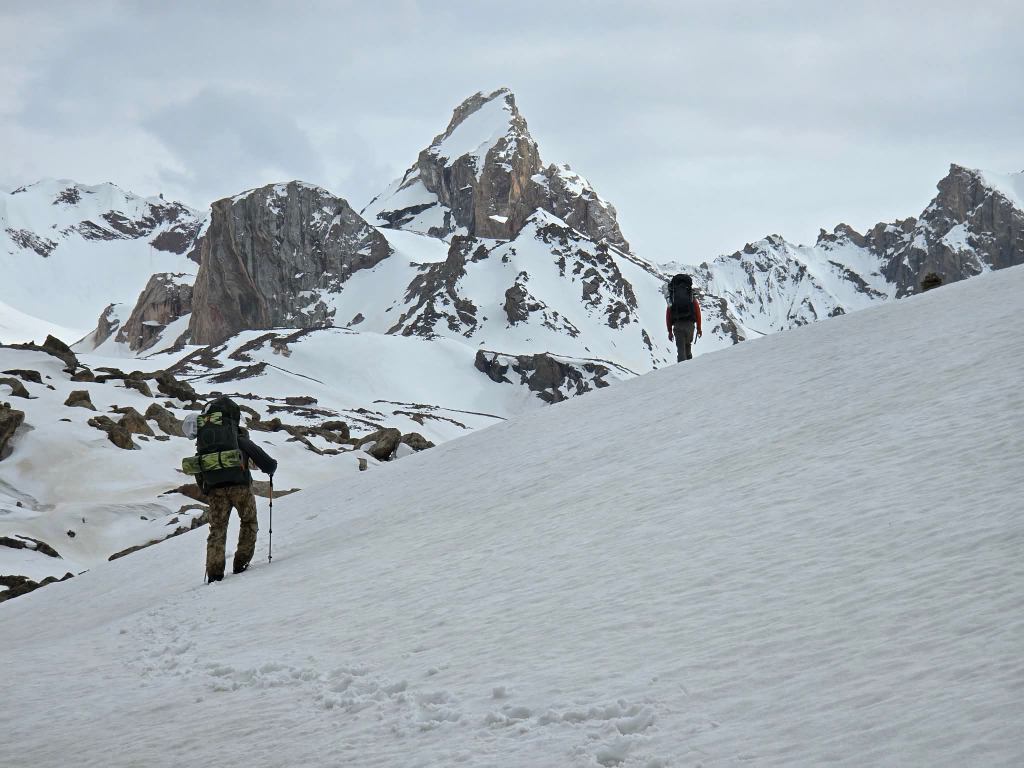
The lake itself was buried beneath snow and ice, blending almost seamlessly into the surrounding mountainsides. It was hard to tell where lake ended and glacier began. The place felt enormous, cold, and ancient. There were no other hikers. No movement anywhere. Just snow, rock, wind, and silence.
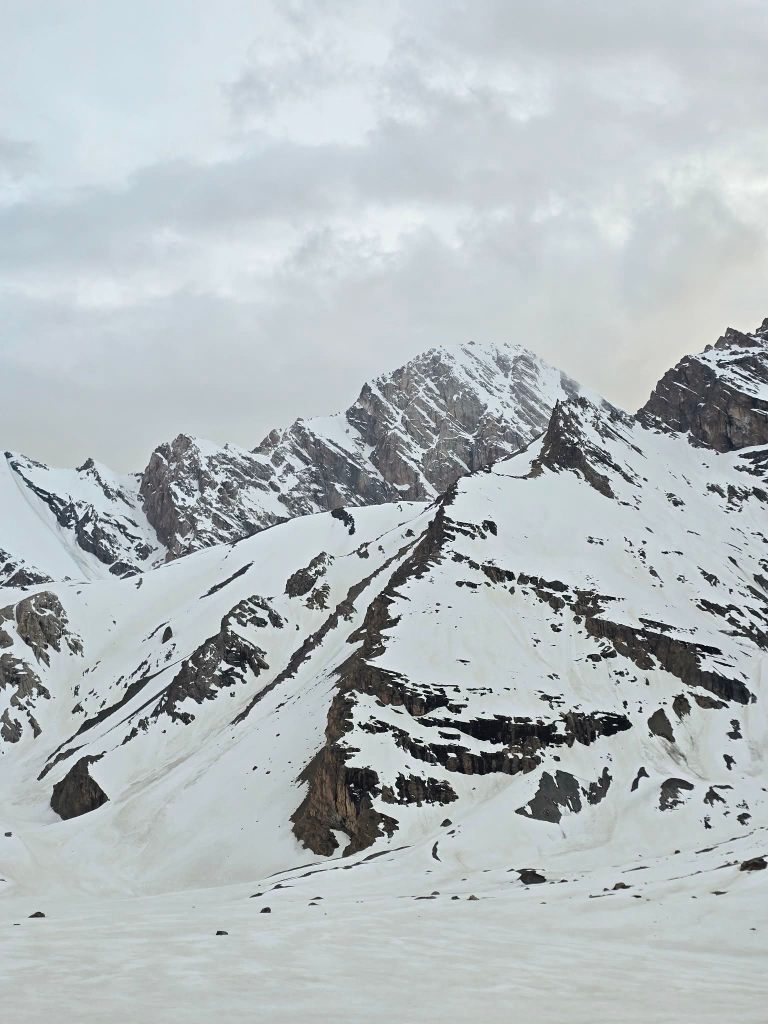
The guys down at Vertical had told us we would likely be the first visitors of the season heading all the way up to the higher lake.
Standing there in the frozen basin, it certainly felt that way.
We set camp, and not long after we did, it began to sleet, and everyone climbed into their tents for a post hike rest. An hour later, the sleet stopped and the last light of the day began to fade. Victor set about melting water for a big pot of buckwheat, veggies, and canned meat. As the light completely disappeared, we took dinner into my tent and set up a lantern enjoying hot food, tea, and lots of stories. As we wound down the evening, I had the fleeting thought about how my tent now smelled like a nice hot meal, an open invitation to the bears and wolves to come eat me first. Lack of a 2A leaves options of self-defense against such beasts little more than a hiking stick and an endless assortment of stones. The animals wouldn’t be coming out on this night though.
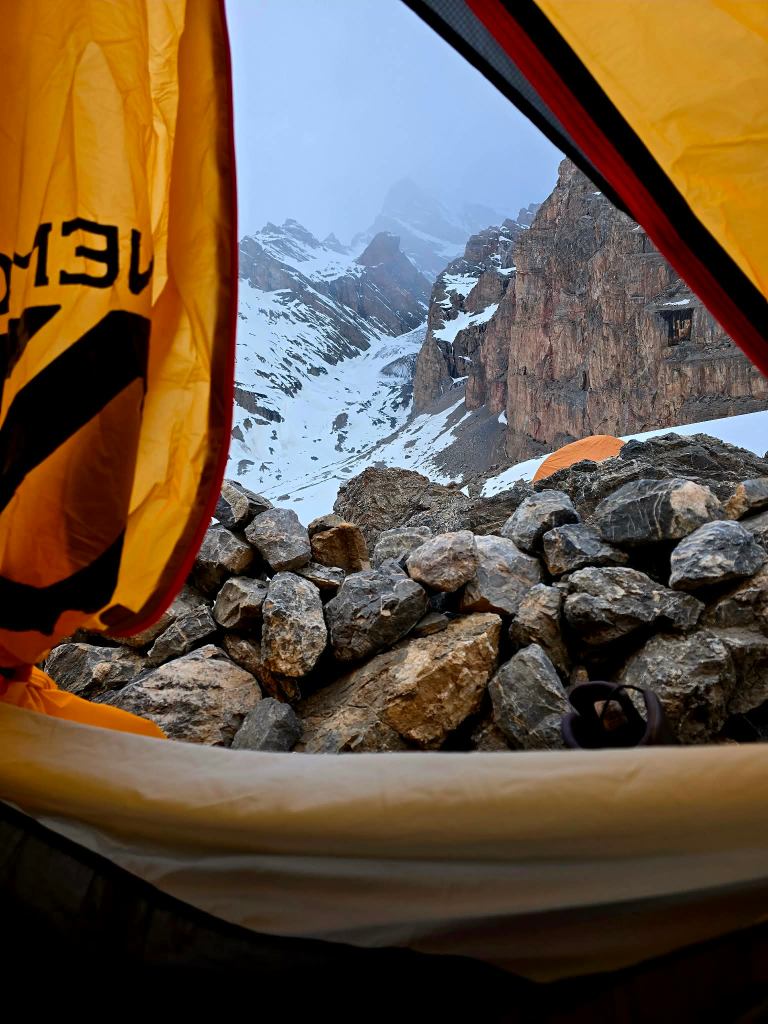
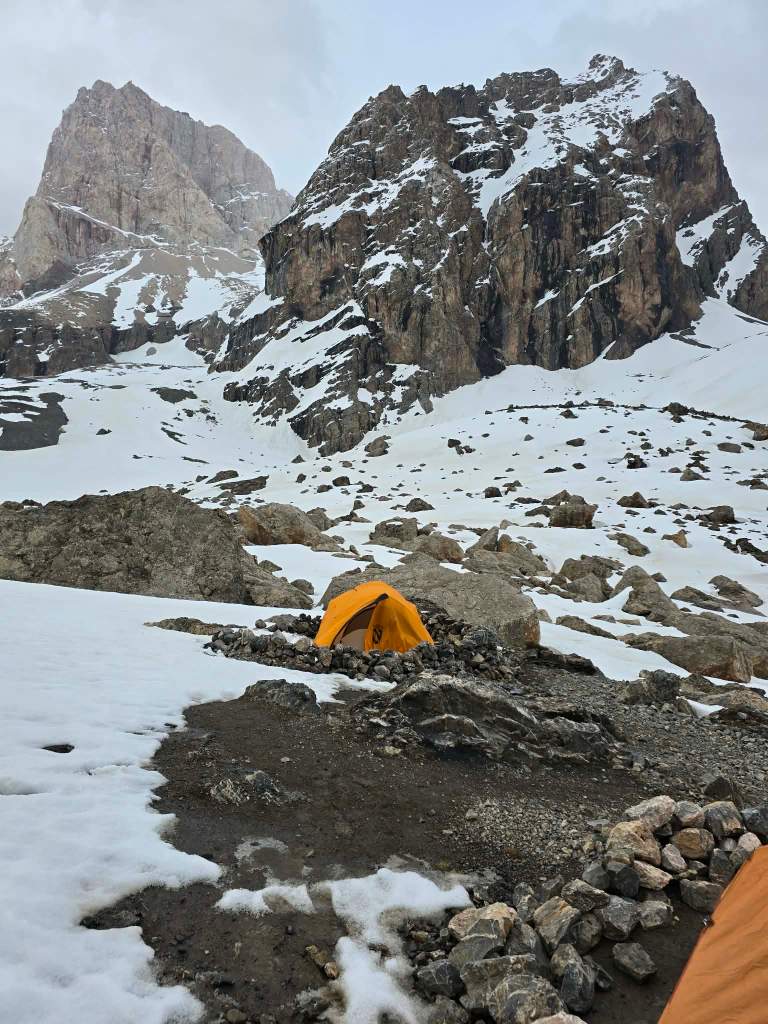
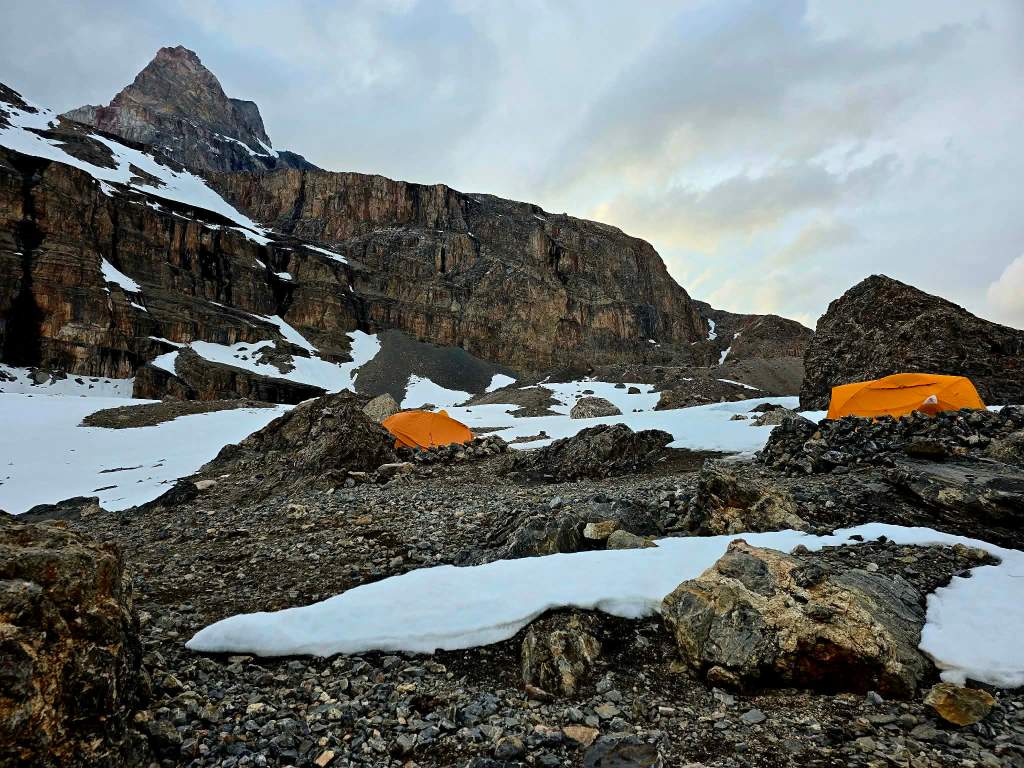
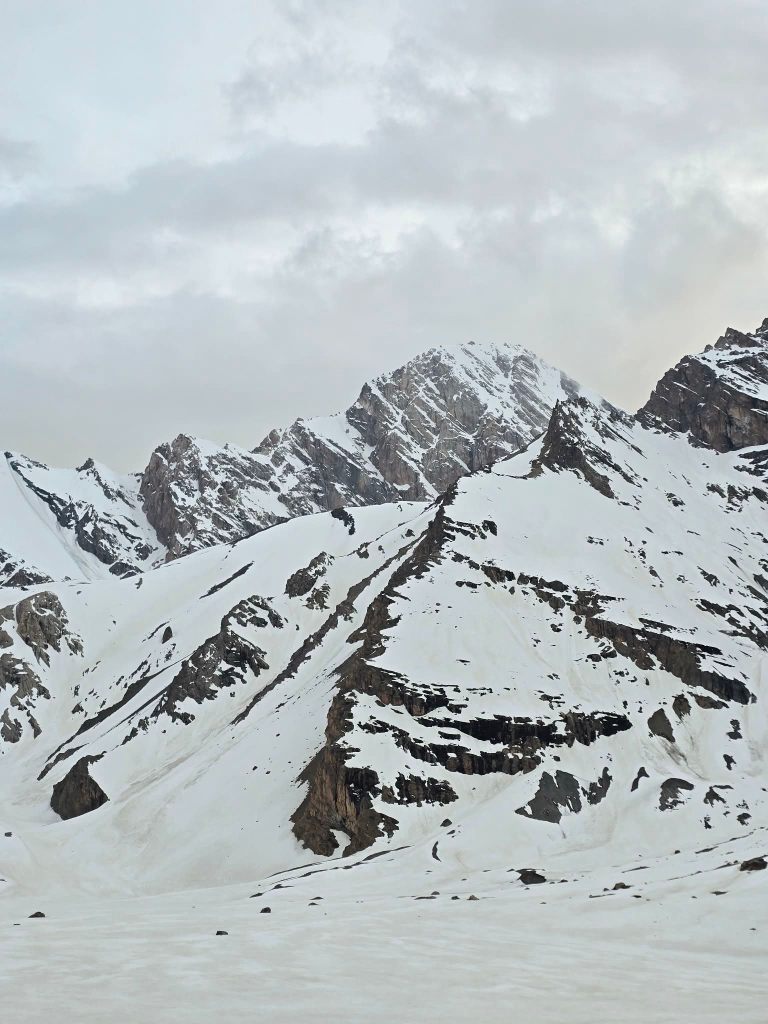
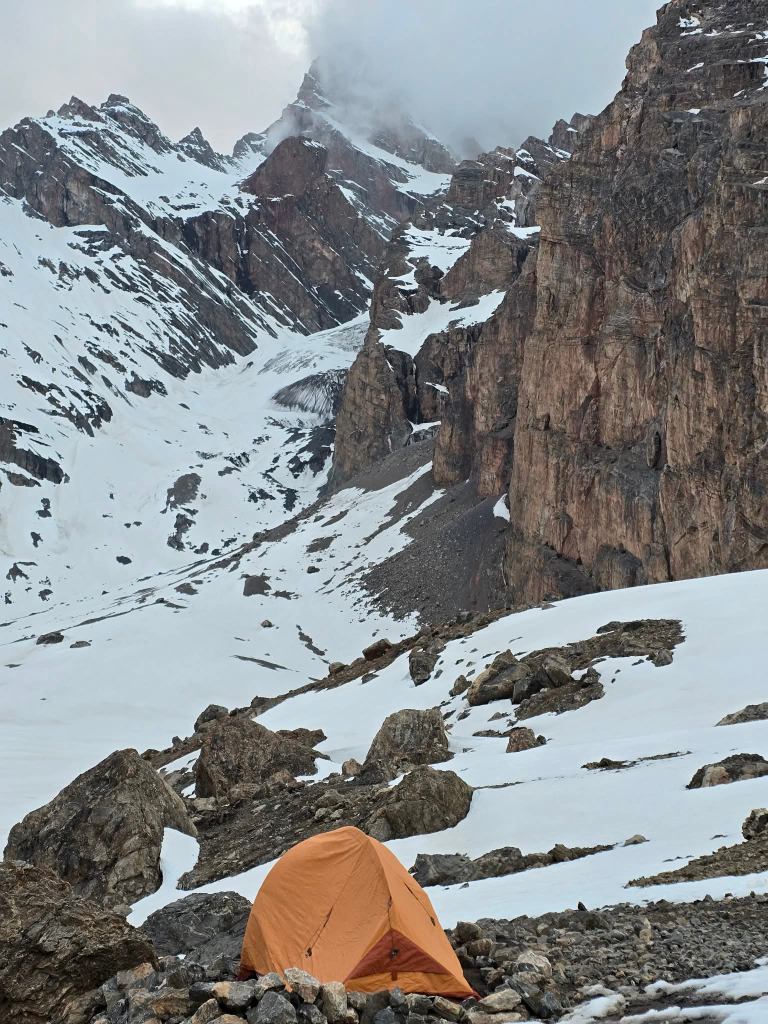
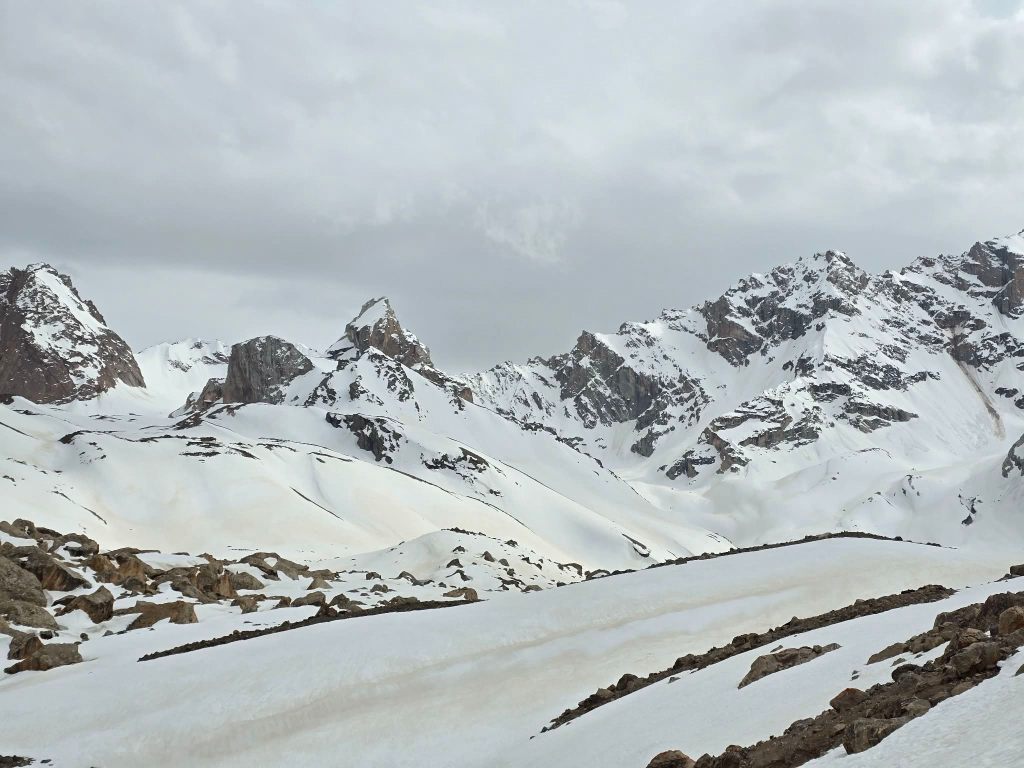
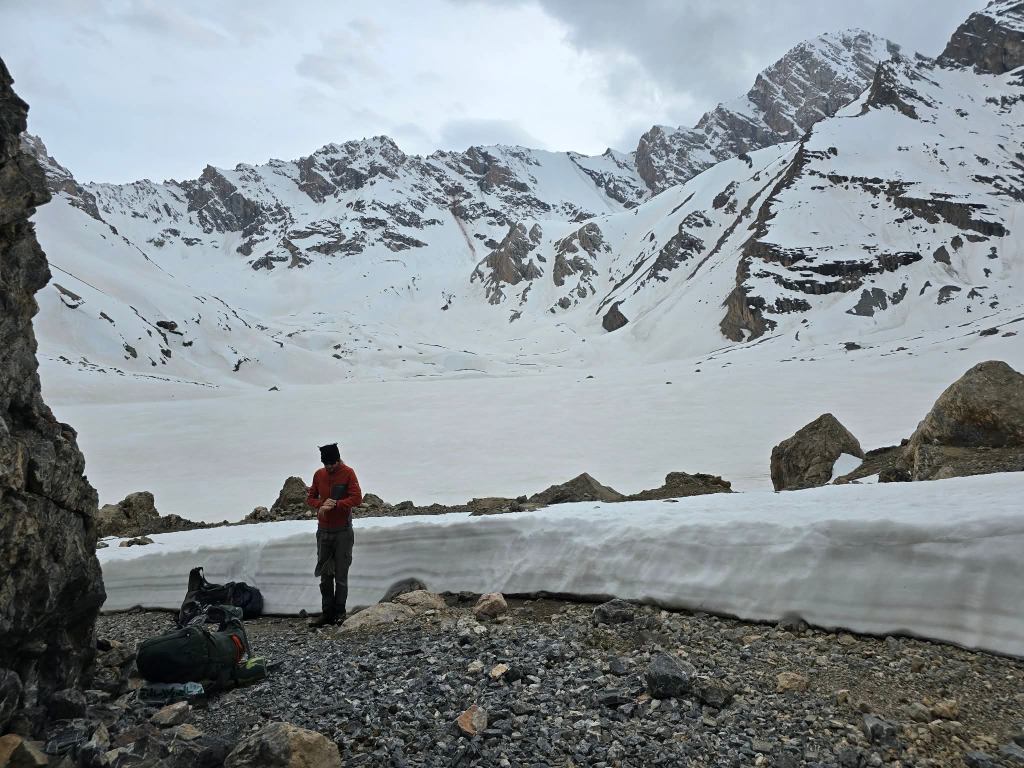
The mountains gave us exactly one good day.
Early into the night, the weather turned against us with a violence that felt personal.
The wind came first.
Not occasional gusts, but sustained, relentless wind that hammered the basin hour after hour without pause. My tent snapped and flexed violently through the entire night. Fabric cracked like rifle shots in the darkness while the poles bent hard enough to make sleep impossible. I have camped in strong wind a handful of times before, but never with such nonstop intensity. Once it started, it simply never let up.
Lying there in the dark listening to the storm batter the tent walls, it honestly felt like the mountain was trying to expel its first visitors of the season — uninvited company lingering too long in a place that still belonged to winter.
First light finally arrived around 5 am and the wind mostly died down.
Then the sleet began again.
I kept unzipping the tent every so often hoping to see some patch of clearing sky where the sun might eventually burn through the storm. But the basin remained completely socked in. Gray clouds sat heavy over the peaks while cold sleet rattled endlessly against the tent fabric.
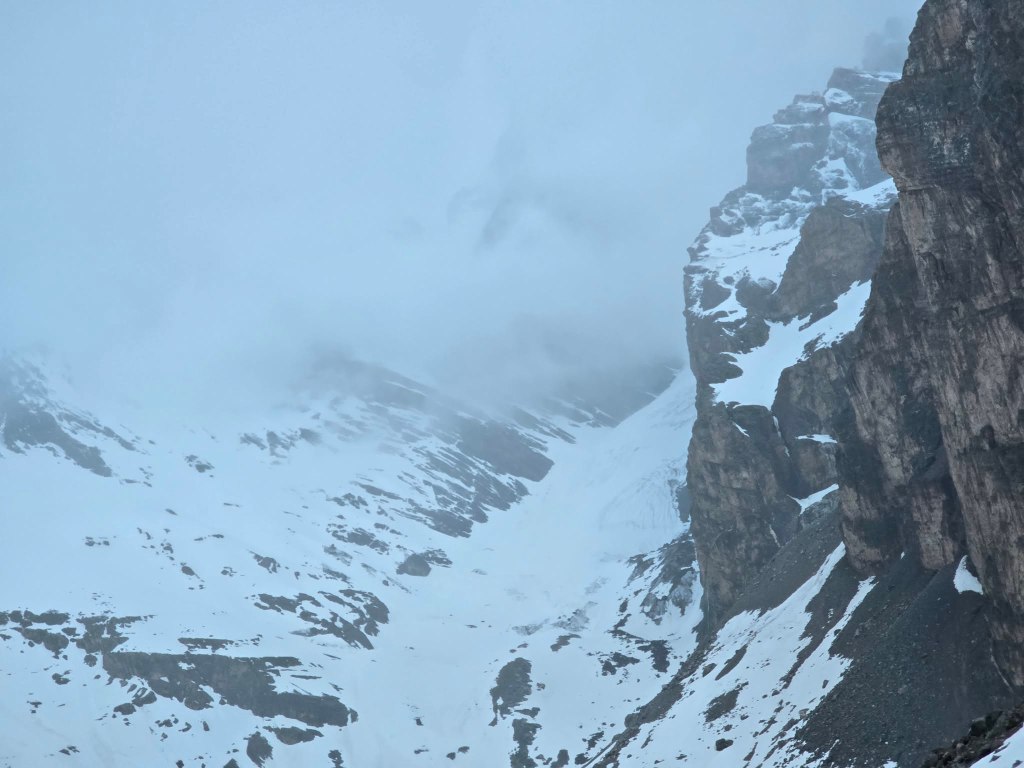
By 9:30 am, the sleet had turned into heavy snow.
I climbed out and walked over to Victor’s tent to get his thoughts. To me, the weather felt deeply set in. This no longer felt like a passing storm cell. It felt established. We called over to Nickolay, whose head briefly appeared from his tent looking every bit as discouraged as the rest of us. His suggestion was to make a pot of tea and think things over.
We countered with another idea entirely:
Get off the mountain.
The decision came pretty quickly after that.
Within half an hour, we were outside packing up soaked gear while snow continued falling around us. Normally, you hike out lighter after an overnight trip than when you came in. This time, every piece of equipment felt heavier. Sleeping bags were damp. Jackets were soaked through. My 85-liter pack didn’t have a rain cover, and by the time we dropped lower and the snow turned to a freezing mix of rain and sleet, everything inside was taking on water as well.
The hike out was miserable.
We didn’t stop for coffee. We didn’t stop for snacks. We barely stopped at all. The entire goal became getting out of our cold, wet situation as quickly as possible. Hour after hour we descended through freezing rain beneath collapsing clouds while the trail slowly transformed into mudflows and running water.
About two hours above Vertical Alauddin Camp, we finally stopped long enough to use Victor’s satellite phone to call the driver. We told him we would arrive roughly two hours earlier than planned. He agreed to leave immediately and begin making the long, rough drive up the dirt road toward camp.
By the time we made it back down to Alaudin Lake, the mountains were putting on one final show of force.
As we moved along the shoreline beneath the cliffs on the far side of the lake, we kept hearing deep rumbling sounds that at first almost resembled low-flying jetliners somewhere above us. Then suddenly, through the mist and clouds clinging to the mountainsides, massive avalanches of wet snow began crashing down from high above. Entire slopes would break loose and thunder into the valley below, some of them continuing for twenty-five or thirty seconds at a time before finally settling into silence again.
It happened over and over as we passed through the basin.
Four or five separate avalanches came roaring down through the storm clouds while we hurried beneath them through rain and sleet. It was both incredible and deeply unsettling to witness up close — another reminder that the mountains around us were still very much in transition between winter and spring.
By the time we reached Vertical, the place was deserted.
The local men we had seen celebrating Victory Day the afternoon before were gone. Our driver was nowhere to be found. At this lower elevation, the precipitation had become entirely rain now, cold and steady.
A couple miles before Vertical, we had crossed a large avalanche chute that had already looked unstable the previous day. We started wondering if perhaps the worsening weather had made the road impassable. Calls went unanswered. Packs went back on.
So we kept walking. We finally made it to where the avalanche had the road blocked up on our way in, a bit disappointed to see that our driver wasn’t there waiting for us. After a brief rest and a break from heavy packs, we carried on.
Another mile or so down the valley, we came upon an old stone shepherd’s home beside the river, surrounded by fencing and several enormous shepherd dogs that immediately came charging toward us barking furiously. Eventually a man appeared and chased the dogs away before motioning for us to cross the fence and use a nearby bridge to get across the river we would have had to wade through on the road.
Right then, for the first time all day, the rain briefly stopped.
The clouds cracked open just enough for a few minutes of sunlight to reach the valley floor, and suddenly all three of us had wet clothes spread out across rocks and fencing trying desperately to dry anything we could. We explained our situation to the shepherd as best we could — that we were waiting on a driver who should have already arrived.
As it turned out, the man knew our driver personally.
He explained that he himself was waiting on another shepherd to arrive from one of the lower villages to take over for the week, but that person was also delayed by the weather. Once the replacement arrived, he offered to drive us himself down toward the main road.
Another forty minutes passed.
Finally, we got the satellite phone back out and had the shepherd call his replacement directly.
That was when we learned the road was closed.
Multiple mudslides and rockfalls had come down during the storm. Sections of road were actively being cleared even then.
Under normal conditions, we probably would have just pitched our tents again and waited another day. But there was nothing dry left. The thought of climbing back into soaked sleeping bags inside wet tents while rain continued hammering the valley felt completely demoralizing.
At the same time, the idea of hiking the entire remaining 30 kilometers out to the main highway sounded equally miserable.
So we waited.
And eventually, after what felt like hours, we finally heard the sound of an engine somewhere down the valley road.
A vehicle appeared around the bend.
Our driver.
He arrived soaked, exhausted, and full of stories about the drive up through mudflows, rockslides, and sections of road actively being bulldozed clear as he passed through. The mountains behind us were still unraveling in the storm.
And the drive back out proved it.
As we bounced our way down the long dirt road, signs of destruction were everywhere. By the time we reached the canyon section, fresh rockslides were scattered across multiple sections of road. Looking up at the massive stones protruding from the steep dirt walls directly above us made the entire descent feel nerve-racking. Every turn felt like a place you simply didn’t want to linger beneath for too long.
Lower down, the road crossed enormous mudflows that had poured directly across the valley during the storm. Fallen rocks and boulders littered the road in countless places. The driver navigated around debris piles and muddy washouts while we sat mostly silent, watching the mountains carefully.
When we finally reached the main highway back toward Dushanbe, all three of us breathed a huge sigh of relief.
It didn’t last long.
We stopped briefly in the small town near the junction to grab drinks and ice cream bars while our driver casually mentioned that there seemed to be far less traffic coming from the Dushanbe direction than normal. A few miles later, we understood why.
The first line of waiting cars appeared beside a massive mudslide that had completely buried part of the highway. Bulldozers worked furiously to clear a path through it while traffic crawled past one lane at a time. Not long after that came another blocked section. Then another.
Eventually we climbed back up over Anzob Pass and passed once again through the infamous “Tunnel of Death” before descending into Varzob.
The storm had transformed the entire valley.
The river below had become a raging wall of muddy water charging through the narrow gorge nearly as fast as the vehicles beside it, throwing spray and mist high into the air along its entire length. Fresh waterfalls poured from cliffs high above the road everywhere we looked. Some were thin ribbons of runoff. Others came crashing down the mountainsides with astonishing force.
It was one of the most memorable and nerve-racking drives I’ve ever made in this country, bringing an end to one of the most memorable overnighters I’ve done anywhere.
Some trips leave you with summit photos.
Others leave you with stories.
This one gave us a frozen alpine basin beneath Chimtarga, a night of violent wind, a storm-driven retreat through sleet and snow, avalanches crashing from the peaks, flooded valleys, shepherd huts, mudslides, and one very long ride back out of the mountains.
And honestly, I wouldn’t trade it for anything.

 Wise Clan in Stanland
Leave a comment