May 2-3, 2026
🥾 Trail Stats
- 📍 Route: Timurdara Trailhead → Khoja Hasan Meadow
- 📏 Distance: 18.4 miles total
- ⬆️ Elevation Gain: 2,825 ft
- ⬇️ Elevation Loss: 2,809 ft
- 🏔️ Highest Elevation: 7,812 ft
- 🏞️ Lowest Elevation: 5,240 ft
- ⏱️ Total Trail Time: 15 hrs 1 min
- 🚶 Moving Time: 9 hrs 25 min
- 🎒 Difficulty: Moderate Backpacking
- 🛖 Camp: Alpine meadow at Khoja Hasan
- ♨️ Highlight: Remote sulfur hot spring hidden high in the mountains
- 🗓️ Season: Spring / Early Summer
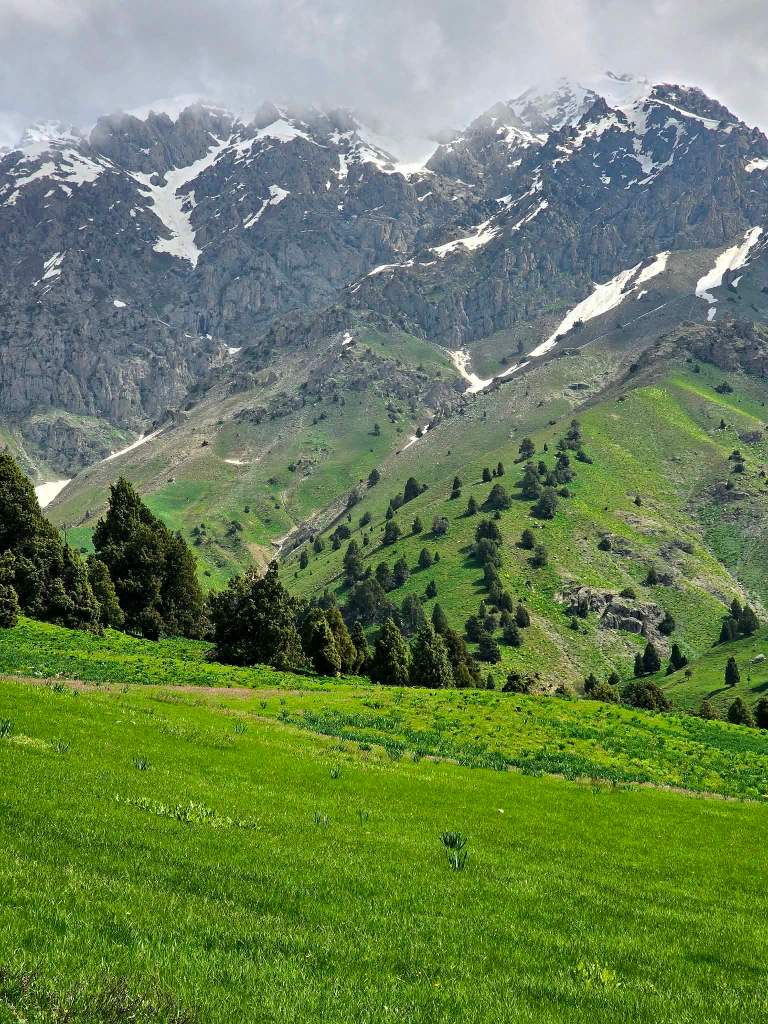
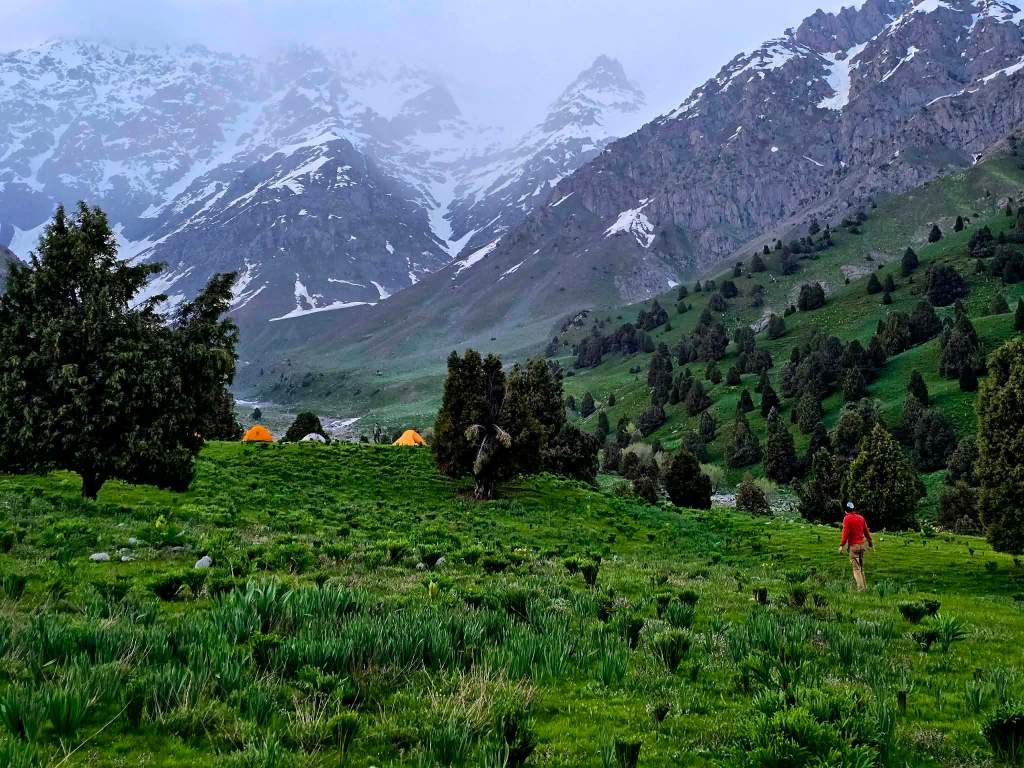
We had a great backpacking trip last weekend out to Khoja Hasan.
We made our usual early morning departure from Dushanbe and headed west out of the city, stopping in the little town where the road branches off the Uzbekistan highway. We loaded up on giant fresh chapatis and picked up supplies for camp dinner and Sunday morning breakfast before continuing on toward the mountains.
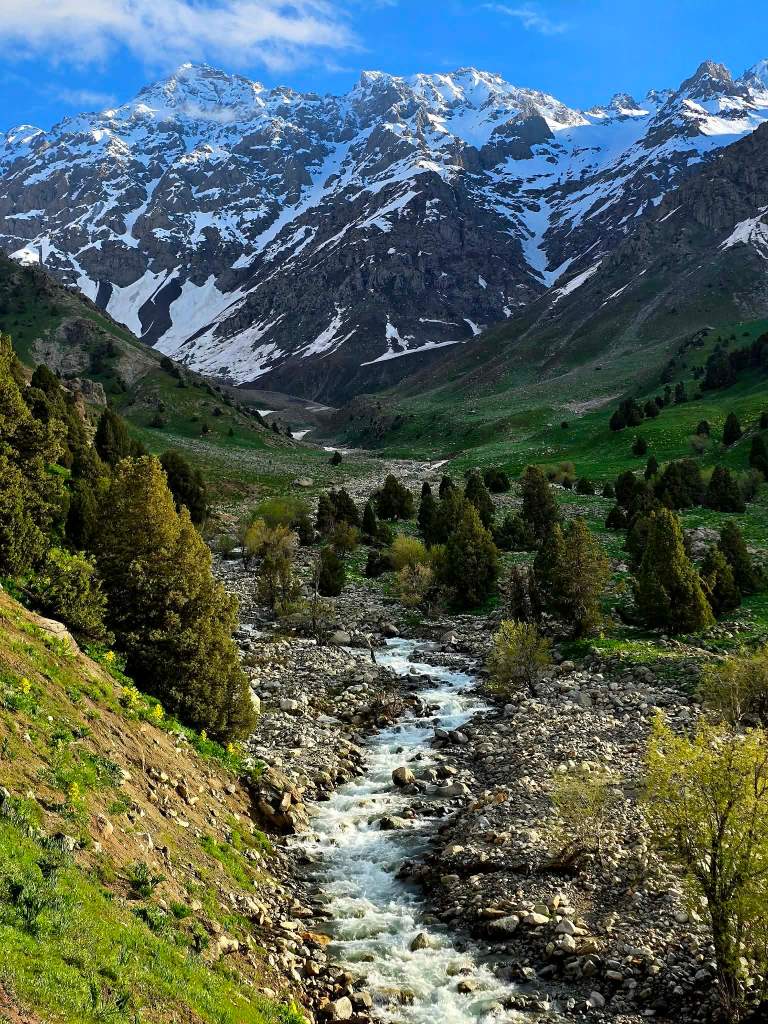
From there, it was the long familiar drive out toward the Timurdara trailhead. By the time we were following the edge of the Qaratoq River, it was obvious the river was at full flow from recent rain and snowmelt higher in the mountains. The water was absolutely raging. The dirt road was wet and muddy with fresh signs of rockfall scattered here and there along the cliffsides. When we finally reached the parking area by the bridge, we set about washing and marinating the chicken wings we planned to cook over the fire that evening.
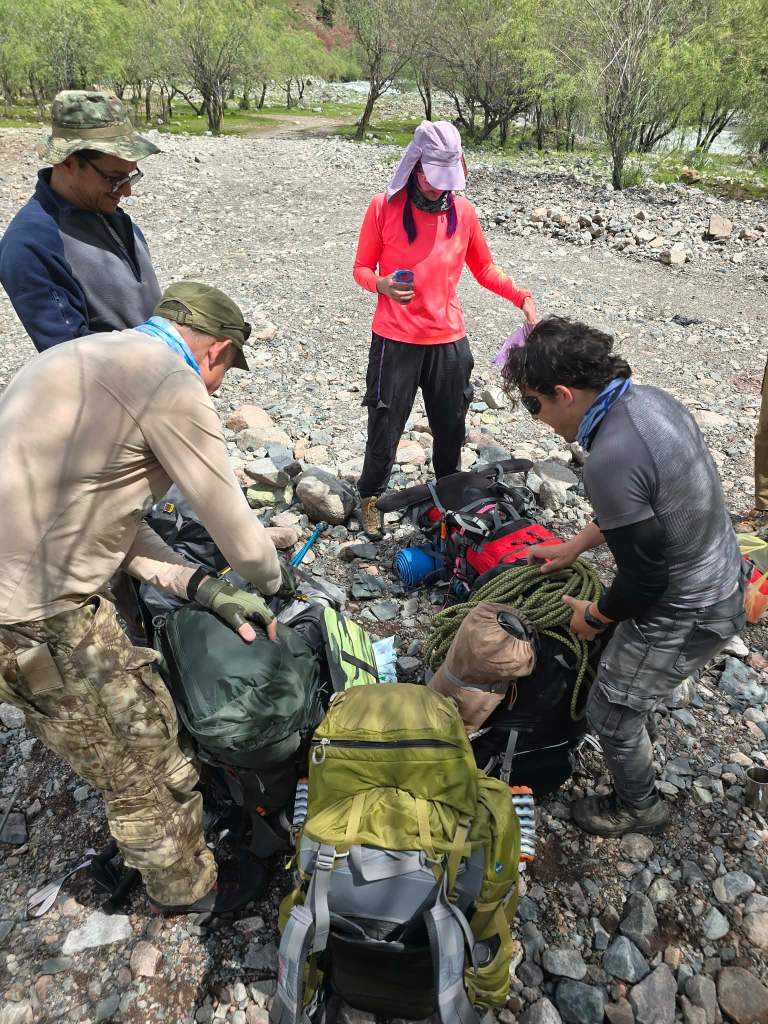
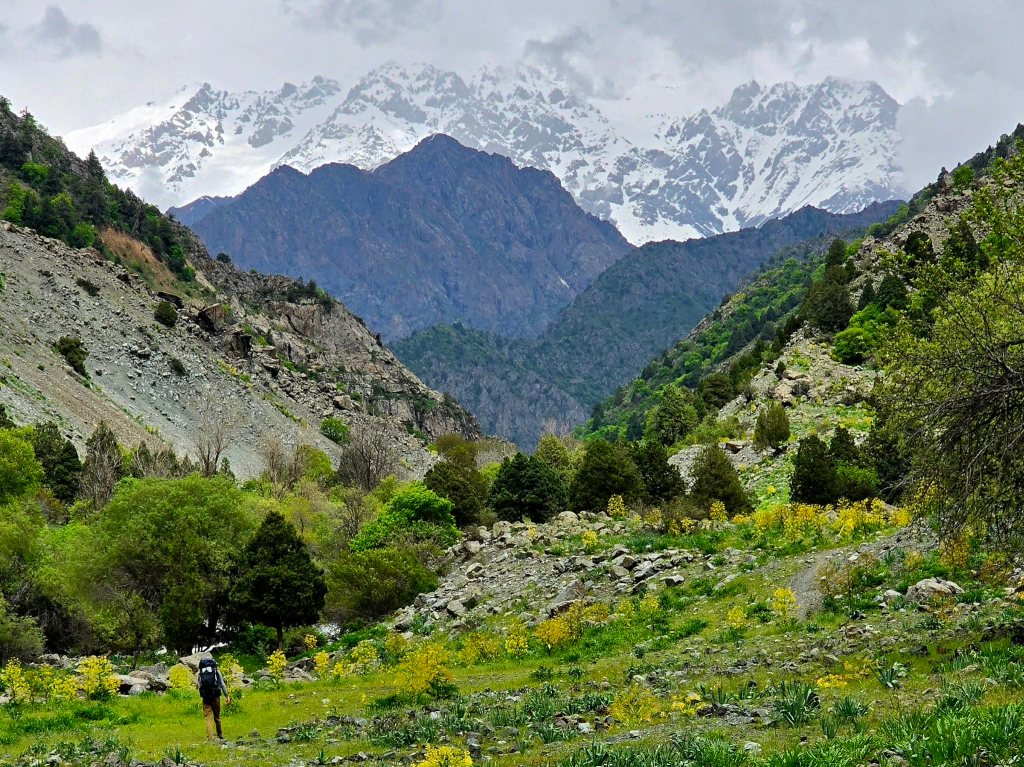
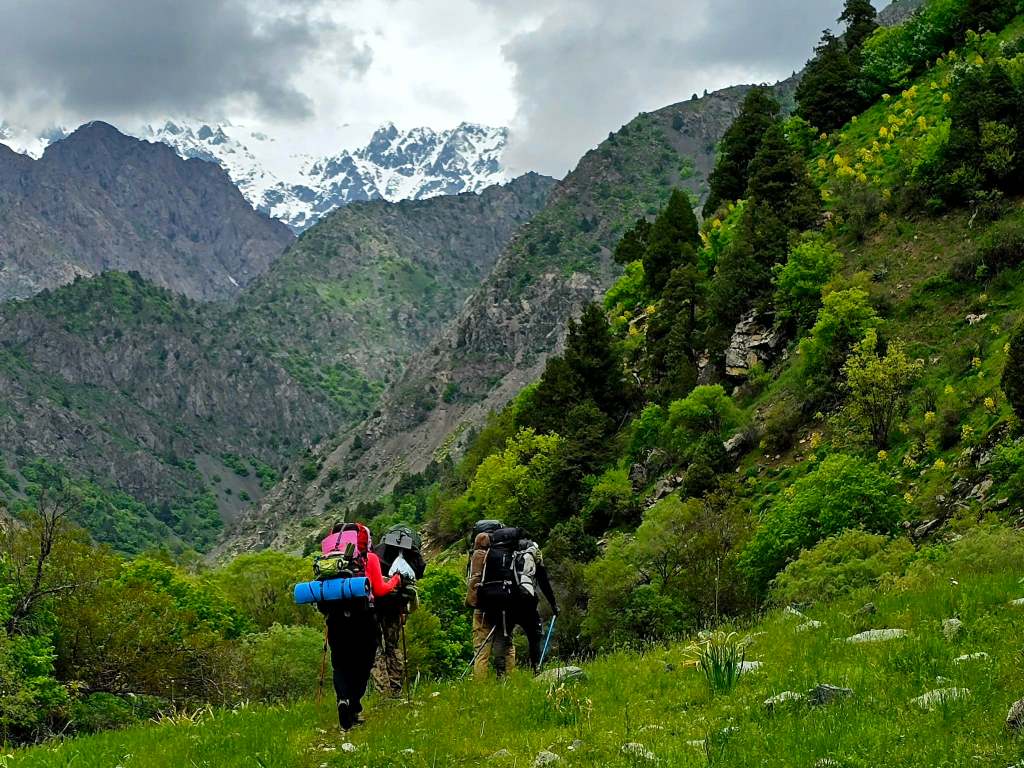
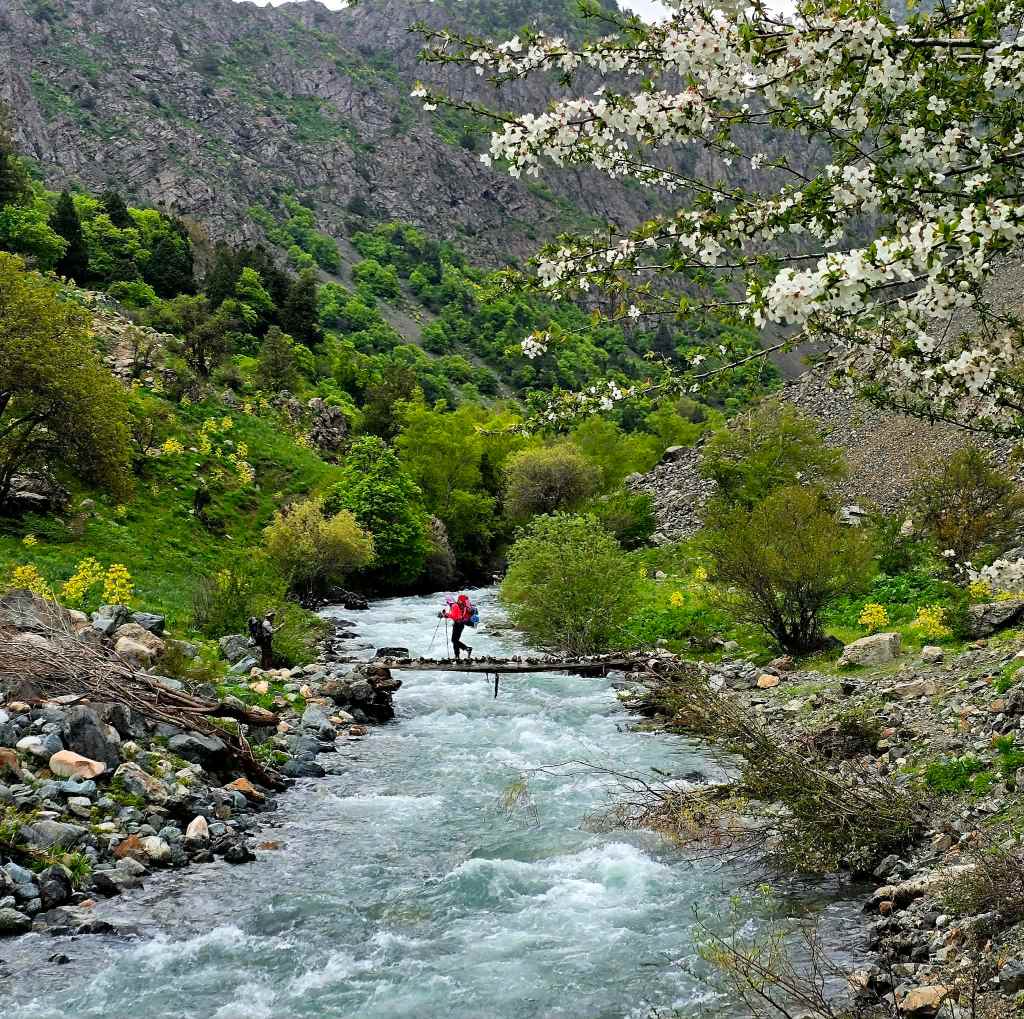
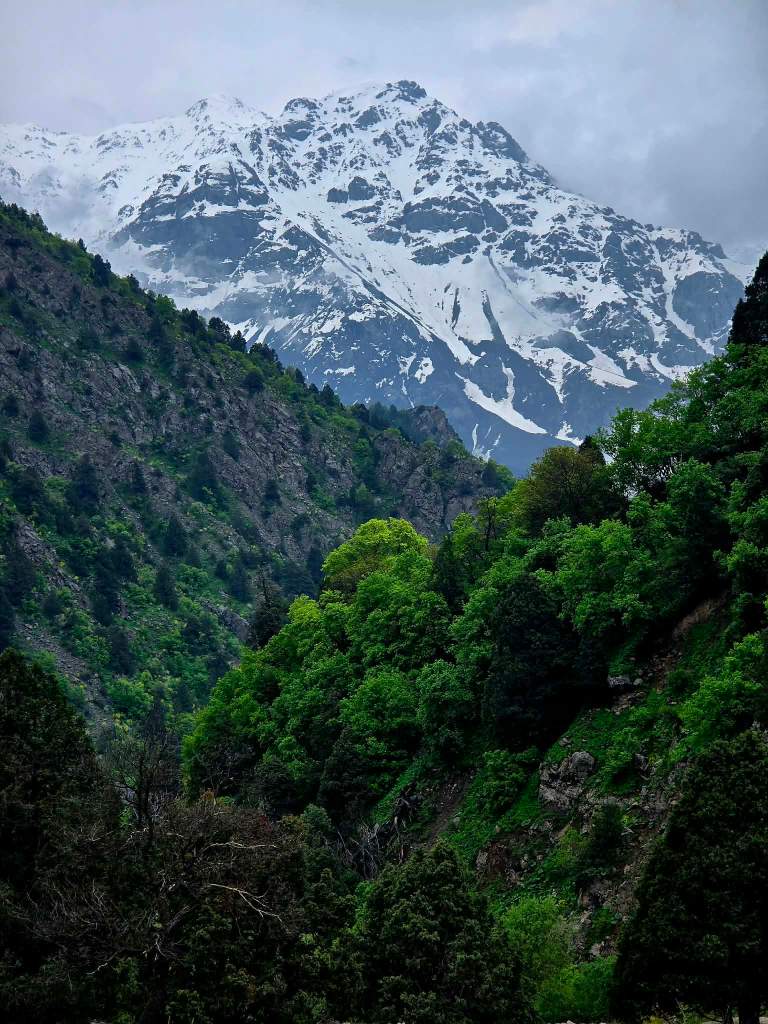
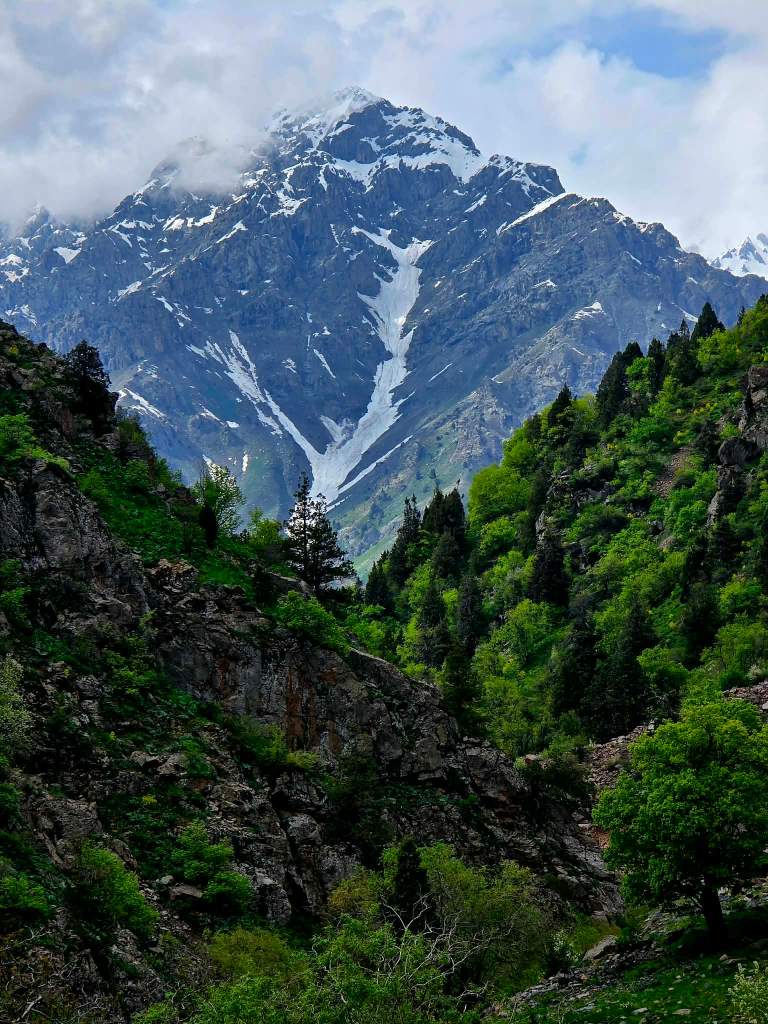
The first several miles followed familiar ground. We hiked the same trail that leads toward Lake Payron, winding through the gorge with the river crashing beside us. About twenty minutes before we reached the bridge and meadow where we usually stop for lunch, the rain began to fall. Instead of sitting out in the open, we cut left into the gorge and a couple hundred meters later arrived at the small hunter’s shack tucked against the hillside.
Nobody was there, so we ducked inside and settled in for lunch while rain pattered against the roof outside. It’s one of those little mountain shelters that feels like part of the trail itself—simple, rough, and there whenever you need it. After lingering as long as possible, we cleaned everything up, shut the place back up the way we found it, and stepped back out into the cold drizzle.
From that point on, I was in entirely new territory.
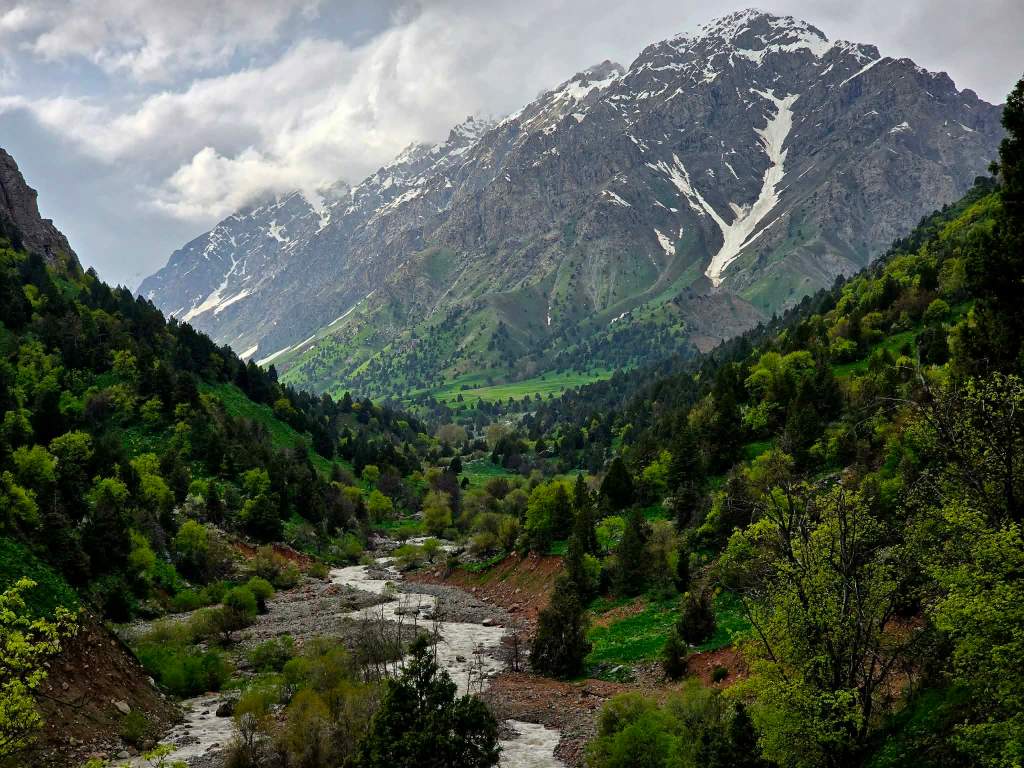
We had now joined the Mura Pass trail, an old route that eventually climbs over the high mountains and drops all the way down toward Sarytag near Iskanderkul. That crossing is a serious undertaking requiring several days and crampons and an ice axe for descending the glacier on the north side of the pass.
For us, though, Khoja Hasan was far enough.
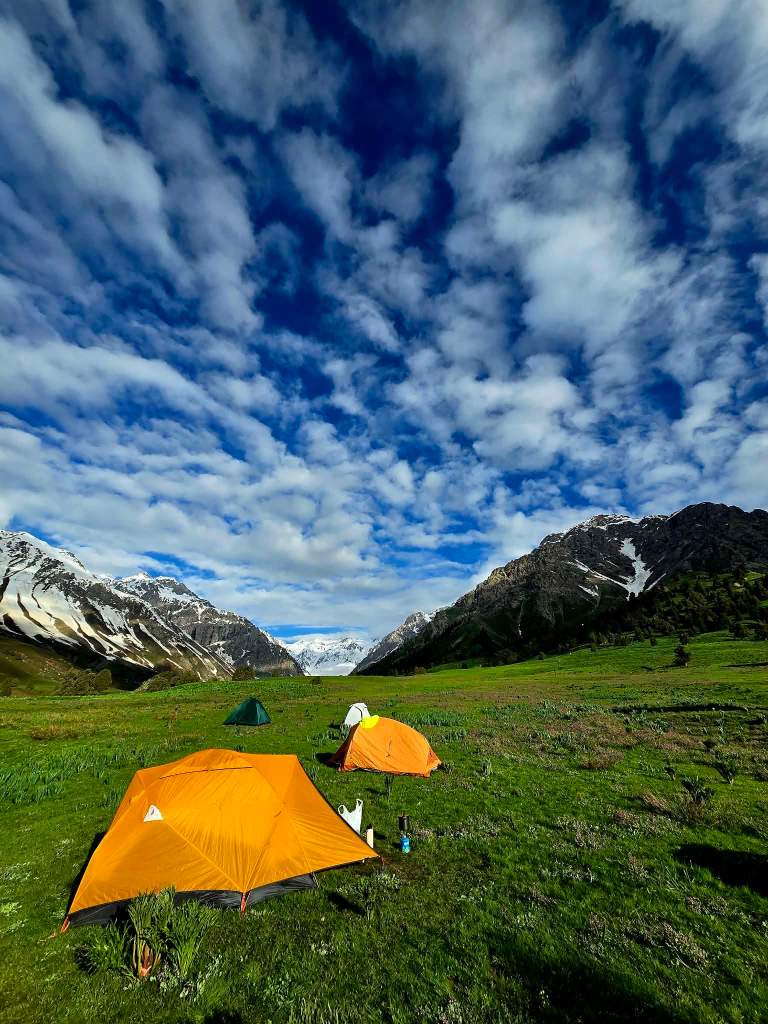
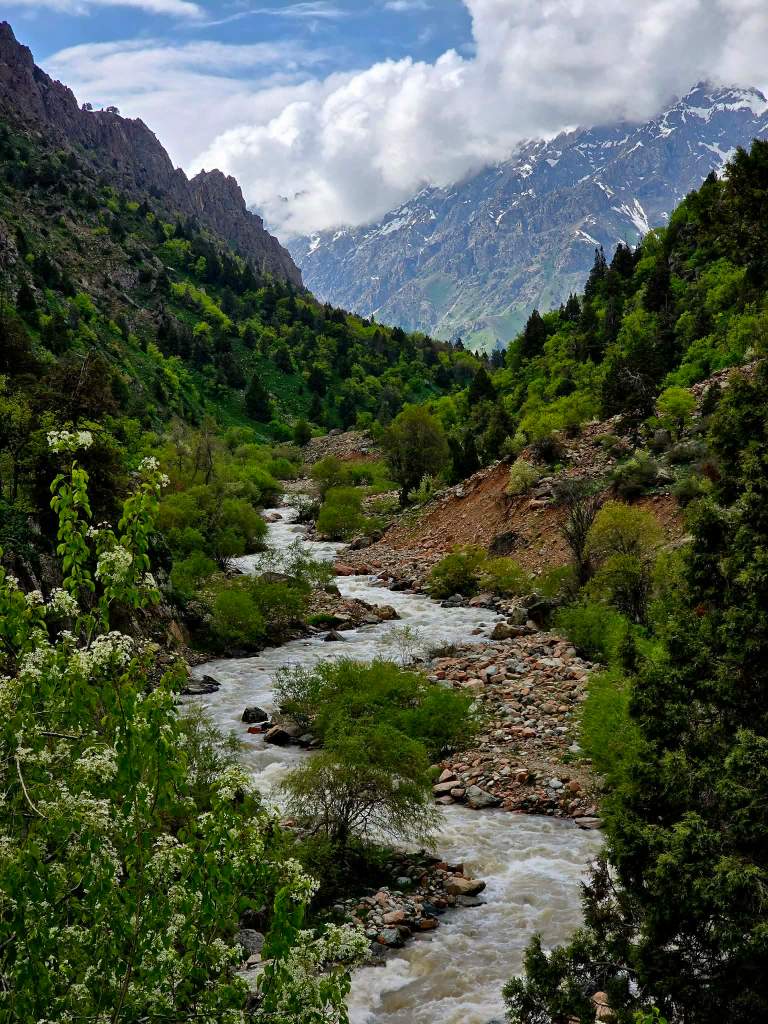
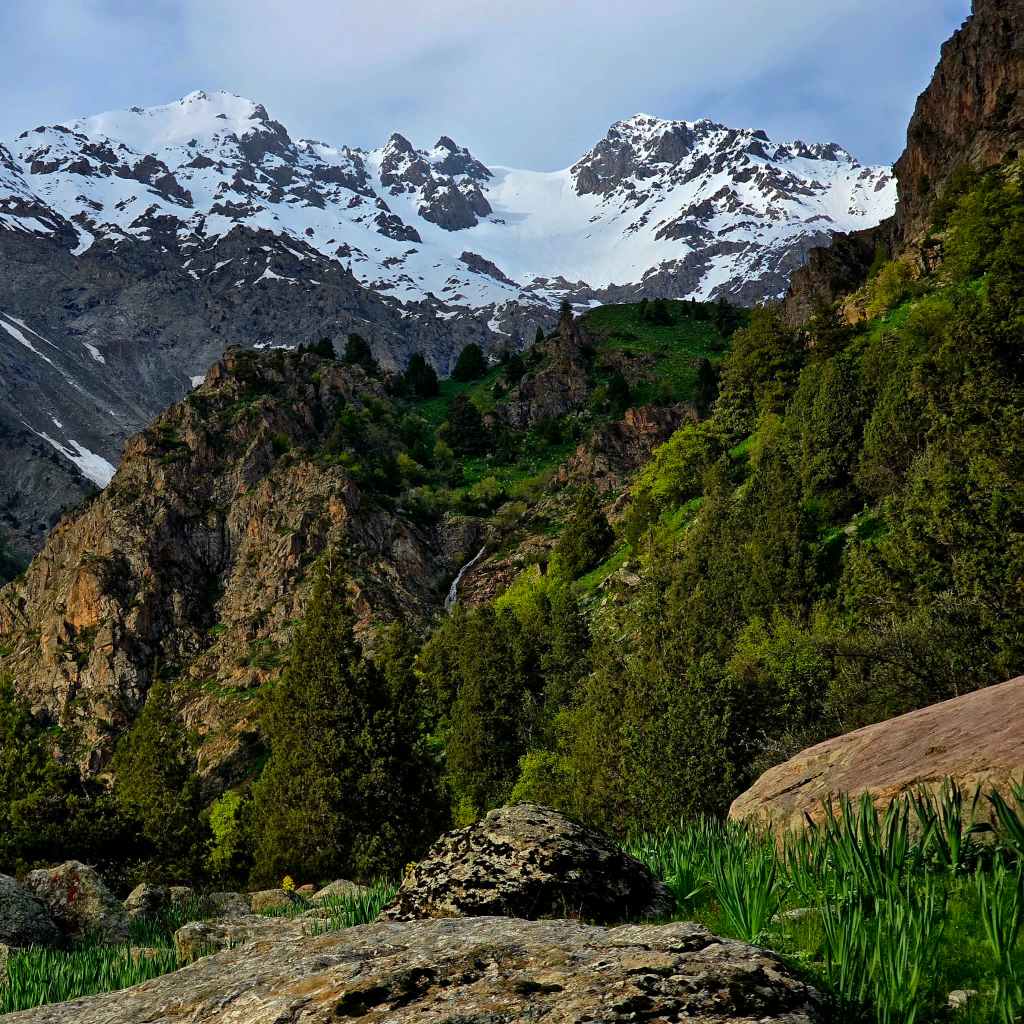
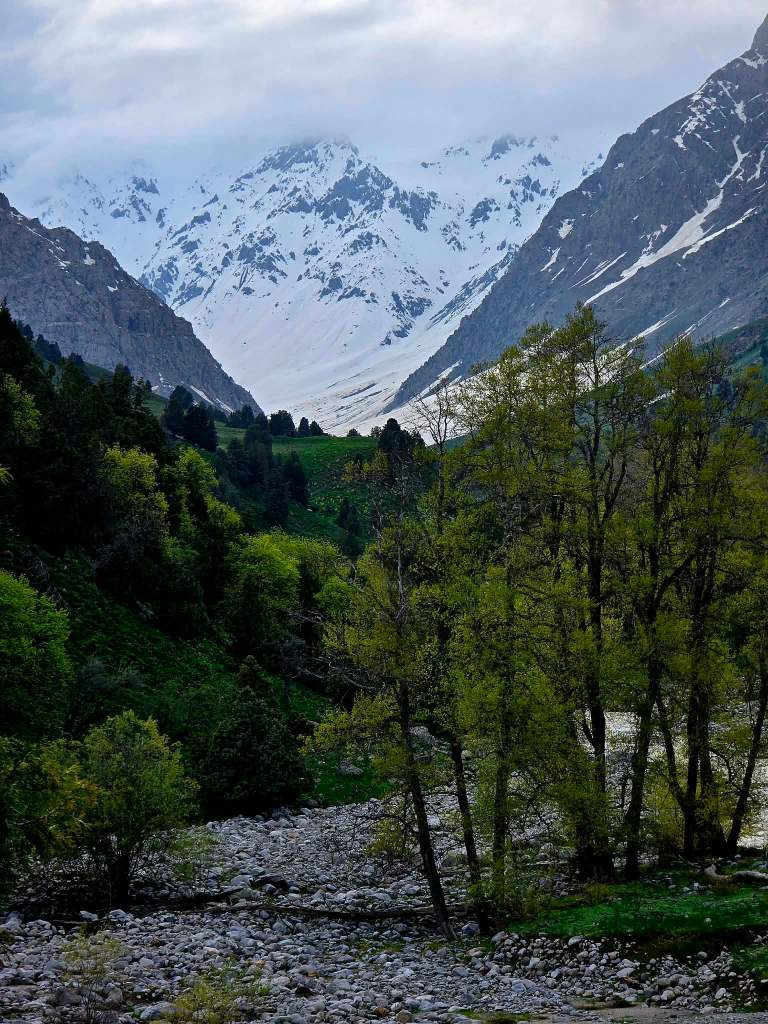
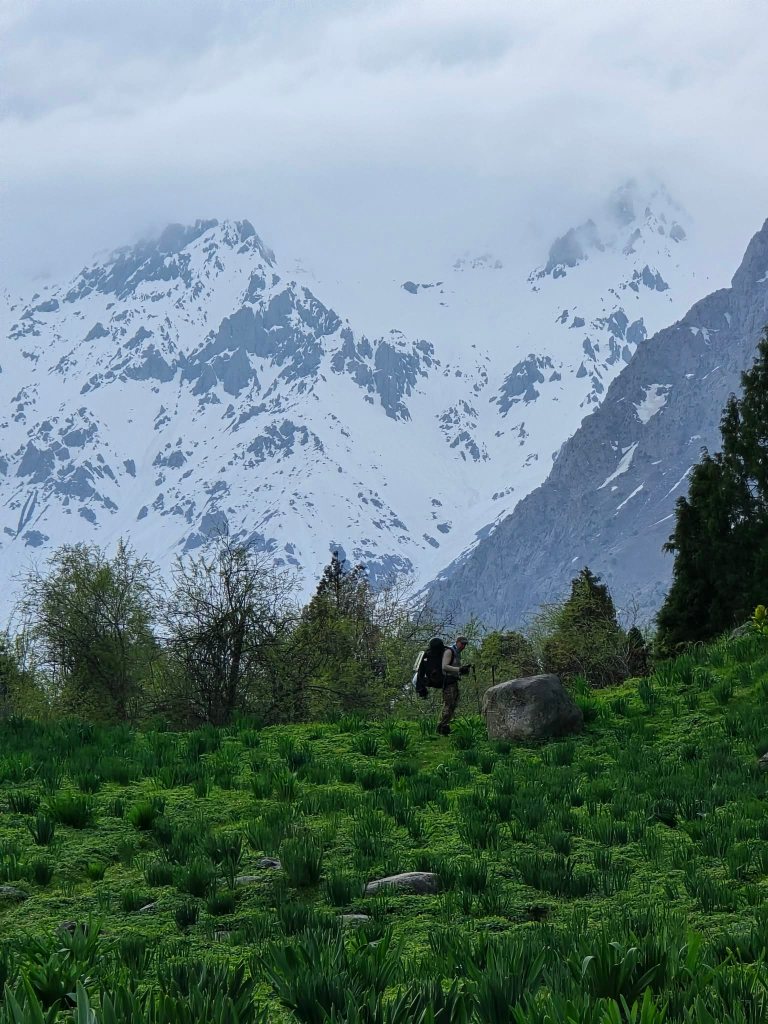
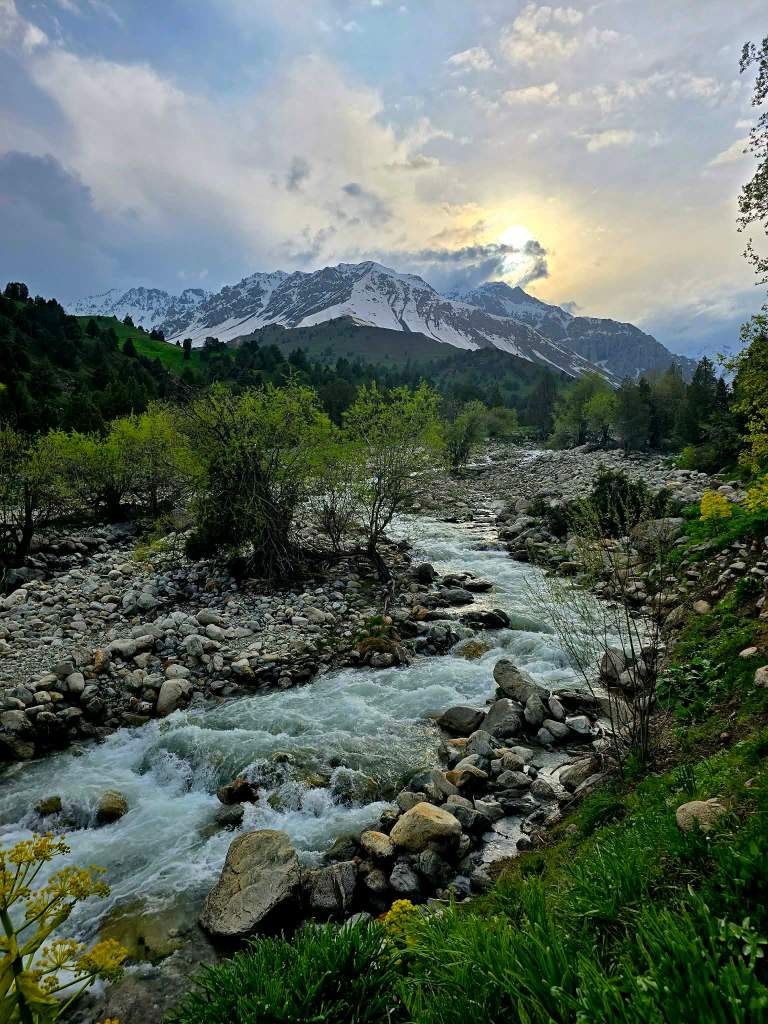
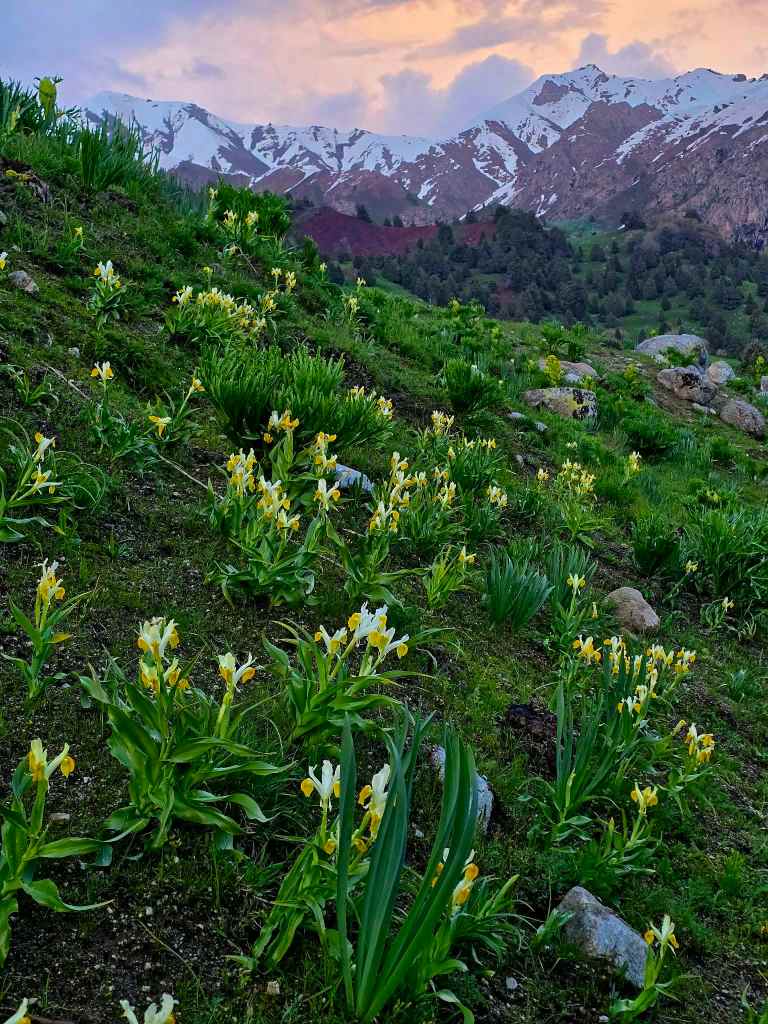
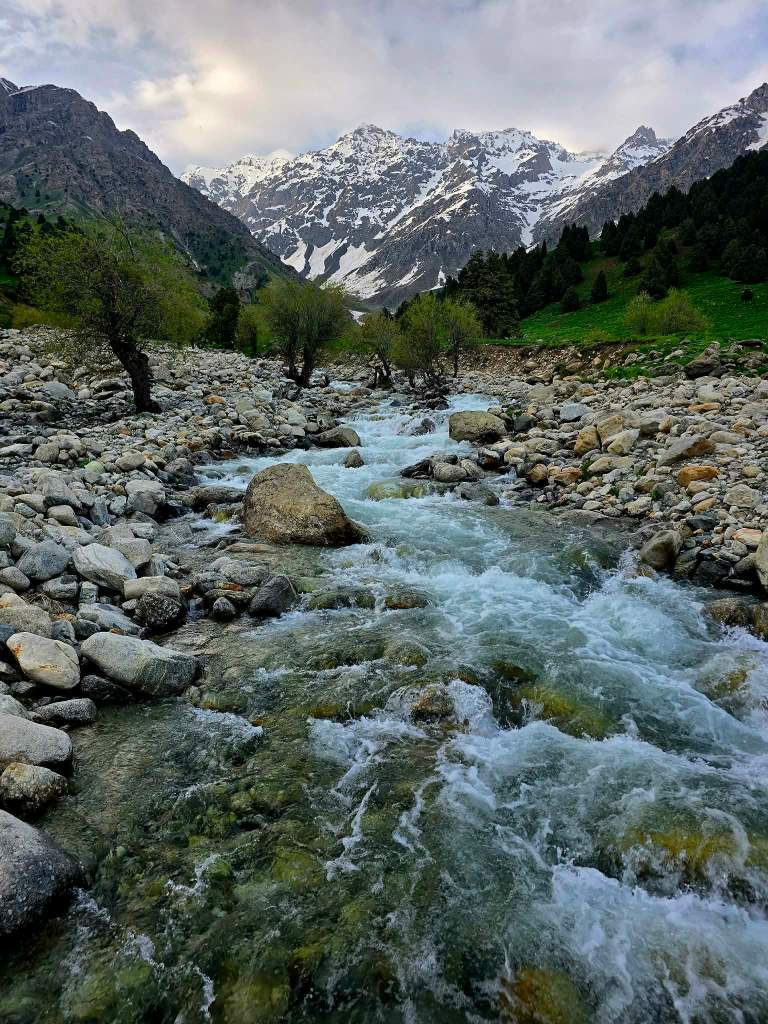
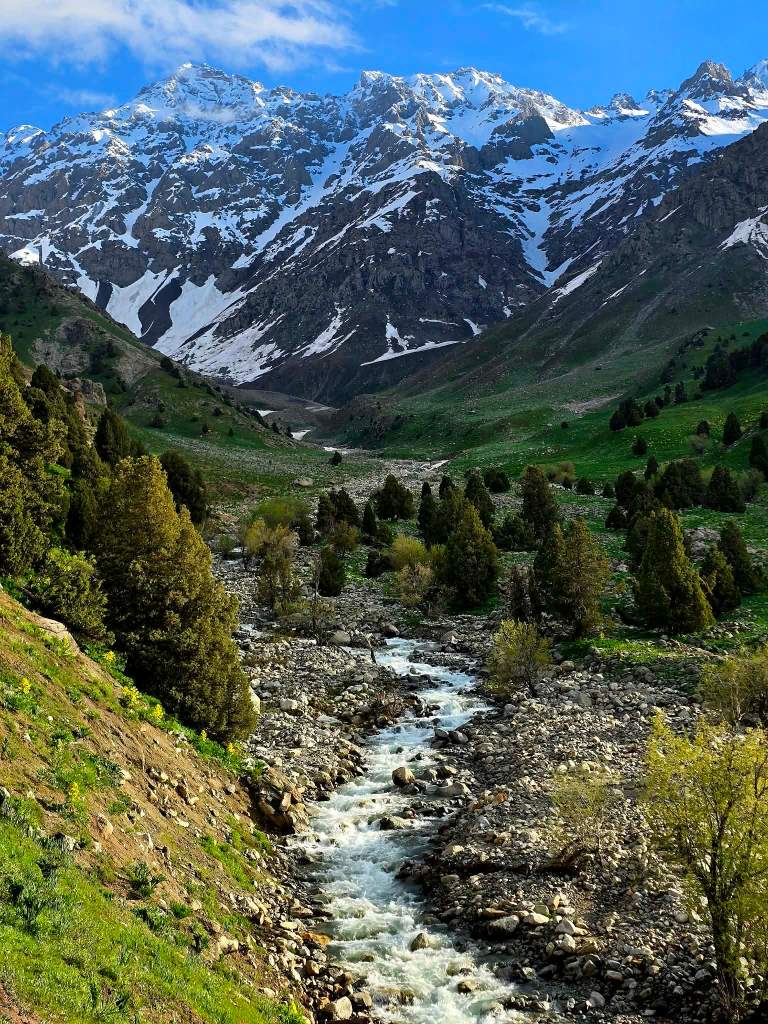
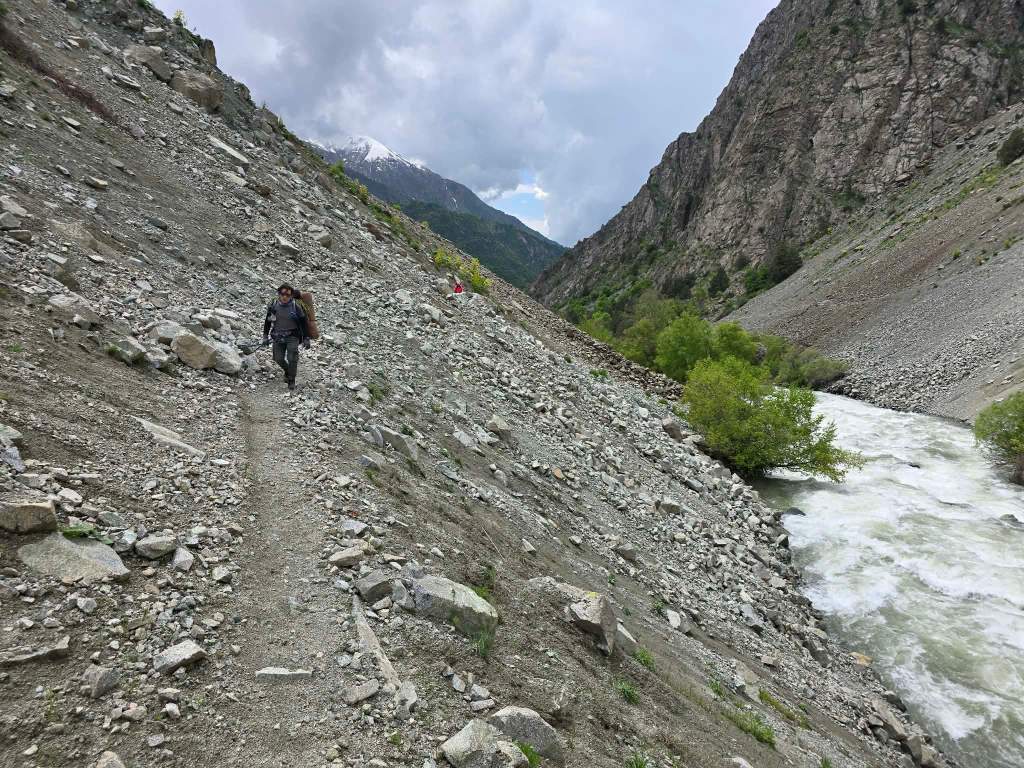
We continued following the Qaratoq River deeper into the valley for another three or four miles. The trail itself was deceptively exhausting. Although it stayed close to the river, it constantly climbed 60 or 80 feet up steep rocky slopes before dropping right back down to the water’s edge, only to repeat the process over and over again. My tracking app claimed we had barely lost elevation overall, but my legs strongly disagreed. Carrying a heavy overnight pack across endless jagged rock had my feet and calves completely cooked by the end of the day.
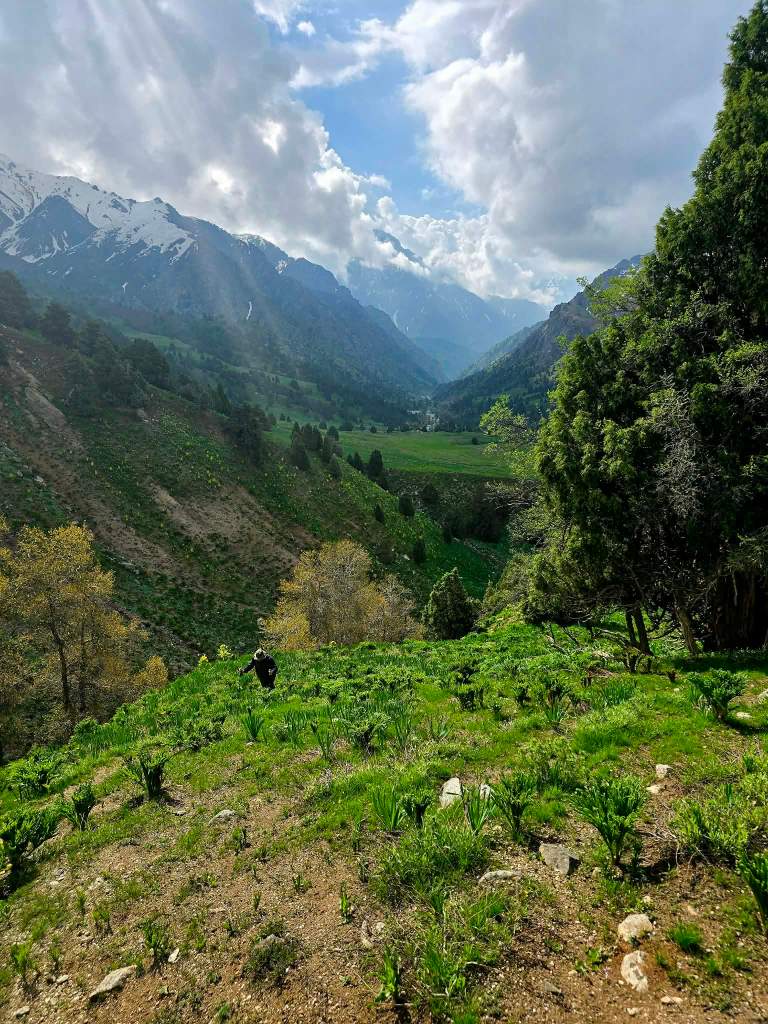
Eventually we crossed a tributary stream pouring out of another gorge—the same gorge that eventually leads toward Mura Pass itself—and climbed up into an enormous green meadow surrounded by snow-covered peaks. This was Khoja Hasan.
There are different stories tied to the area. One local tradition says that Khoja Hasan was a religious scholar or holy man who fled persecution long ago and hid out in these mountains. Somewhere nearby sits a rough stone structure that some claim is his tomb. Whether the stories are historically true or simply mountain folklore passed down over generations, the place carries a quiet feeling that makes it easy to understand how such stories survive.
By the time we dropped our packs into the grass, the sun was disappearing behind the ridges. The day’s hike had only been around 8.3 miles, but it felt far longer under the weight of full packs and uneven terrain.
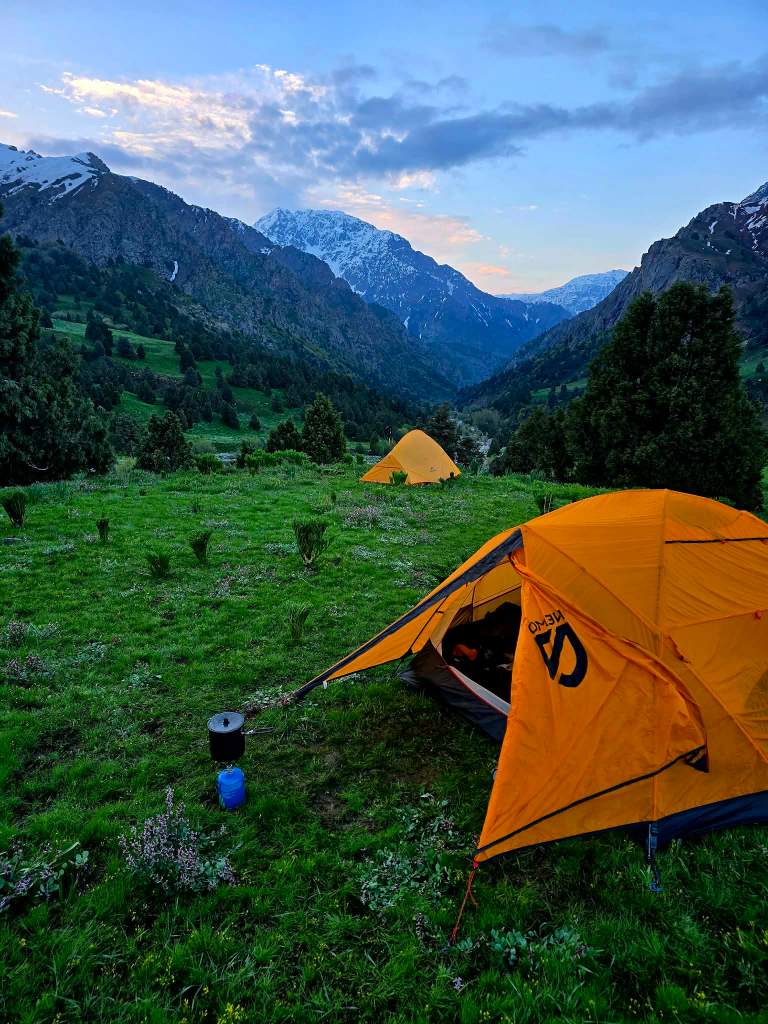
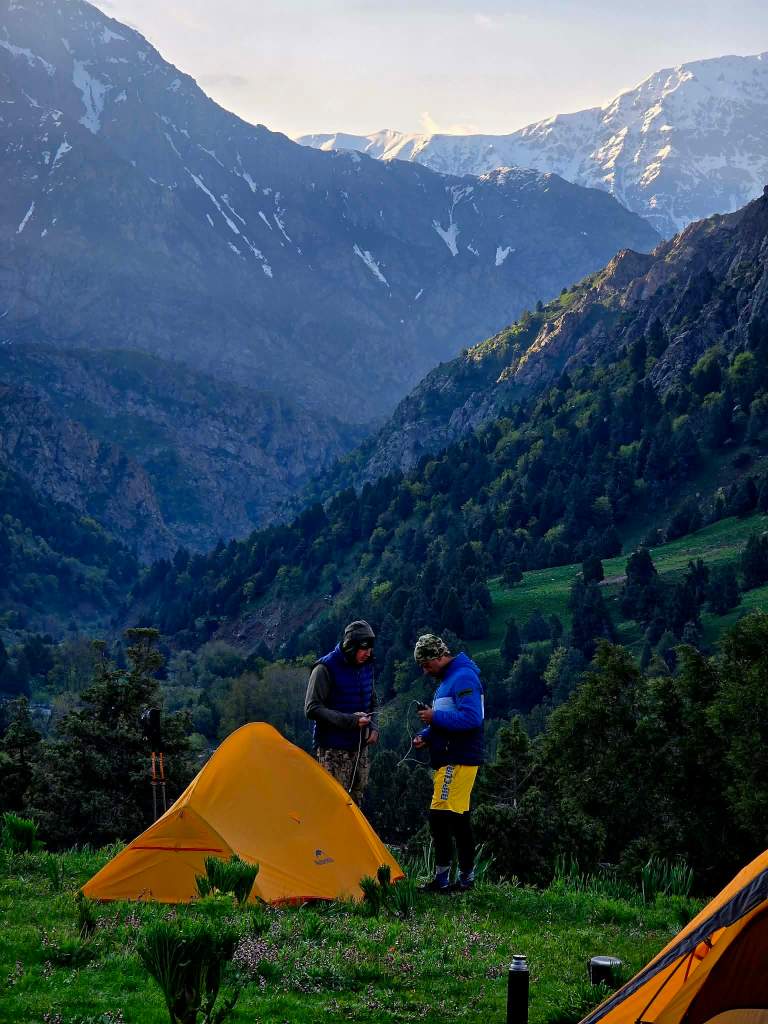
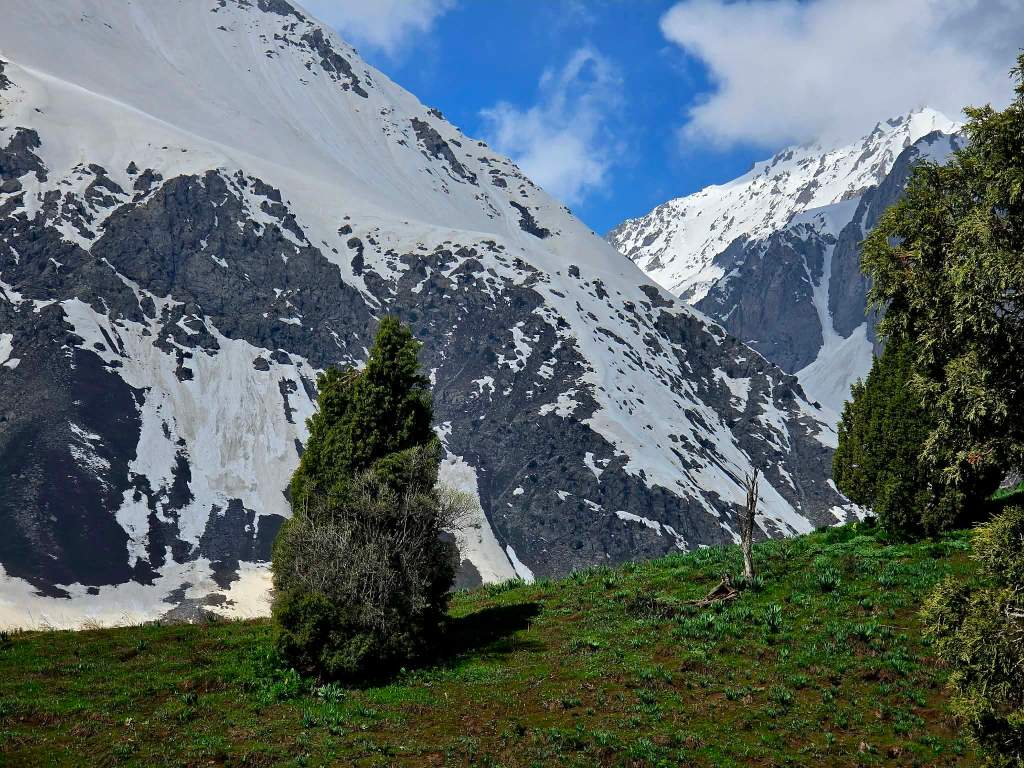
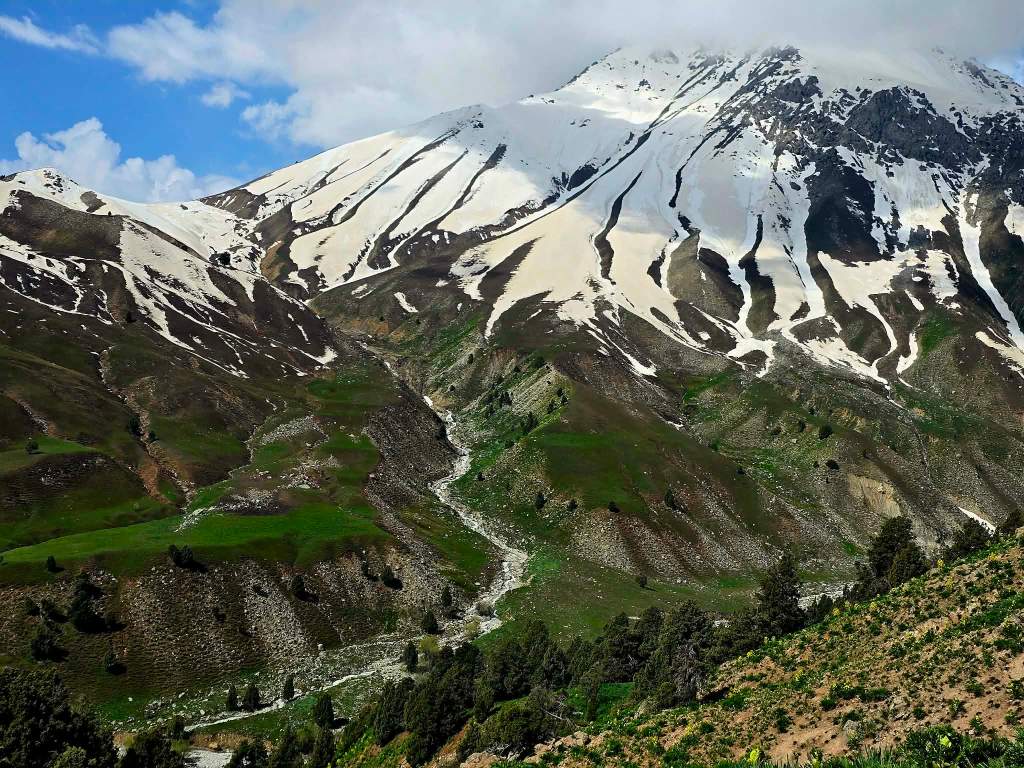
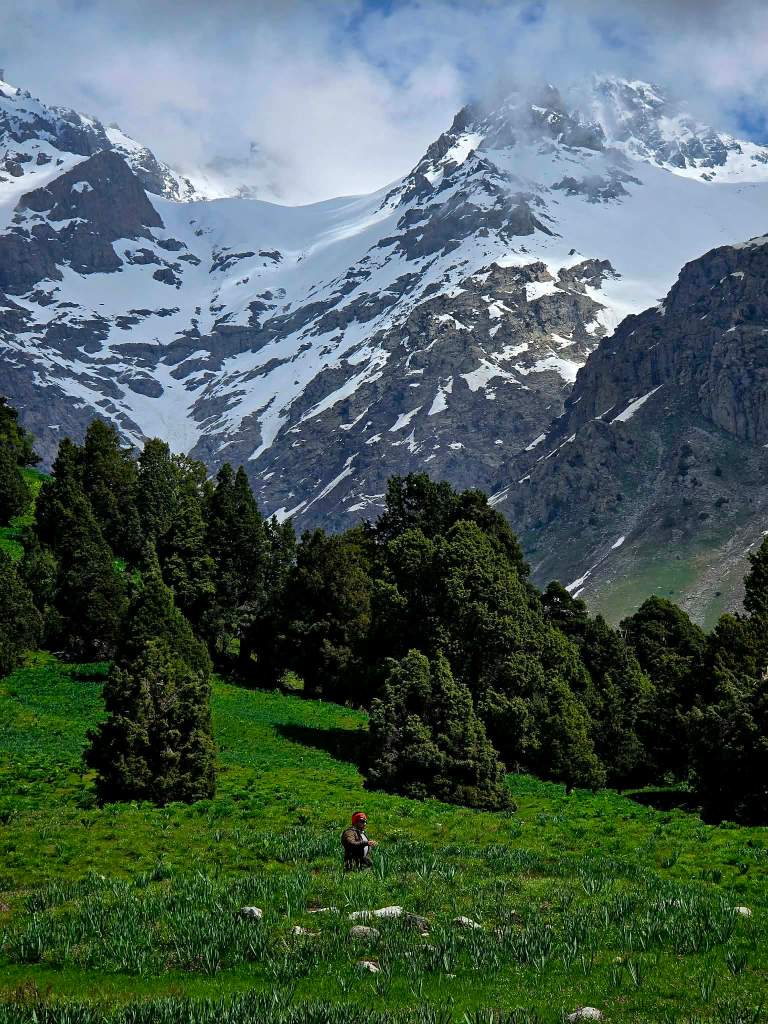
We set up camp, gathered firewood, and settled in for the evening beneath a ring of snowcapped mountains. Despite rain being forecast for most of the weekend, we somehow managed to stay in a perfect weather window. Clouds drifted around the peaks, but hardly a drop fell on camp itself.
As darkness settled over the meadow, we built a fire and cooked chicken shashlik over the coals while a large pot of buckwheat with vegetables and meat simmered nearby. Far down the valley we had hiked in through, massive lightning storms flashed across the horizon, lighting up entire sections of sky, but somehow they never reached us.
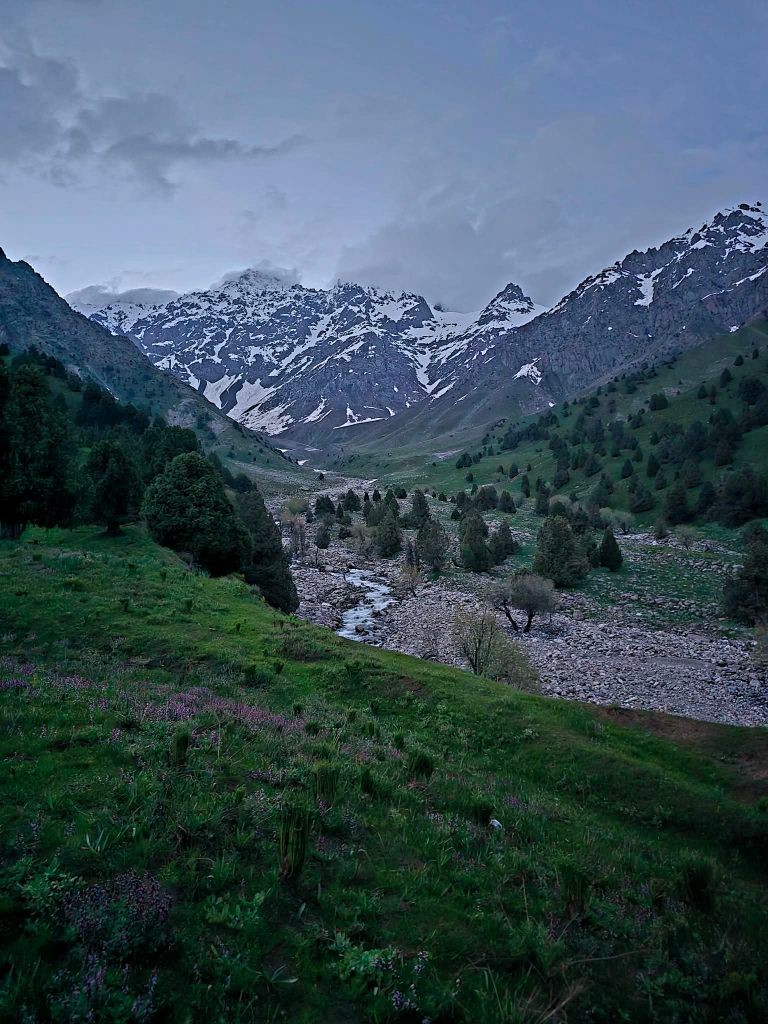
Sometime in the middle of the night, I stepped out of the tent and found the mountains glowing beneath a nearly full moon hanging high overhead. The entire meadow was washed in silver light. Peaks, clouds, grass, riverbanks—everything stood out in sharp detail. I stood there alone for twenty minutes just soaking it all in before finally climbing back into my sleeping bag.
I woke again around 5 a.m. and climbed down the steep bank toward the river to fill every empty pot and water container I could find before putting water on to boil for coffee and tea. Once everyone had eaten breakfast and fully caffeinated themselves for the day, we headed out toward a small sulfur hot spring hidden about half a mile from camp.
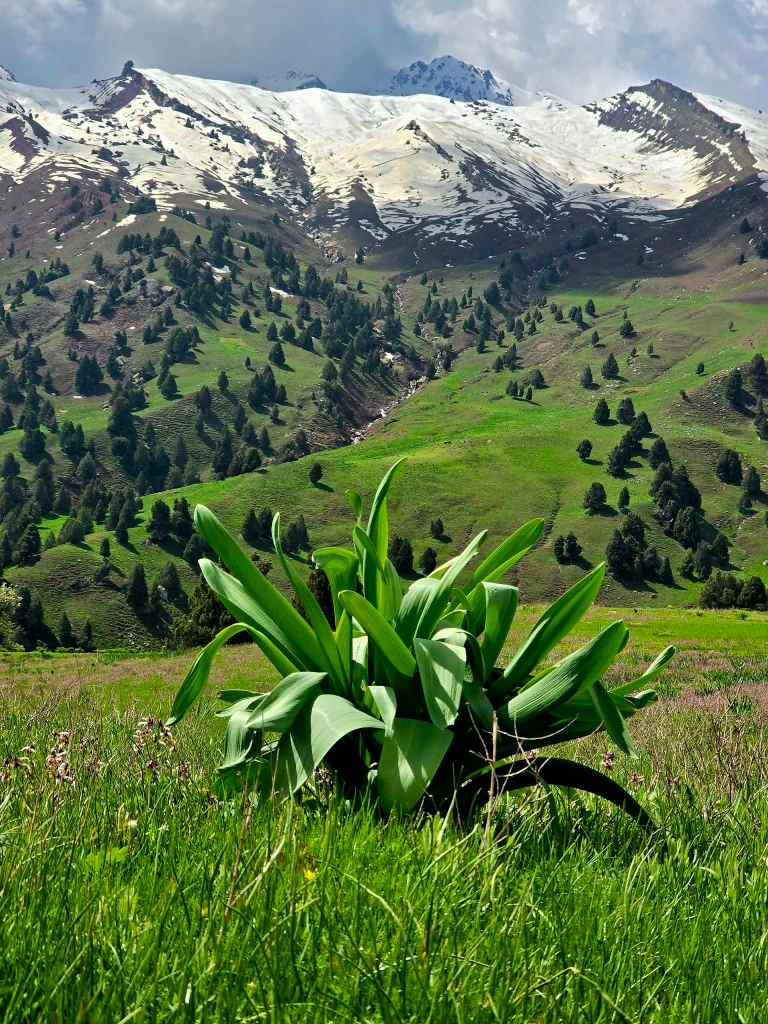
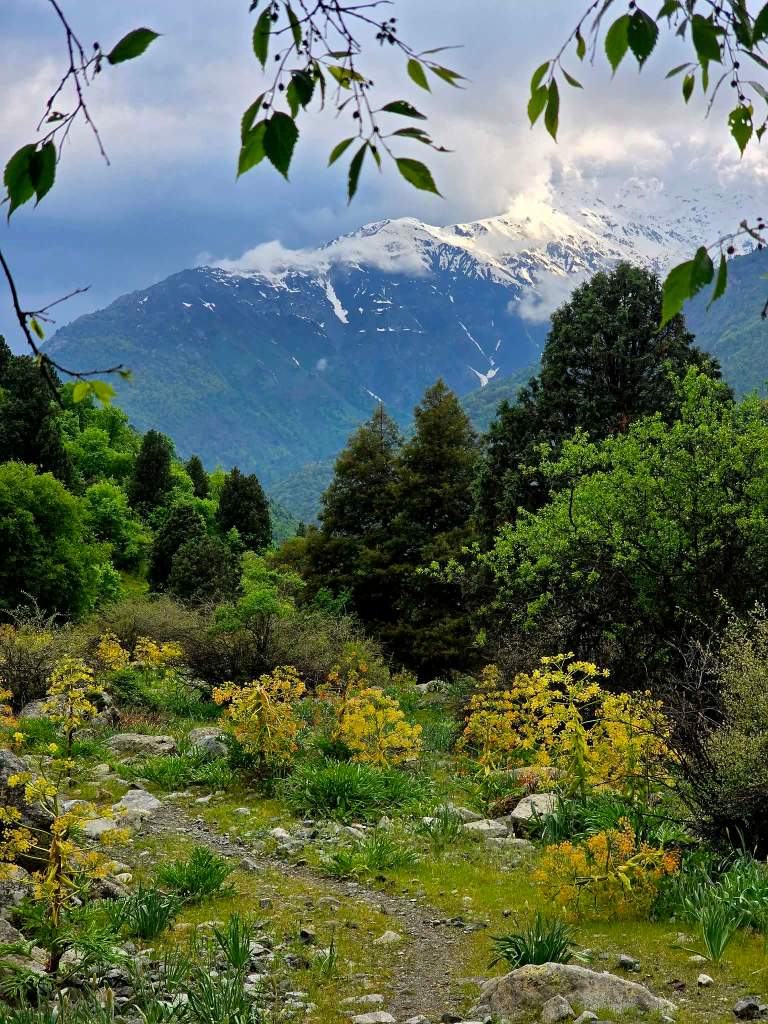
The spring sits tucked away in a narrow ravine high in the mountains. We dropped steeply into one gorge, climbed out the other side, and continued upward until we descended again into another rocky cut in the hillside. A few minutes later, the unmistakable smell of sulfur drifted down toward us before we finally spotted the pool itself.
It wasn’t much to look at at first glance—just a small stone-ringed basin fed by warm mineral water trickling directly out of the mountainside—but it was perfect. The pool was only large enough for two people comfortably, maybe three if you squeezed in. The water wasn’t scalding hot either, more like a warm bath, especially around the point where the spring entered the pool.
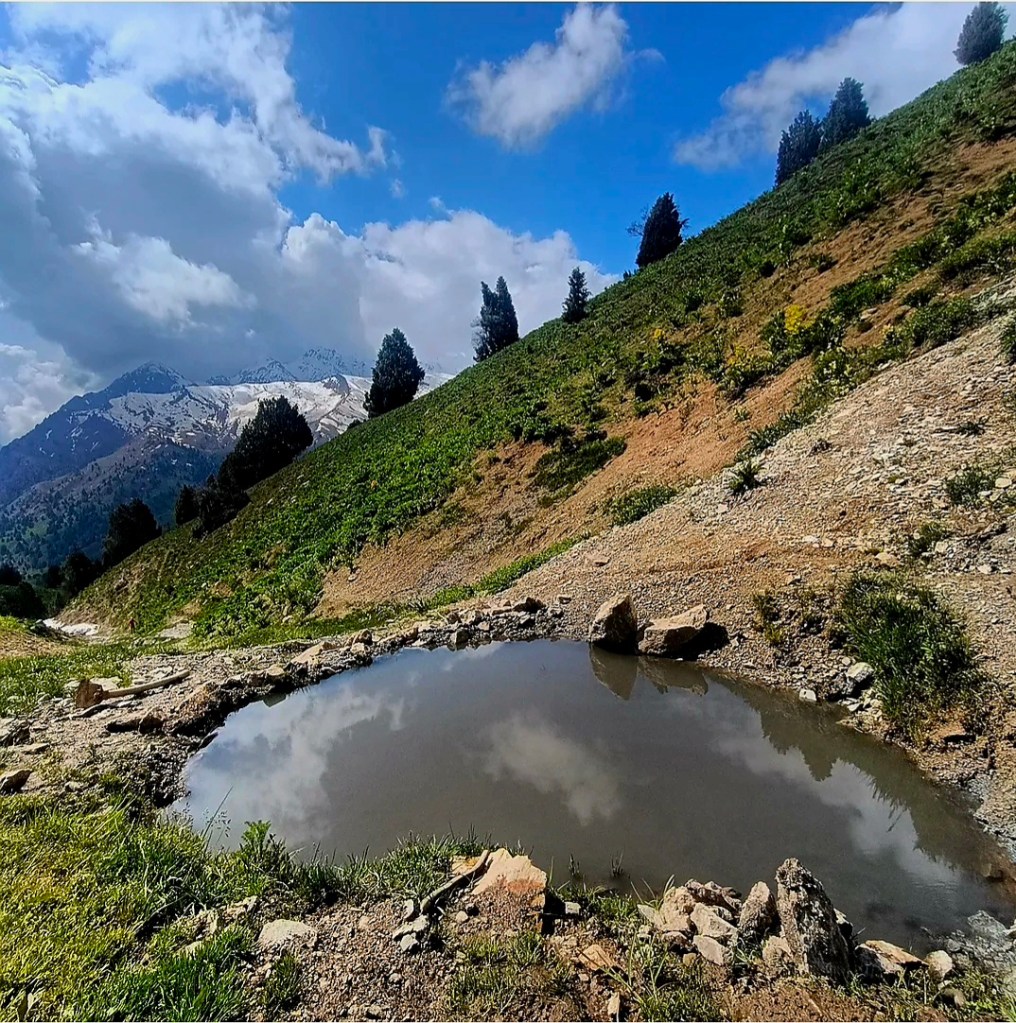
Like many remote springs throughout Tajikistan, the place carries its own stories. Locals say the sulfur waters help with fertility, and according to one friend, women will sometimes make the long difficult journey out here specifically to visit the spring during certain times of year. Standing there miles from the nearest road, it’s hard not to respect the level of determination that would take.
After everyone had their turn soaking in the warm water, we made our way back to camp, packed everything up, and began the long hike back out. Our packs were noticeably lighter by then, but the miles still felt long on sore feet and tired legs.
Right where the three valleys converge—the same place the rain had caught us the day before—the skies opened once again and we spent the next couple of hours hiking through cold mountain rain before finally reaching the trailhead.
Another unforgettable weekend in the mountains of Tajikistan.


Leave a Reply