📍 Trail Stats
- 🗺️ Distance: 6.1 miles
- ⛰️ Ascent: 1,161 ft
- ⛰️ Descent: 1,165 ft
- ⏱️ Total Time: 7h 33m
- 🏃 Time Moving: 4h 9m
- 📅 Date Hiked: August 24, 2025
- ⚡ Difficulty: Moderate (steep descent into gorge + off-trail exploration)
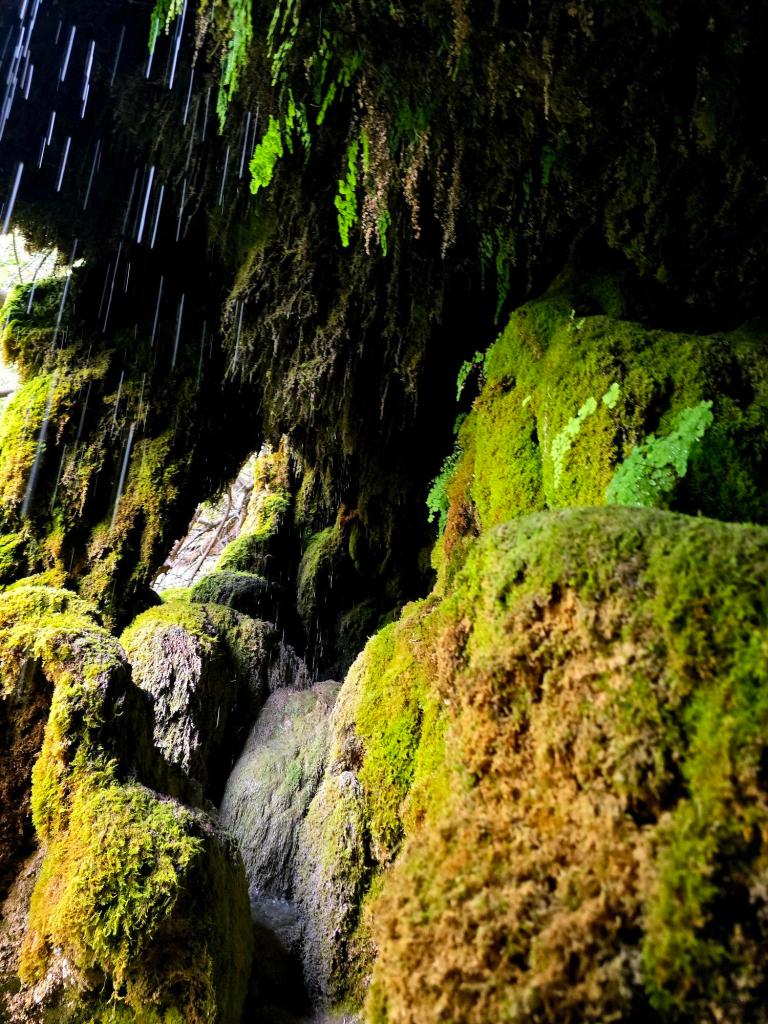
Last August, just after we returned from summer break, the kids and I joined a Daidushki hike to a place I had been meaning to check out with them since spring. It’s one of those spots that gets mentioned just enough to stick in your head, but not enough that you ever quite know what to expect. Locally, it’s known as the Patra waterfalls.
It sits out in the same direction as the trailhead for Timurdara, but about halfway along that main road, you turn right and head up into the mountains, the same way you would if you were aiming for the jump-off point to Lake Jouzavak. The paved road gives way to dirt, the villages thin out, and before long you’re climbing steadily into the foothills, winding deeper into terrain that starts to feel quieter and more remote with every turn.
After bouncing along the dirt road for a while, we eventually pulled over near a small bridge and continued on foot, following the track for another couple of miles. The landscape up top was exactly what you expect in late August—dry, dusty hillsides, sunburnt grasses, and that familiar palette of yellows and browns that settles over most of Tajikistan by the end of summer. It felt like a place where water had long since disappeared for the season.
But as we walked, the faint sound of running water began to rise from somewhere below us.
At first it was barely noticeable, easy to dismiss as wind moving through the rocks. Then it grew louder, more constant. Eventually we reached a point where the road hugged the edge of a gorge, and we spotted a steep, narrow path dropping off to the side.
Down we went.
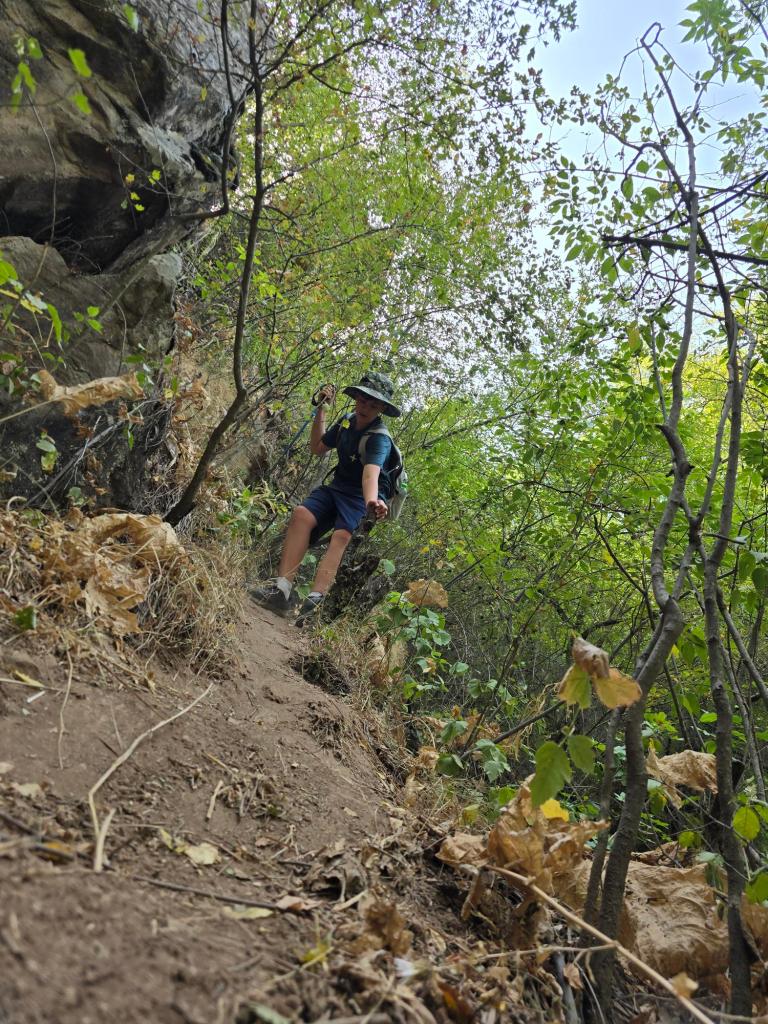
The descent wasn’t long, but it demanded attention—loose dirt, a few technical sections, and one final steep drop that forced us to slow down and pick our way carefully. And then, just like that, we stepped out of the dry mountains and into something that felt completely out of place.
A hidden oasis.
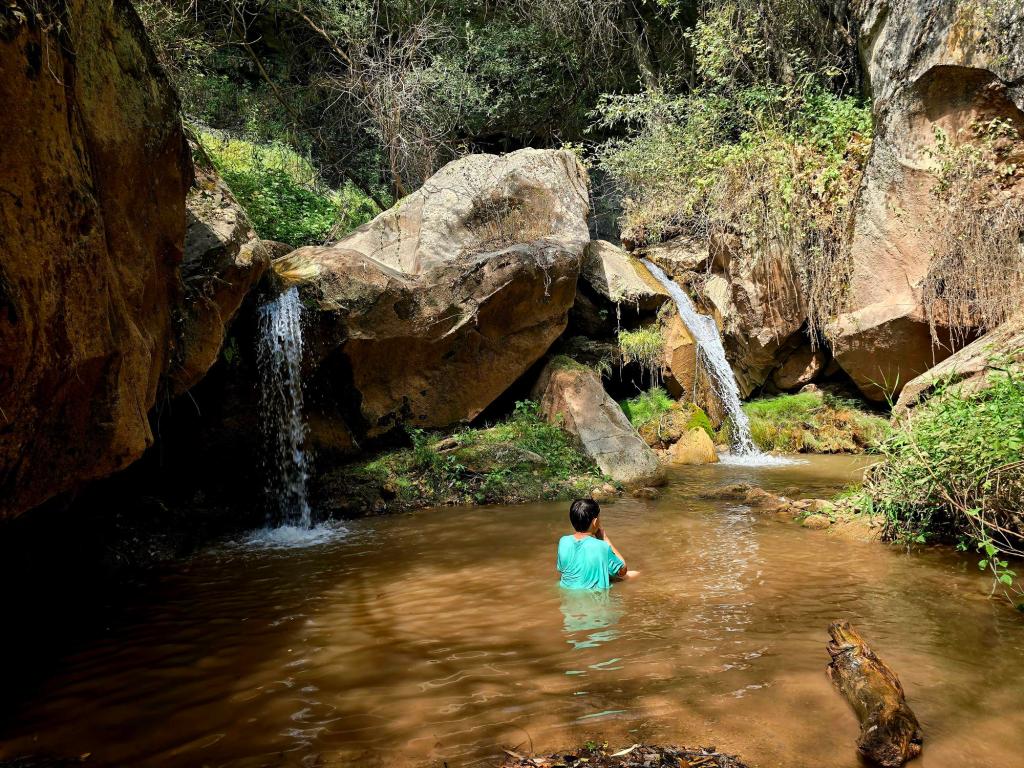
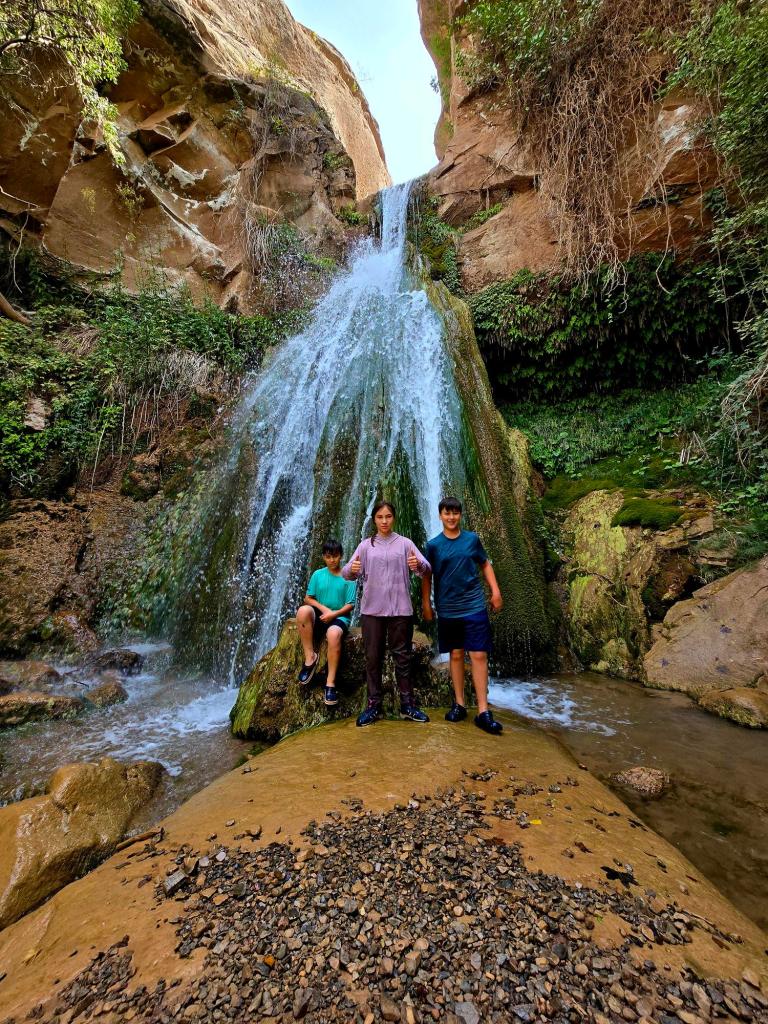
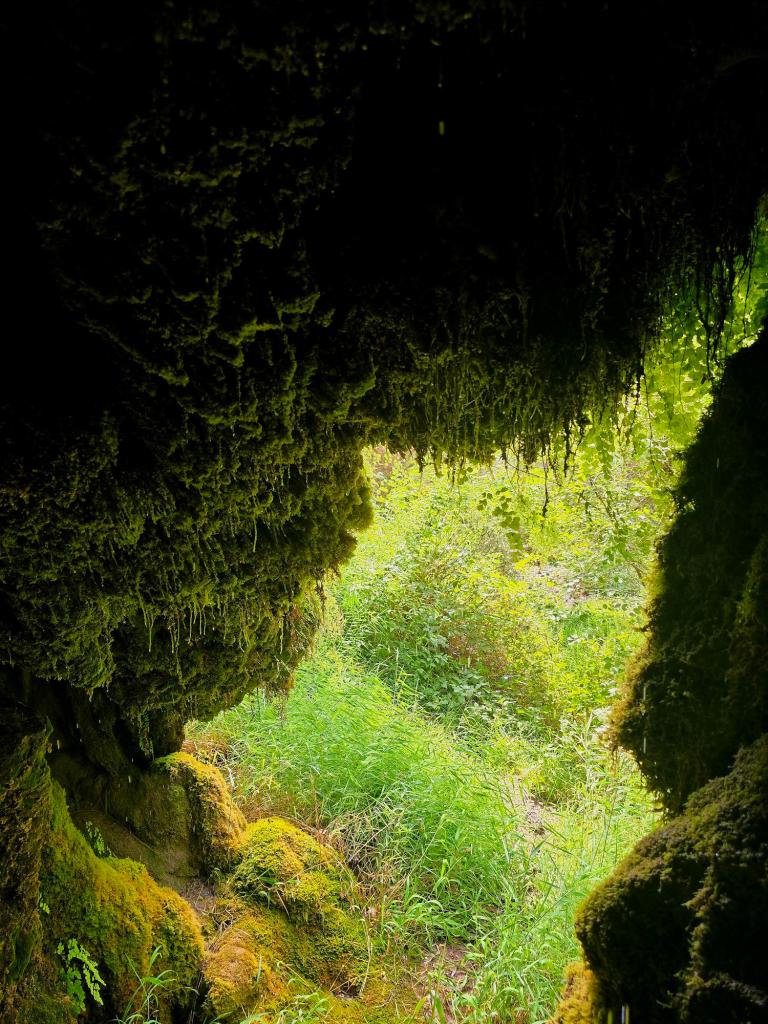
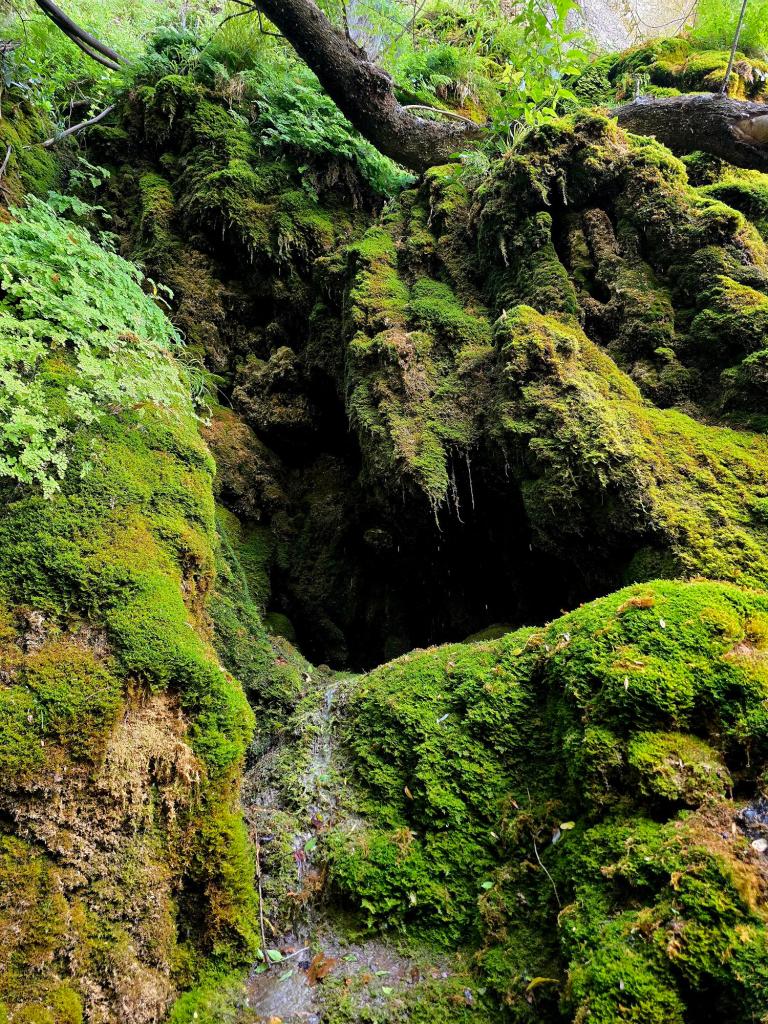
By late August, most of the country is baked dry, but down in this gorge everything changed. The air felt cooler. The ground softened. Small pools of clear water spread out across the base of the canyon, fed by a long wall of deep green, moss-covered rock. Water seeped and dripped from everywhere—through cracks, over ledges, out of small cave-like openings in the rock face. The whole place was alive with the sound of it, a steady mix of trickling, dripping, and distant rushing water echoing through the narrow space.
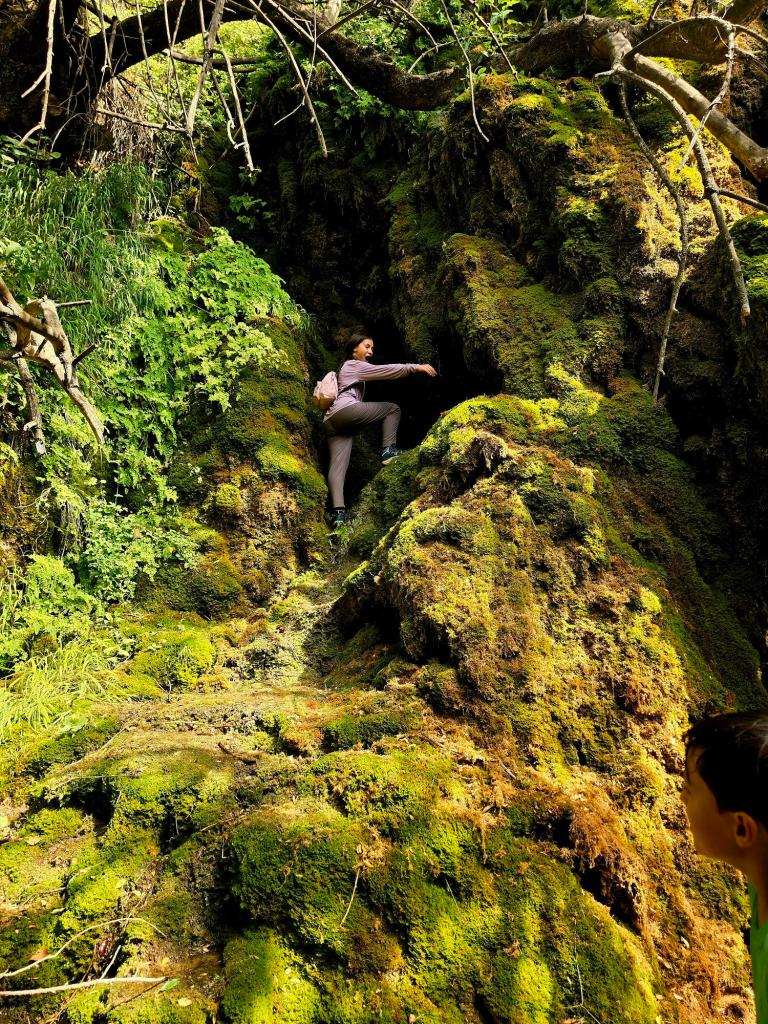
It didn’t feel like Tajikistan in August. It felt like we had stumbled into a completely different season.
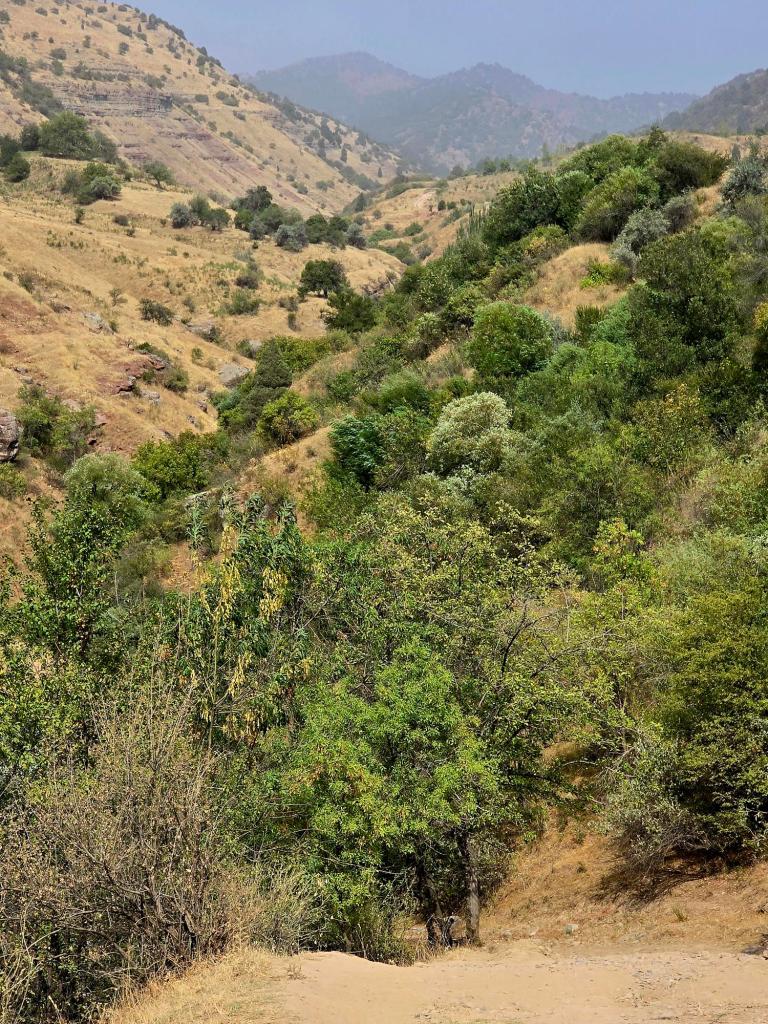
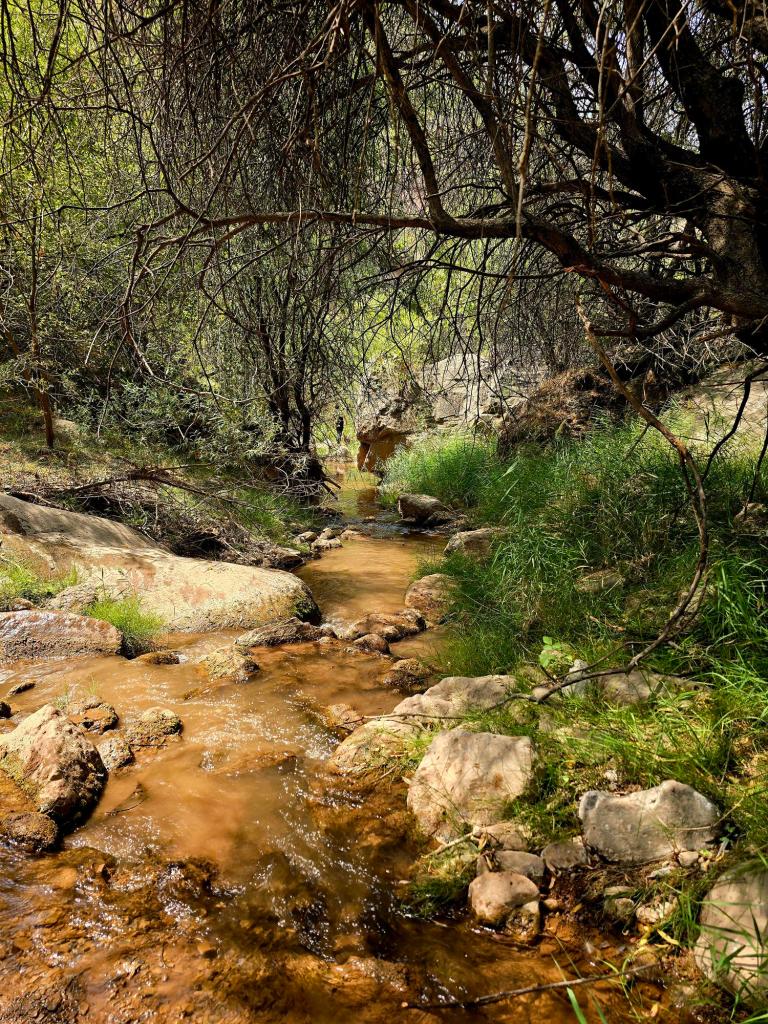
These kinds of pockets exist here and there in the mountains—little microclimates tucked into shaded gullies where snowmelt and underground seepage keep things alive long after everything else has dried out. But until you stand in one, it’s hard to fully appreciate just how dramatic that contrast can be.
After exploring the caves and the immediate area, we settled in by the water for lunch. Shoes came off, feet went in, and before long that turned into full-on swimming. The water was cold—shockingly so—but after the dusty hike in, it was exactly what you wanted. We drifted back and forth between eating and jumping into the pools for a solid hour, in no rush to move on.
Eventually curiosity got the better of us.
Across from where we had set up, someone had rigged up a small ladder leading to a shelf above the main pool. We climbed up and followed a faint trail that wrapped around the bend of the canyon. Just beyond, the space opened slightly, revealing more of what this little drainage system had carved out over time.
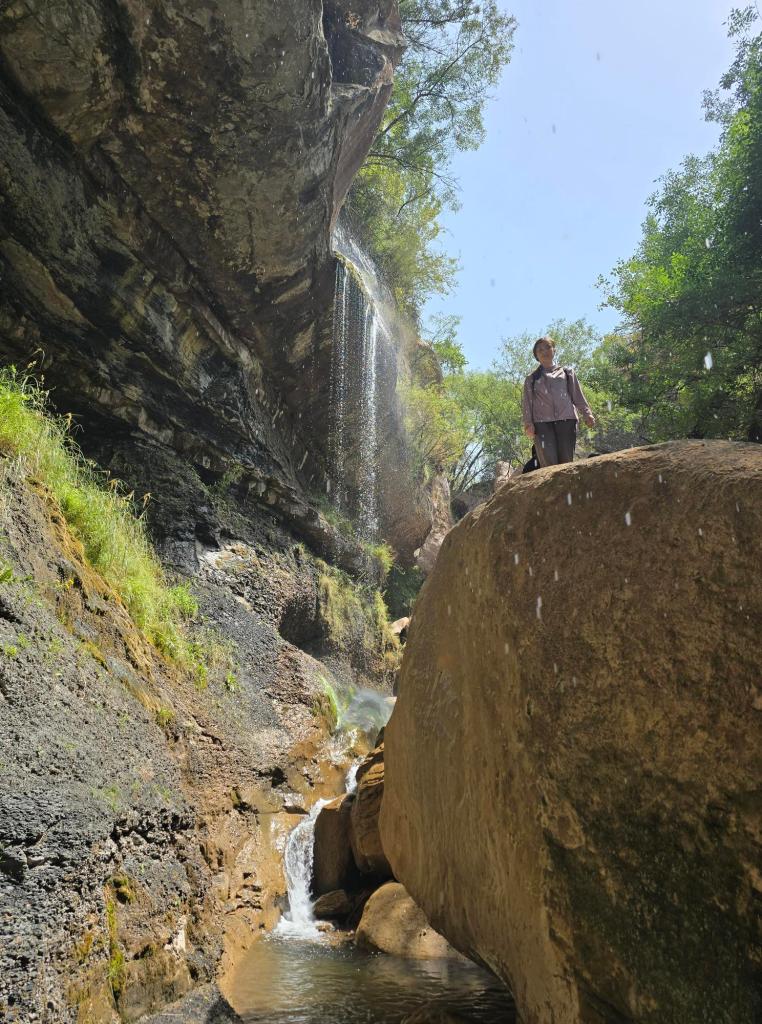
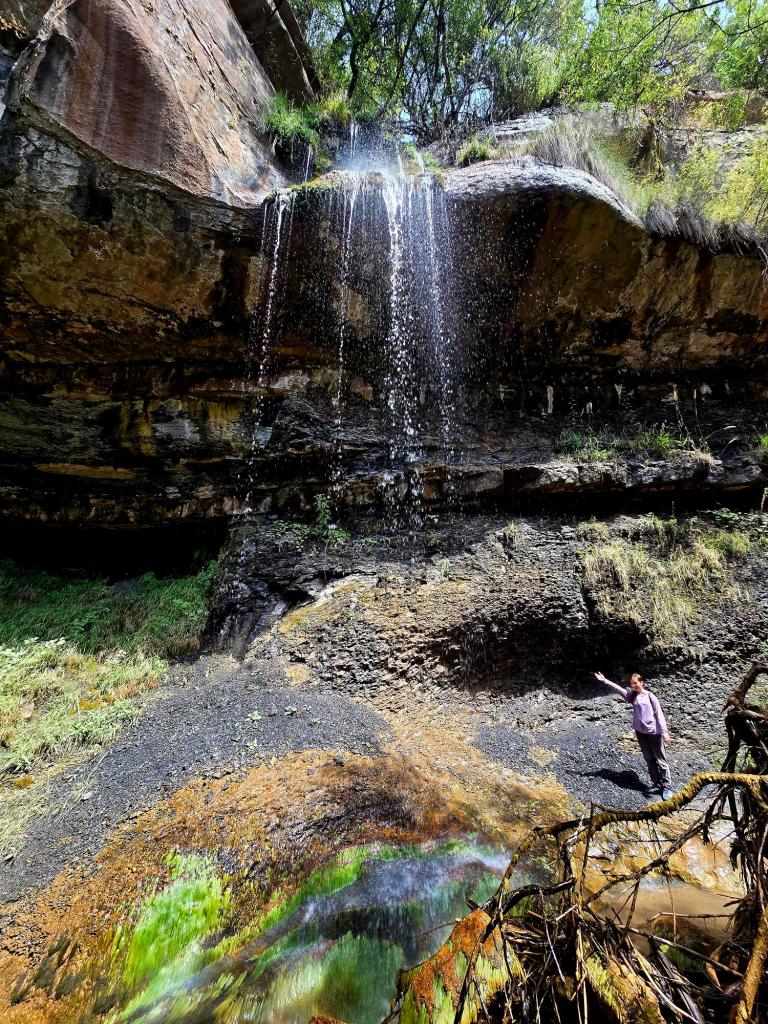
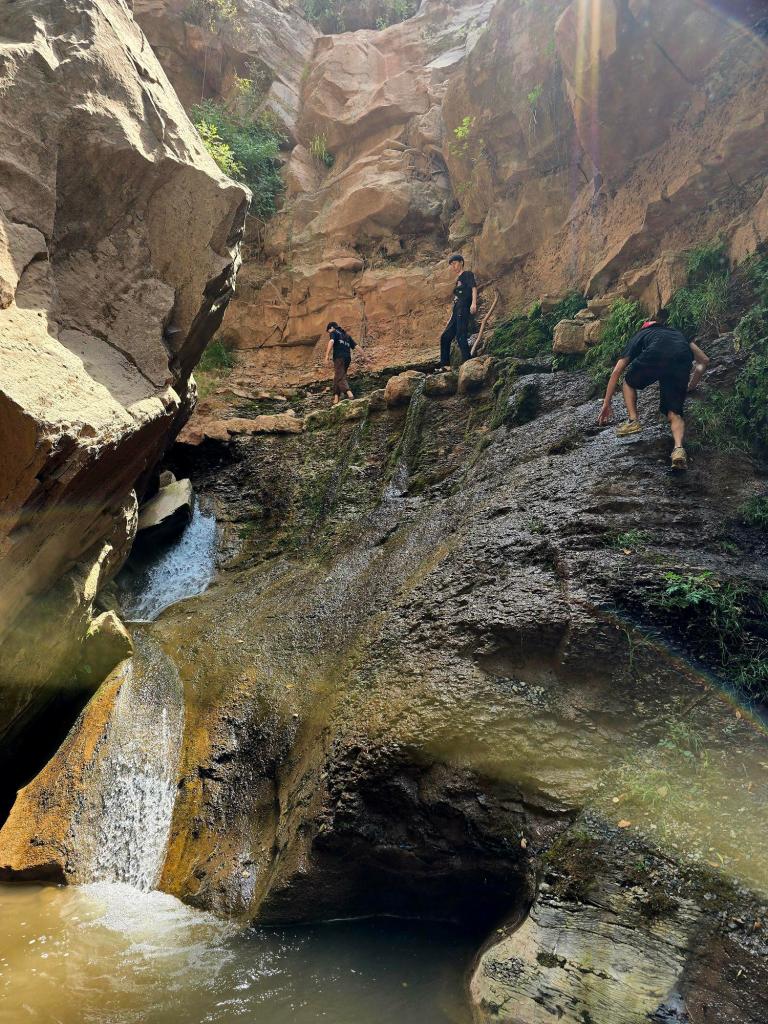
One waterfall spilled cleanly off a higher ledge, dropping into a narrow basin below. Nearby, a stronger flow cut its way down the main channel of the mini-canyon, carving a path through rock that had clearly been shaped by years—if not centuries—of seasonal runoff. It wasn’t one single dramatic waterfall, but a series of them, layered and scattered, each one adding to the feel of the place.
We spent the next couple of hours wandering through it all—climbing over rocks, tracing the water upstream, finding new pools tucked into corners, and more spots to cool off. Every turn seemed to reveal something slightly different. A deeper pool here. A thicker patch of moss there. Another small cascade just out of sight until you were nearly on top of it.
At some point, you stop trying to map it out and just move through it.
This little oasis sits right on the edge of where the Hissor range begins to blend toward the outer reaches of the Fann Mountains, a transition zone where dry foothills give way to higher, wetter terrain. You can feel that shift happening here. The waterfalls are fed by snowmelt and hidden water sources higher up, funneled down through these narrow gullies and held in place by the shade and structure of the canyon.
It’s the kind of place that doesn’t advertise itself. You won’t see signs for it. You won’t find crowds. You just have to know where to turn off the road and be willing to go have a look.
And that’s part of what makes it so good.
It’s hard to believe something like this exists just an hour and twenty minutes from Dushanbe—especially when the city and the surrounding hills are sitting under the full weight of late summer heat. But it does, tucked quietly into the mountains, waiting for anyone curious enough to go find it.
We eventually made our way back up the steep trail and out into the dry hills again, the sound of water fading behind us as quickly as it had appeared.
I’ll definitely be heading back.
I have a feeling this place in spring—when the snowmelt is at its peak—must be something else entirely.


Leave a Reply