📊 Trip Stat Box —
Route: Dushanbe → Norak Reservoir → Kulob → Kalai Khum
Distance: ~370 km
Driving Time: ~8 hours (with stops)
Elevation Range: ~800 m (Dushanbe) → ~1,300 m (Kalai Khum)
Road Conditions: Paved highways transitioning to rougher mountain roads
Highlights: Norak Dam & Reservoir, Kulob markets, Panj River border, first Pamir night
Overnight: Sangakov Bahron Homestay, Kalai Khum
Date: October 12, 2024
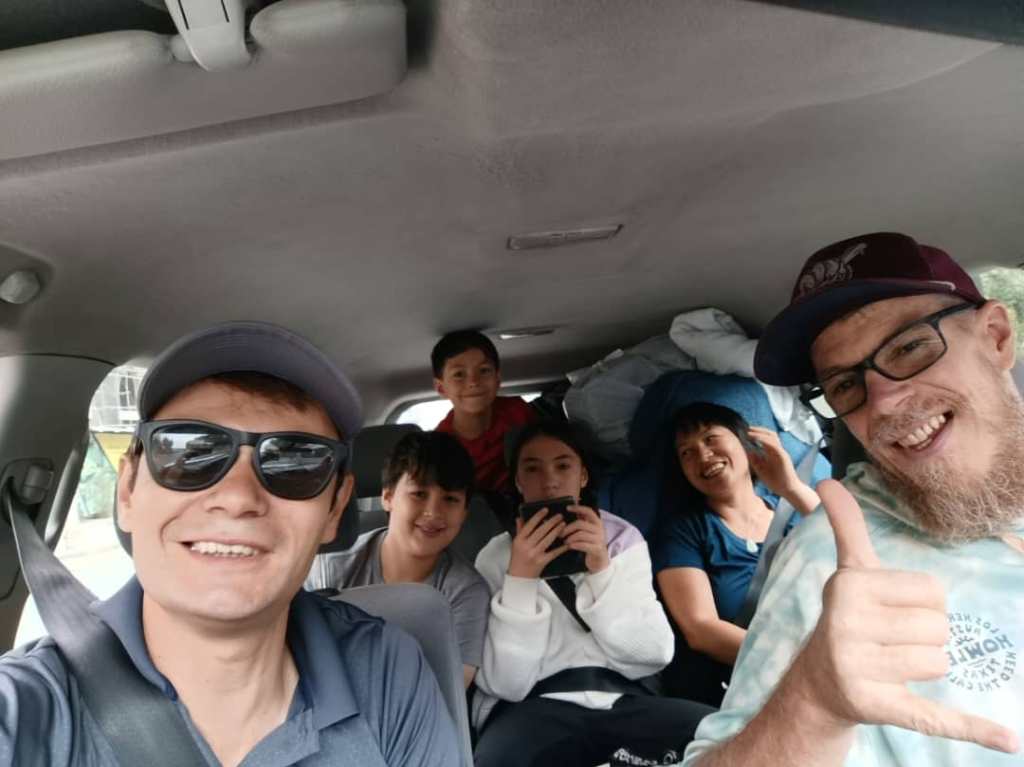
The Mood
This was a particularly joyful time for our family.
The kids and I had departed the United States in early August with what was left of our worldly possessions—mostly clothes—stuffed into eight large REI duffle bags and four oversized suitcases. Three flights across the planet later, the kids found themselves about as far away from their mom as they could possibly be. We began settling into our new home in Dushanbe while my wife stayed behind to tie up all the loose ends we’d left behind.
We had to go early. My job was beginning, and so was the new school year for the kids. After just over two months apart, she finally joined us in October, arriving only days before the start of our 11-day fall holiday. She wasn’t going to have much time to settle in.
The day after she arrived, I met up with Denis and handed over all of our passports so he could begin securing the special permits required to travel through the Pamir Mountain region. Copies were made—lots of them—to be distributed at the many checkpoints we’d pass along the way. Bureaucracy first, adventure second.
By the morning we pulled out of Dushanbe, all of our spirits were soaring. We were finally together again and ready for something big. The itinerary I had lined up probably doesn’t resemble the average family holiday plan—but that’s exactly the way we like it.
The road ahead would take us into some of the largest mountains in one of the most remote regions on the planet: the Pamirs.
This trip had been on my radar since 2014, back when I was making work trips to Uzbekistan and devouring anything I could read about Central Asia. For a long time, I imagined it happening between 2015 and 2017 as a motorcycle trip with a few close friends I’d toured with before. The timing never lined up. What I didn’t know then was that we’d eventually relocate back into the region as a family.
Now, with the kids a bit older, my first journey into the Pamirs was destined to be a family adventure—the very best sort.
Dushanbe to Kalai Khum (via Norak and Kulob)
We rolled out of Dushanbe early, knowing we had a long day ahead. The city thinned quickly as we headed south, trading traffic circles and apartment blocks for open road and low hills as we slipped out the city’s eastern edge. For the first stretch, the driving felt deceptively easy—wide roads, gentle curves, and the sense that we were still firmly in the lowlands.
Norak Reservoir — The “Tajik Sea”
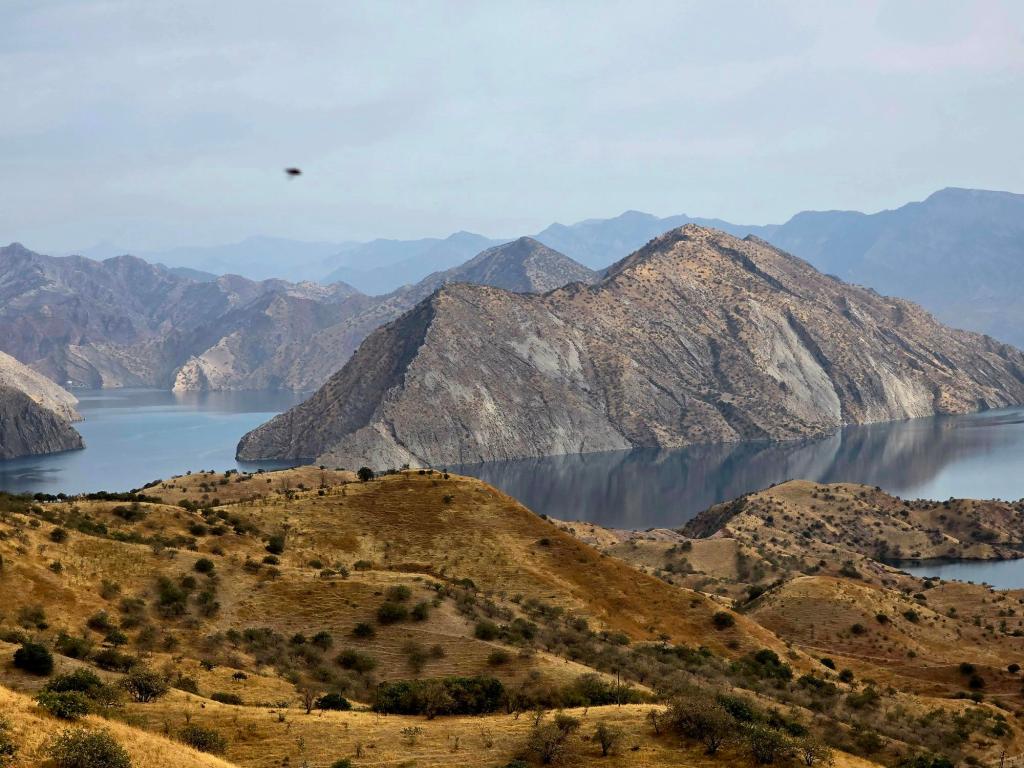
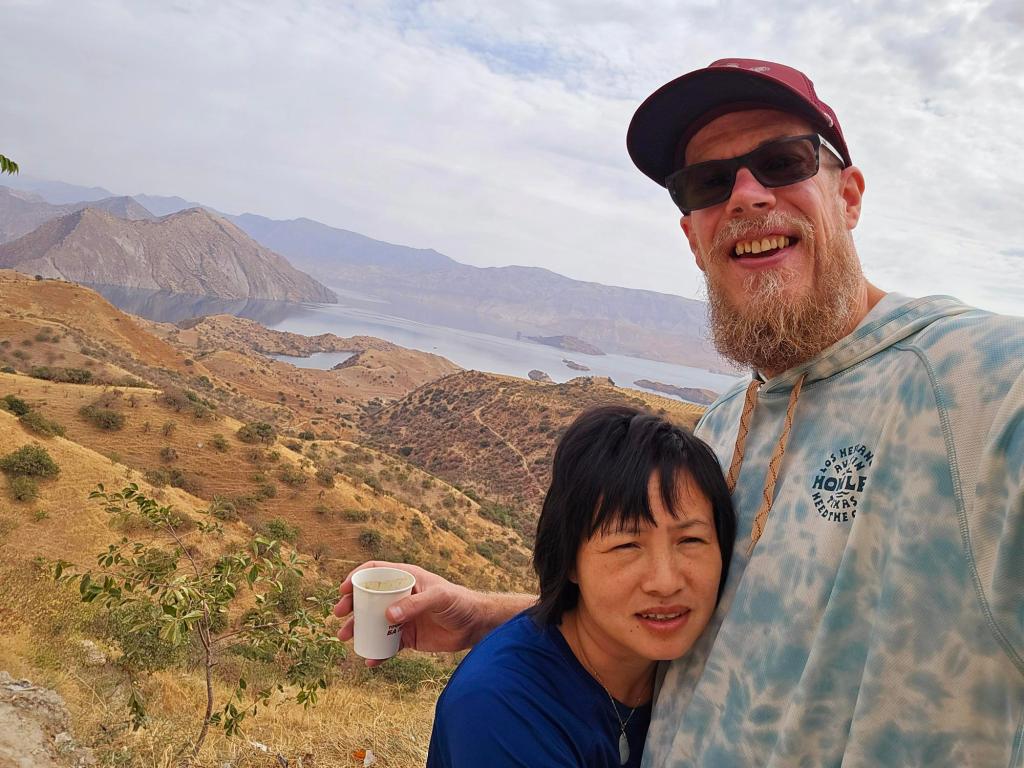
Our first major stop was at the Norak Reservoir, often called the Tajik Sea. From the roadside viewpoints, the scale of it is immediately striking. The reservoir stretches for dozens of kilometers, filling what were once deep river valleys and villages, made possible by the Norak Dam—completed in 1980 and, at the time, the tallest dam in the world at 300 meters.
We pulled in near the large fruit and food stands overlooking the water far below. Tables were piled high with grapes, melons, dried apricots, nuts, and jars of local honey. It felt like a final taste of abundance before the road began to tighten and climb into more remote terrain.
We grabbed a few snacks, brewed some road coffee, took in the view, and lingered just long enough to remind ourselves that this was still a road trip—not a race.
South Toward Kulob
From Norak, the road carried us deeper into southern Tajikistan, passing through fertile agricultural regions known for cotton fields, orchards, and vineyards. At one point we passed through Danghara District, the hometown of President Emomali Rahmon—an area marked by newer infrastructure and a noticeable sense of investment.
Gradually, the pace of life along the road changed. Traffic thickened, villages pressed closer together, and roadside markets became more frequent as we approached—and then passed through—the main gate into Kulob.
Kulob — History, Markets, and Midday Calm
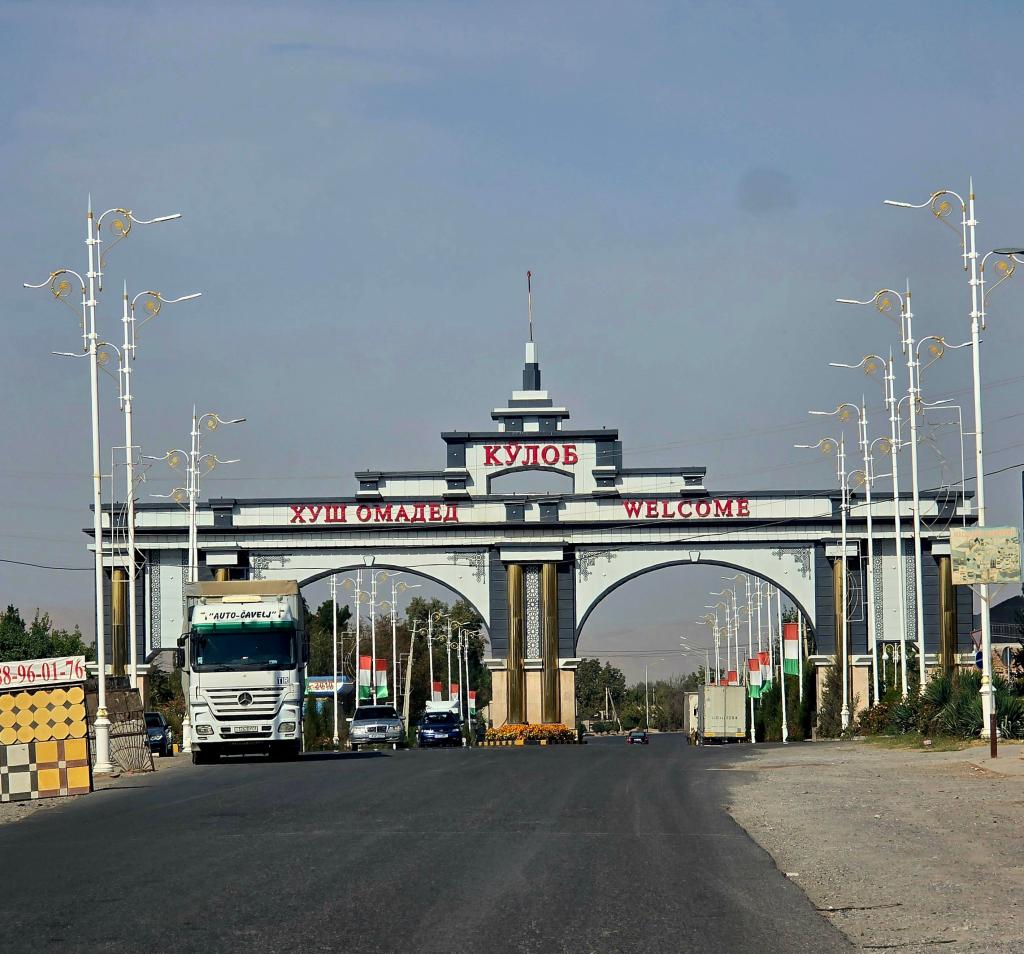
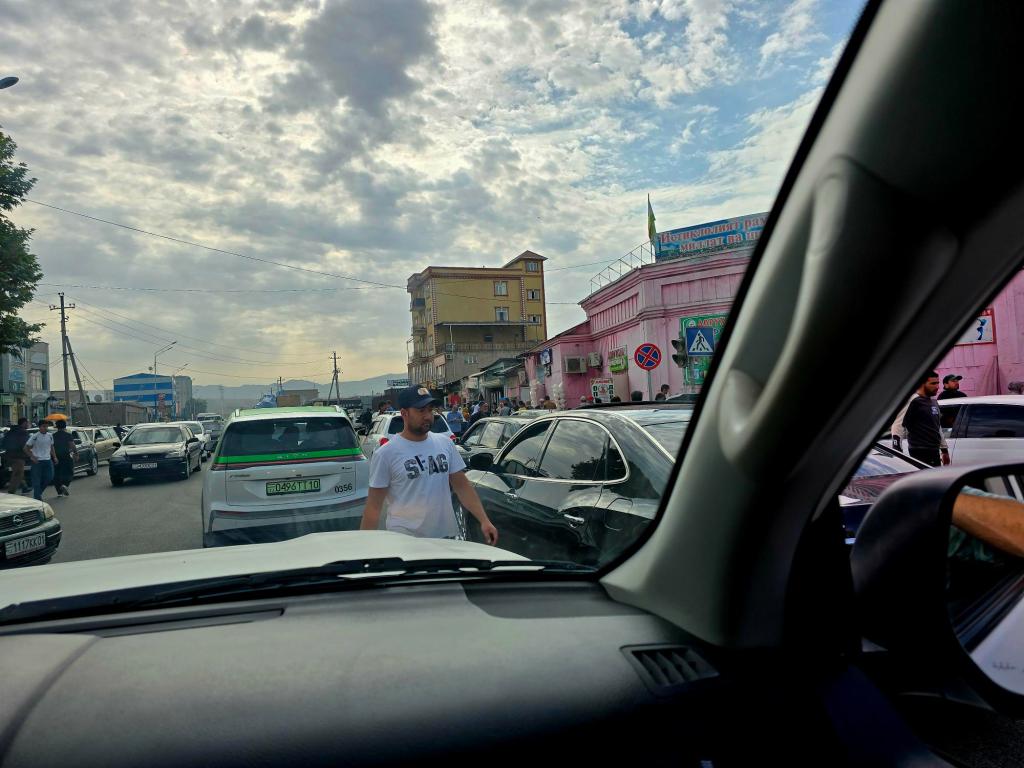
Kulob announced itself before we ever stopped the car. The main road into the city was alive with people—vendors, shoppers, families criss-crossing the street as market stalls spilled out on both sides. After hours on the road, the energy was welcome.
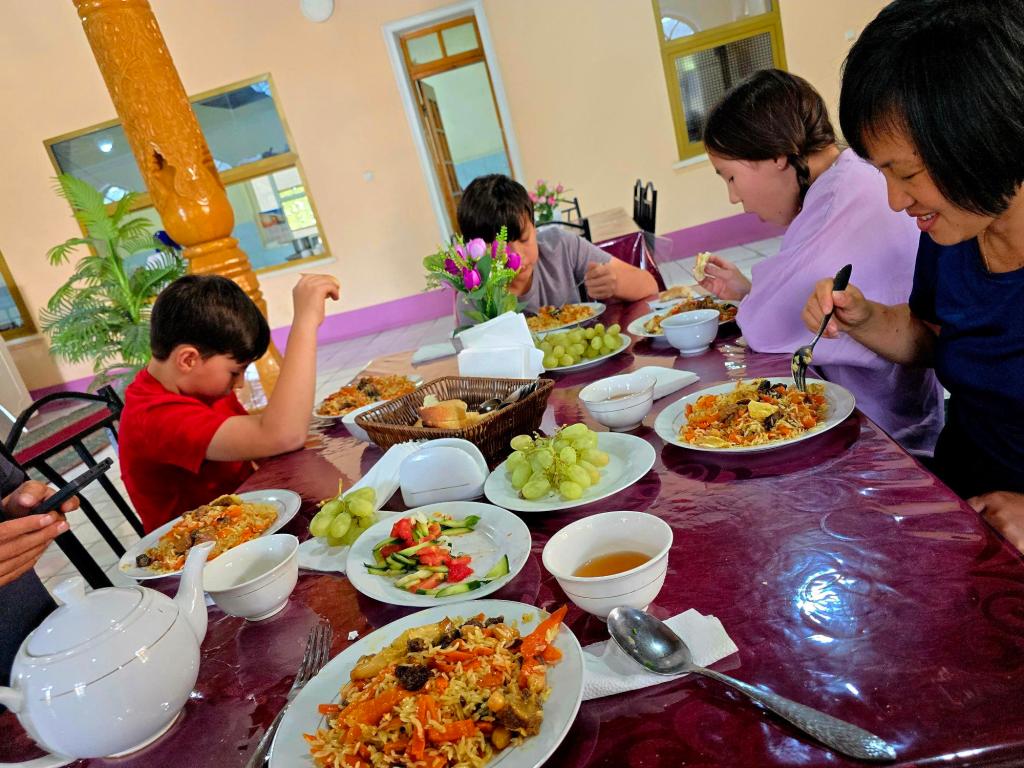
We pulled into a small tea house for lunch and settled in for a simple, perfect meal: osh (plov), warm flatbread, grapes, and tea. Southern-style osh is hearty and filling, and it hit exactly right after a long morning behind the wheel.
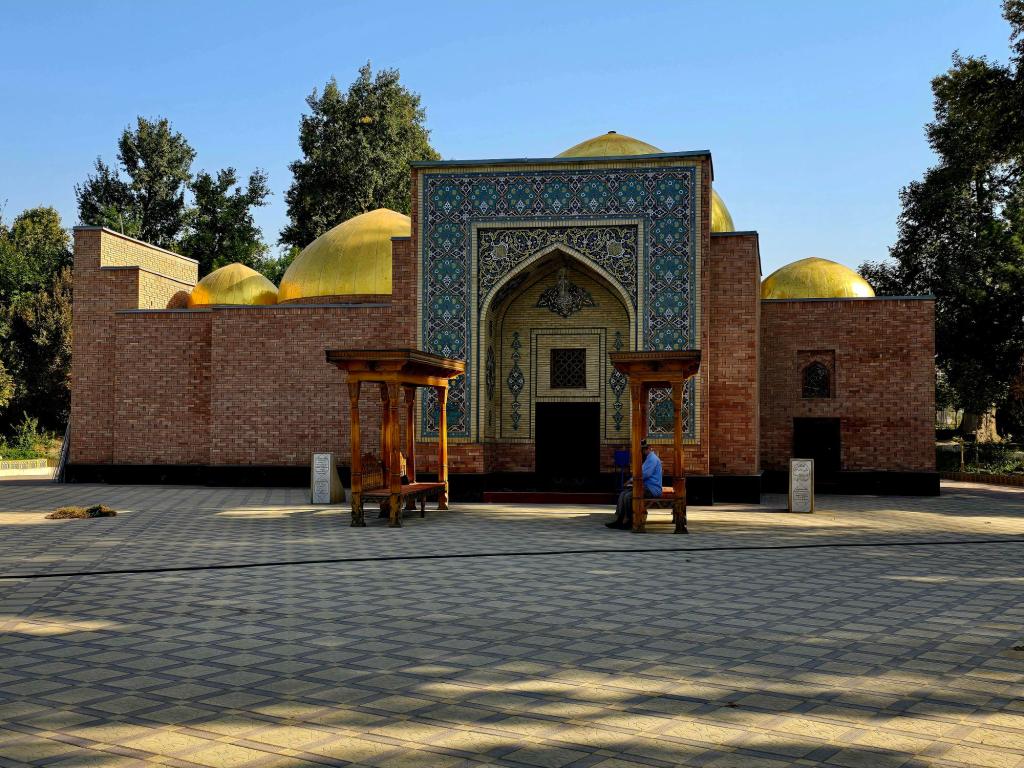
Across the street stood one of Kulob’s most important landmarks—the Mausoleum of Mir Sayyid Ali Hamadani. Kulob is more than 2,700 years old and has long been a religious and cultural center, and Hamadani, a 14th-century Persian scholar and Sufi philosopher, remains deeply influential in the region. Inside the gates, the grounds were calm and well kept—a sharp contrast to the noise and movement just outside.
Afterward, we wandered down a nearby pedestrian street that felt like a small, almost whimsical attempt at a European promenade—a mini-Paris of sorts, complete with a miniature Eiffel Tower, not unlike the one behind Dushanbe Mall and Ashan.
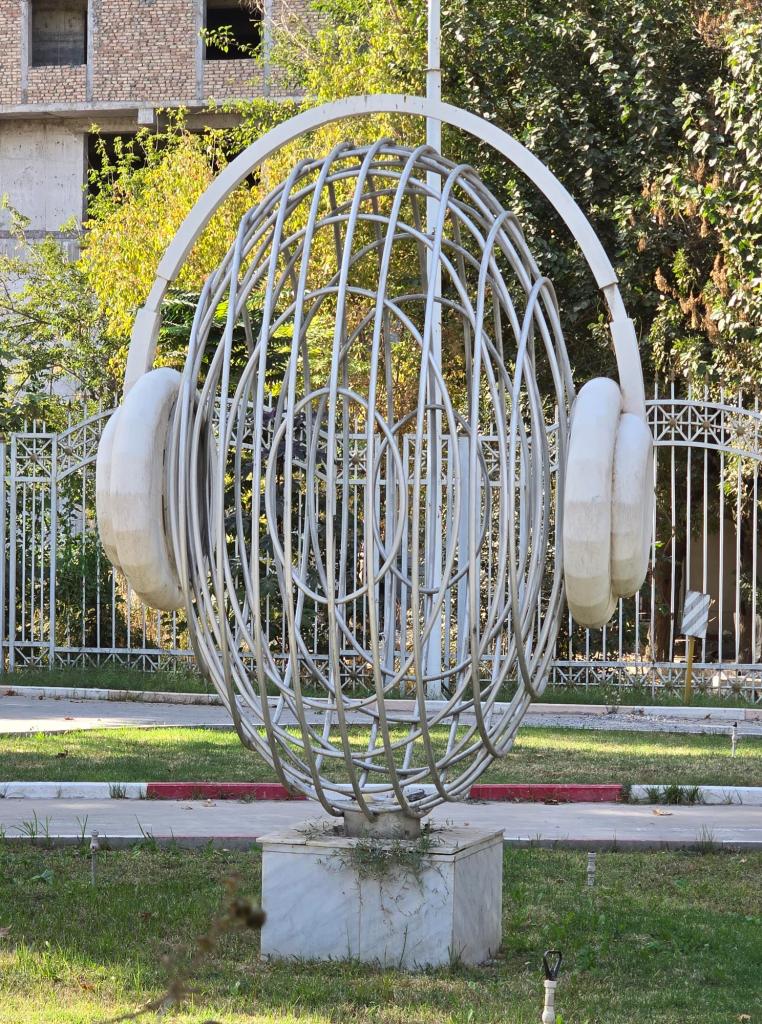
The cafés, façades, and tower made it a pleasant enough place to stretch our legs, but the vibe was a little sad. It reminded me of the replica streets you sometimes find in China—except those usually have people walking around. This one felt like it had lost steam shortly after opening. Rusting metal sculptures gave parts of it an almost end-of-the-world feel.
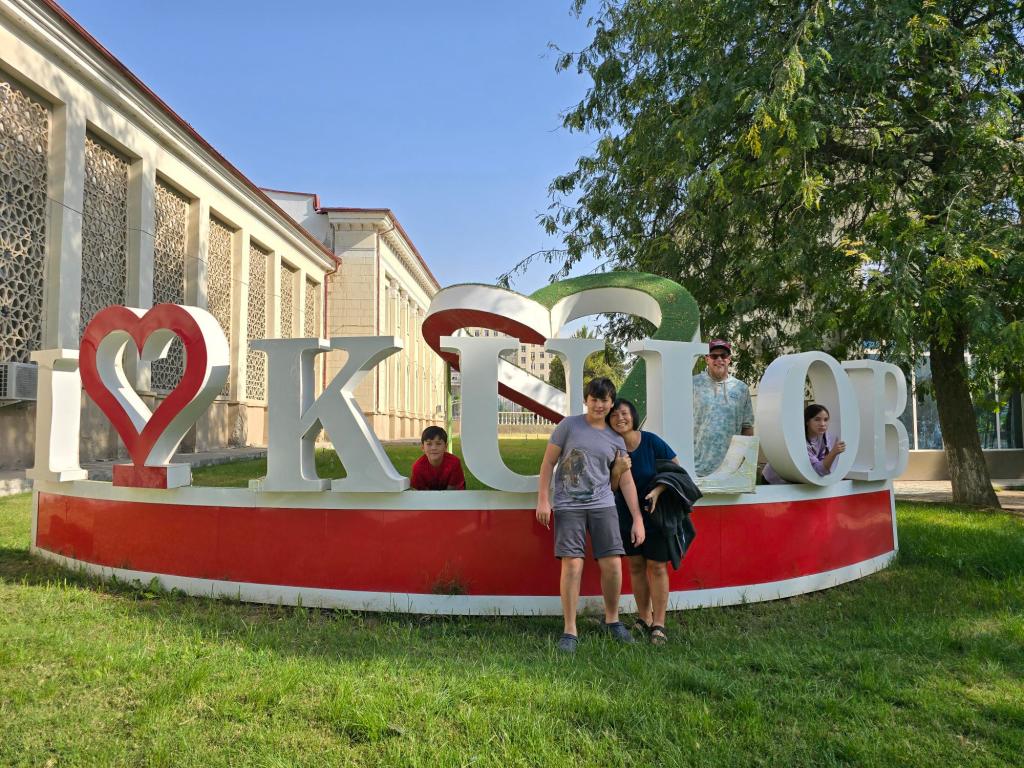
One end of the street still held the familiar “I ♥ Kulob” sign, one of many you’ll find scattered across Tajikistan. We snapped a quick family photo and made our way back toward the main road, which was still very much alive.
Back in the car, we slow-rolled down the rest of the main drag, traffic crawling as people continued to flow across the street in every direction. A bit farther along, we reached the first—and largest—checkpoint of the journey.
Here, paperwork was inspected and questions were asked. At first, Denis was told the kids wouldn’t be permitted to continue into the region. After a fair amount of negotiating, explaining, and confirming that both parents were present and in agreement, we were finally cleared to carry on.
Into Darvoz — The Landscape Narrows
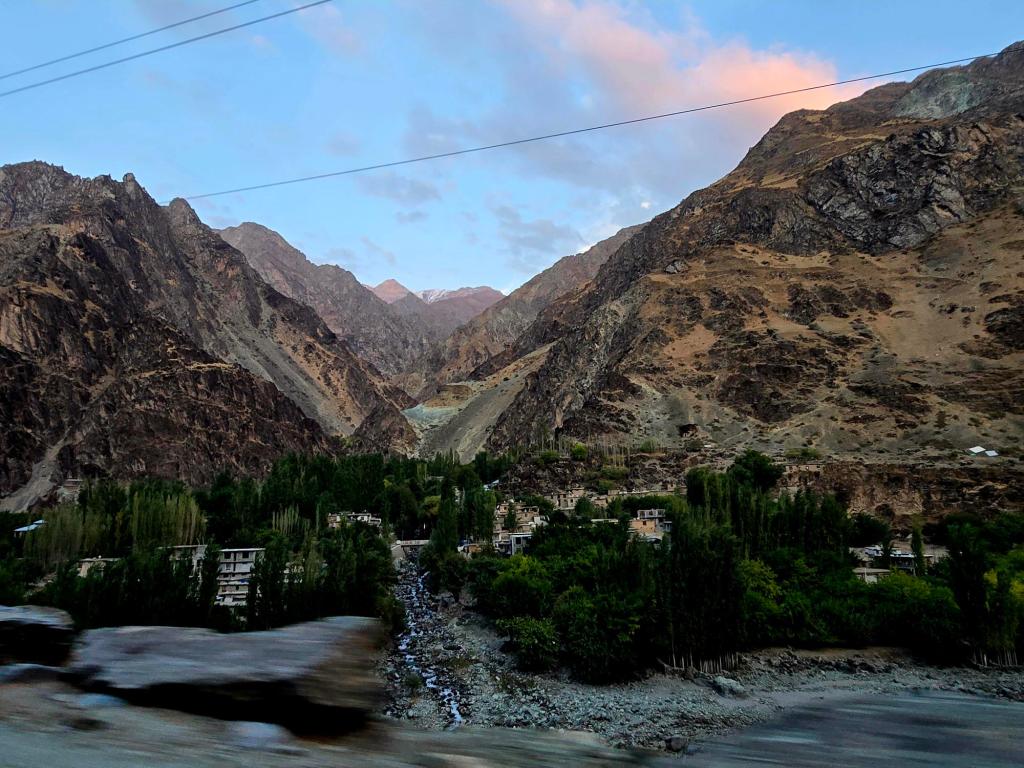
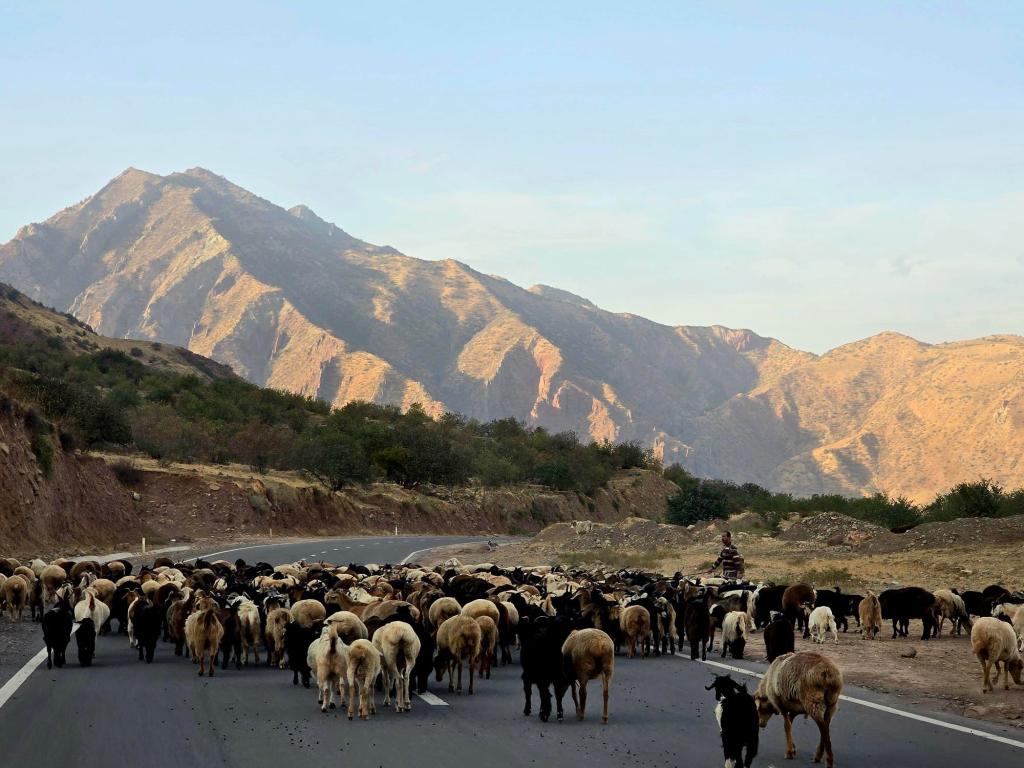
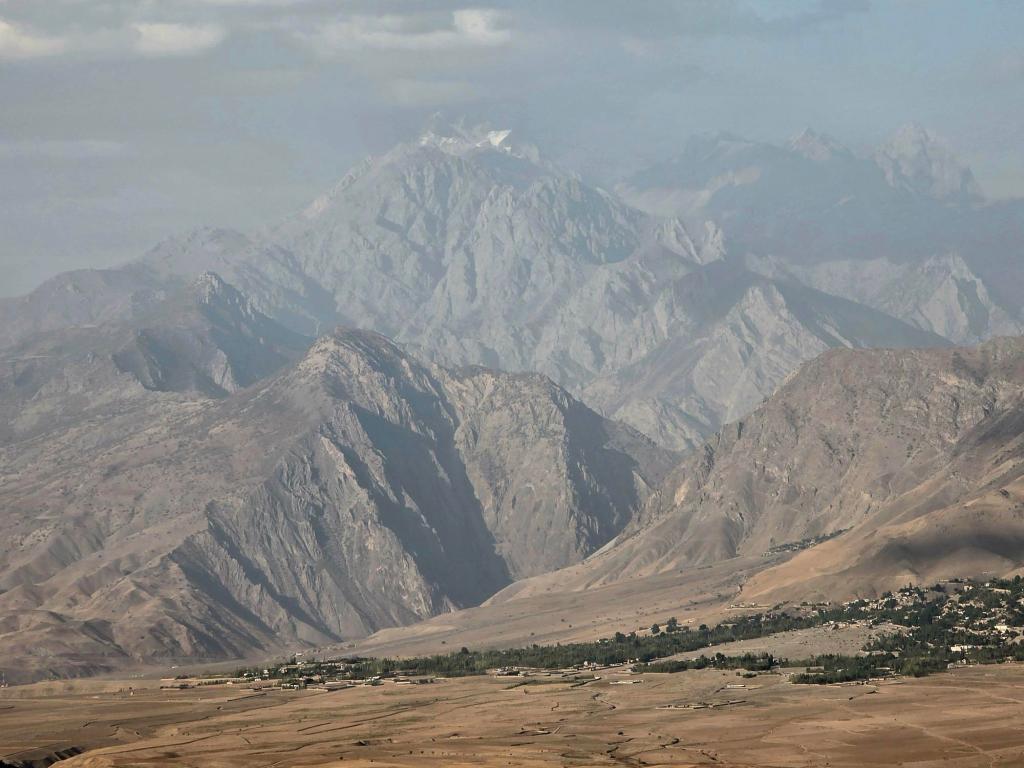
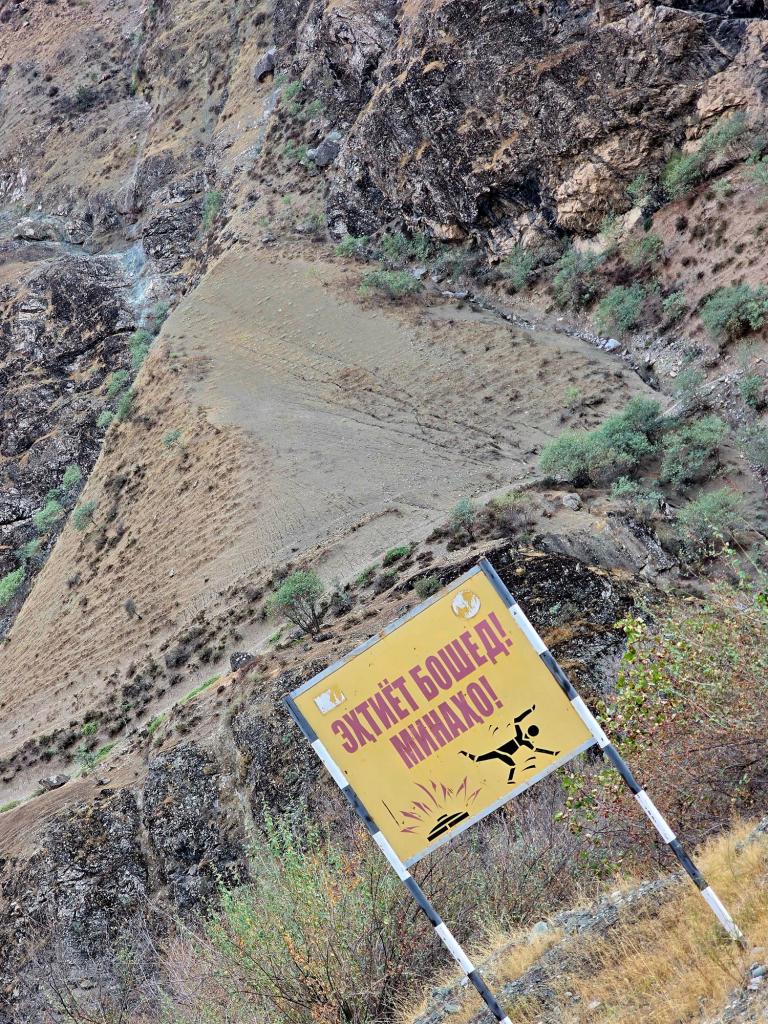
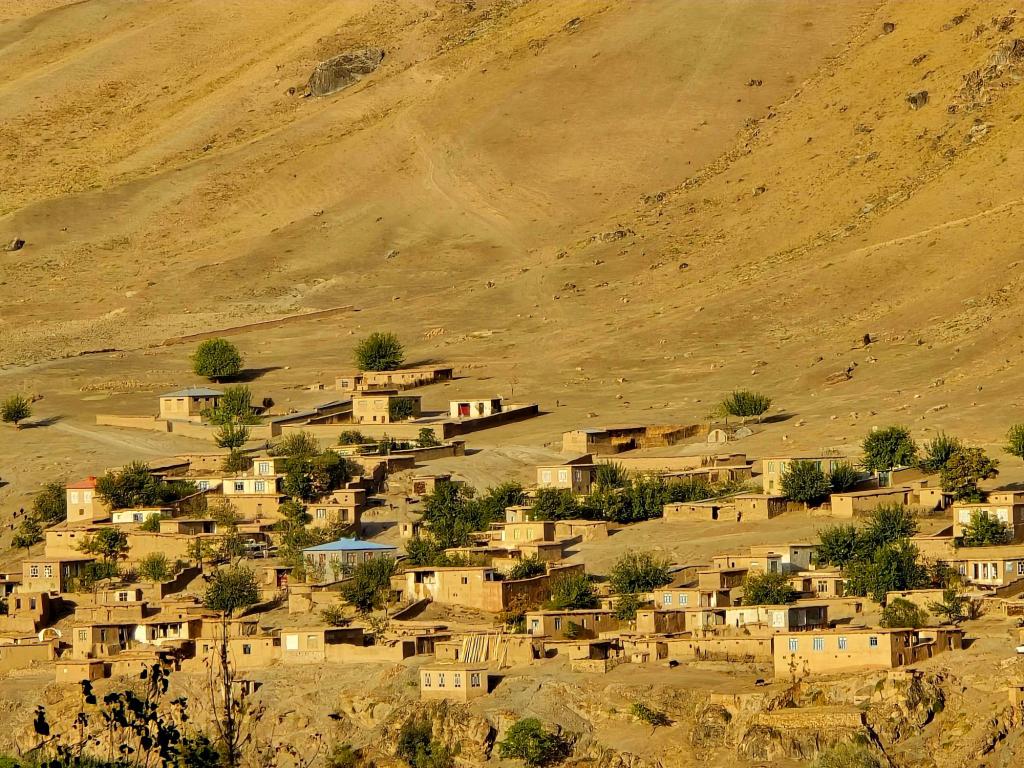
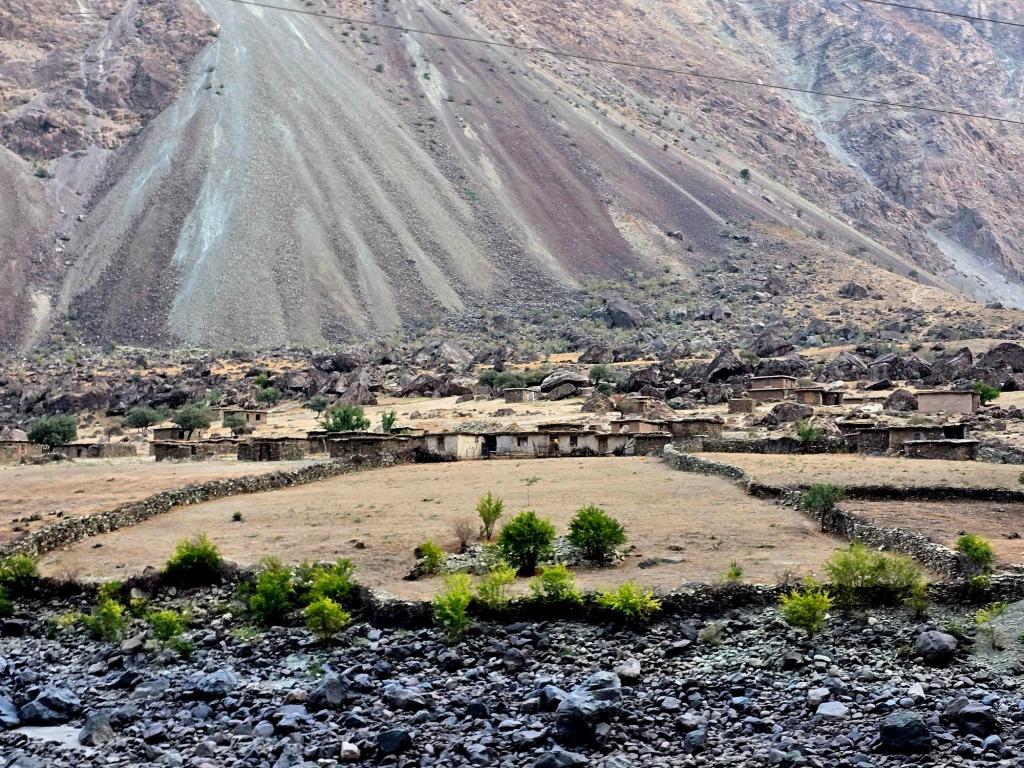
Beyond Kulob, the road began to change in a more noticeable way. We entered Darvoz District, a transitional zone between the lowlands and the Pamirs. The hills steepened, the valleys narrowed, and the sense of moving into something more remote became unmistakable.
Then the road dropped.
As we descended toward the Panj River, the landscape tightened dramatically. Sheer rock walls pressed in, the road clung to the mountainside, and suddenly the river was there—wide, fast-moving, and defining everything around it.
The Panj River forms the natural border between Tajikistan and Afghanistan. Once you meet it, you don’t just cross it and move on. You follow it. For days.
At times, the opposite bank felt impossibly close—villages, fields, and footpaths clearly visible across the water. In other places, the river roared through narrow gorges, making the border feel ancient and immovable.
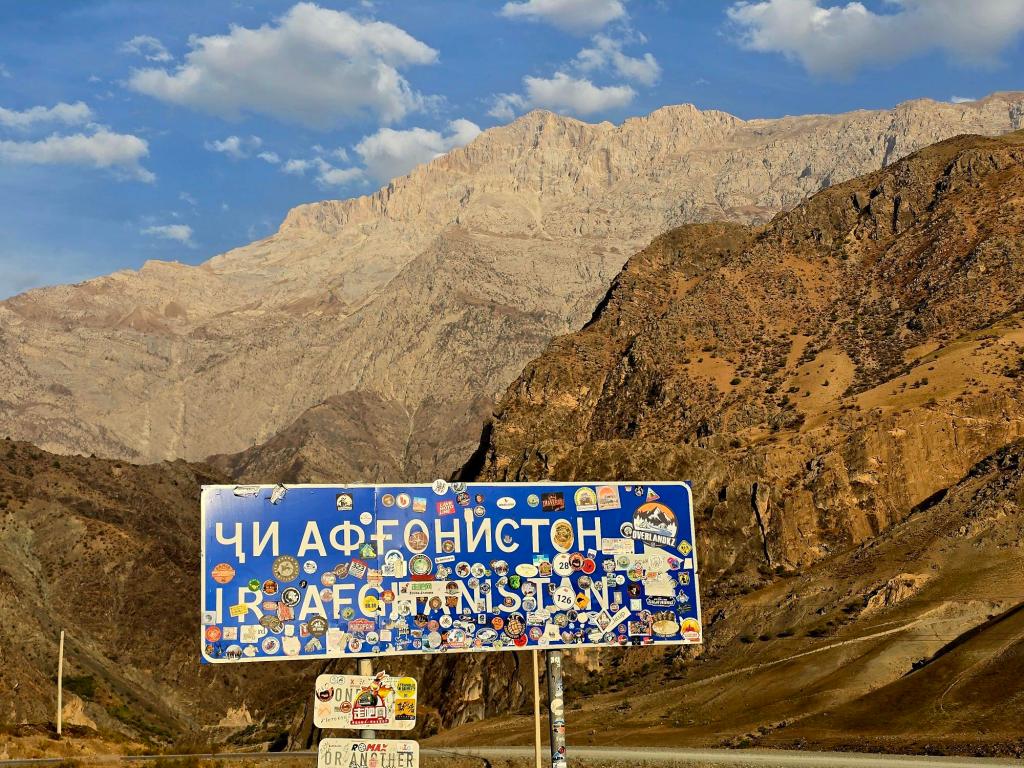
Not long after reaching the Panj, we passed the well-known road sign pointing toward Afghanistan. It was a small detail, but it carried weight. This was no longer abstract geography—we were traveling alongside one of the most politically and historically complex borders in the world.
Kalai Khum — First Night on the River
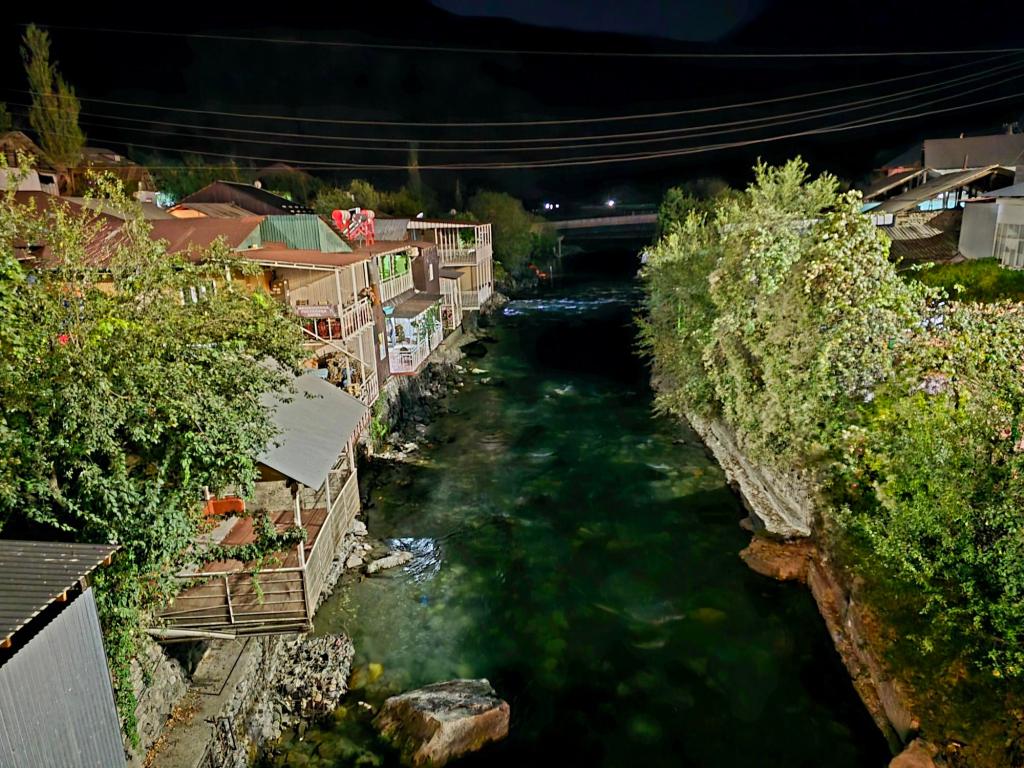
By the time we reached Kalai Khum, night had fallen and the fatigue of the day had fully set in. The town sits right along the Panj and has long served as a strategic trading point—its name roughly translating to “Fortress of Khumb.”
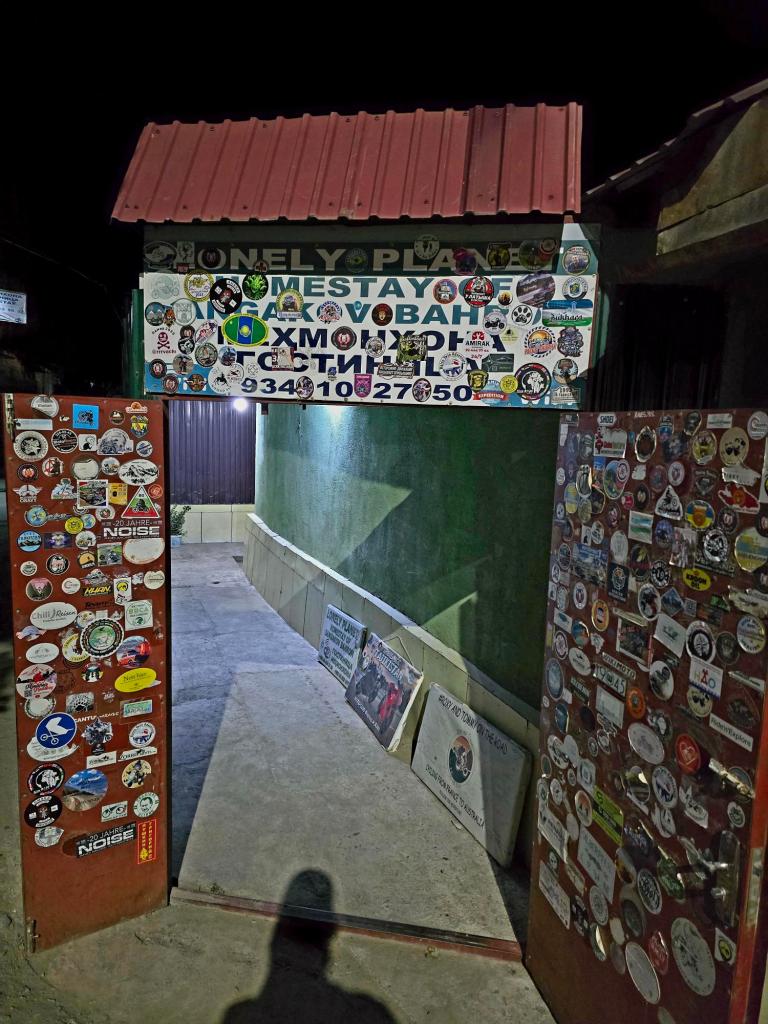
We checked in at the Sangakov Bahron homestay, grateful for a hot meal and a quiet place to rest. Dinner was a comforting spread of meat and potato soup, salads, fresh yogurt, and flatbread, served on an open-air deck overlooking a smaller tributary feeding into the Panj.
It felt like the proper beginning of the Pamir journey: the river below, mountains closing in, and the knowledge that the next several days would keep pulling us farther from the familiar.
Day one was behind us—but the real journey was only just beginning.
🏰 Footnote: Ancient Fortresses near Kalai Khum
The name Kalai Khum itself means “Fortress on the Khumb” — a direct hint at its origins as a strategic stronghold on the edge of the Pamirs. The settlement began in the 15th century with the construction of a military fortress on the riverbank, designed to guard the eastern frontier of the Timurid Empire as it pushed into Central Asia’s highlands and controlled movement along the valley. Over the centuries, that outpost grew into the center of the independent Darvaz Khanate, which lasted until the late 1800s before being absorbed into the broader regional powers and later the Soviet administrative structure.
Today, remnants of the old fortifications and settlement ruins still dot the outskirts of Kalai Khum. While the fortress itself survives only in fragments, these archaeological traces — stone walls, foundations, and traces of ancient buildings — give a tangible sense of how long people have carved out a presence here at the crossroads of river and mountain.
In addition, about ~6–7 km upstream from Kalai Khum near the village of Ruzvay lies the remarkable Ancient City of Karon (often referred to as Castle Karon in travel and archaeological literature). This site is believed to span 4,000 years of history, with fortifications, temples, and civic structures that once controlled trade routes and regional power networks before its population relocated into the Panj valley — including what became Kalai Khum — by the early 17th century.


Leave a Reply