📍 Trail Stats
📏 Distance: 11.7 miles (18.8 km)
⛰️ Ascent: 5,276 ft (1,608 m)
⛰️ Descent: 3,835 ft (1,169 m)
🕒 Total Time: 16h 19m
🚶 Moving Time: 7h 41m
🥾 Difficulty: Hard
📅 Date Hiked: April 11, 2026
📍 Route Type: Point-to-Point Traverse
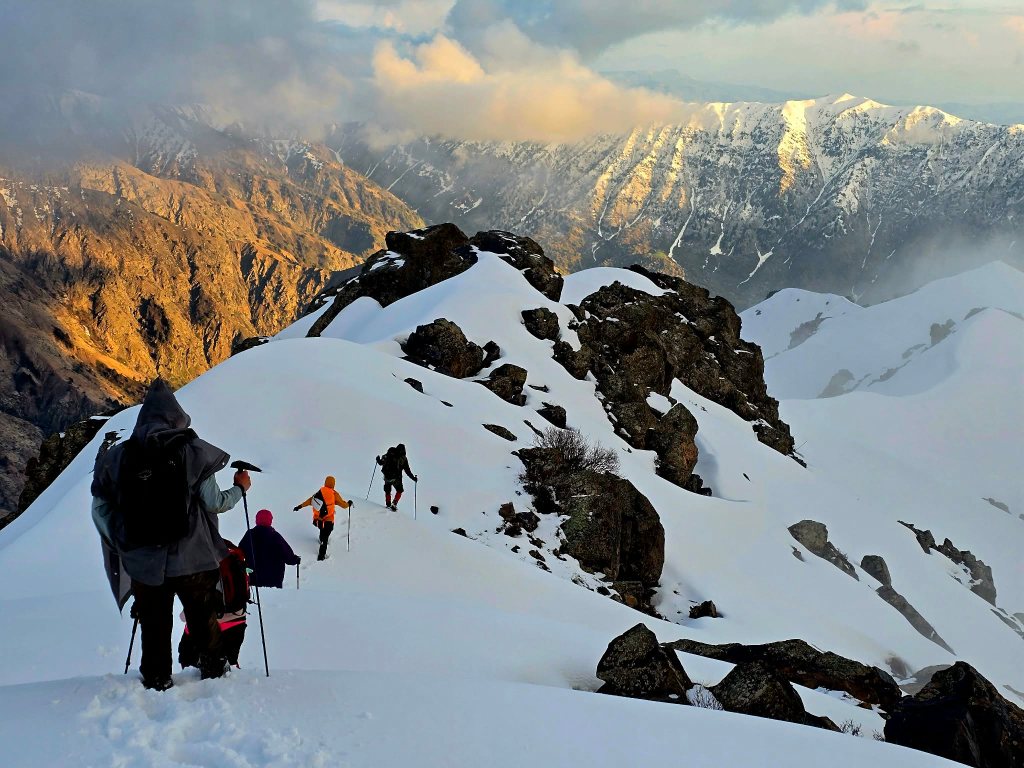
We decided to have a go at the summit of Black Mountain yesterday. It wasn’t until I looked more closely at the route that I realized this was the same general area my buddy Philippe and I had tried to figure out last October—though that attempt turned into a completely different overnighter over another pass after we started in the wrong place.
In hindsight, this one probably should have been an overnighter too. Instead, we went for it in a single push—and long it was.
We met at 5:45 a.m. and had a driver drop us off at the trailhead for the Seven Bridges hike through Adjuk. The plan was simple: start early, cross the range, and meet the driver again in Dara around 8:00 p.m. Simple on paper.
We were moving just before 6:45 a.m., earlier than I’ve ever been through Adjuk. Spring had arrived. The valley was alive—green pushing up everywhere, water running strong, and soft morning light filtering through broken clouds. We made quick progress through the first valley, crossing the last of the bridges in no time and pushing on toward the junction we’d camped at before.
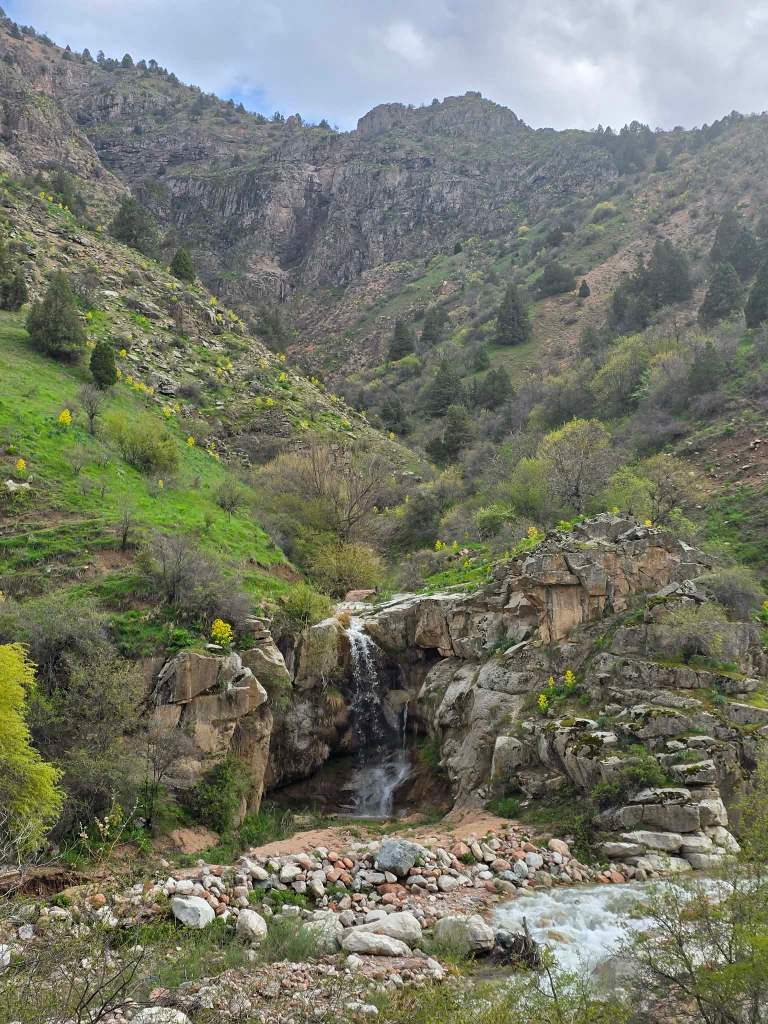
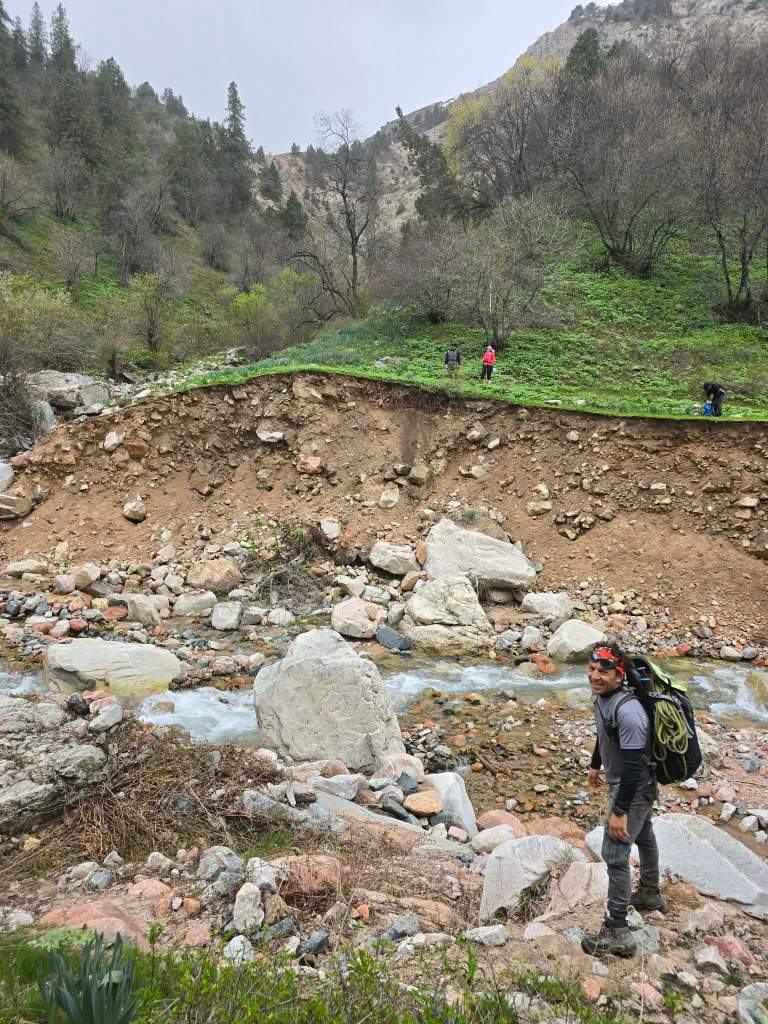
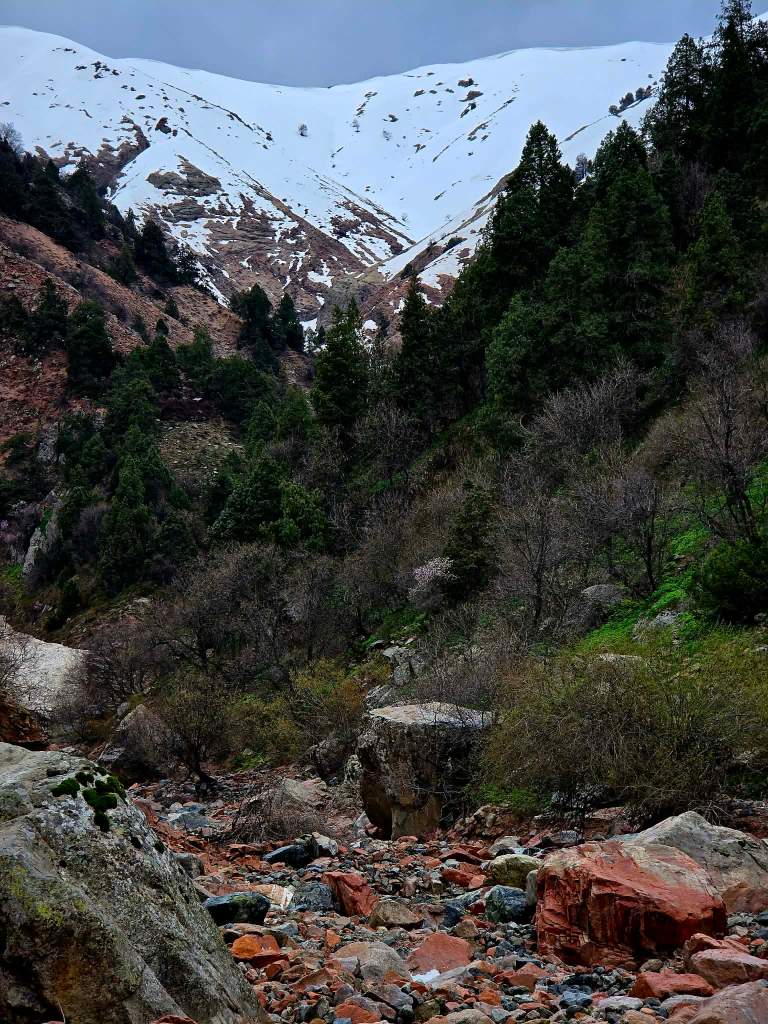
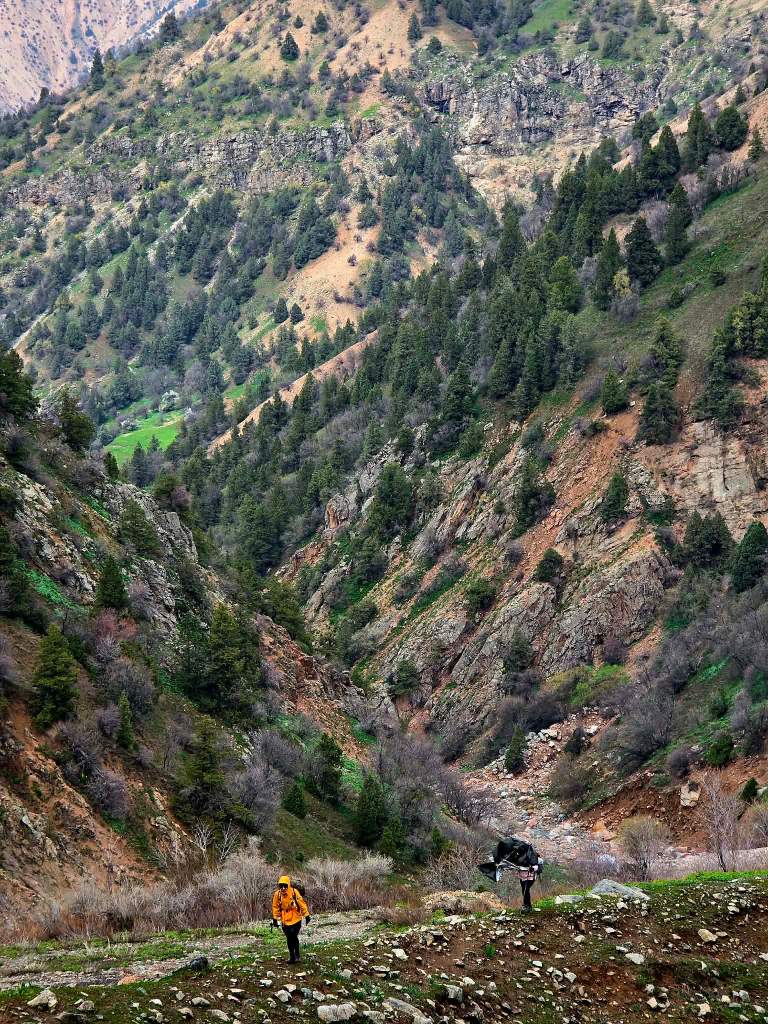
This time, we took the valley branching off to the right.
From there, things slowed down.
The trail followed the riverbed, crossing back and forth over a stream swollen with snowmelt. Rock-hopping wasn’t always an option, so out came the Chacos and we waded through, switching constantly between sandals and boots as the trail climbed in and out of the banks. It was slower going, more deliberate.
Clouds thickened as we moved deeper into the valley, and before long, the rain started. We pushed on through it and eventually ducked under a stand of trees for a long snack and tea break. By the time we got moving again, the far end of the valley had opened up, revealing snow-covered peaks rising above the clouds—our line for the day finally in view.
We passed the last of the river crossings and pushed toward the base of the mountains. A couple of shepherd camps were being set up for the season, and we stopped to ask about conditions over the peak. The response was mostly confusion and a few gestures toward the snow-covered slopes above us—as if to say, “You see that, right?”
We did.
And we kept going anyway.
Just beyond the last camp, the climb turned vertical.
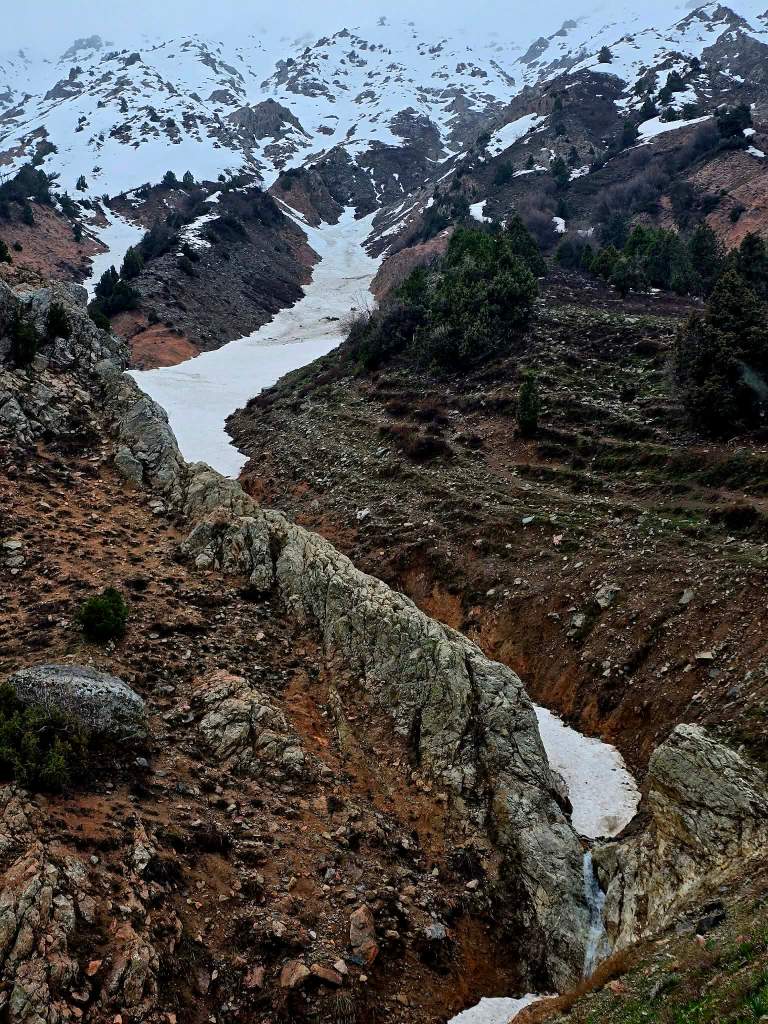
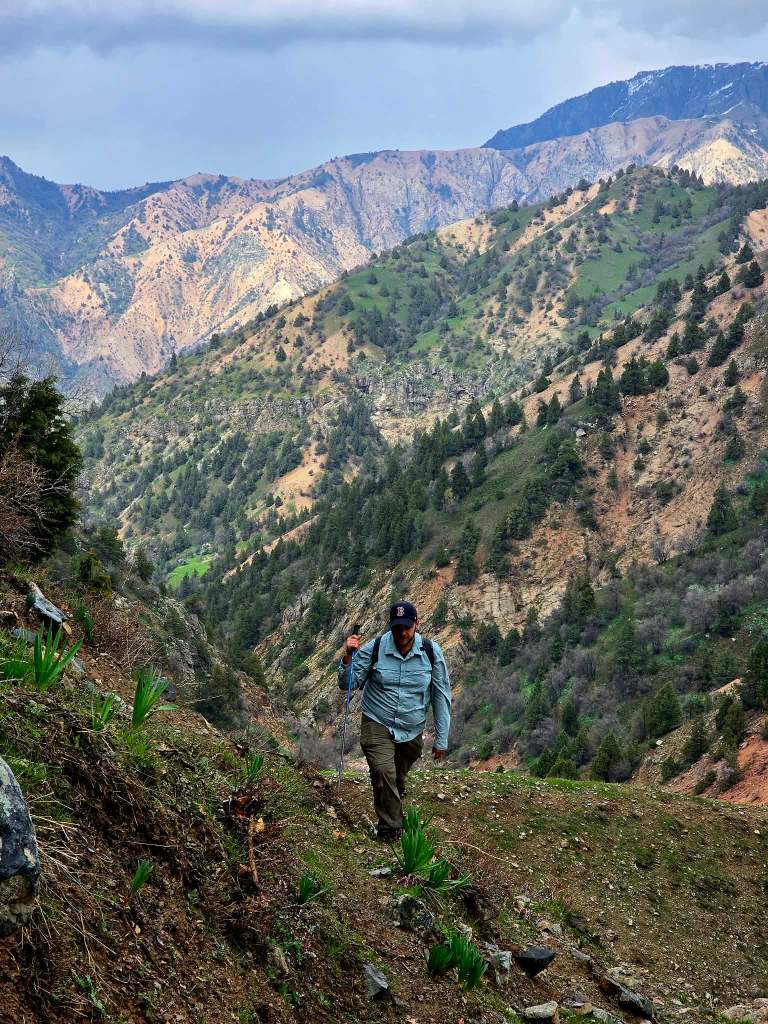
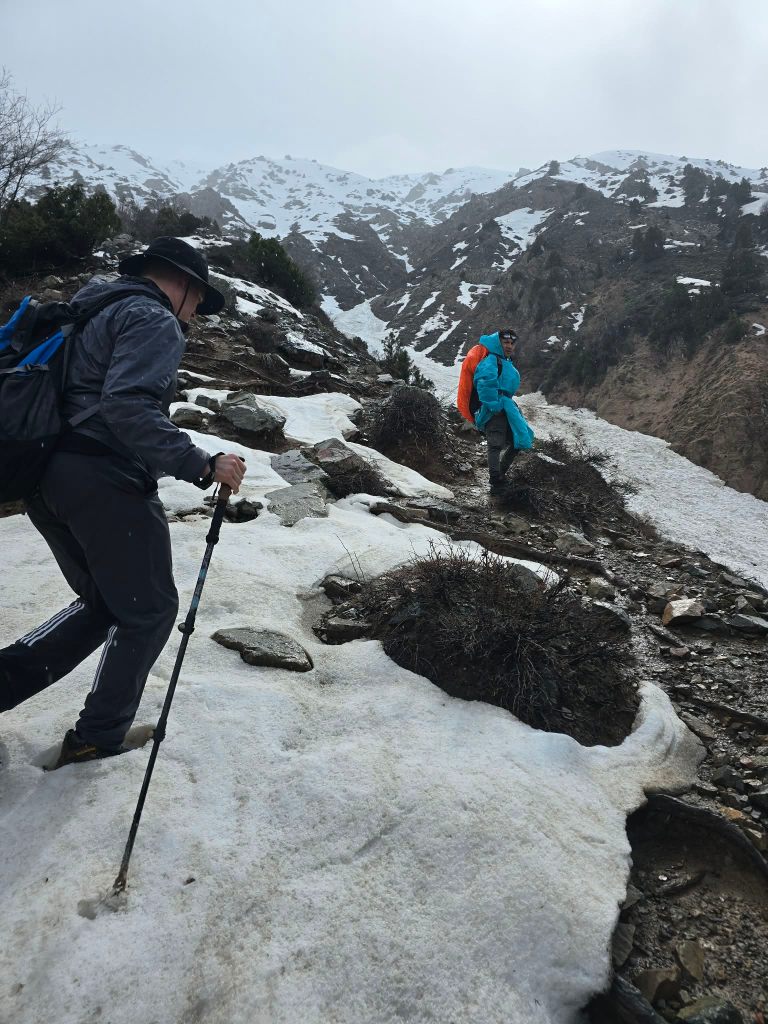
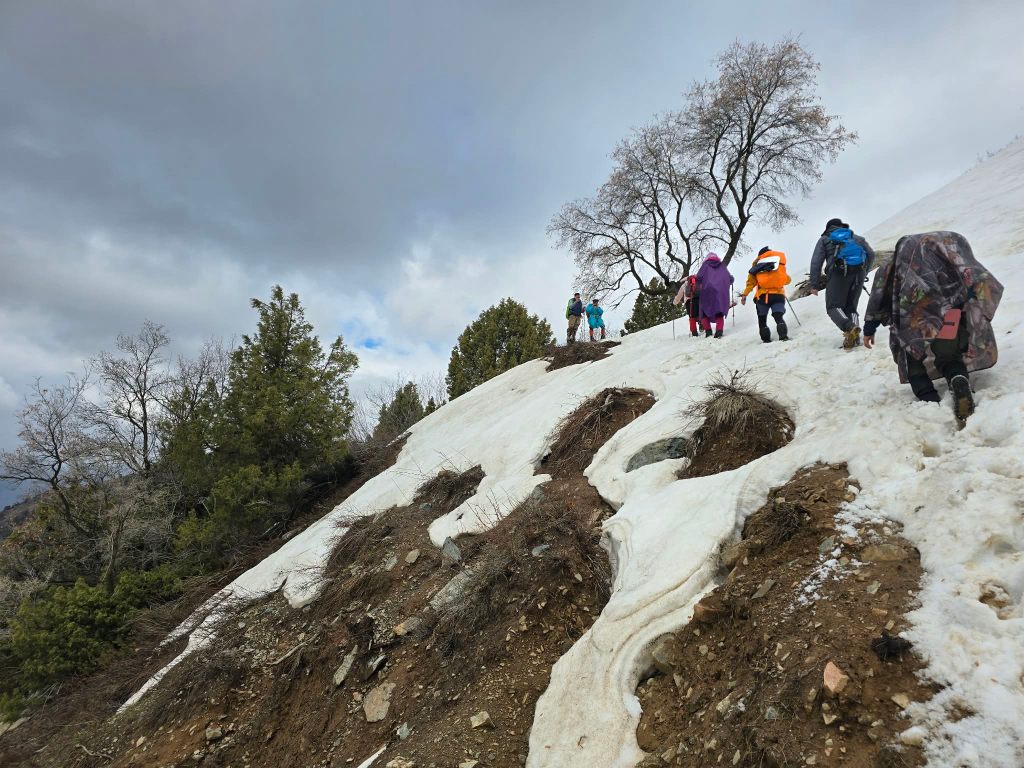
We worked our way up past a series of gorges, some still choked with avalanche debris. One in particular had long snow bridges stretched across it, with water occasionally bursting out into short waterfalls before disappearing back under the snowpack. It was a reminder that things were still very much in transition up here.
After another thousand feet of climbing, we stopped to reassess. It was around 1:30 p.m., and a light mix of snow and rain was falling. We had options:
- Push for the peak
- Traverse toward a lower pass
- Or turn around and head back out
We went for the peak.
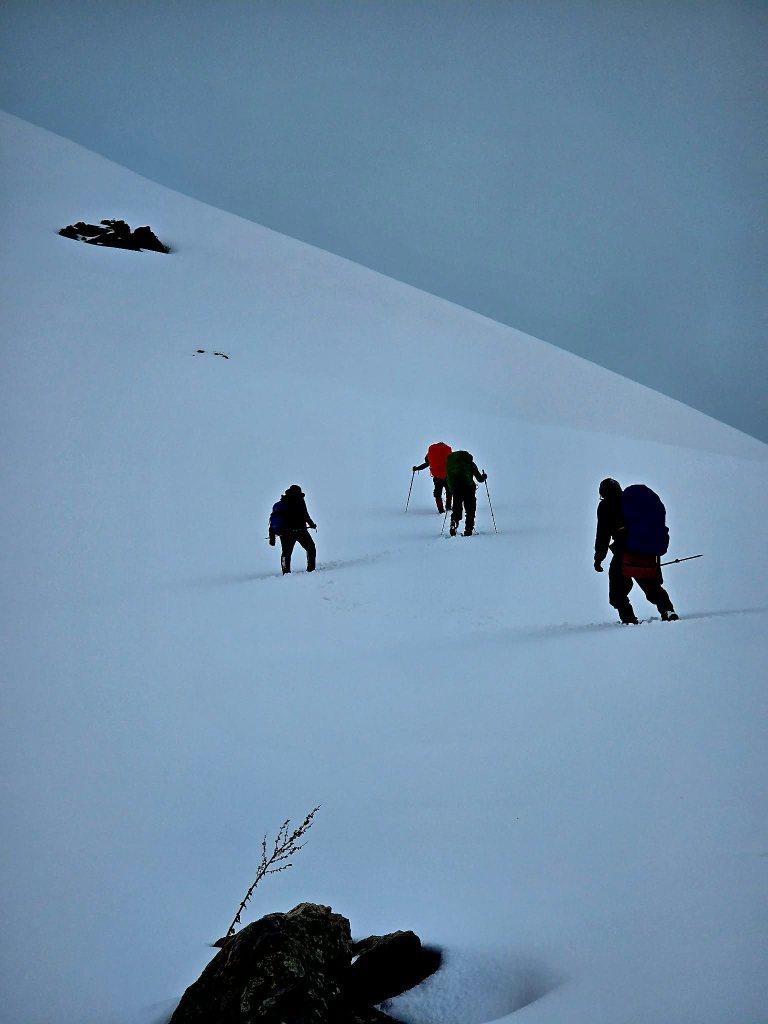
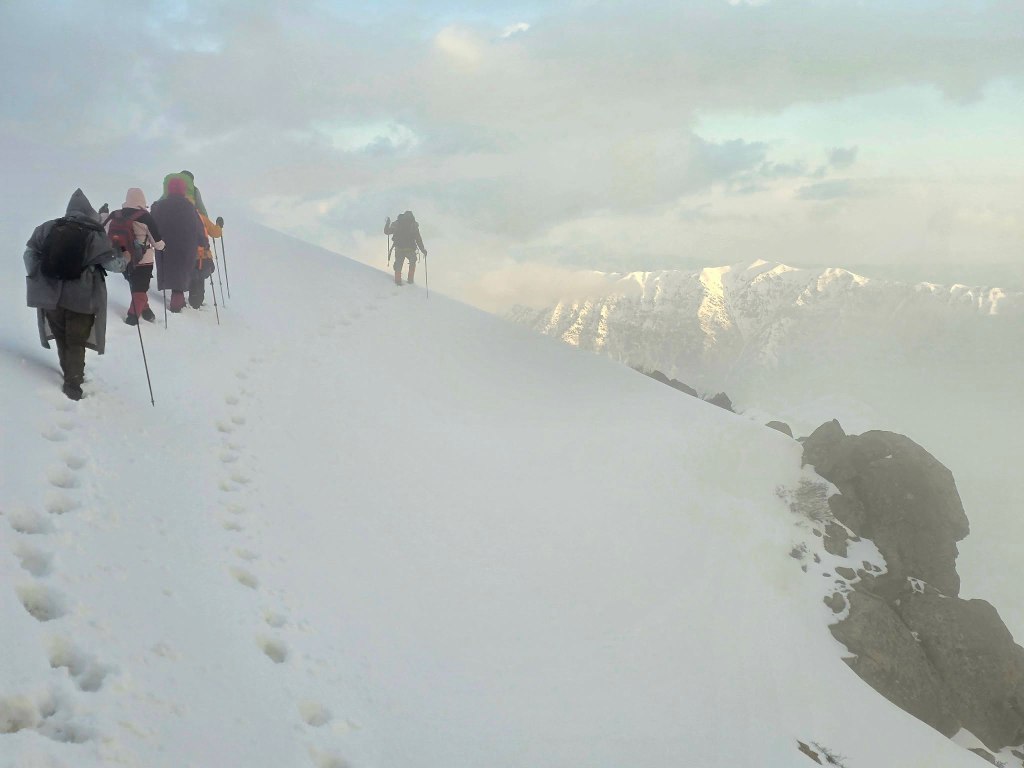
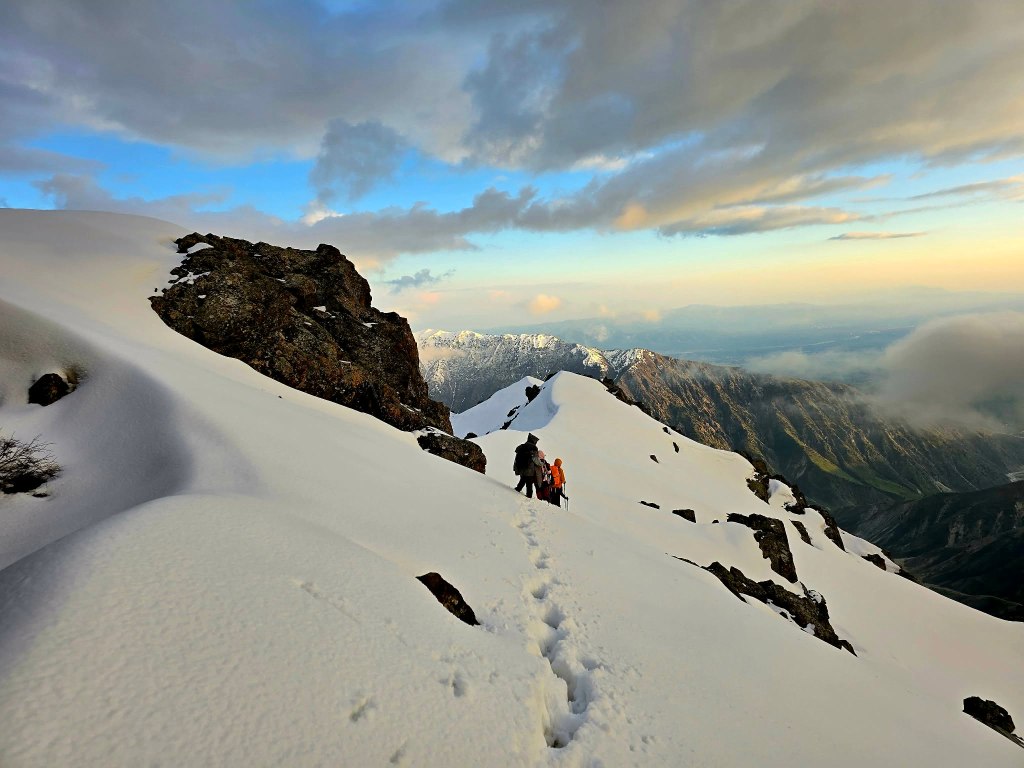
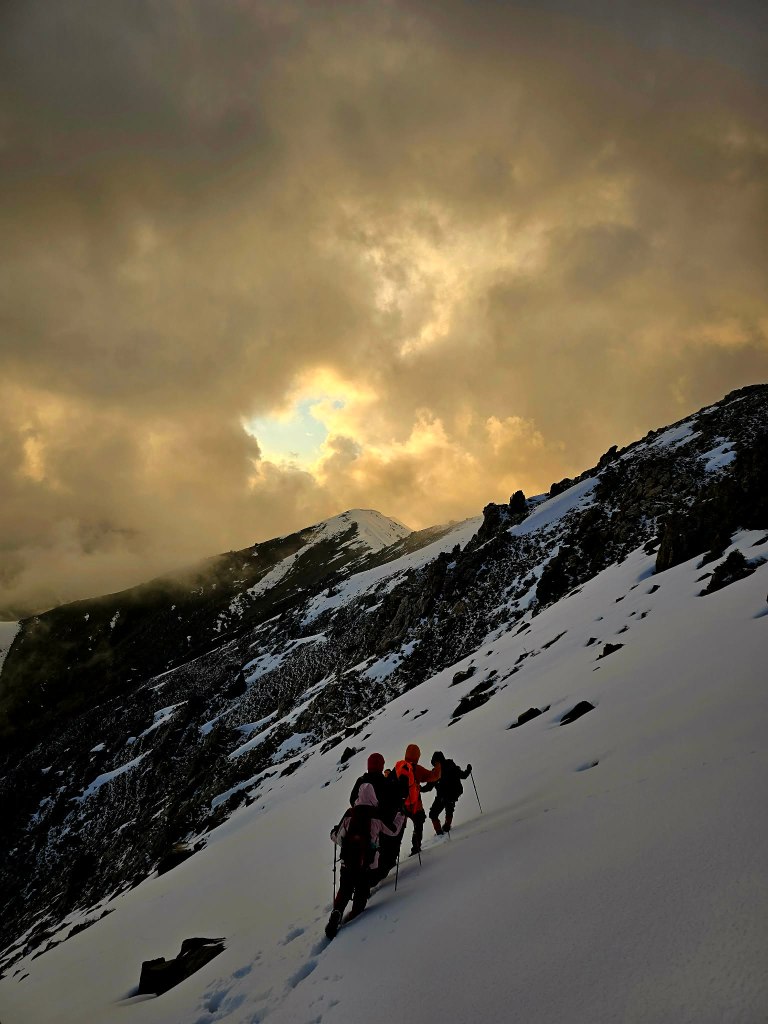
The next section was a grind—mud, rock, and deep snow bridges mixed together. Eventually, we reached the slope leading up to the ridge. It was steep and fully snow-covered. Sirius took the lead, kicking in steps, turning it into something like a staircase to the sky. Every now and then a foot would punch through into a hole beneath, but not enough to slow us too much.
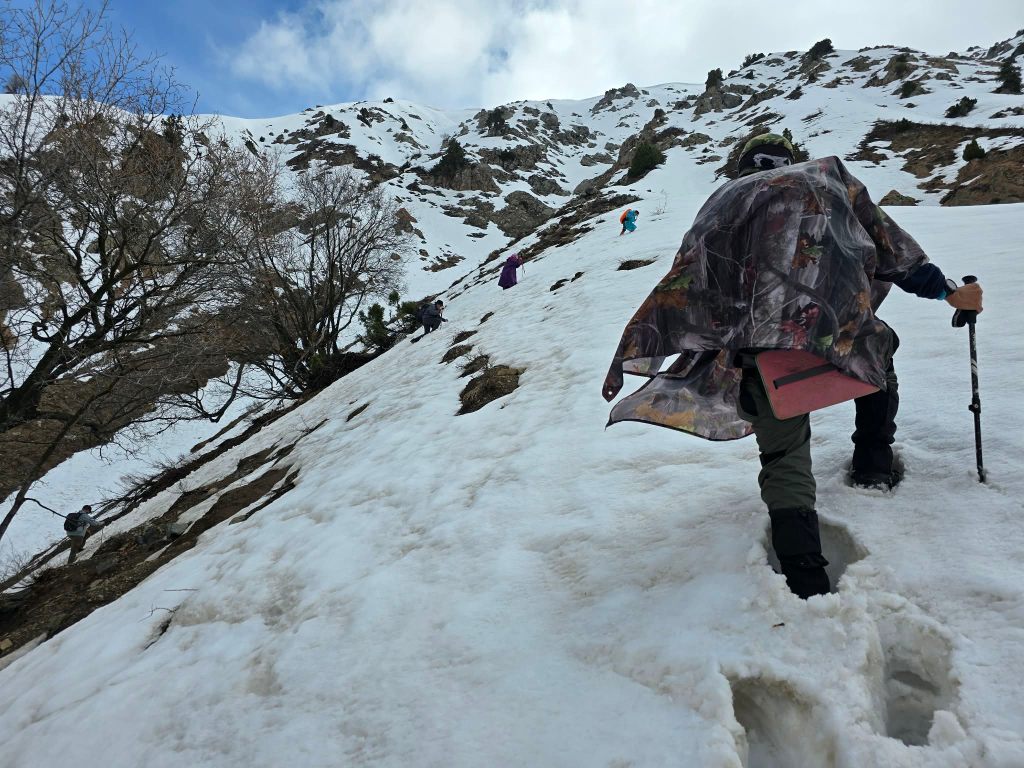
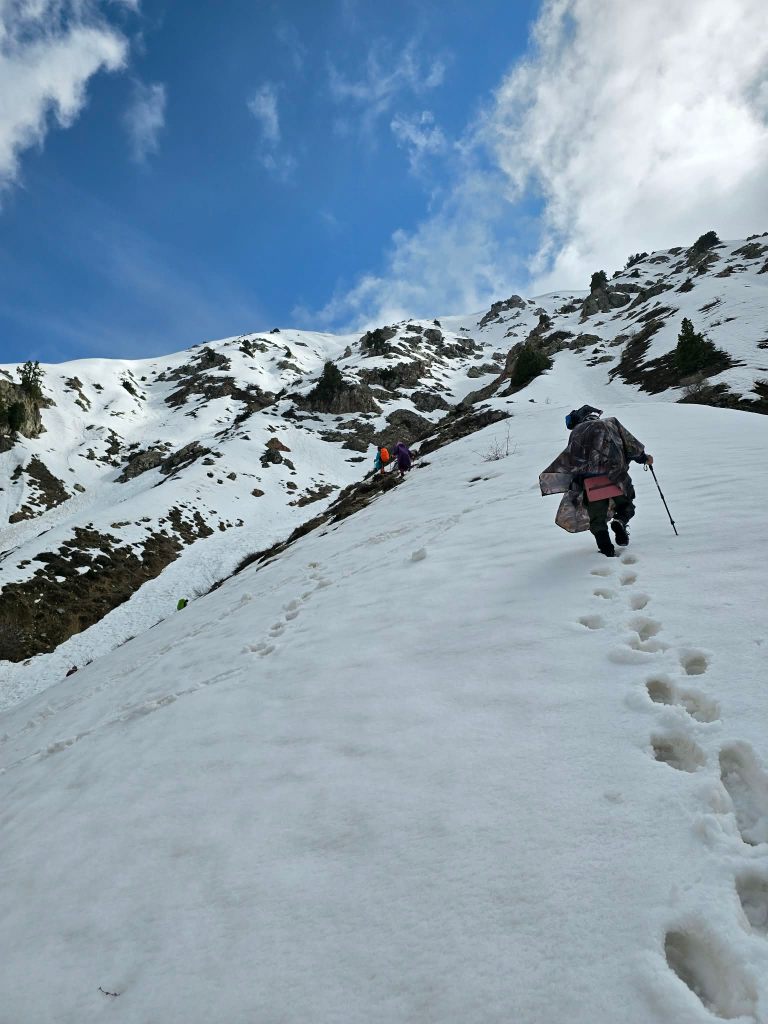
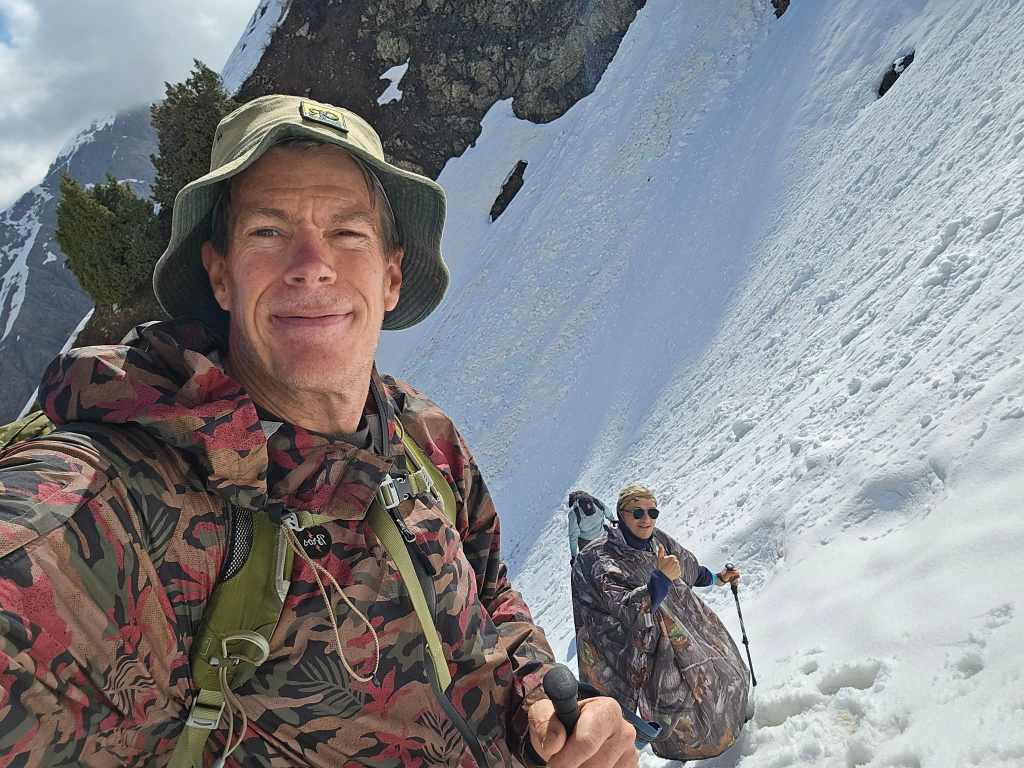
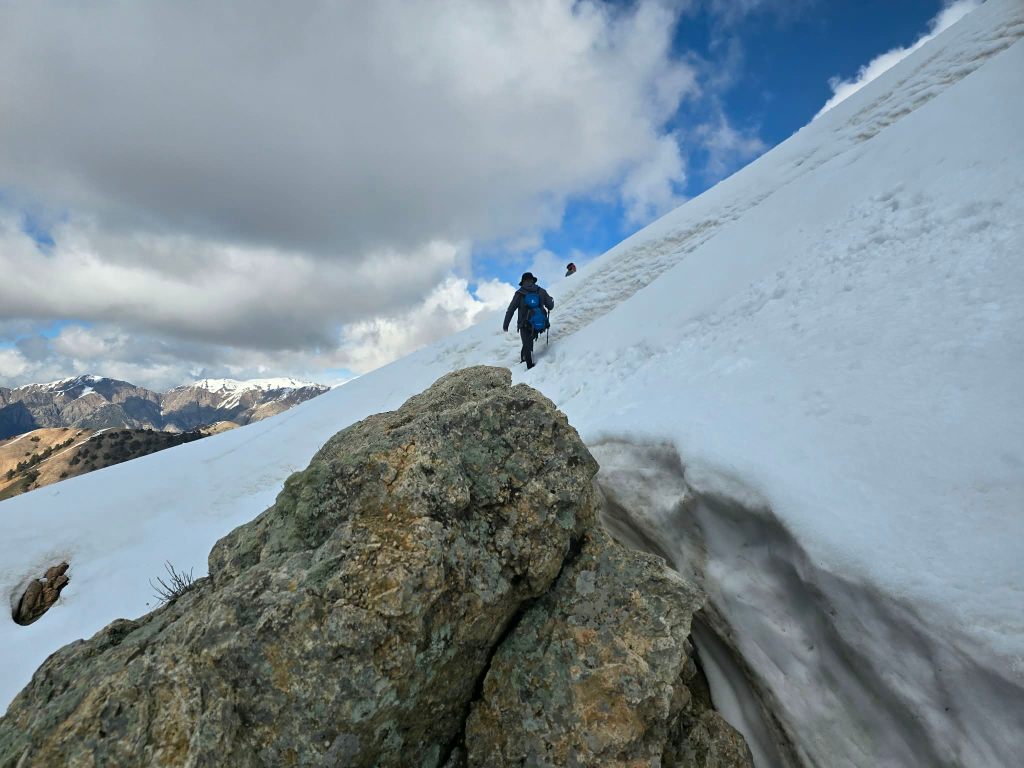
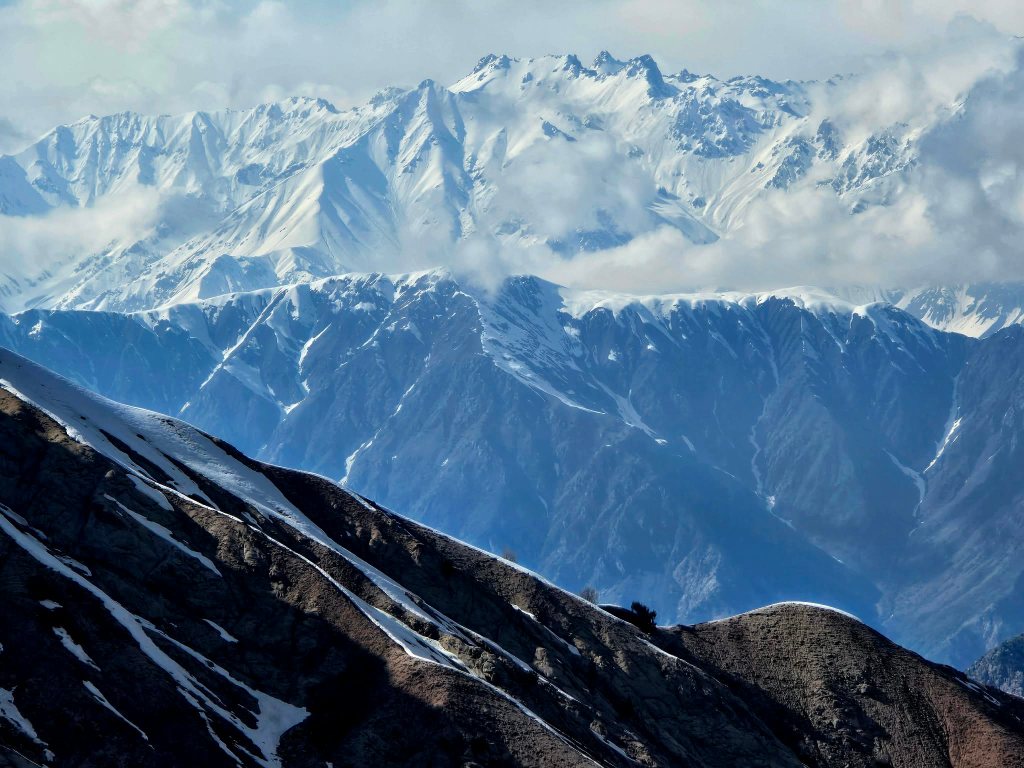
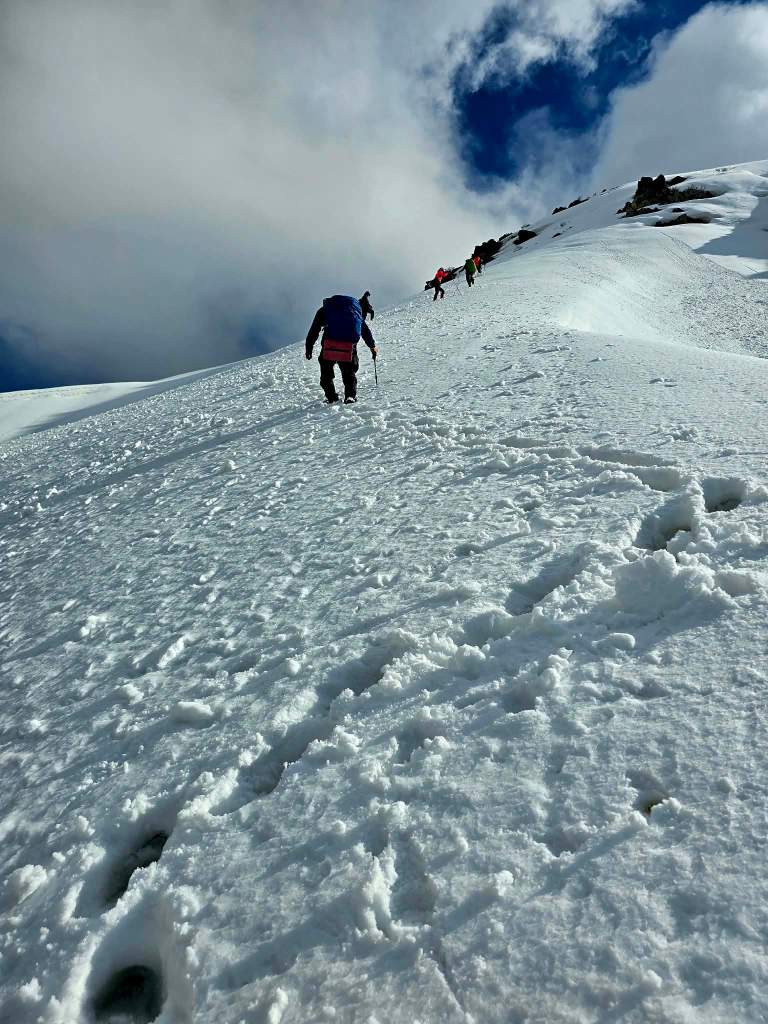
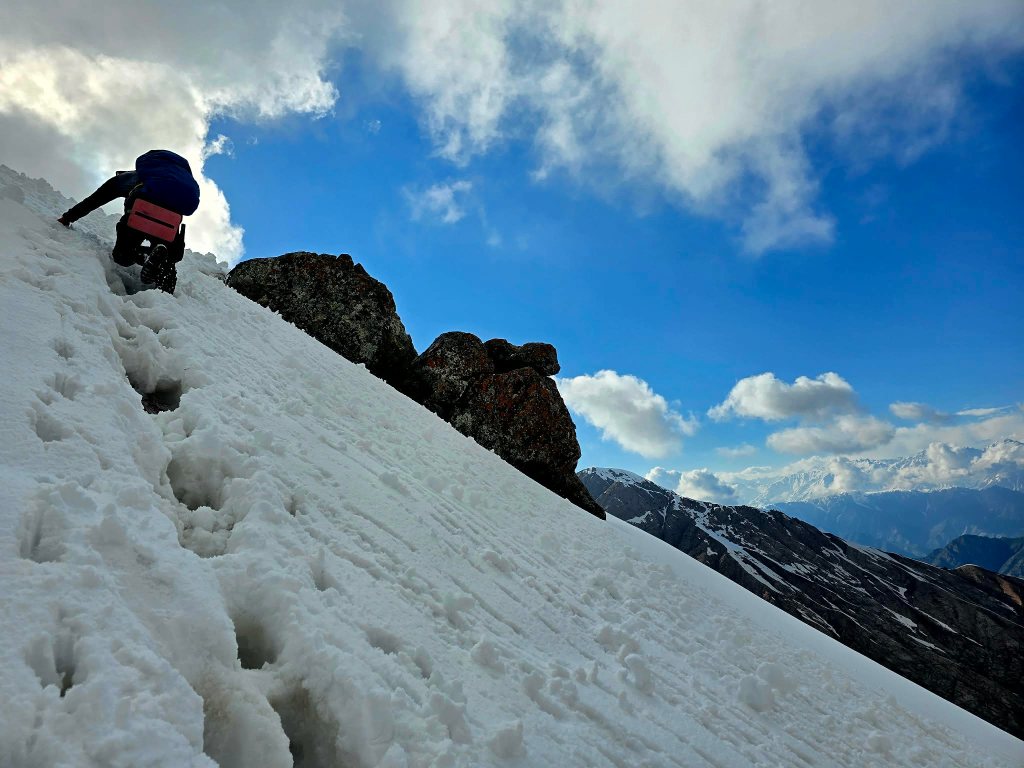
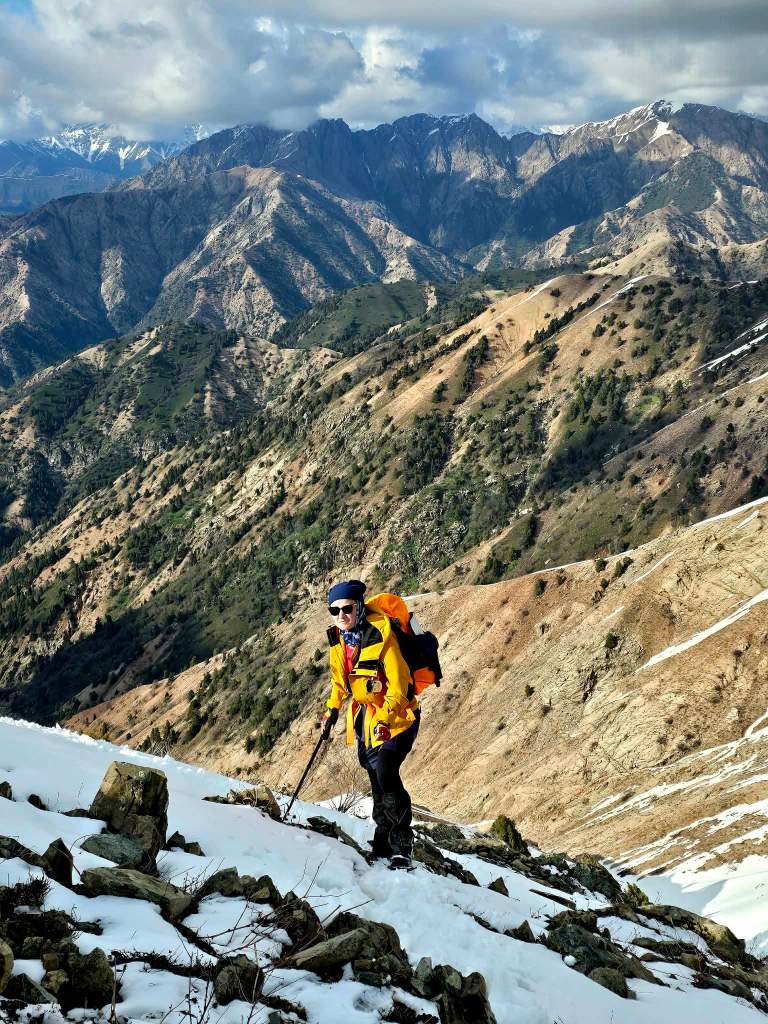
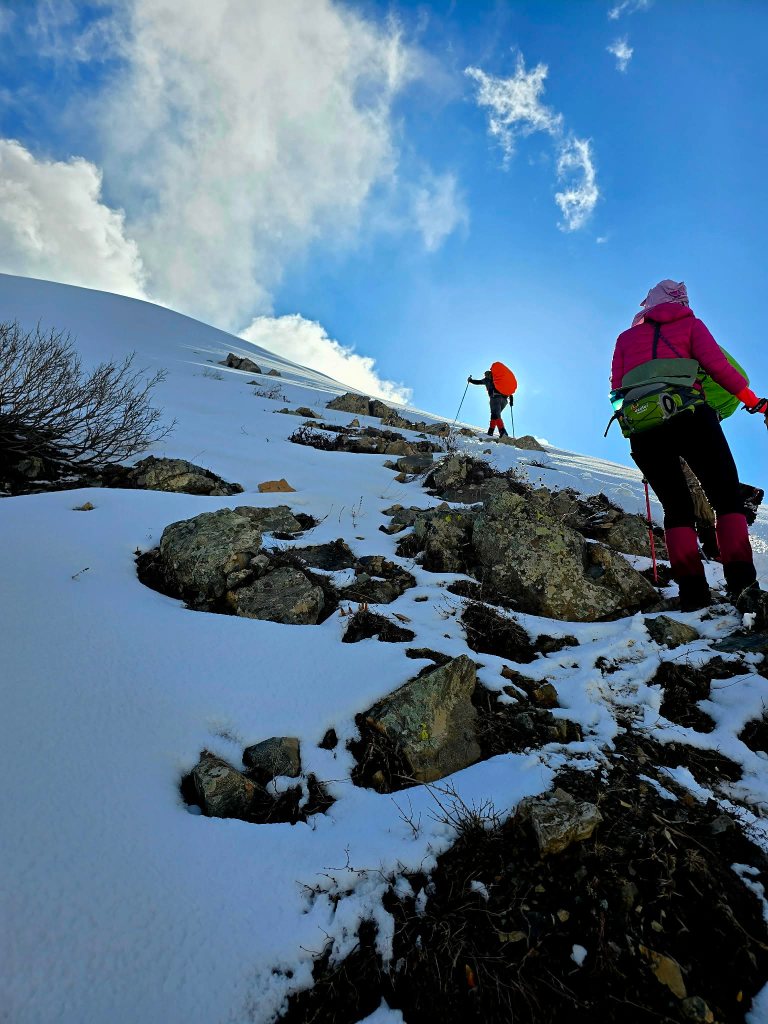
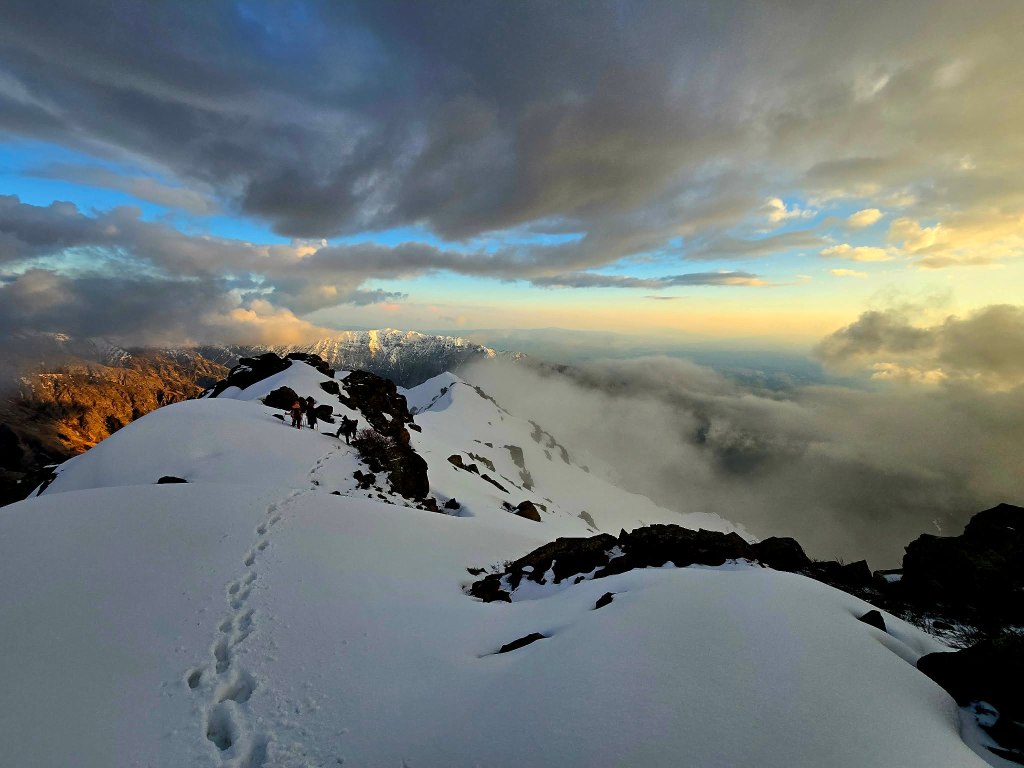
As we neared the ridge, the clouds began to lift.
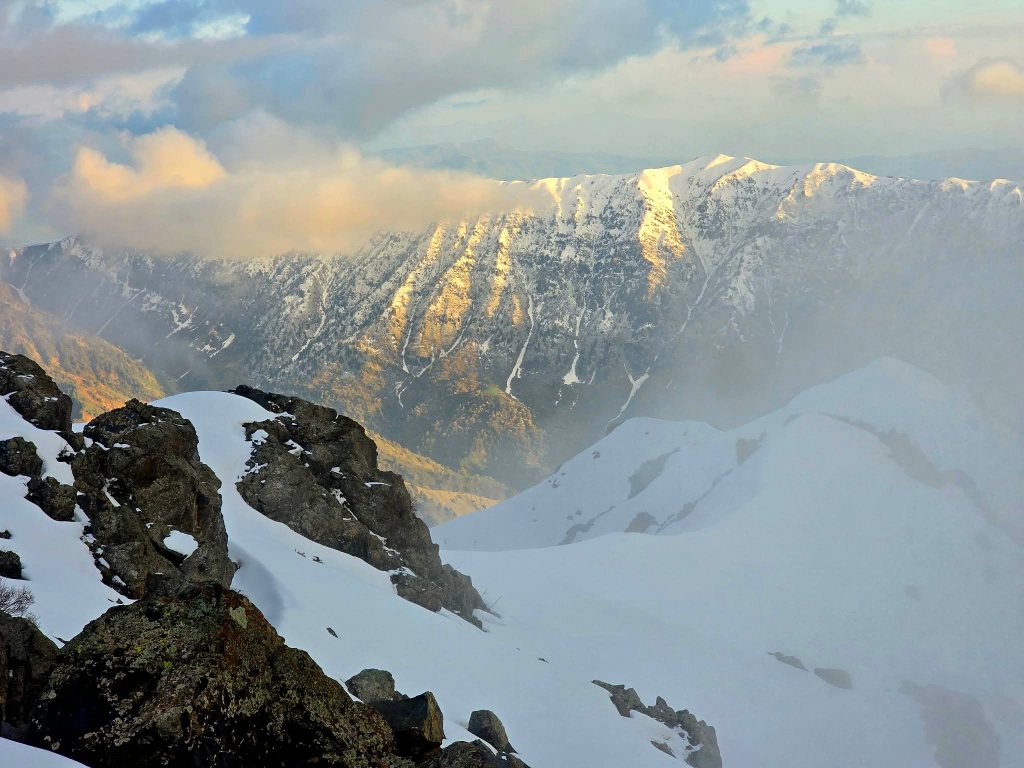
Views opened in every direction—the rugged expanse of the Hissar Range stretching endlessly, and far in the distance, peaks near Obi Garm rising above it all.
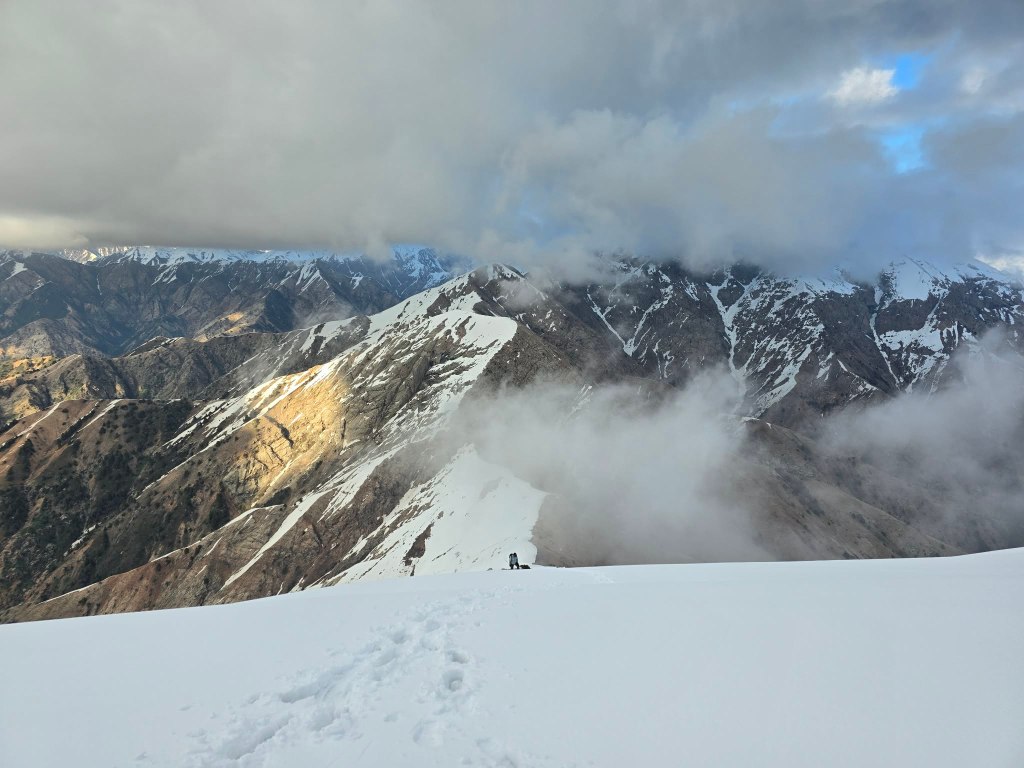
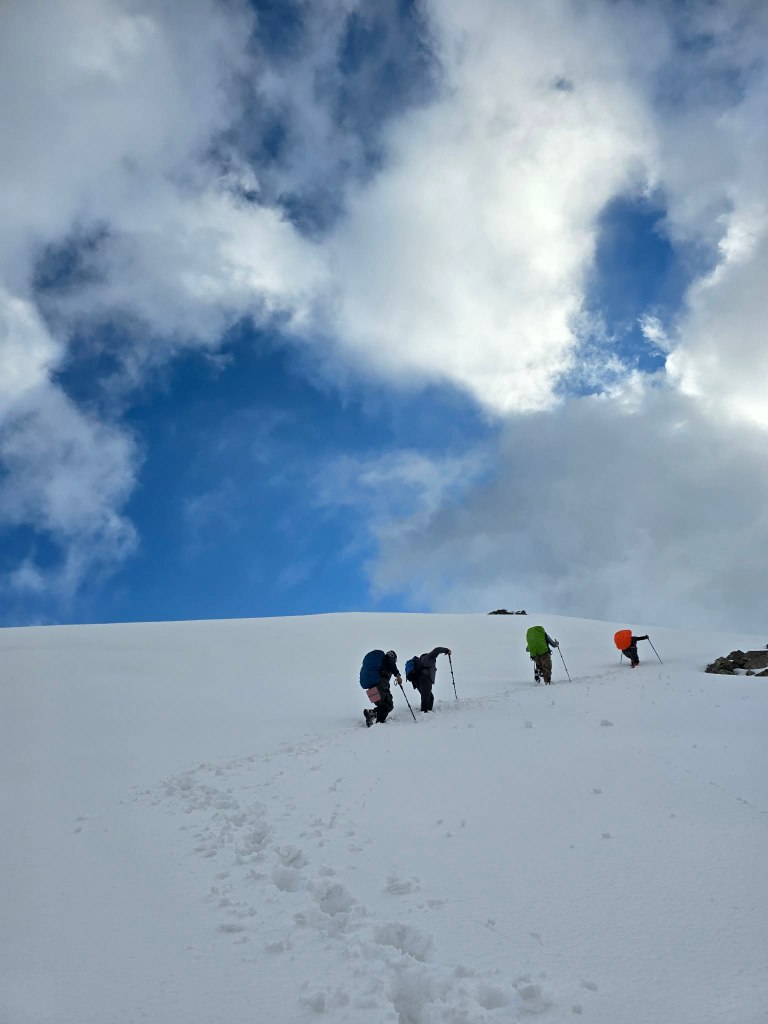
When we finally crested the ridge, the view into the opposite valley hit just as hard. Below us, mountains dropped away toward the edge of the city, with Mushteppa Peak sitting prominently in the center of it all. We had been on that ridge just weeks before, turning back short of the summit. Now we were staring at it from the other side.
And beyond that—Black Mountain.
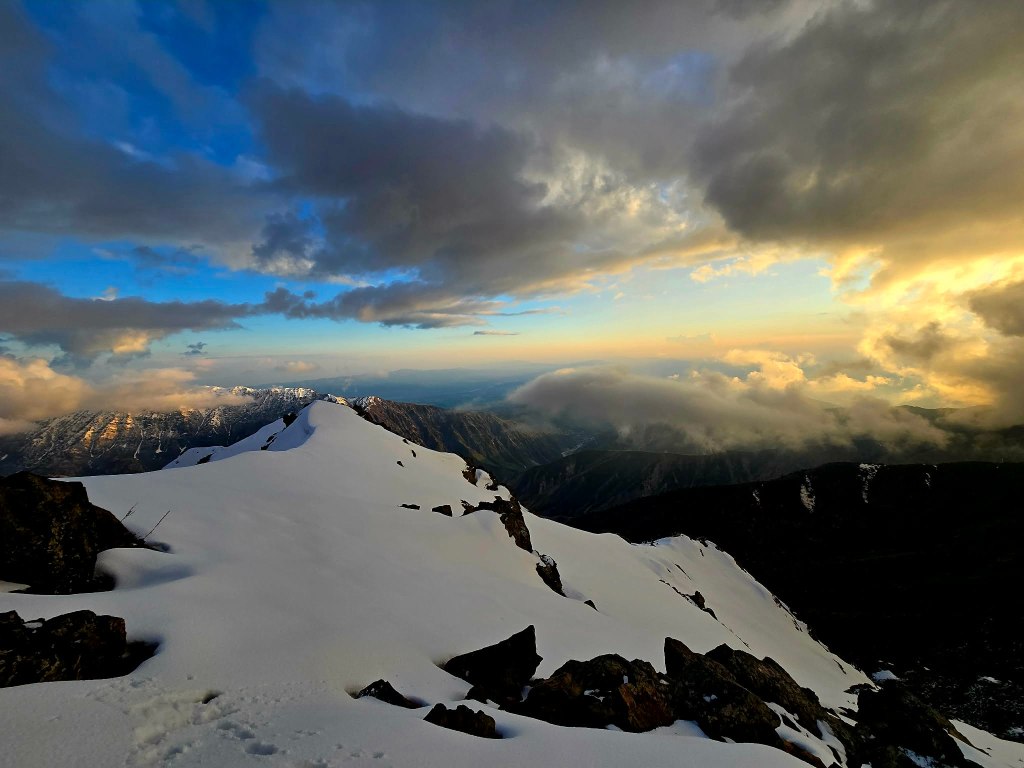
Clouds were racing past the summit, revealing it in flashes. We still had another 800 to 1,000 feet to climb.
The final push was slow. Legs were feeling the day, and the mountain wasn’t giving anything away easily. A short plateau gave us a brief break before one last steep push to the top.
It took 10.5 hours and over a mile of vertical gain, but just before 5:30 p.m., we stood on the summit.
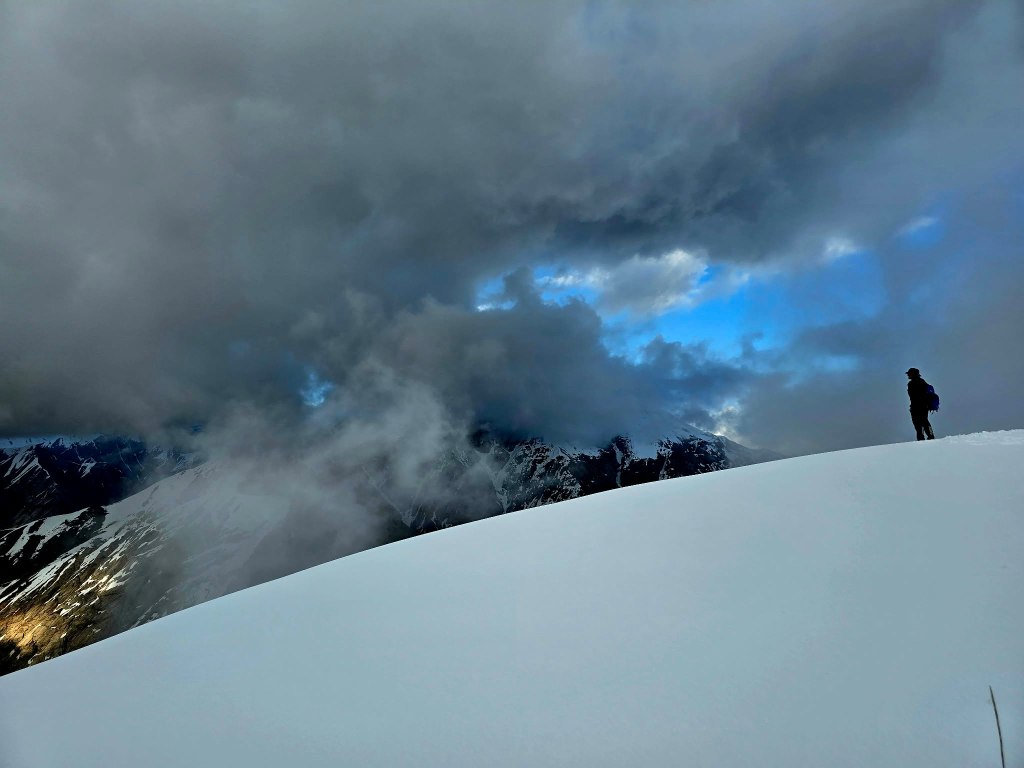
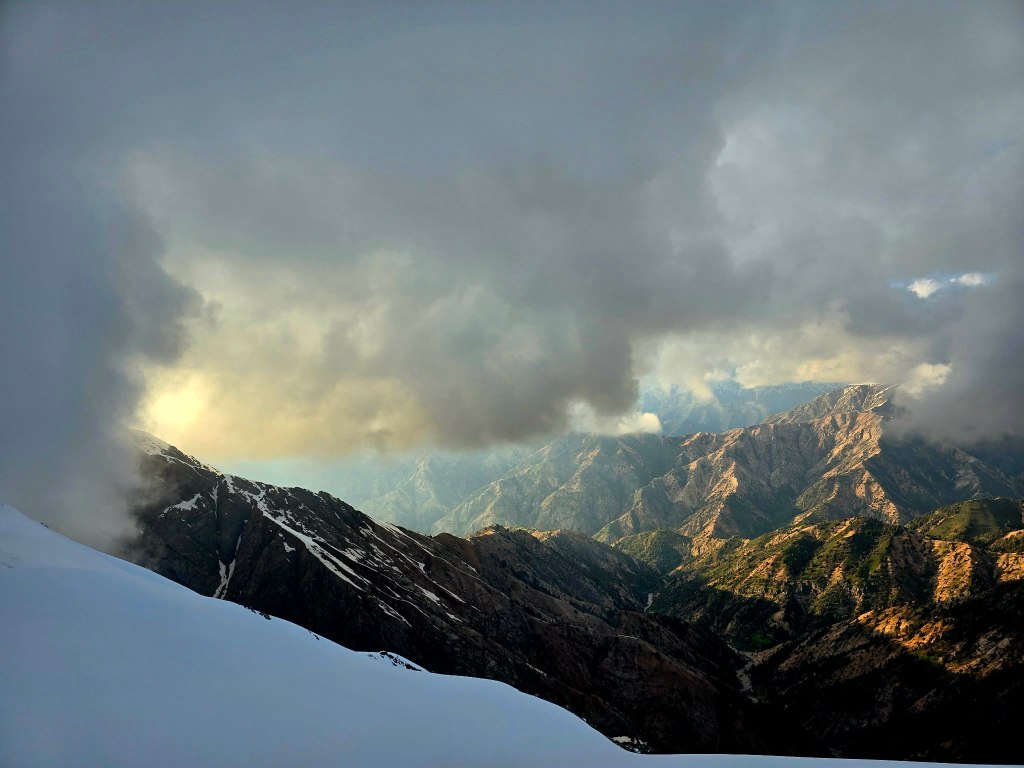
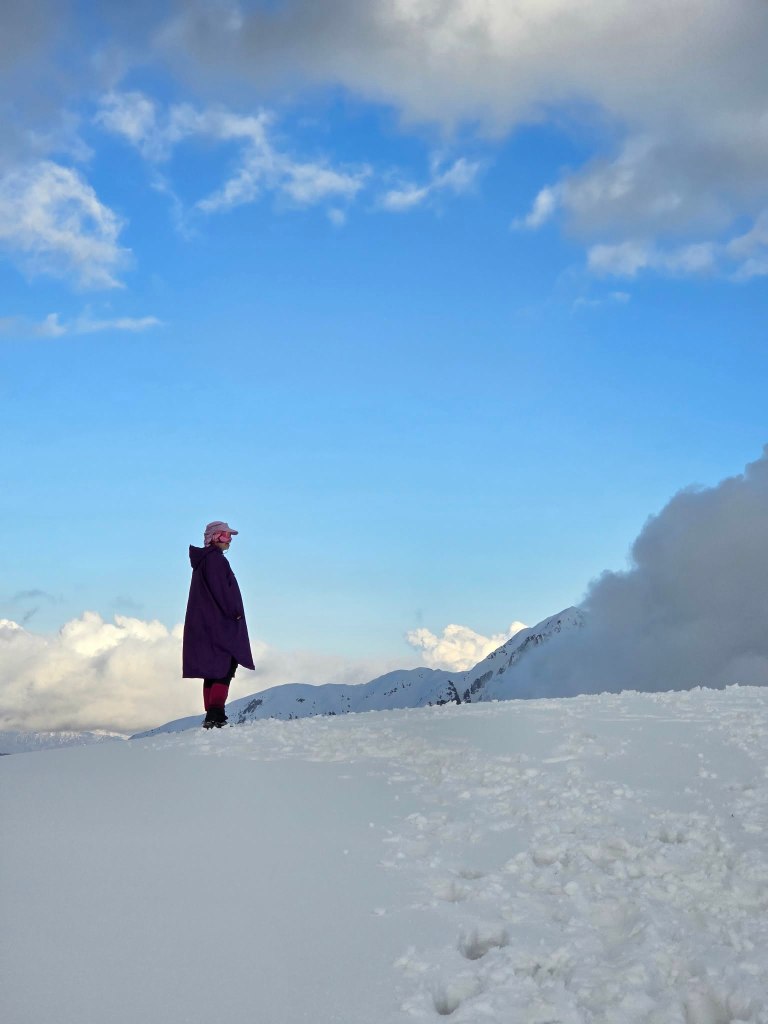
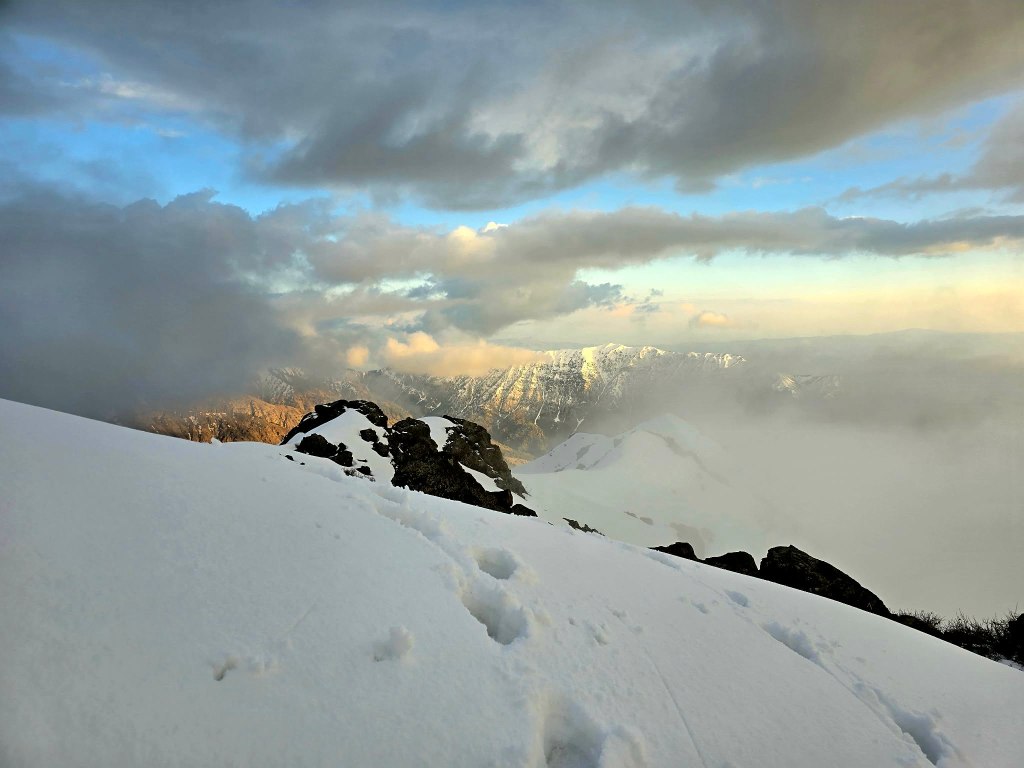
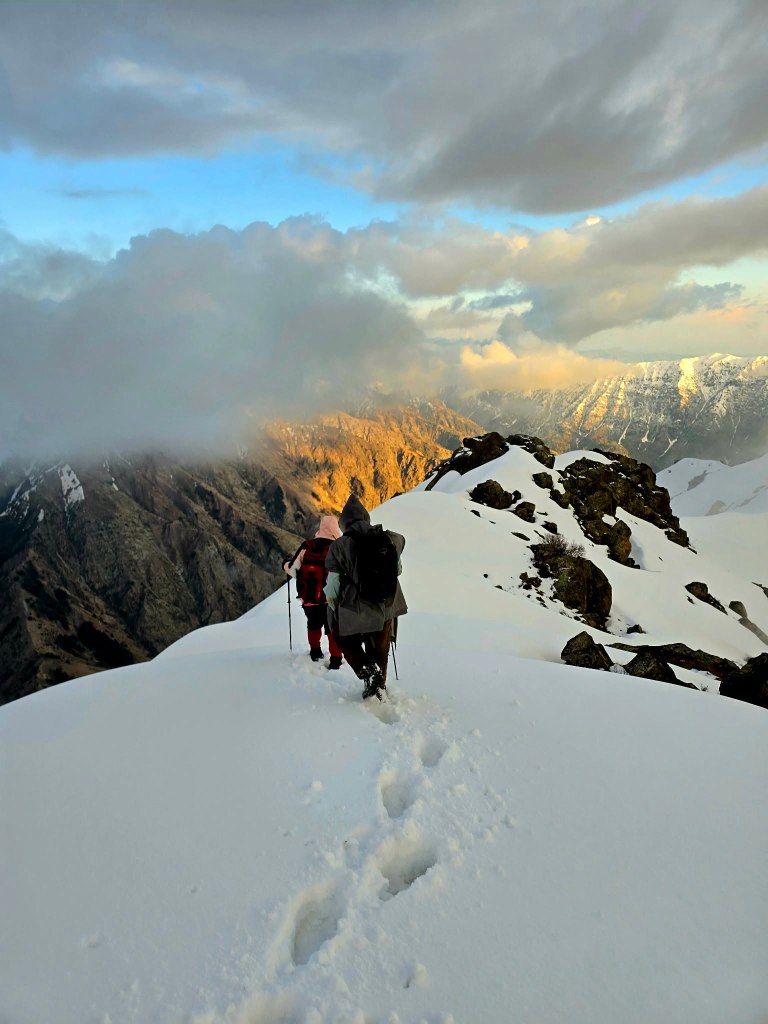
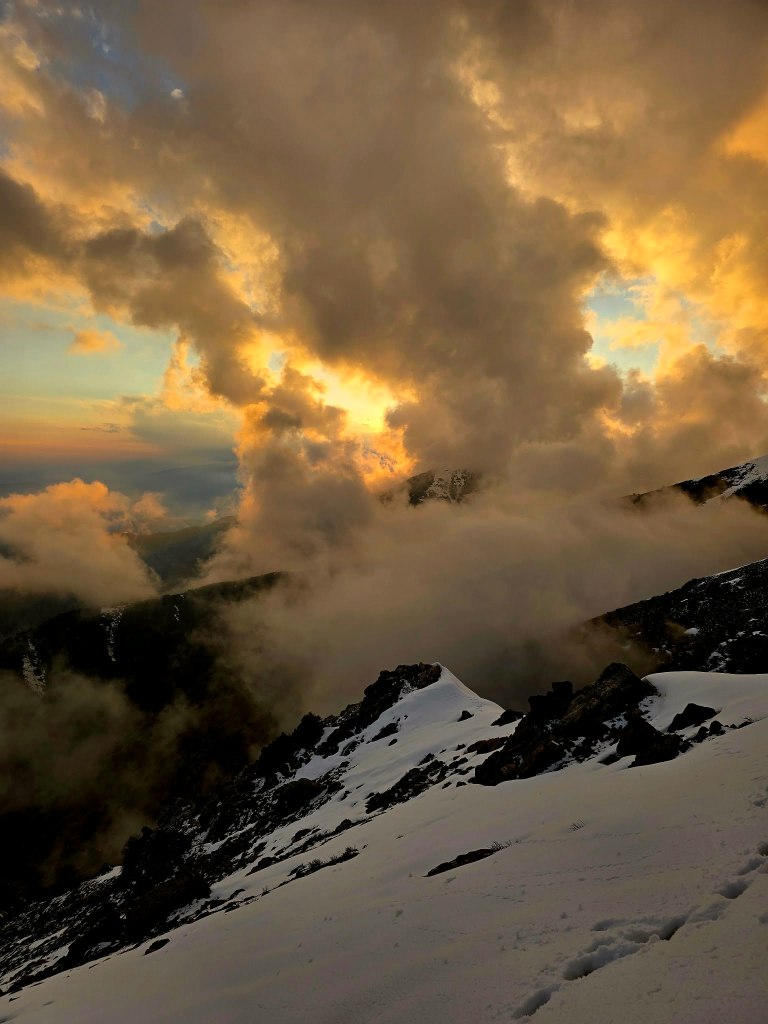
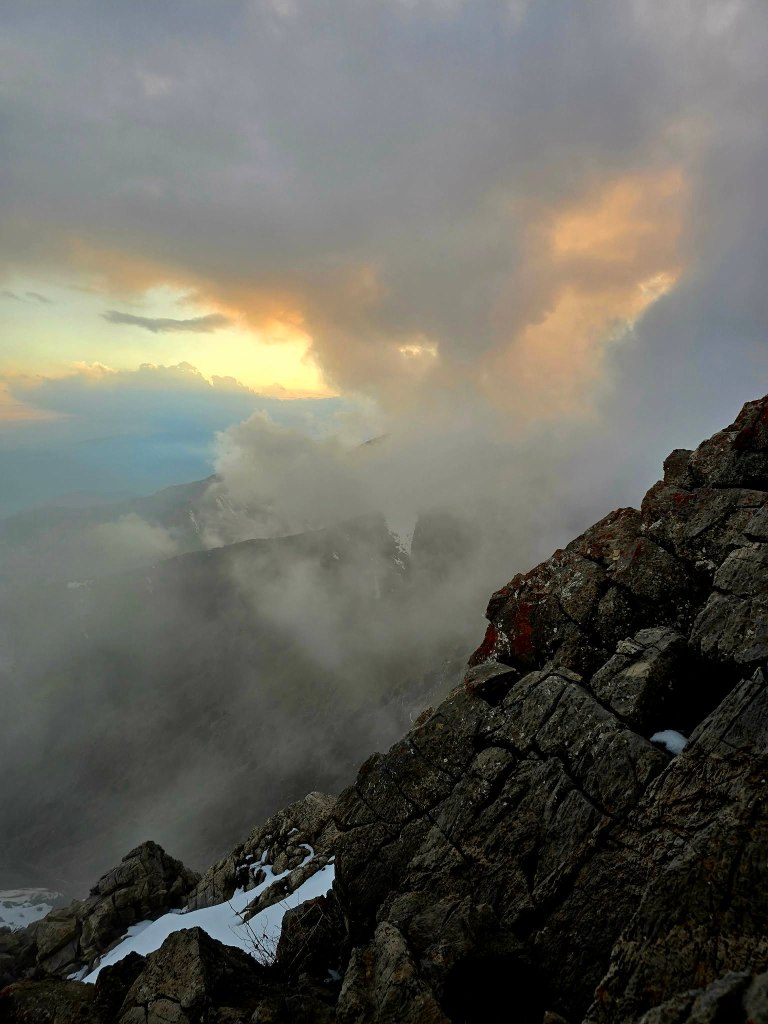
We dropped packs, layered up, and laid out what was left of our food on a makeshift “tablecloth.” For about 40 minutes, the mountain put on a show. Clouds drifted below us and at eye level, catching the light of the setting sun. Entire sections of the landscape would ignite for a moment before fading back into shadow. It was one of those rare windows where everything comes together.
But the temperature was dropping fast, and we still had a long way to go.
We started down.
The first part of the descent was unreal—views stretching down into the Dara valley, the sky burning through sunset, and that quiet feeling that comes after a summit. But the light faded quickly. At the snowline, we stopped to switch gear—gaiters off, headlamps on.
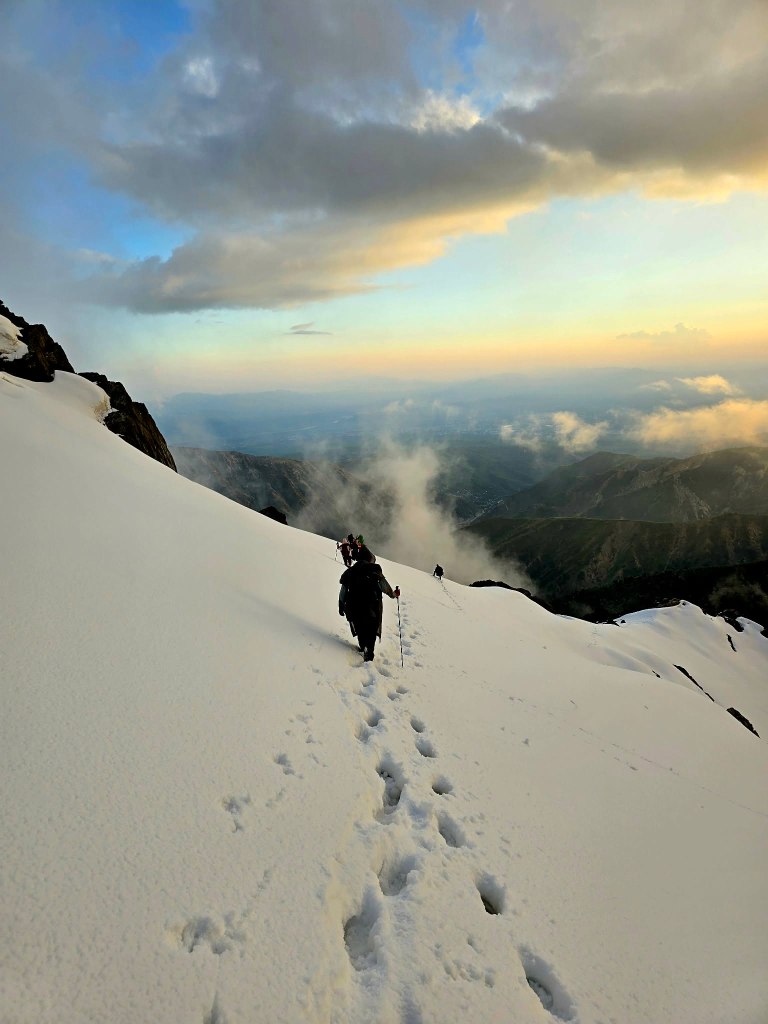
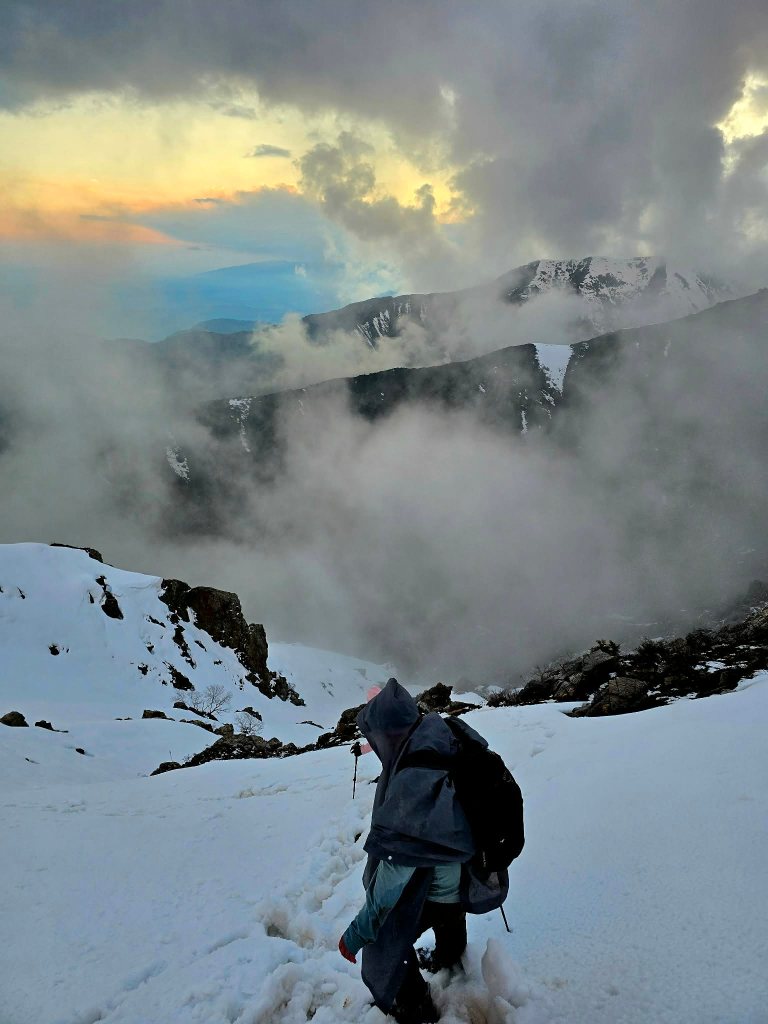
We had figured on about three hours to reach Dara.
That estimate didn’t hold.
After dropping off the main slope, we picked up a faint trail along a ridge. It came and went, but it seemed to be heading the right way. Eventually, we regrouped on a rocky outcrop before the final descent. The trail appeared to cut down to the right, so we followed it.
That was the wrong call.
The path quickly deteriorated into steep, muddy terrain and eventually dropped us into a narrow drainage. At that point, we committed to following the water down, assuming it would lead us to the river near Dara.
It did—but not without a fight.
What should have been a 30–40 minute descent turned into a three-hour scramble through the ravine—down small waterfalls, over slick rock ledges, and through tight sections where the walls closed in. At one point, the trail we needed was only a couple hundred meters away, but the terrain between us and it was completely impassable.
Climbing back up wasn’t an option.
So we kept going down.
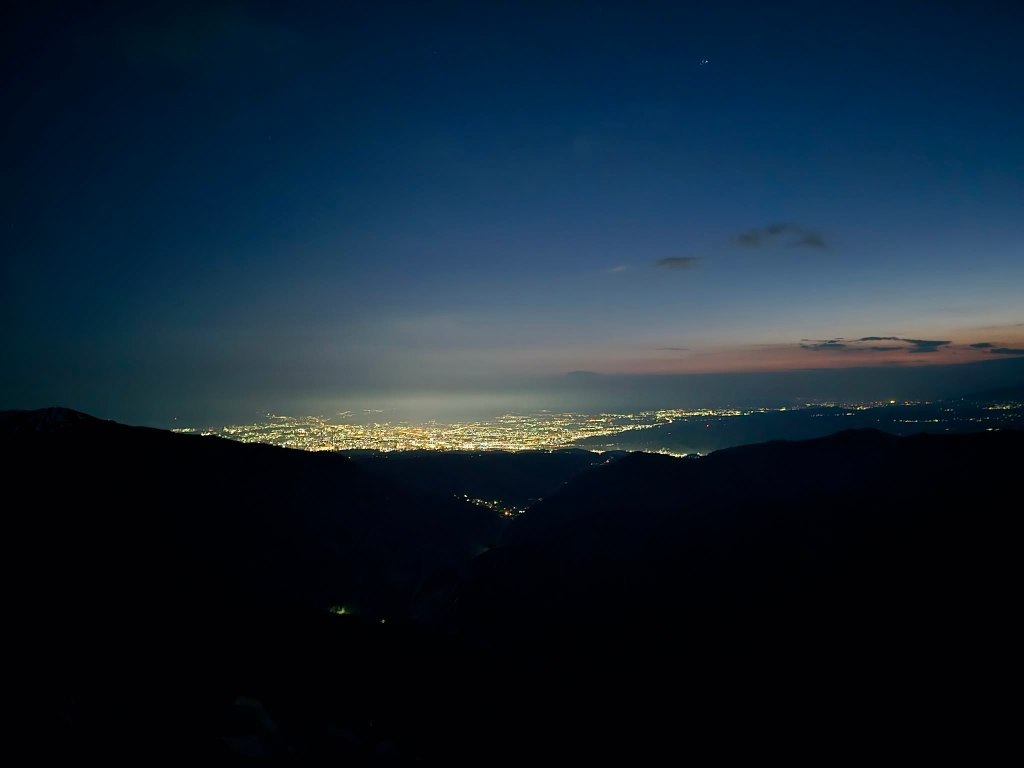
Eventually, help came in the form of a local villager who met us along the lower section and pointed us towards the easiest line down the final drops. By the time we walked into Dara village, it was after 11:00 p.m.
Sixteen hours after we had started.
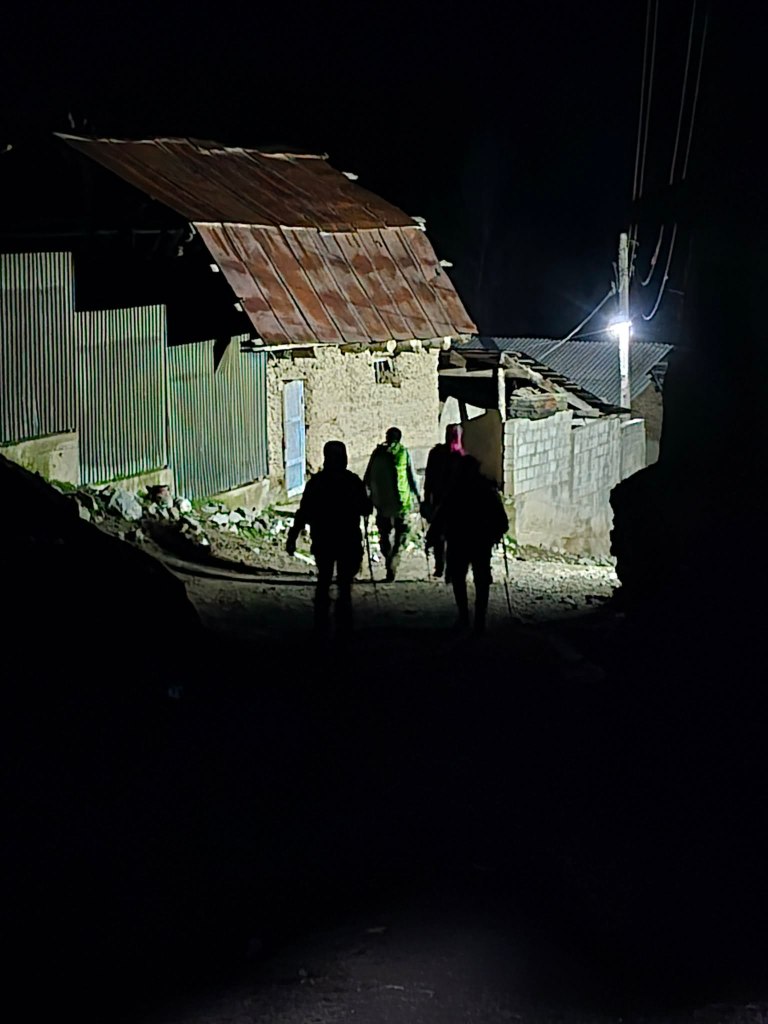
Completely spent—but feeling that kind of satisfaction that only comes from a long day in the mountains.
Some days in the mountains take everything you’ve got—and give just enough back to make you want to do it again.
 Wise Clan in Stanland
Leave a comment