🧭 Trip Stats: Seven Lakes (Haft Kul)
📍 Location: Shing River Valley, Fann Mountains, Tajikistan
📏 Distance: ~2.5–3 miles (final hike from 6th → 7th lake and exploring)
⬆️ Elevation Gain: ~800–1,000 ft
⬇️ Elevation Loss: ~800–1,000 ft
⏱ Total Time: 3–4 hours (with stops and wandering)
🥾 Route Type: Out and back (from 6th lake village)
🚗 Access: High-clearance vehicle recommended beyond 4th lake
📅 Date Hiked: March 31, 2025
⚖️ Difficulty: Easy–Moderate (road exposure + light hiking)
🌿 Season: Spring shoulder season (snow/ice still present at 7th lake)
We woke to a thin wash of morning light pushing through the windows, doing its best to chase the cold that had crept back into the room sometime in the night, long after the wood-burning stove had gone quiet. It’s the kind of mountain cold that settles in and lingers. You feel it in the floorboards, in the walls, in your bones until the day finally gets moving.
We made our way into the common room for breakfast, warmed up a bit, and got ready to head further up the valley. The Seven Lakes—Haft Kul—stretch one after another up the Shing River gorge, each one held in place by ancient landslides that dammed the valley long ago. It’s a quiet kind of violence, frozen in time. A chain of natural barriers, each one creating a lake, each one slightly different from the last—different in color, shape, and mood, like they’ve each taken on a personality of their own.
Local legend tells of seven sisters who wept after losing someone they loved, their tears forming the lakes that now fill this valley. Whether myth or metaphor, it fits. There’s something about the way the lakes stack upward—connected, but distinct—that makes it easy to believe each one carries its own story.
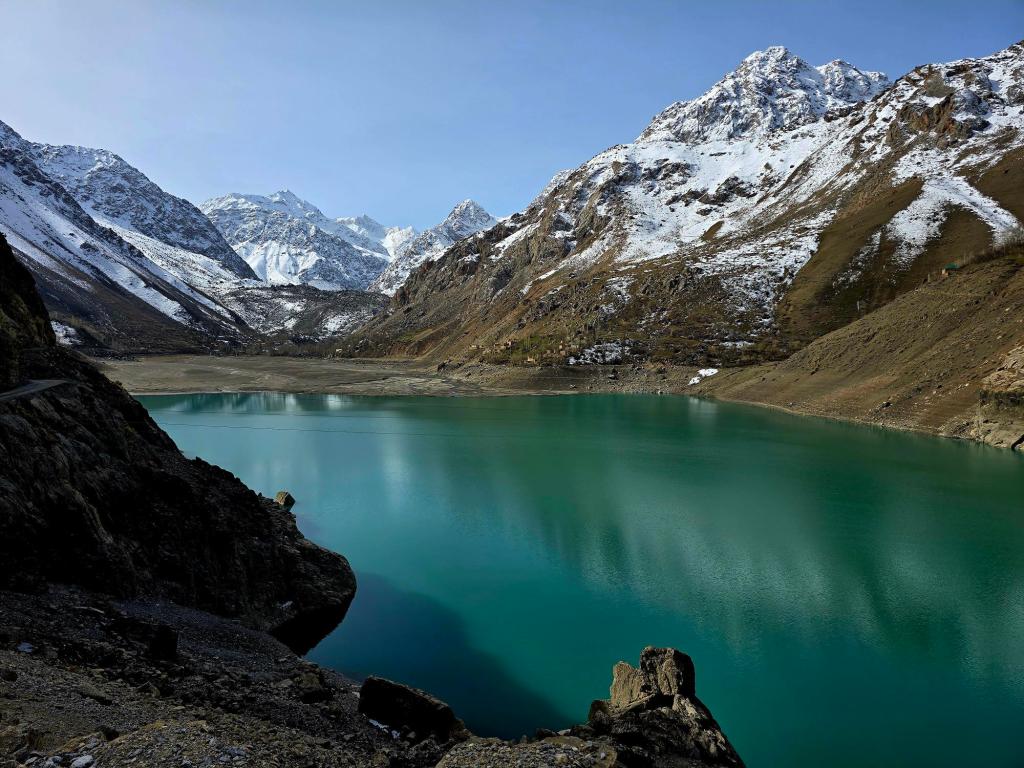
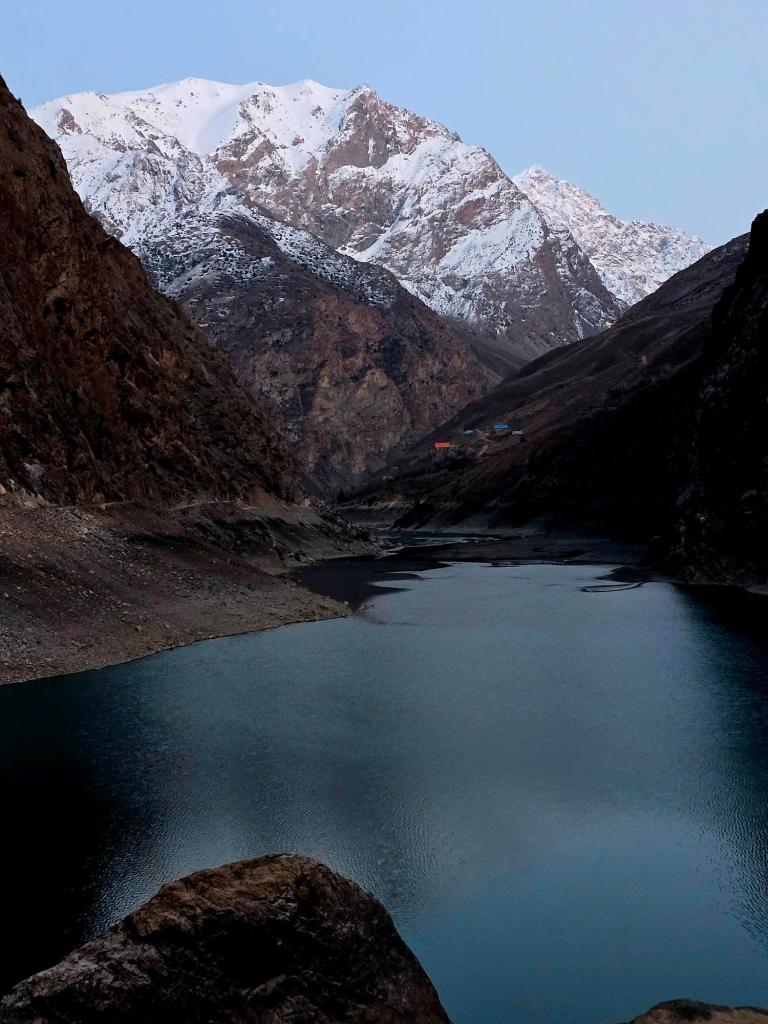
We drove up past the fourth lake, where the road eventually pulls away from the shoreline and climbs onto a narrow ledge carved into the cliff. By the time we reached the fifth, the road had turned into one of those stretches where you start doing quiet math in your head about turning radiuses and passing points, hoping you don’t meet another vehicle coming the other way. On the lake side, the drop falls away sharply—close enough to make you lean ever so slightly toward the mountain without realizing it.
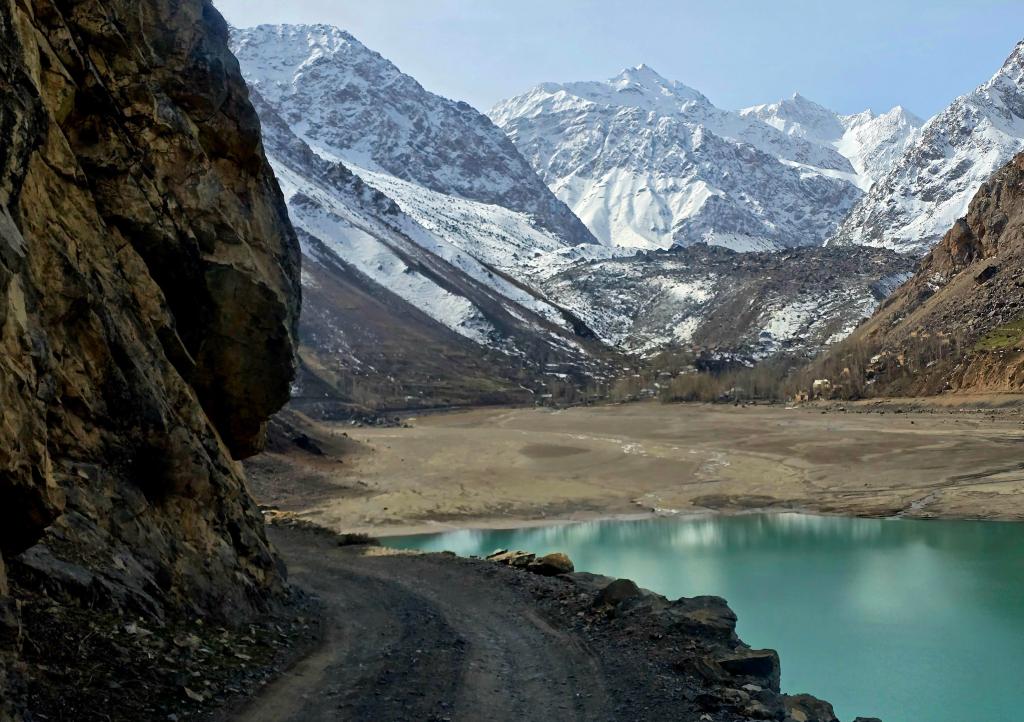
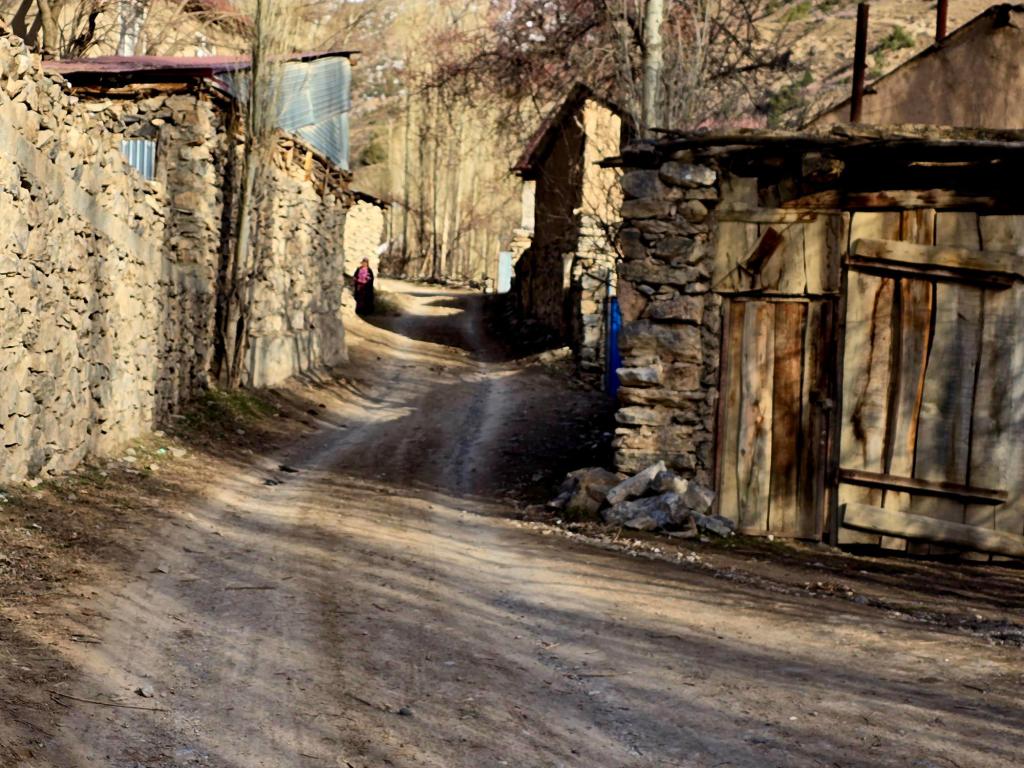
I was more than happy when the road finally dropped back down to lake level. Somewhere along the way we passed through one of the lakeside villages—tucked neatly between steep slopes and water, the kind of place that feels both remote and completely lived in. Life doesn’t pause up here. It just adjusts to the terrain.
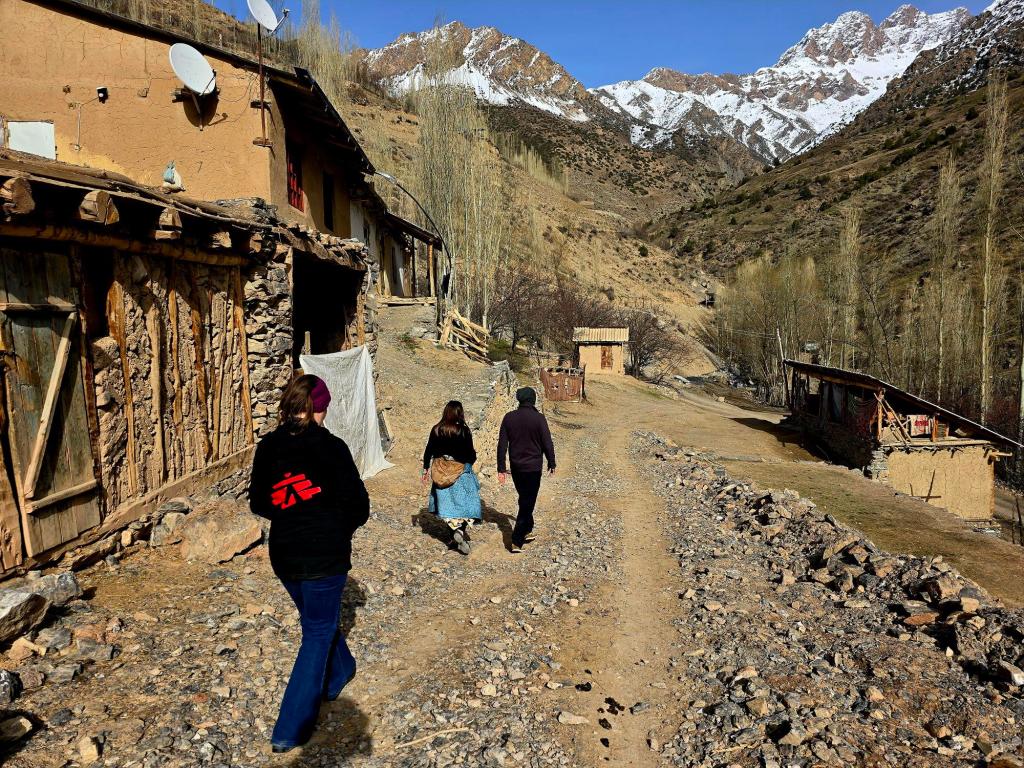
By the time we reached the sixth lake, another village came into view, this one climbing up the far slope above the water. We pulled over and decided to hike the rest of the way to the final lake. There are countless lakes scattered through these mountains, but these seven—stacked one after another up the same narrow valley—are the ones that draw you in.
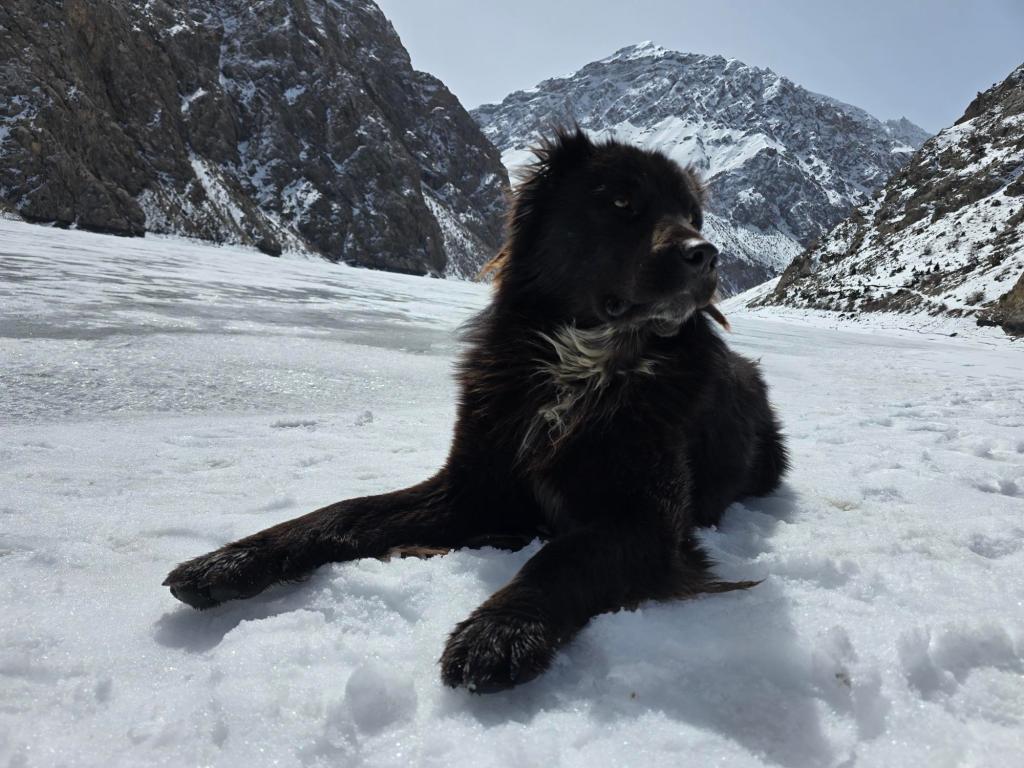
The trail climbed steadily out of the village, and we passed through the quiet rhythm of morning life. Women guiding goats out toward the hills, people gathered along the edges of their homes, and the occasional rider making their way down the path on a donkey. It wasn’t staged or slowed down for anyone—it just was. Somewhere along the way, a big black and brown dog with a few loose dreadlocks behind his ears decided to join us. He had an easygoing, unbothered kind of presence—part trail companion, part silent guide—and he stuck with us for most of the day.
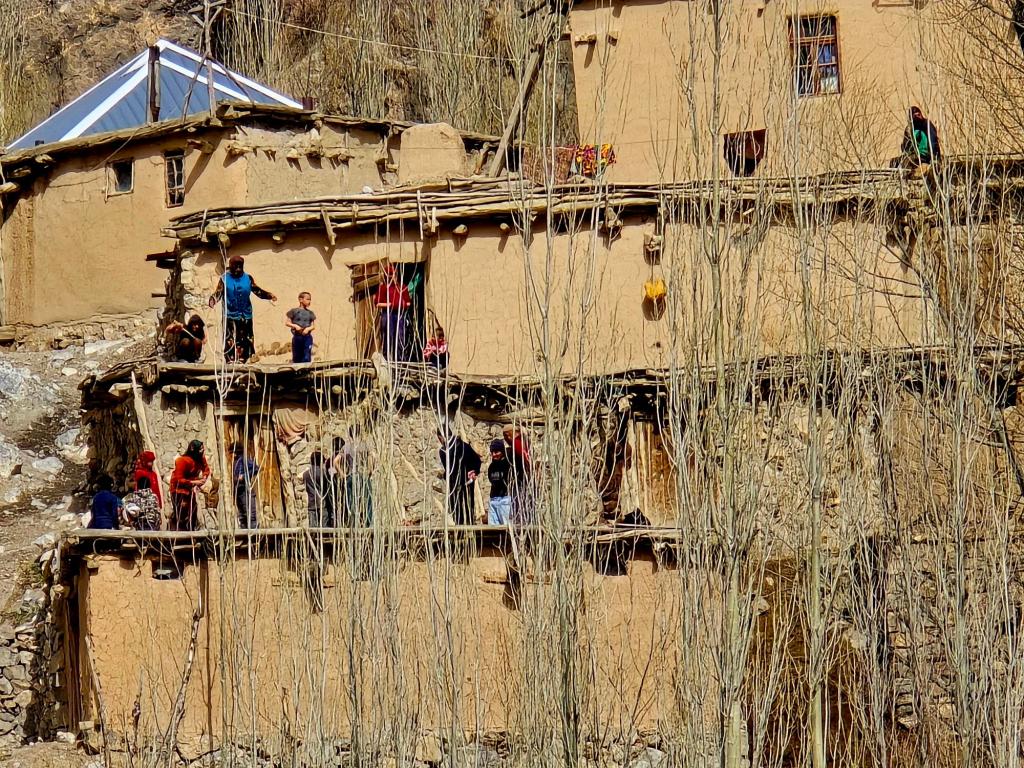
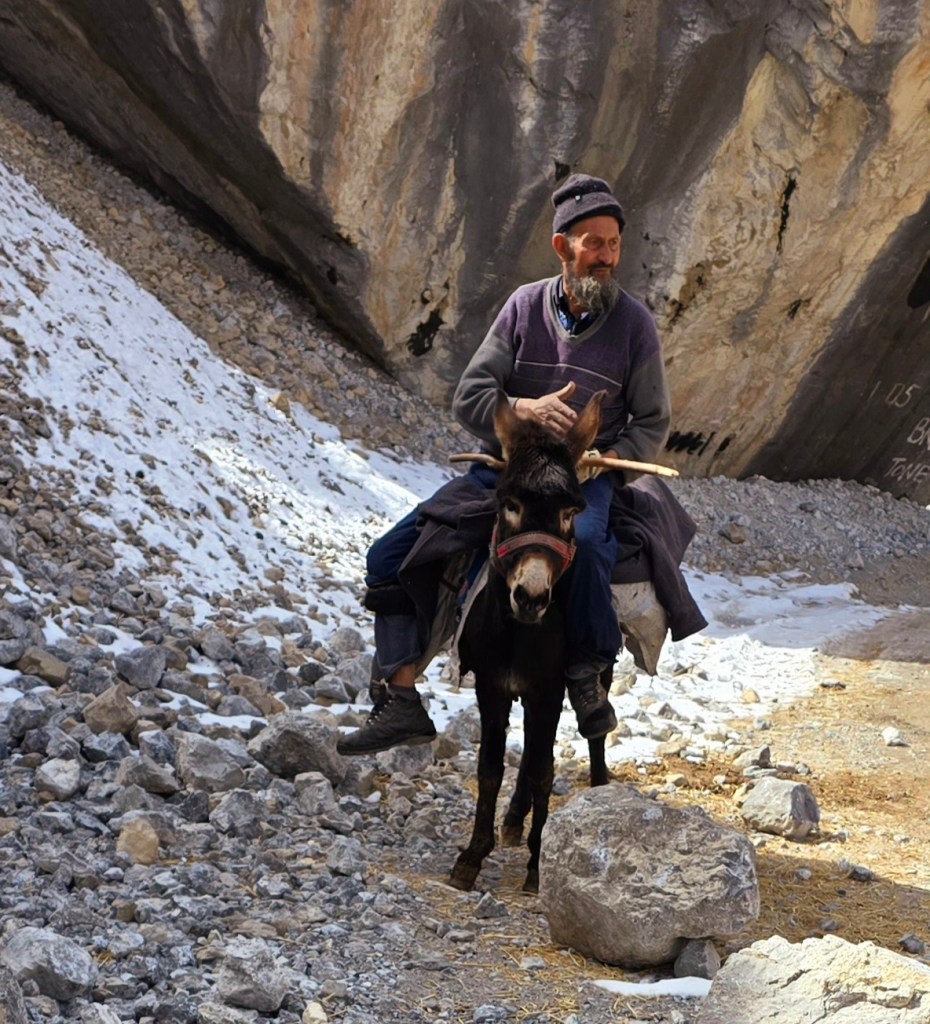
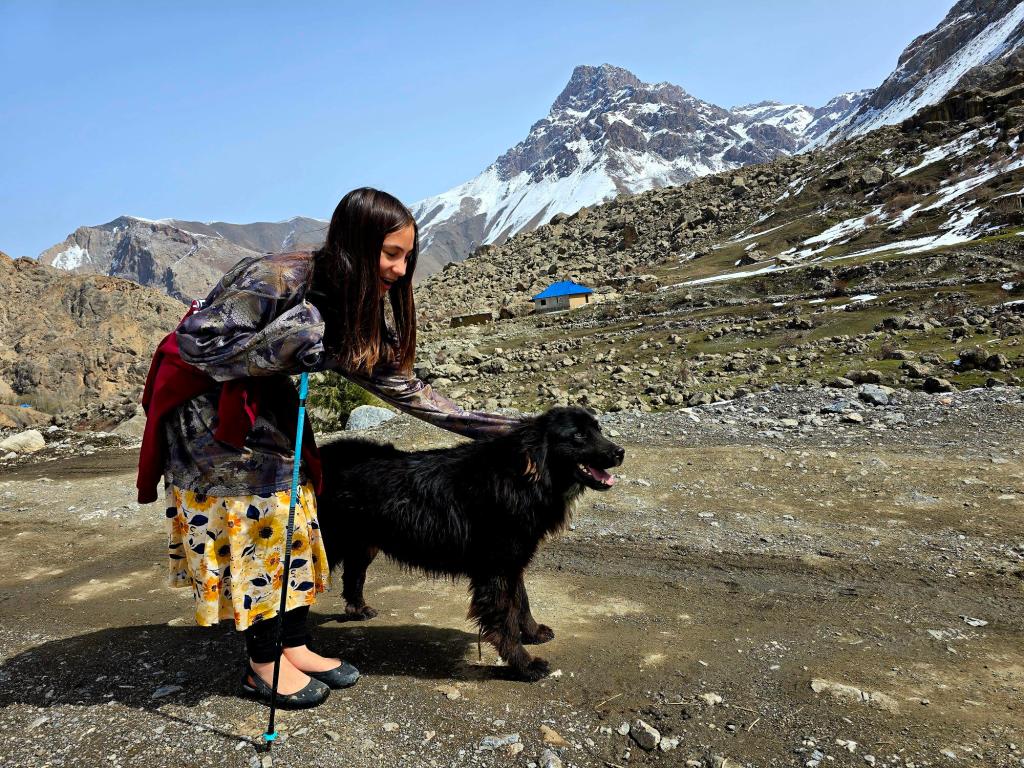
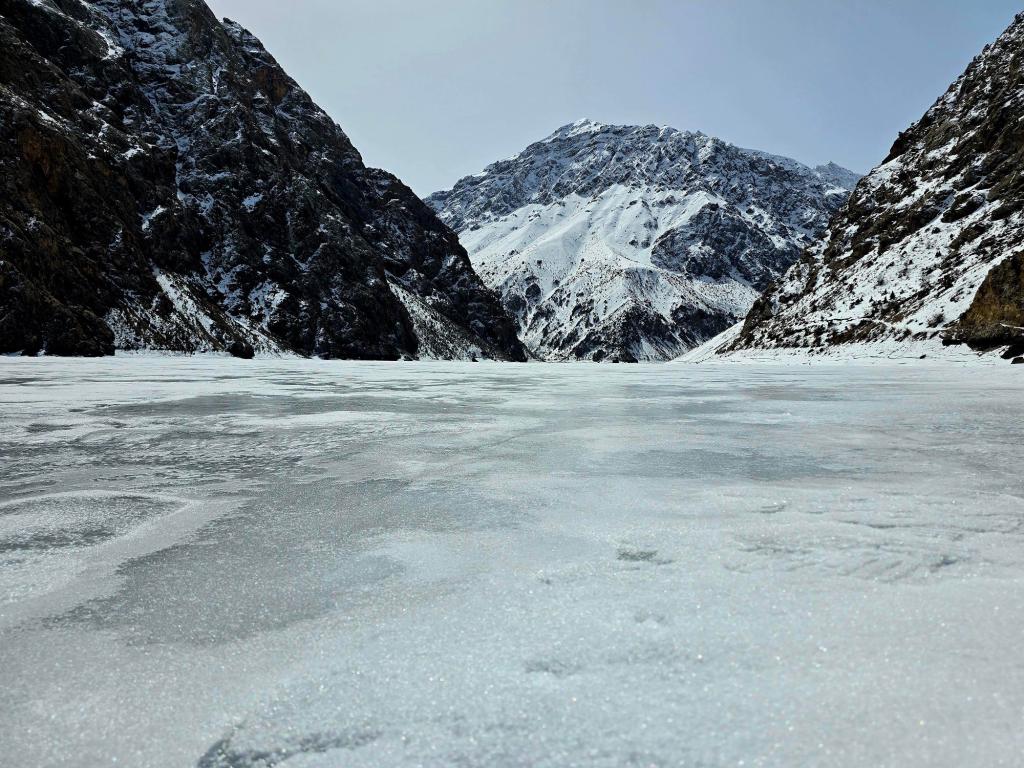
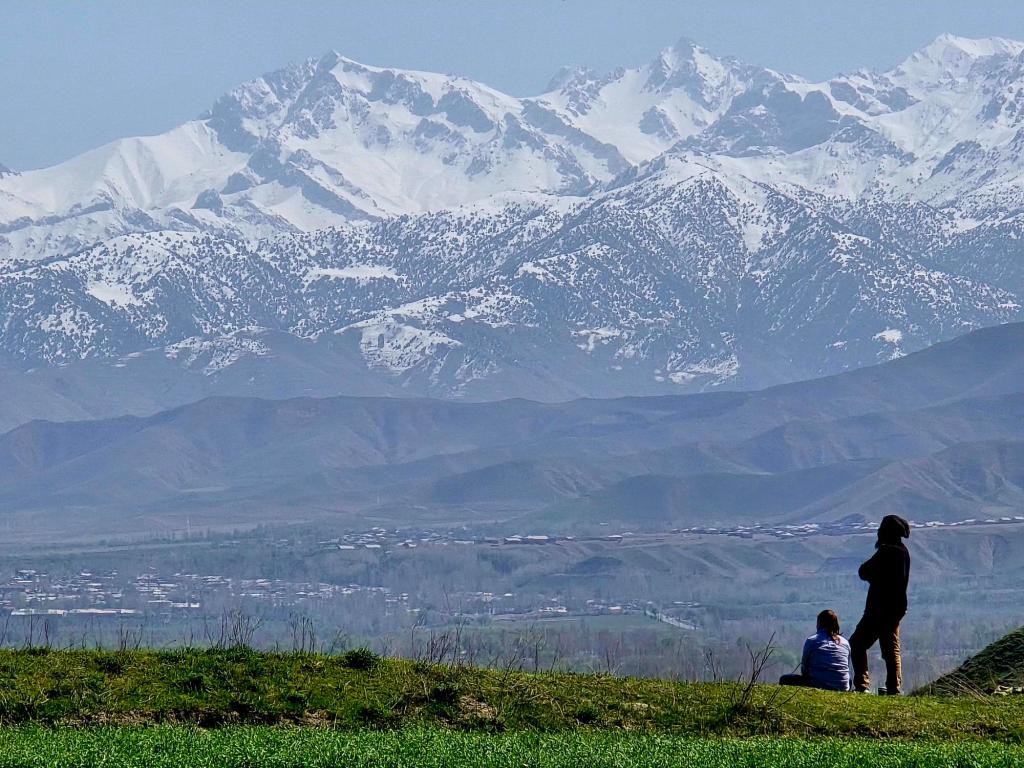
As we gained elevation, the valley opened and tightened again in waves, each turn revealing a slightly different version of the same landscape—rock, water, sky, and that steady upward pull. By the time we reached the final shelf, winter still had a grip on things. Snow covered the ground, and the seventh lake—Hazorchashma, the highest of them all—lay completely frozen beneath a thick sheet of ice.
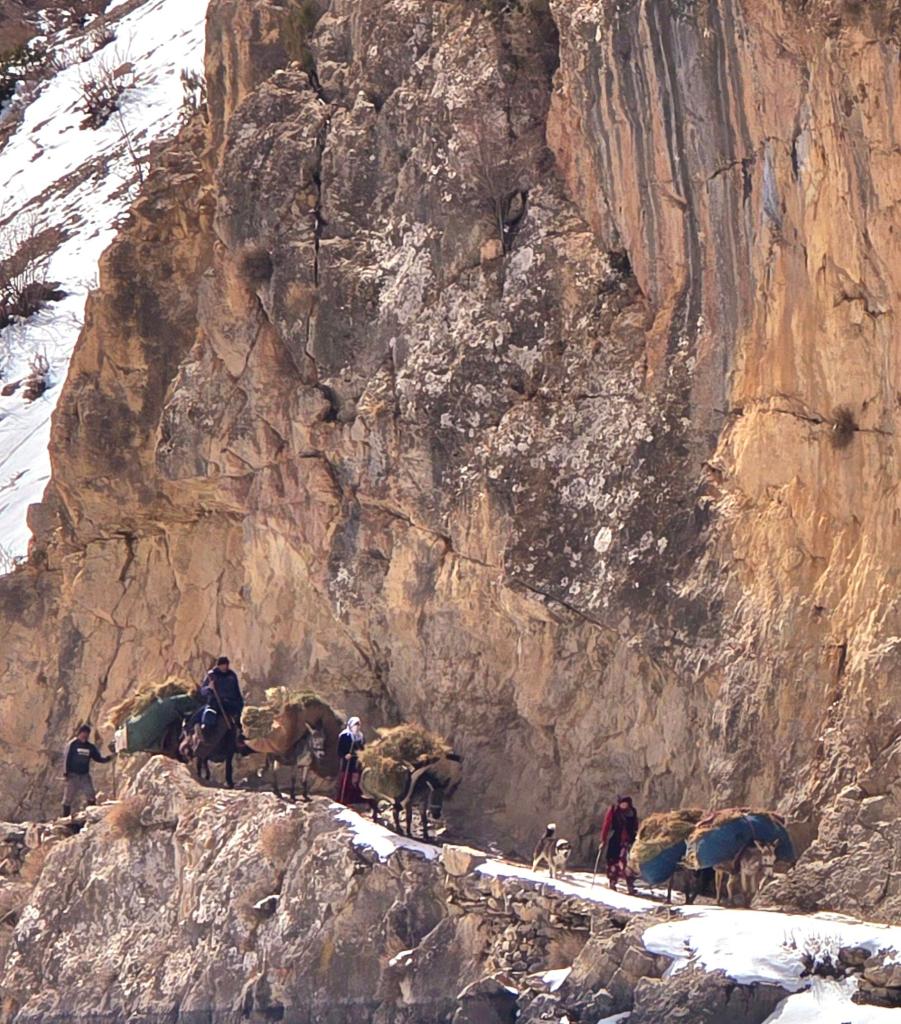
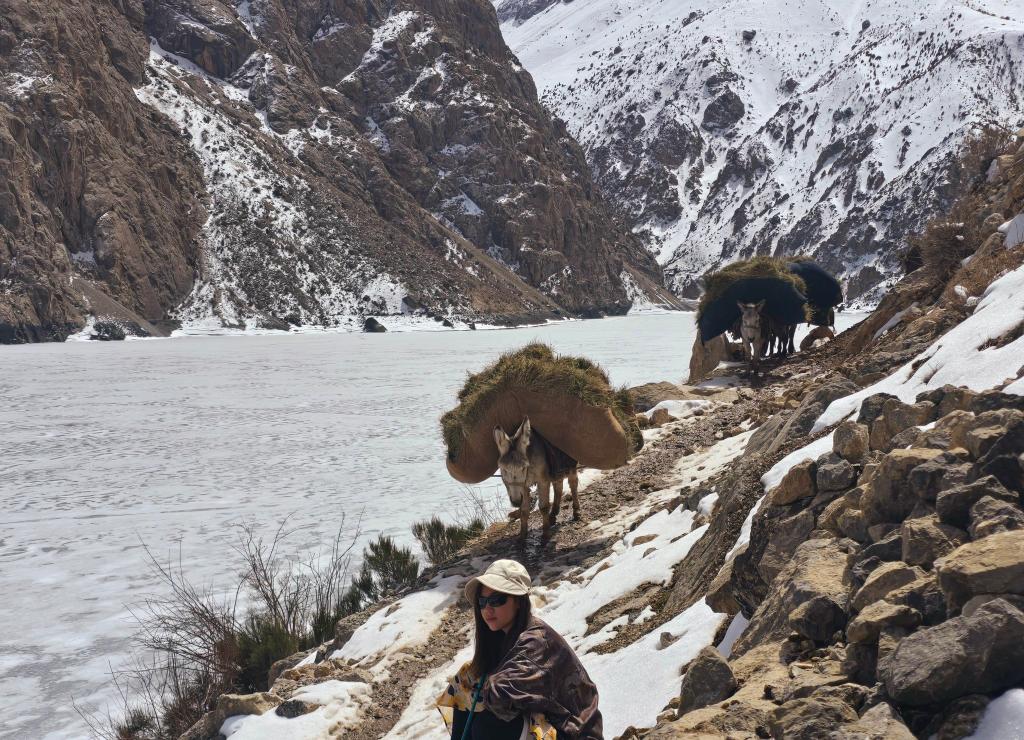
Along the narrow trail tracing the edge of the basin, we passed groups of locals moving in the opposite direction, their donkeys loaded high with hay. They greeted us in stride and kept moving, heading back down toward the lower lakes. There’s a constant movement through this valley—people, animals, supplies—threading these villages together in a way that hasn’t changed much over time.
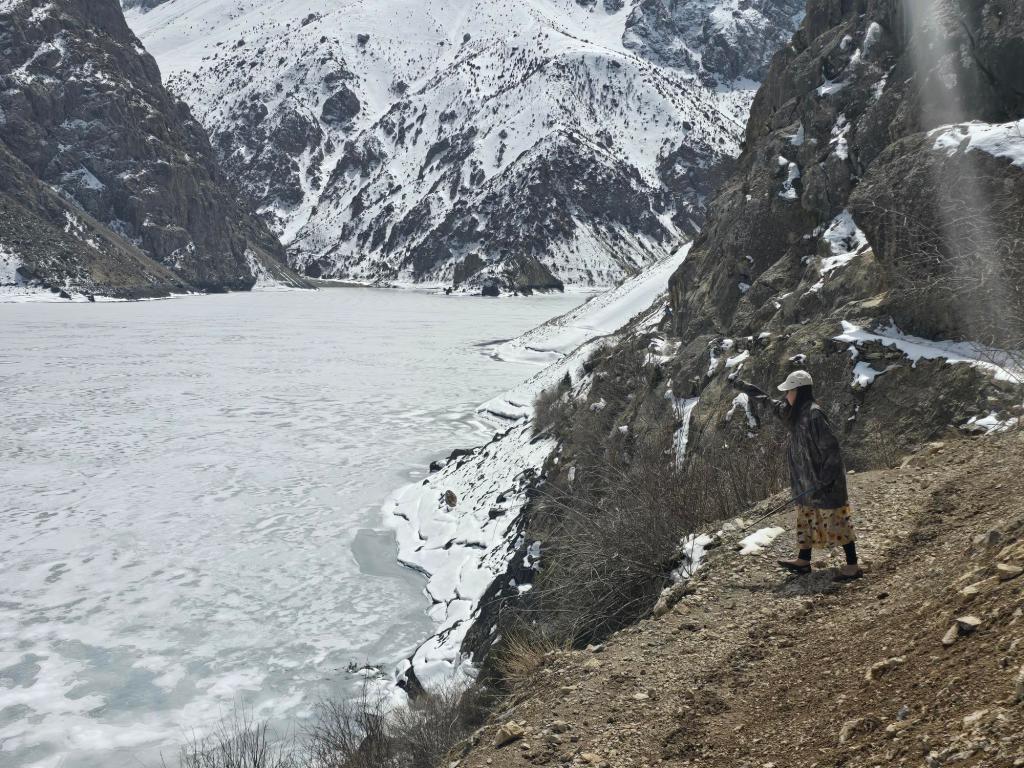
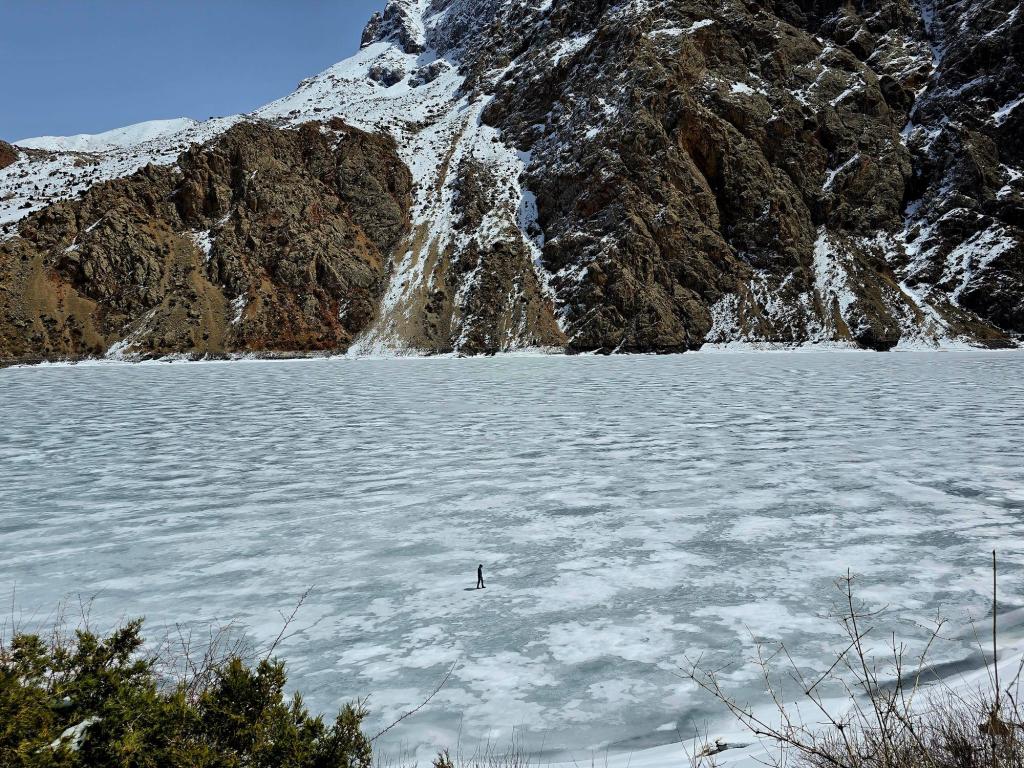
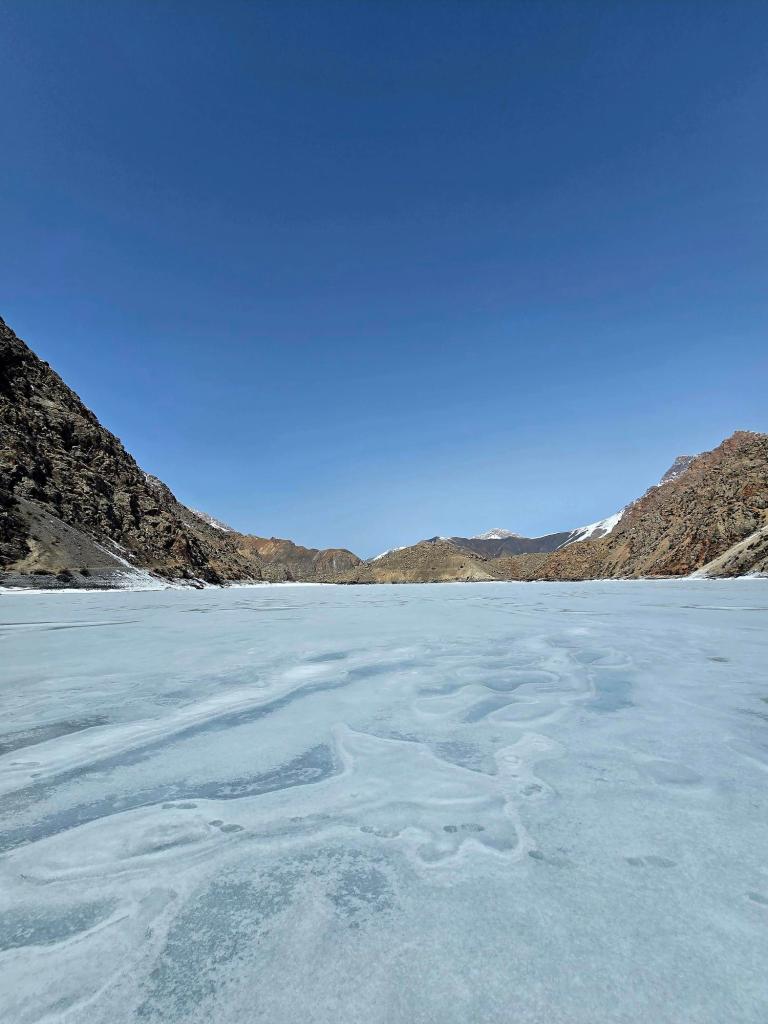
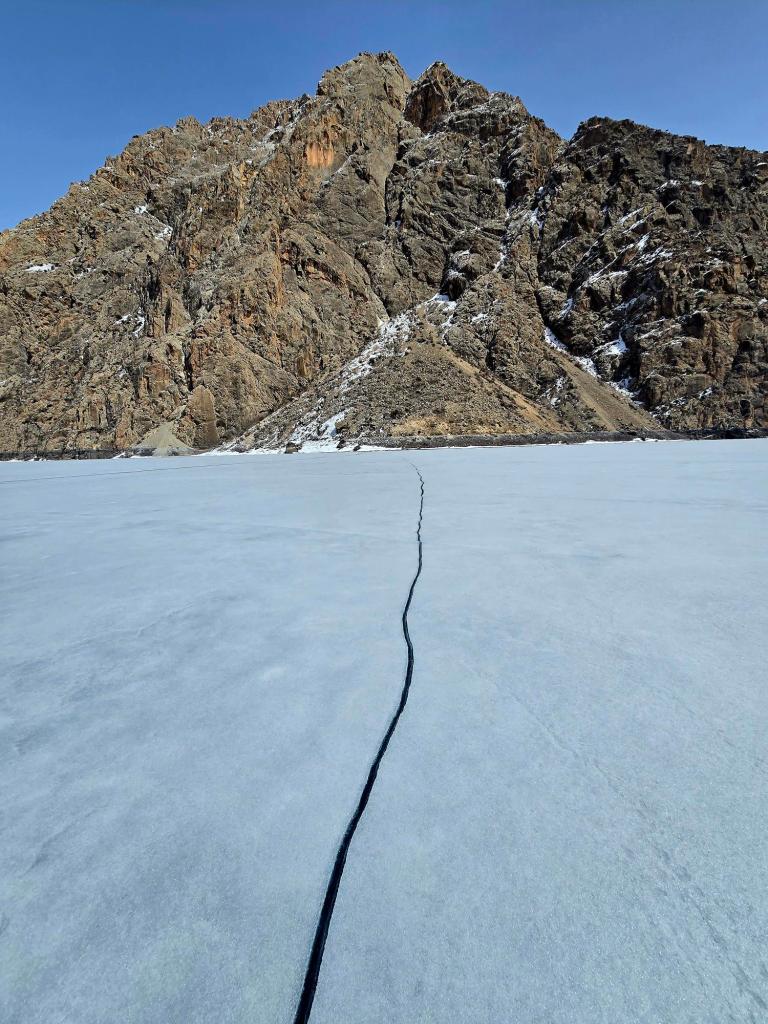
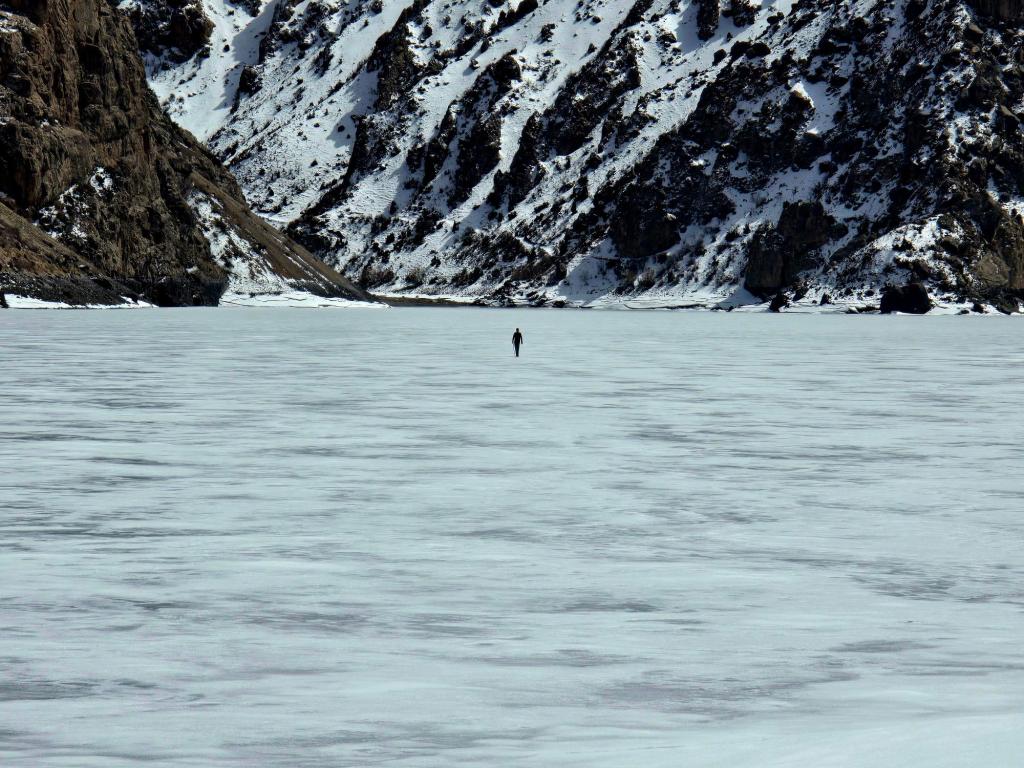
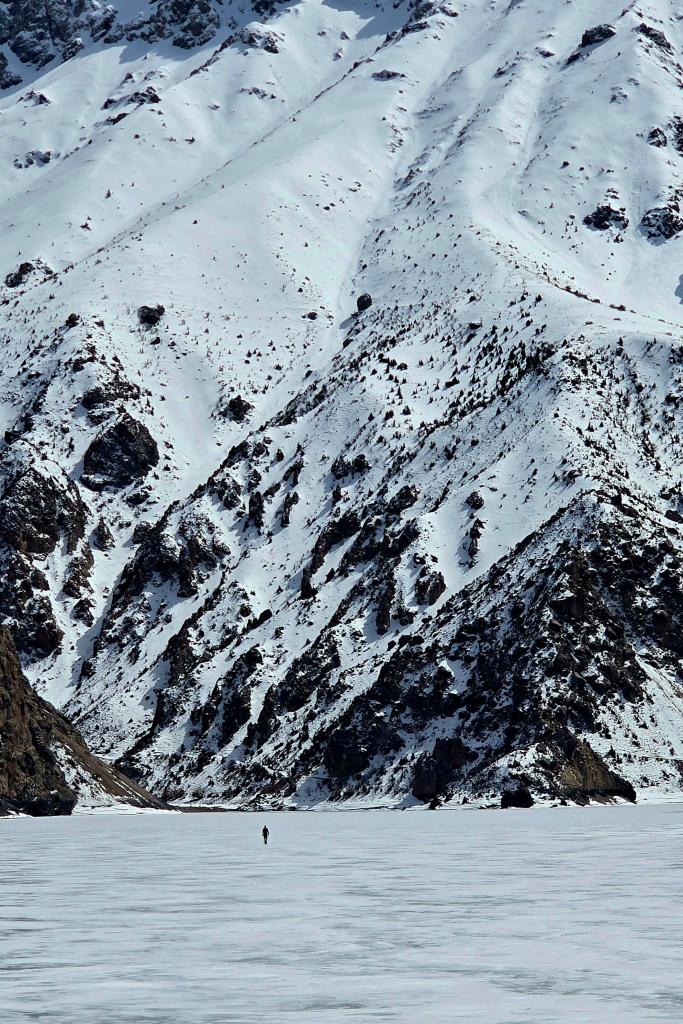
We continued along the edge of the lake, eventually looping toward the far side. At one point, I spotted Denis making his way straight across the middle of the frozen surface. That’s when it really sank in just how thick the ice must have been. Not long after, I found myself stepping out onto it as well, walking the length of the lake right down the center—something that felt just uncertain enough to stay interesting.
A couple of weeks later, Denis told me he had gone back up there, and the entire lake had already melted out. Just like that. It’s always a bit wild how quickly things shift in the mountains—solid ice one week, open water the next.
We hung out for a while near the edge of the lake, sharing snacks and soaking it all in, our rastadog companion lounging nearby like he had nowhere else to be. Eventually, we made our way back down toward the village, retracing our steps along the same winding trail. Once again, we were grateful not to meet anyone on that narrow stretch of road carved into the cliffs.
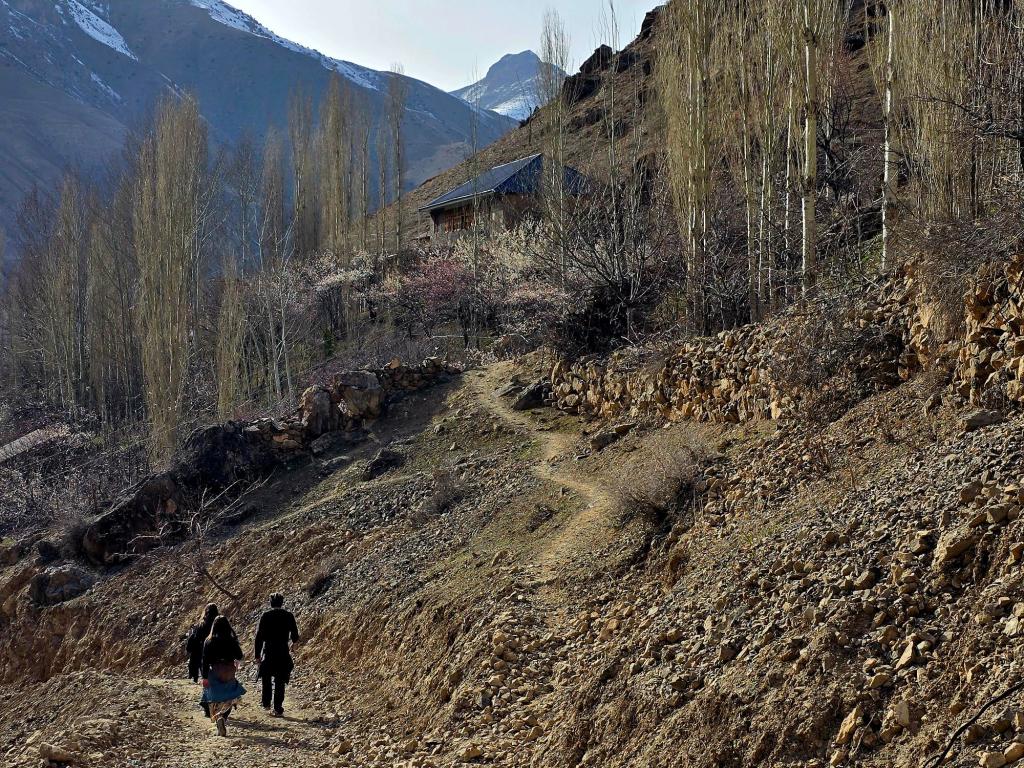
Back at the guesthouse, we regrouped briefly before heading out for one more walk—this time up into the hills above the village. It turned into one of those perfect late-afternoon outings. Soft light, long shadows, and wide views stretching back down through the valley we had just climbed.
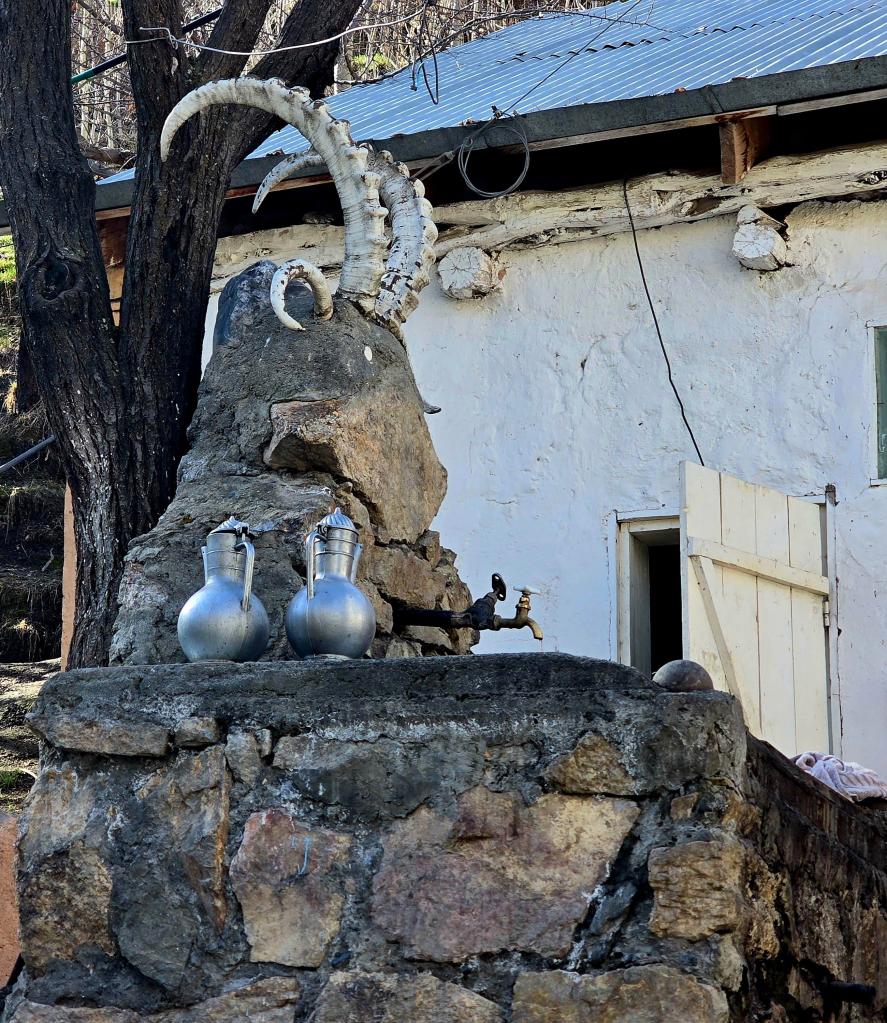
Cassady and I ended the day wandering across the mostly dry basin where the fourth lake usually sits. Only a narrow river traced its way across the far side, the rest of the lakebed lying open and exposed. It felt like seeing the place in between moments—neither full nor empty, just waiting.
As evening settled in, we made our way back for a well-earned meal of osh and salads, the kind of simple, hearty food that somehow always tastes better after a long day outside. Not long after, we turned in early, the mountains going quiet around us once again.
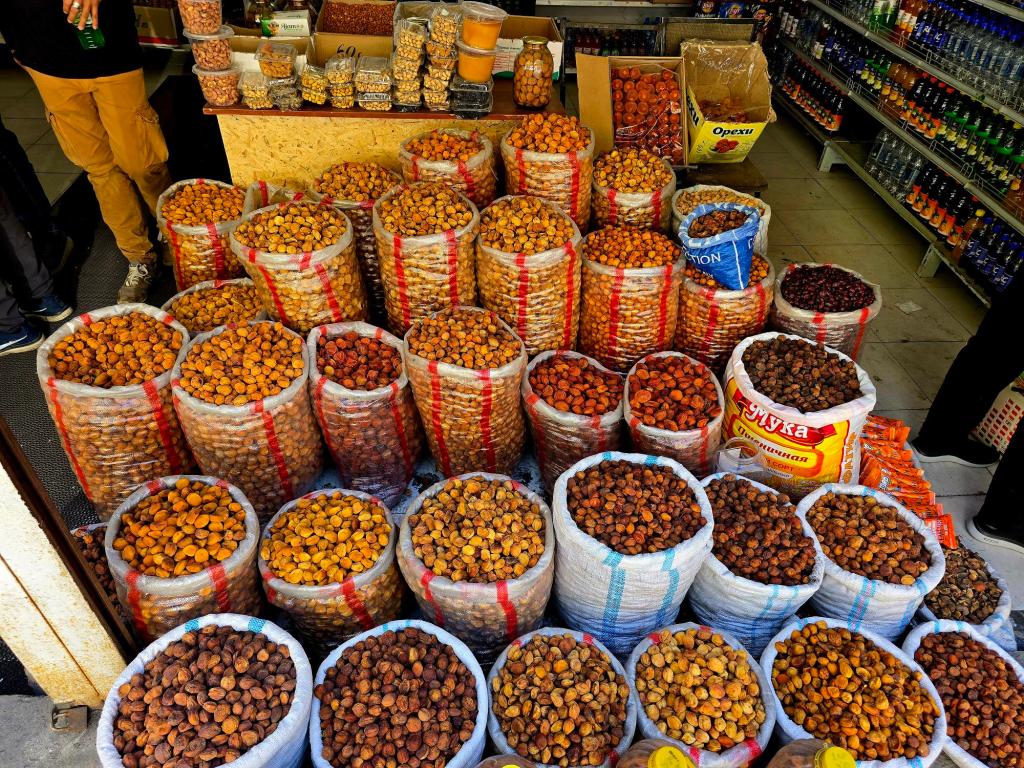
The next morning, we packed up and began the drive home, stopping first in Panjakent to wander through the market. It had that unmistakable Silk Road feel—busy without being rushed, layered without being chaotic. Stalls stacked with bread, dried fruits, nuts, and fresh produce, people moving through familiar routines, buying and selling in the same ways that have played out here for generations.
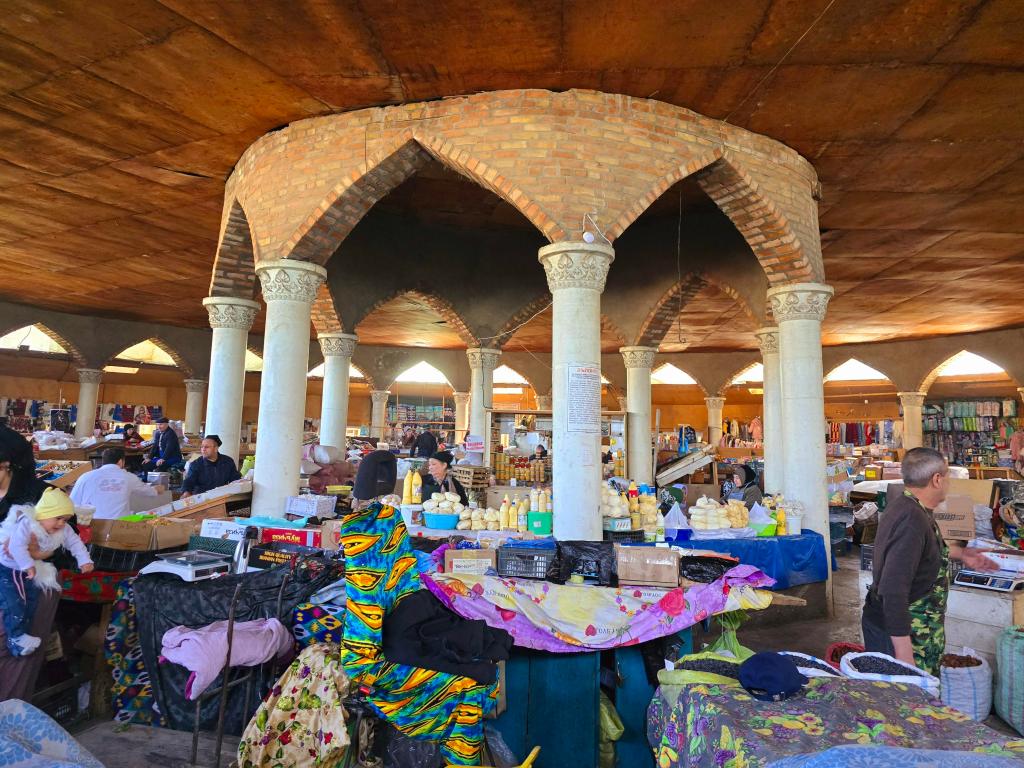
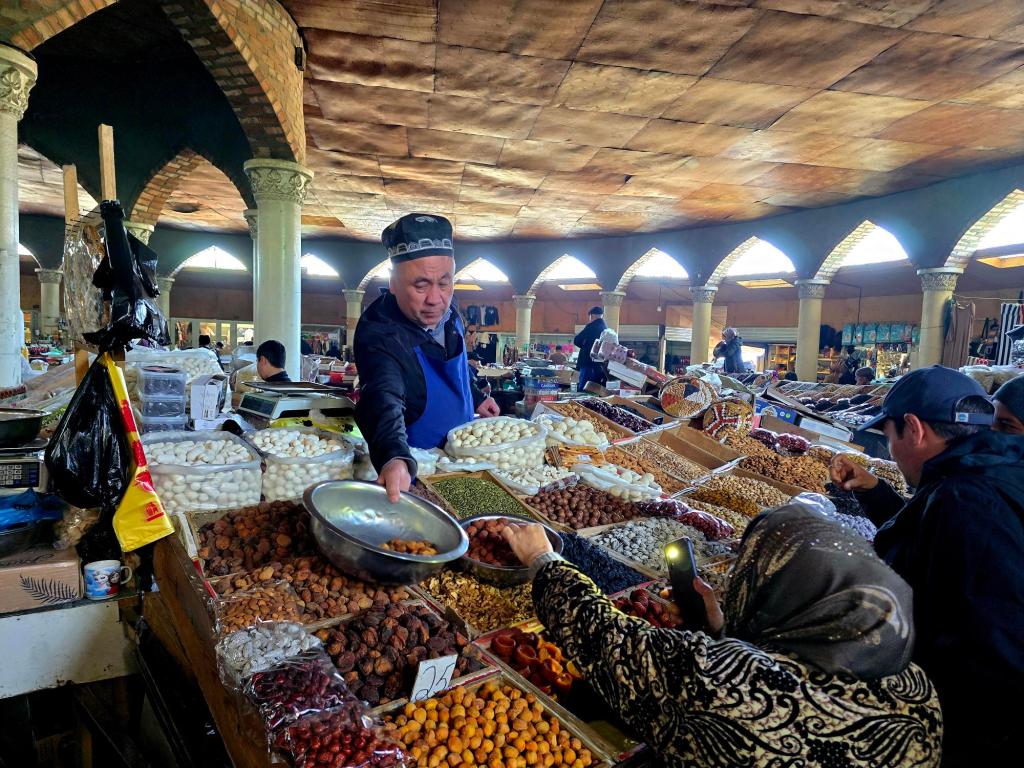
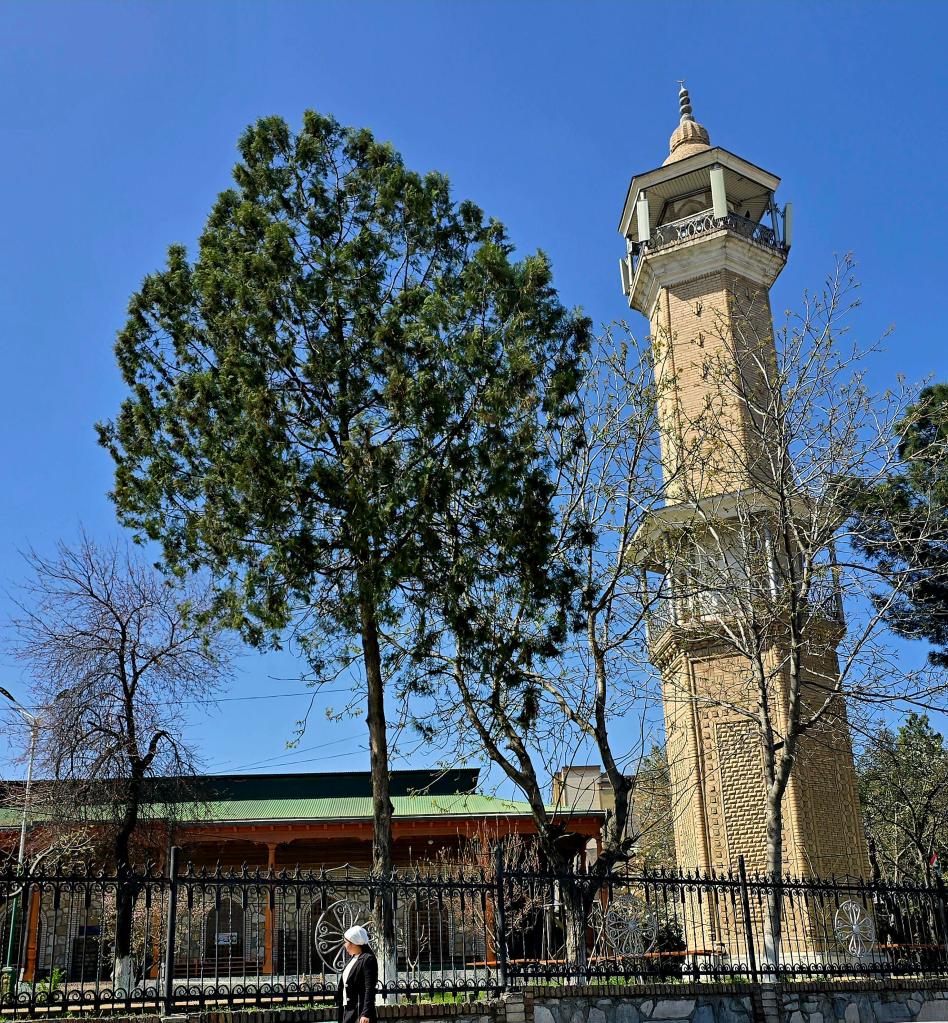
Across from the market stood the main mosque and minaret, anchoring the other side of daily life. Trade and prayer, side by side. It’s a pairing you see across Central Asia, and it always feels like a quiet reminder of how these places have functioned for centuries.
And then, just like that, we were back on the road—leaving the lakes, the villages, and the slow rhythm of the mountains behind, settling in for the long drive back to Dushanbe.
 Wise Clan in Stanland
Leave a comment