🧭 Trail Stats
📏 Distance: 14 miles
⬆️ Ascent: 3,379 ft.
⬇️ Descent: 3,734 ft.
⏱ Total Time: 9h 26m
🚶 Time Moving: 6h 47m
⚖️ Difficulty: Moderate from trailhead, difficult with the extra mountain thrown in
📅 Date Hiked: June 7, 2025
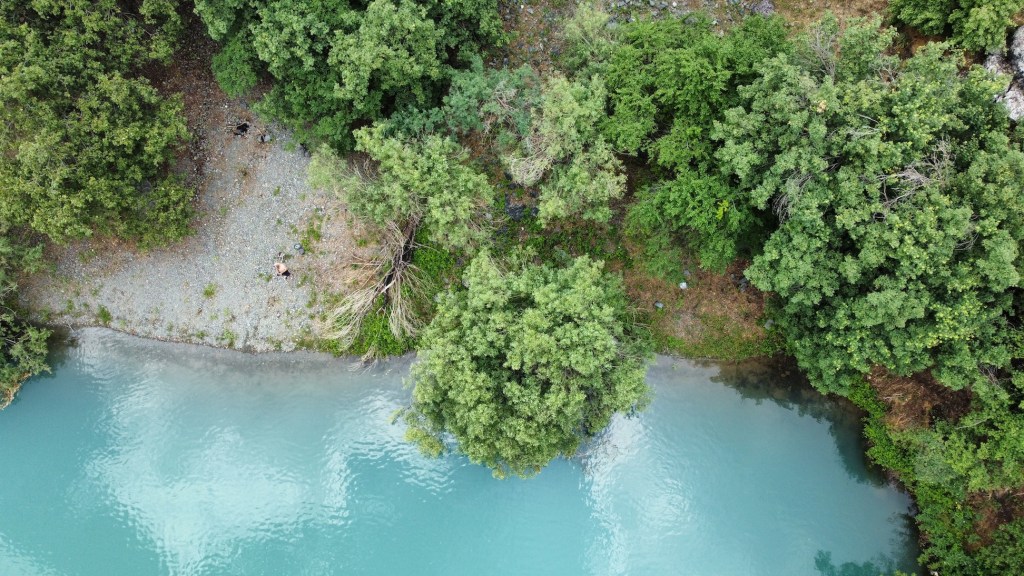
We were sitting at Lake Timurdara last weekend when the topic of another lake came up—Kuli Juazak, tucked somewhere over a ridge nearby. I mentioned I had already been there once before with a mutual friend, though at the time I hadn’t fully appreciated just how roundabout that first visit had been.
There was no ridge crossing involved. Not even close.
Instead, we drove.
Or at least, we tried to.
What started as a mountain dirt road quickly turned into a muddy, rutted-out track clinging to the side of a steep slope. The kind of road where you don’t say much, you just sit there in the back seat watching the tires slide a little more than you’d like, with a long drop-off just outside your window. Not my favorite place to be, and I was more relieved than disappointed when the driver finally decided he’d had enough and refused to push on any further.
We all piled out, expecting a quick regroup and a new plan. The original idea had been a 7 km hike each way, and according to the driver, we were only a couple more kilometers from the trailhead.
Turns out… maybe he hadn’t been there in a while either.
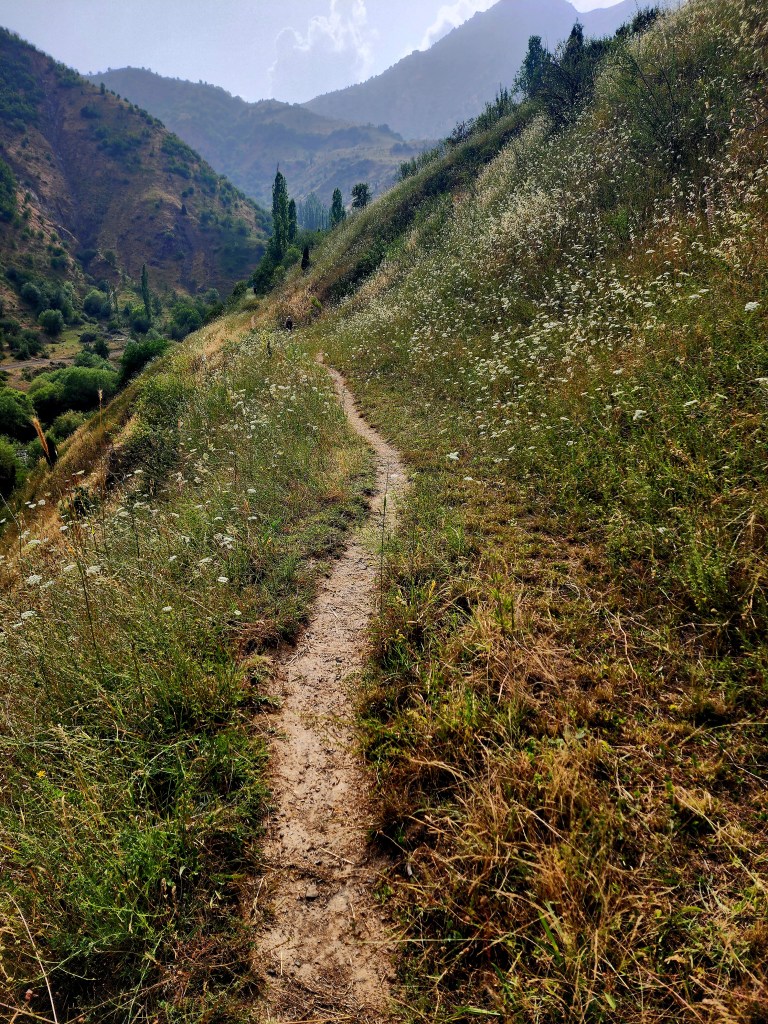
We started walking up the road, skirting the mud by cutting through patches of grass where we could, eventually having to chase an angry bull off the track with a few well-placed sticks. Just another small detail added to the day. After a while, the road flattened out, and in the distance we spotted a faint trail dropping steeply into the valley below.
I still had no real idea where we were going.
By the time we reached a small village near the valley floor, we had already covered about 3.5 miles and dropped over 2,500 feet in elevation—only to realize we had just arrived at the actual trailhead.
That’s when it hit me.
This was not going to be the moderate hike I thought I had signed up for… and everything we had just descended was waiting for us at the very end of the day.
Assuming, of course, the van was still there… and not halfway down the mountainside.
We pushed on.
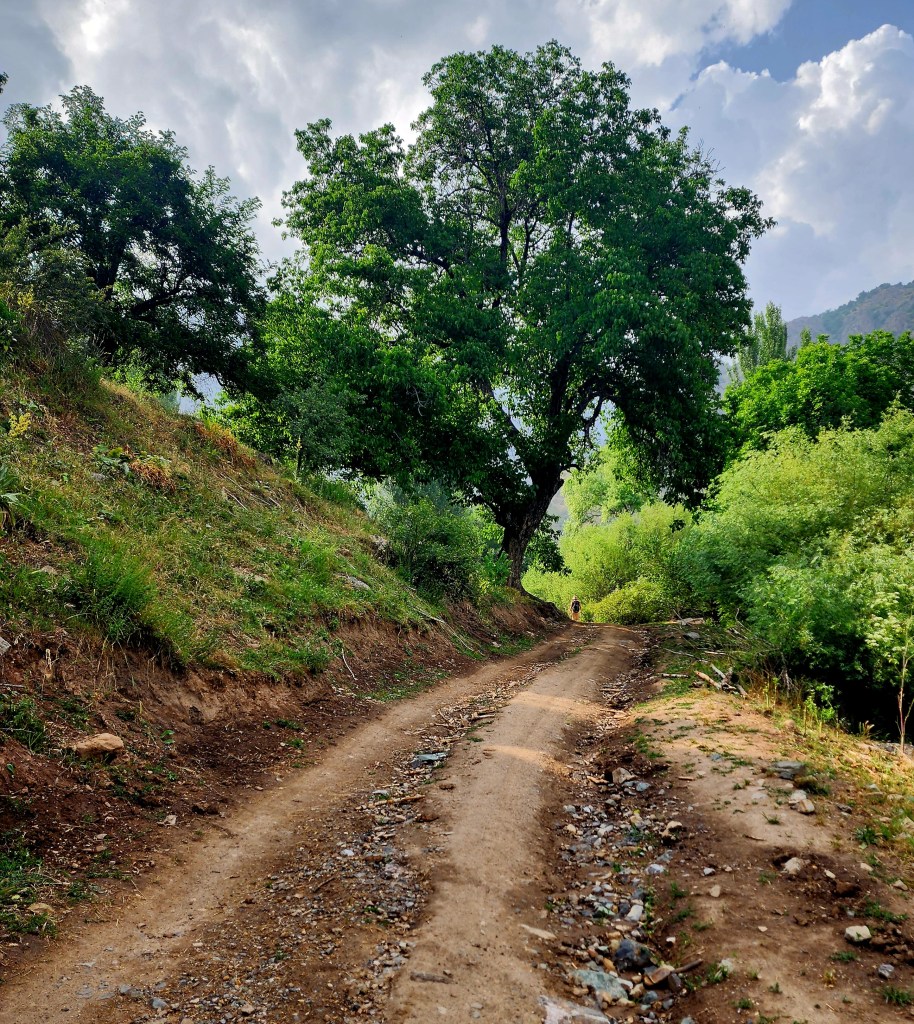
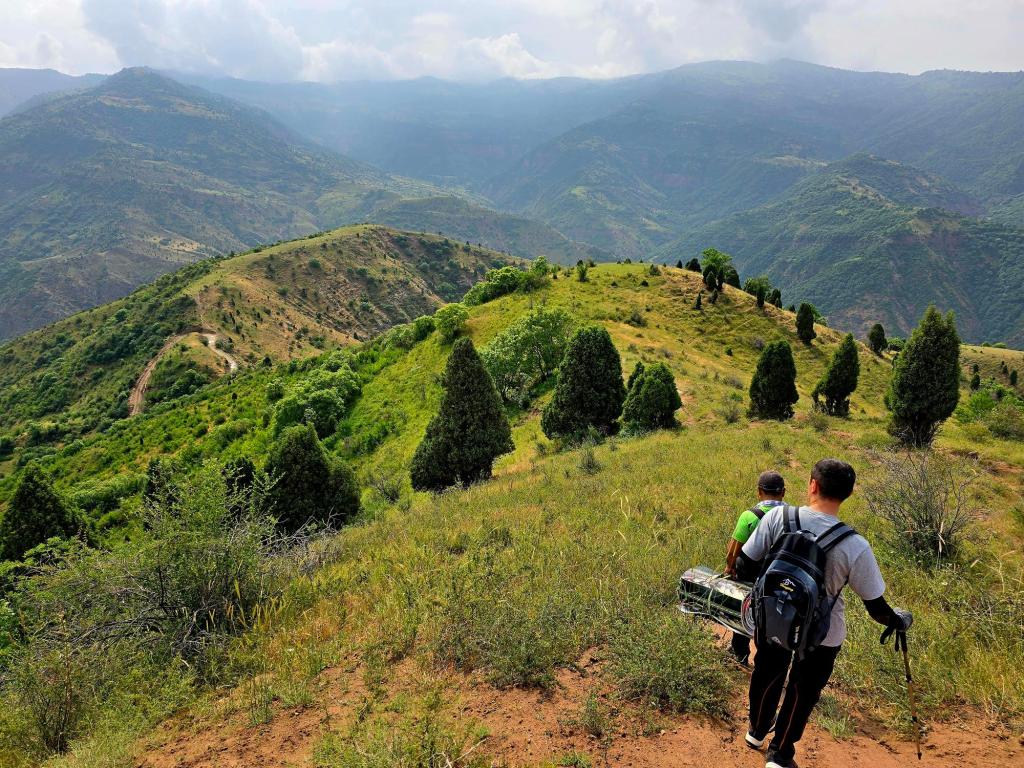
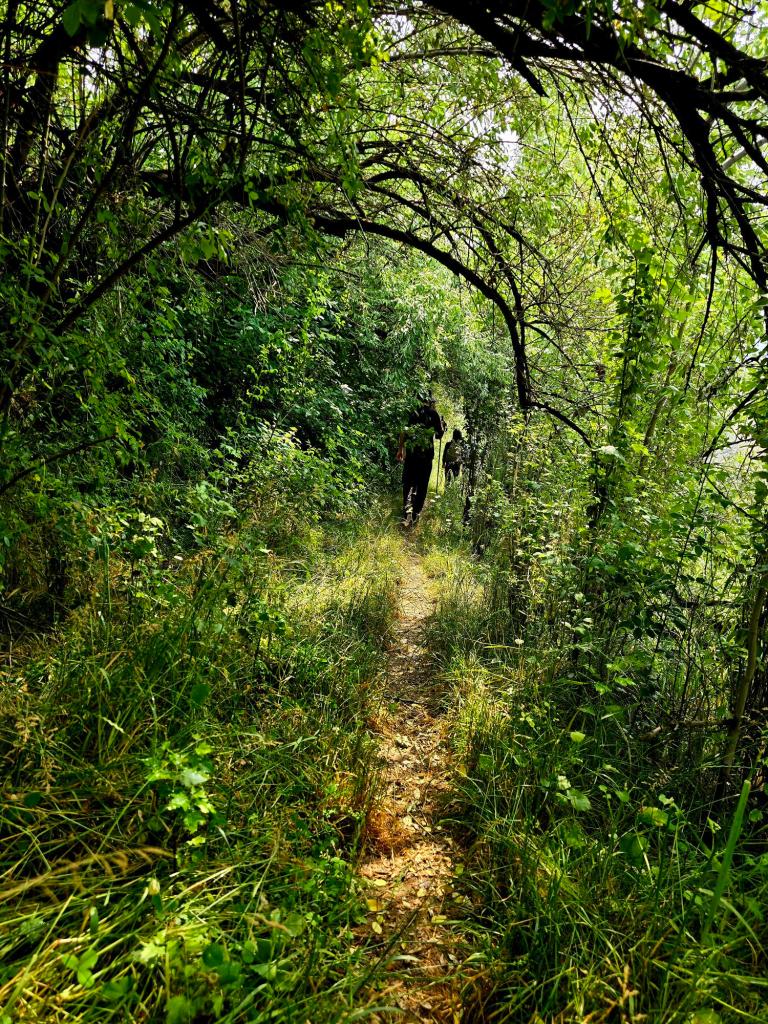
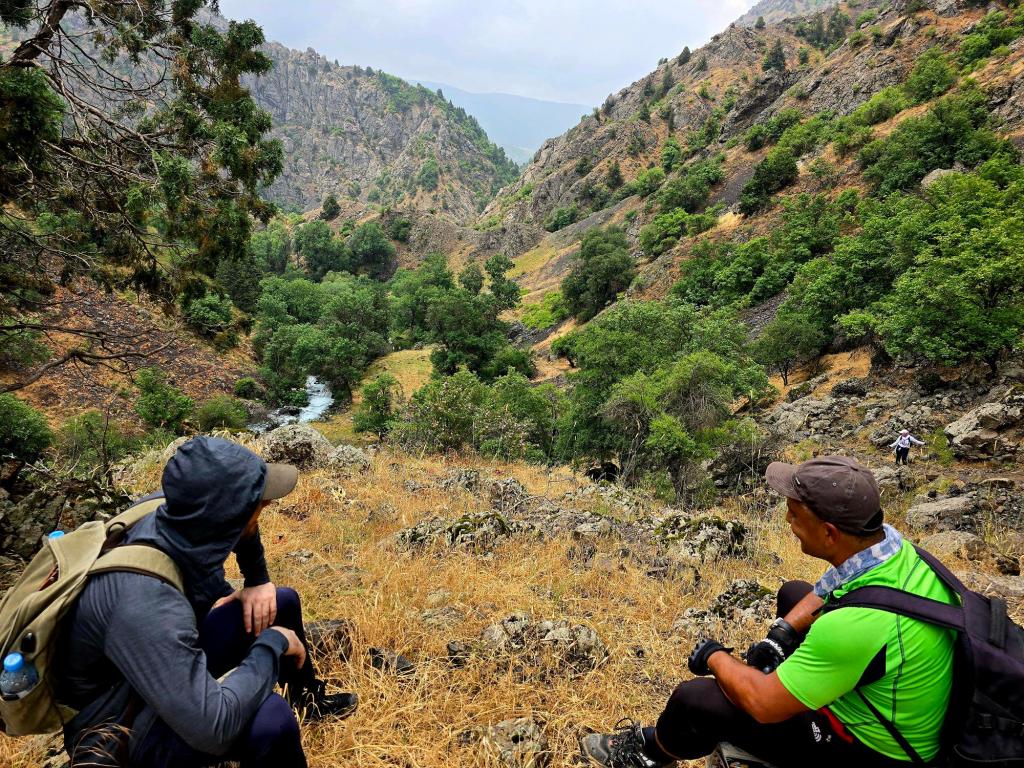
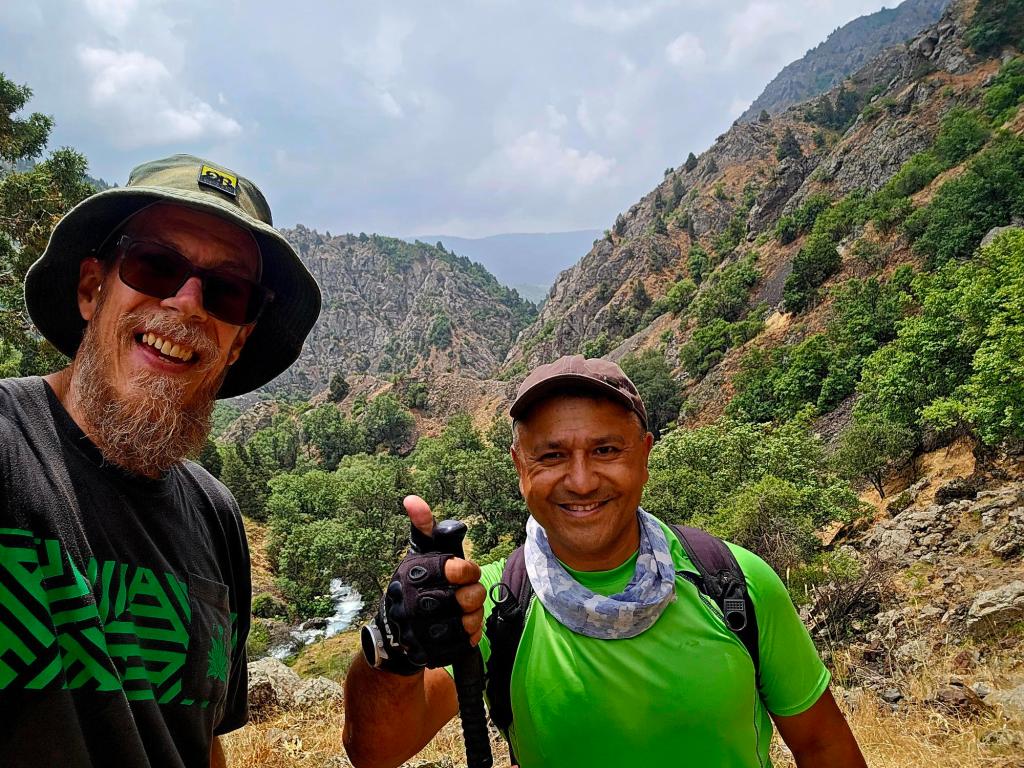
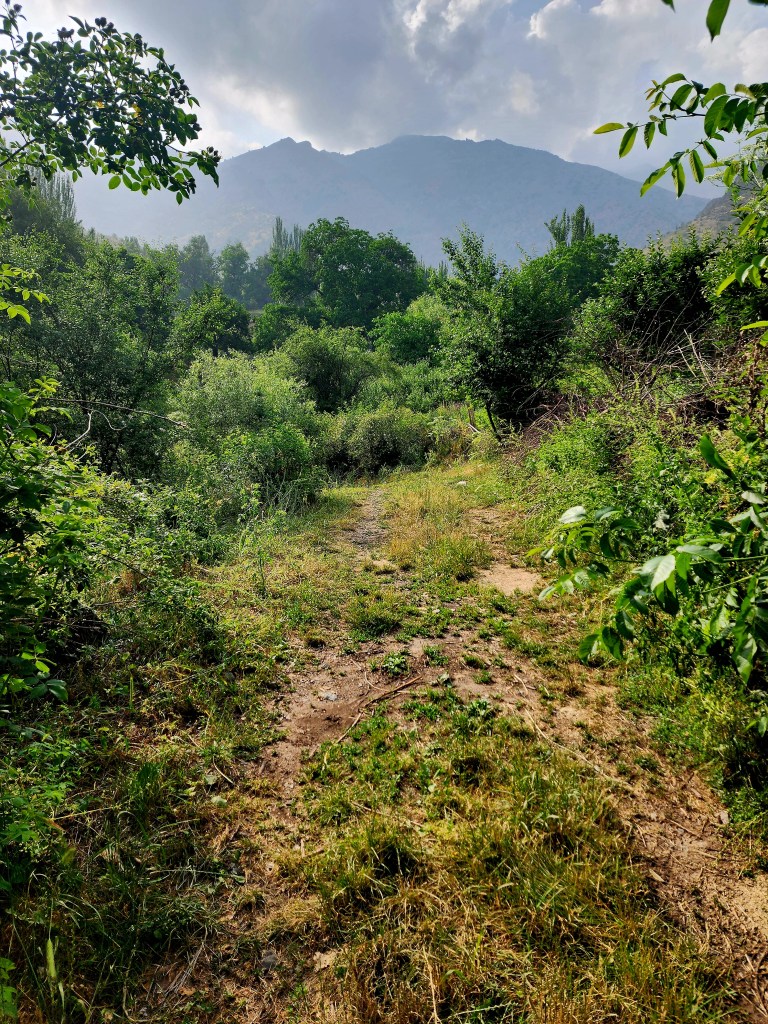
Leaving the village behind, the trail wandered through wide open meadows and into stretches of dense green vegetation that closed in overhead, forming short tunnels of shade. Beehive boxes dotted the hillsides along the way, a quiet reminder that this wasn’t nearly as remote as it felt.
Then came the river.
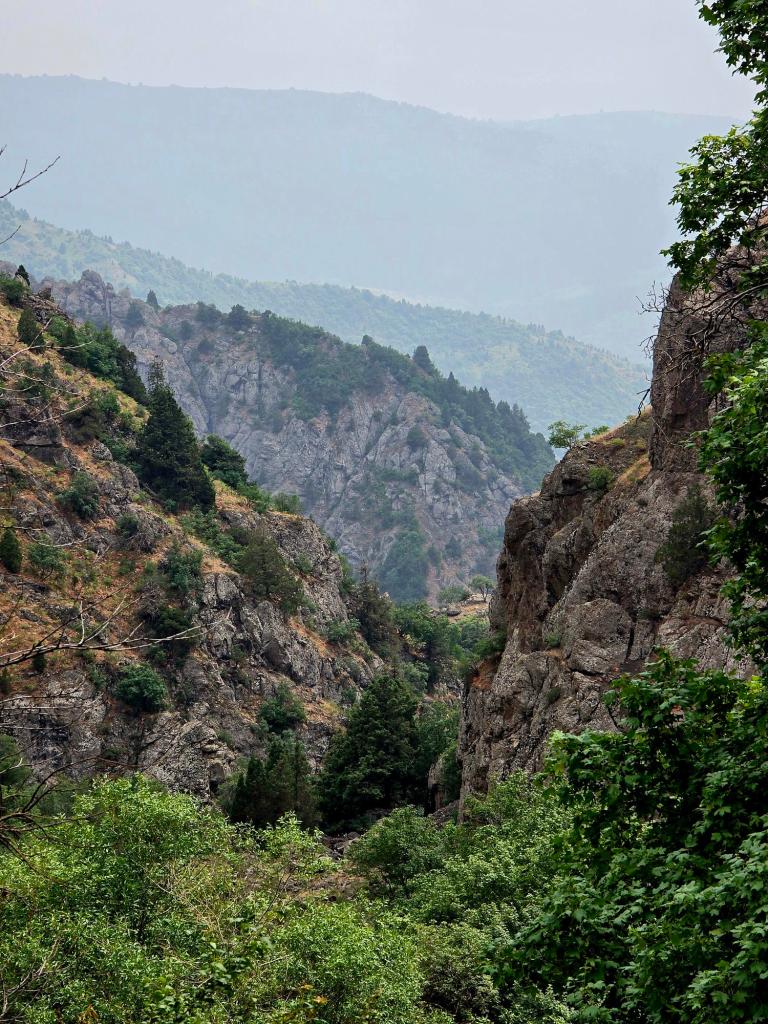
Boots off, water cold, and across we went before picking up the trail again as it began to climb steadily into the canyon ahead. The walls narrowed, the terrain steepened, and the path grew rougher underfoot as we worked our way deeper into the mountains.
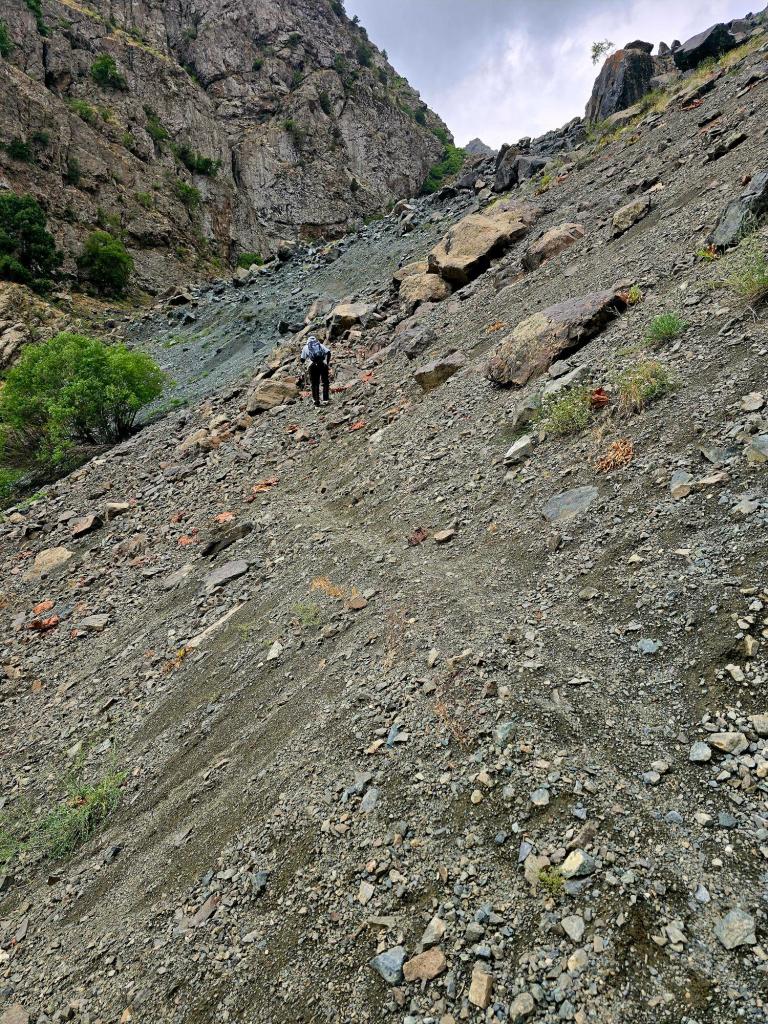
Eventually, the canyon ended in what looked like a dead end—a steep wall of rock and scree rising sharply above us. But off to one side, a narrow line hinted at a way up to a higher shelf.
It didn’t look fun.
And it wasn’t.
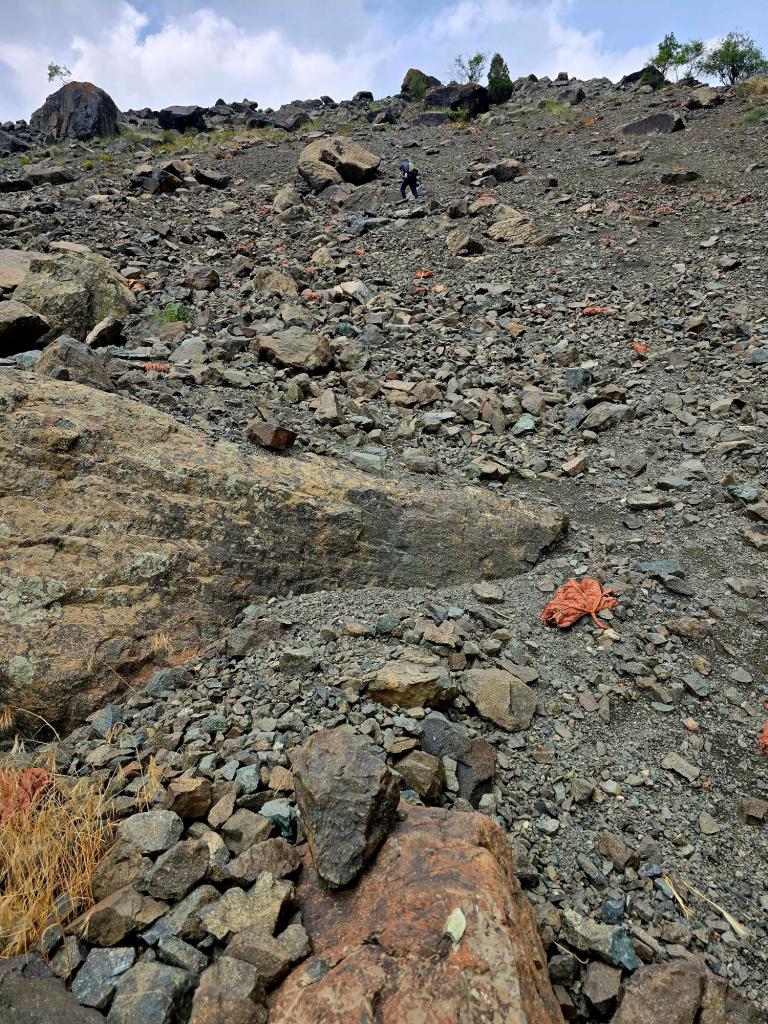
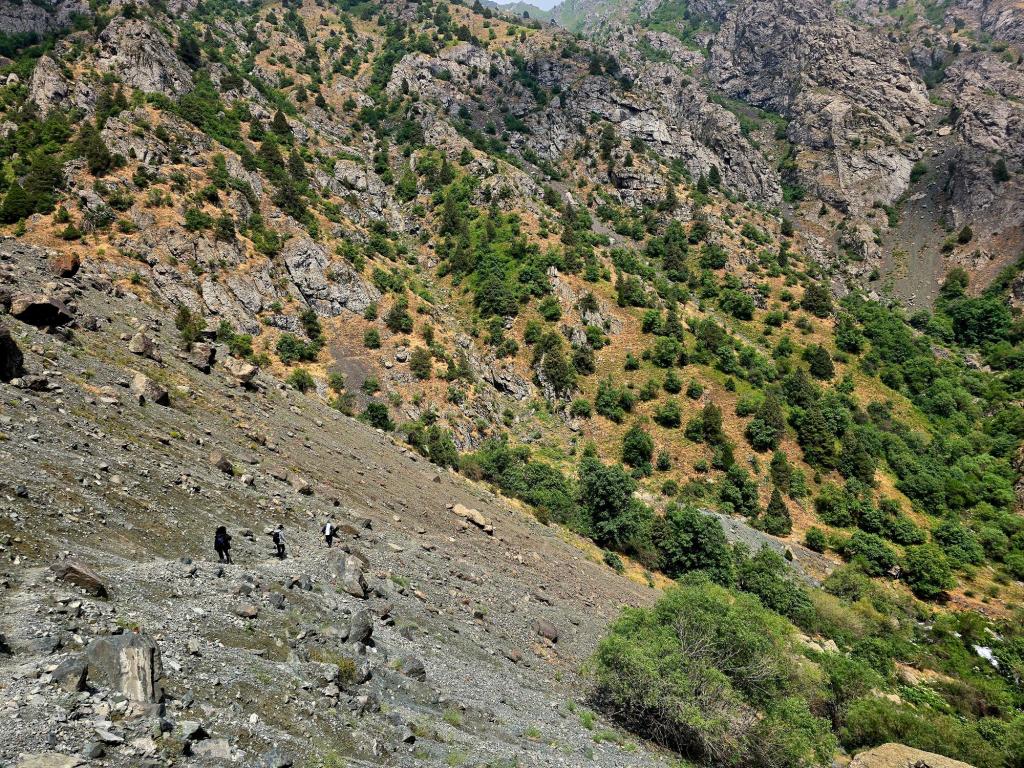
We began the slow, grinding climb up loose scree, picking our way between large, truck-sized boulders, each step sliding back just enough to remind you how much work it was going to take. It was one of those climbs where you stop often—not because you want to, but because you have to.
At the top of the wall, the world suddenly opened.
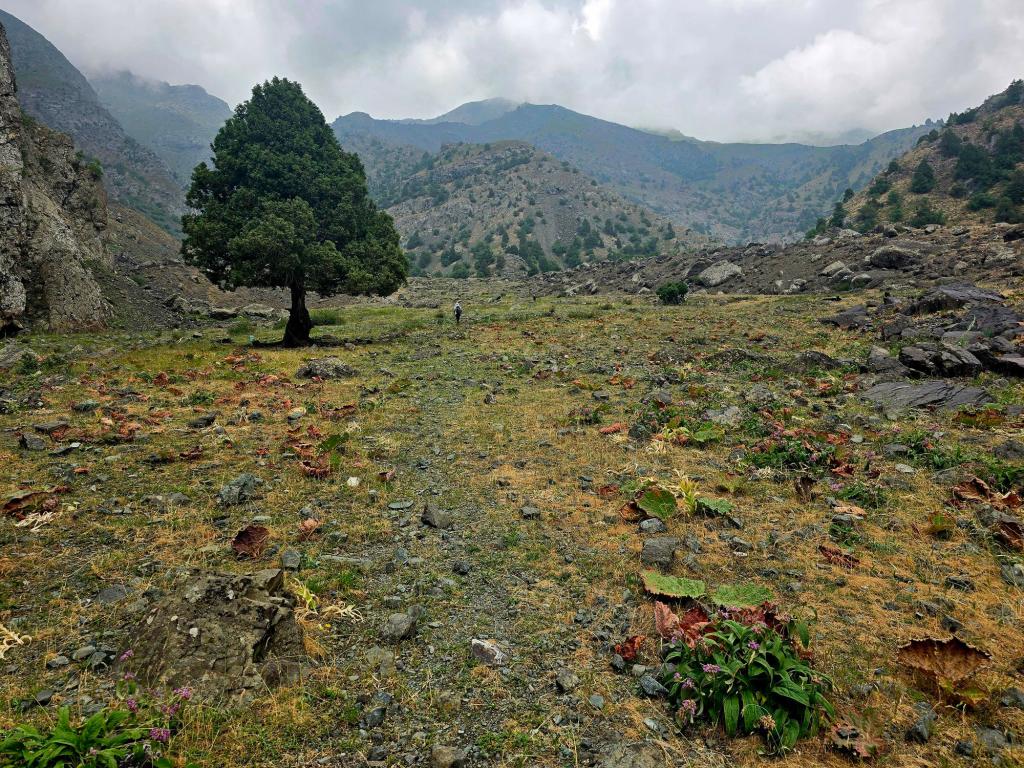
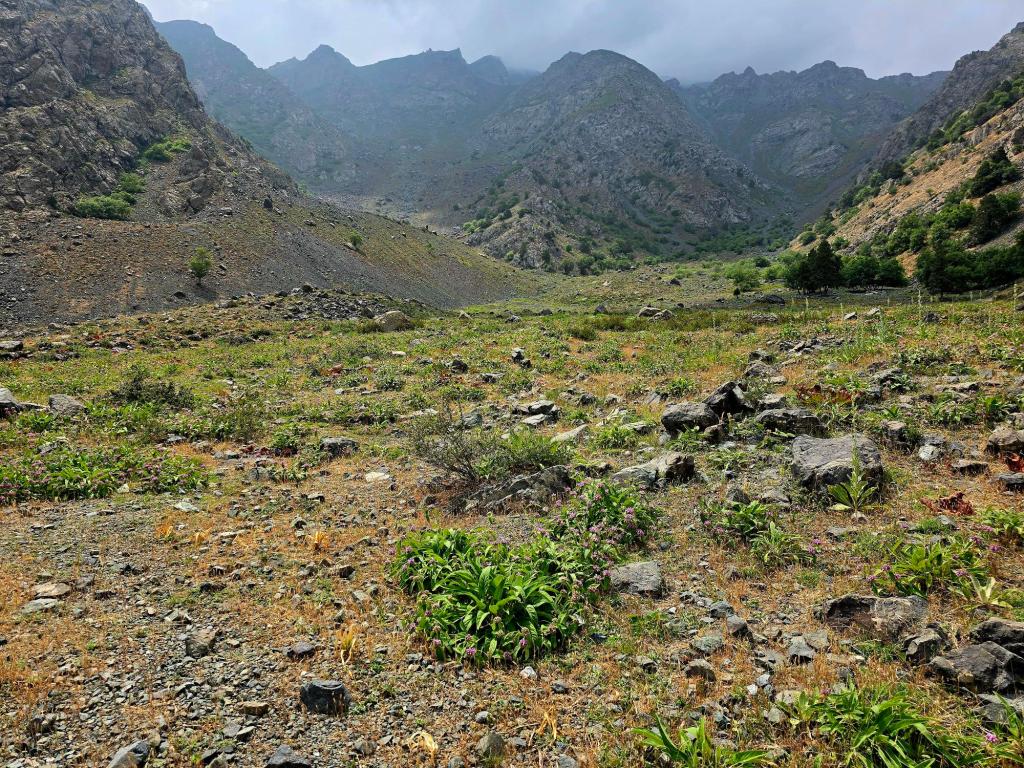
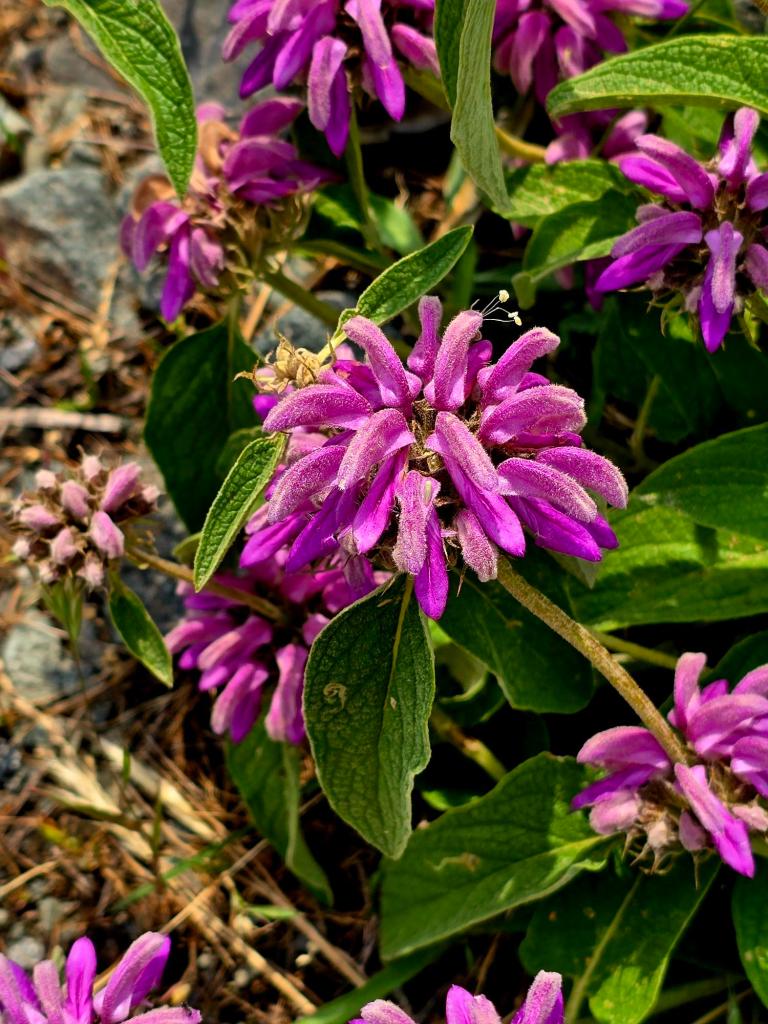
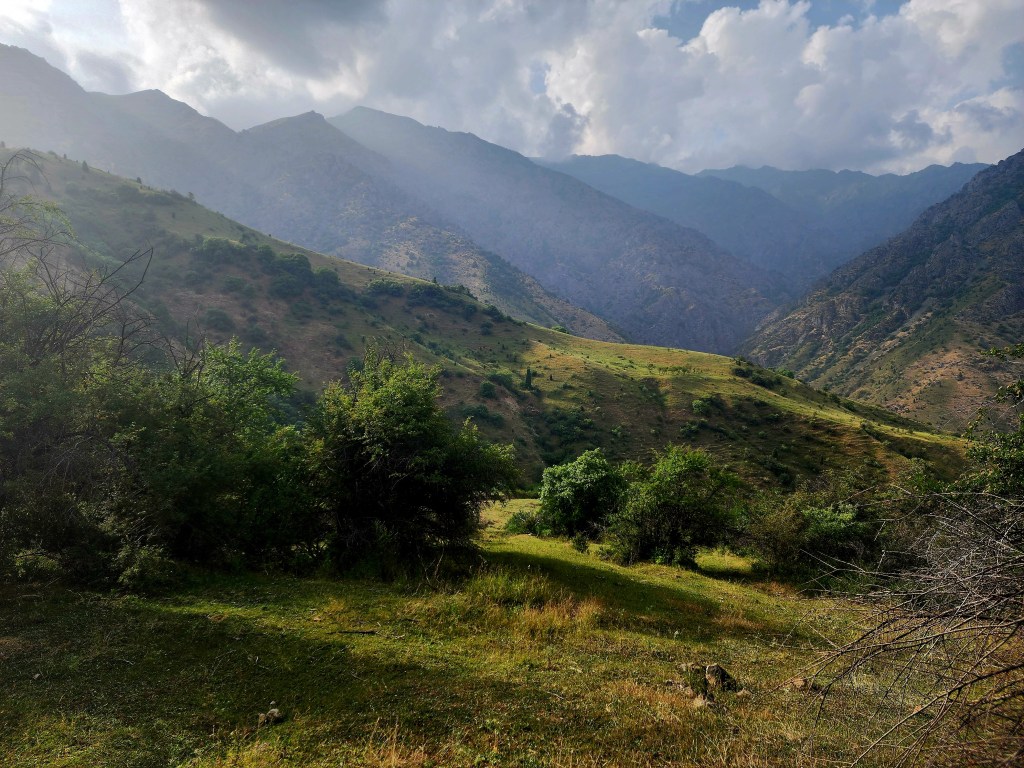
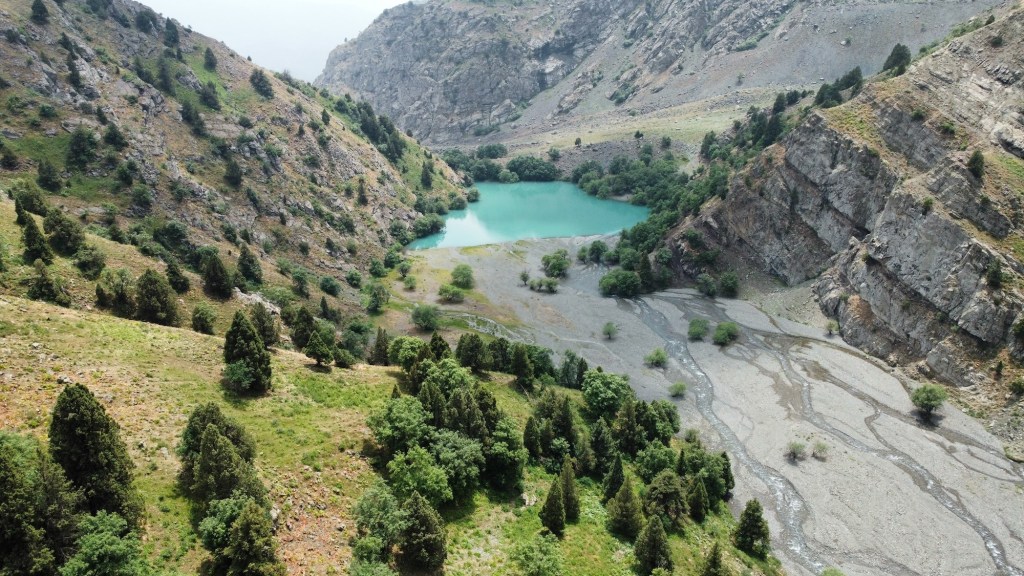
A massive cirque stretched out before us, with a lone tree standing oddly out of place in the rocky grassland. We walked another half kilometer across the basin, and then—almost out of nowhere—the lake appeared, rising into view over a small mound, framed in wildflowers.
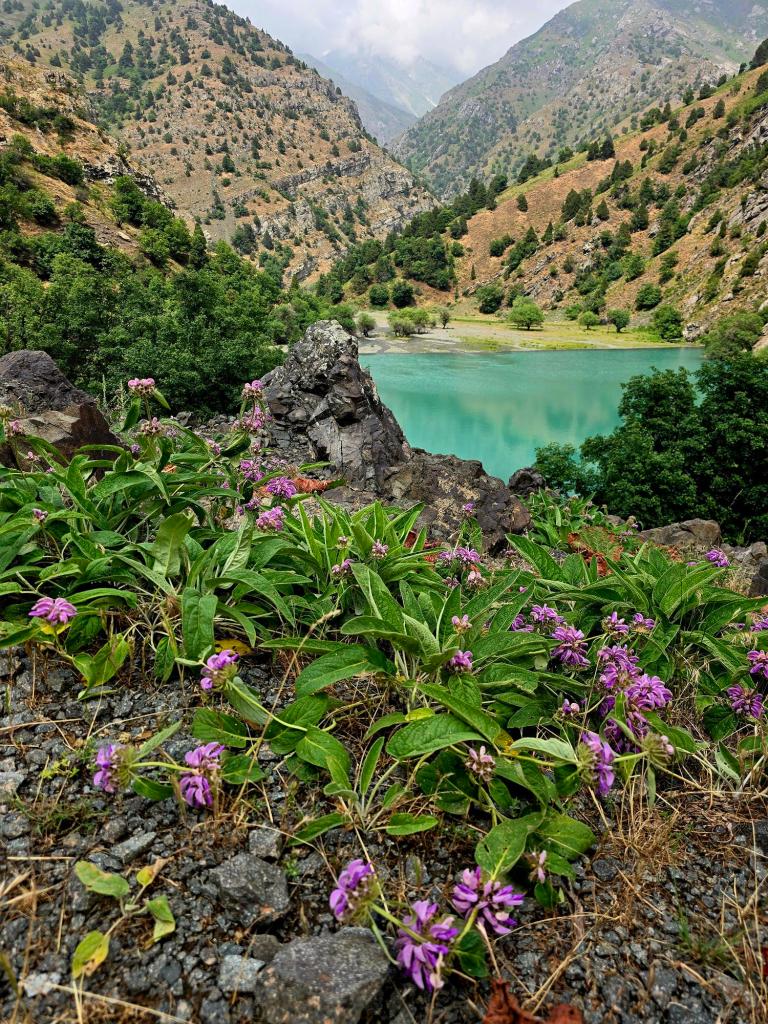
Kuli Juazak.
The water was a mesmerizing turquoise, glowing beneath the peaks that rose up behind it. The lake sat quietly in its own pocket of the mountains, perfectly placed, like it had been waiting there the whole time.
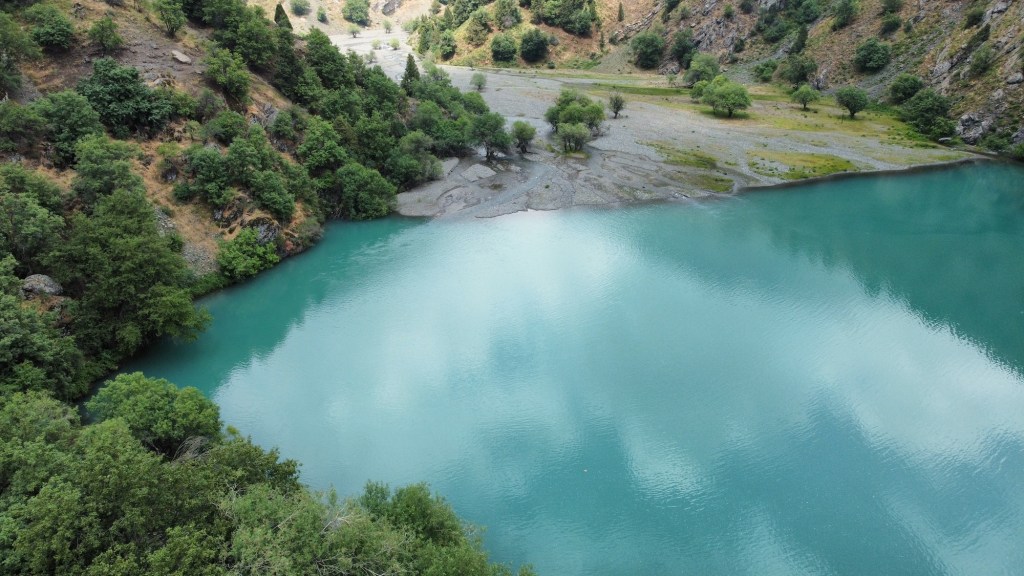
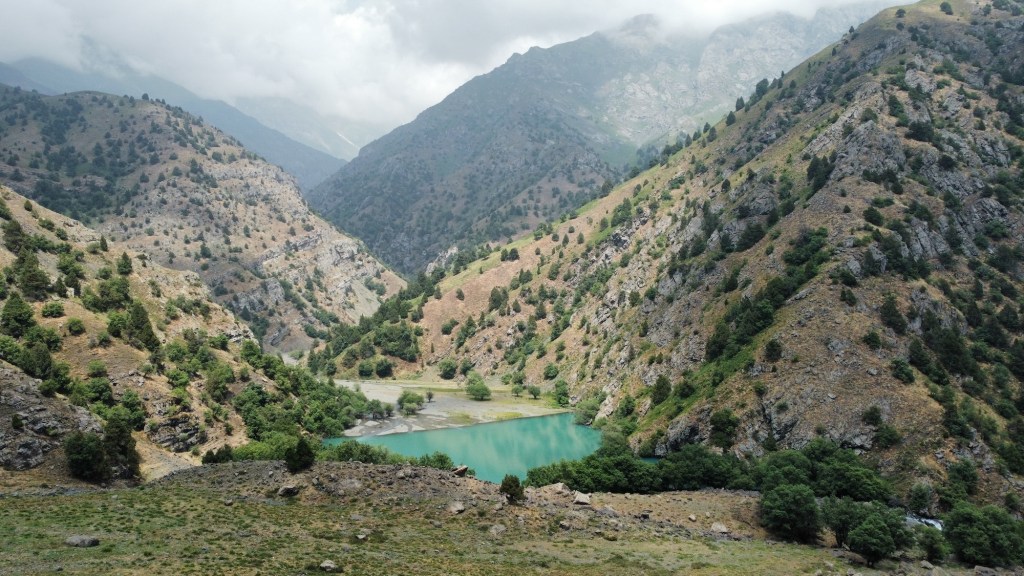
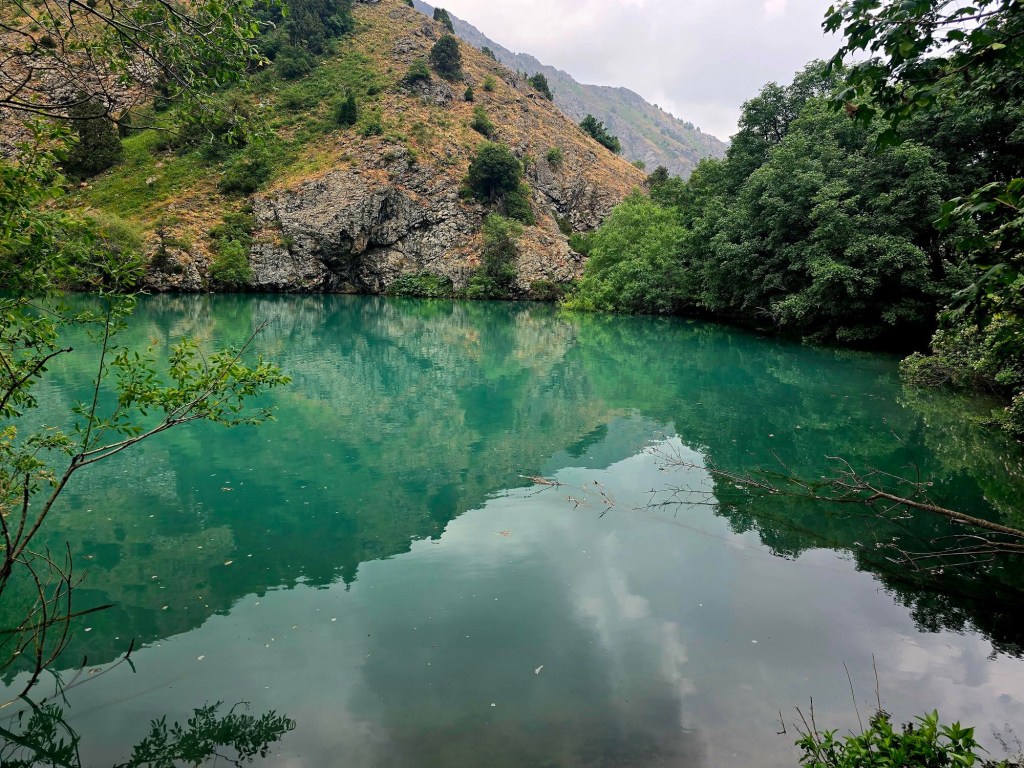
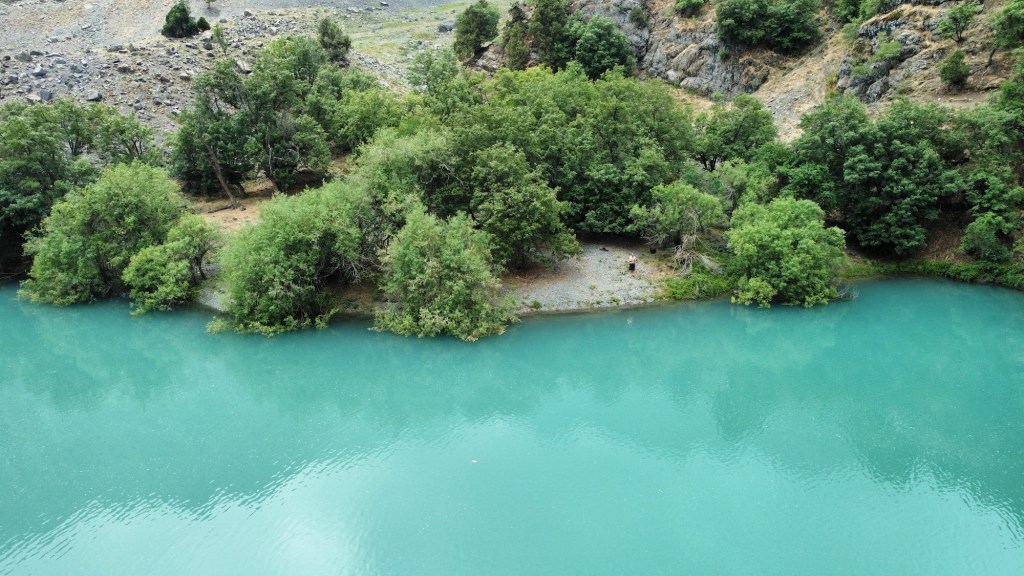
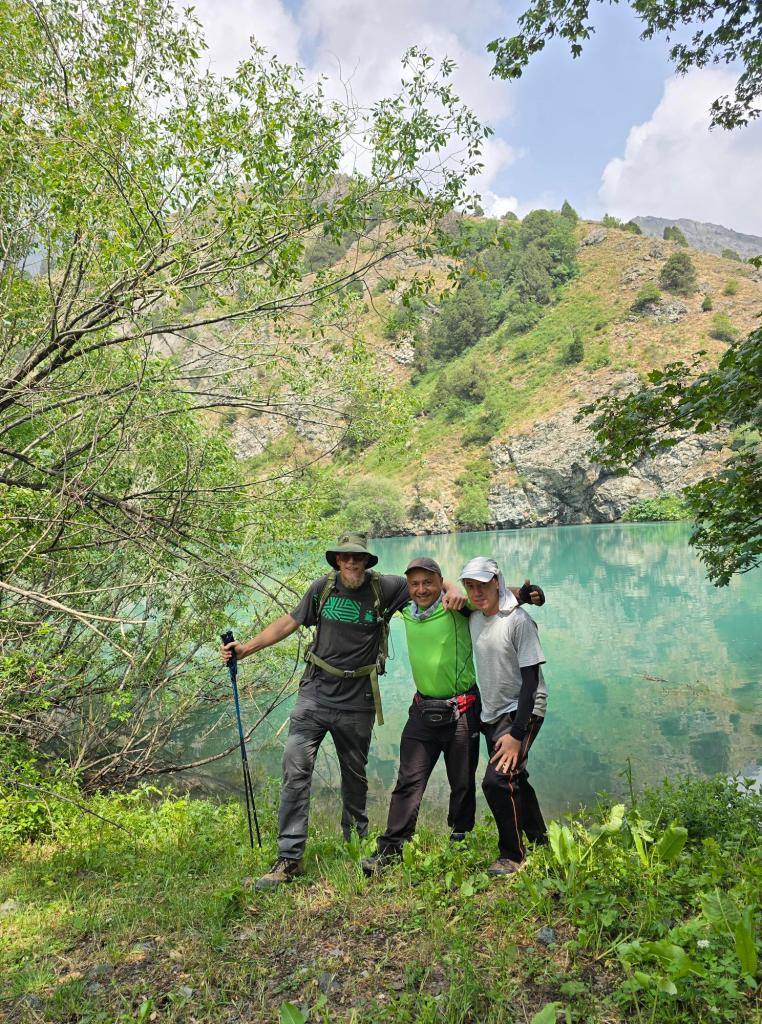
We made our way down to the edge and set up for a late lunch. I changed into shorts and went for the obligatory dip. The bottom dropped off almost immediately, and the cold hit like a shock—one of those moments where your lungs forget how to work for a second. I lasted maybe a minute before scrambling back out and dragging myself onto shore.
Worth it.
We lingered a bit longer, soaking it all in, before packing up and starting the long way out.
Getting back to the trailhead was quick—maybe an hour and a half. It was everything that came after that started to hurt.
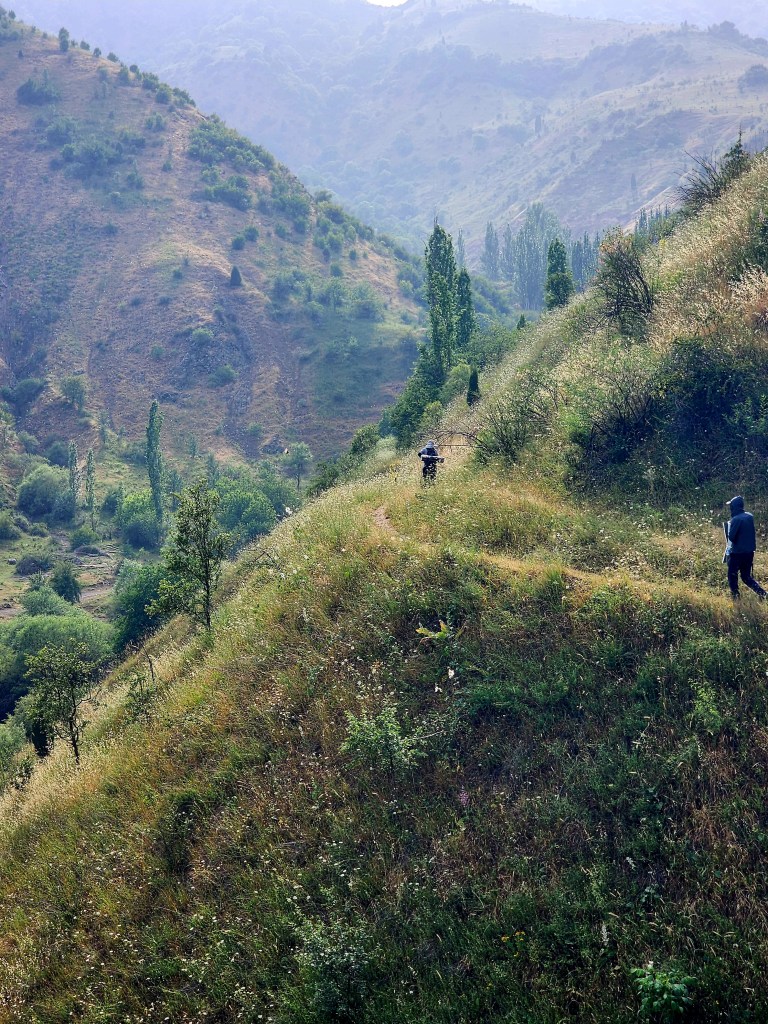
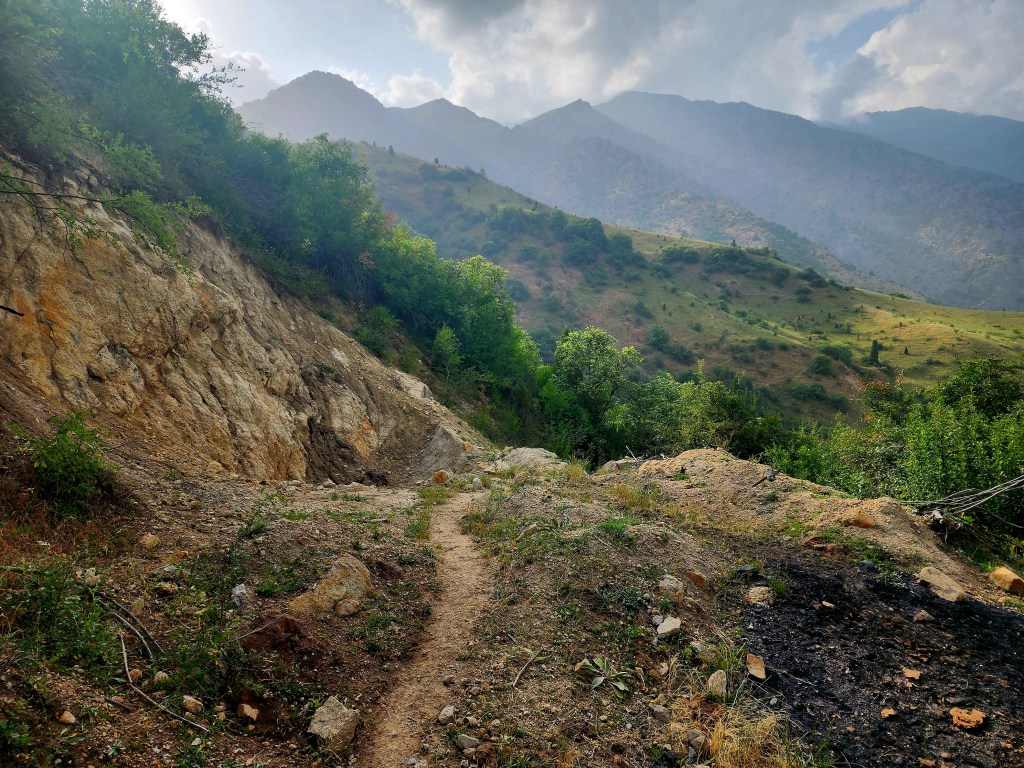
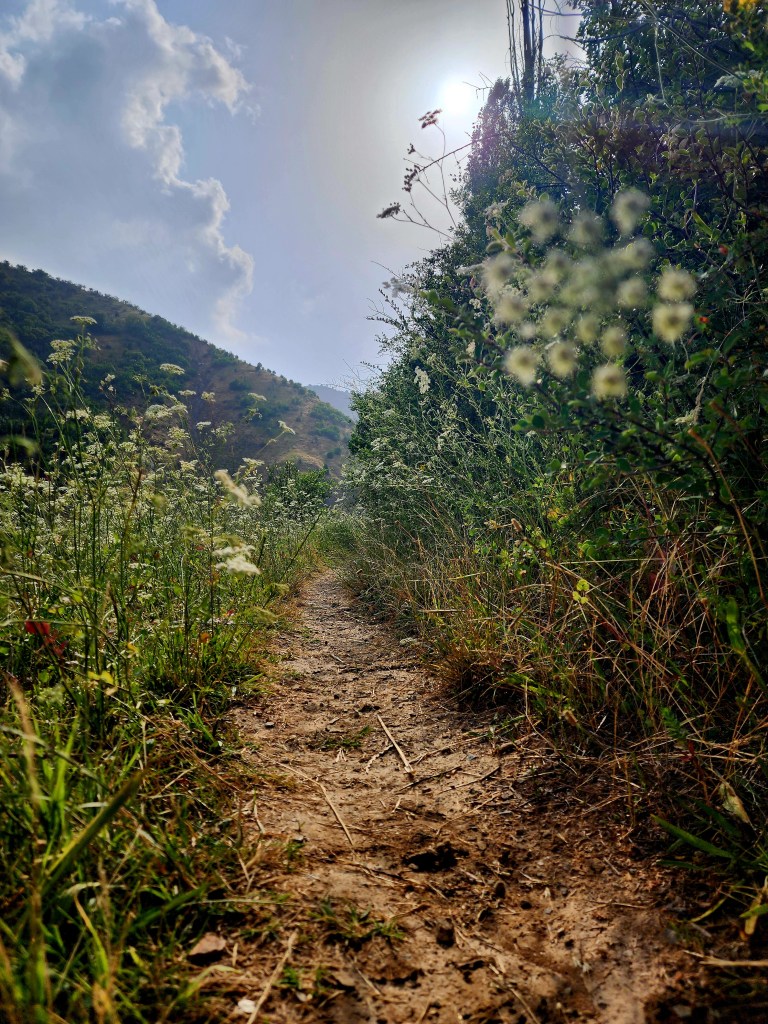
The climb back up toward the van was relentless. Legs that had felt fine all day began to protest, and by halfway up, every step slowed. The group stretched out along the trail, each of us settling into our own pace, grinding upward.
At one point, five of us reached a section where the trail dipped down to run briefly alongside the road before cutting back up into the mountains. We heard a truck somewhere in the distance and stopped to listen. After a few minutes, it became clear it was coming from the village, heading our way.
For a moment, we joked about blocking the road—two of us even laying down in the dirt pretending to play dead—before quickly abandoning the idea and stepping off to flag it down instead.
An old Soviet-style jeep rounded the corner, driven by a local guy who didn’t hesitate to stop. He waved us in, and somehow we managed to squeeze all five of us into the vehicle. A few minutes later, we spotted the remaining three from our group just reaching the road. The driver slowed, we waved them over, and they piled in as well.
Eight of us, crammed into one aging jeep, bouncing our way up the mountain.
He carried us through another brutal mile and a half of climbing, along a long ridge, and down the other side until we finally reached our van—miraculously unstuck and pointed in the right direction.
We offered him money. He refused. Just a wave, a nod, and he was gone.
By the time we reached pavement, the sun had already slipped behind the mountains, and night had settled in.
Looking back, it’s hard not to think about how different the day could have been. A little more success with the van, and we might have walked in on a much easier route.
But that’s not the version we got.
And honestly, I wouldn’t trade it.
Because sometimes the long way in—and the even longer way out—is exactly what makes a place unforgettable.
 Wise Clan in Stanland
Leave a comment