🧭 Trail Stats
📏 Distance: 13.7 miles
⬆️ Ascent: 1,835 ft
⬇️ Descent: 1,820 ft
🔁 Route: Out and Back
⏱ Total Time: 9h 10m (Moving: 6h 38m)
⚖️ Difficulty: Hard
📅 Date Hiked: March 22, 2026
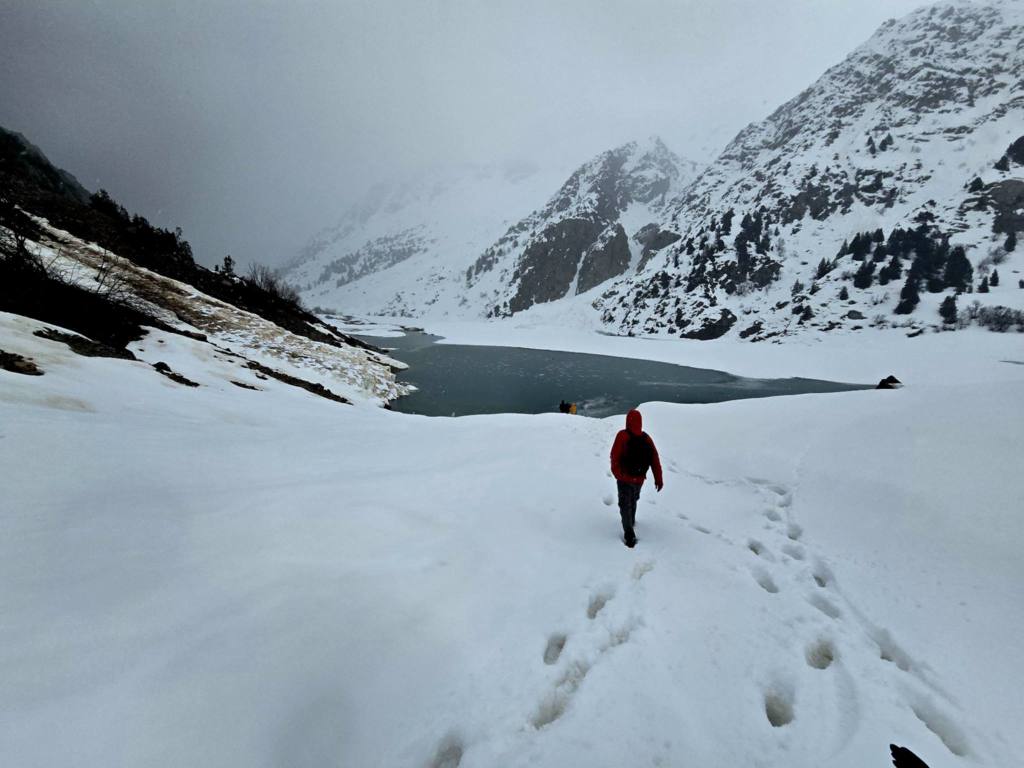
There’s a certain kind of pride that only comes from watching your kid handle a hard day in the mountains. Avalanche crossings, bear tracks, shredded shoes, and a midnight ride back to the city—this was one of those days.
I recently wrote about a hike up to Lake Payron last May—tough, but done in ideal conditions. Yesterday, Gavin and I headed back with a group of friends to see what this same route looks like in March. It turned out to be a completely different beast.
Getting to the trailhead is an adventure in itself. About an hour west of Dushanbe, you leave the main road and wind through small villages before the pavement disappears entirely. Another hour of rough track leads you deeper into the mountains—past a trout farm, beyond scattered homesteads, and into true backcountry. In good conditions, a capable vehicle can make it in two hours. We were not in good conditions.
The final stretch—5 to 6 kilometers of narrow, muddy, cliffside road—was already sketchy, but riding it in the back of a small Opel sedan added a whole new level of commitment. Just beyond the fish farm, we passed a section where an avalanche had buried the road weeks earlier. A path had been carved through it, with a 20-foot wall of snow looming above us and a massive boulder hanging over the edge. It didn’t get much better from there—river crossings, washed-out sections, and the growing sense of heading somewhere truly remote.
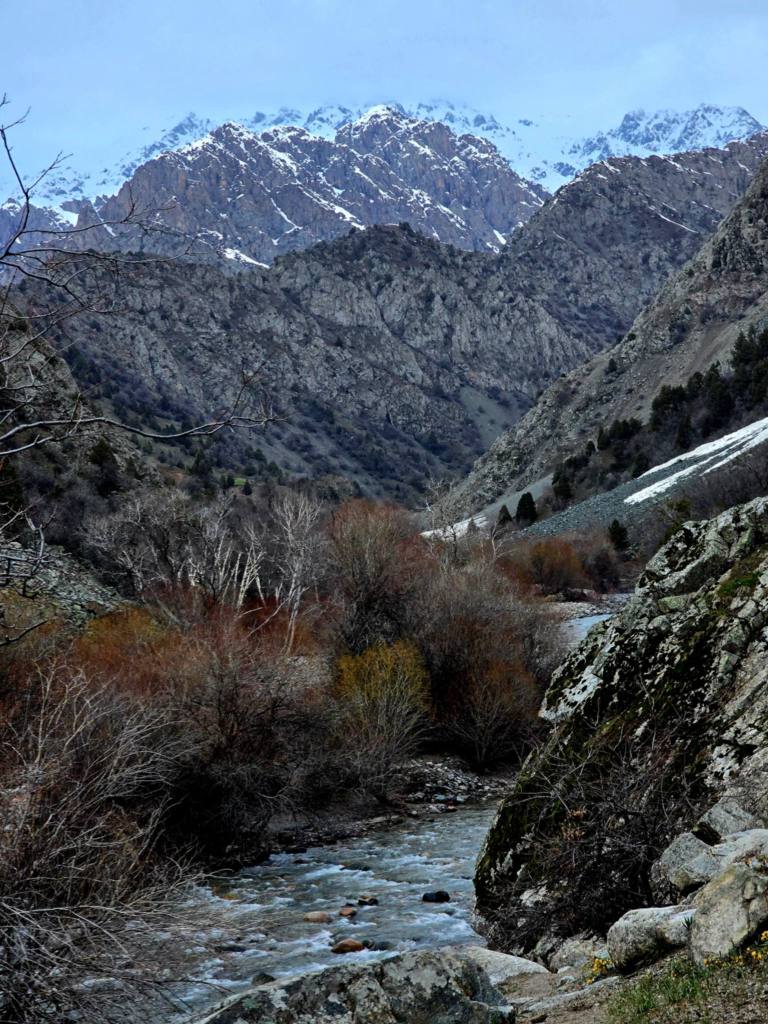
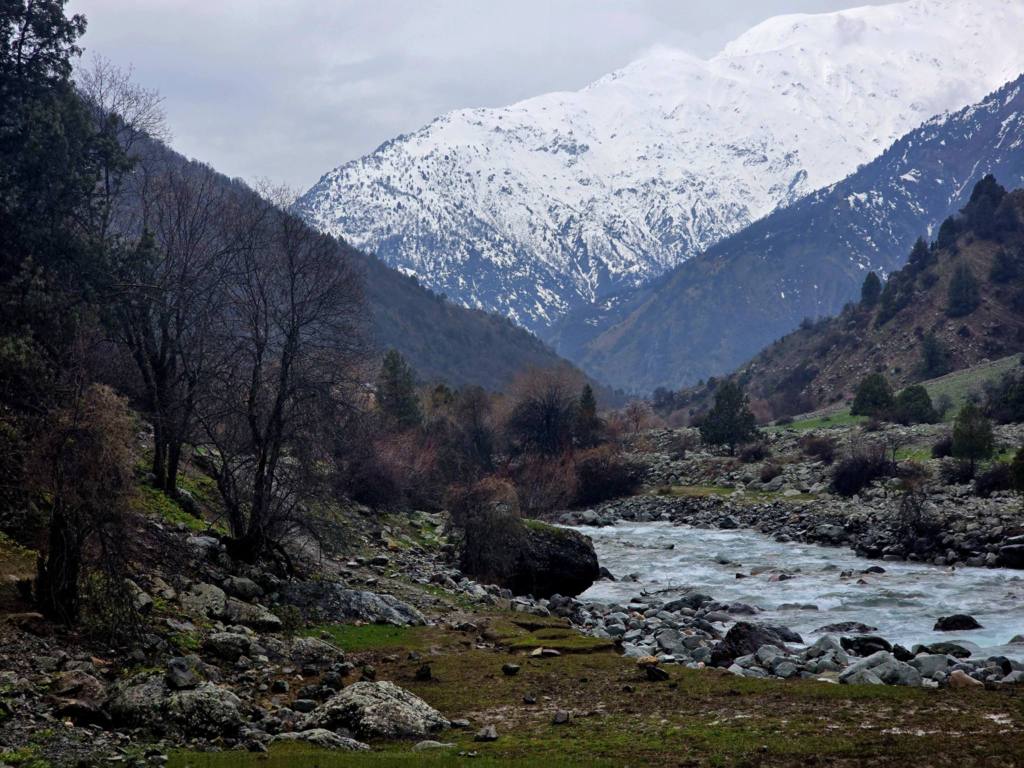
By the time we reached the end of the road near a quiet summer settlement, rain had started to fall.
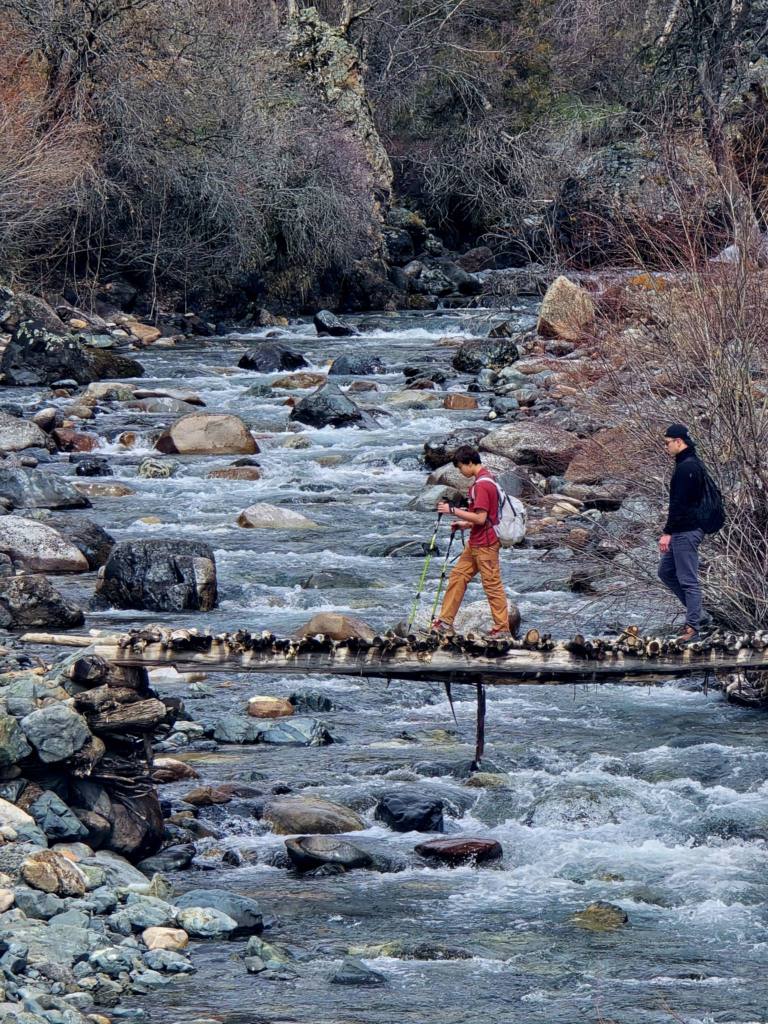
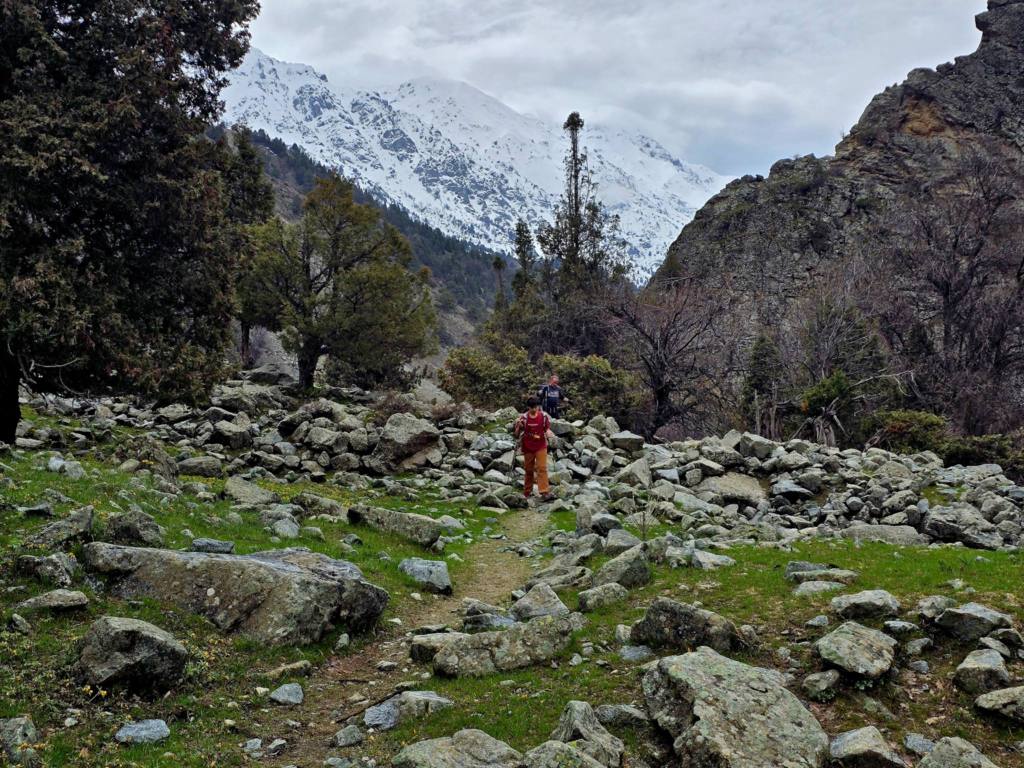
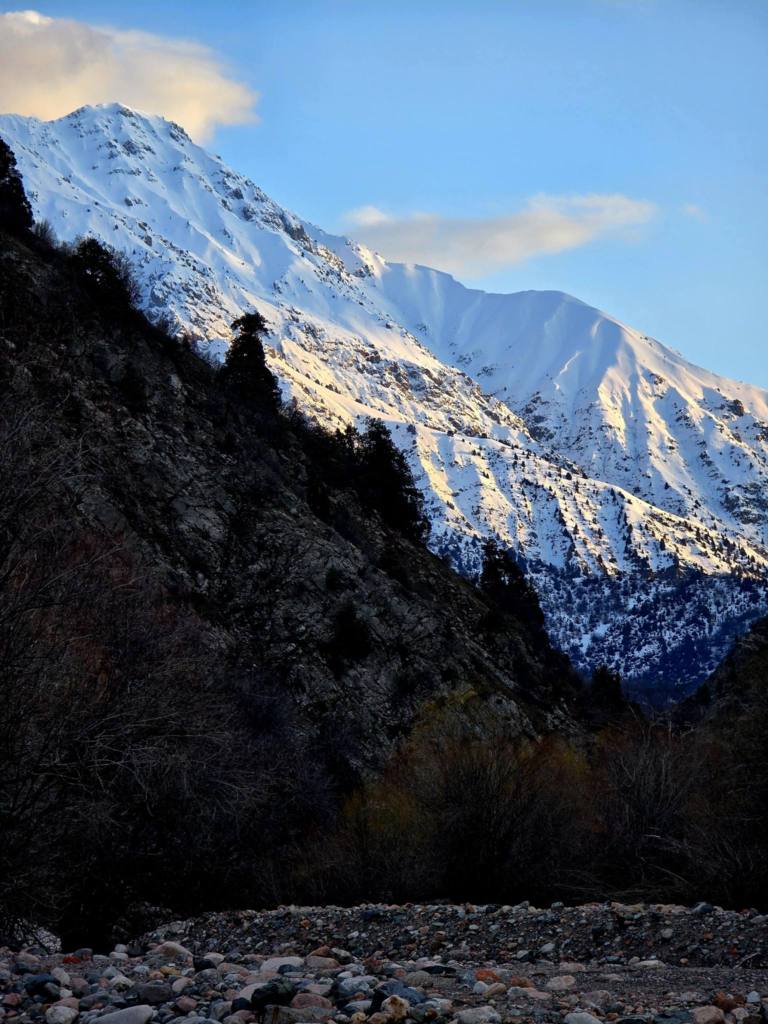
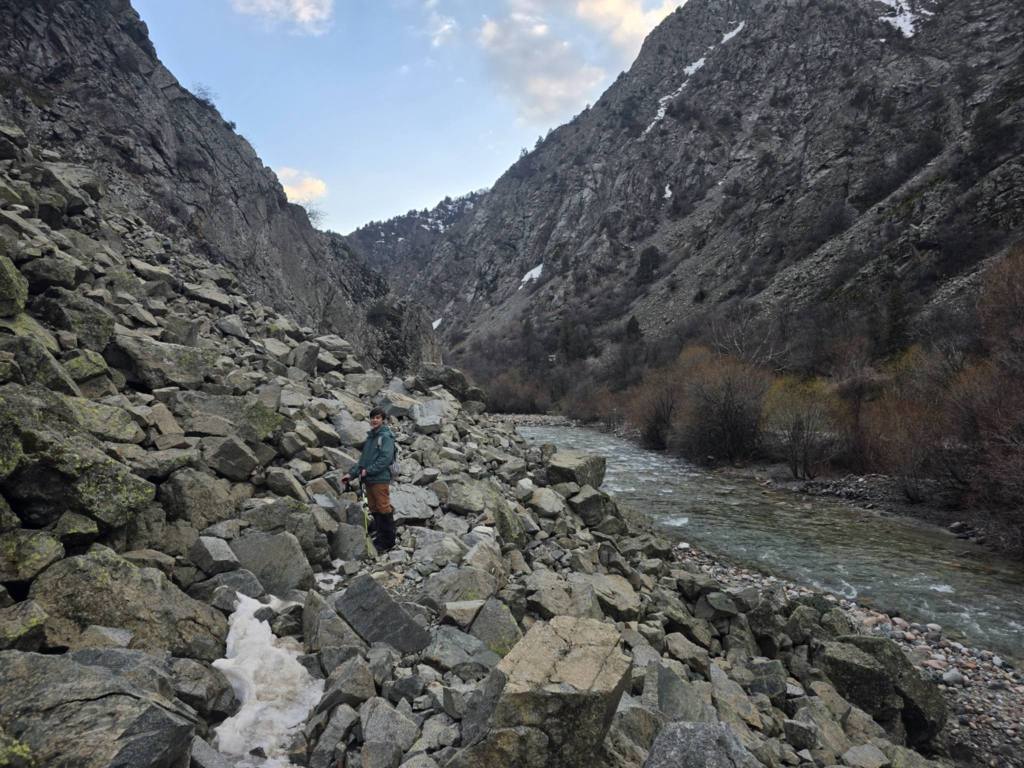
We geared up quickly, crossed the swaying bridge over the river, passed the ruins of an old fort, and began working our way up the Qaratoqh River valley. A few kilometers in, the rain softened to a cold drizzle. Then we came across something that stopped us in our tracks—hundreds of porcupine quills scattered across the ground, blood everywhere, and just below, the fresh guts of a large animal. Whatever had happened here had unfolded within the last day.
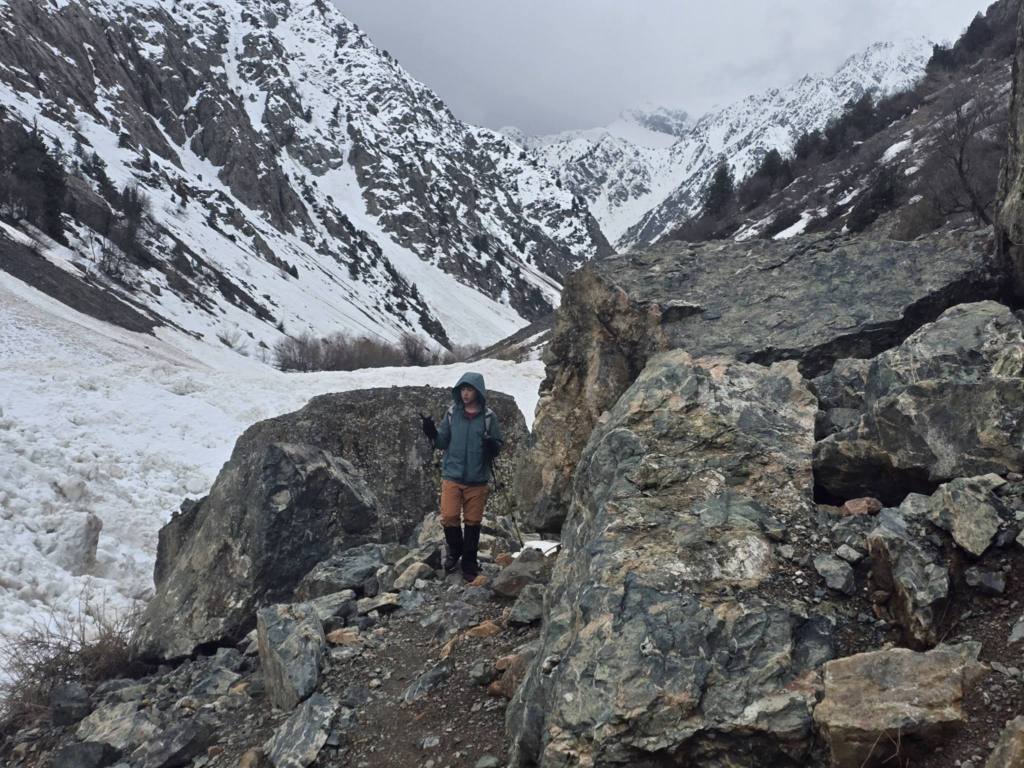
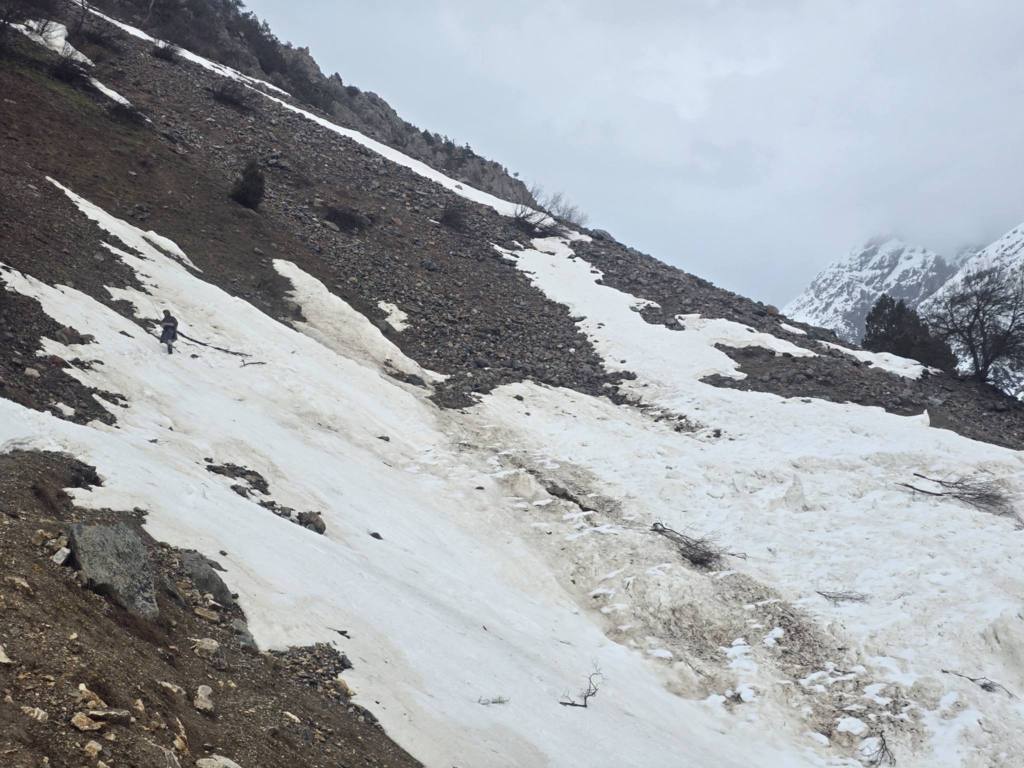
Not long after came one of the crux points of the hike—a steep avalanche chute that had poured down the mountainside and buried the trail. It was only about 20 meters across, but it demanded full focus. Hard snow, embedded rocks, and a steep drop into the icy river below made it clear: a slip here would not end well. We moved slowly and deliberately, relieved to reach the other side.
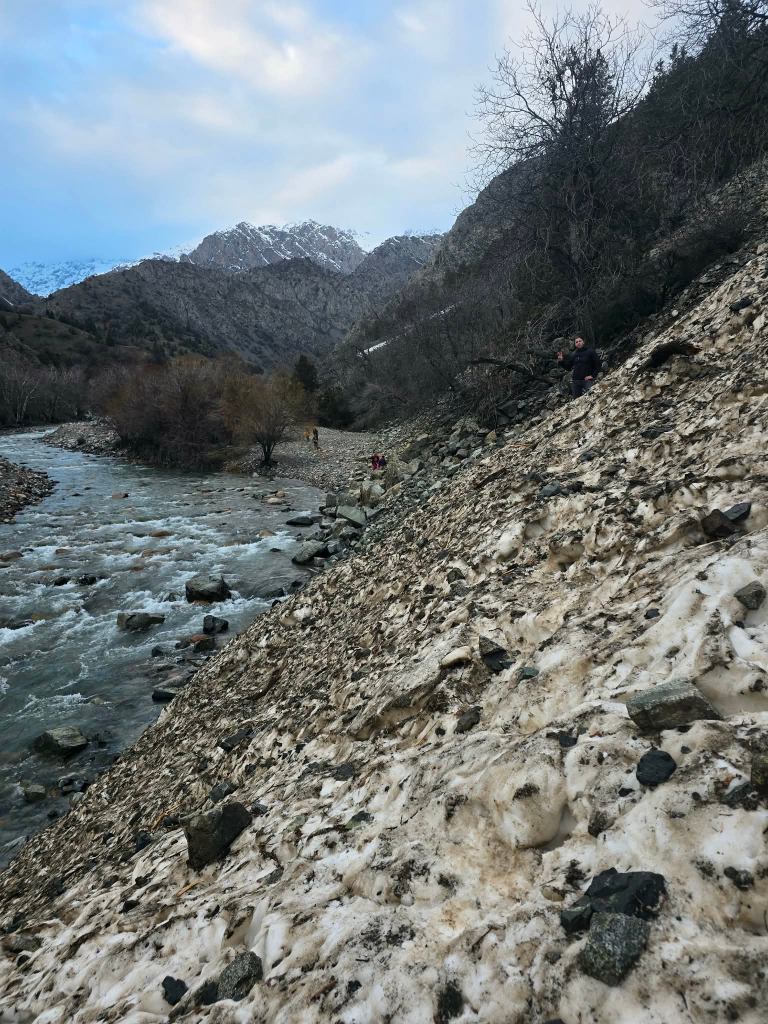
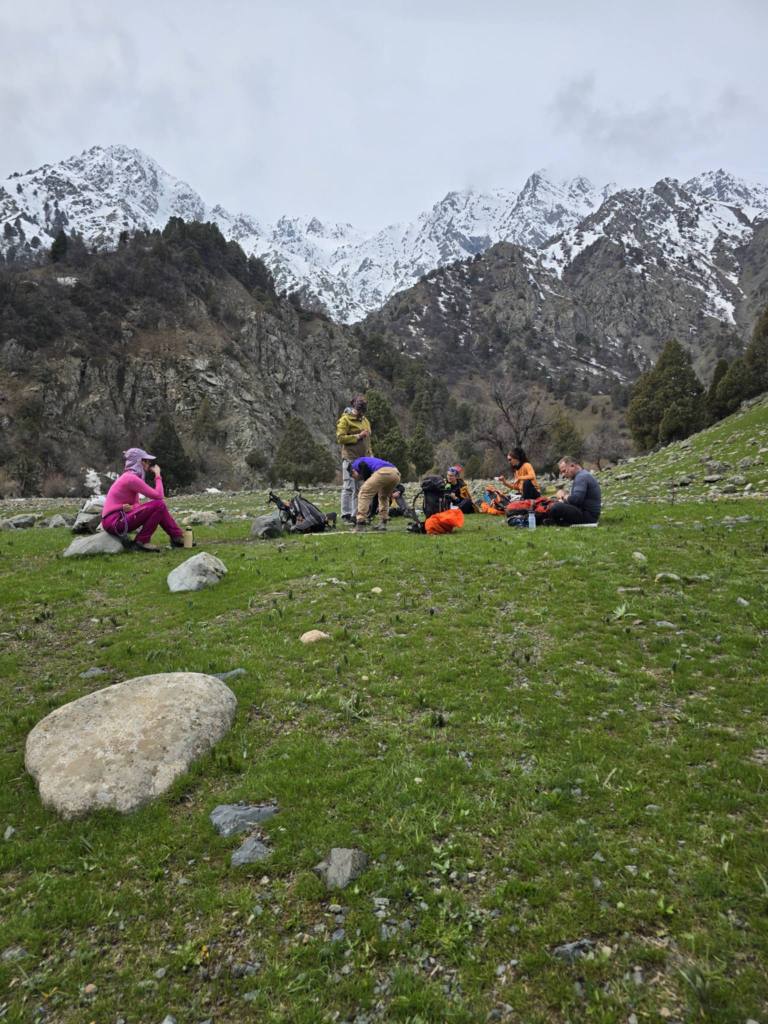
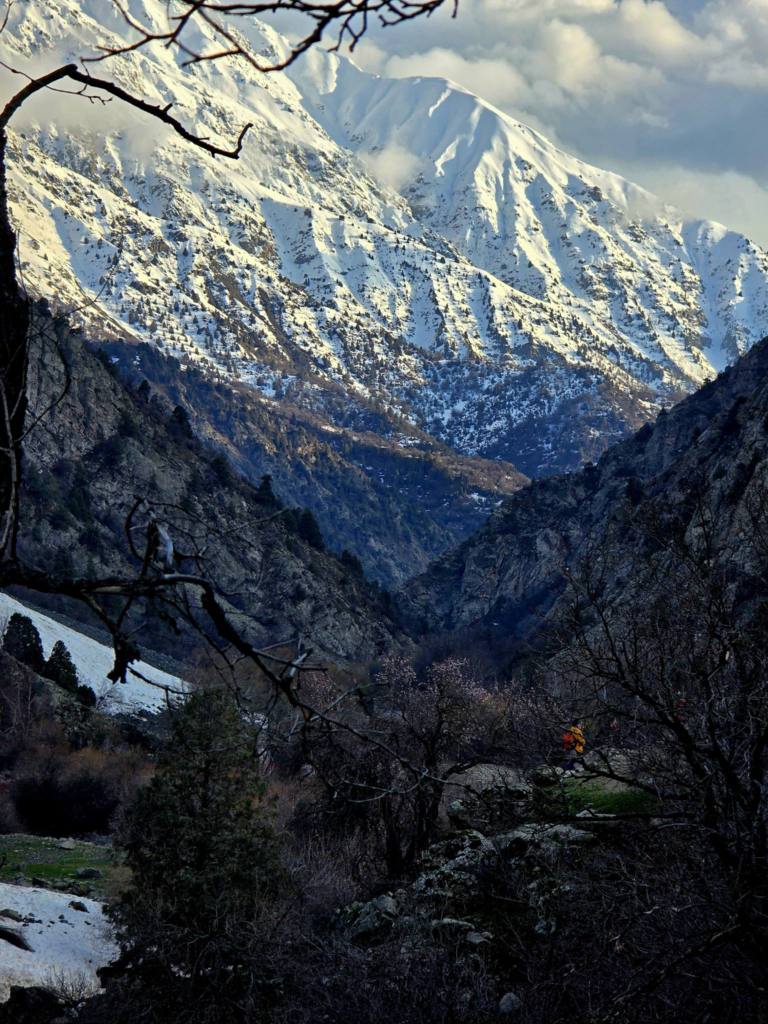
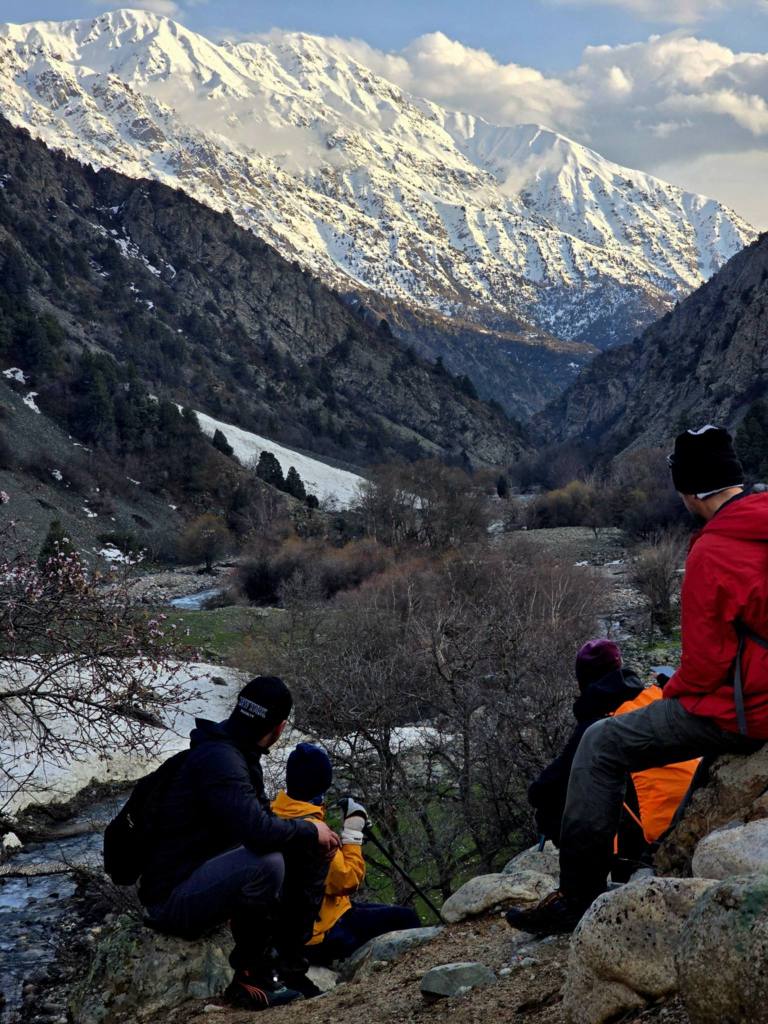
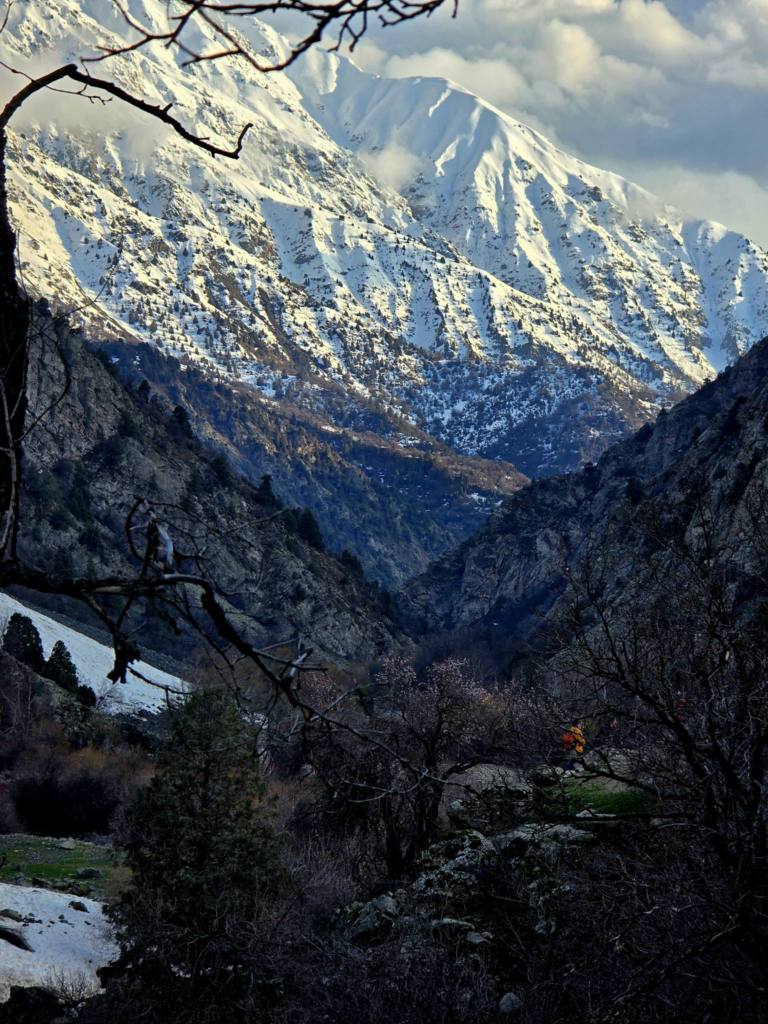
At the halfway point, we crossed another avalanche zone—less steep this time—and descended to where the Payron River meets the Qaratoqh. A small bridge led us into an open meadow with sweeping mountain views. We took a break here, ate lunch, and regrouped before pushing up the Payron valley toward the lake.
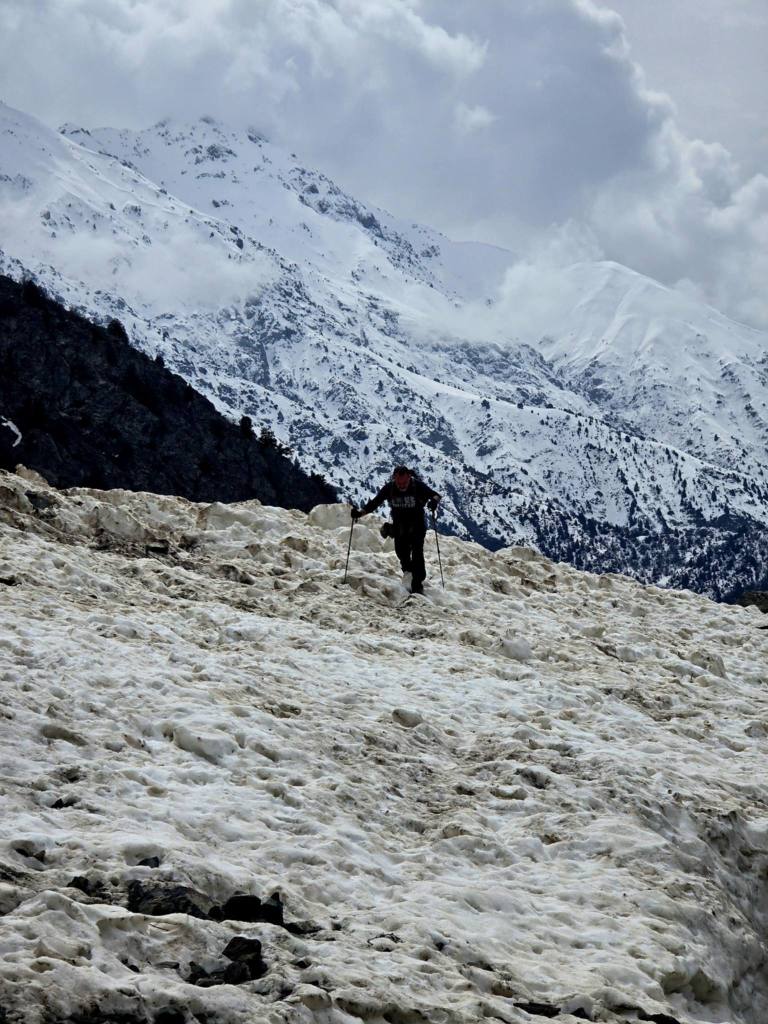
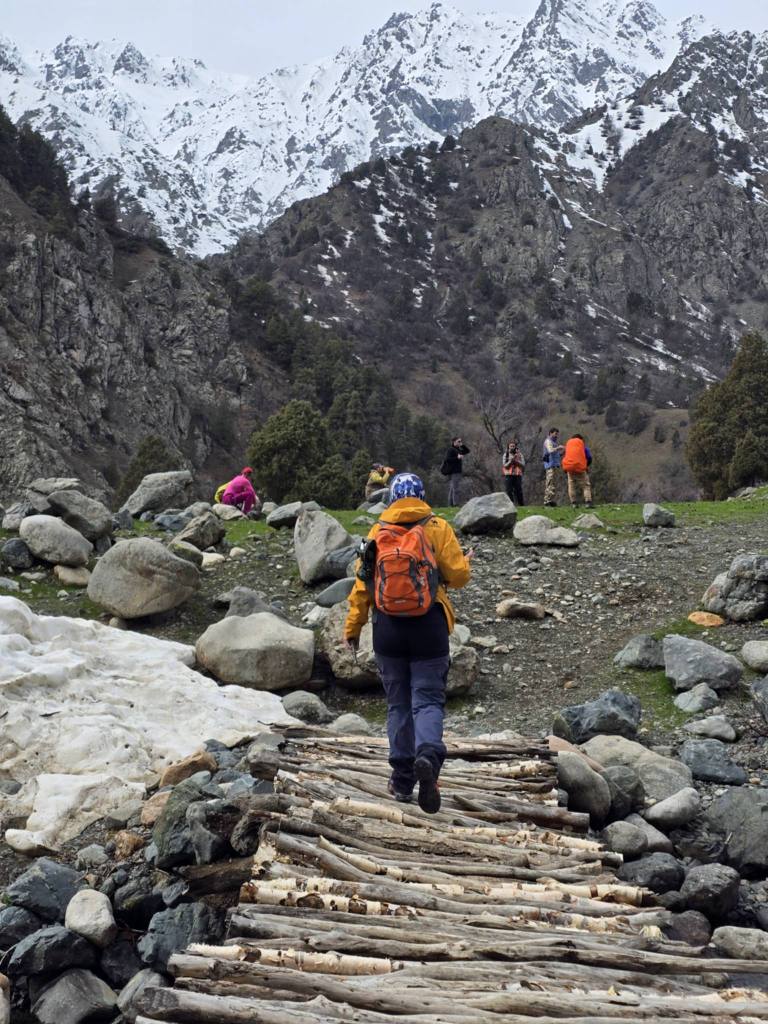
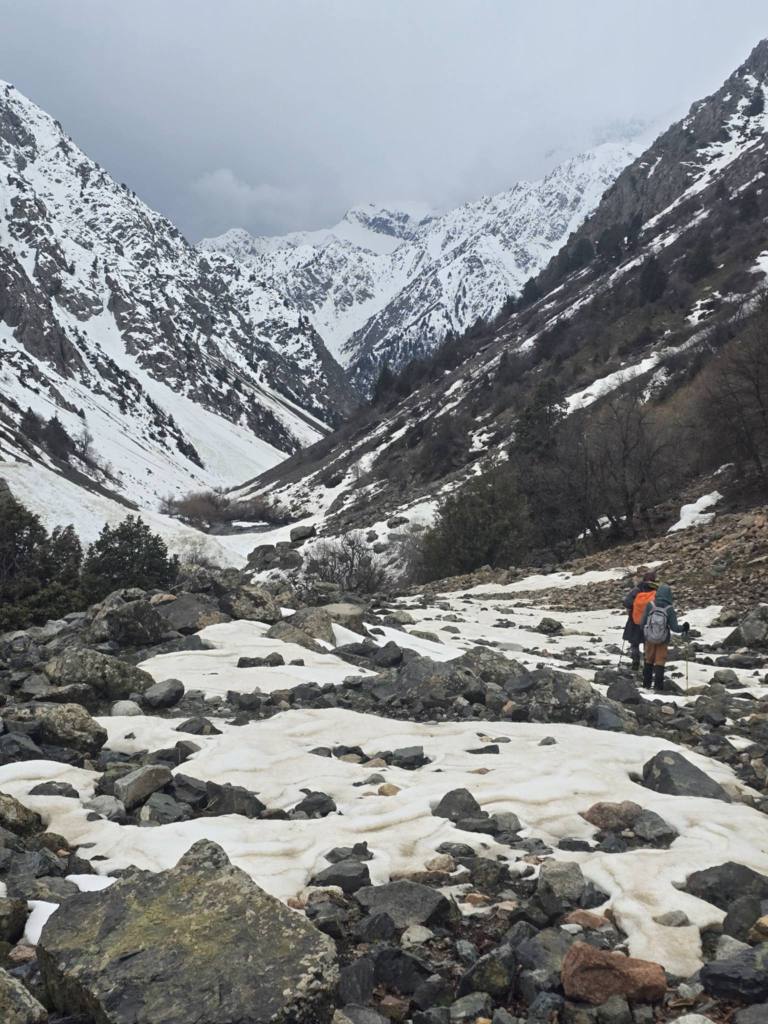
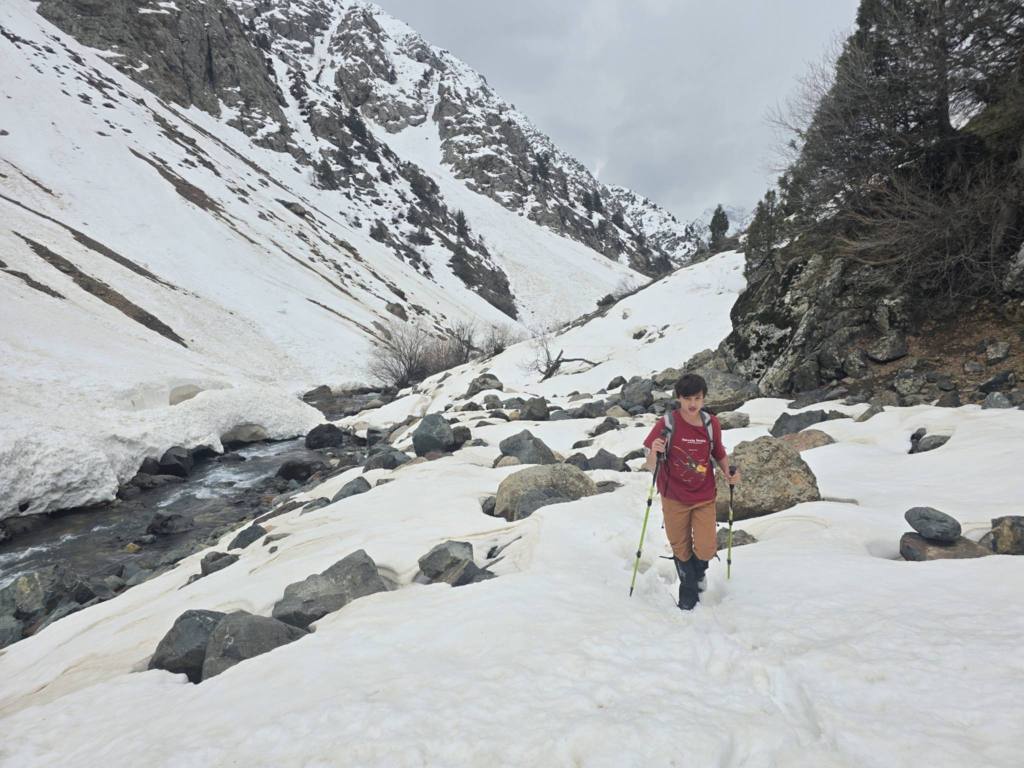
The rain finally stopped, but the temperature dropped as we climbed. To enter the upper valley, we had to crest a ridge and follow a long, muddy singletrack high above the river before dropping back down. Soon, snow began to take over. Gaiters came out, and progress slowed to that familiar rhythm—solid step, solid step, then suddenly punching through knee-deep.
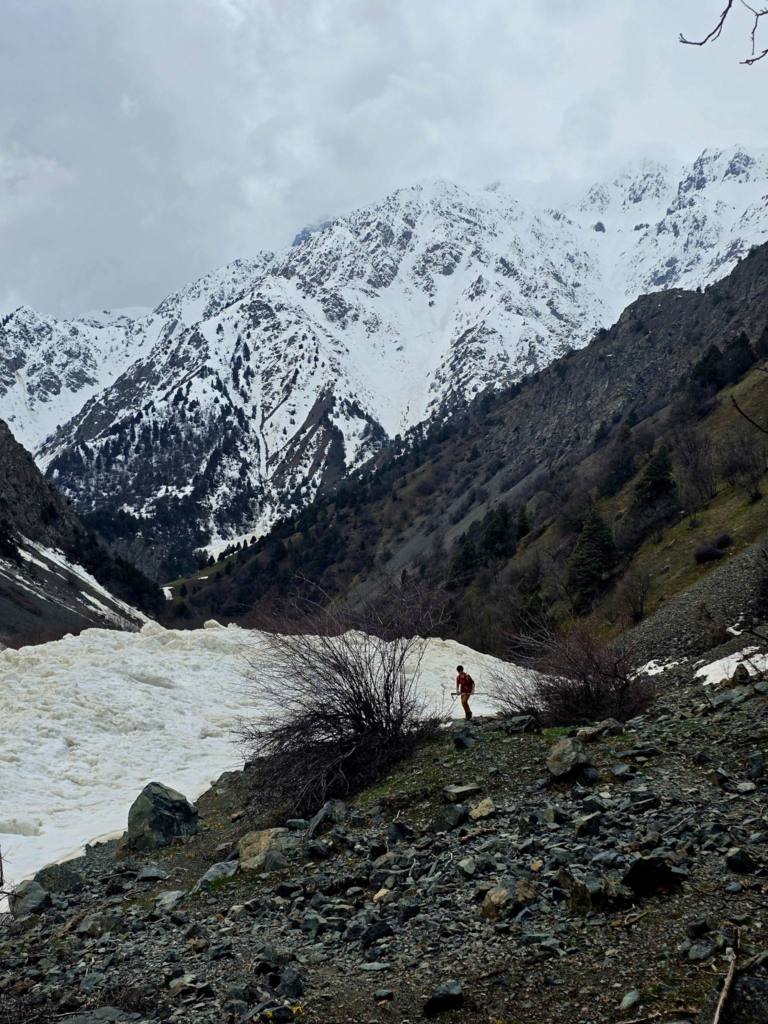
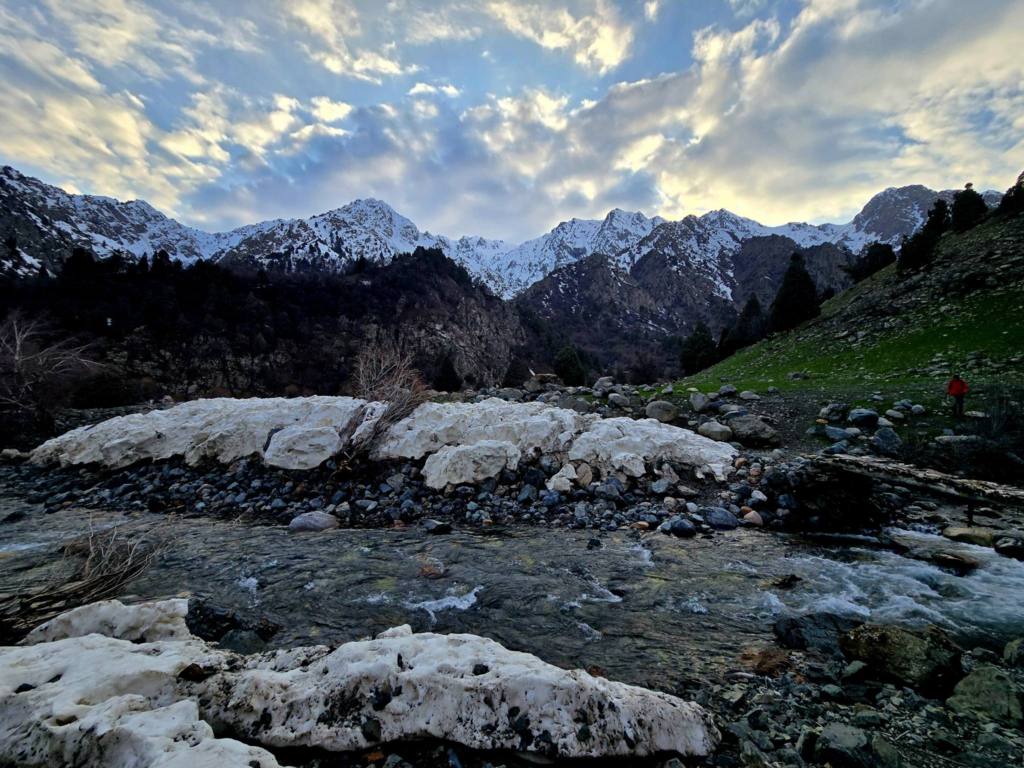
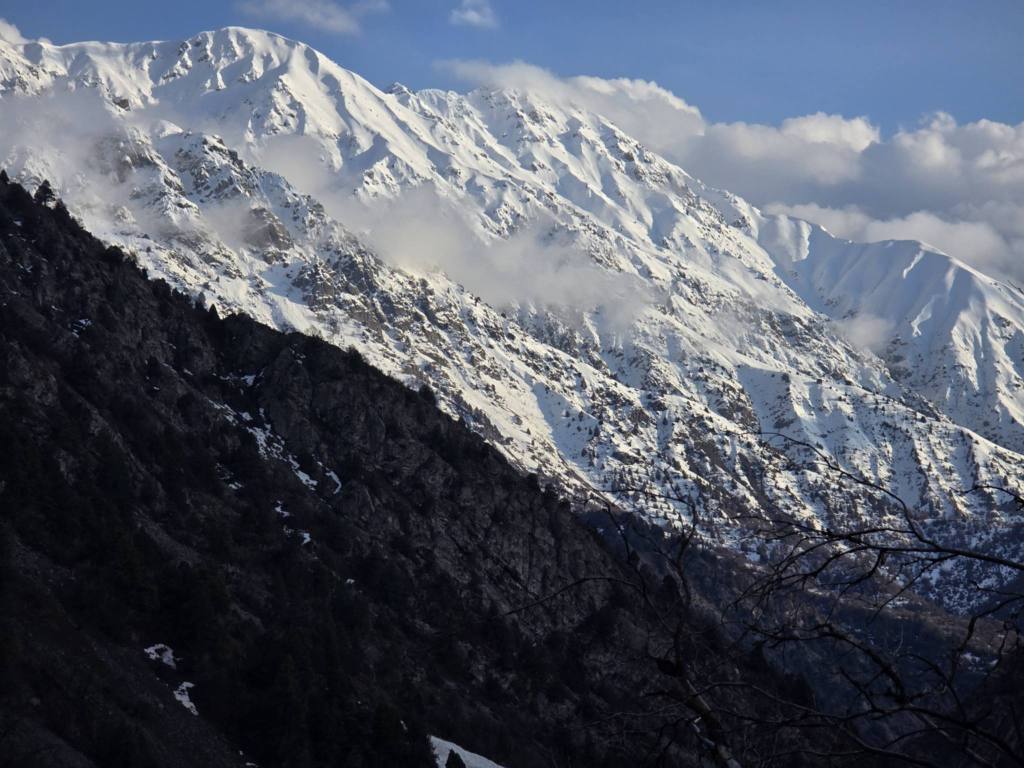
Higher up, avalanche debris stretched across the valley—massive snow and ice formations spilling down from the peaks and forming bridges over the river. The scenery grew wilder the deeper we went. Grey skies pressed in, snow-covered peaks rose all around us, and the entire place took on a stark, otherworldly feel.
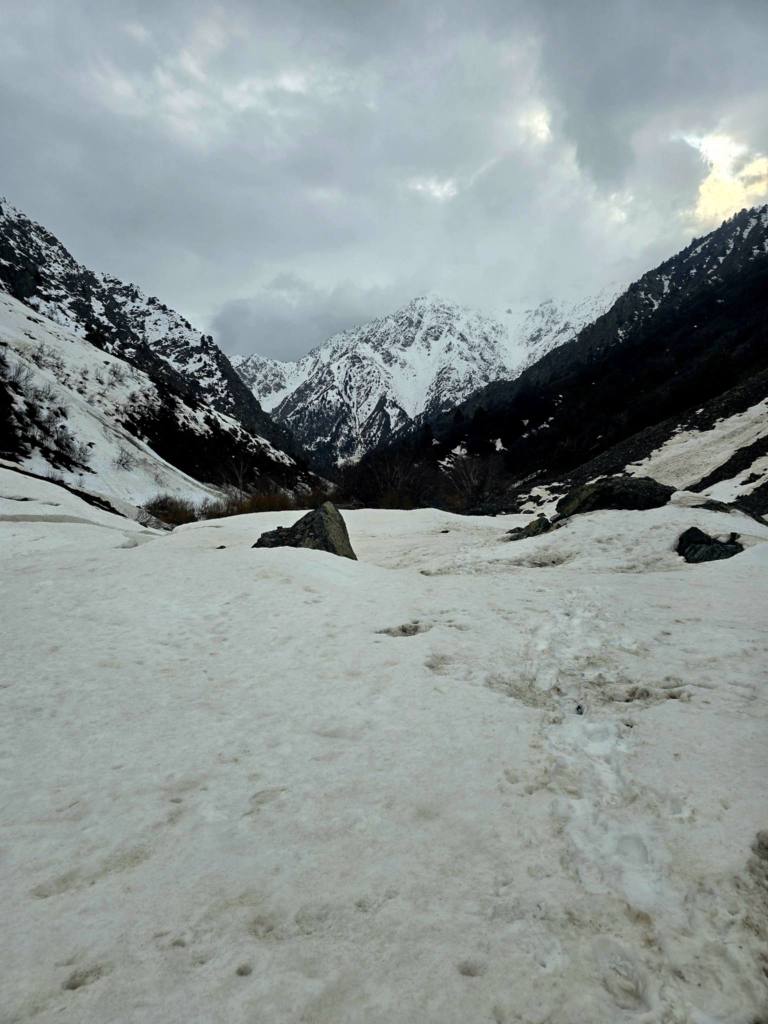
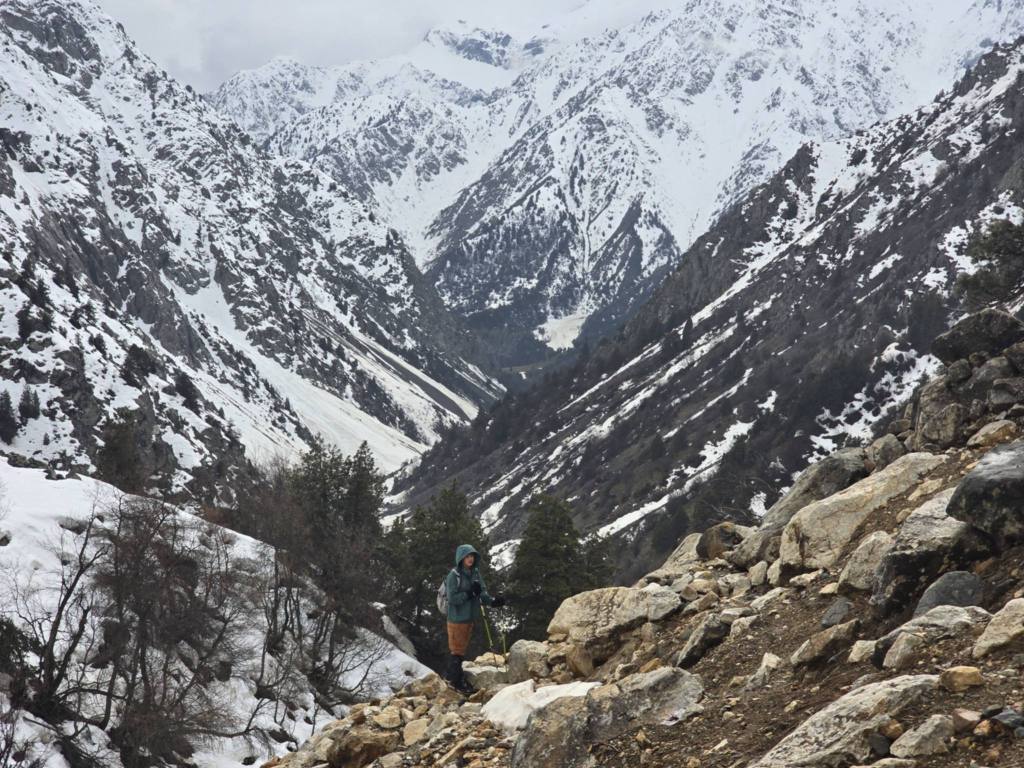
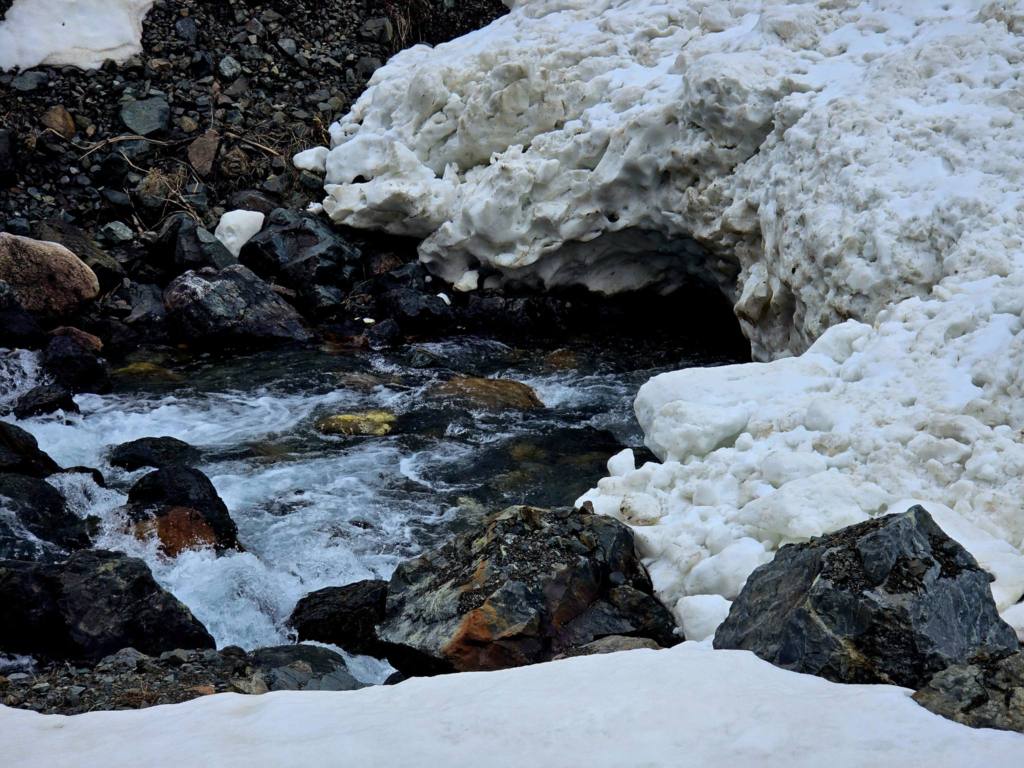
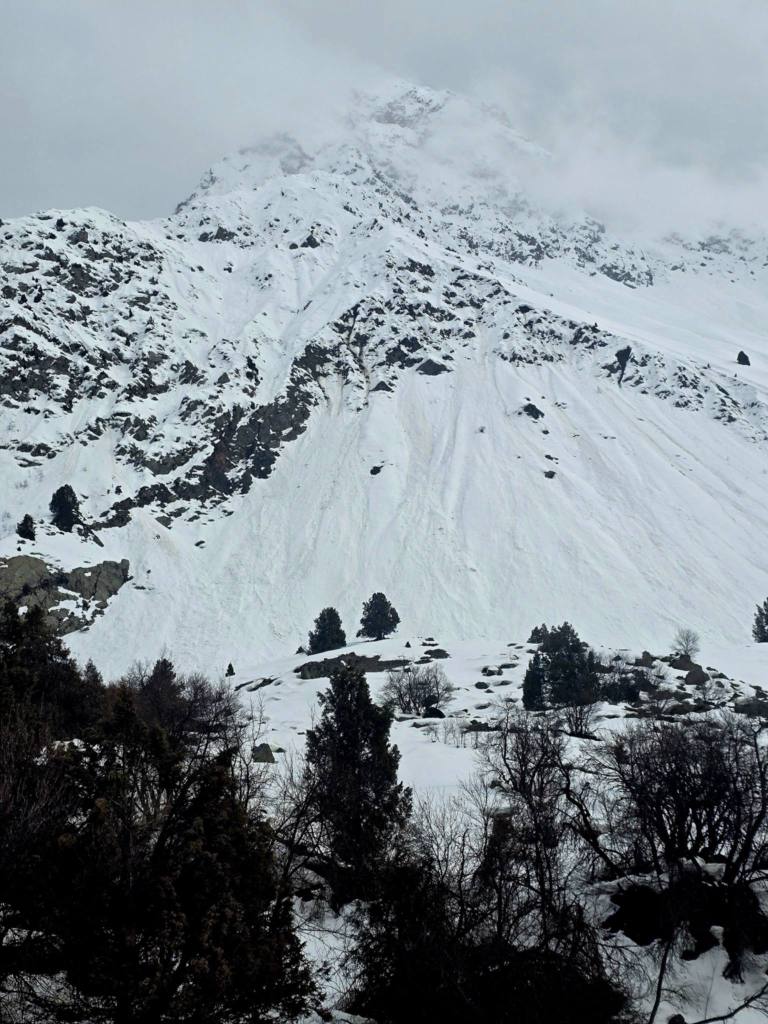
The final climb to the lake—about 400 vertical meters—was fully buried under snow and avalanche debris. It was slow, exhausting work. As we gained elevation, the temperature dropped again, and cold rain mixed with snow began to fall.
And then, we were there.
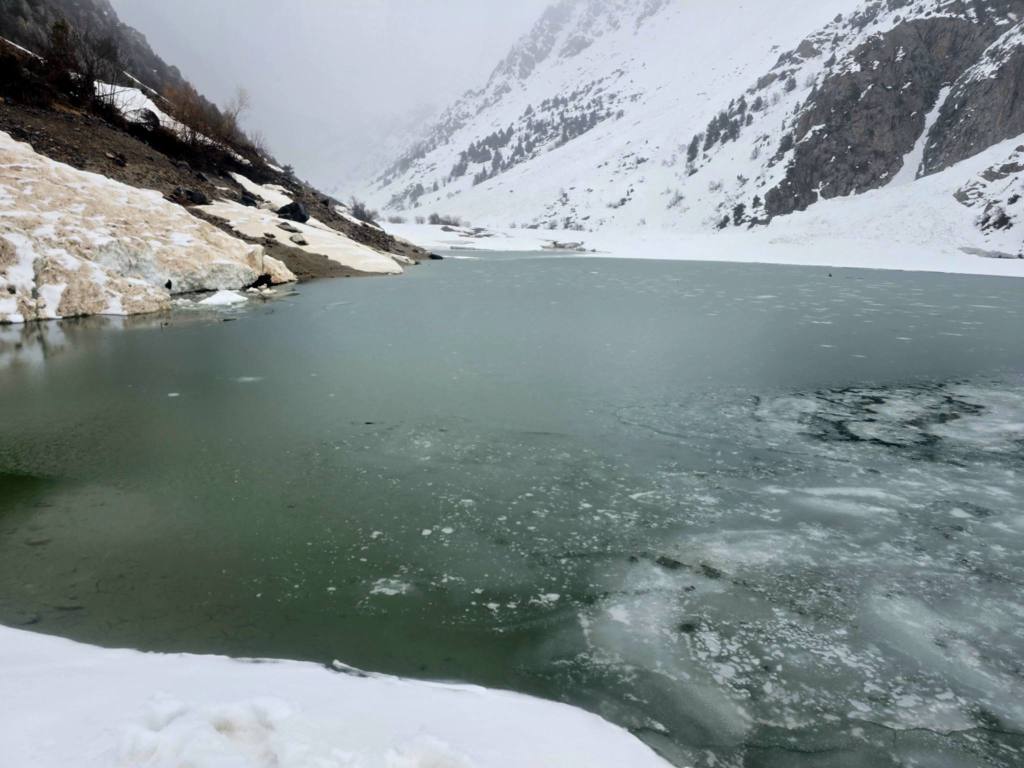
Lake Payron sat beneath dark, swirling clouds, surrounded by snow-covered peaks that disappeared into the mist. A massive eagle circled overhead. The remoteness of the place was overwhelming—it felt like another planet.
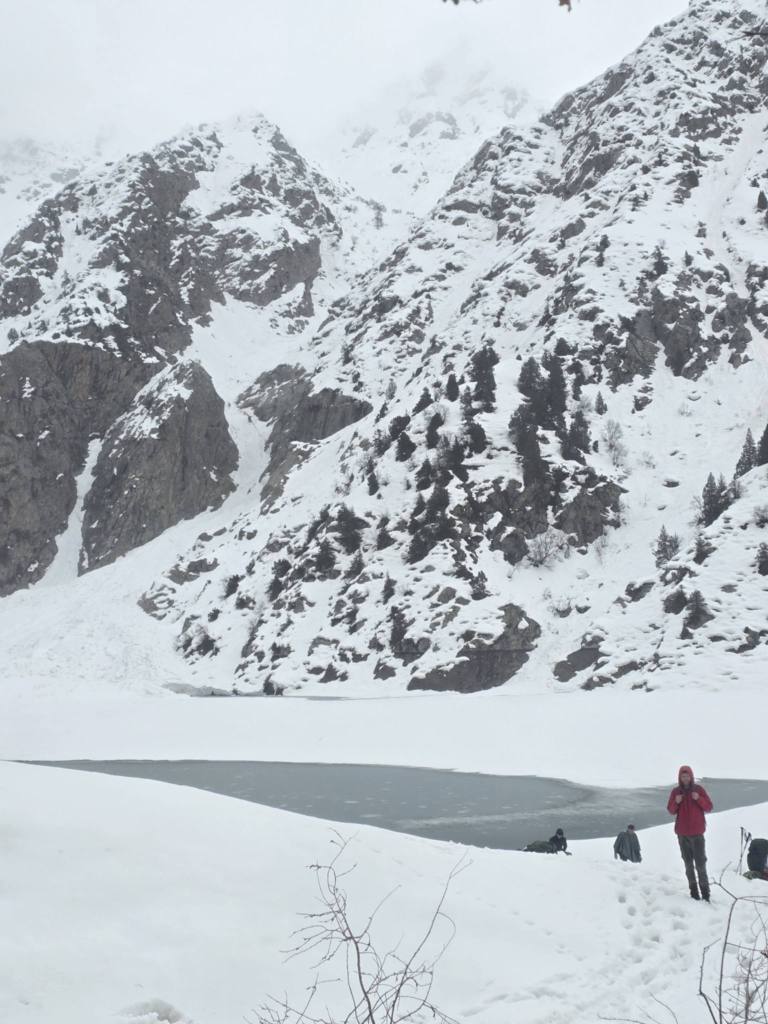
Somewhere along the way, any doubt I had about bringing Gavin on this trip disappeared. Standing there together in those conditions, I couldn’t have been prouder of him. He handled it all without complaint—even as his already undersized shoes took a beating that would leave them nearly destroyed by the end of the day.
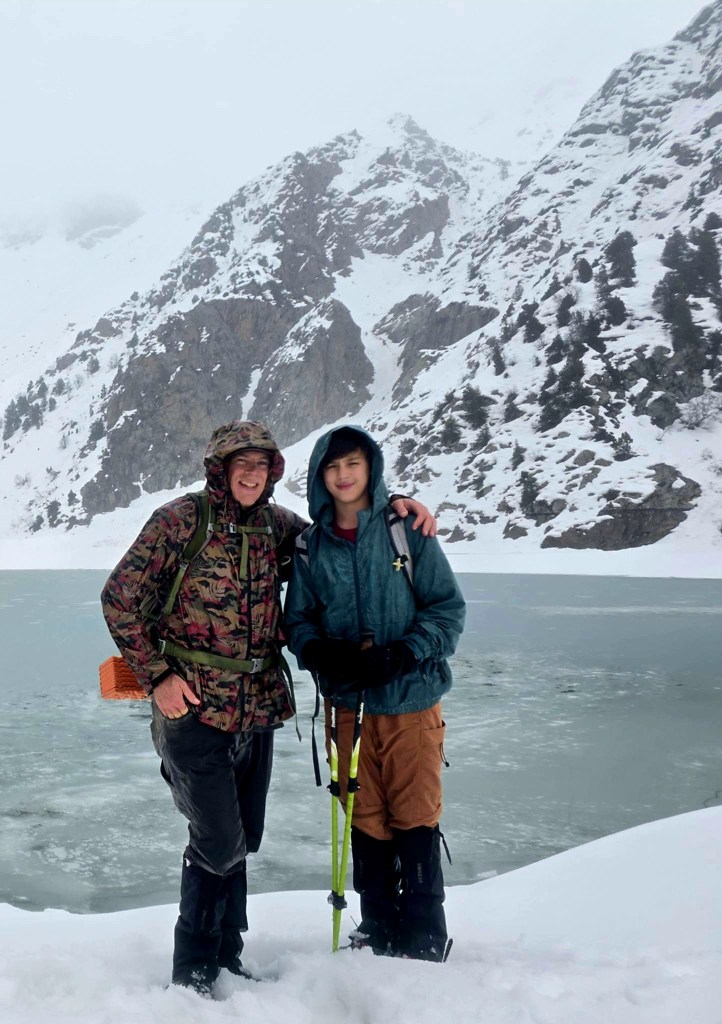
We stayed at the lake for only 10–15 minutes—just enough to take it in—before turning back. While the rest of the group huddled under a tree to make tea, Gavin and I started descending, knowing I’d be slower going down with my knee.
On the way back, we found fresh bear tracks—large prints in the Qaratoqh valley, and smaller ones alongside them in the Payron valley. A mother and cub, not far ahead of us. A steaming pile of bear scat confirmed just how close we were. I’ve seen plenty of signs of bears out here, but still haven’t seen one in the flesh—and I’m perfectly fine keeping it that way.
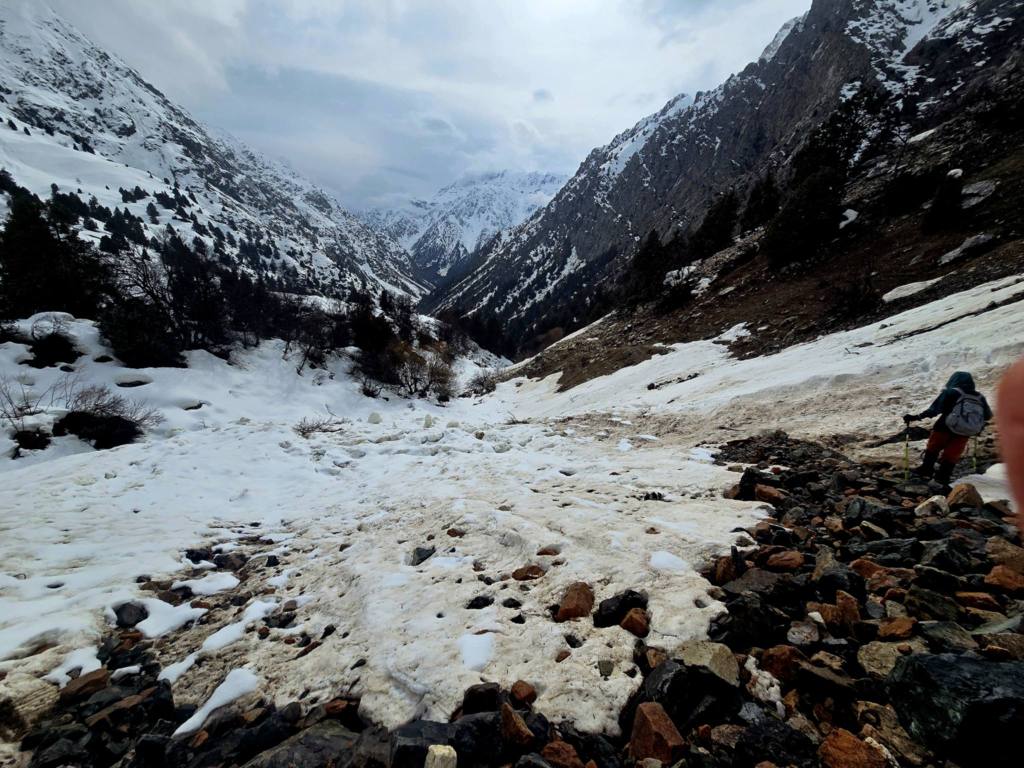
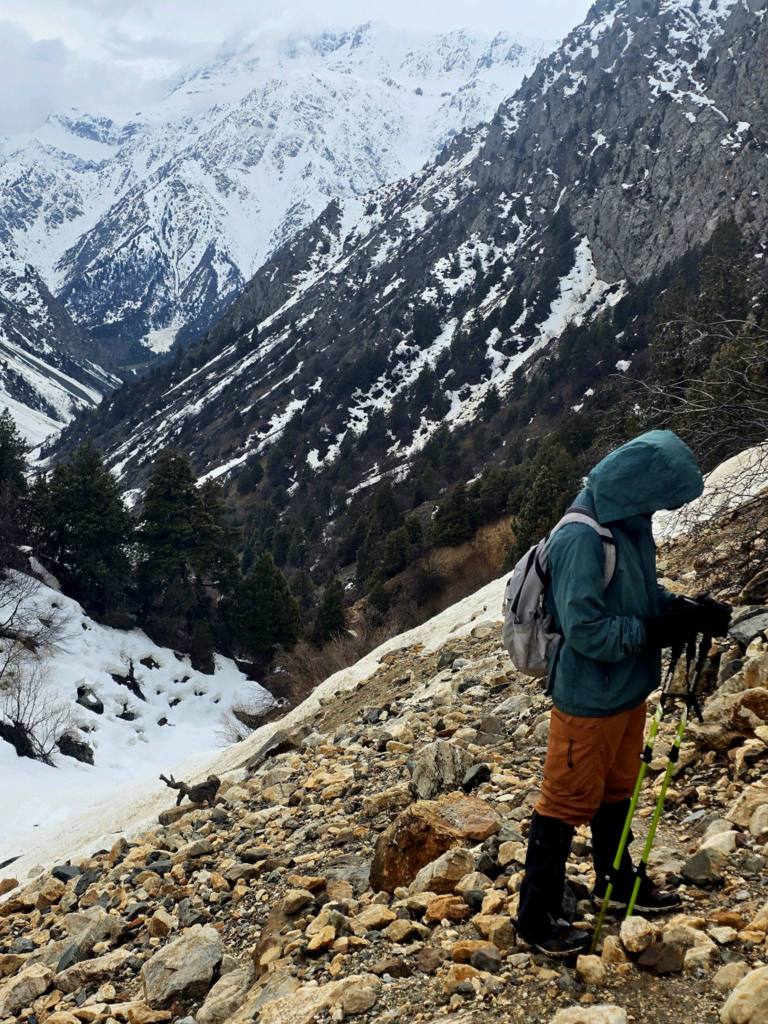
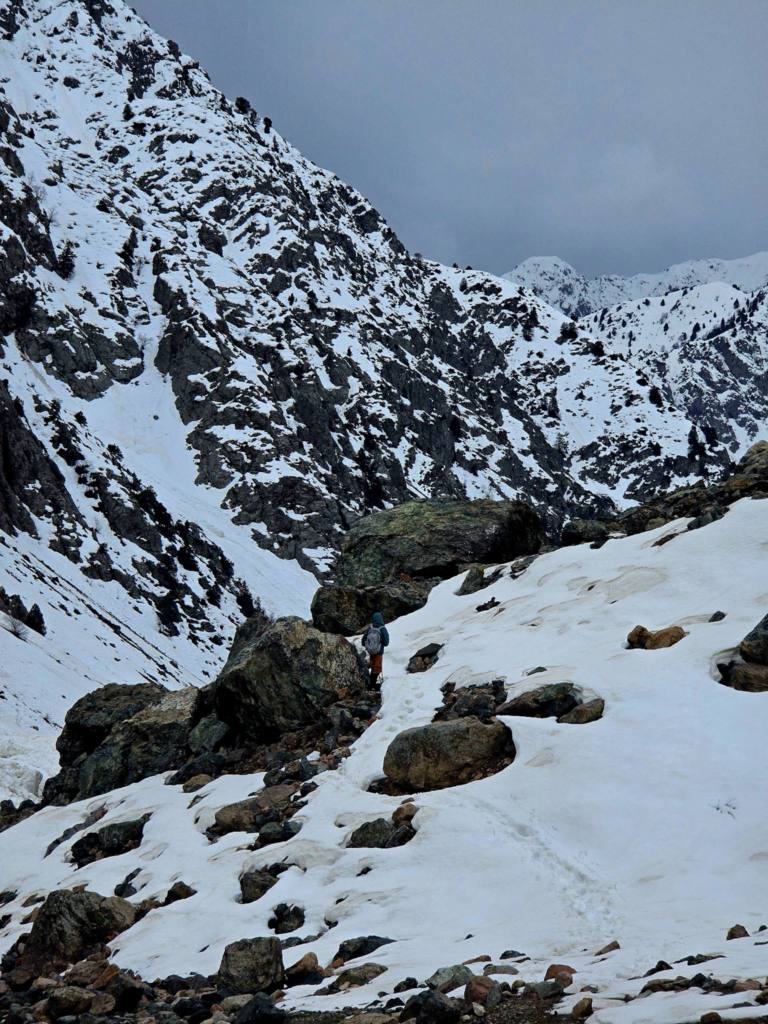
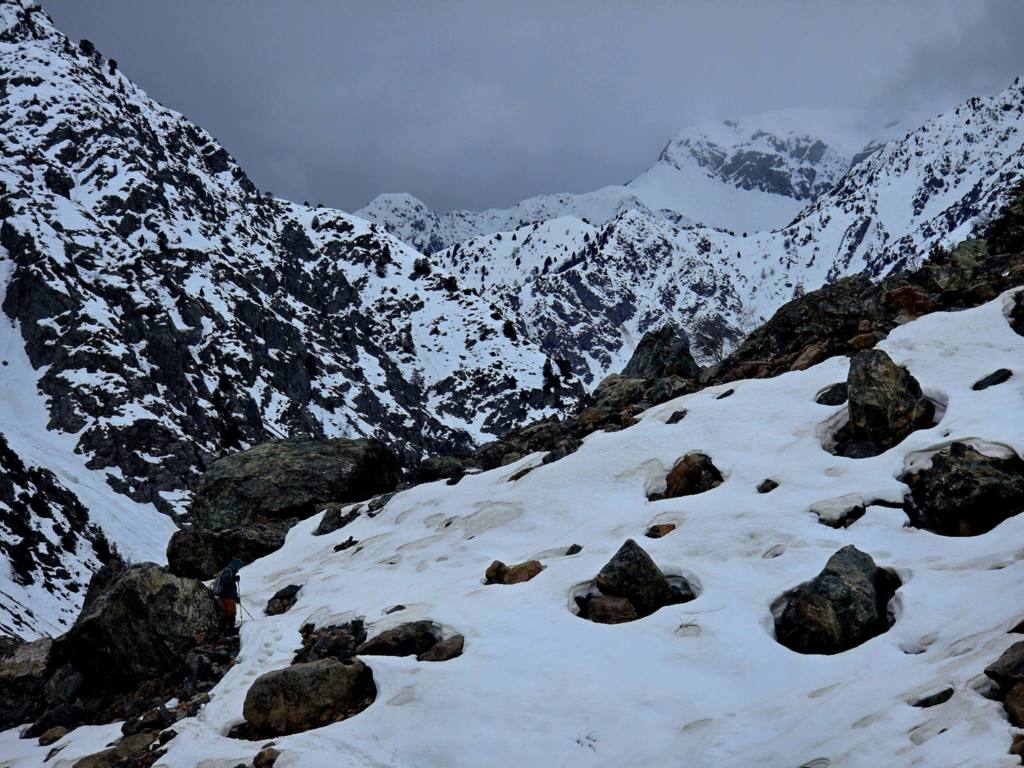
We reached the steep avalanche crossing again with about 30 minutes of daylight left and carefully made our way across. Not long after, darkness settled in. Headlamps came out, and we pushed through the final stretch with tired legs and just enough imagination to keep the shadows interesting.
Back at the cars, we loaded up and started the long drive out. Just past the mining operation, the Opel began making the kind of noise no one wants to hear. I had flashbacks to last year—hiking out in the snow, stumbling into the mining camp during Ramadan, and being welcomed in, fed, and helped by the workers breaking their fast. That kind of hospitality sticks with you.
This time, we had backup. One of the other vehicles towed the Opel all the way to the nearest garage. Slow, careful progress—but at least we were past the worst of the road.
From there, things took one final turn.
The driver called a friend to pick us up—a young guy who seemed equally committed to driving fast and talking on his phone at all times. We tore down the road toward Dushanbe at speeds that felt entirely unnecessary, weaving past cars while he alternated between shouting into the phone and trying to hear the response.
On the bright side, we made excellent time.
He dropped us off on the outskirts of the city just before midnight.
We made it back in one piece—which, all things considered, felt like a solid outcome.
 Wise Clan in Stanland
Leave a comment