Stepping into the flames of an old tradition
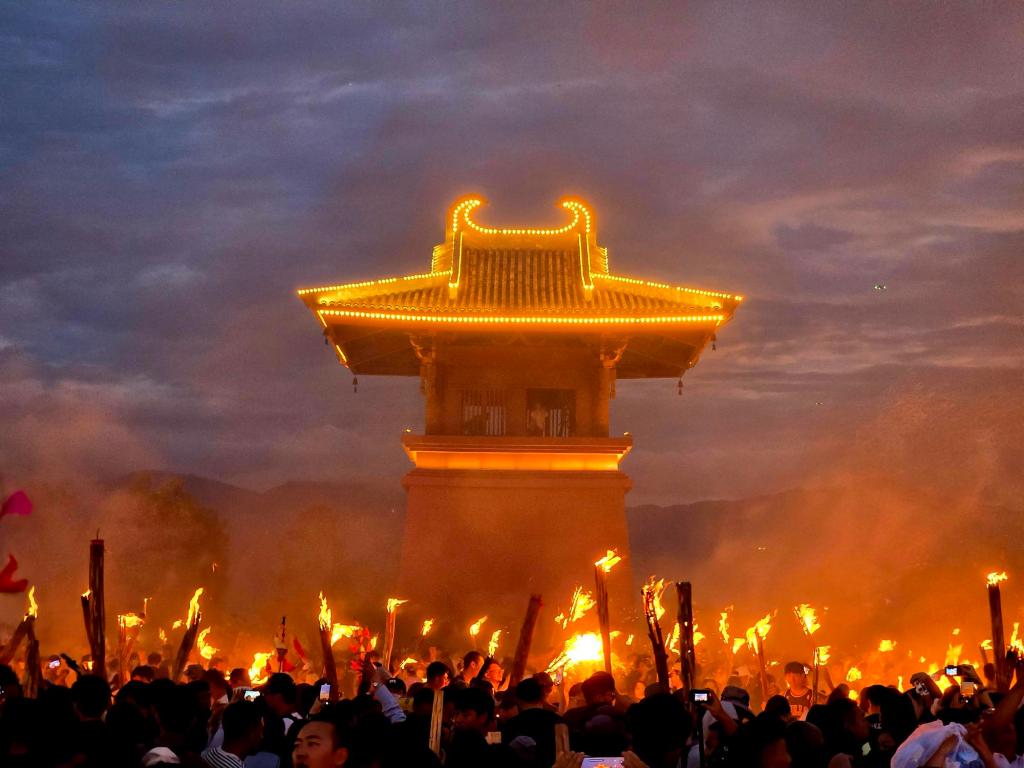
The afternoon of the Torch Festival in Weishan old town was a bit of a spectacle on its own. The quiet town from the day before had packed streets—all of them. People had come flooding in from near and far, giving the whole atmosphere the air of a carnival. Store owners stood in the middle of the streets decorating their massive torches, prepping them for the moment everything would kick off. Handheld torches were for sale throughout the old town and along the route up to the park where the main gathering would begin.
Around every corner, ladies pushed wooden carts stacked with grocery bags full of powdered pine sap—poor man’s gunpowder. I only say “poor man’s” because a huge bag of it was dirt cheap. For less than $12, we were heading up the hill with four large torches and three bags of sap, flowing in a river of similarly armed festival goers.
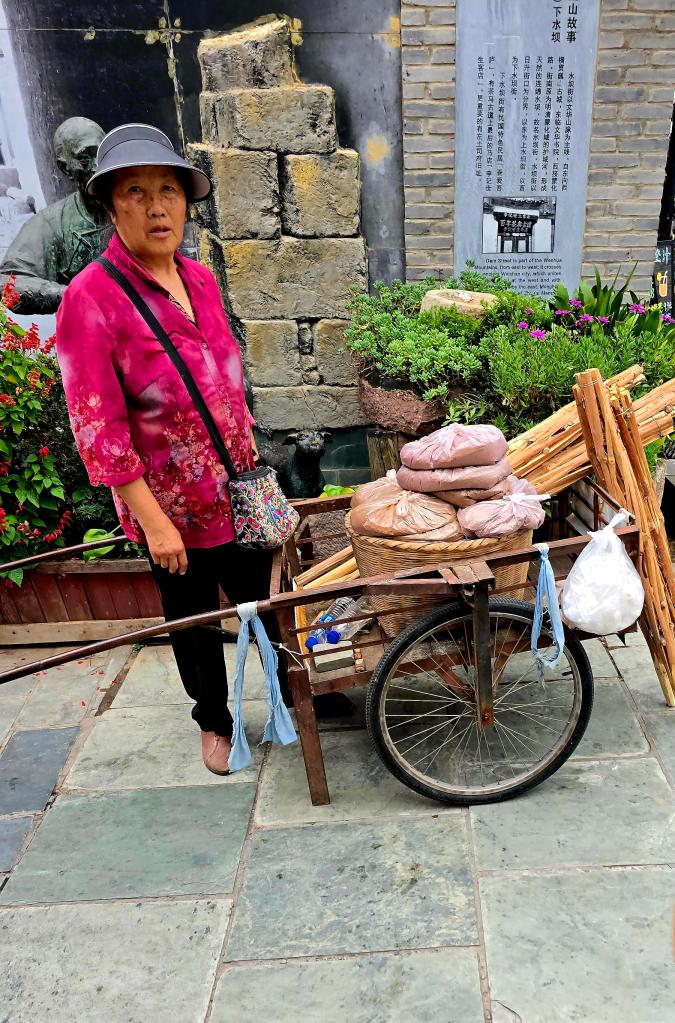
The Torch Festival, celebrated across much of southwest China, traces its roots back thousands of years to a time when fire meant survival. For many of the region’s ethnic groups—especially the Yi—it began as a ritual to protect crops, with villagers carrying flames through their fields to drive away insects and evil spirits. Over time, layers of legend formed around it—stories of heroes defeating locust plagues, burning back demons, or sacrificing themselves to save their people. Different groups tell it differently, but the message holds steady: fire as protection, renewal, and life.
As we neared the park grounds, Mother Nature decided to put on a spectacle of her own, with a sunset that painted the clouded sky in shifting colors. We made our way around the central torches and closer to the stage, watching the crowd grow. People kept pouring in until the park hit capacity, with the overflow filling the massive stairways all the way back down into town.
The stage finally lit up, and a series of performances from different local ethnic groups took over. About 40 minutes in, a man dressed like some medieval sorcerer stepped out with an unlit torch as a hearth of fire was pushed beside him. He spoke a few words, then thrust his torch into the flames and began chanting—pulling it out, swirling it through the air, feeding the fire as it grew. The chanting intensified as the flame did. Then, without warning, he turned and moved toward the centerpiece—a ring of towering torches surrounding one massive central pillar.
They lit them.
And then everything changed.
Fires began to spring up across the grounds—hundreds of small circles forming as people crouched down and lit their torches from shared flames. Within minutes, thousands of torches burned bright, raised to the sky. Smoke filled the air. Fire everywhere.
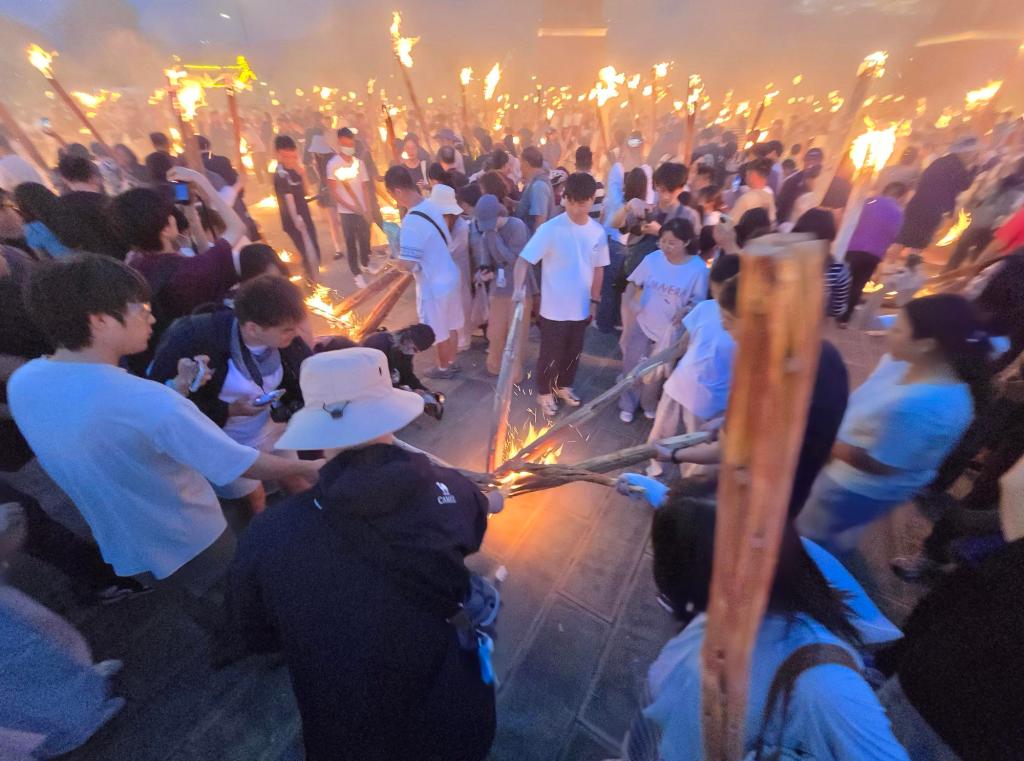
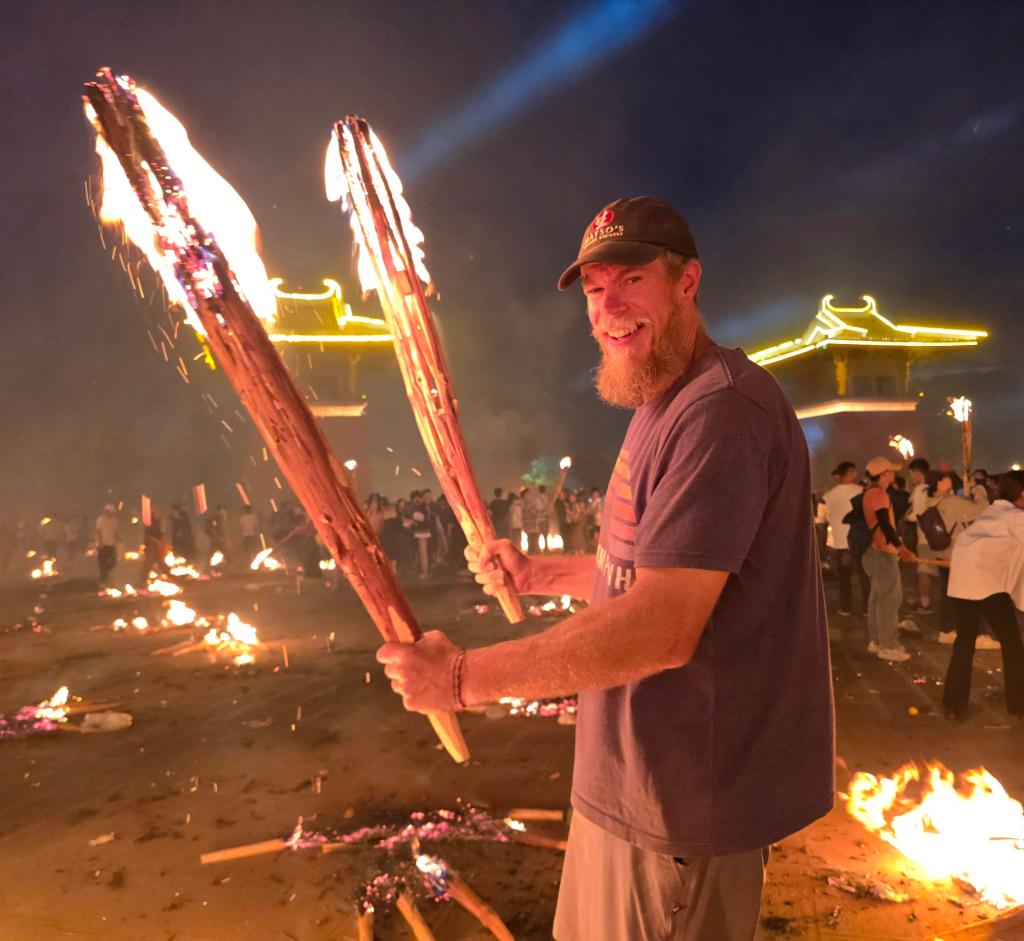
Moments earlier, the kids had been wrapped up in the spectacle. But as the flames spread and the scene tipped into something far more chaotic, the older two started scanning for an escape route. People were running in every direction, tossing handfuls of pine sap onto open flames, sending bursts of fire shooting through the crowd. Night was falling quickly, and looking back toward the entrance, the scene was wild—the two towers glowing overhead while the crowd below raised torches like something out of another time.
My oldest two gave up their torches and bags of sap and made a hasty retreat with my wife, dodging fire and flying embers in search of a little breathing room.
But the pyro blood runs pretty thick in my Gen X veins—I wasn’t going anywhere.
Rowan wasn’t either.
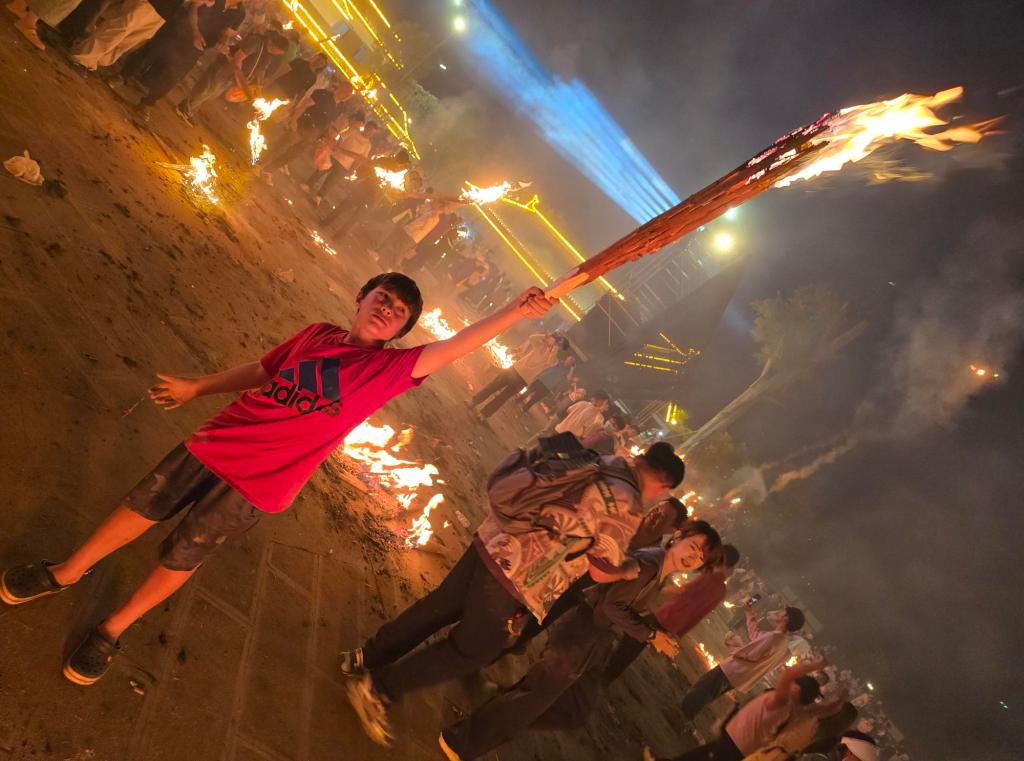
Full-blown pyro mayhem carried on for another half hour. We handed one torch off to someone empty-handed, Rowan took one, and I held onto the other two. At one point, I dropped one into a fire so I could free up a hand for the sap. A small handful sends up a quick burst. One of my full scoops… goes off like a small bomb.
Fun times.
A fireworks display finally signaled that things were winding down. As the crowd began flowing out of the gates and back toward the old town, the park behind us looked like a battleground—smoldering, smoky, glowing.
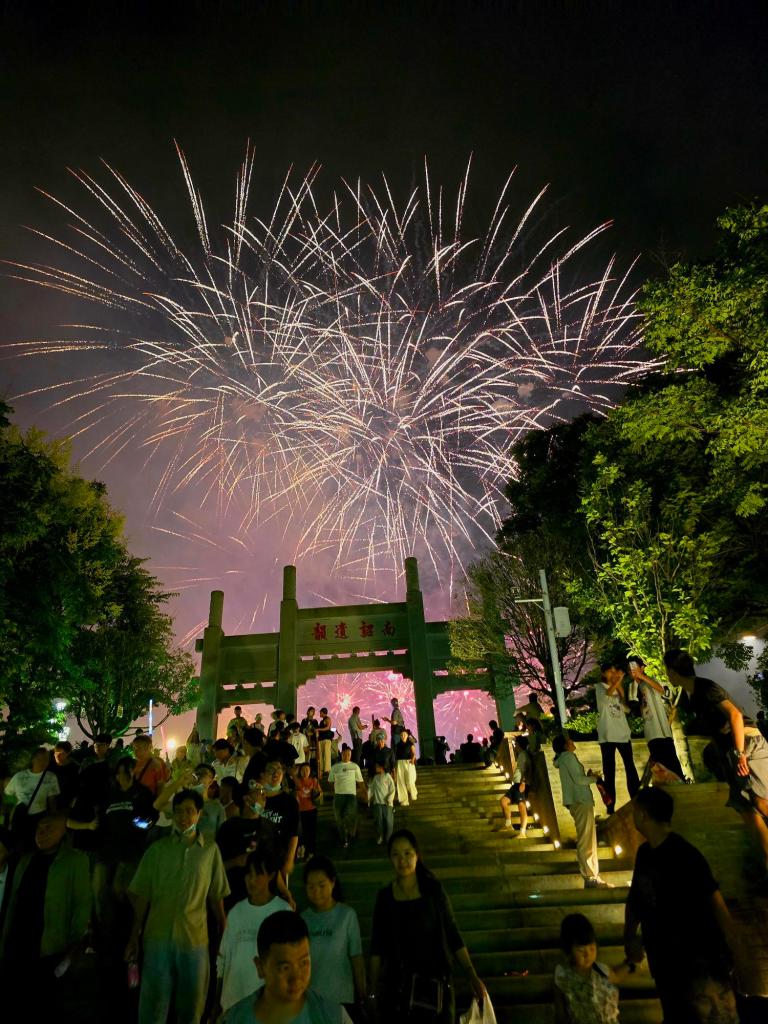
We followed the current down the wide stairway, eventually finding the rest of our crew at a street crossing lined with food vendors. They had plates of fried potatoes and stinky tofu. We had blackened faces and wide eyes.
Fires were still burning in the streets. More torches were still being lit.
Because the festival doesn’t end at the park.
It spills into the town.
The festival wasn’t just contained to the main grounds above—where thousands, maybe tens of thousands, gathered around massive bonfires. It moved into the streets themselves. Giant stationary torches burned throughout the old town, flames rising high above narrow lanes lined with old wooden buildings, while people carried handheld torches through the maze below.
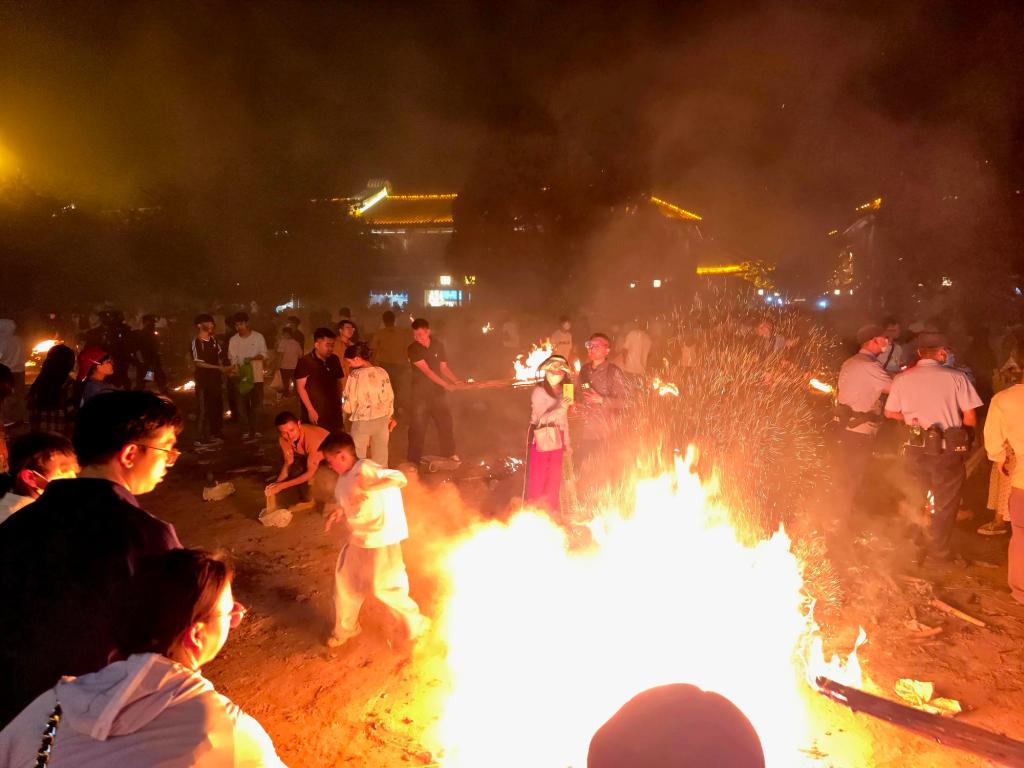
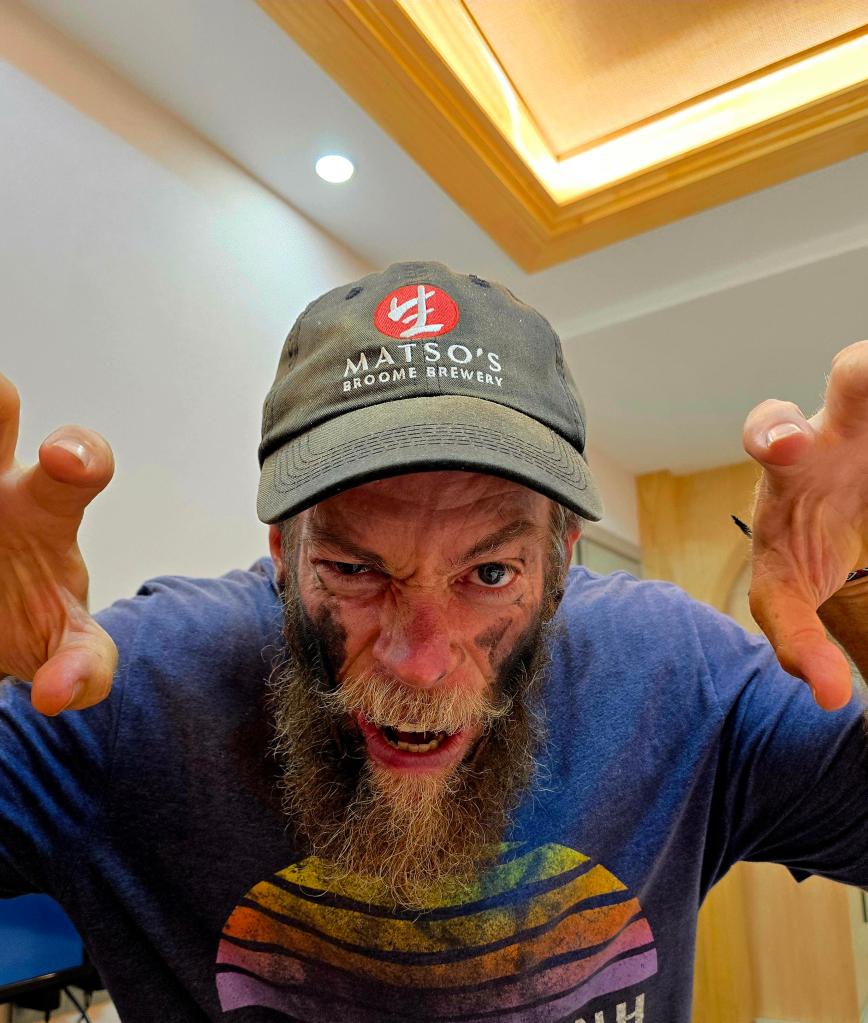
It was equal parts incredible and slightly terrifying.
The entire town, it seemed, was on fire—in the most controlled way possible.
And somehow, year after year, it all holds together.
It’s a bit of a miracle, really.
Things didn’t start to fade until after 10:30pm, and even then, the streets stayed alive well into the night.
By the time we finally made our way out of the old town, the fires were fading, but the scene still felt alive. Smoke hung in the air, torches still burned here and there, and the streets carried on like nothing unusual had just happened. For a few hours, the whole place had been set ablaze—and somehow, it worked.
 Wise Clan in Stanland
Leave a comment