July 18, 2025
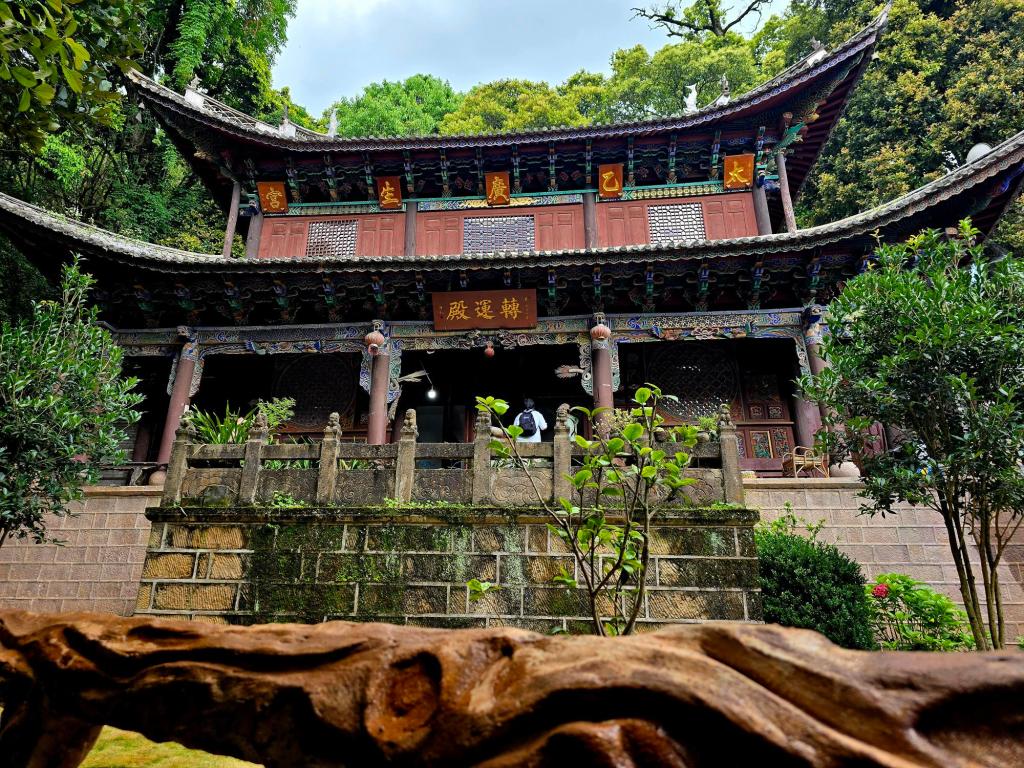
We came to Weishan mainly for the Torch Festival. The plan was to just spend a couple of nights, but when we arrived, I realized that I had the days wrong, and the main festival would take place the night that we were due to leave. That wouldn’t do. Luckily for us, the guesthouse still had our room available for one more night, so we booked it and suddenly found ourselves with an extra day to wander.
We decided to spend that day hiking around the nearby mountain of Weibaoshan.
I didn’t know much about the mountain before we headed up there, including how high it was. I was under the false impression that there was an entrance to a hiking area about 15 minutes away. We walked around looking for a taxi up the mountain with no luck at all, and eventually found a tuk-tuk driver who was willing to take us up there in his electric ride. Being a local driver, he probably should have known better.
It was more like a solid 45-minute climb with some serious elevation gain. We were cruising along fine until about the last mile or so, when it became clear that his machine was running out of juice. About 2.5 miles before the entrance, the tuk-tuk gave up completely.
We had just started walking when a bus came winding up the steep road. We flagged it down and hopped on, the driver shaking his head and mumbling something about our questionable decision-making.
We paid the entrance fee and stepped into the forest.
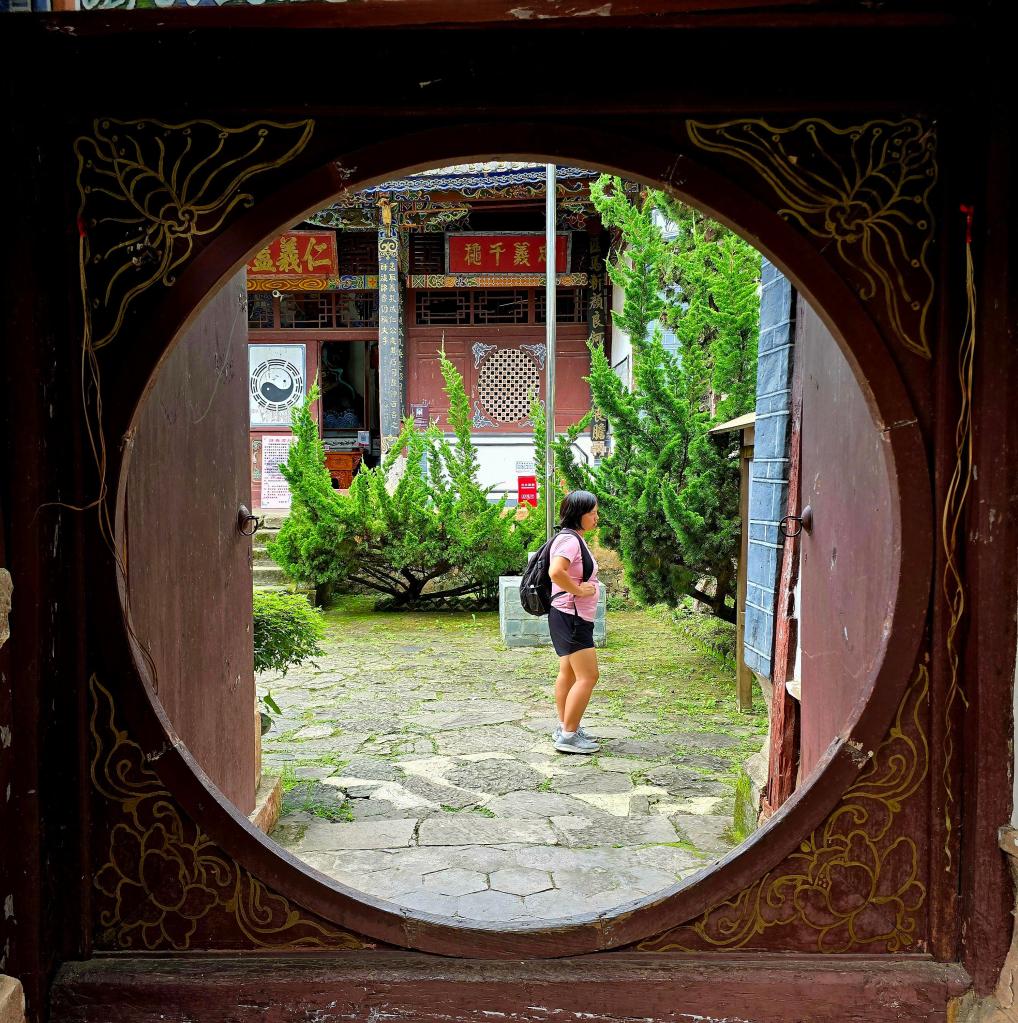
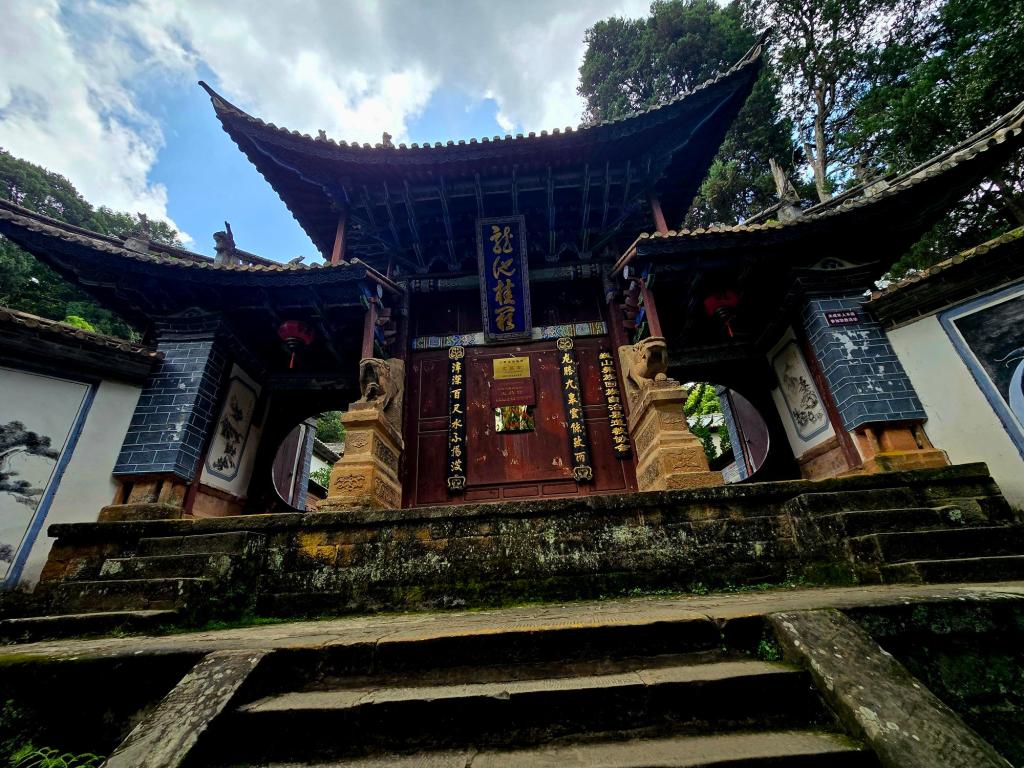
I’ve hiked around a lot of sacred mountains in China, but I couldn’t remember ever hearing much about this one. I wasn’t ready for how incredible it was going to be.
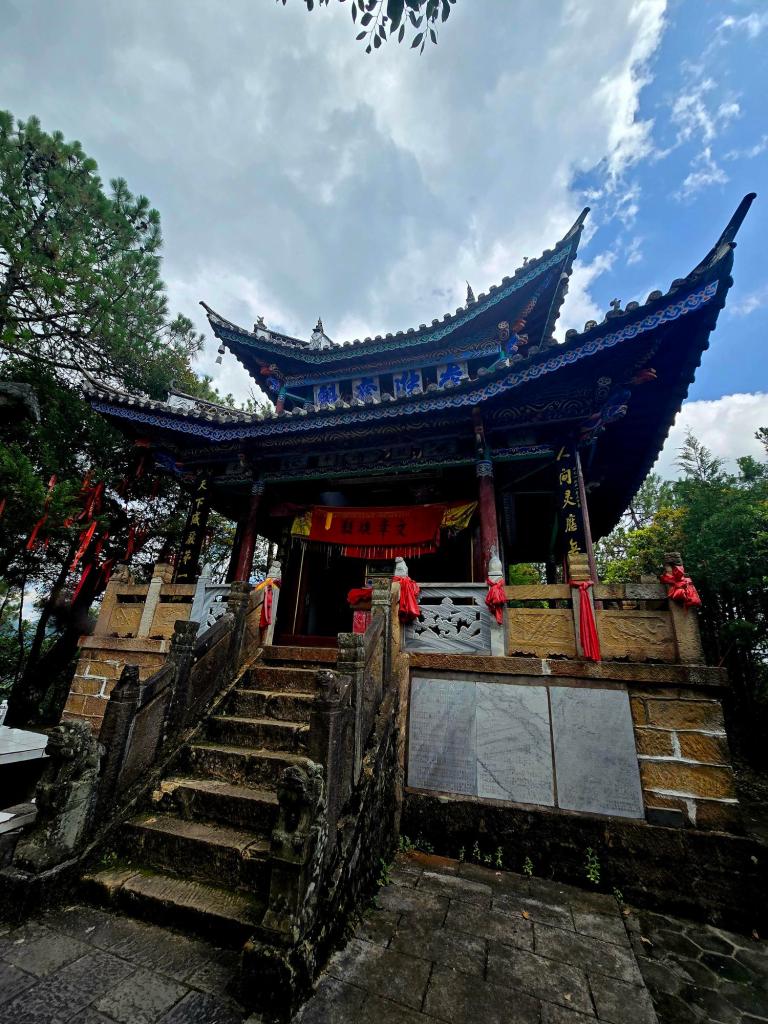
We took a path to the left and came upon the first of what must have been fifteen or twenty temples scattered across the mountain. And just like that, the day shifted.
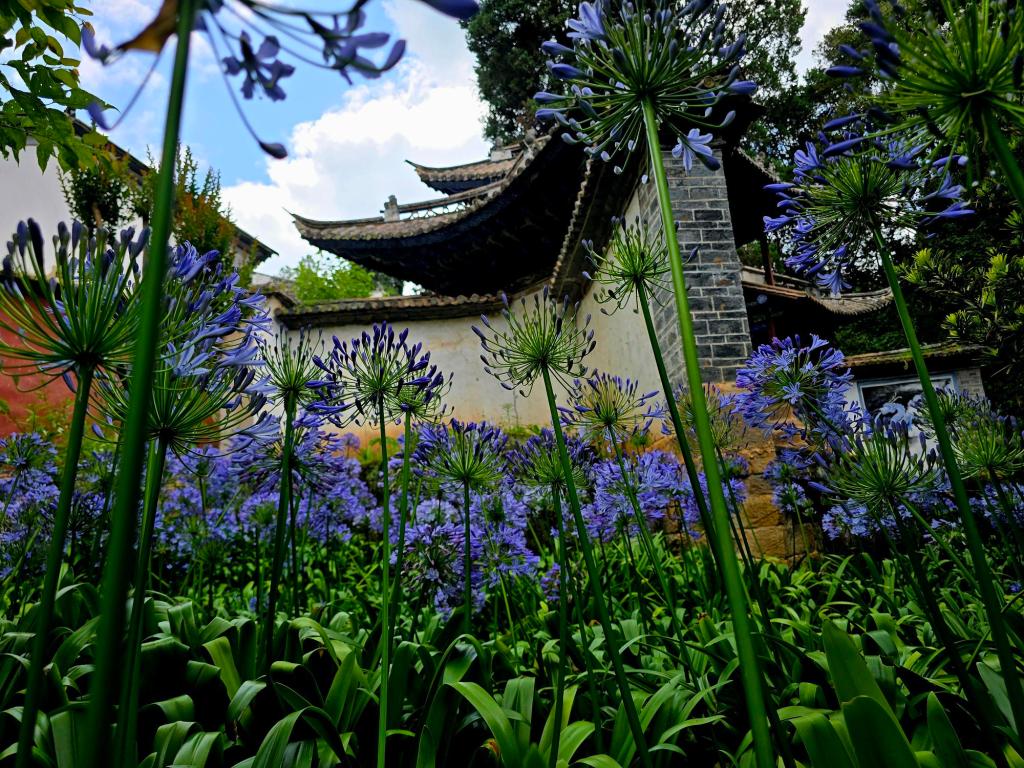
The artistry, the design, the quiet intention behind each structure—it all stood out immediately. Moss clung to old stone. Painted beams and carved panels told stories I couldn’t fully read. Guardian statues stood watch at entrances, frozen somewhere between protection and warning. Courtyards opened one into another, each one rising slightly higher than the last, pulling you deeper into the mountain.
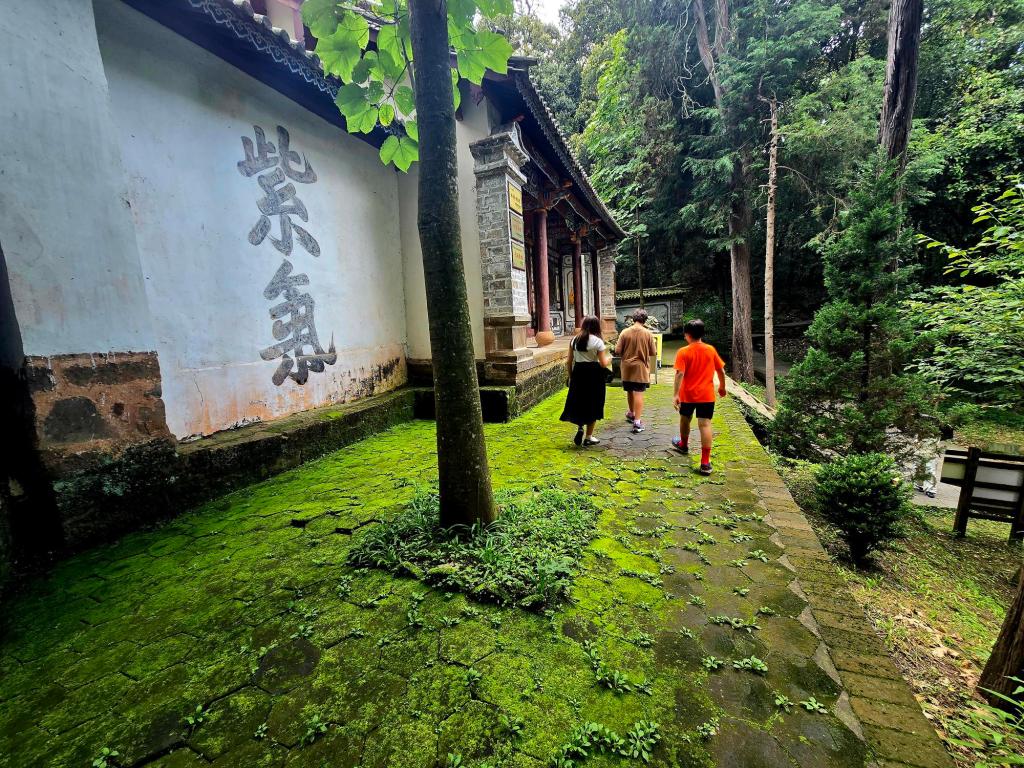
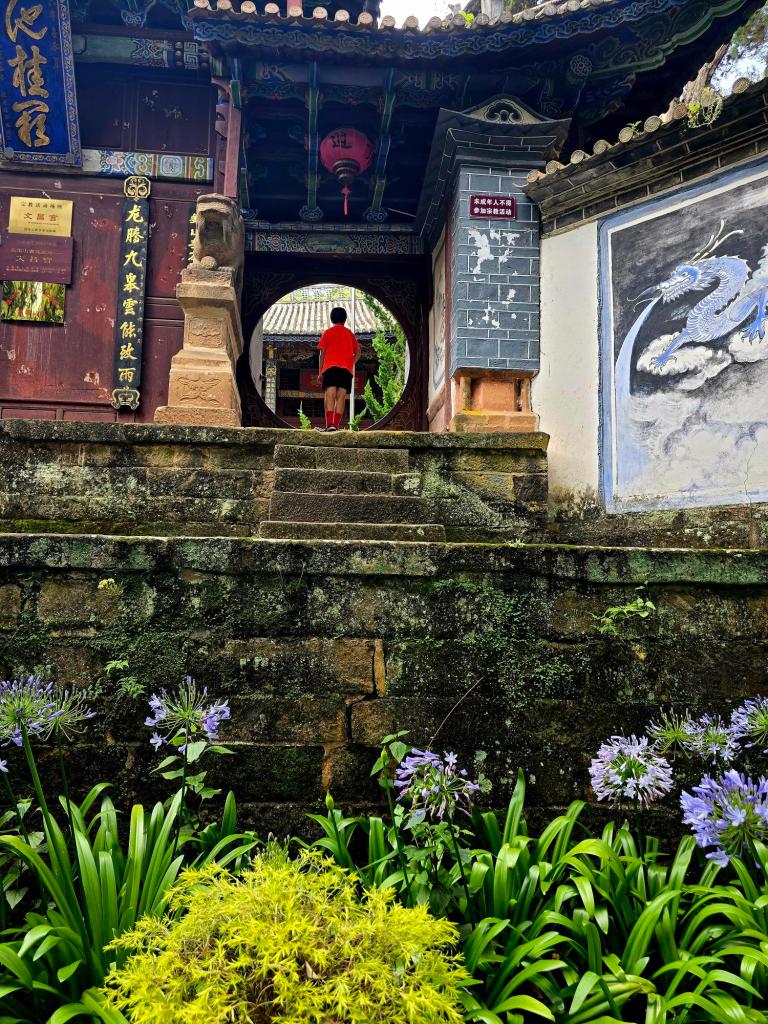
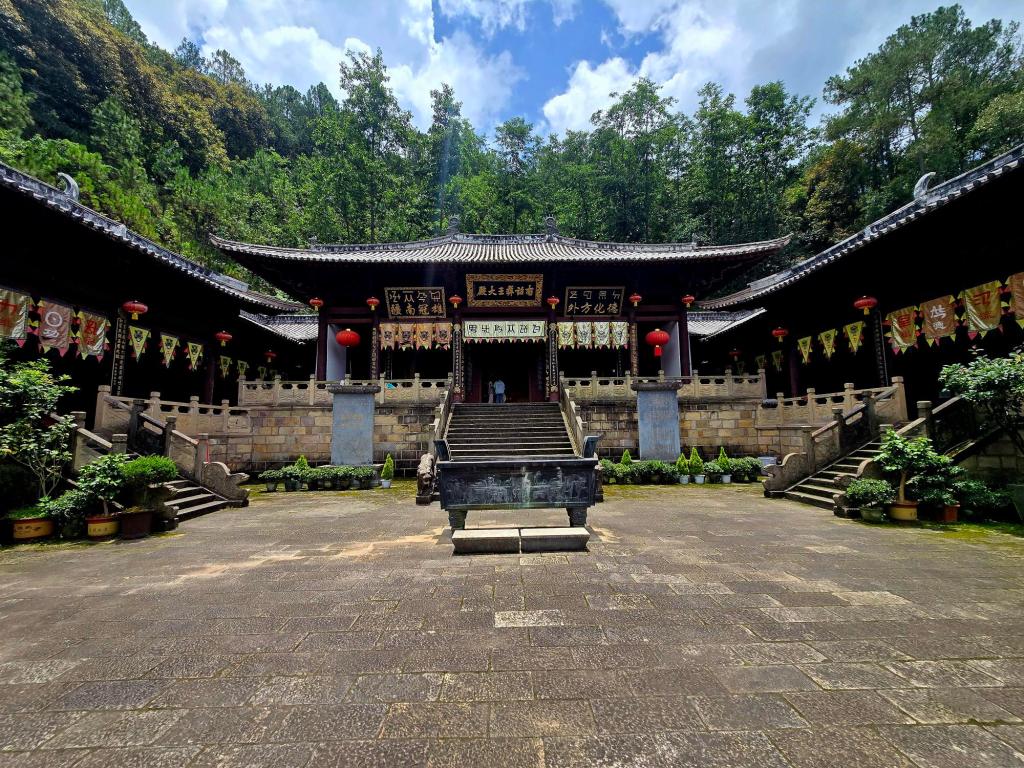
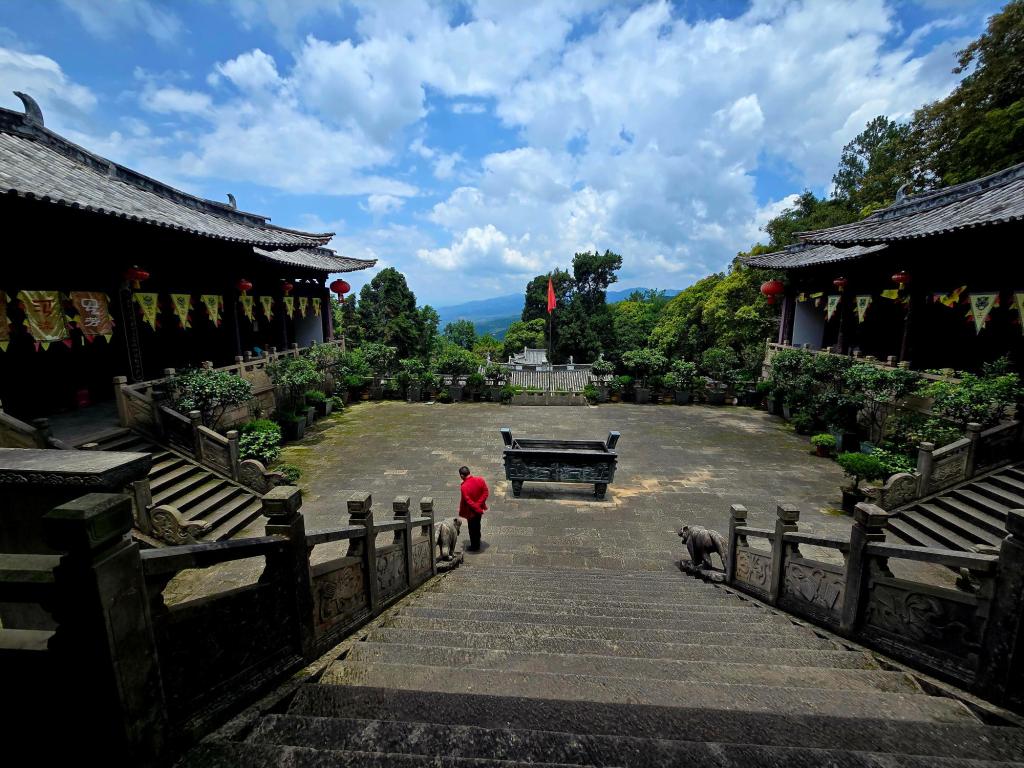
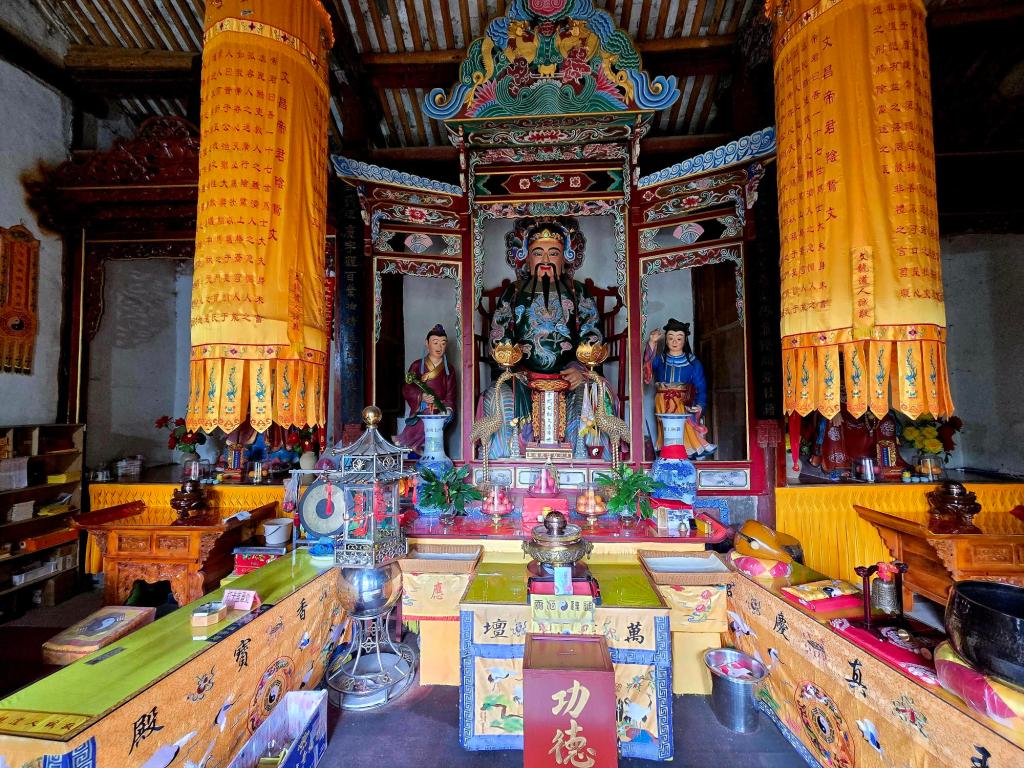
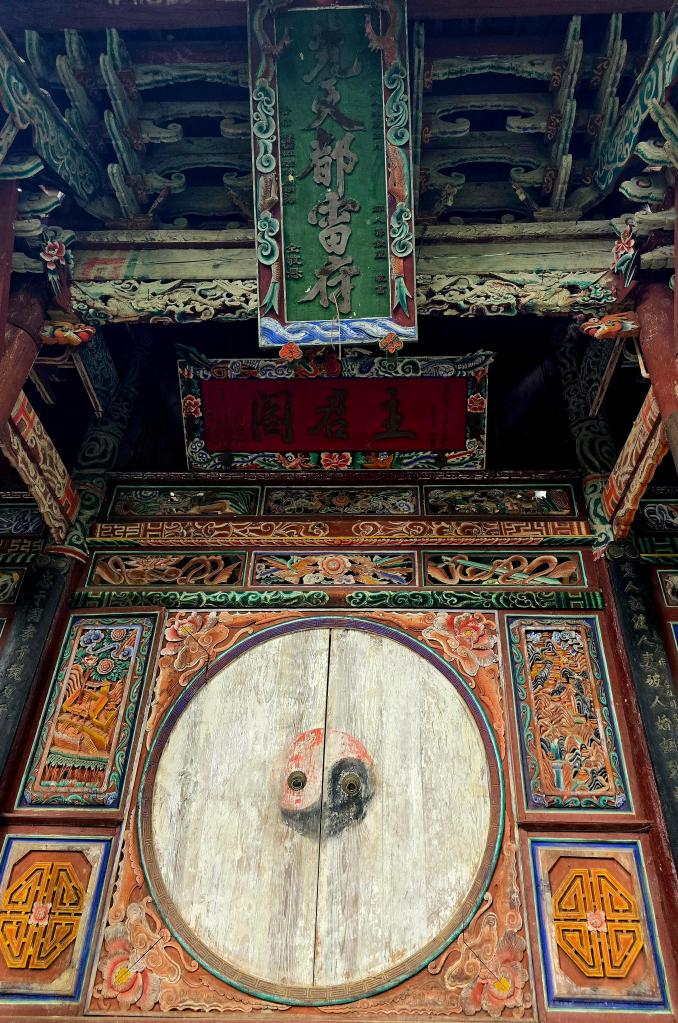
It didn’t feel like a single destination. It felt like a slow unfolding.
And that’s when you start to realize—this isn’t just a collection of temples tucked into the forest.
This mountain has been a sacred place for well over a thousand years. It’s considered one of the important Taoist mountains of China, and even more than that, it sits at the birthplace of the ancient Nanzhao Kingdom. The founder of that kingdom is said to have risen from this very mountain—and after his death, he wasn’t just remembered, he was worshipped.
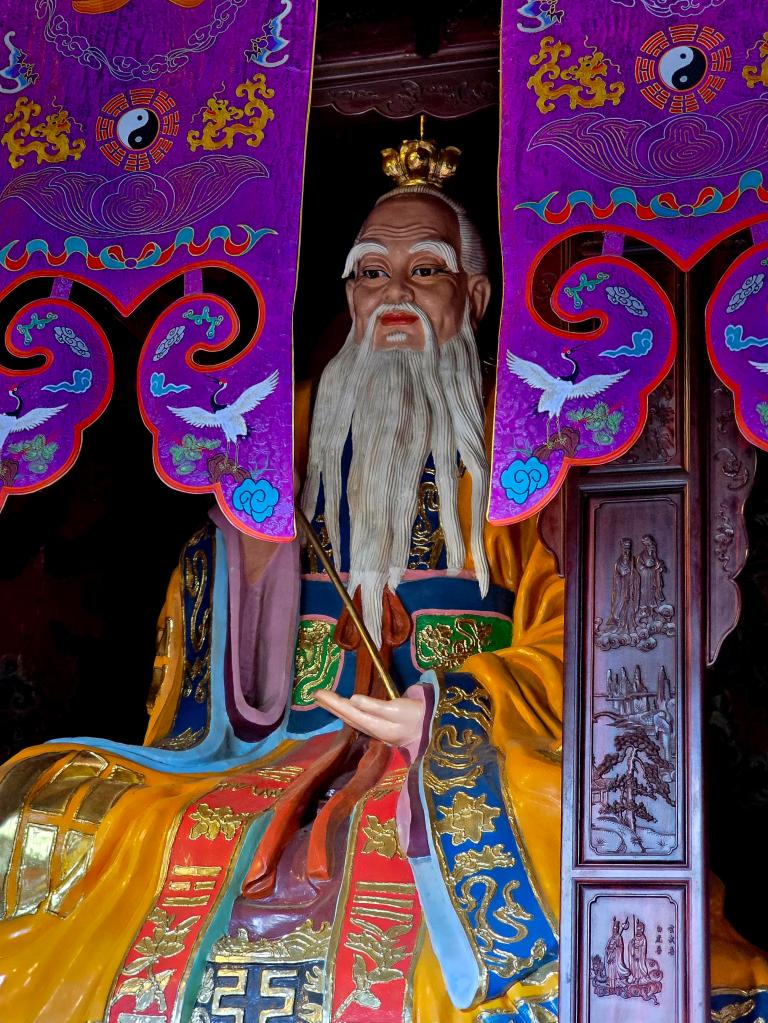
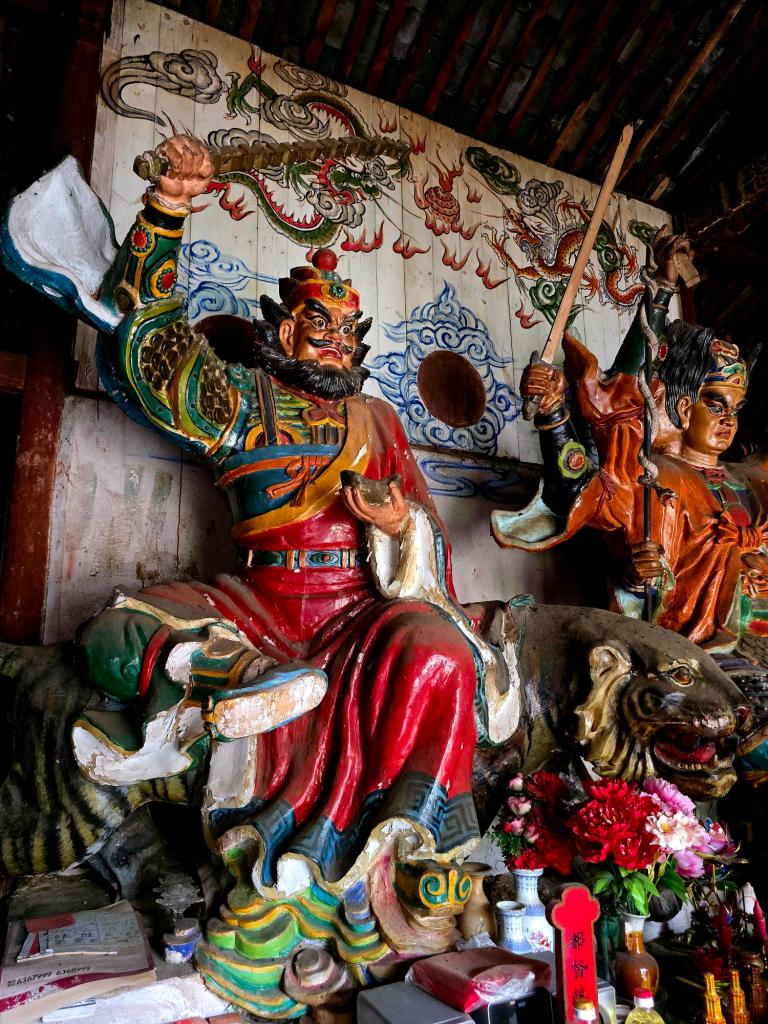
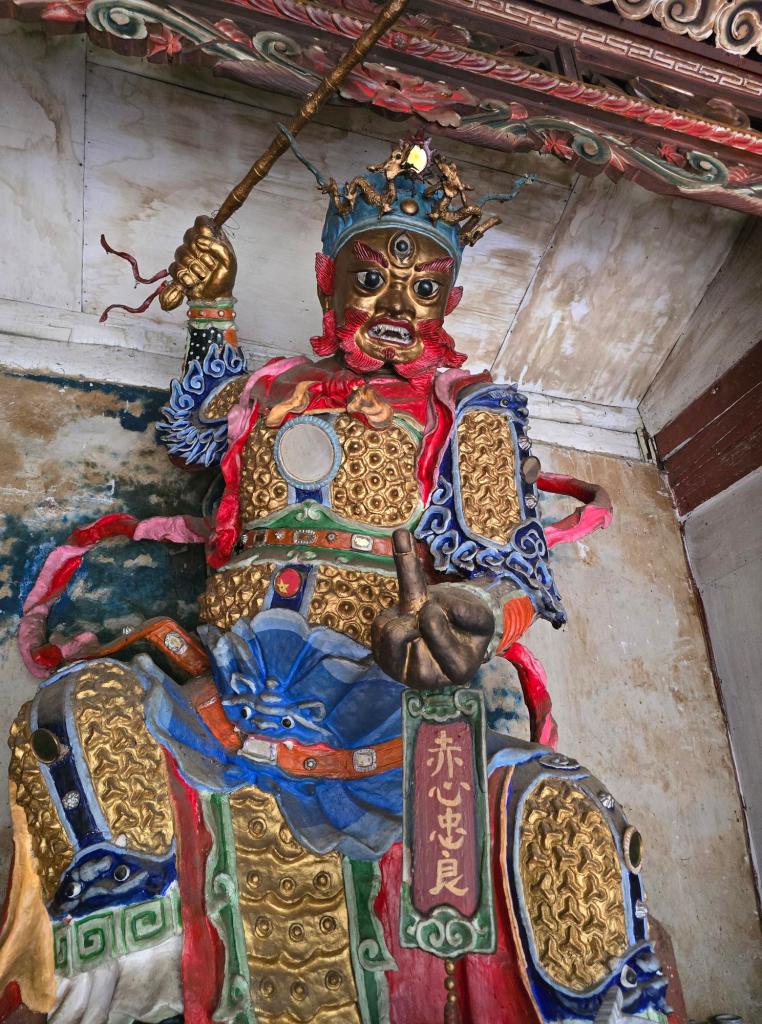
Somewhere along the way, history and belief stopped being separate things here.
You can’t help but imagine what life must have been like on these slopes hundreds of years ago. Not just for the builders, but for the people who stayed. Taoist priests, hermits, wanderers—people who came here to step away from the noise of the world below.
Some came to pray. Others came to disappear.
It’s the kind of place where you can picture a lone figure sitting just beyond the trees, ink brush in hand, a cup of something strong nearby, watching clouds drift through the valley below. A life stripped down to the essentials—stone, wood, wind, and time.
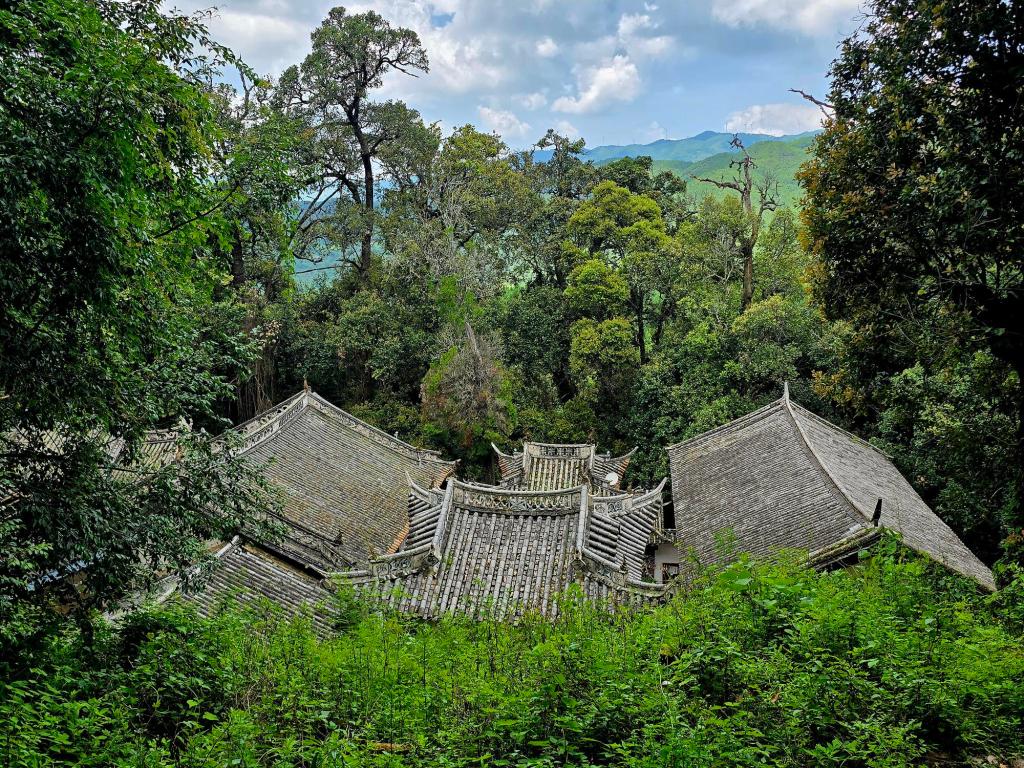
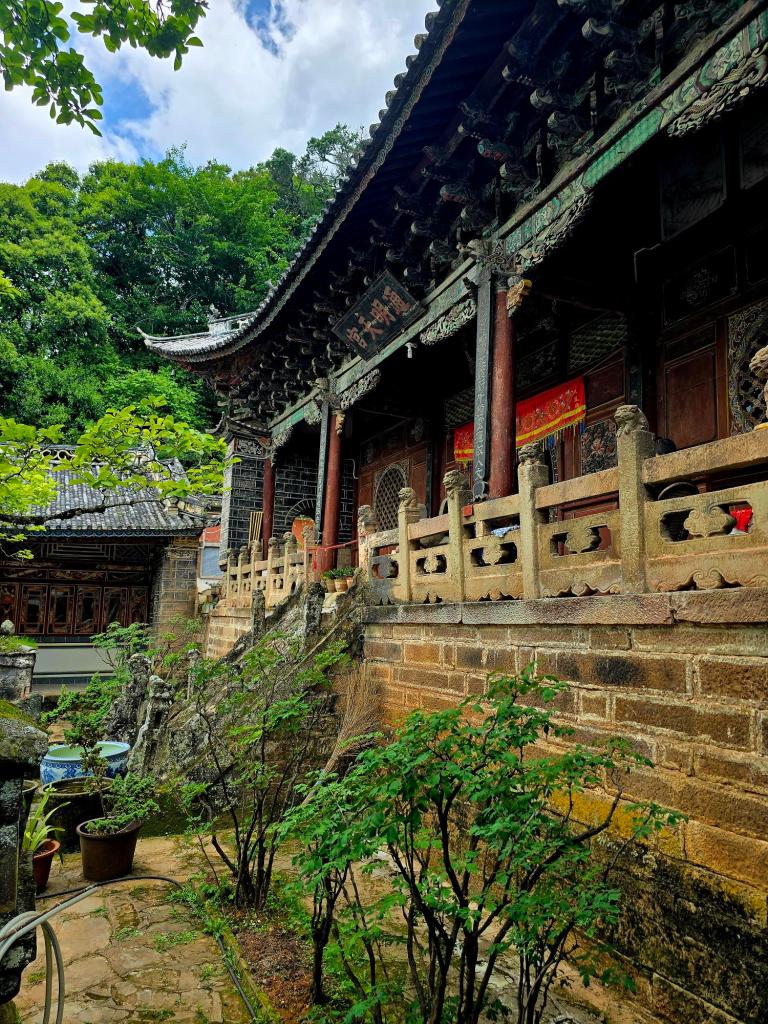
And even now, that feeling hasn’t gone anywhere.
There was a stillness up there that never quite left us. We didn’t have to share the mountain with many people, and there were long stretches where it was just us moving through the forest, with nothing but birds and the occasional creak of old timber breaking the silence.
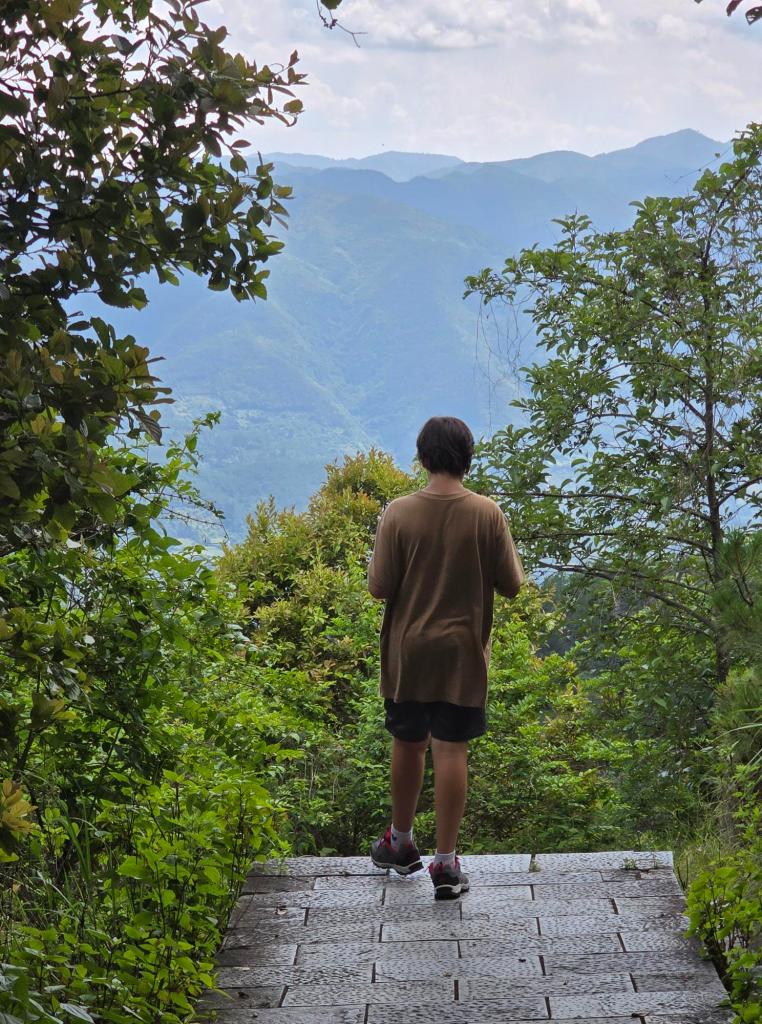
Eventually, we reached a point where our two younger ones were ready to turn around and head back down. My oldest and I kept pushing upward toward the temple at the peak.
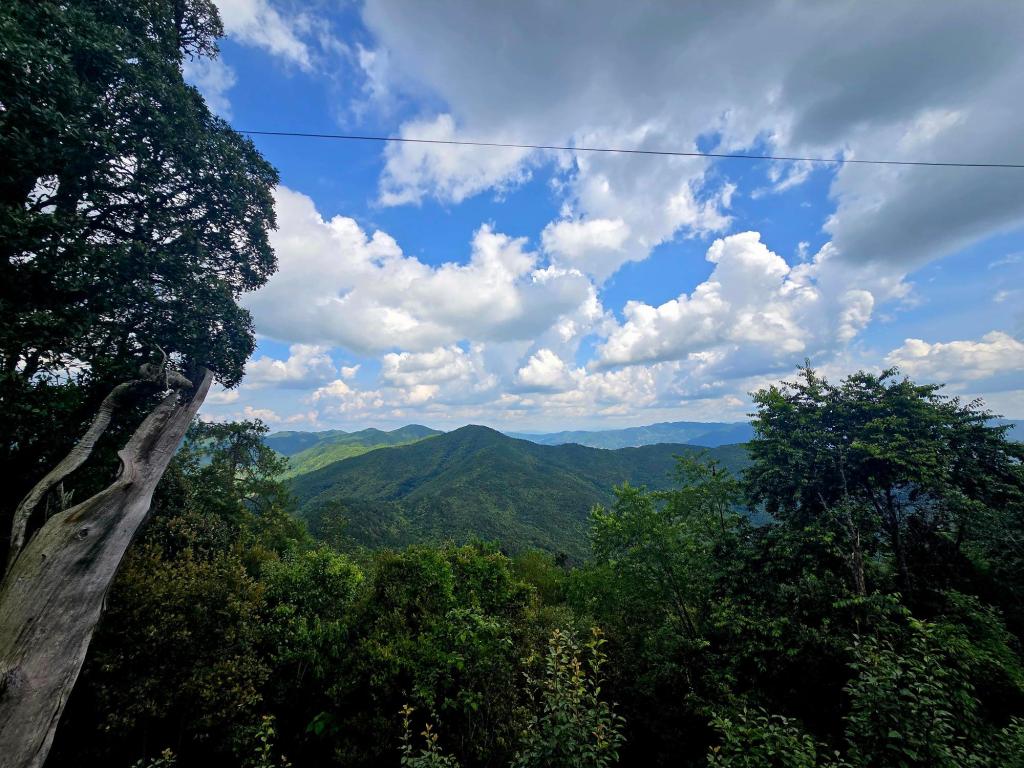
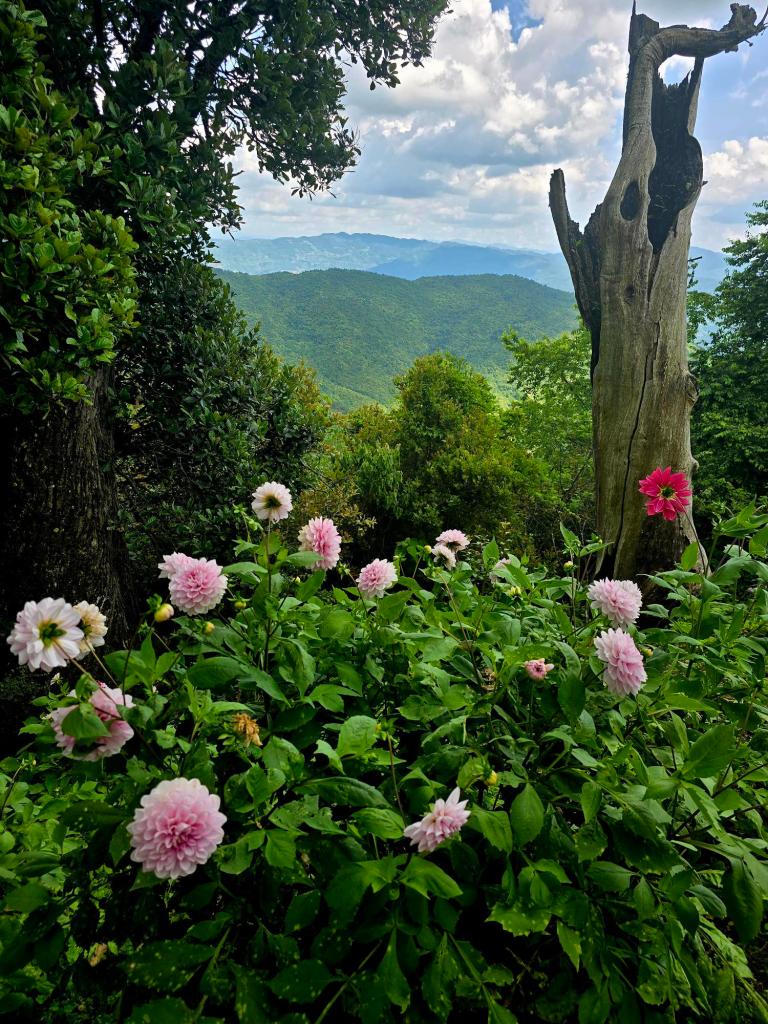
The higher we climbed, the more the trees began to open up. Every so often, the forest would break just enough to reveal wide views stretching out across the countryside below—layer after layer of hills fading into the distance.
When we finally reached the upper temple, we stayed for a while, just taking it all in.
If there’s a place to step away from everything—really step away—it’s somewhere like this.
Not just because it’s quiet, but because it feels like it was meant to be.
Eventually, we made our way to leave, but instead of sending us back the way we came, a monk pointed us down a trail behind the temple and told us we could loop back around to the main entrance. That was all the direction we needed.
So off we went.
The trail dropped down the other side of the mountain, winding through more forest and—of course—more temples. An hour or so later, after passing through several more hidden courtyards and quiet structures, we came across the rest of our crew returning from a sacred cave further down the trail.
Apparently, there’s always one more place to explore up here.
The last bus was leaving in 40 minutes, and we didn’t want to risk missing it while chasing another side mission, so we kept moving and made our way back to the main gate.
But even as we made it back to the gate and caught the last bus out, it felt like we had only scratched the surface.
Not because we rushed it—but because places like this aren’t meant to be finished in a day.
You just pass through, take what you can, and leave the rest for another time.
 Wise Clan in Stanland
Leave a comment