Trail Stats
📏 Distance: 5 miles
⬆️ Ascent: 2,037 ft
⬇️ Descent: 2,054 ft
⚖️ Difficulty: Moderate
⏱ Total Time: 5h 03m
🥾 Time Moving: 3h 06m
📅 Date Hiked: March 15, 2026
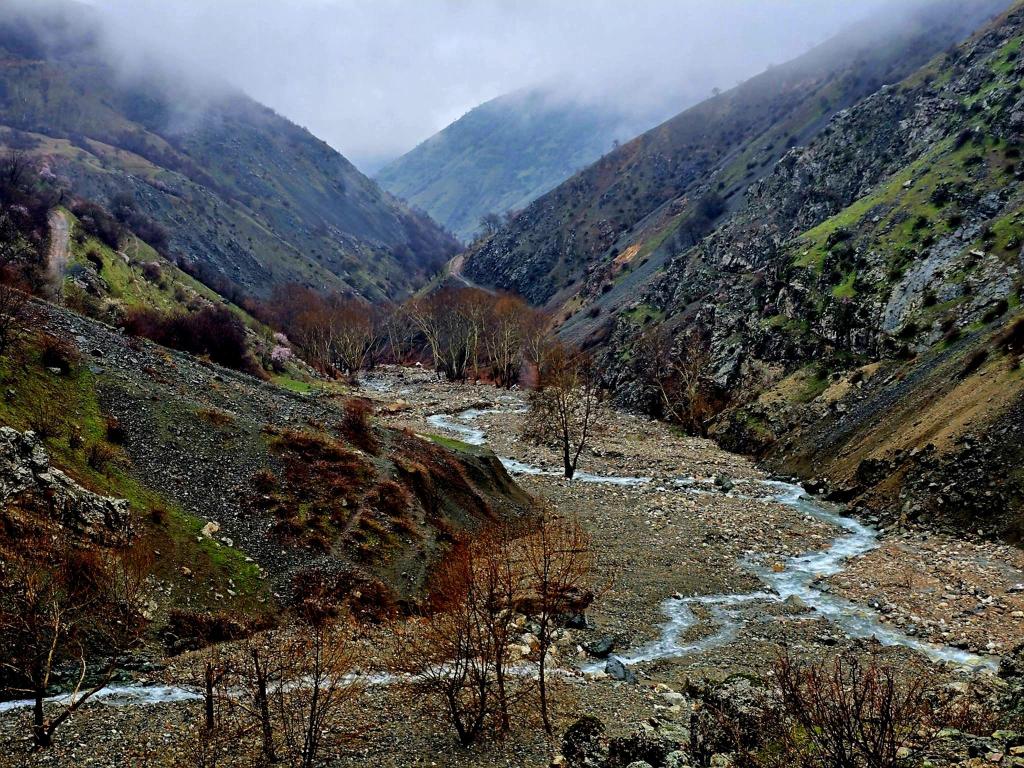
Sunday was due to be cold and rainy with the possibility of being cold and snowy up in the mountains. A fine day to stay warm in the comfort of home, or put on some rain gear and get up into the mountains. I’m a fan of the moody mountain weather, especially if it’s only a light rain, it’s on and off, and the grey clouds are always shifting and changing the scenery. Sometimes there is a low ceiling, other times you catch glimpses of patches of a high peak, and then for a fleeting moment the whole thing opens up, giving you a sneak peek before concealing the giants once more.
That was the type of day Sunday was destined to be.
The plan was originally to hike up to Fanfarok Village. You can make a full 12 km loop on dirt road and track that shouldn’t be terribly slippery in rainy weather. We drove up to the spot where the dirt road climbs off the Varzob highway and begins its winding ascent toward the village. The road wastes no time gaining elevation. By the fourth switchback, you already feel like you’re deep in some remote mountain range. The dirt road clings to the mountainside, and the drop off to the right is hundreds of feet in places. Hiking it feels dramatic enough, but I hadn’t driven it before and decided that it was a bit more nerve-racking.
About six kilometers in, the road drops down to a river that drains into the Varzob below. Thick stands of maple trees line its banks, and tangled in the branches nearby sits the wreckage of an old car, twisted into the trees — likely the victim of some powerful flash flood long ago.
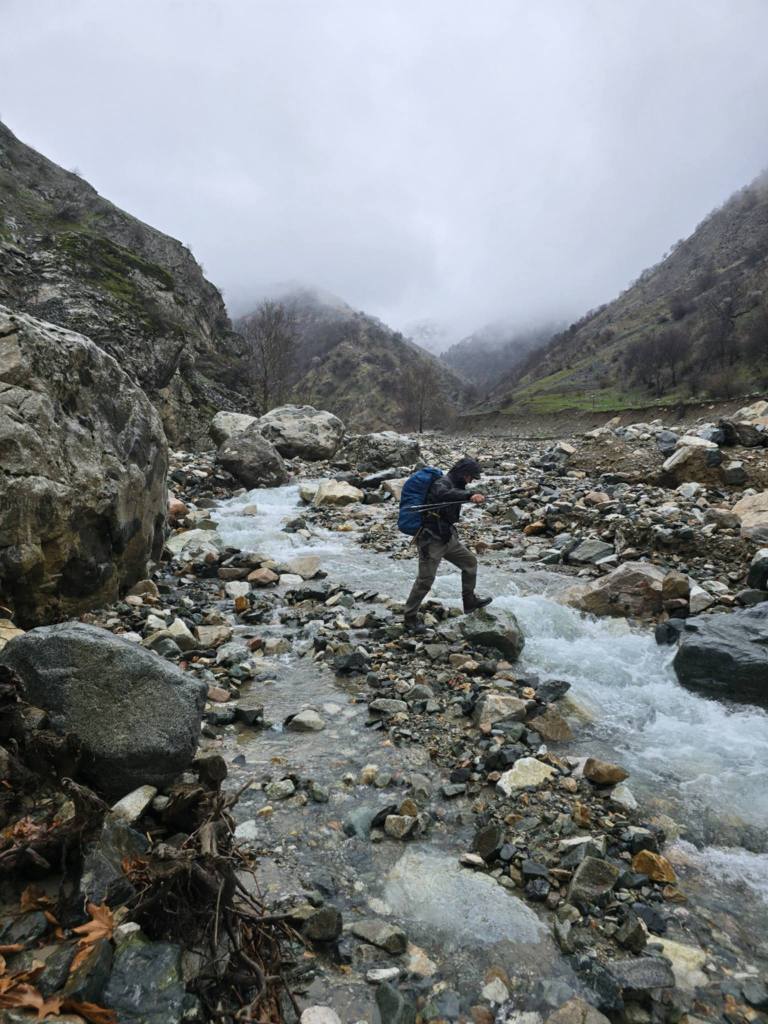
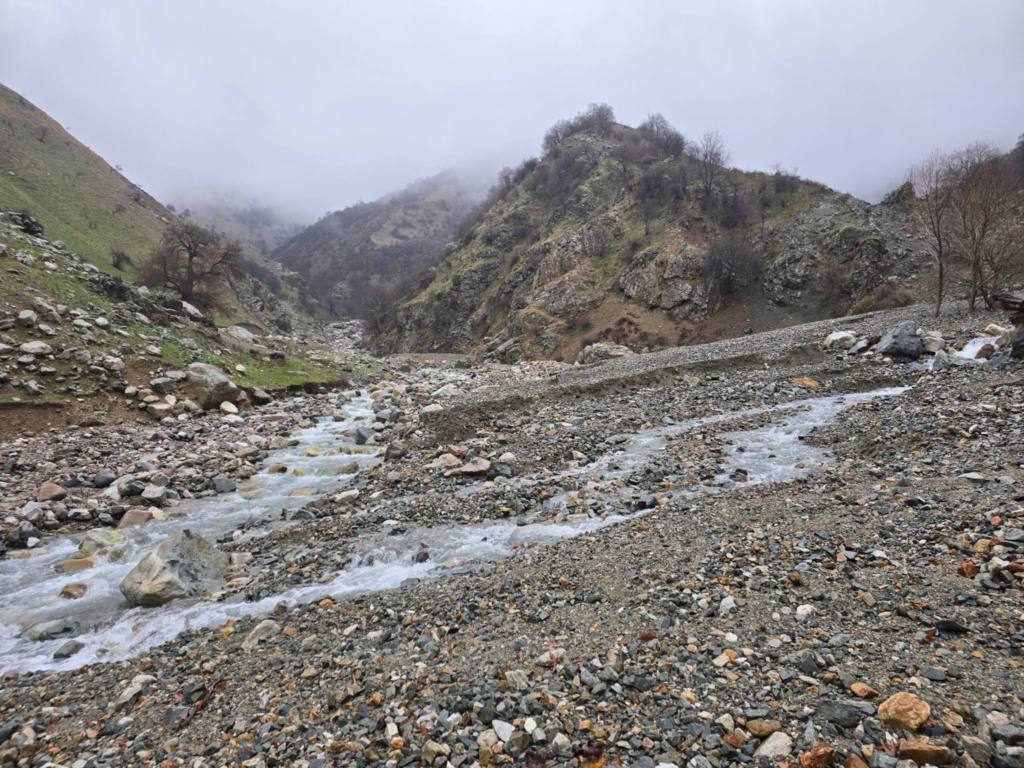
We parked near the river and looked up at the valley above us. Crossing the river in a car here would require some serious lift. It’s rocky and the water moves fast. On the other side, the road continues climbing another few kilometers up to Fanfarok Village.
But the valley above held other possibilities.
Straight ahead, a river flowed out of a narrow gorge. To the left, another river came spilling out of a wider valley, and the two joined just above where the road crossed. One of our friends had already explored the left-hand gorge before. All of us had been to the village. None of us had been up the narrower gorge.
Decision made.
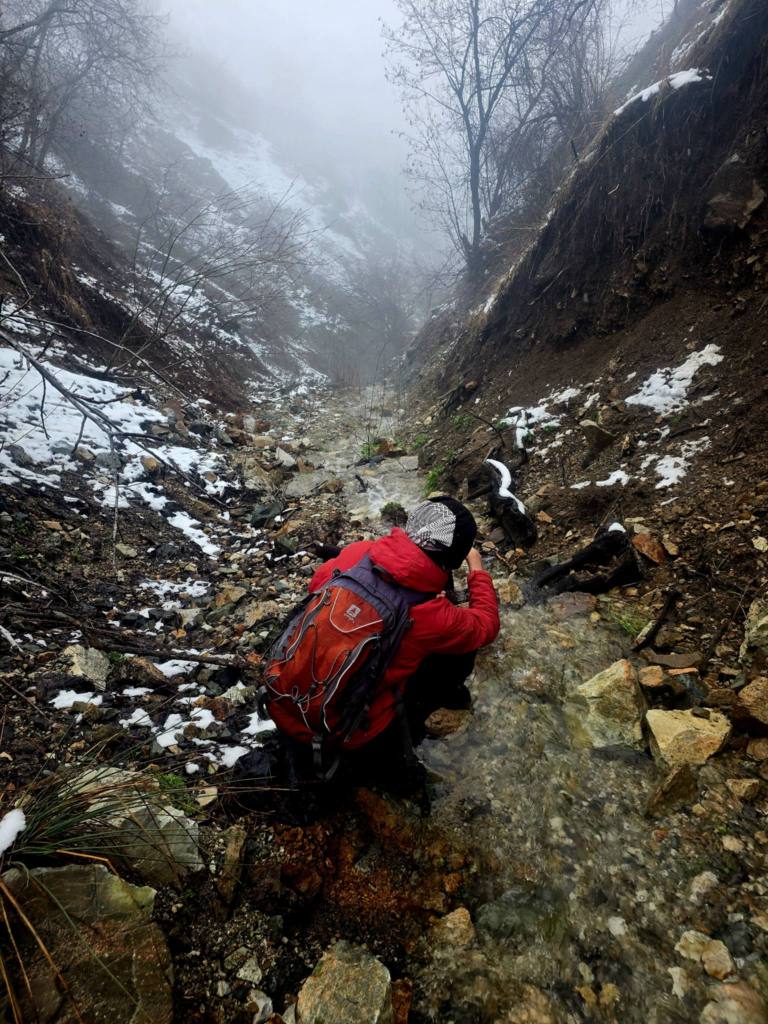
By the time we reached the mouth of the gorge, we had already rock-hopped across the river three times. We scrambled up a steep slope on the left side to get a good vantage point of the canyon and a look back down to where we had started. From there, we dropped back down to the stream and began what would turn into a long rhythm of hopping back and forth across the river, working our way slowly up the gorge.
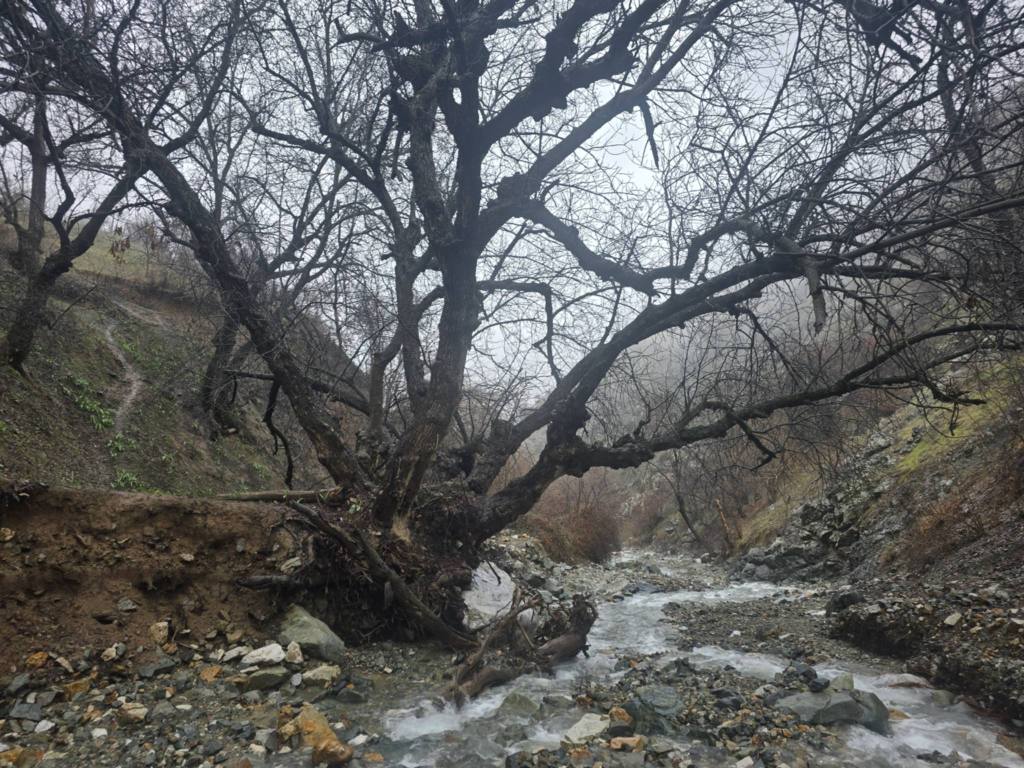
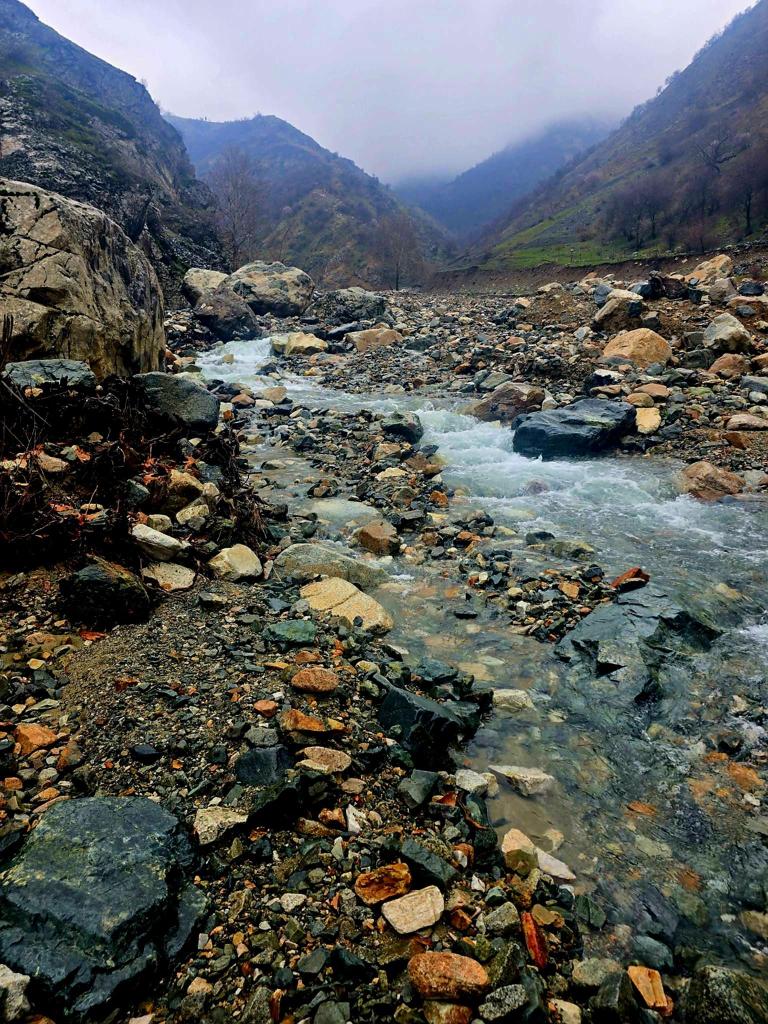
There wasn’t much of a trail. Mostly we just followed the rocky bed of the drainage as it twisted deeper into the mountains.
These foothills north of Dushanbe are part of the outer ridges of the Hissar Range, and they’re carved by dozens of narrow seasonal stream gorges like this one. Many of them don’t appear on maps and don’t seem to have official names. In early spring the snowmelt fills them with rushing water, and the only way forward is to hop from rock to rock and cross the stream again and again.
And again.
And again.
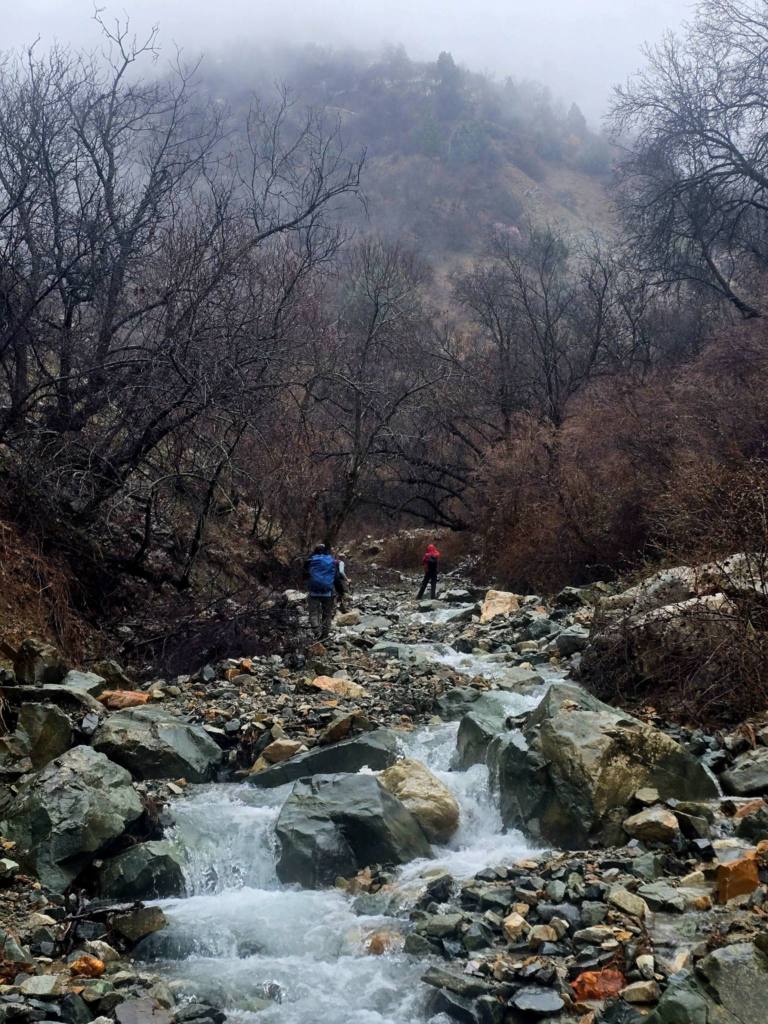
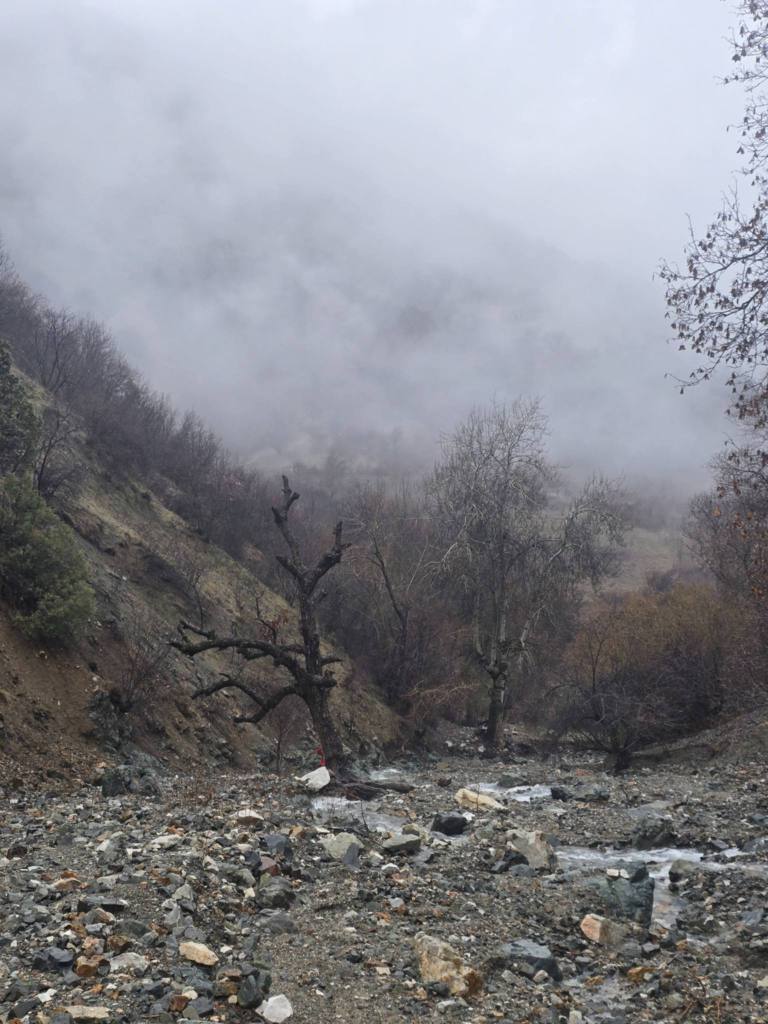
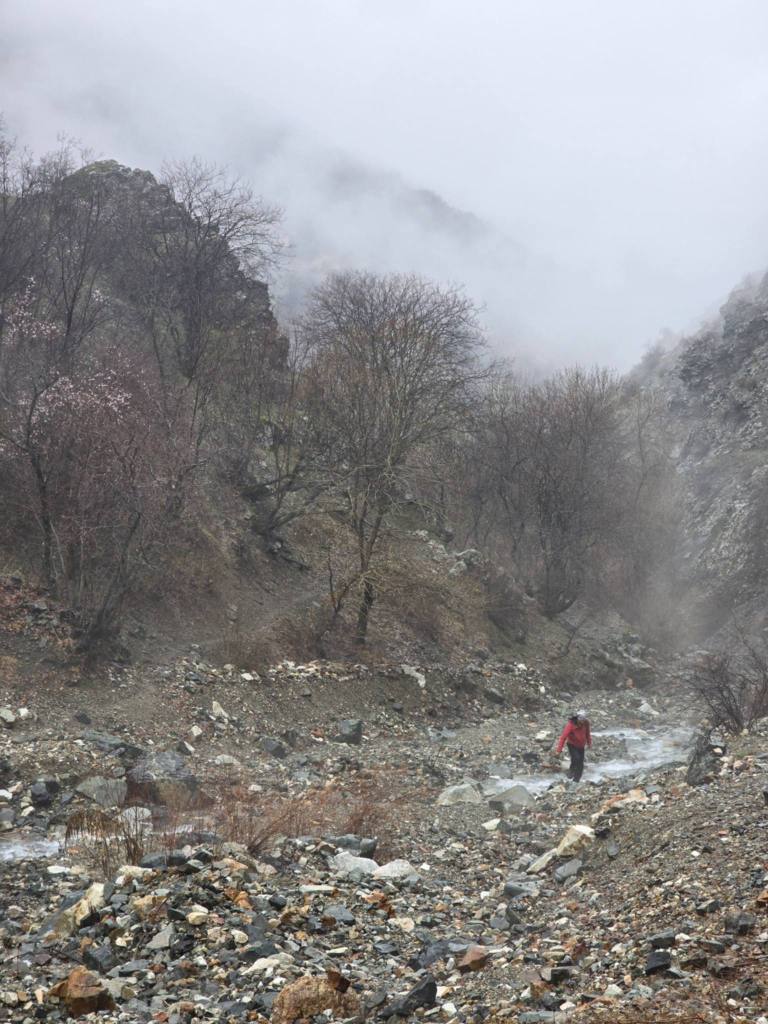
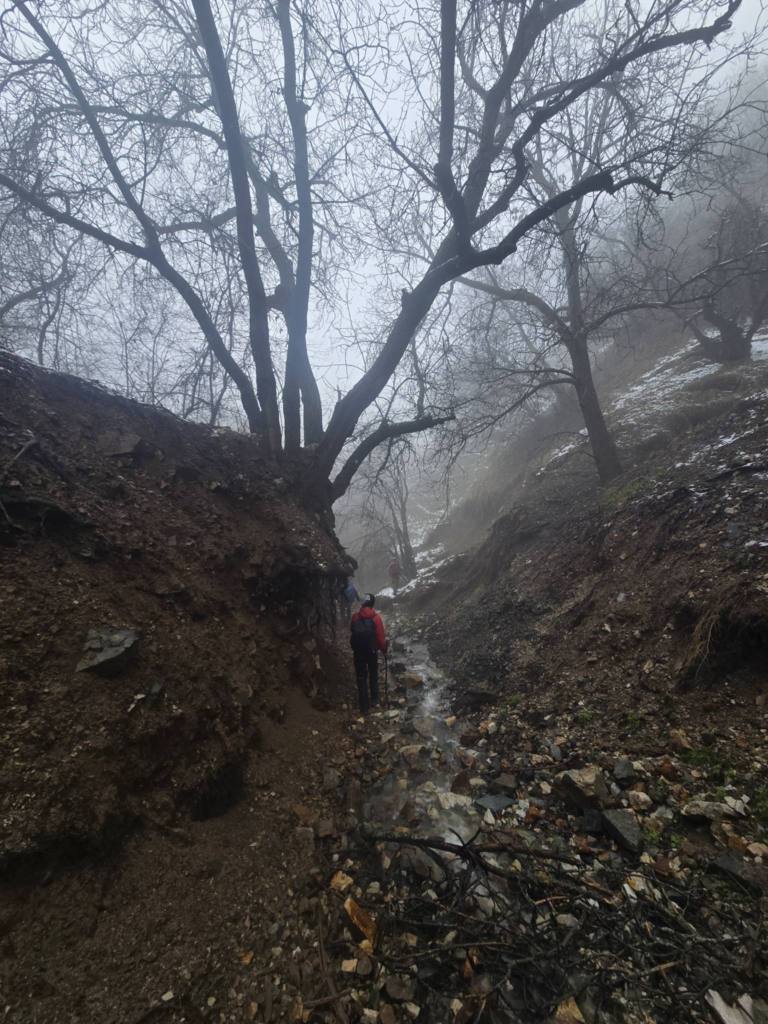
The grey weather made the scenery especially atmospheric. Ancient looking trees lined the river in places, their dark trunks and branches emerging out of the mist like something from another age.
After about a mile and a half we came to a point where another gorge cut sharply off to the right. By this point we had gained around 1,000 feet of elevation. Snow had begun appearing on the slopes above us whenever the clouds briefly opened. We stayed with the main gorge heading left, hoping we might eventually circle around the mountain and come out through the other gorge we had seen at the start.
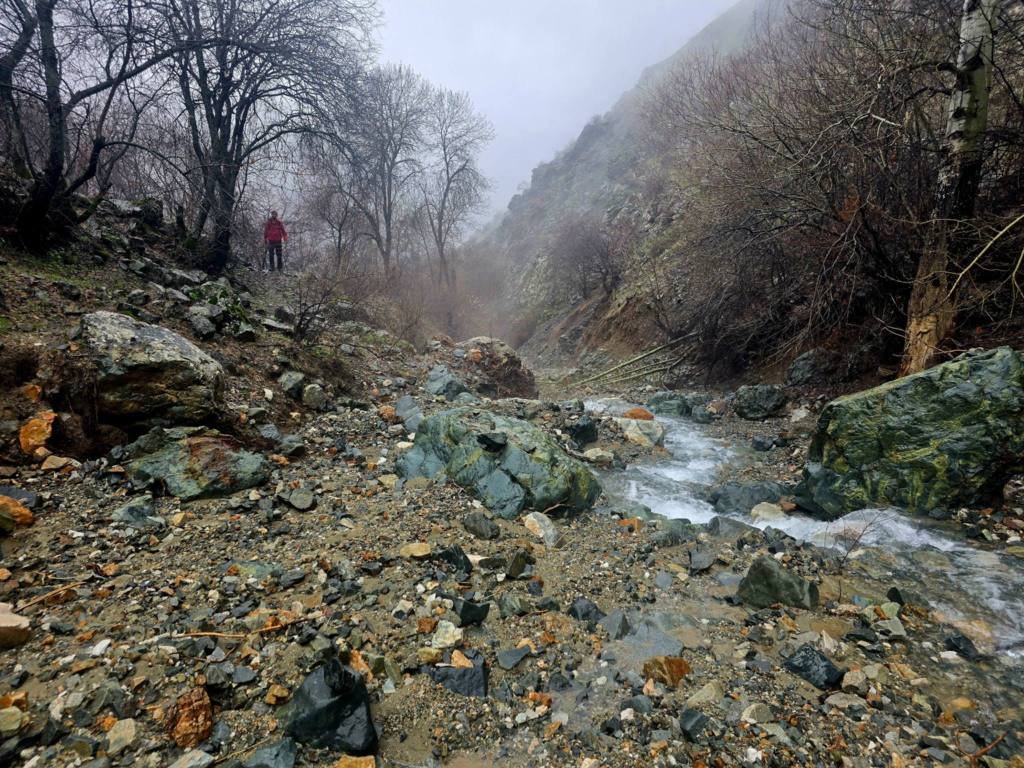
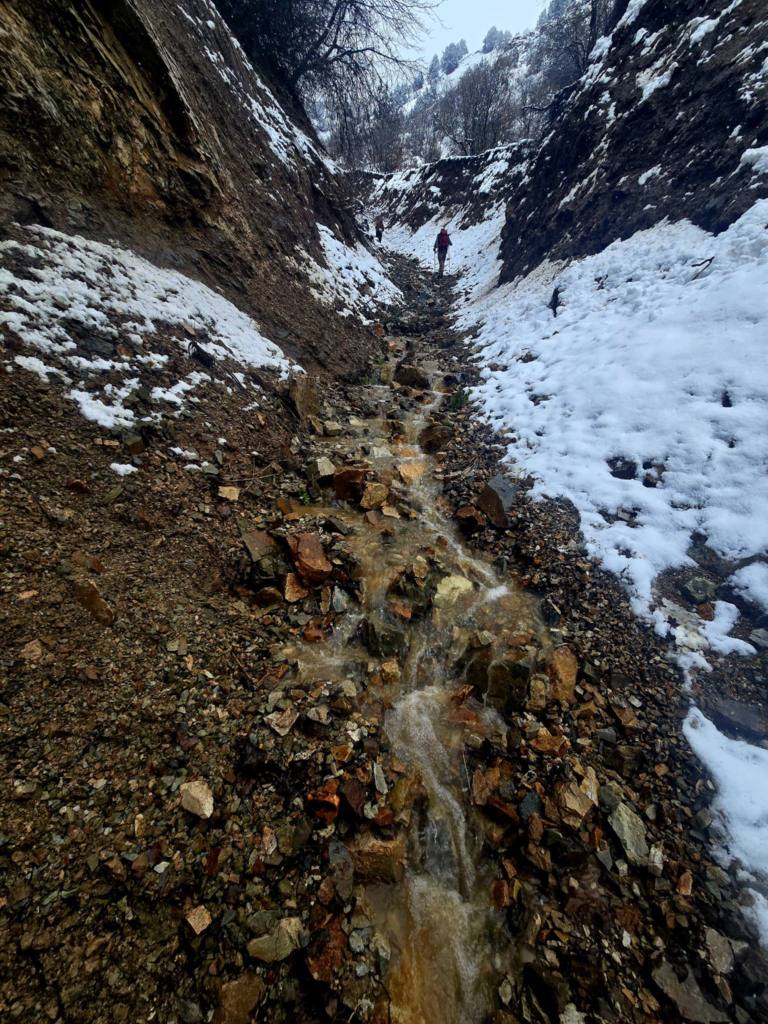
Another half mile up, the light rain turned to snow.
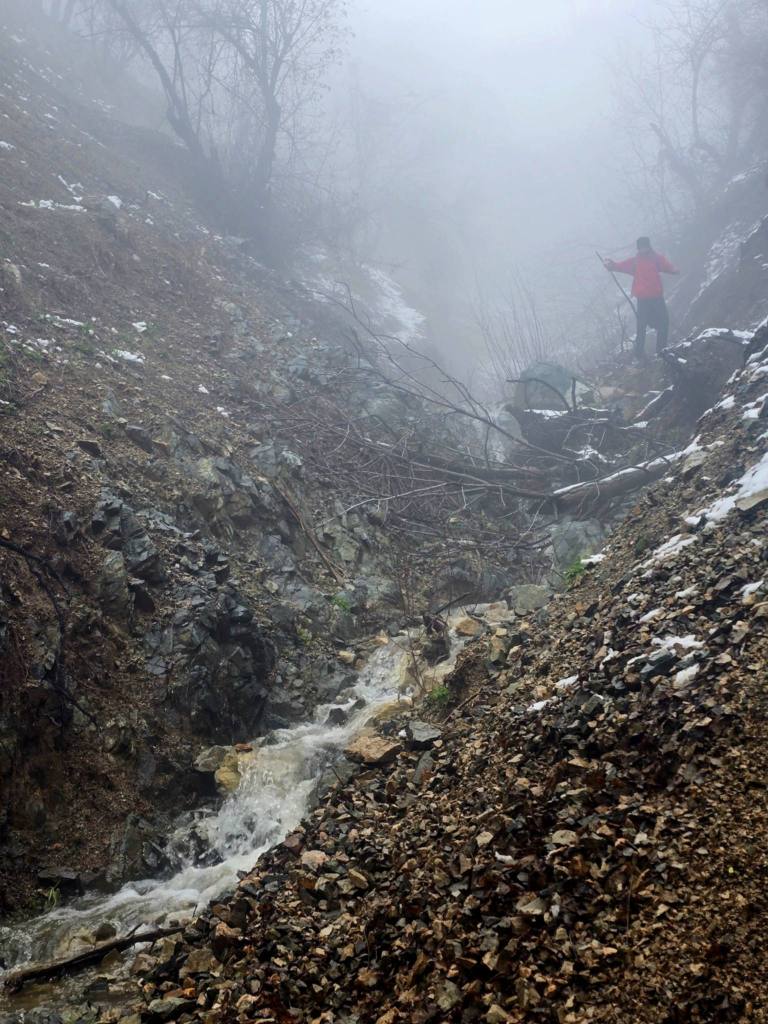
The canyon walls began closing in more and more, forming sections that felt almost like a slot canyon. The stream squeezed between steep rock walls and fallen trees. In a few spots we had to push our way through tangled branches blocking the route.
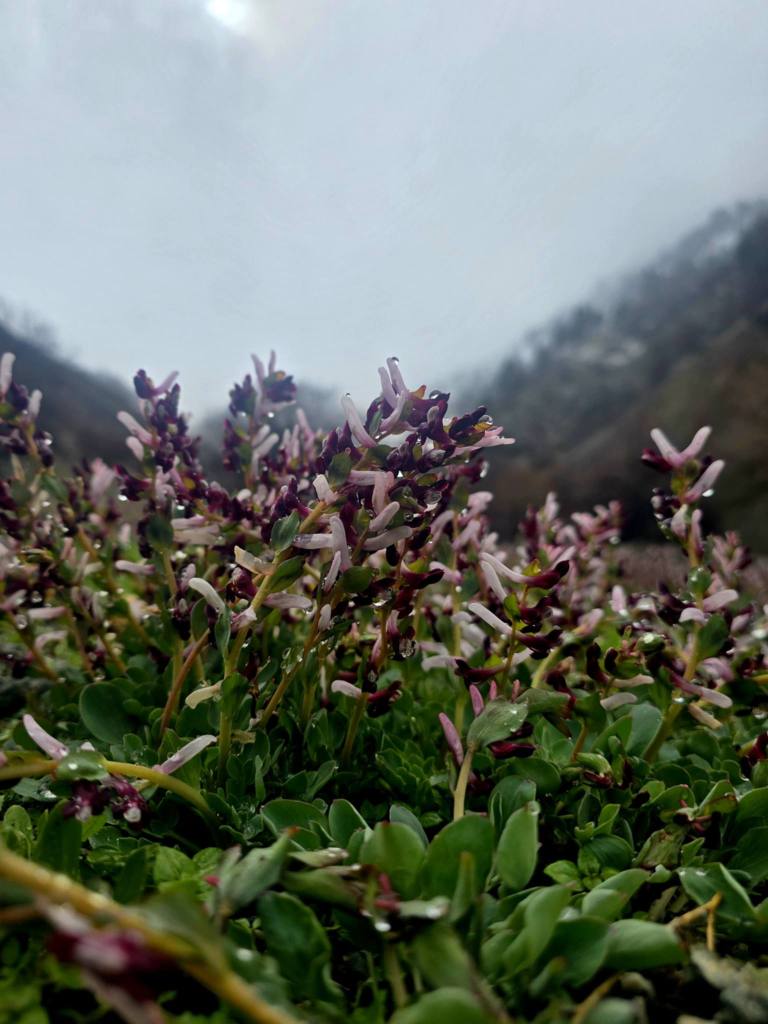
Along the way we passed patches of early wildflowers beginning to emerge from the damp soil. Near a small waterfall higher in the gorge we came across a huge cluster of Crown Imperial lilies, not yet in bloom but unmistakable with their tall stems and leafy crowns. A few weeks later this spot will likely explode with color.
Eventually we reached a fallen tree jammed across the gorge that looked like more trouble than it was worth to climb through or around.
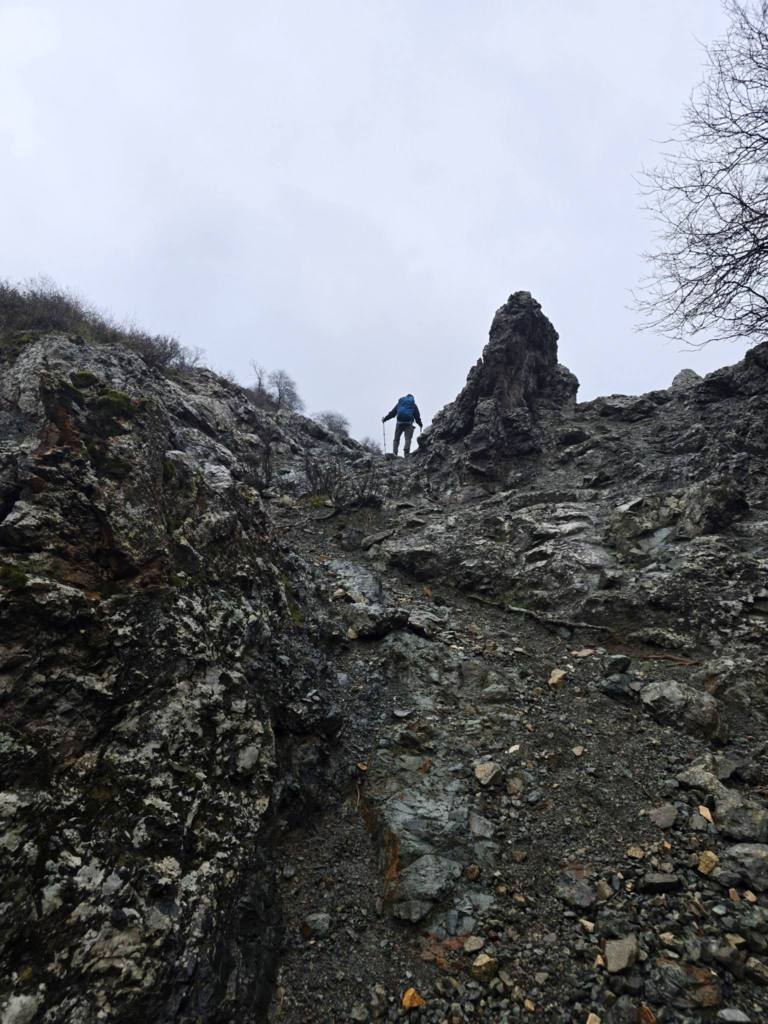
Off to our left, a steep drainage cut sharply up the mountainside. If we could climb up and over, there was a chance we could reach the ridge between the two valleys and drop down into the other gorge.
Up we went.
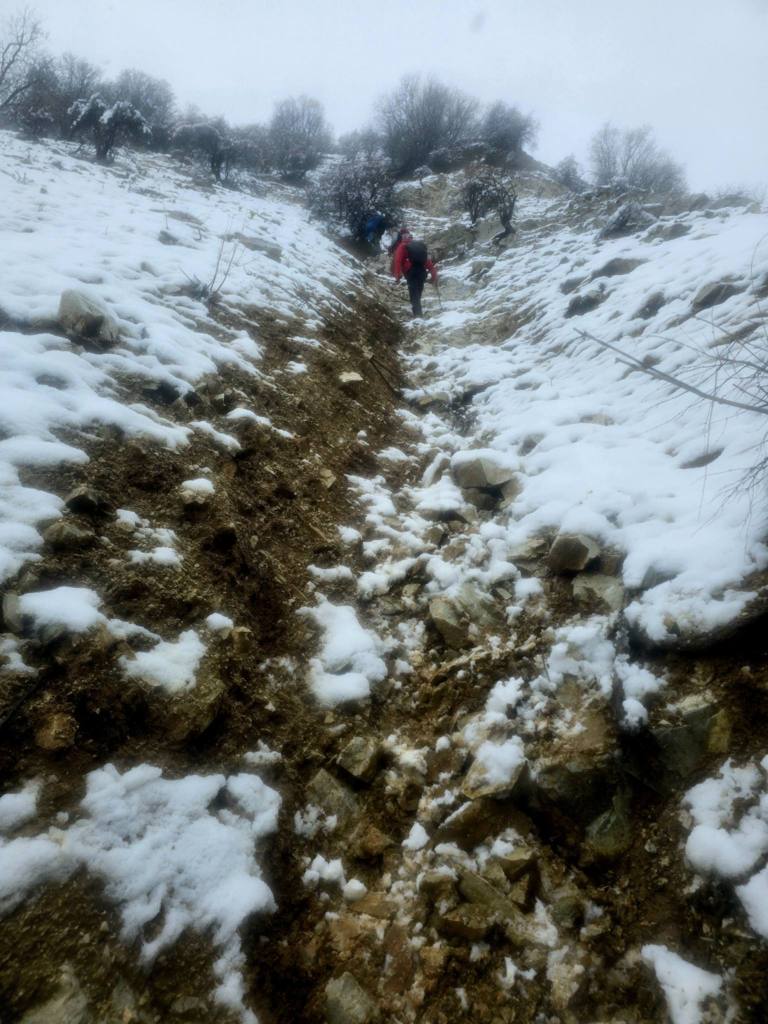
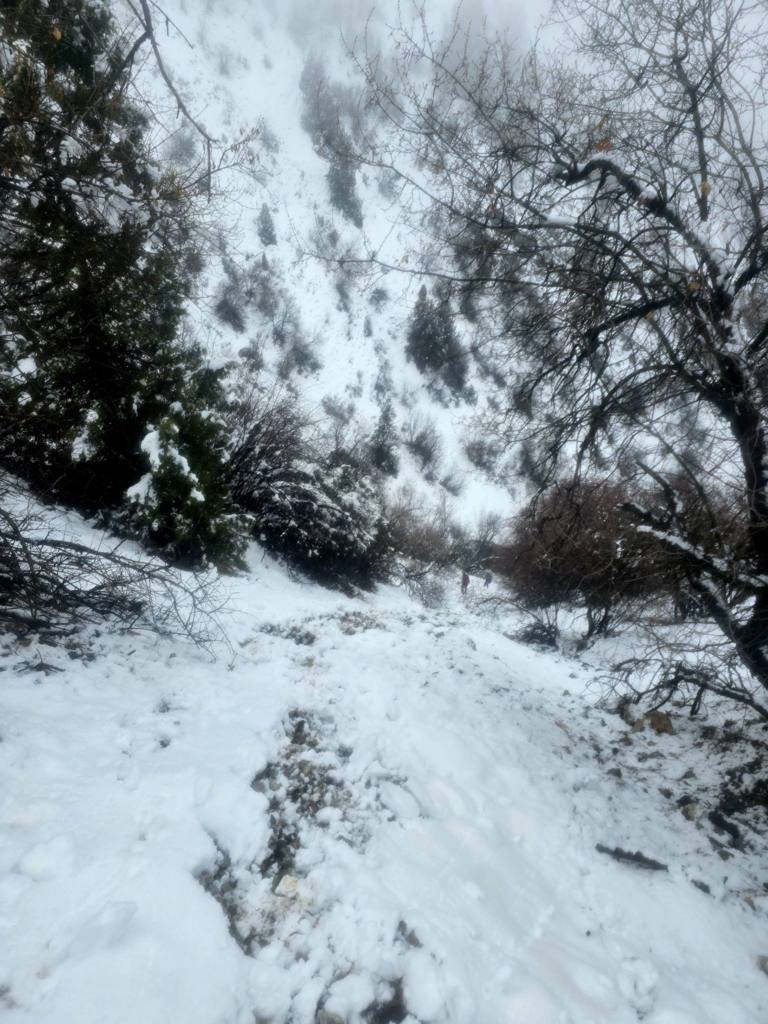
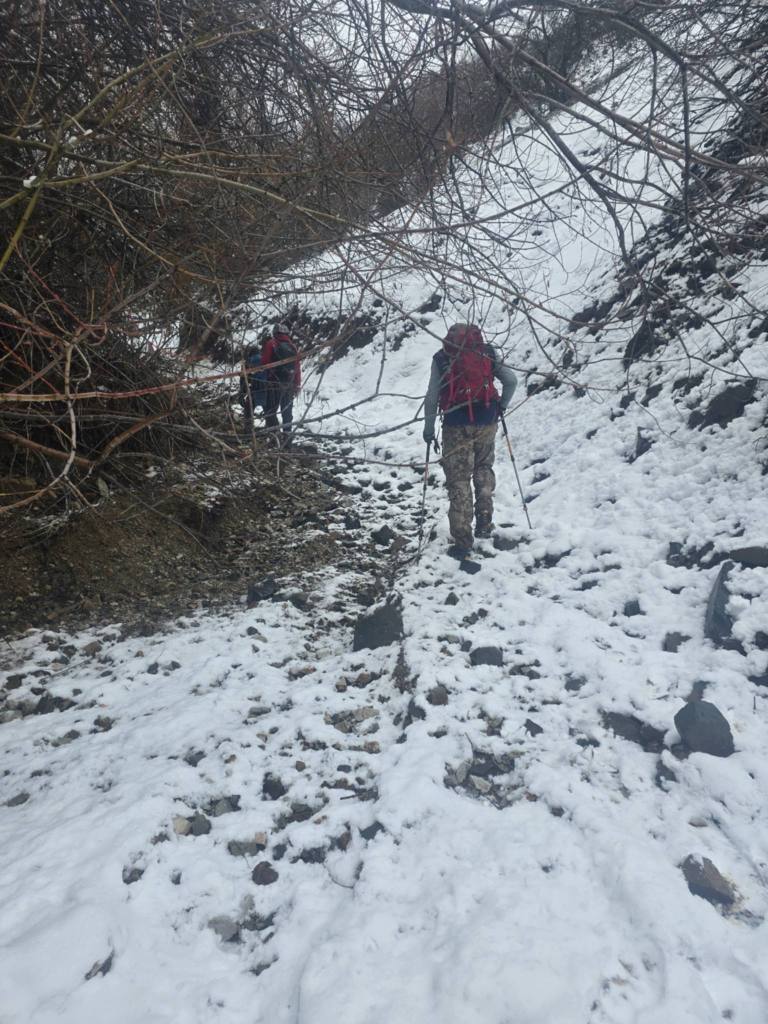
The slope was a mix of loose sand, rocks, mud, and patches of snow. I was bringing up the rear and had the pleasure of dodging chunks of rock that occasionally came tumbling down the narrow drainage we were climbing. Higher up the snow got deeper, and eventually we reached a point where the slope forced us to traverse across a steep face of slick mud and snow.
About sixty meters across we reached another narrow ravine cutting down the mountain. Looking at the terrain ahead, and the long way down behind us, we decided that discretion was the better part of valor. In dry summer conditions the crossing might be manageable, but with snow and mud it felt unnecessarily sketchy.
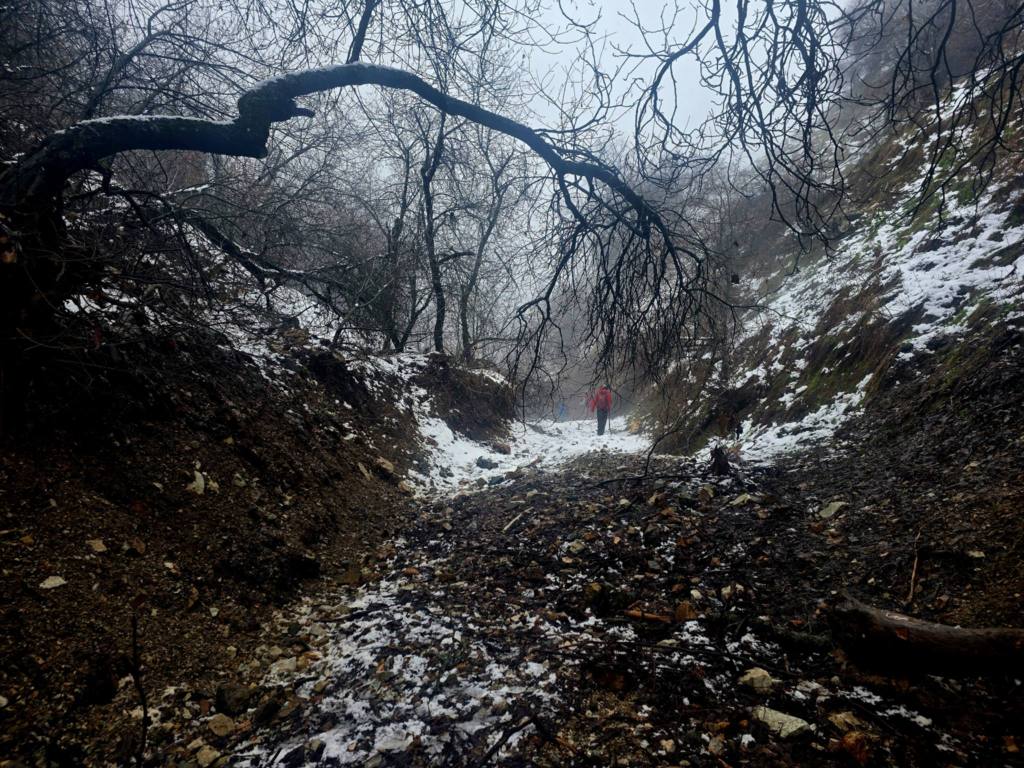
So we turned around and made our way back down to the main gorge.
From there it was simply a matter of reversing the route — hopping back and forth across the stream dozens more times as we worked our way down through the mist and the shifting clouds.
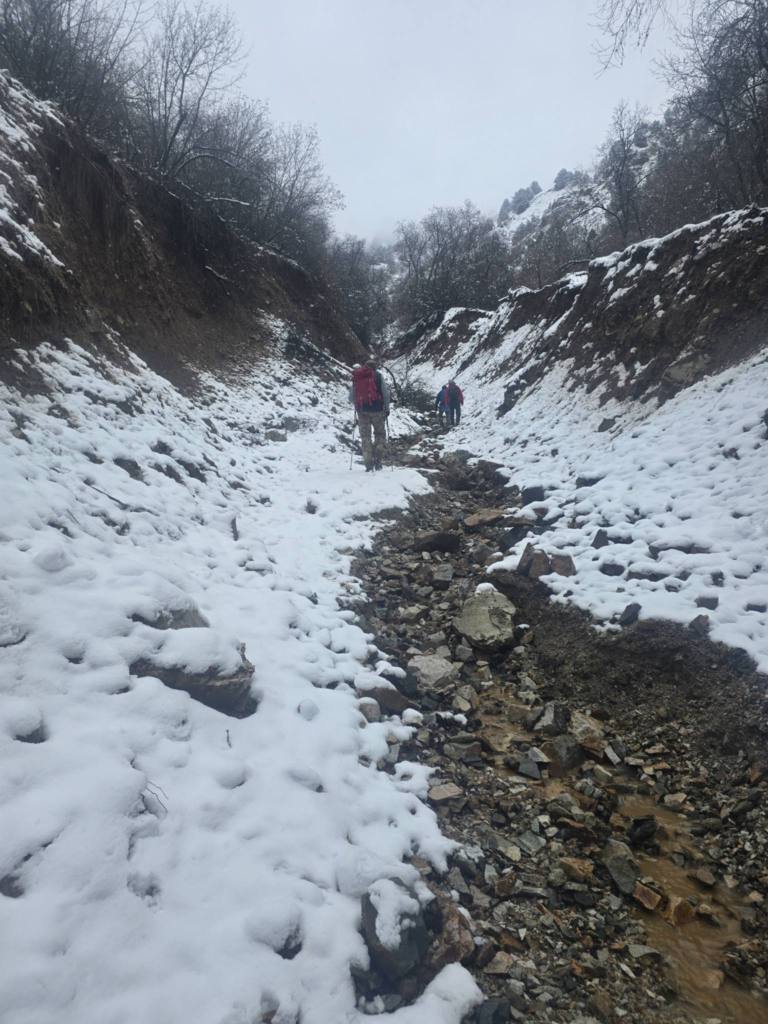
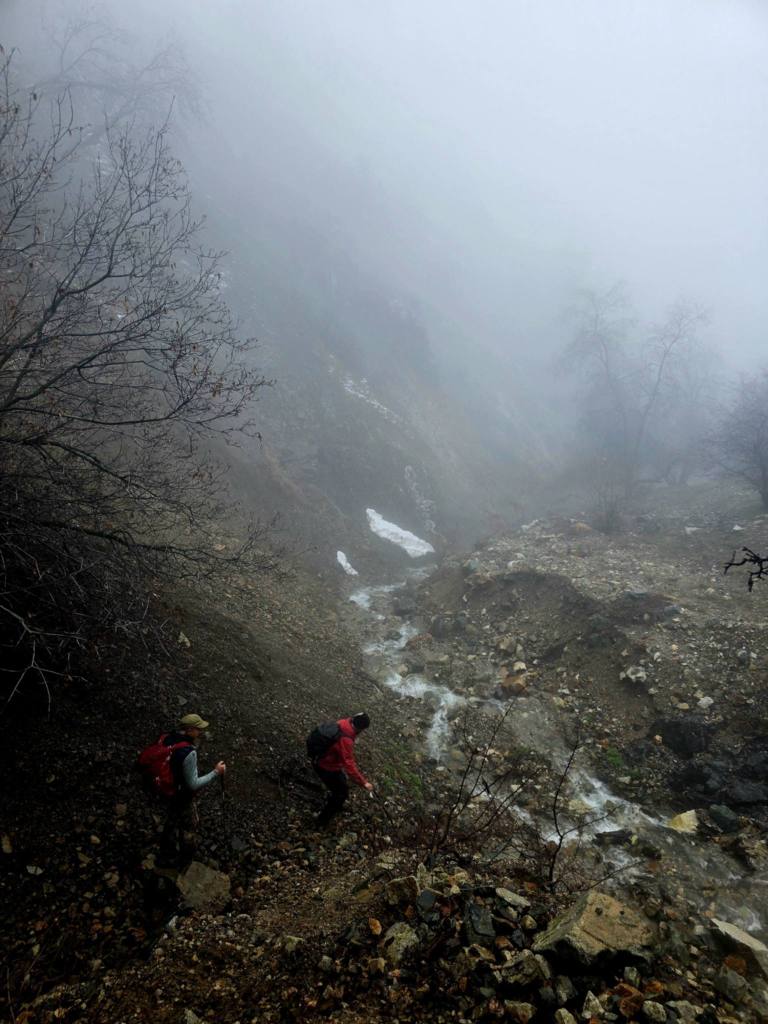
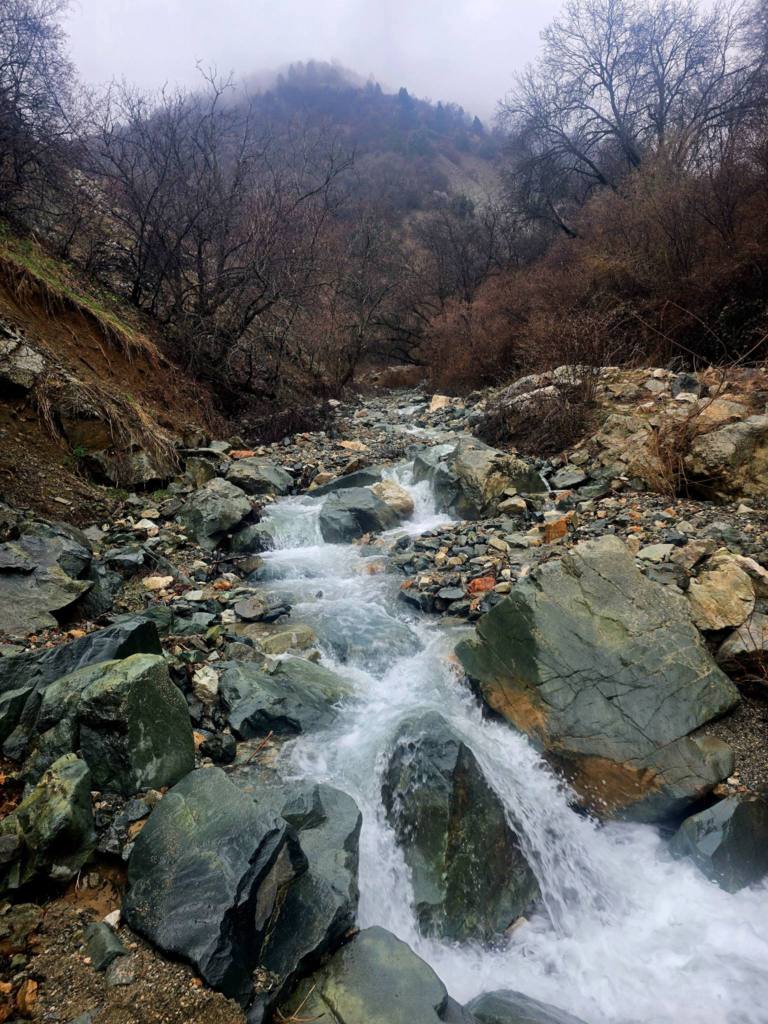
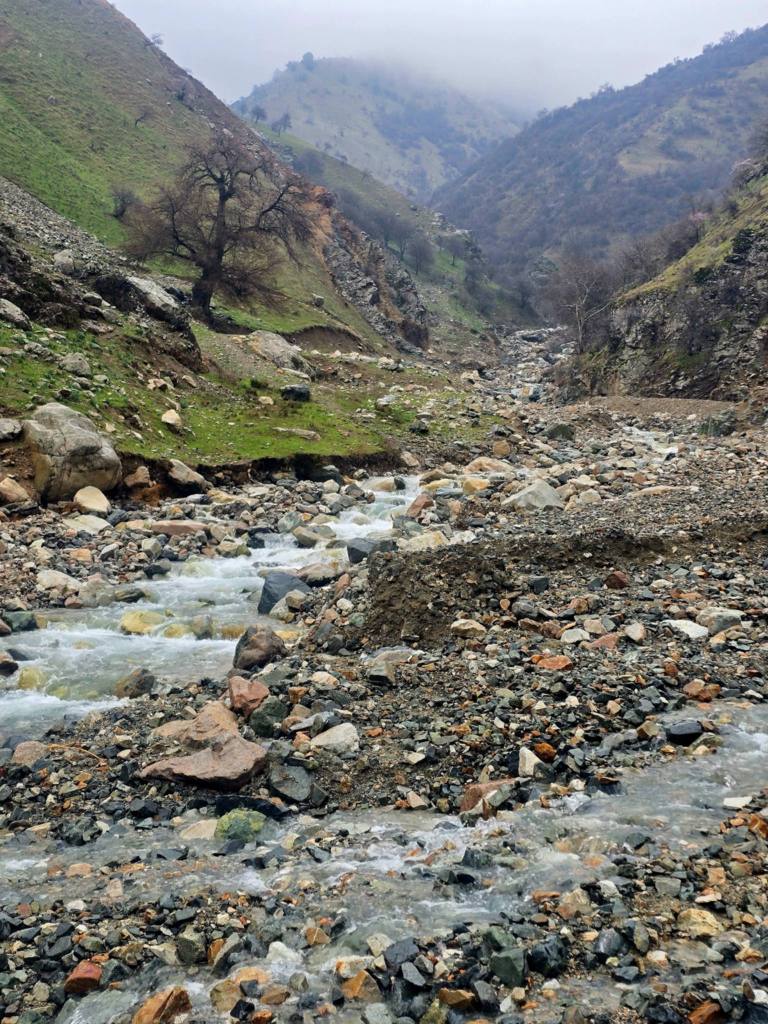
All in all, it was a fantastic day exploring a gorge that doesn’t seem to have a name and almost certainly didn’t have any other hikers in it that day. Another hidden corner of the mountains just north of Dushanbe, and another Sunday well spent.
 Wise Clan in Stanland
Leave a comment