🧭 Trail Stats (Day 1 – Sacred Waterfalls)
📏 Distance: 8.5 miles
⬆️ Ascent: 2,073 ft
⬇️ Descent: 1,965 ft
⏱ Total Time: 5 hrs 24 min
🚶 Time Moving: 4 hr 18 min
📅 Date Hiked: July 26, 2025
🥾 Difficulty: Moderate
🧭 Trail Stats (Day 2 – Exit from Yubeng)
📏 Distance: 8.5 miles
⬆️ Ascent: 10 ft
⬇️ Descent: 3,500 ft
⏱ Total Time: 3 hr 09 min
🚶 Time Moving: 2 hr 52 min
📅 Date Hiked: July 27, 2025
🥾 Difficulty: Easy
The next morning we packed up our gear and made our way down the trail toward the lower village of Yubeng. I had already booked us a place to stay there, so we stopped in to drop most of our things and ordered breakfast before heading out again. Once we finished eating, we packed a light bag and set off toward the Sacred Waterfall.
Of the three classic hikes around Yubeng, the waterfall trail is probably the easiest, but the scenery along the way is no less impressive than anything else in the valley.
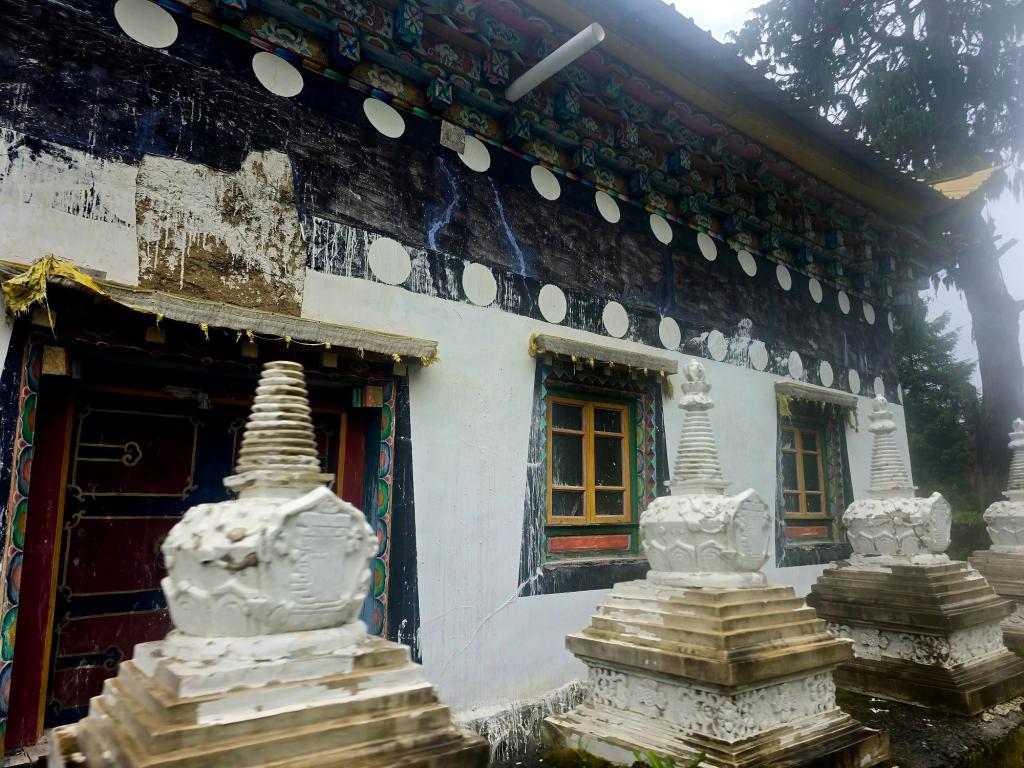
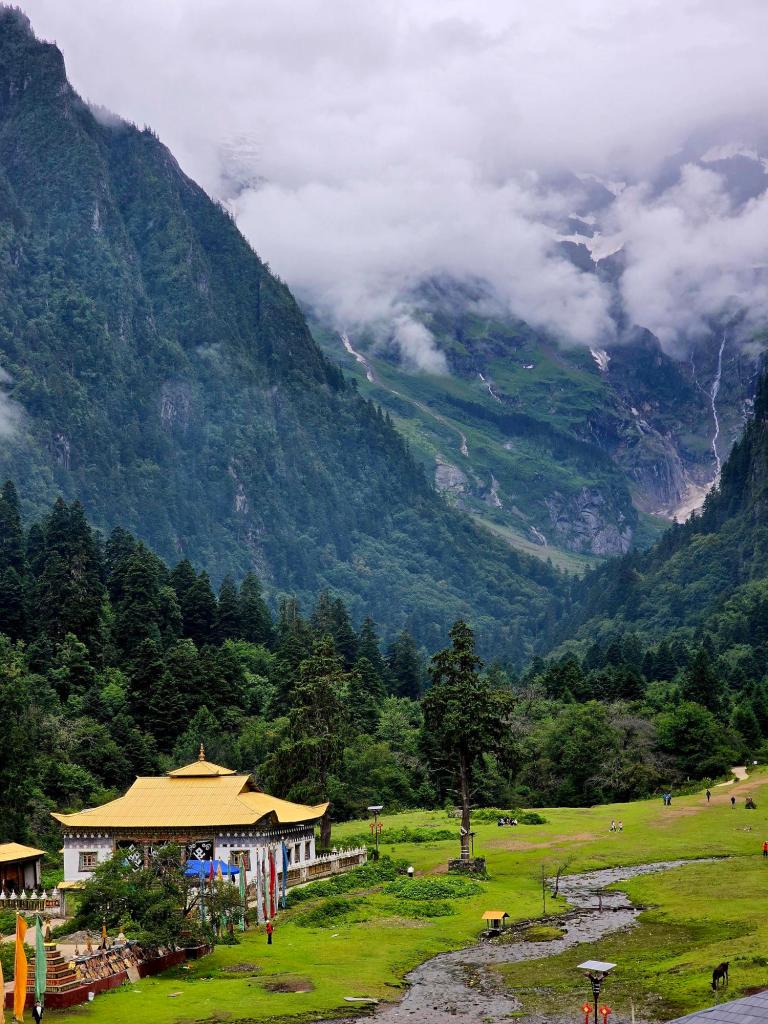
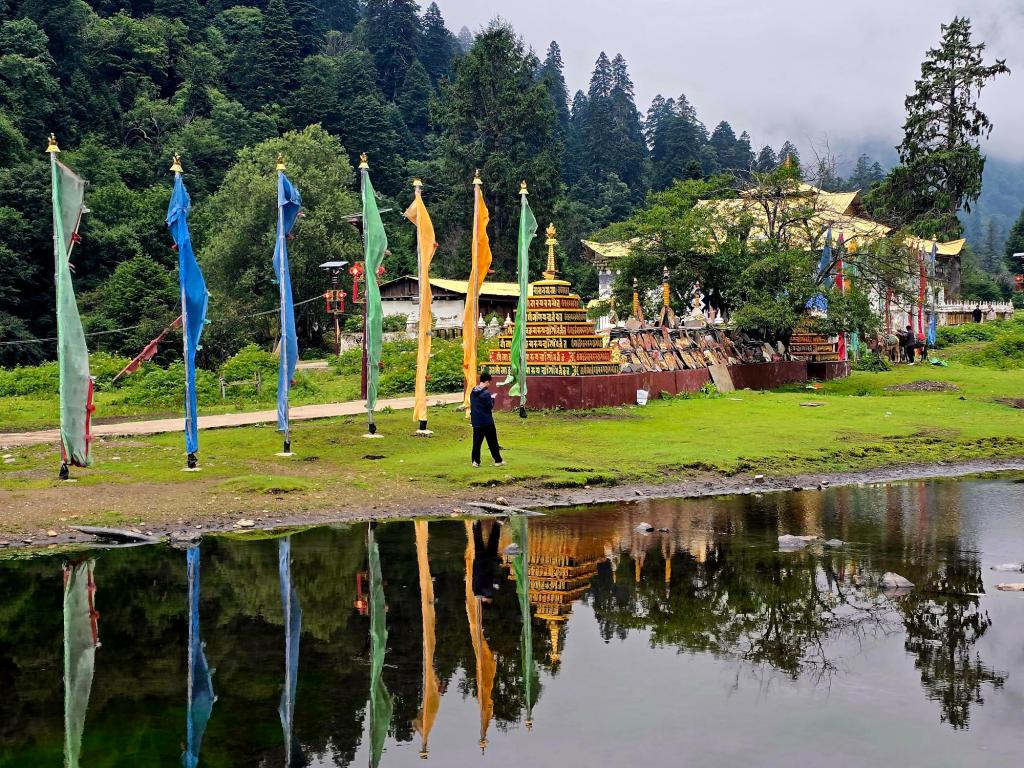
The trail leaves the village gently, passing a small pond and a temple surrounded by a ring of white stupas. From there it opens into a broad alpine meadow that rolls out toward the mountains like a green carpet. Small streams cut silver ribbons through the grass, and a few cows wandered freely through the fields. Near the edge of the meadow stood several large prayer wheels mounted horizontally like waterwheels, slowly spinning as the current of a nearby stream turned them. With every rotation, prayers are believed to be carried out into the world by the wind and water.
The weather that morning was classic mountain mist—low clouds hanging over the peaks with occasional light rain drifting through the valley. It made for perfect hiking conditions and gave the entire landscape a quiet, dreamlike feel.
At the far side of the meadow the trail slips into the forest, following the river that tumbles down from somewhere high above in the clouds. The path gradually climbs deeper into the valley, weaving between mossy boulders and tall spruce and fir trees.
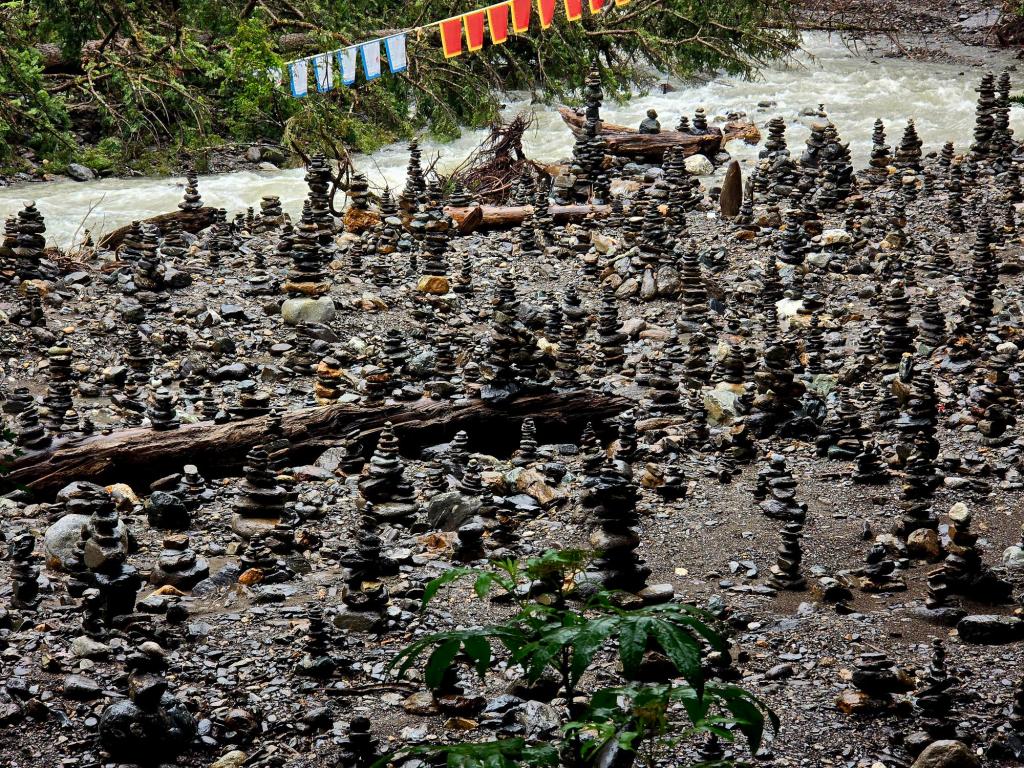
Along the riverbanks we began noticing something unusual—hundreds of carefully stacked piles of stones. These cairns appeared everywhere the river widened, some just a foot or two high while others rose four or five feet into delicate towers of perfectly balanced rock. Some had clearly been placed by hikers, but many likely carried a deeper meaning. In Tibetan regions, stacking stones can be both a trail marker and a small spiritual offering, a quiet gesture for safe passage through the mountains.
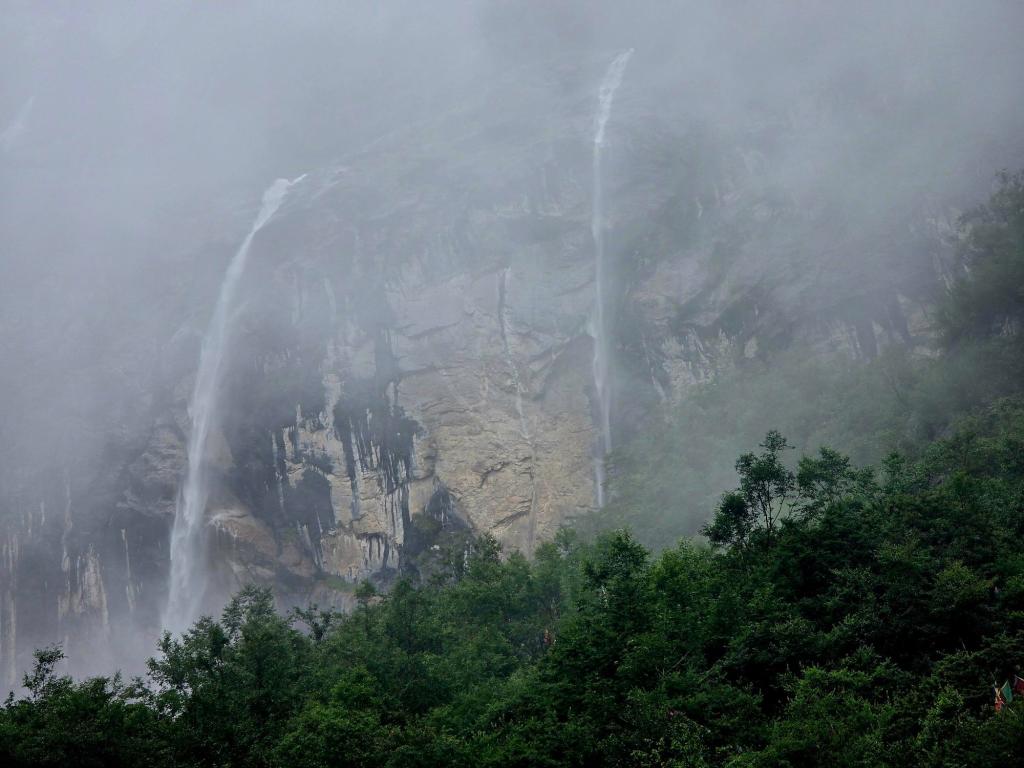
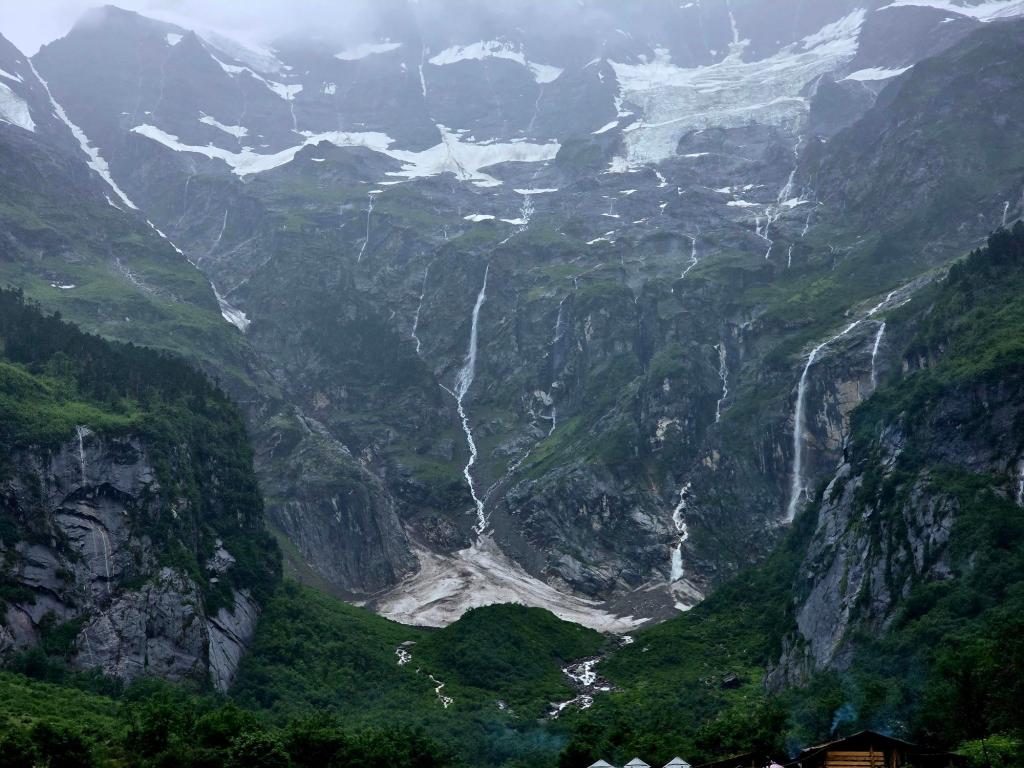
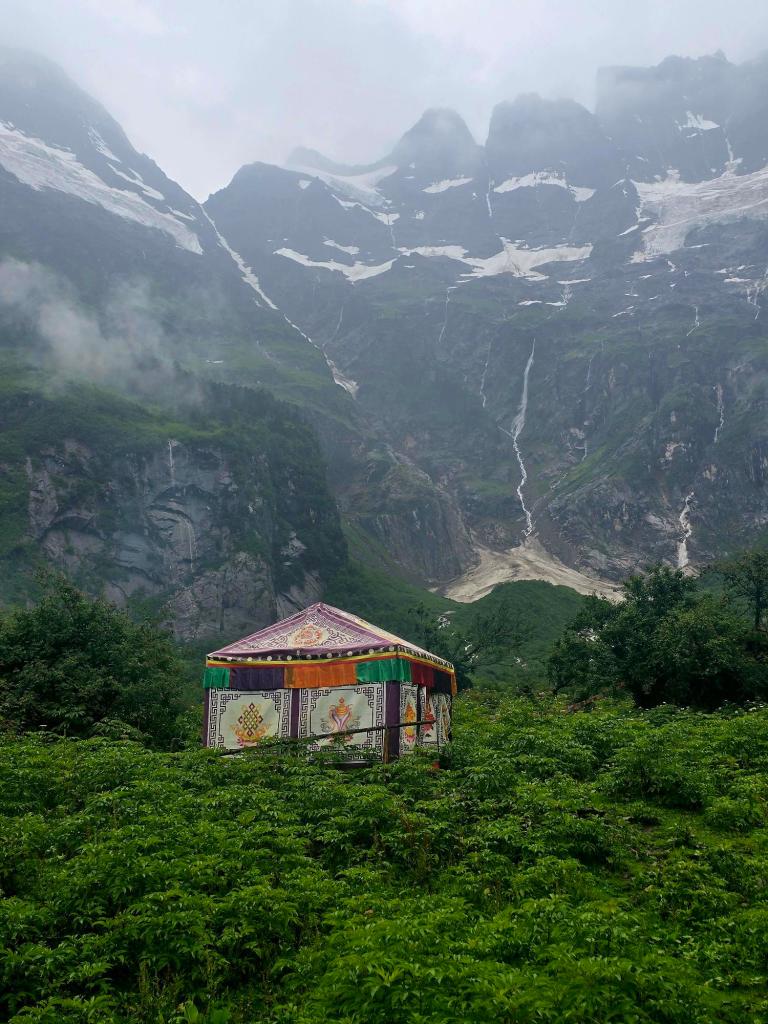
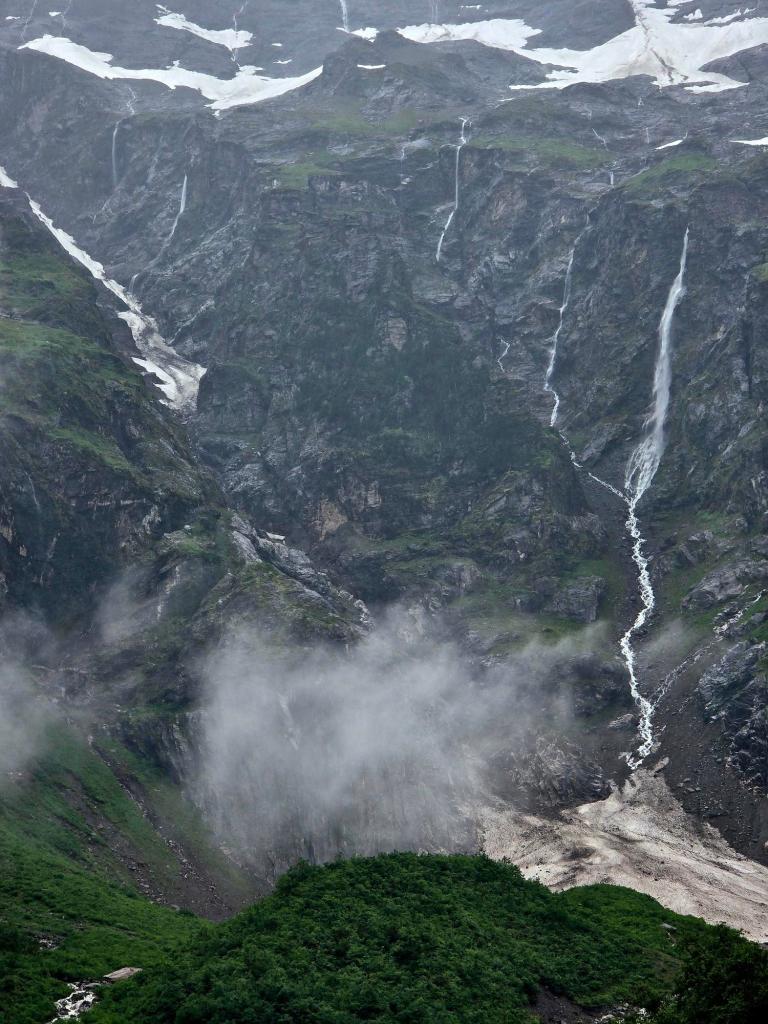
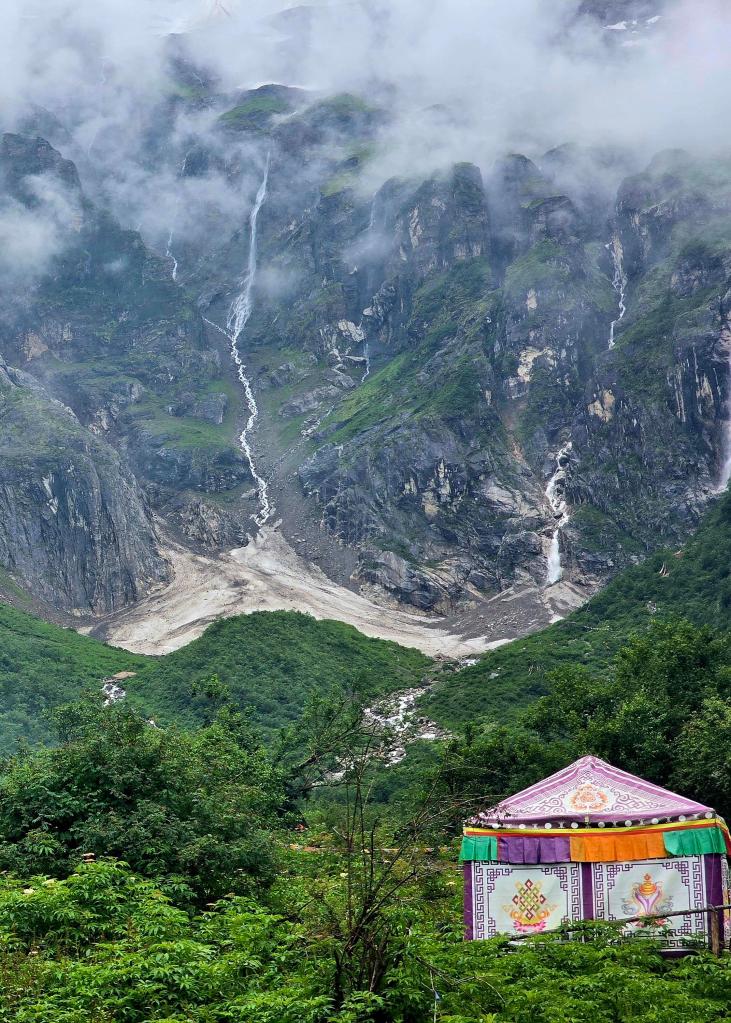
The valley slowly narrowed as we climbed toward the towering wall of peaks ahead of us. Waterfalls began appearing high on the cliffs above, fed by the glaciers clinging to the upper slopes of the mountains. Even from a distance the scale of the landscape was staggering—sheer walls of rock rising thousands of feet above the forest.
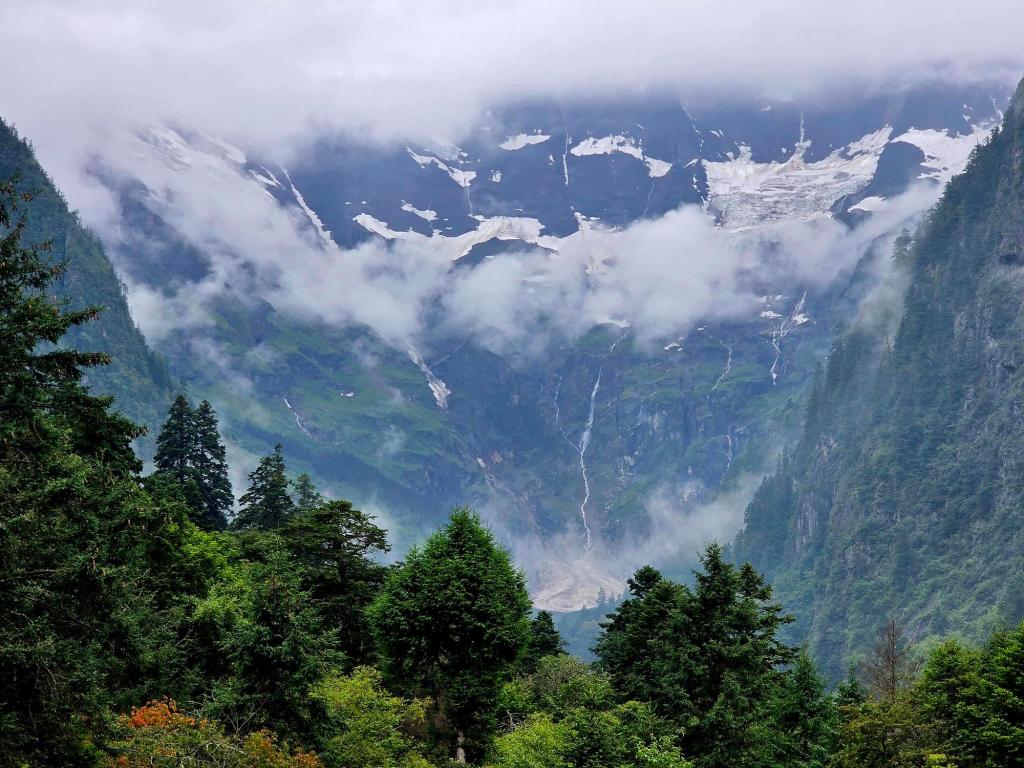
About halfway along the trail a narrow path breaks off and climbs steeply to a small temple built into a rock overhang high above the valley floor. A cave entrance beside the temple disappears into darkness, and prayer flags flutter from the surrounding trees.
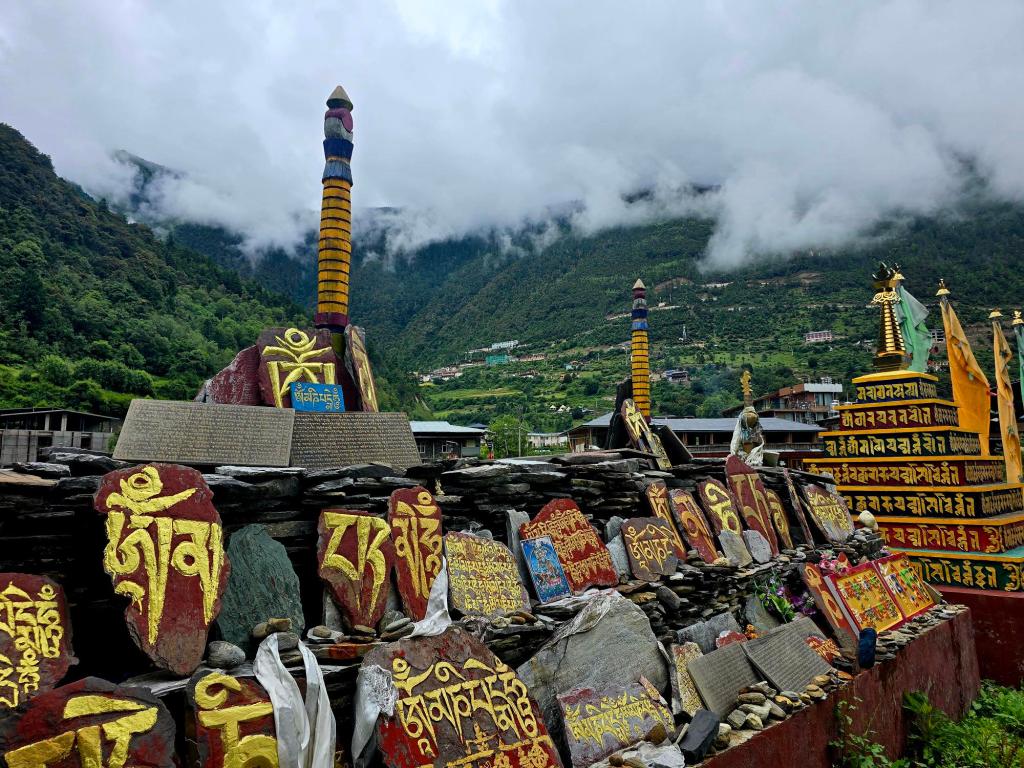
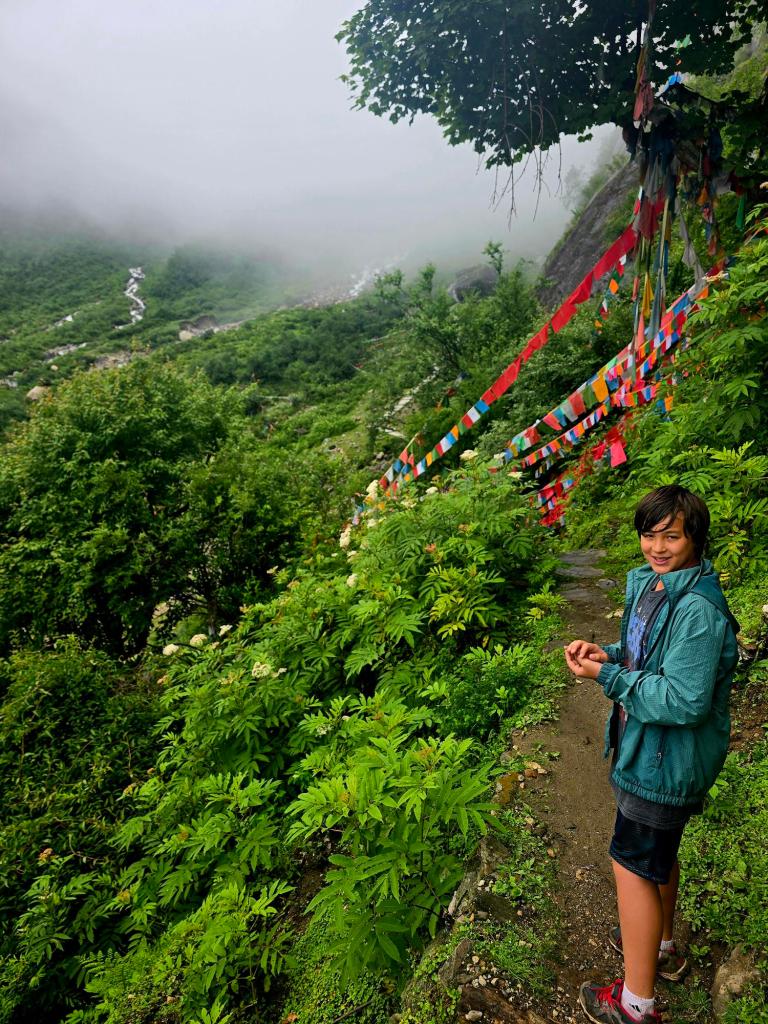
The closer we came to the end of the valley, the more obvious it became that this was more than just a hiking trail. Mani stones—flat rocks carved with Buddhist mantras—began appearing along the sides of the path, and strings of colorful prayer flags stretched between trees overhead.
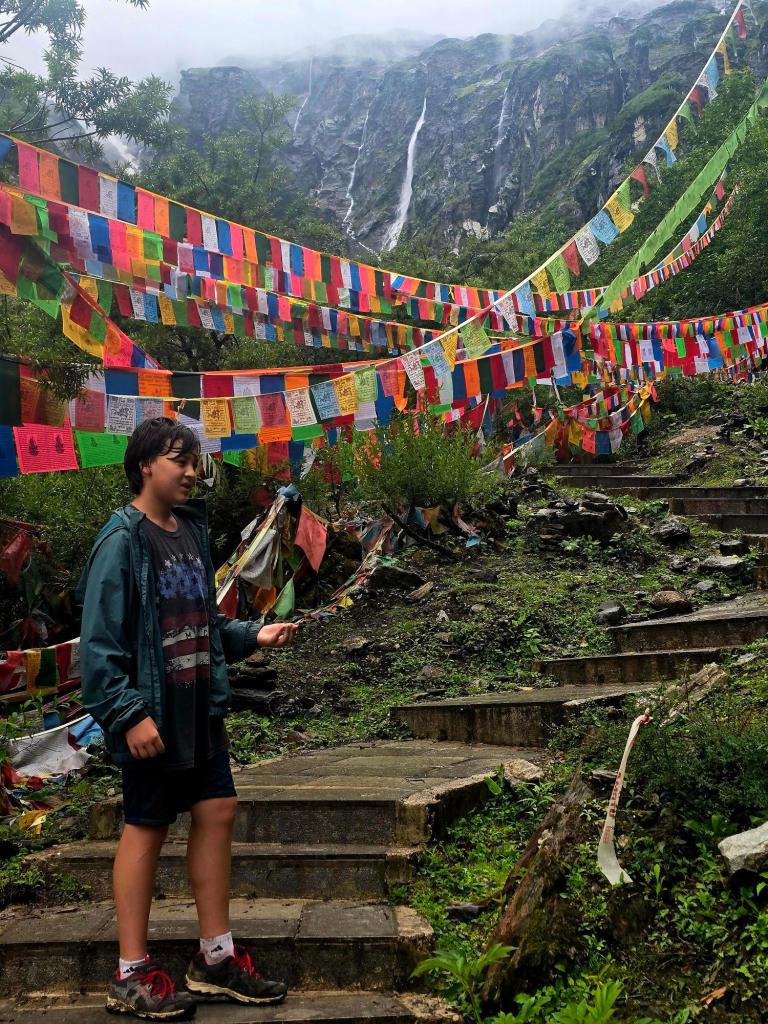
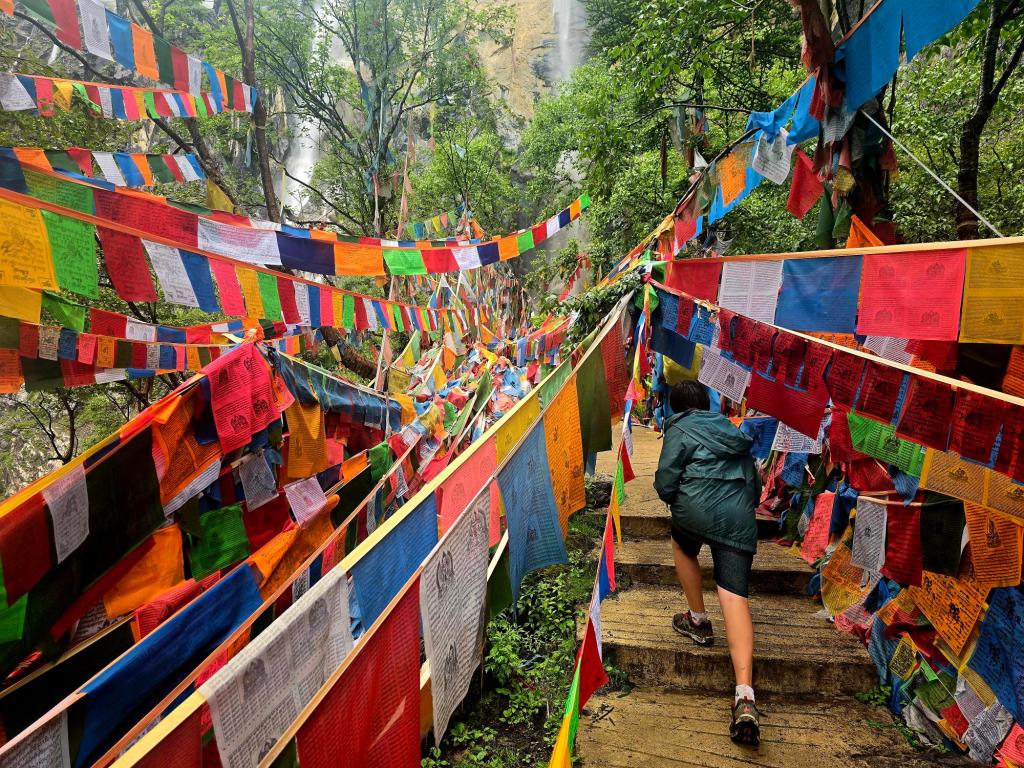
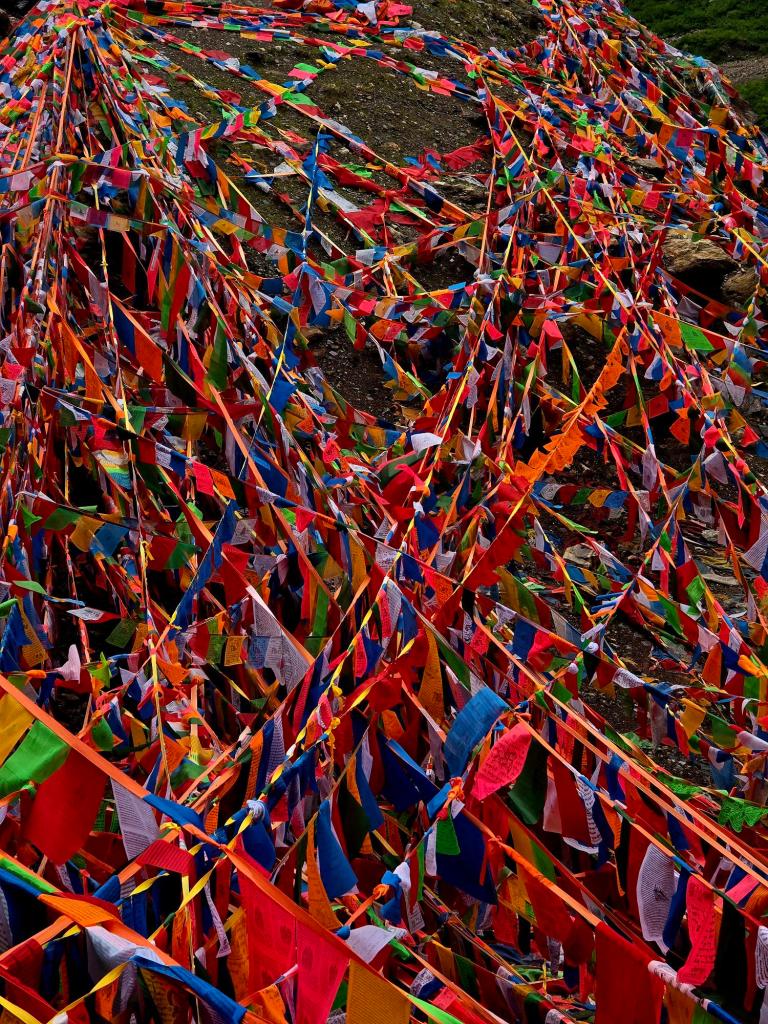
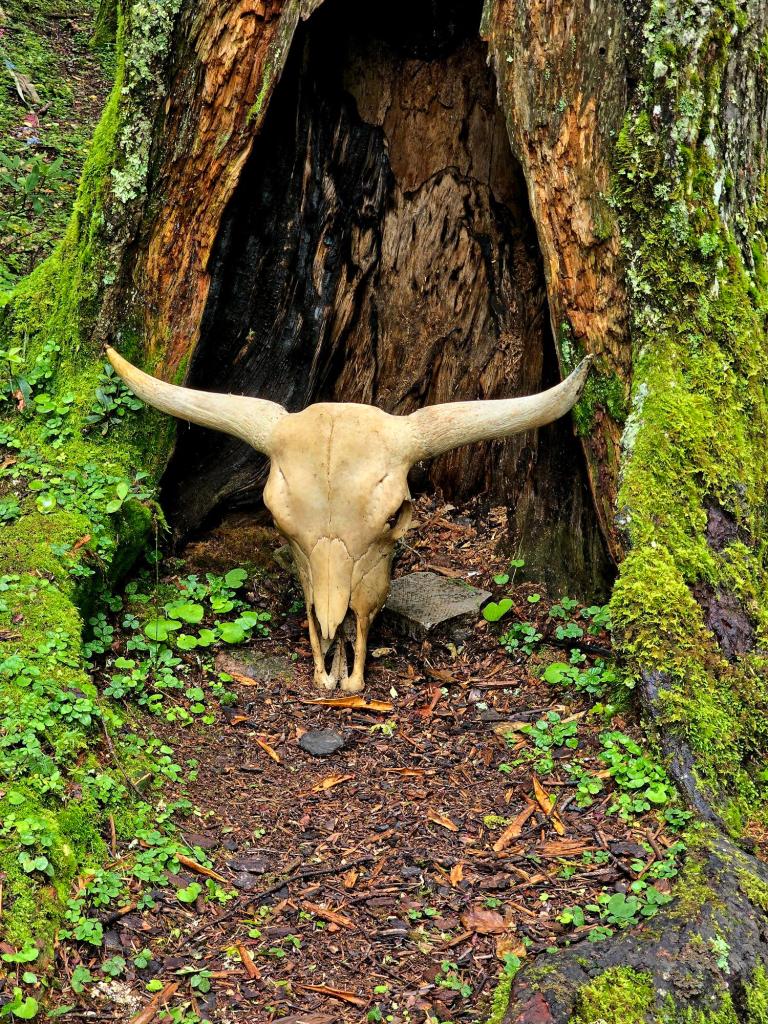
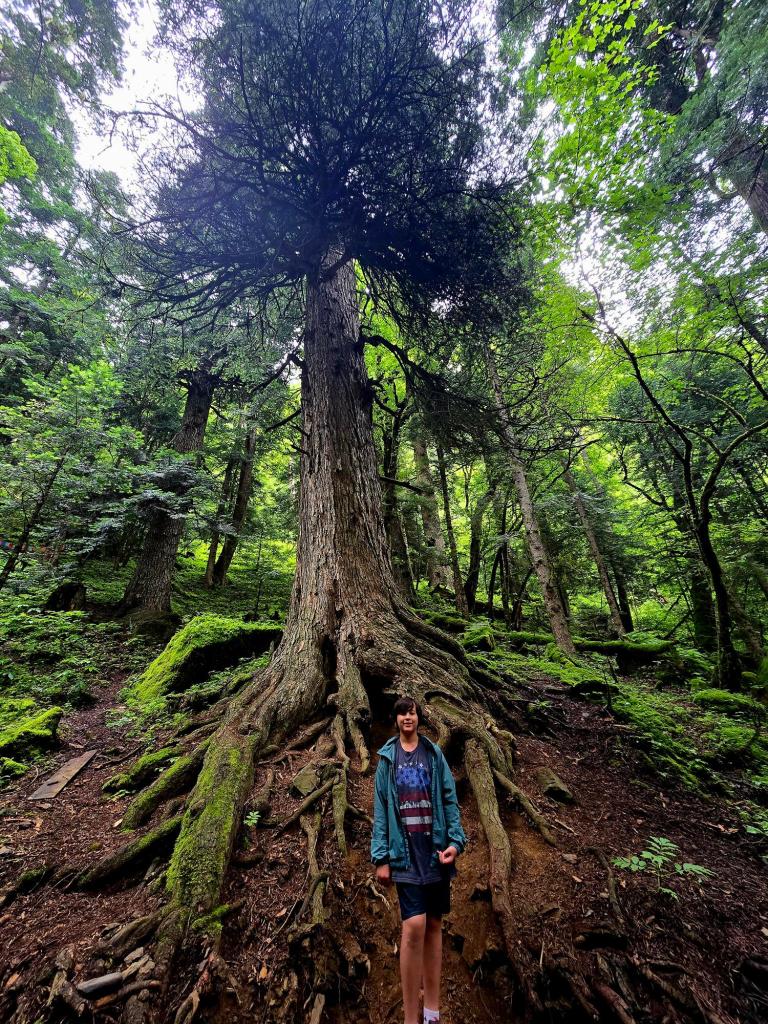
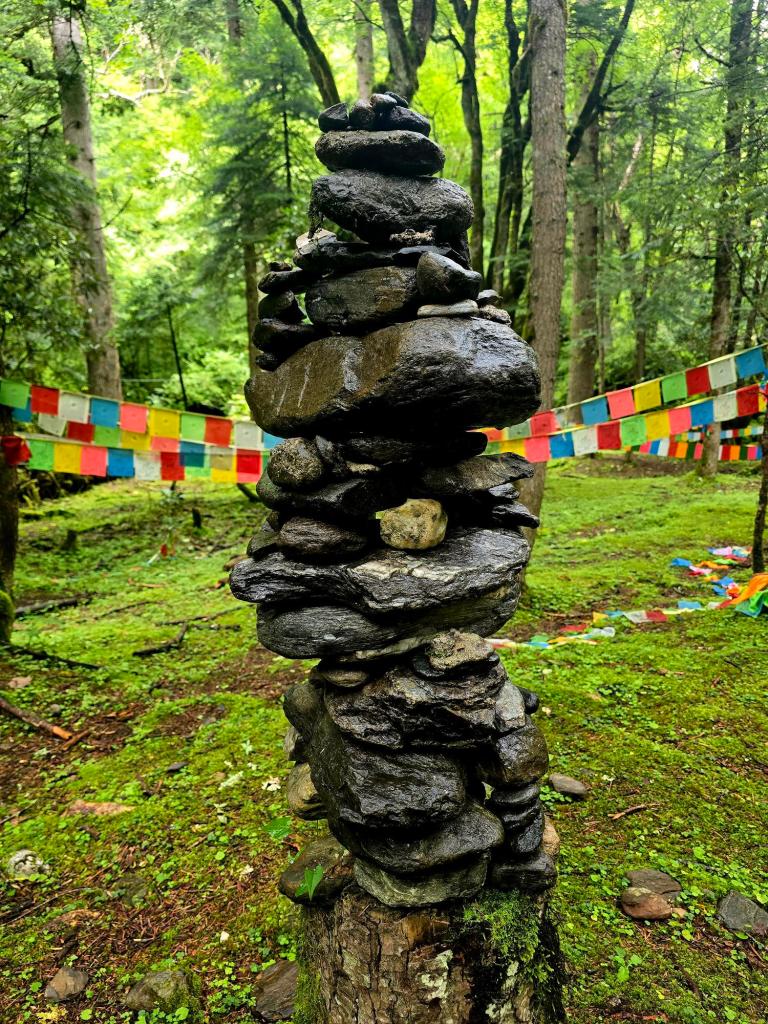
This trail is part of a much larger pilgrimage route around the sacred peaks of Meili Snow Mountain. The highest summit in the range, Kawagarbo, rises to more than 6,700 meters and is considered one of the holiest mountains in Tibetan Buddhism. For many local pilgrims, walking beneath the Sacred Waterfall is an important stop along the ritual circuit around the mountain known as the Kawagarbo kora.
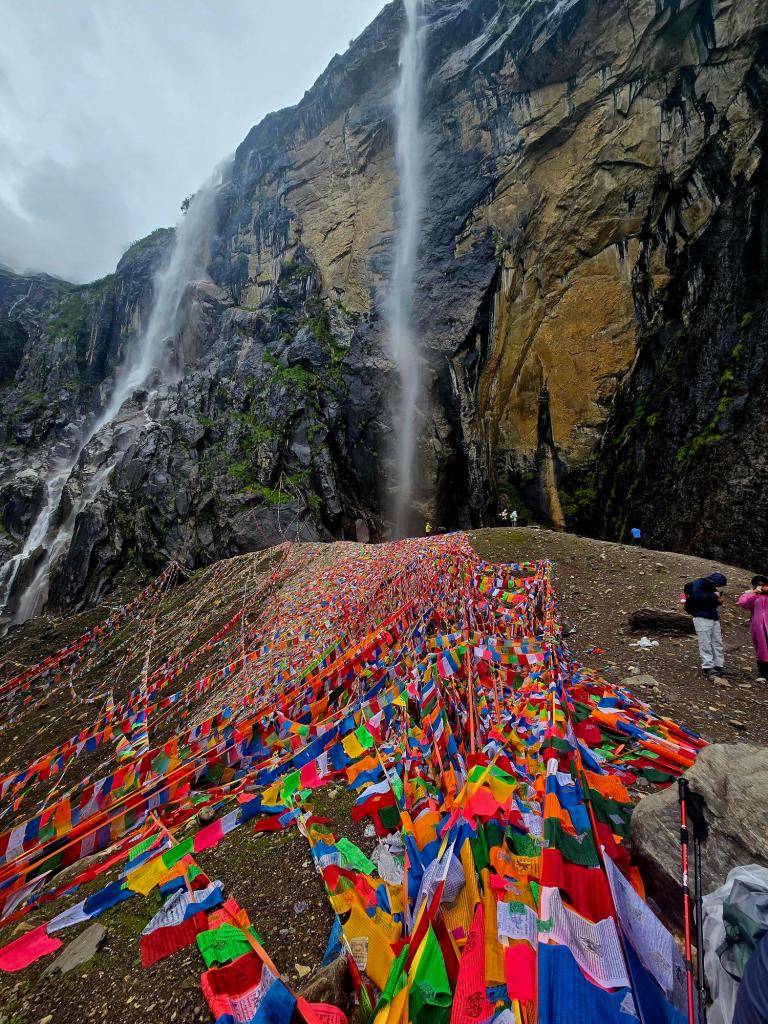
Eventually the forest opened into a clearing and the falls came into view.
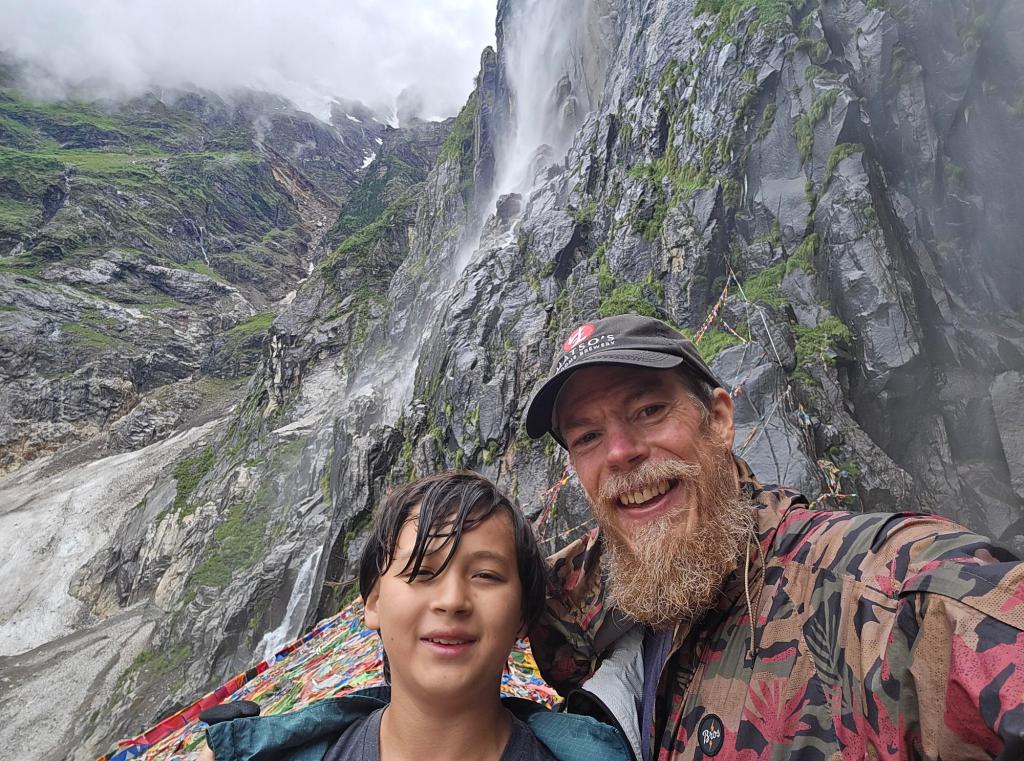
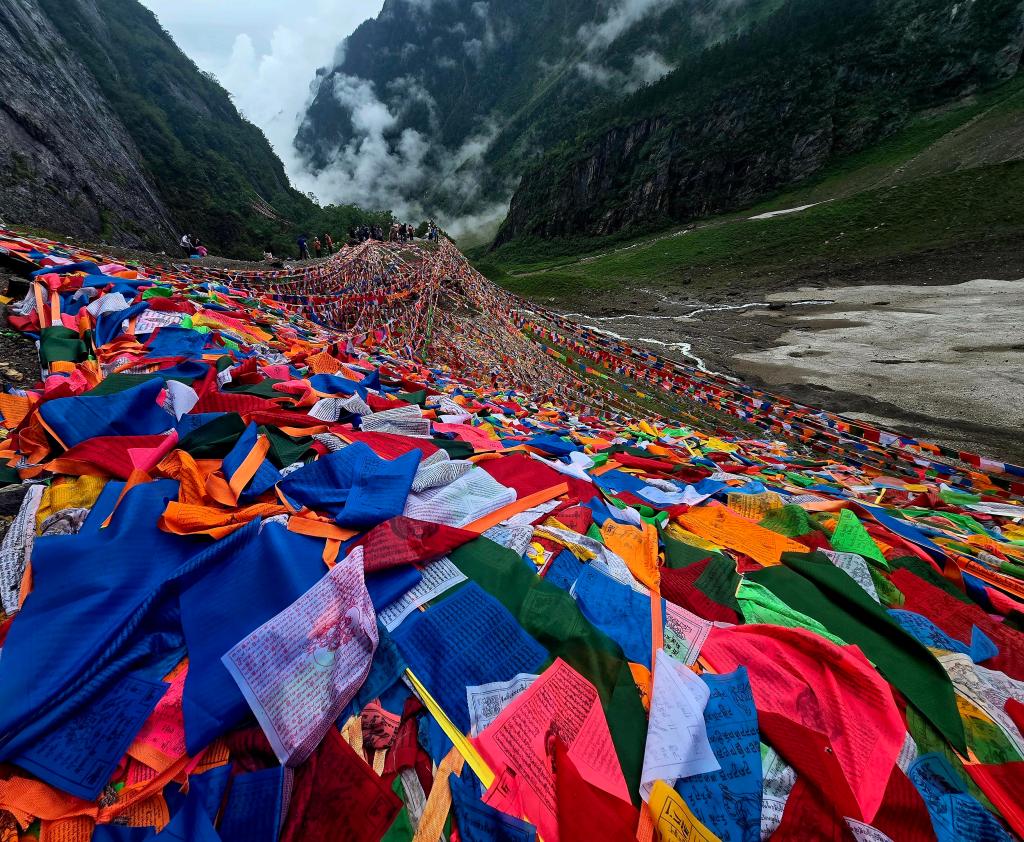
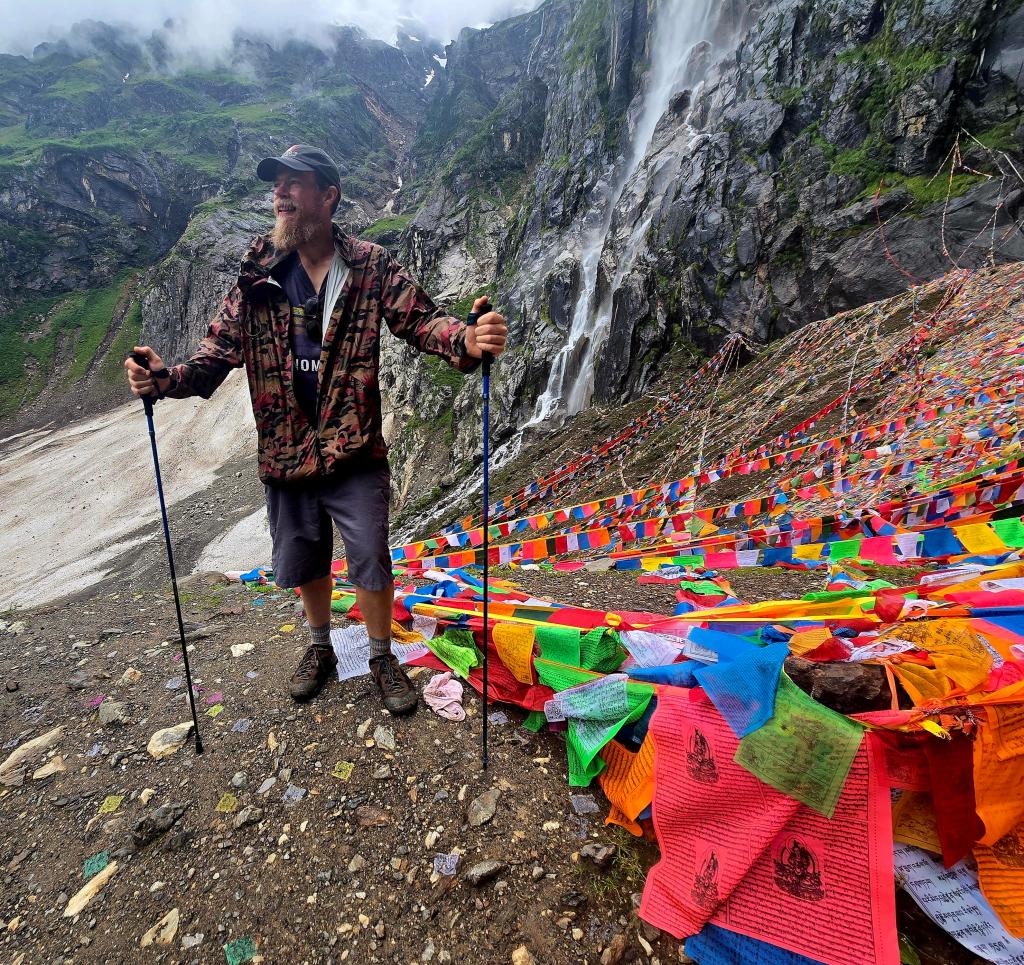
Two streams of water spilled down the cliffs above us, emerging from the clouds and crashing onto the rocks below. At the base of the falls stood a large mound of smoldering incense and an enormous tangle of prayer flags draped across the mountainside.
Pilgrims approached the waterfall slowly, some spinning prayer beads as they walked. Others stepped carefully across the slick rocks to pass beneath the falling water, a ritual believed to wash away misfortune and renew the spirit.
We sat for a while at the base of the falls, watching the steady flow of people coming and going—tourists with cameras and local pilgrims sharing the same path beneath the sacred mountain.
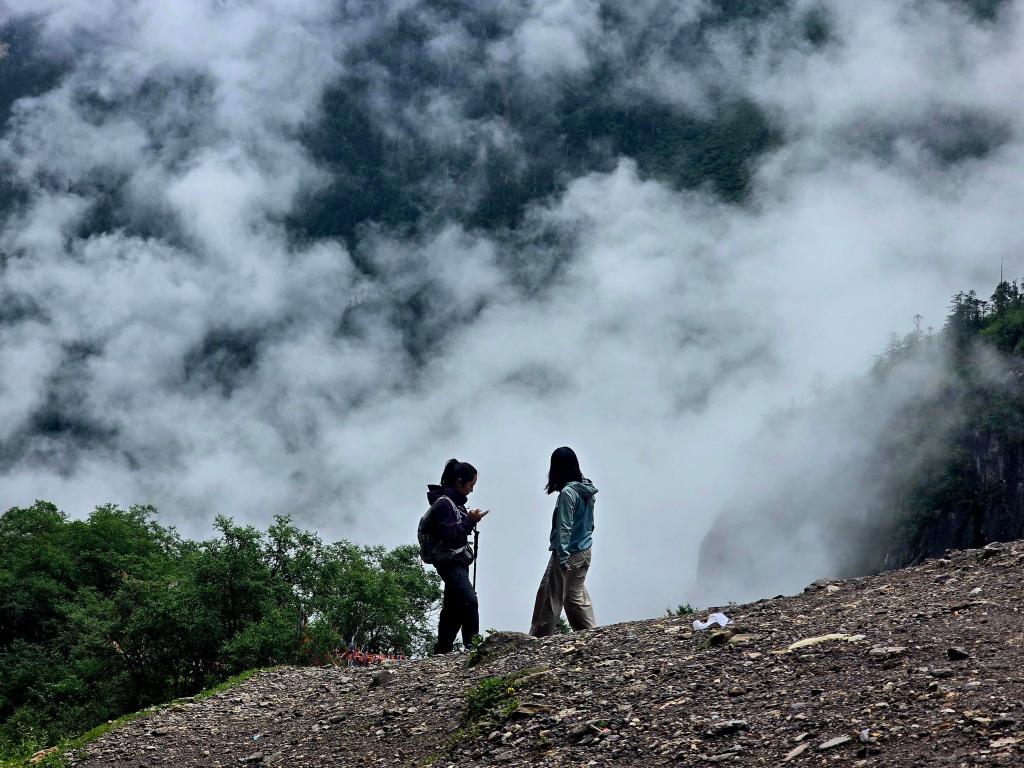
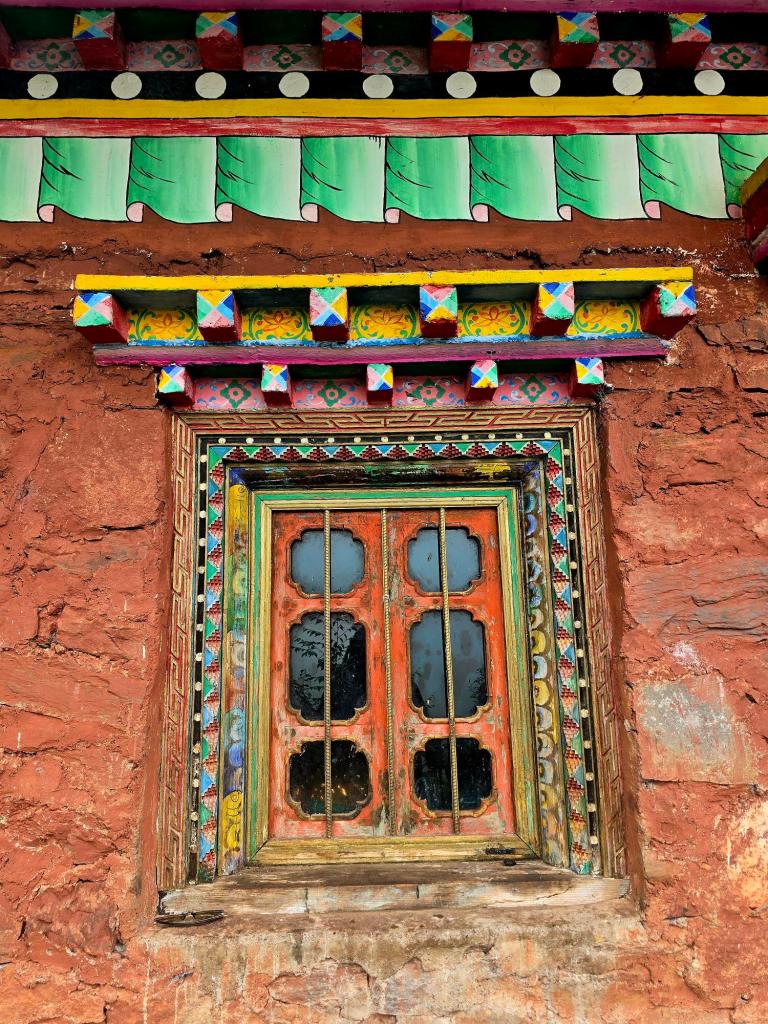
Hidden deep within the Meili range, Yubeng itself remained one of the most isolated villages in China for centuries. Until only a few years ago the only way into the valley was by foot or mule trail over a high mountain pass. Supplies, livestock, and building materials all had to be carried in by hand or pack animal. The village developed largely as a resting point for pilgrims traveling the long route around Kawagarbo.
Even now, despite the recent arrival of a rough road into the valley, the place still feels remarkably remote.
Back in the lower village that evening we had dinner and then headed out with flashlights to see what we could find along the edges of the fields and streams. As usual, the mountains delivered. We found an impressive assortment of insects and amphibians wandering through the damp grass.

Gavin was especially excited when we spotted several specimens of the Tibetan Flower Cow beetle, a bizarre-looking insect with large fanned antennae. We had first seen one years earlier while exploring the Balagezong Gorge nearby, and he had been hoping to find another ever since. After searching through Tiger Leaping Gorge and the Yubeng valley without luck, it seemed fitting that on our final night we suddenly found five or six of them. Two had already died naturally, which meant we were able to bring them home to dry and pin for the collection.
The next morning we woke early for breakfast and began the long descent out of Yubeng.
The hike down was far quicker than the climb in. Much of the steep trail was actually easier to navigate at a controlled run than trying to carefully pick our way down the slippery dirt.
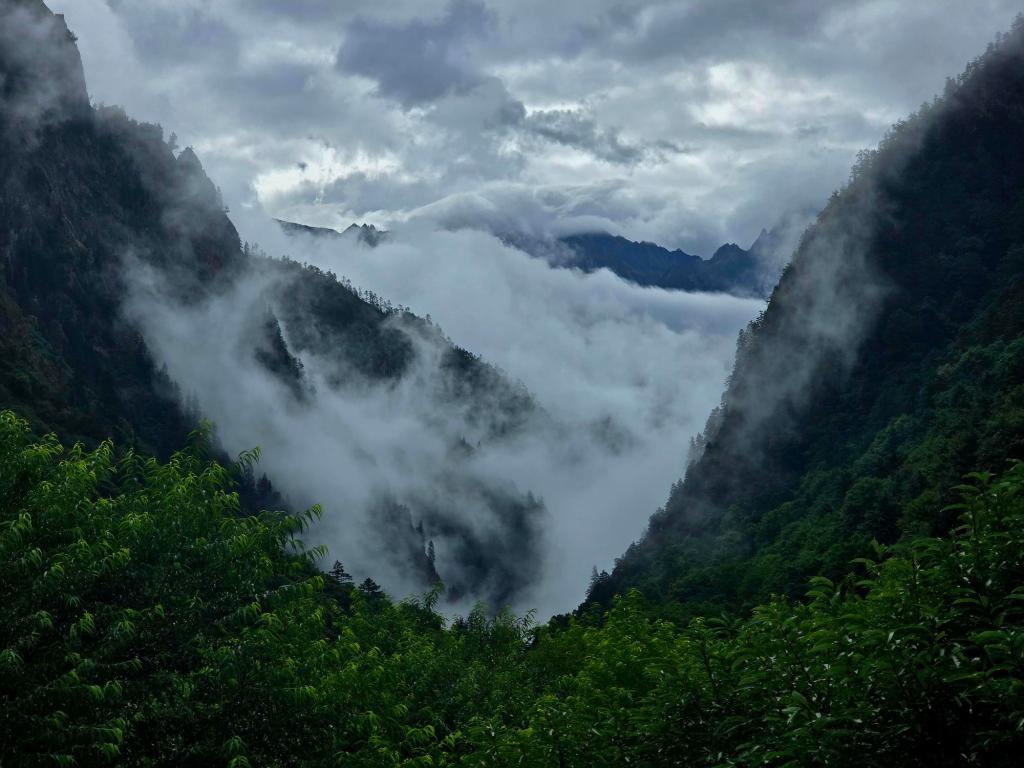
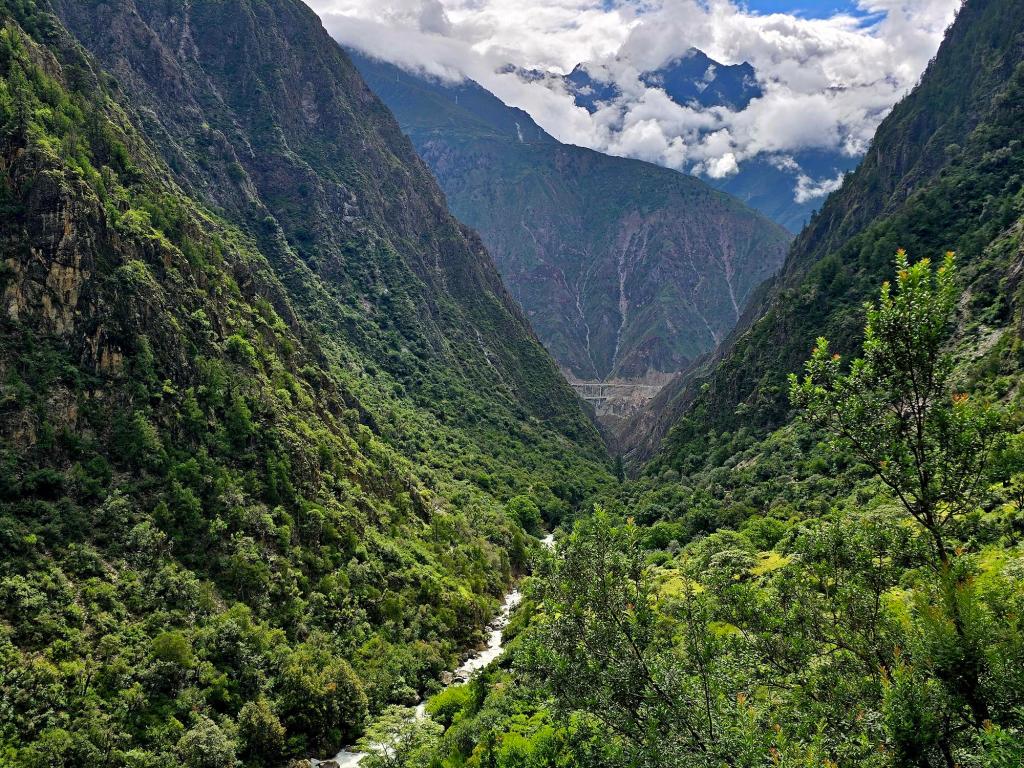
Low clouds still hung over the upper sections of the trail, wrapping the forest in thick fog, but as we dropped lower the skies gradually cleared. By the time we reached the bottom of the mountain the sun had broken through and the valley below was bright and warm.
The final mile follows a relatively flat trail carved into the cliffs high above the upper reaches of the Mekong River. After days spent deep inside the mountains, the sight of that massive river winding through the canyon below was a reminder of just how far we had come.
When we reached the parking area at the trailhead, we grabbed some drinks and were told there was a bus leaving for Shangri-La later that afternoon. It wasn’t scheduled to depart for another ninety minutes, so we wandered around for a bit.
While waiting we ran into a couple we had passed on the trail earlier and started chatting with them. It turned out they were a fairly well-known TikTok couple with more than four million followers. After talking for a while they offered us a ride back to Shangri-La in their car, much to the frustration of the guy who had been trying to organize the bus ride.
Four hours later we were walking through the streets of Shangri-La’s old town. Much of it had been rebuilt after a massive fire destroyed large sections years ago, but the place still has plenty of charm.
After several days in the mountains, wandering the narrow streets and wooden buildings of the town felt like the perfect way to end our time beneath the sacred peaks of Meili Snow Mountain.
 Wise Clan in Stanland
Leave a comment