🧭 Trail Stats
📏 Distance: 12.7 miles
⬆️ Ascent: 3,438 ft
⬇️ Descent: 3,120 ft
⏱ Total Time: 9 hrs 47 min
🚶 Moving Time: 7 hrs 46 min
🥾 Route Type: Out & Back with small loop variation
📅 Date Hiked: July 25, 2025
⚖️ Difficulty: Hard (long day at altitude)
Sometimes altitude can make for a restless night, and I wondered if that would be the case for us in Upper Yubeng, which sits well above the 10,000-foot mark. Luckily, the ten-mile climb earlier in the day solved that problem. By the time we crawled into bed, our legs were completely spent, and we both slept like rocks.
We were up early the next morning and wandered into the kitchen to order breakfast while getting our packs ready for the day. I knew the hike to Glacier Lake—often called Ice Lake—was supposed to be a big one, but I didn’t really have a clear sense of just how demanding it would be.
The trail begins directly from Upper Yubeng village, and by the end of the day I was very glad we had made the push up to the upper village the afternoon before. Starting from Lower Yubeng would have added even more climbing to an already long day.
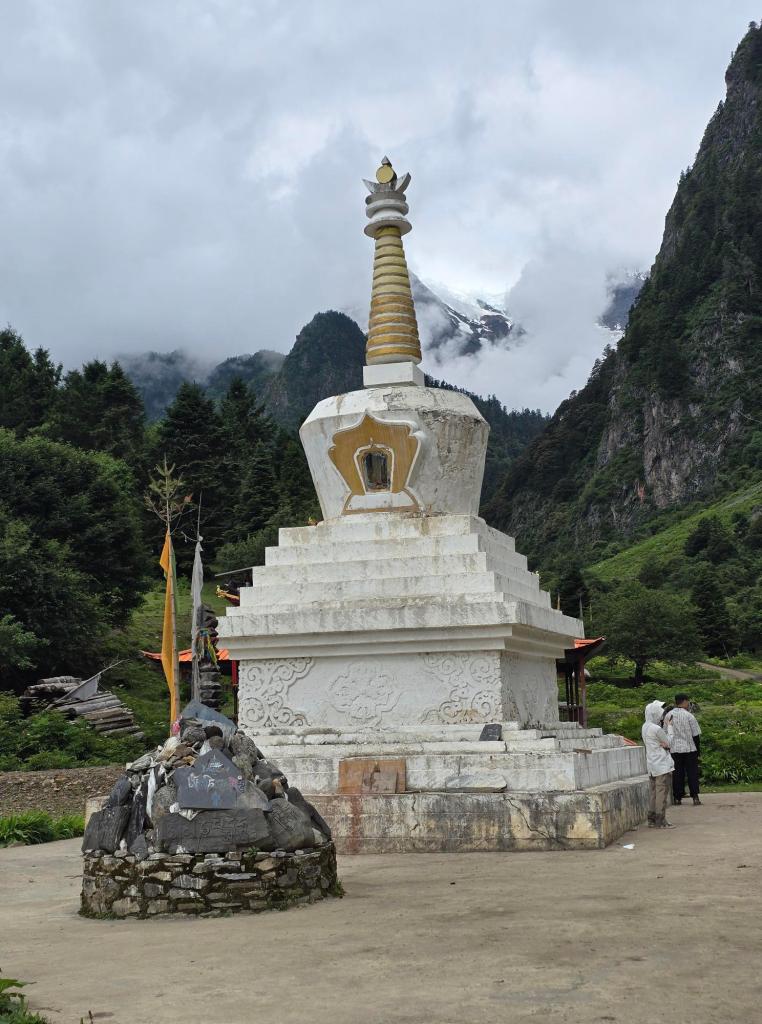
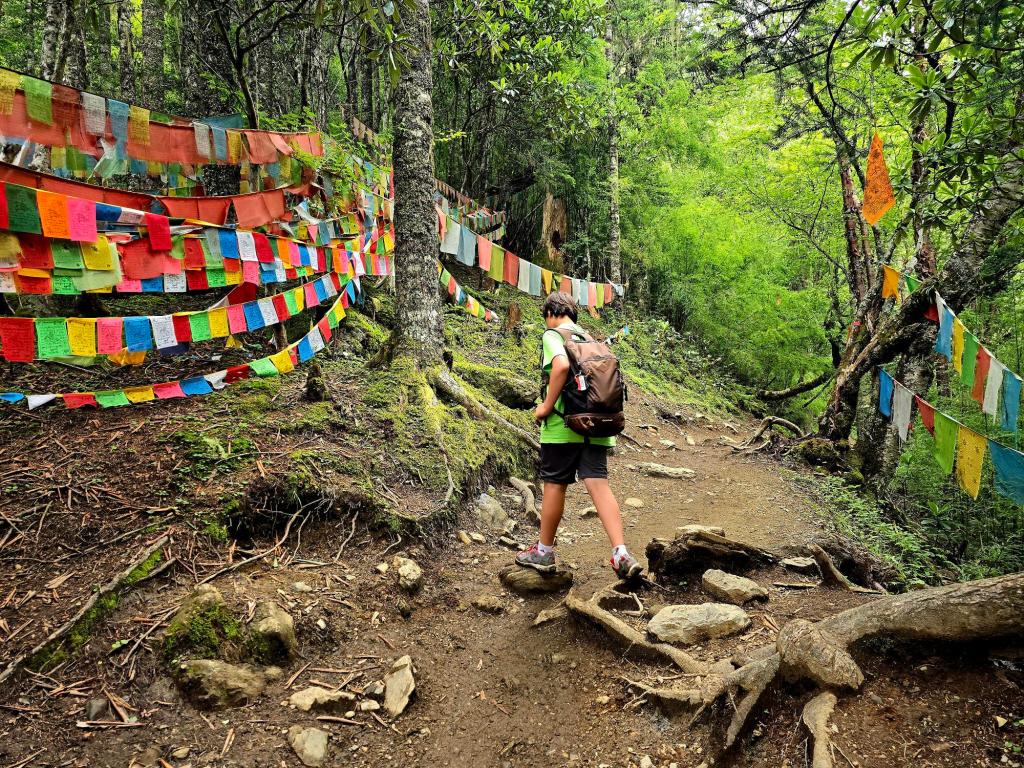
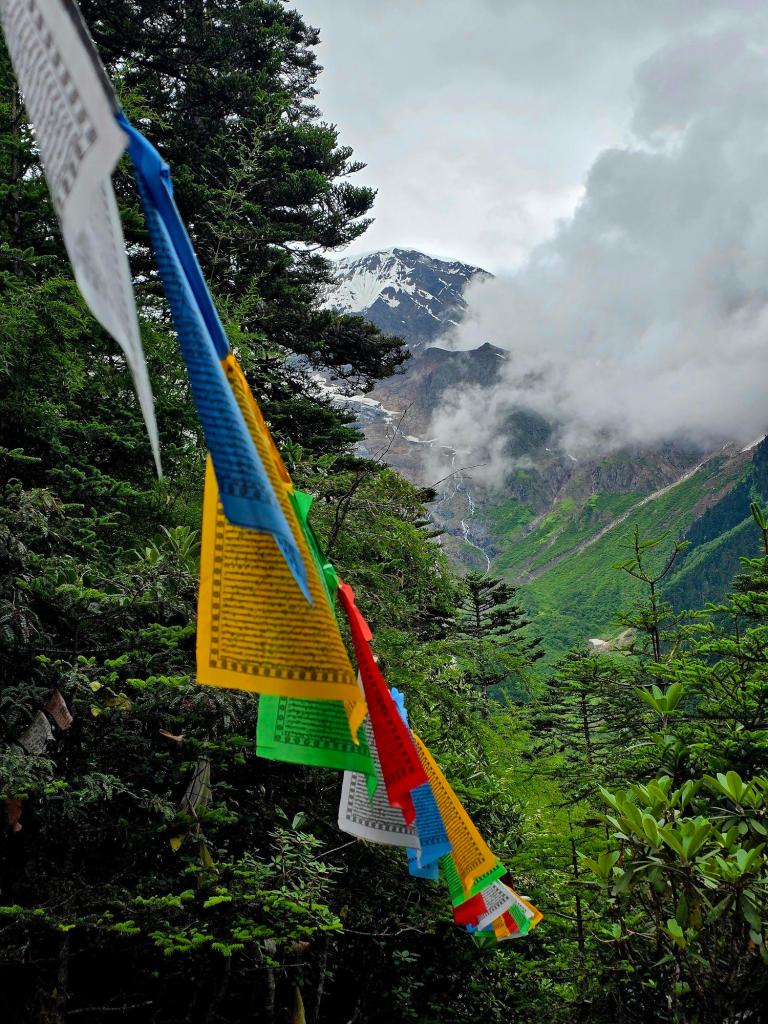
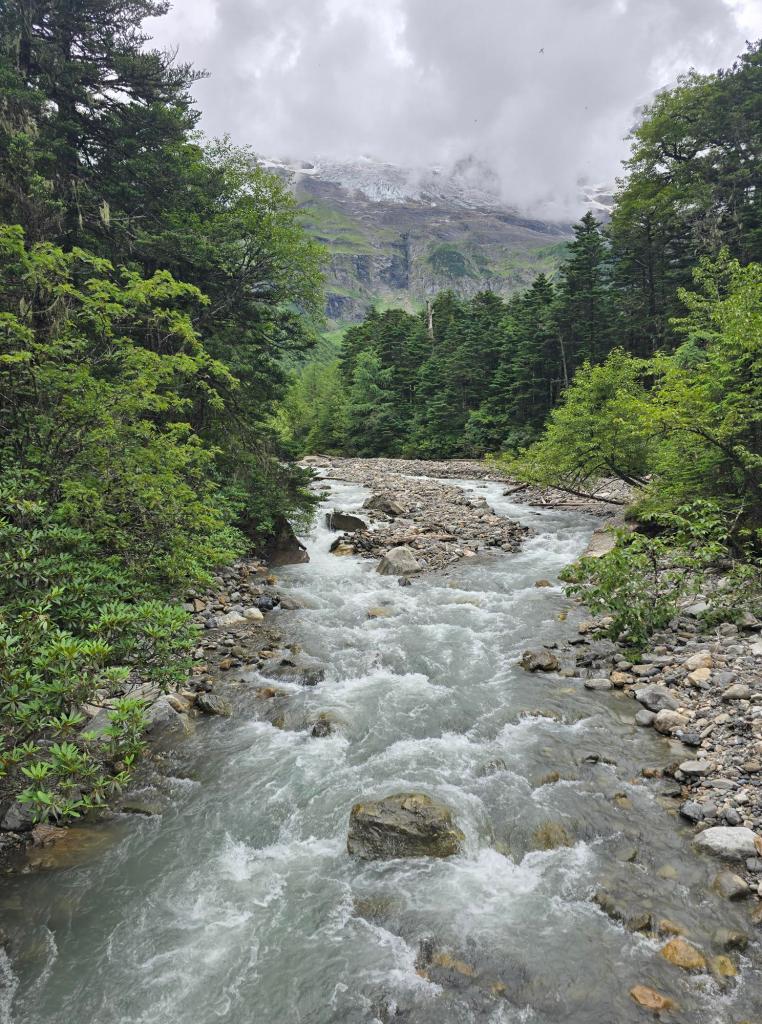
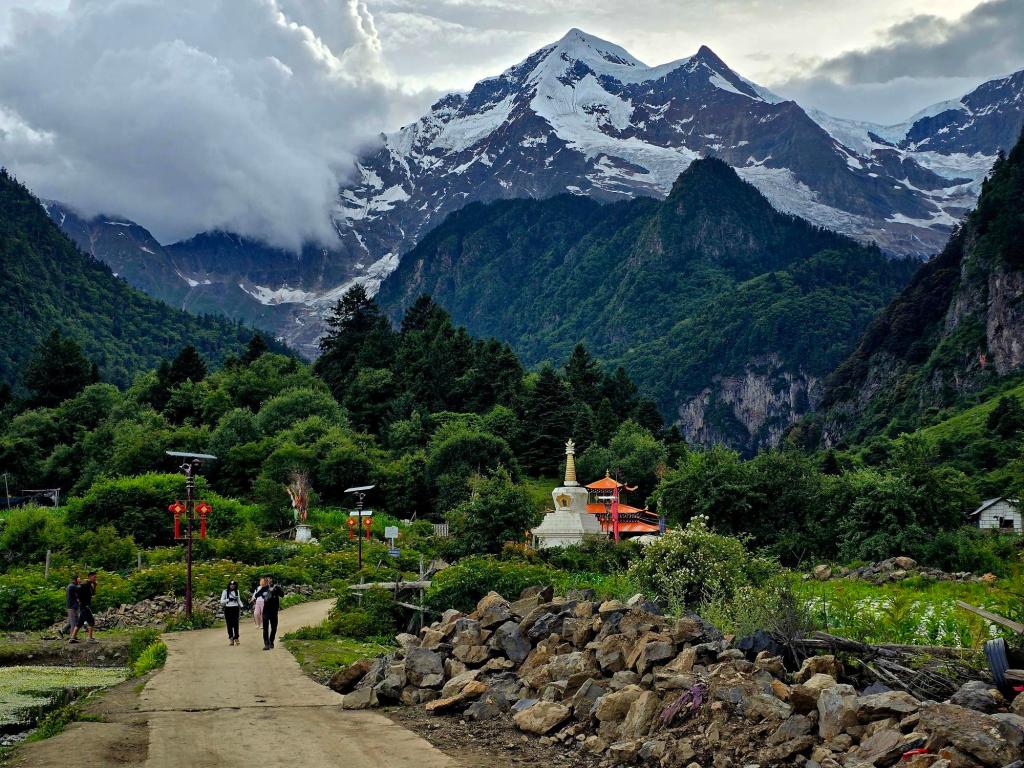
We walked through the village and out the far side, passing a large white stupa before crossing a small stream and entering a wide meadow where thick forest quickly began to take over. Soon we were moving through dense fir and spruce. The first mile followed a gentle incline, and we passed a small temple tucked into the trees as we worked deeper into the forest.
Then the first real climb began—and it meant business.
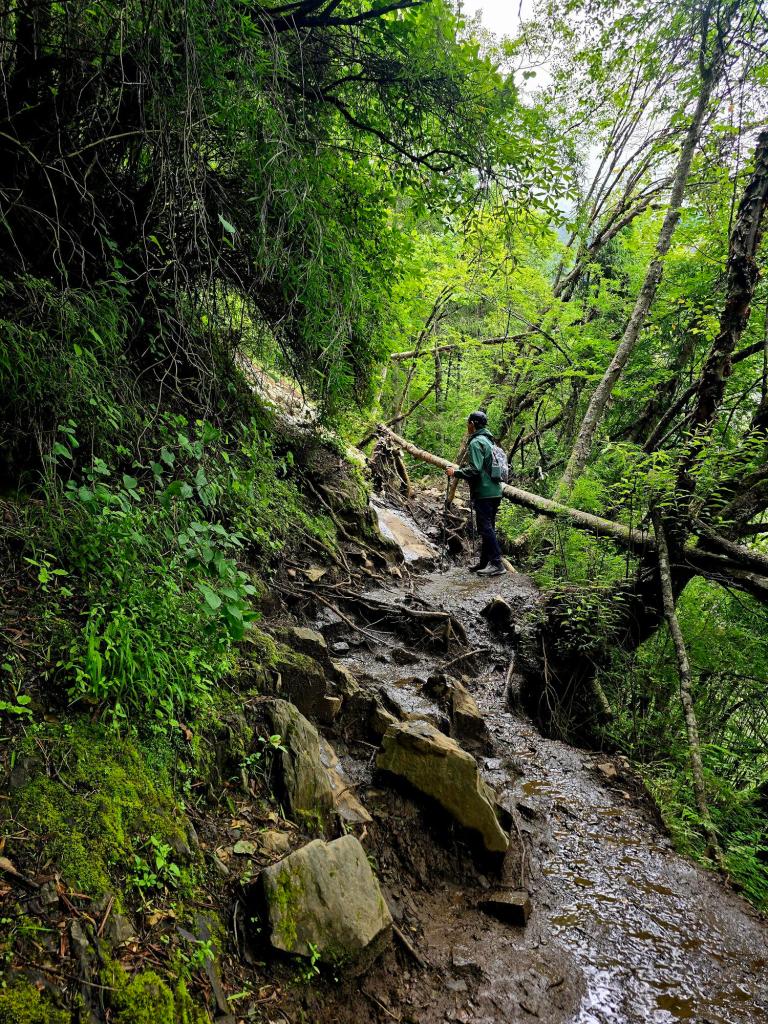
The trail steepened dramatically, often slick with mud and tangled with thick knots of exposed roots. Up and up it climbed through dense forest with no views beyond the trees. We moved quietly through that section, both of us feeling the accumulated miles from the previous three days of hiking.
When we finally reached a flat stretch of trail again, it felt like a gift. Our laughter broke the quiet forest air once more. There was a small shelter there along with what looked like the remains of a snack shack that had clearly been abandoned for some time.
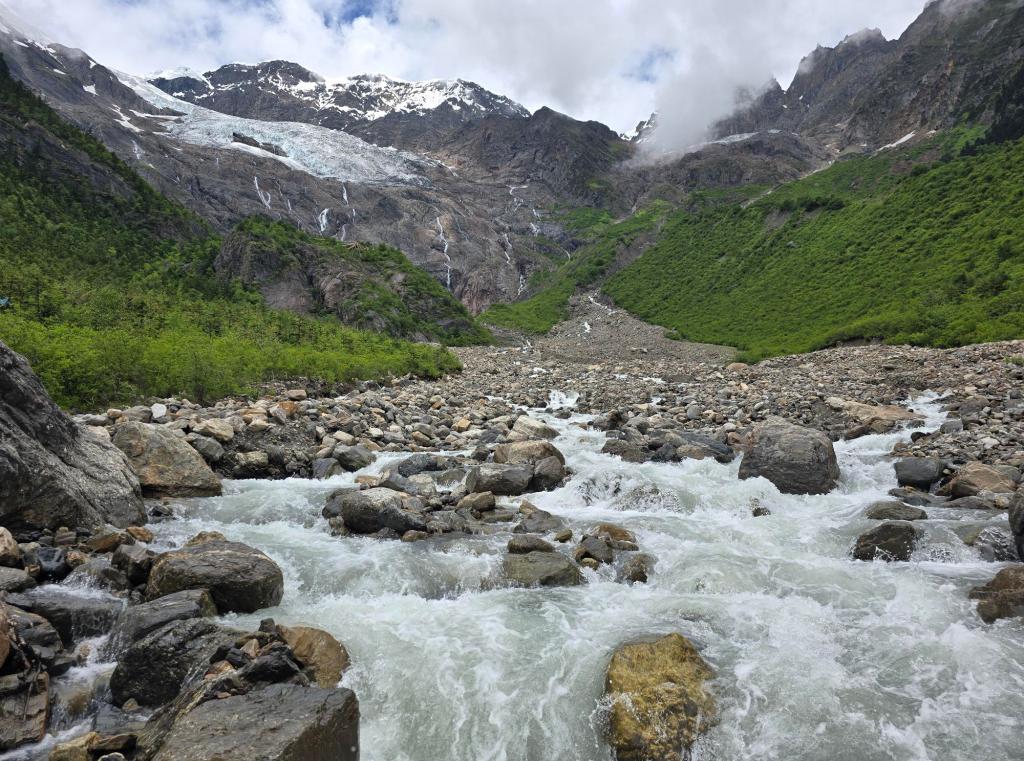
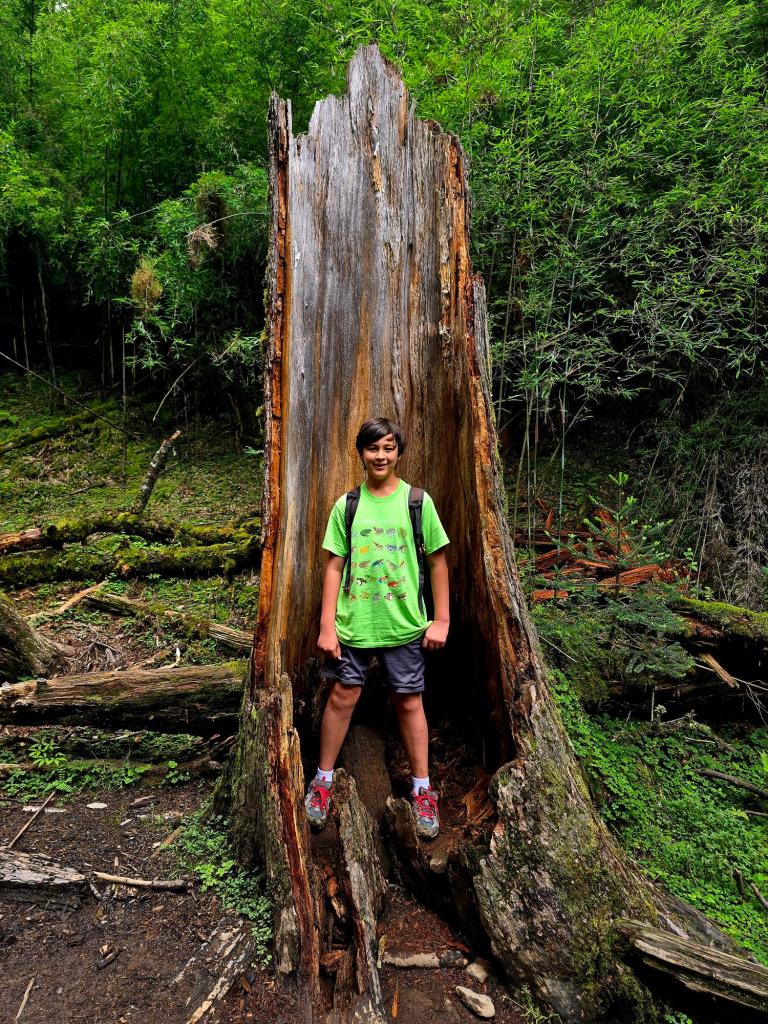
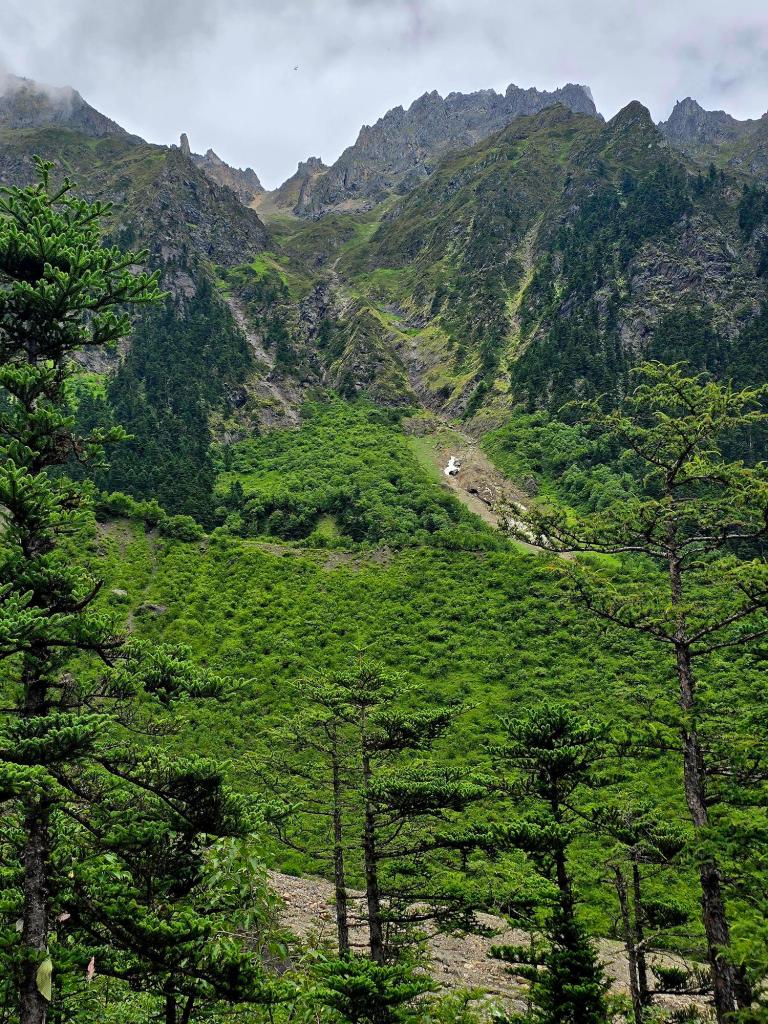
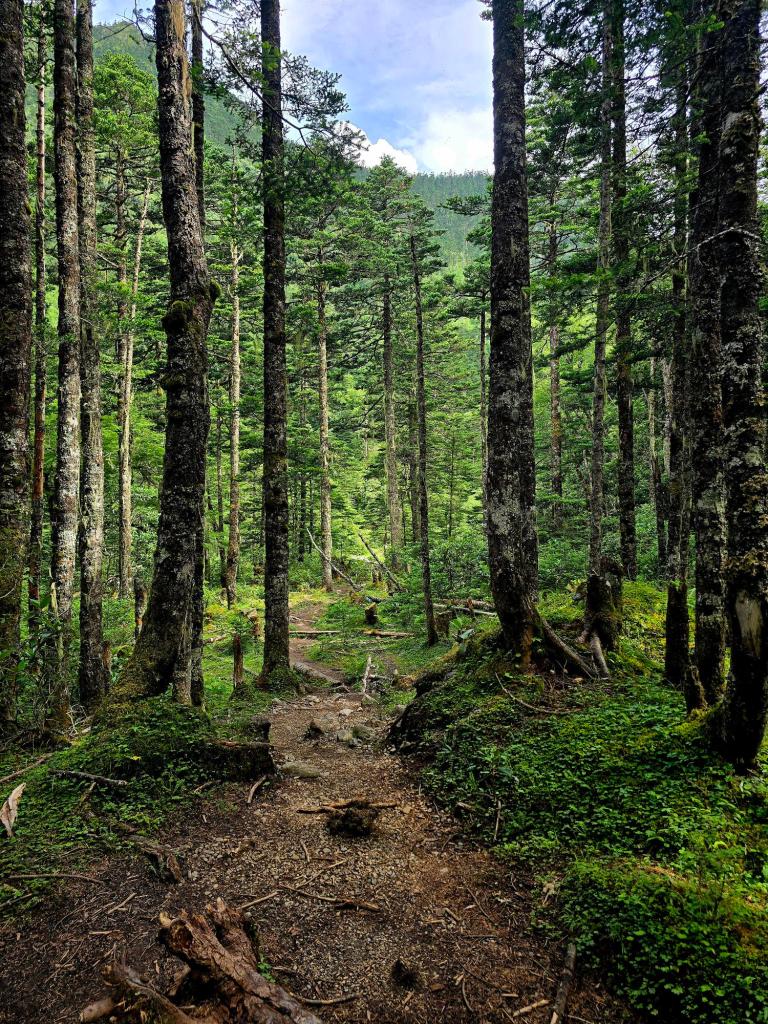
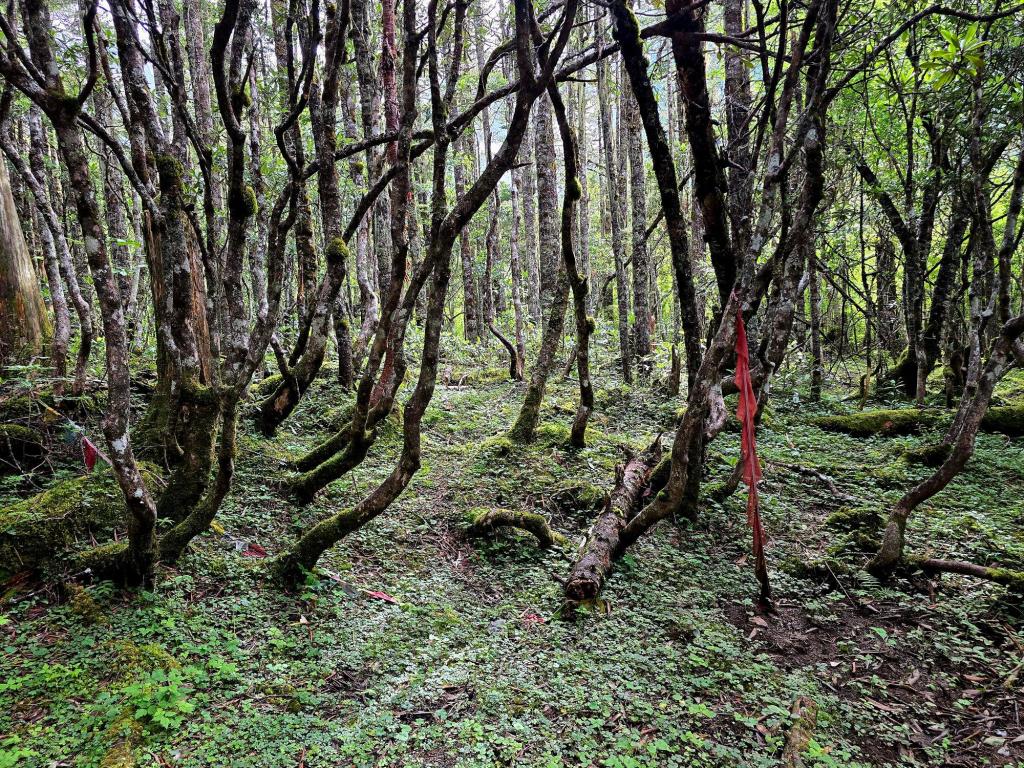
After a short break we continued on, and before long the forest transformed into something that felt almost magical. Moss and ferns covered everything—rocks, fallen logs, and tree trunks alike. It had the feel of a fairy tale forest, cool and green and dripping with moisture.
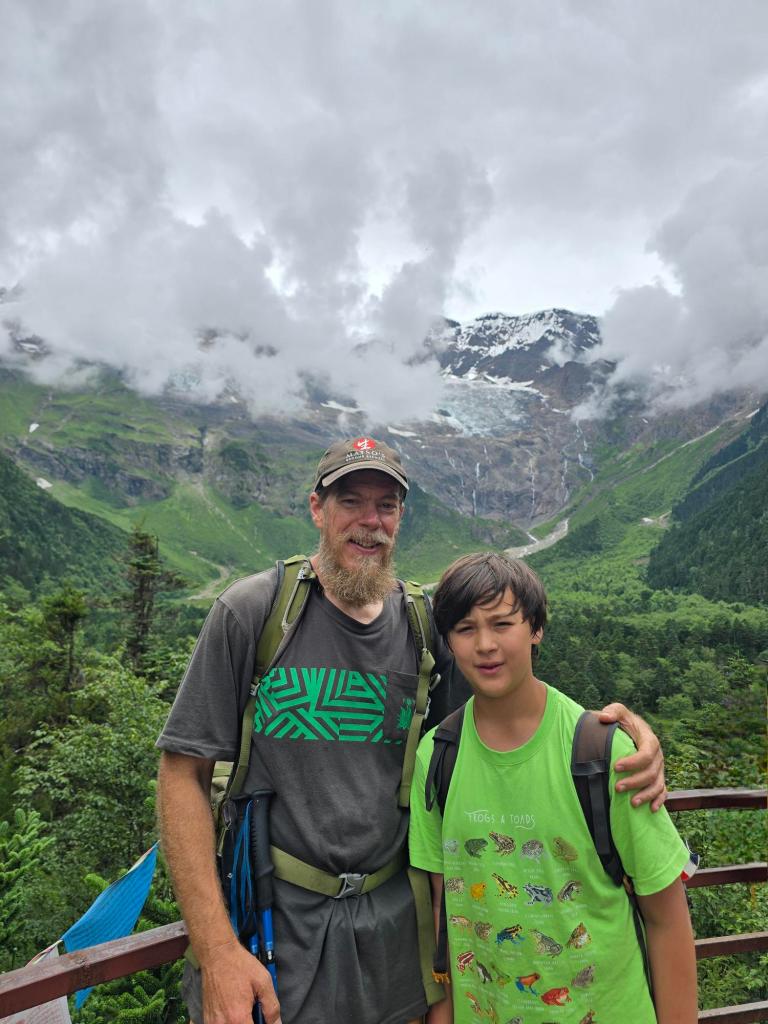
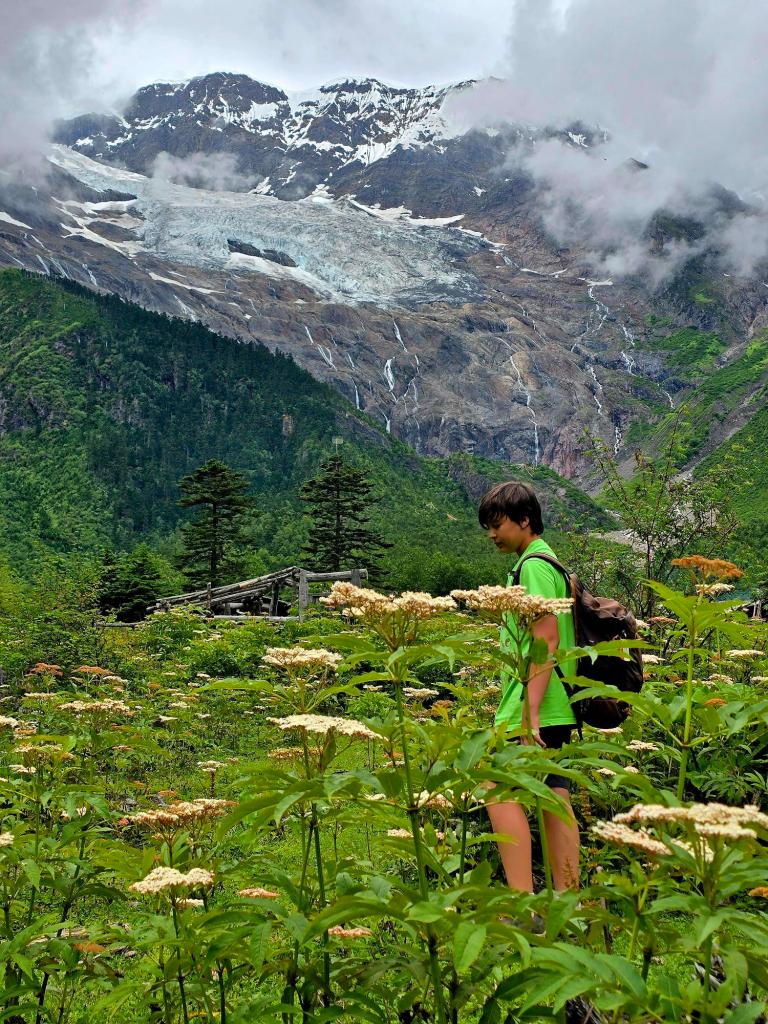
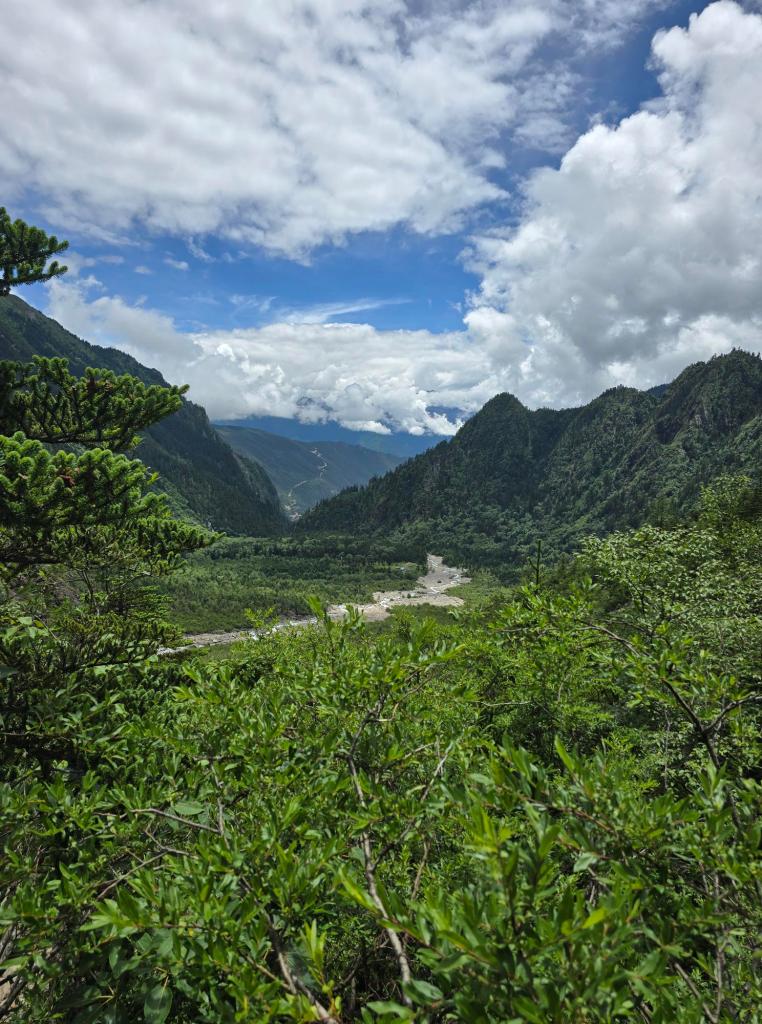
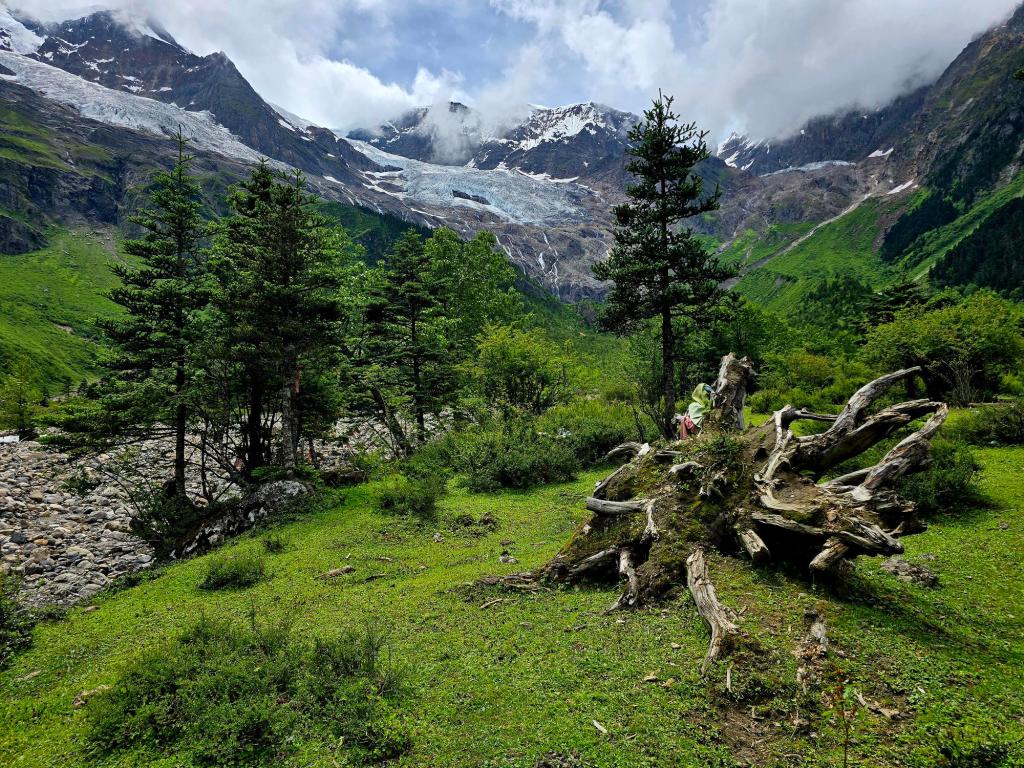
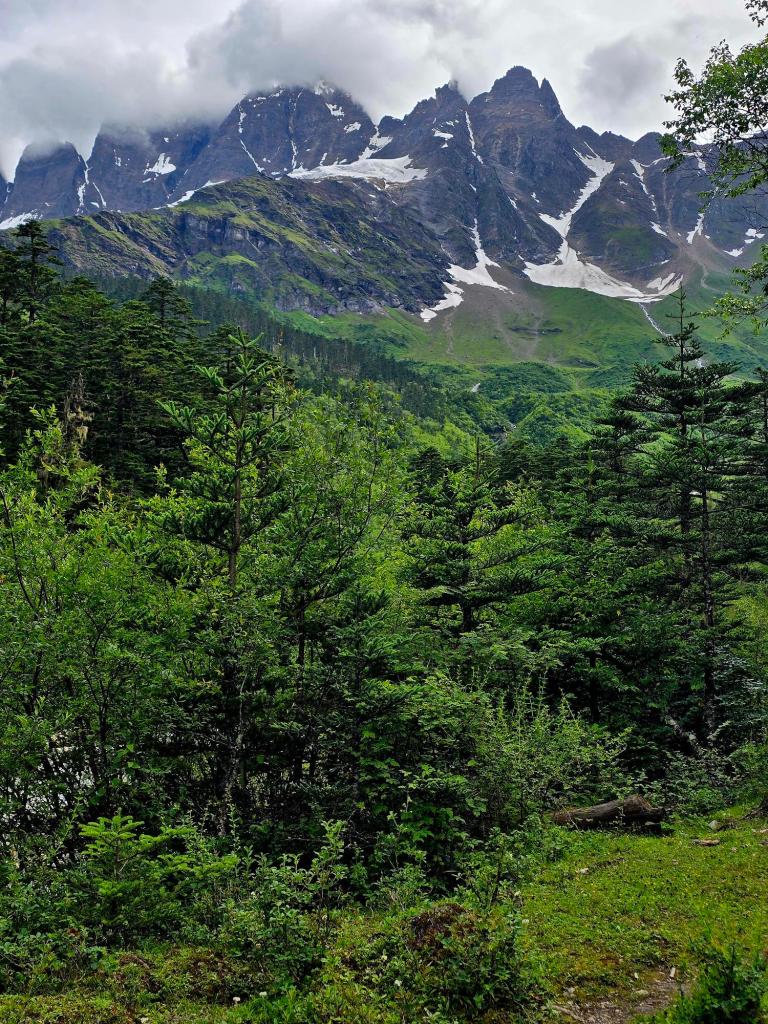
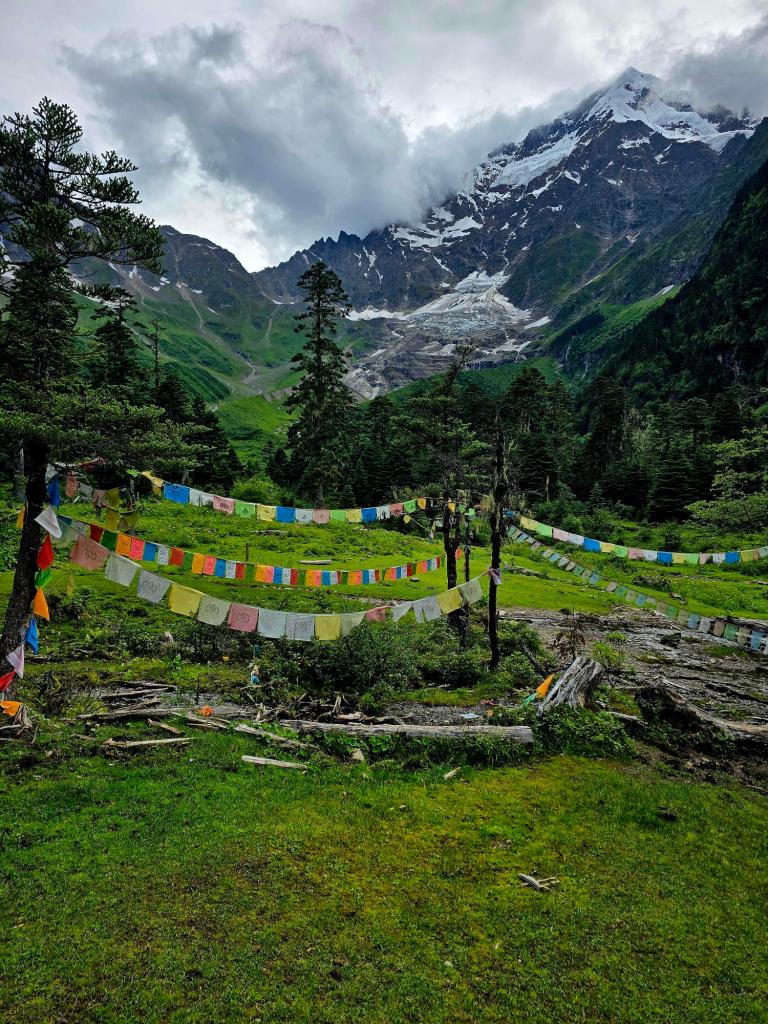
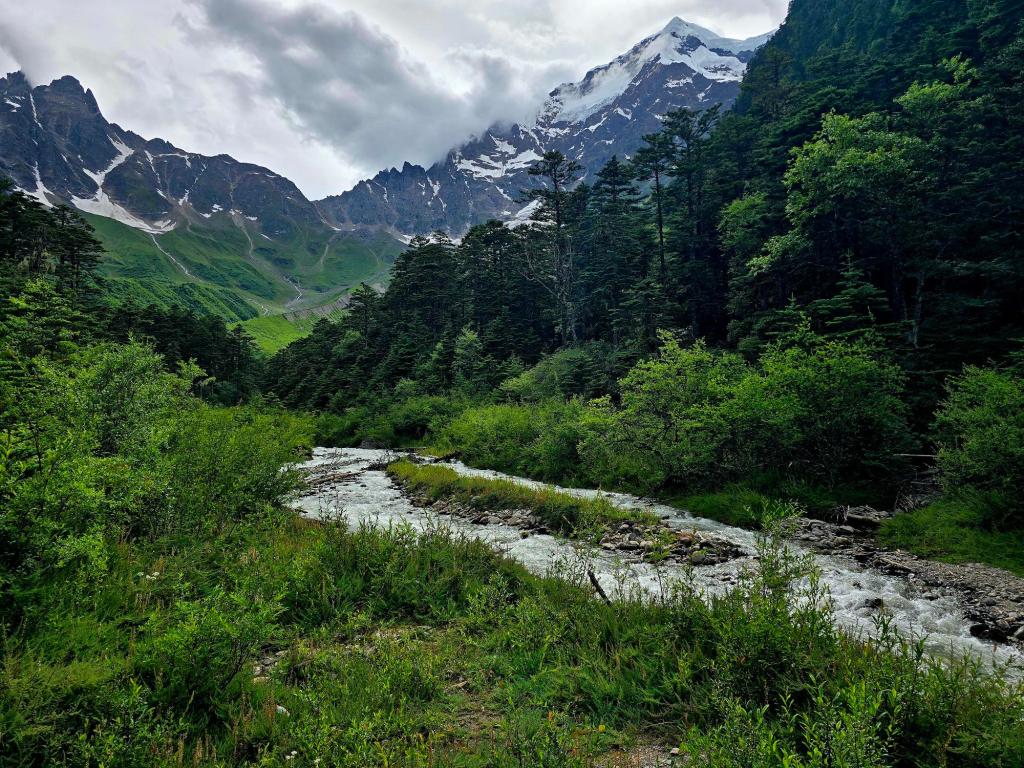
Another mile of gentle climbing eventually brought us out into a meadow that opened up spectacular views in every direction. For the first time we caught a clear glimpse of the glaciers clinging to the upper slopes of the sacred mountain above us.
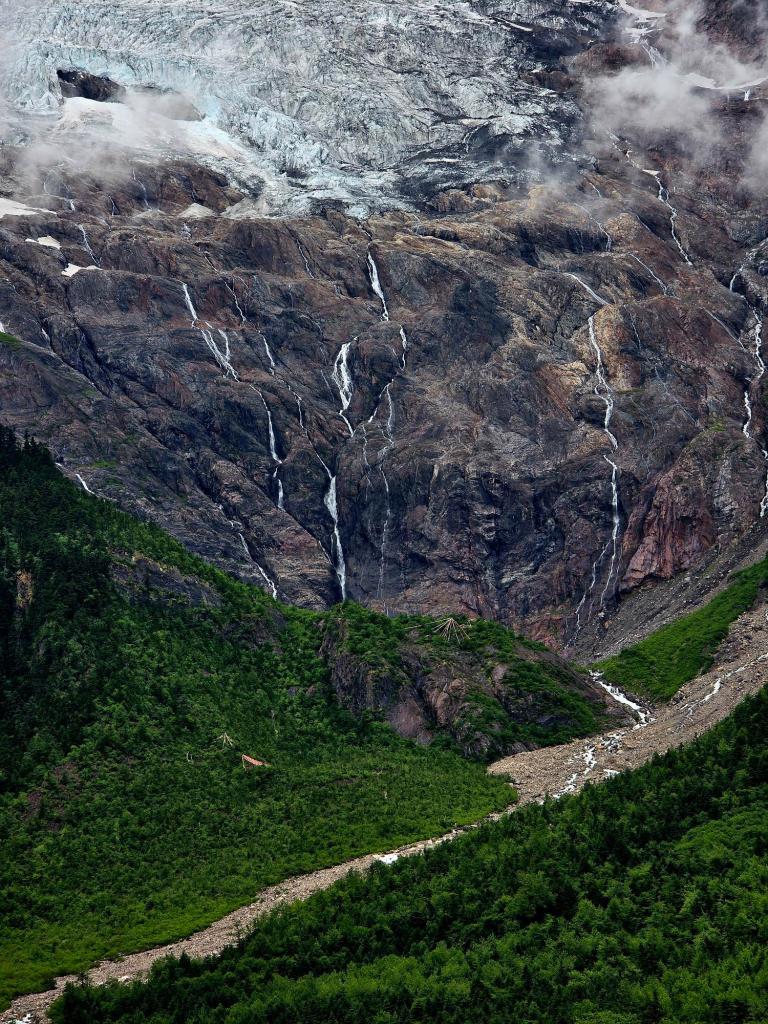
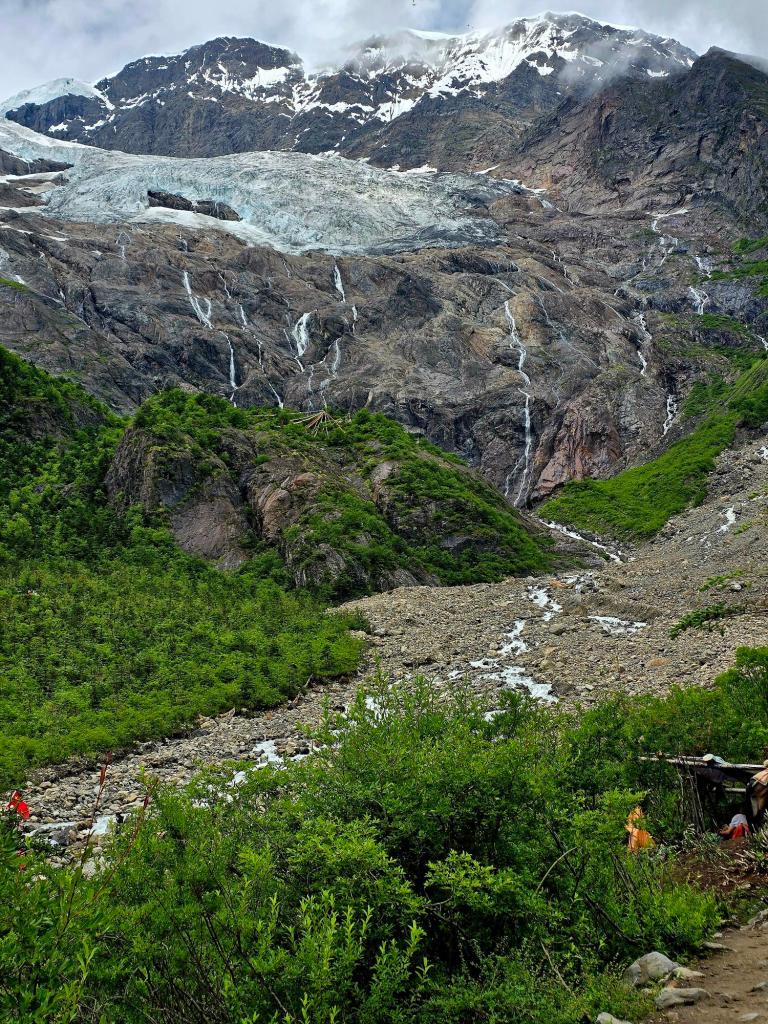
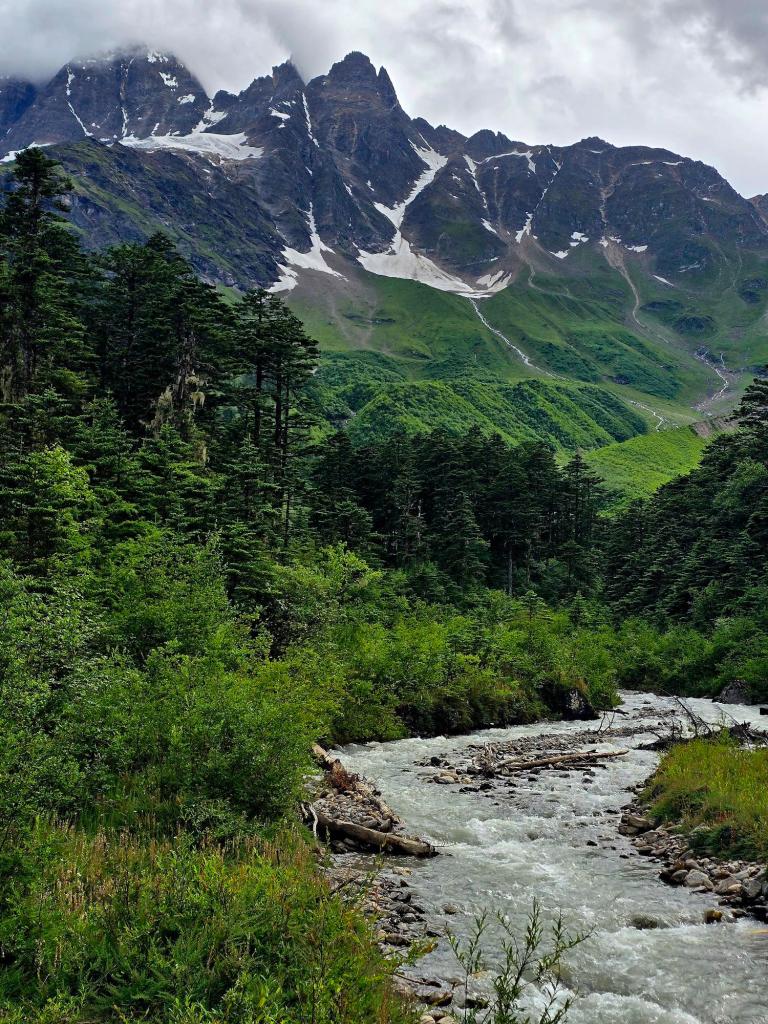
The mountains around the valley were thick with forest at their base, but above the tree line massive rock walls rose upward, streaked with silver ribbons of waterfalls. Higher still, enormous glaciers sprawled across the upper slopes, with jagged peaks rising above them. The entire landscape felt immense.
We stood there for a while taking it all in before continuing onward.
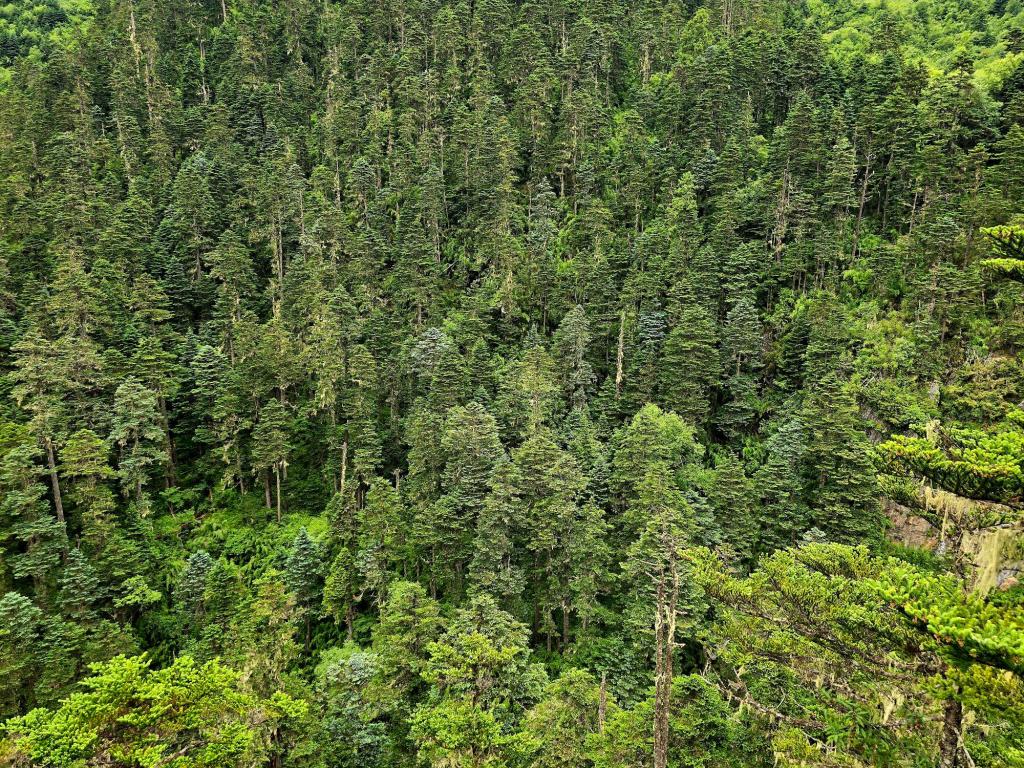
After crossing a bridge over a rushing river far below, the trail led us to a large viewing platform with a couple of observation decks. From there, long flights of stairs dropped down into the valley that we would need to cross before making the final push to Glacier Lake.
Just before that final climb, we came across a small settlement where a local family operates a tea house, snack shop, and restaurant all rolled into one. We were interested in all three. Inside we found seats along a bench that ran around the room.
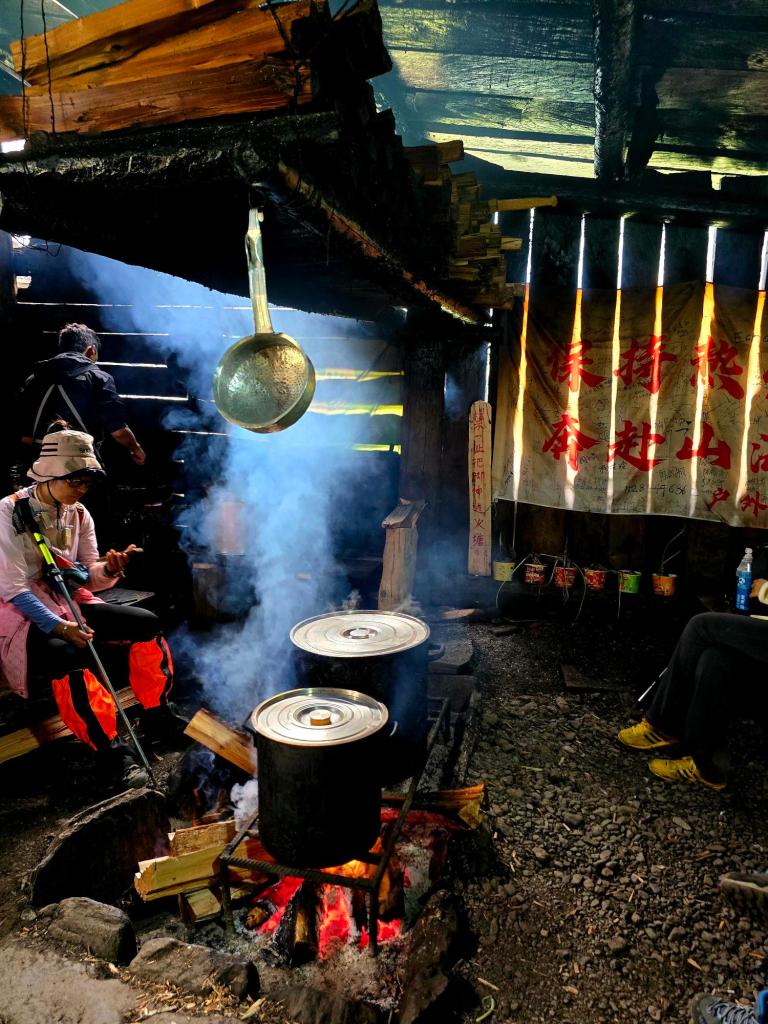
The walls of the building were something I had never seen before. They were constructed from stacks of thousands upon thousands of empty instant noodle containers—an ingenious way of turning trash into building material.
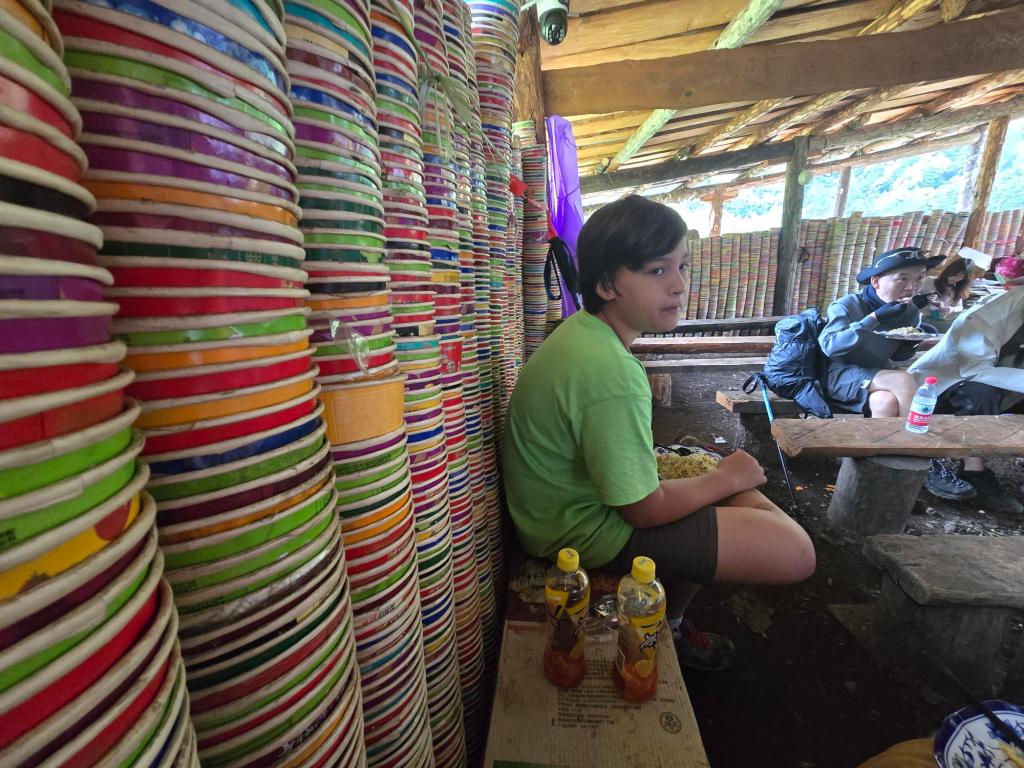
We ordered big plates of fried rice along with drinks and, of course, more chocolate. After finishing our improvised feast we pushed on up the final half-mile climb to the lake.
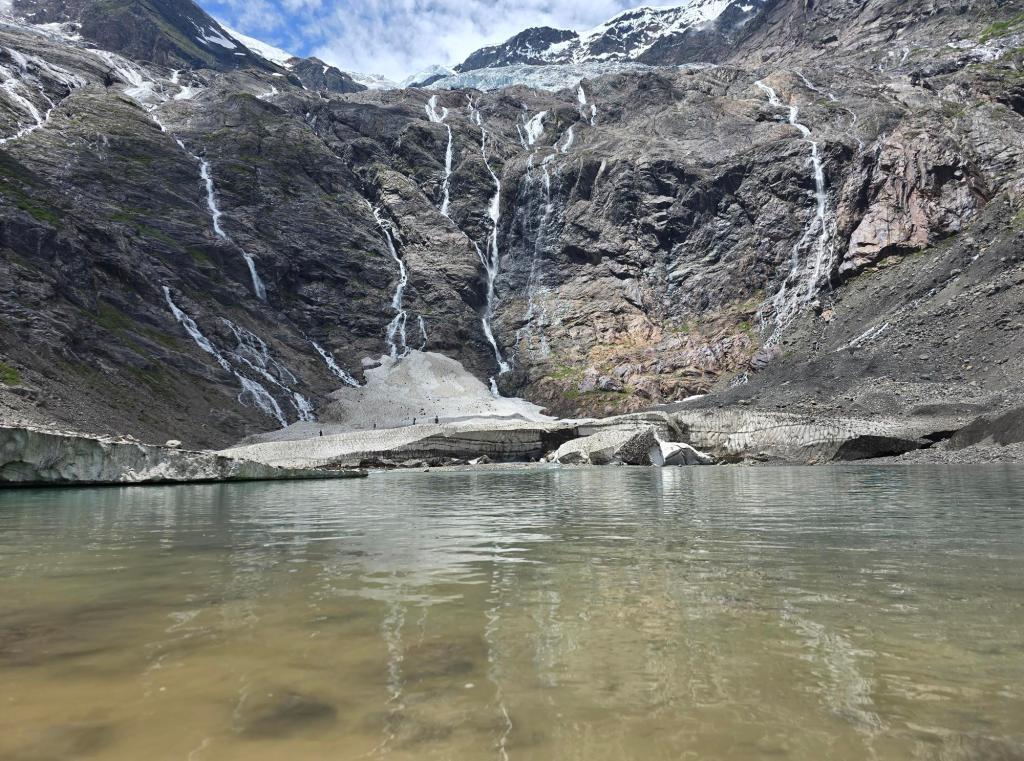
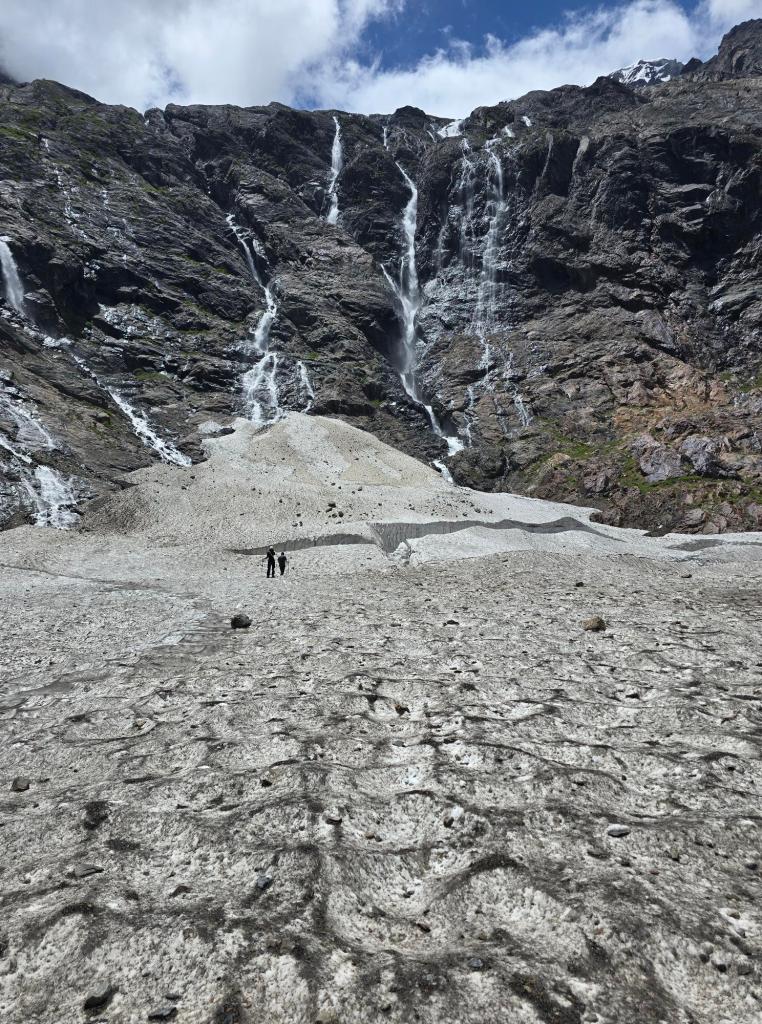
Glacier Lake sits in a wide alpine basin beneath the towering slopes of the sacred mountain. The lake itself is an icy turquoise pool, partly surrounded by thick glacial ice that sweeps nearly all the way around its edges. On the far side, a massive glacier spills down the mountain above, feeding the lake with meltwater. Waterfalls stream down the cliffs behind it, all supplied by the glaciers higher up.
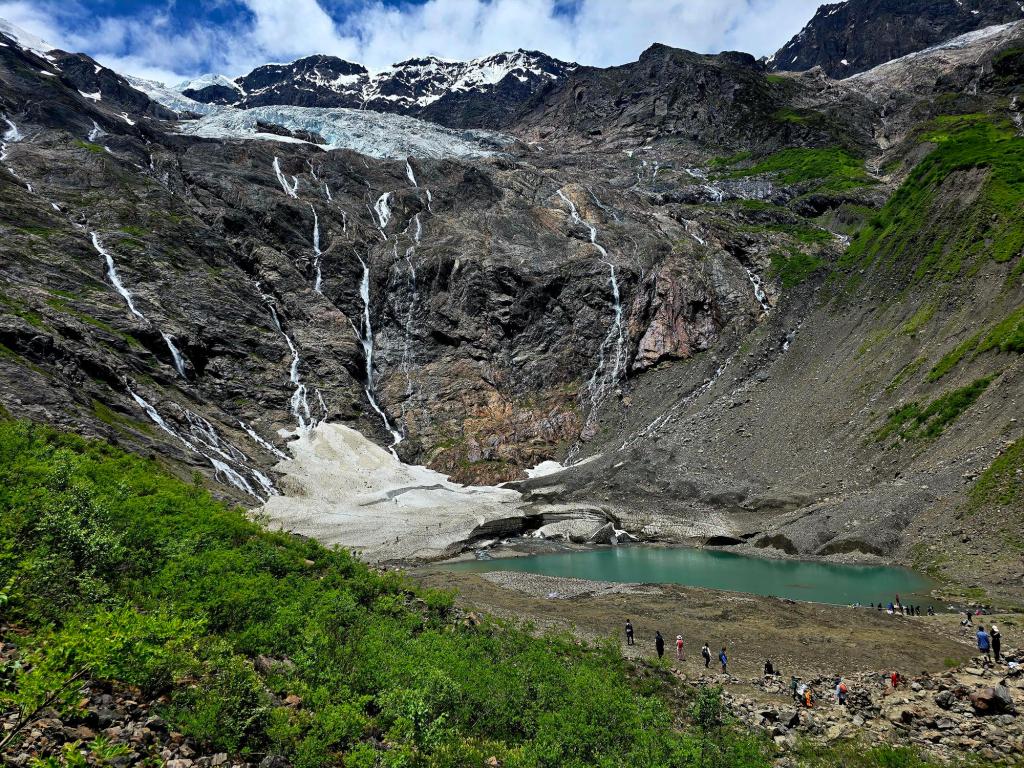
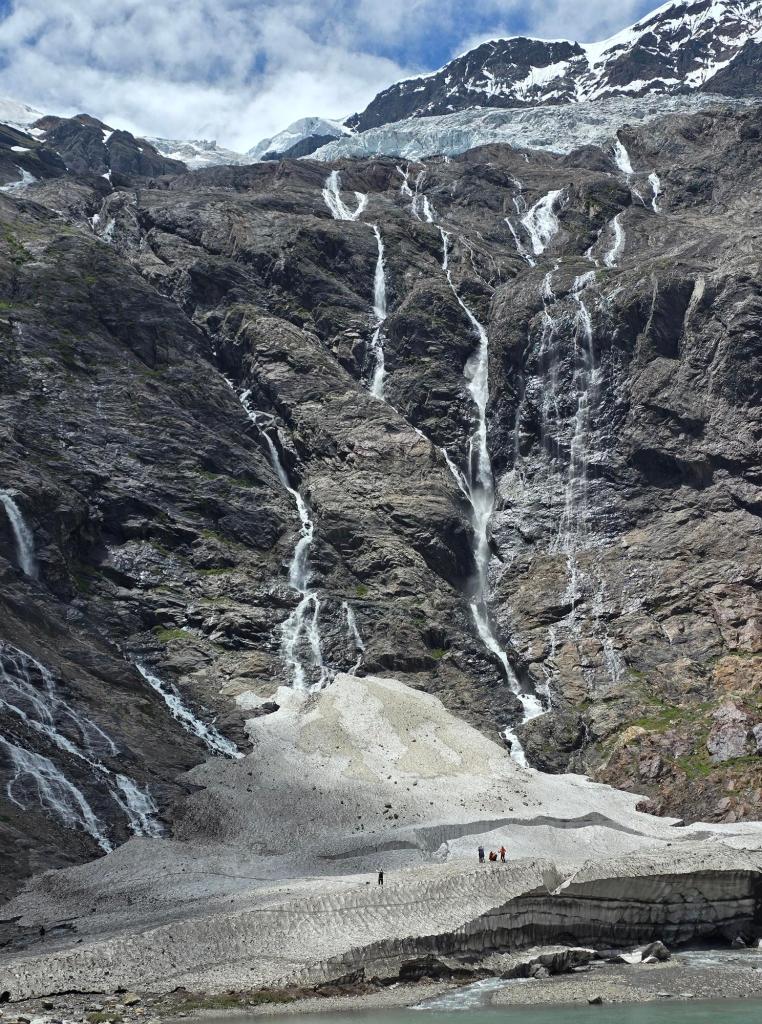
My first thought upon seeing the lake was that I wanted to jump in for a quick swim. Apparently that’s forbidden. The lake is considered sacred, and swimming is not allowed, so that idea was quickly abandoned.
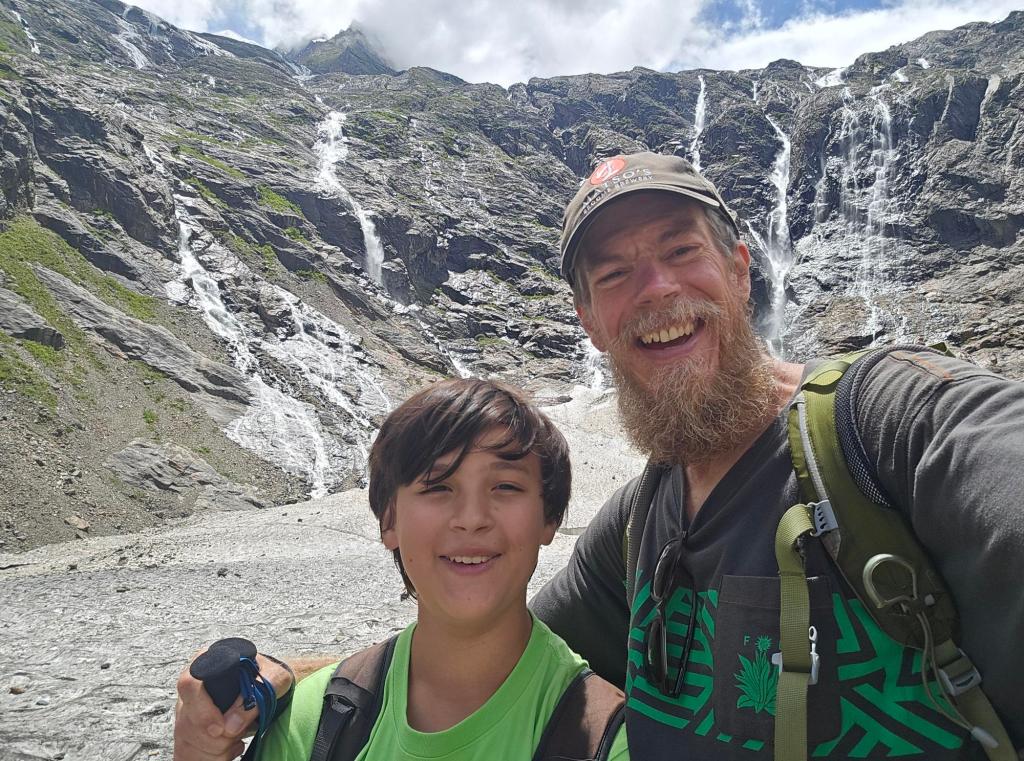
We spent nearly an hour wandering around the lake and even climbed out onto the largest accessible glacier nearby. The sound of water was everywhere—rushing down from the cliffs above, pouring out of the waterfalls beside us, and running beneath the glacier we were standing on before spilling into the lake.
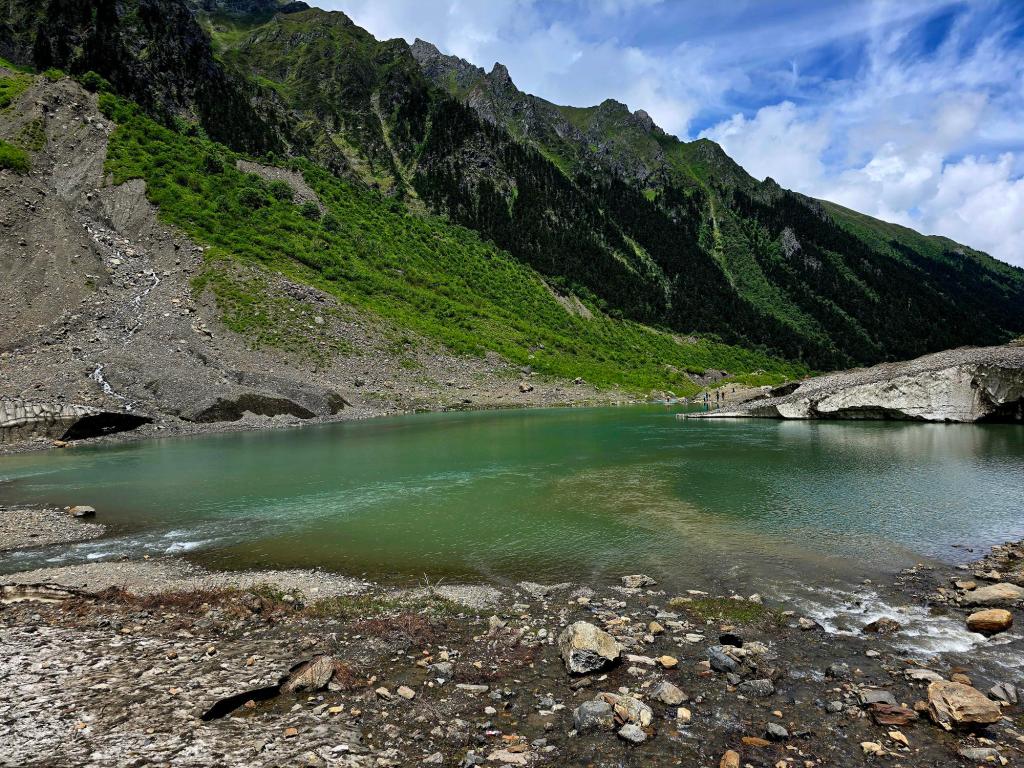
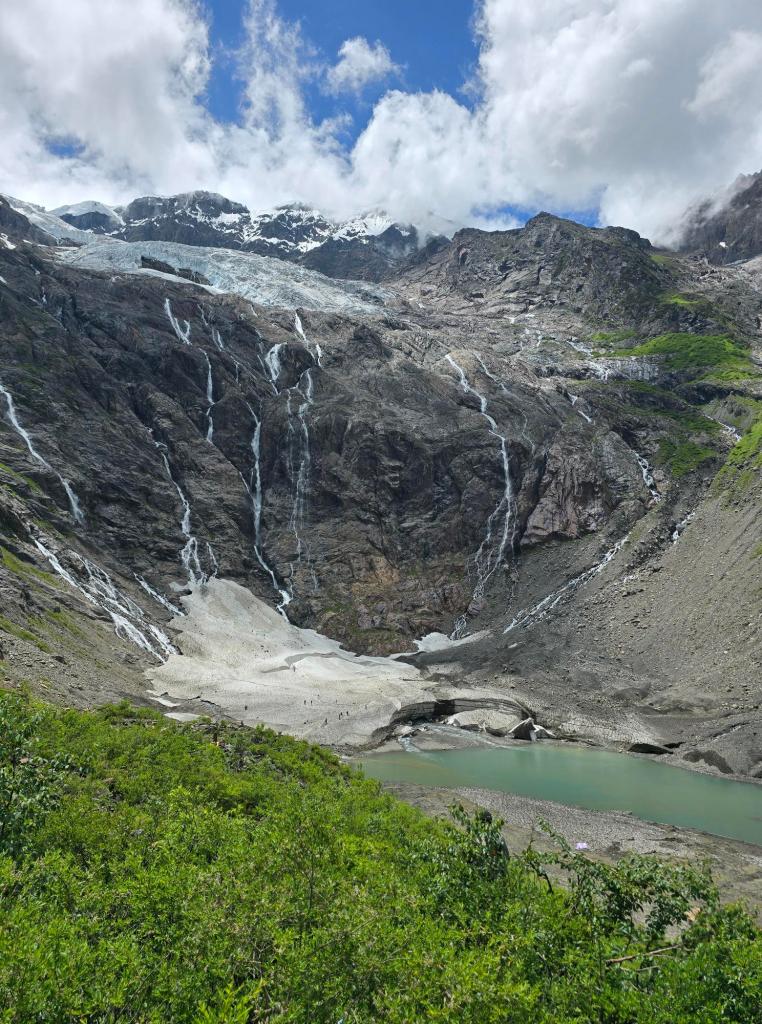
At the far end of the basin, the milky glacial water flowed out of the lake and formed the beginnings of a river that would eventually join the much larger Yubeng River far below.
Eventually we began the long hike back.
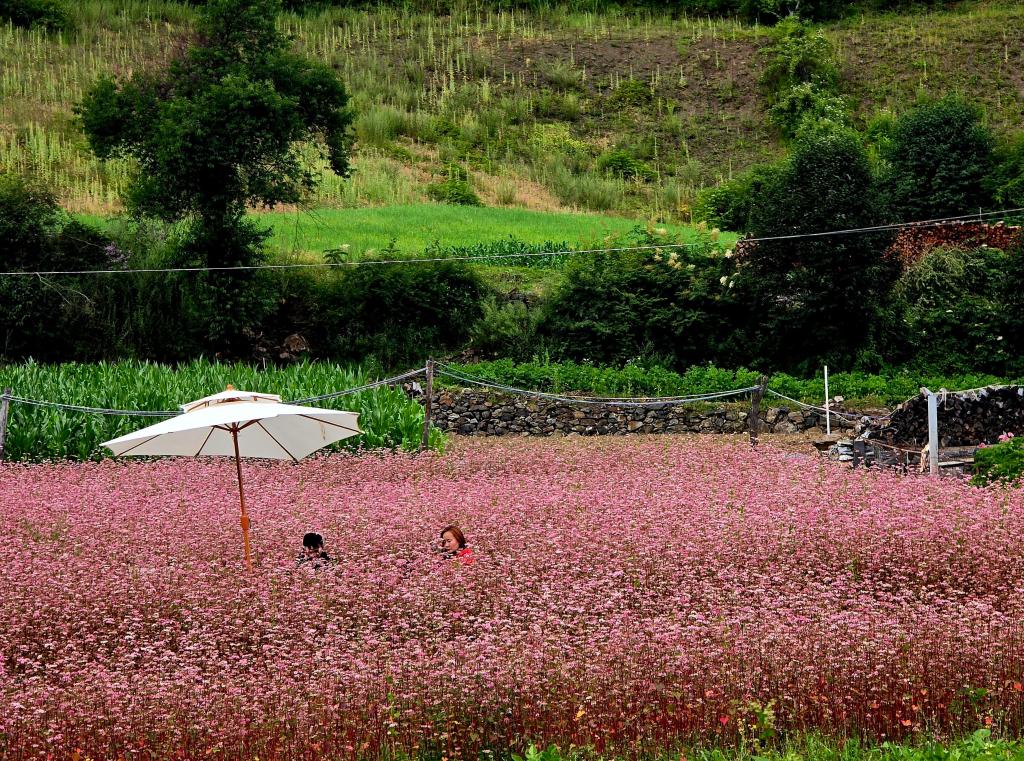
We stopped again at the small family restaurant to grab more drinks before continuing down the trail. While checking my OutdoorActive app, I noticed another trail branching off near the first shelter we had passed earlier. According to the map, it created a longer loop back toward the village.
When we reached the junction, there was a sign saying the trail was closed due to bear activity.
Another Chinese hiker and his girlfriend were standing there debating whether or not to go that way anyway. I’ve never heard of a group of hikers being attacked by a bear, so we decided to join them and just make plenty of noise along the way.
The detour added another three or four miles to the route, but that stretch of forest turned out to be one of the most beautiful parts of the entire hike.
Gavin, however, was unimpressed with my decision to ignore the warning sign. He seemed fairly certain we were either going to jail for breaking the rules—or more likely going to be eaten by bears and disappear forever because we ignored the sign.
He didn’t enjoy that section nearly as much as the rest of us.
His mood improved considerably when the trail finally rejoined the main route back toward the village and talk shifted to what we were going to order for dinner.
We rolled back into Upper Yubeng nearly ten hours after we had started, absolutely starving.
After ordering a full table of dishes, we pulled a couple of liter bottles of Coca-Cola out of the refrigerator. They were ice cold—something that is surprisingly rare in China.
It may have been the best Coke I’ve ever had in my life.
We sat around the table for a long time after dinner talking about the incredible string of experiences we had already packed into the past few days in the mountains.
Not long after that we were searching for soft beds and pillows again.
The plan for the next morning was to get up early, hike down to Lower Yubeng, drop our bags at a guesthouse I had booked for the following night, and then head back out once again—this time toward the Sacred Waterfalls.
 Wise Clan in Stanland
Leave a comment