🥾 Yubeng Village Hike (Ninong Canyon Route)
Yubeng Village | Meili Snow Mountain
Yunnan, China
🧭 Trail Stats
Route: Ninong Canyon
📏 Distance: 10.4 miles
⬆️ Ascent: 4,429 ft
⬇️ Descent: 203 ft
⏱ Total Time: 6.5 hours
⏳ Moving Time: 4 hrs 45 min
⚖️ Difficulty: Hard (Length + sustained elevation gain)
📅 Date Hiked: July 24, 2025
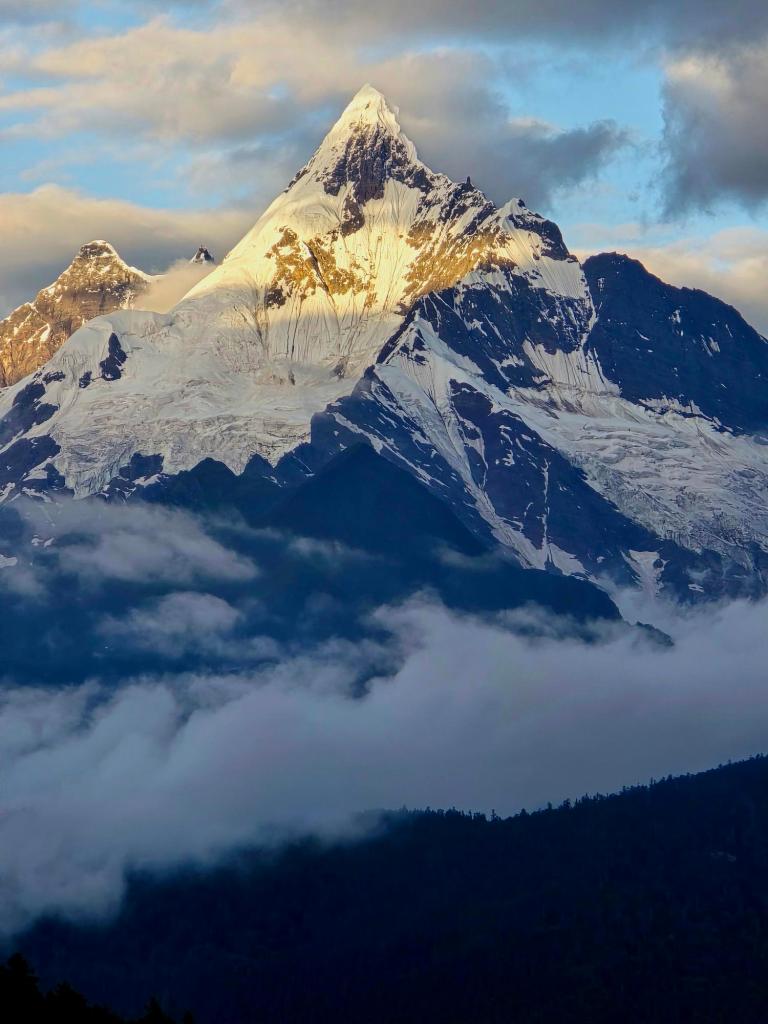
We rolled into Deqin late the evening before, stiff from hiking out of Tiger Leaping Gorge and a long stretch of mountain road. Our hotel sat a couple hundred meters uphill from Feilai Temple, the most famous overlook for sunrise on Meili Xue Shan. Dinner that night came courtesy of a Sichuan restaurant that was clearly trying to close when we walked in. After a brief sigh from the server, the owner waved us inside anyway and cooked up a phenomenal meal. After a full day on the trail and seven and a half hours in the car, it tasted like grace.
I had been here once before — back in 2006. That trip felt far more remote. The road from Shangri-La took at least six hours then, and we spent three days waiting for the clouds to lift. They never did. Thick grey ceilings swallowed the mountains whole. I left without ever seeing the peaks of Meili. I did, however, leave with a healthy respect for Tibetan Mastiffs after a tense encounter on a mountainside above town.
This time the road was faster — about four and a half hours including a stop above the great bend of the Jinsha River. The drive itself is spectacular: terraced hillsides, villages clinging to impossible slopes, and distant summits rising layer upon layer. The entire region lies within the dramatic terrain where some of Asia’s great rivers carve deep gorges between towering ranges.
I woke at 5:00 a.m. and let Gavin sleep. Coffee in hand, I walked down to the enormous viewing platform at Feilaisi. Even before the first hint of light, I could tell this morning would be different.
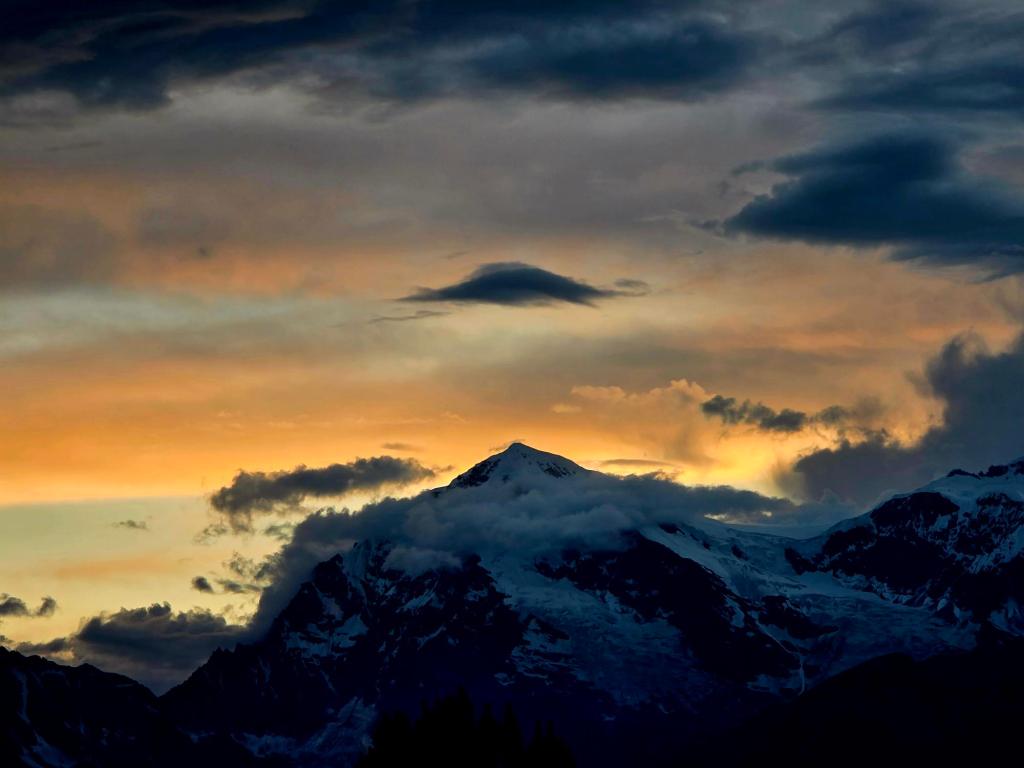
In 2006, maybe thirty travelers lingered in town. This time, well over a thousand people packed the observation deck. I briefly wished for solitude — but as the sky shifted from cobalt to amber and the clouds thinned, a shared anticipation began to hum through the crowd.
When the first rays struck Kawagebo — the highest and most sacred summit in the Meili range — the entire ridge ignited in gold. The phenomenon locals call Rizhao Jinshan — “Sunlight on the Golden Mountain.” The crowd erupted. For a full half minute cheers echoed across the valley. It made my hair stand on end. I found myself grateful to share the moment with so many strangers who were just as blown away as I was.
Kawagebo rises to 6,740 meters and is revered in Tibetan Buddhism not simply as a mountain, but as a deity. Pilgrims have circled these slopes for centuries, and many locals believe the peak should never be climbed. In 1991, a joint expedition attempting to summit the mountain was struck by a massive avalanche that killed seventeen climbers. In the years that followed, official climbing attempts were halted, and Kawagebo remains unclimbed to this day — one of the highest untouched peaks on earth. Standing there watching it ignite in gold, it’s not hard to understand why.
Back at the hotel, I returned with bags of jiaozi for Gavin. The original plan had been to hike in via the classic Xidang route — climbing to the high pass before descending into Yubeng — and exit a few days later through Ninong Canyon. But when we arranged transport to the trailhead, about an hour’s drive away, we learned the Xidang route would be closed for restoration for the next year. The only way in or out was through the Ninong Canyon route.
So Ninong it would be.
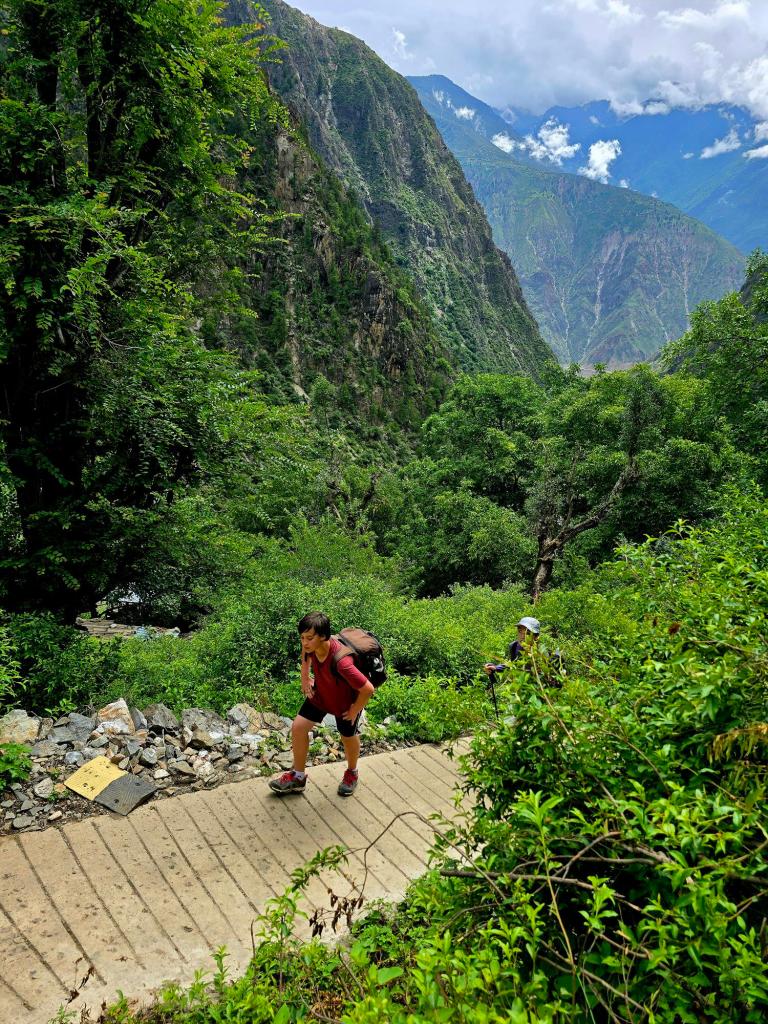
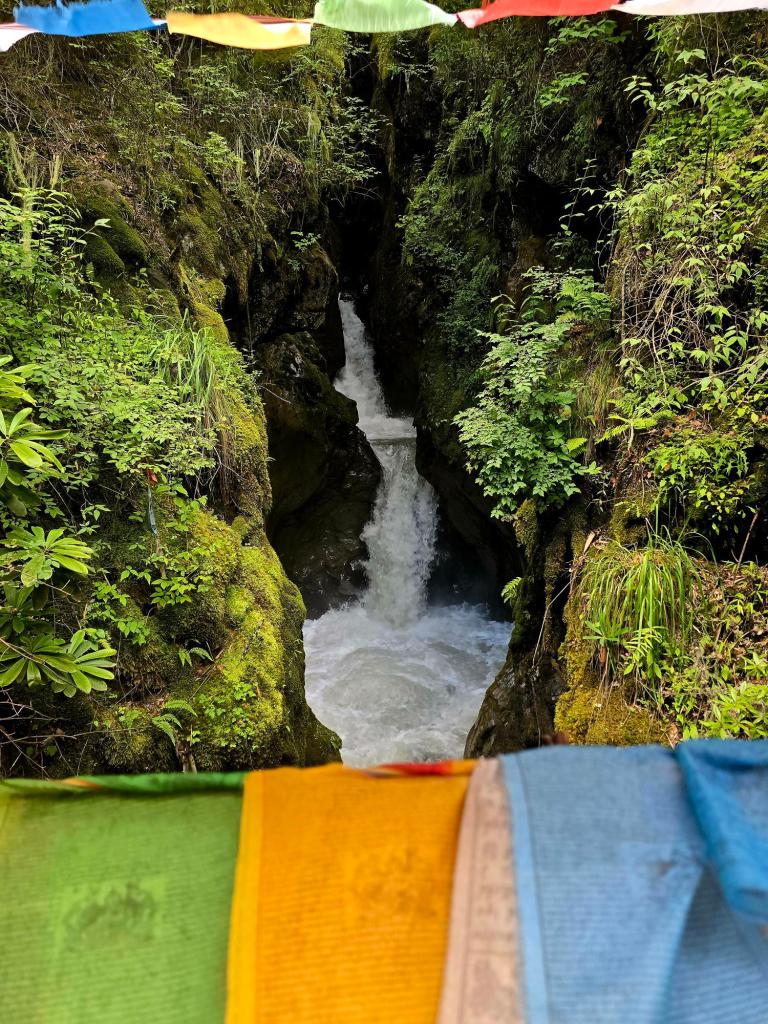
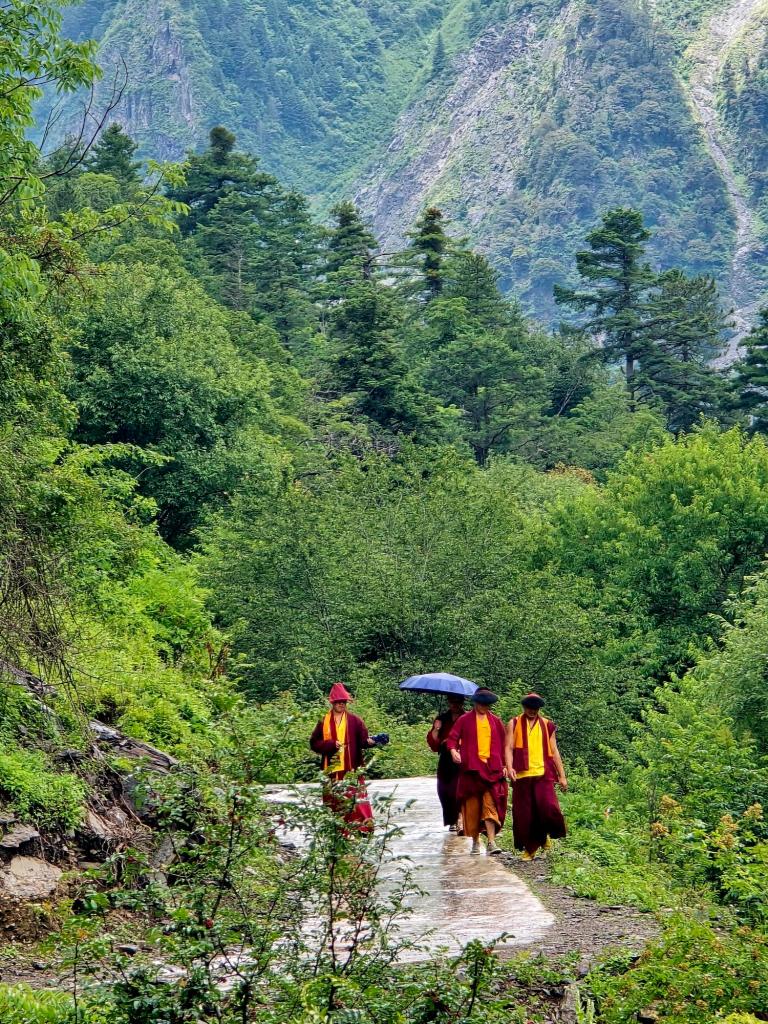

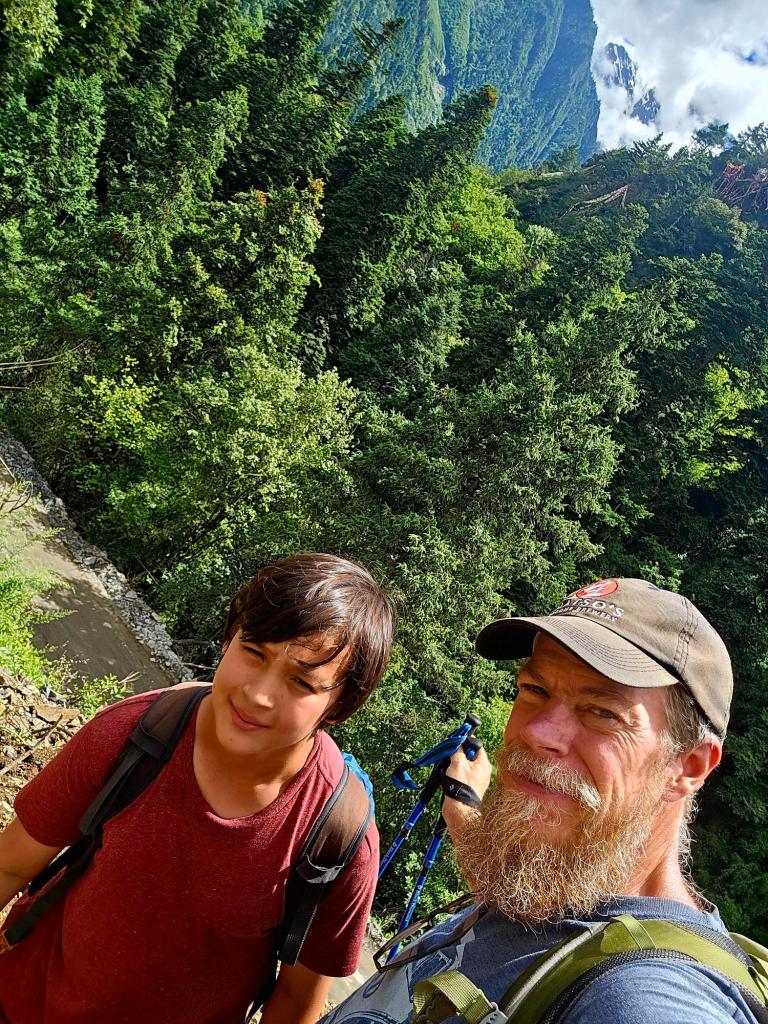
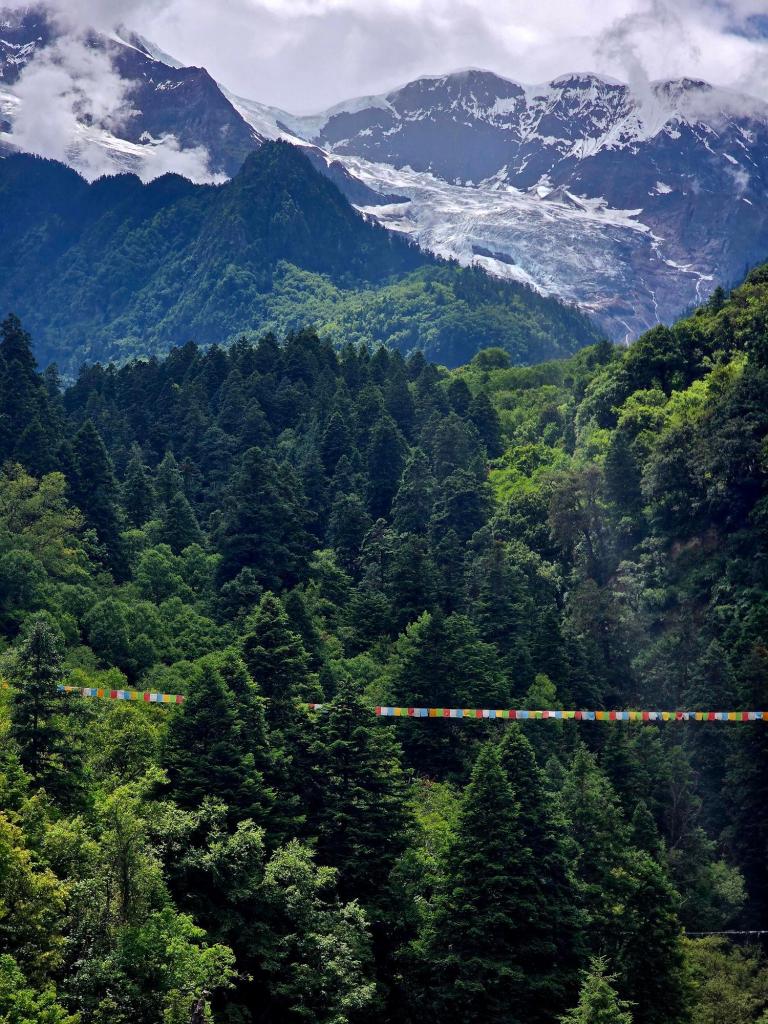
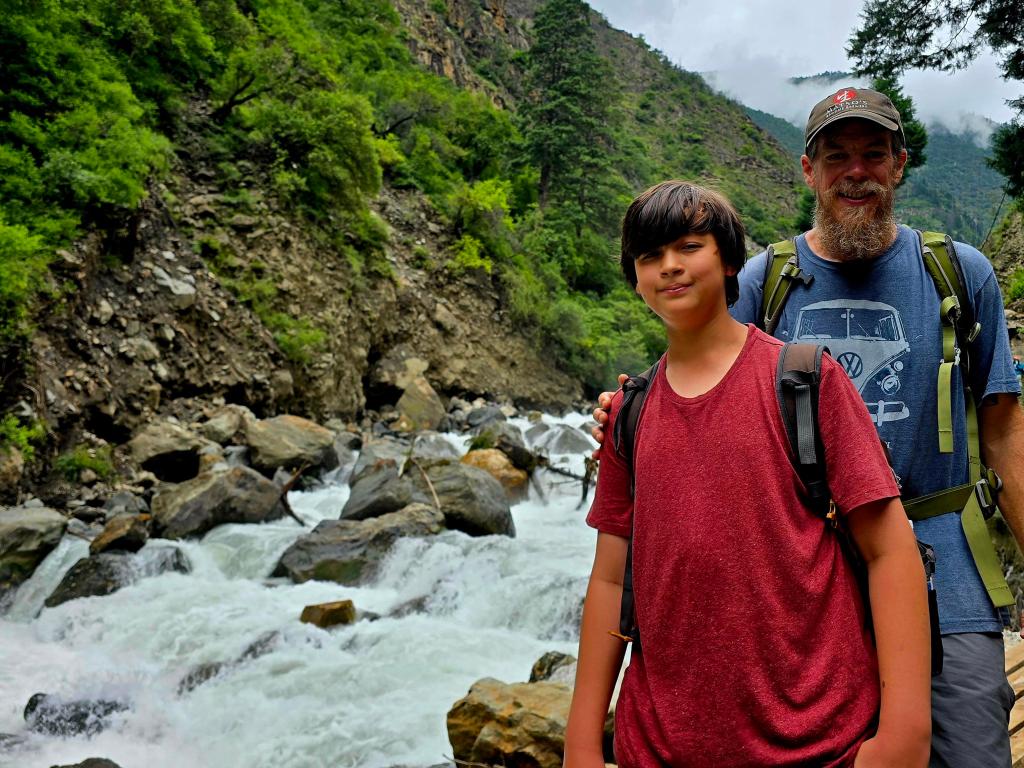
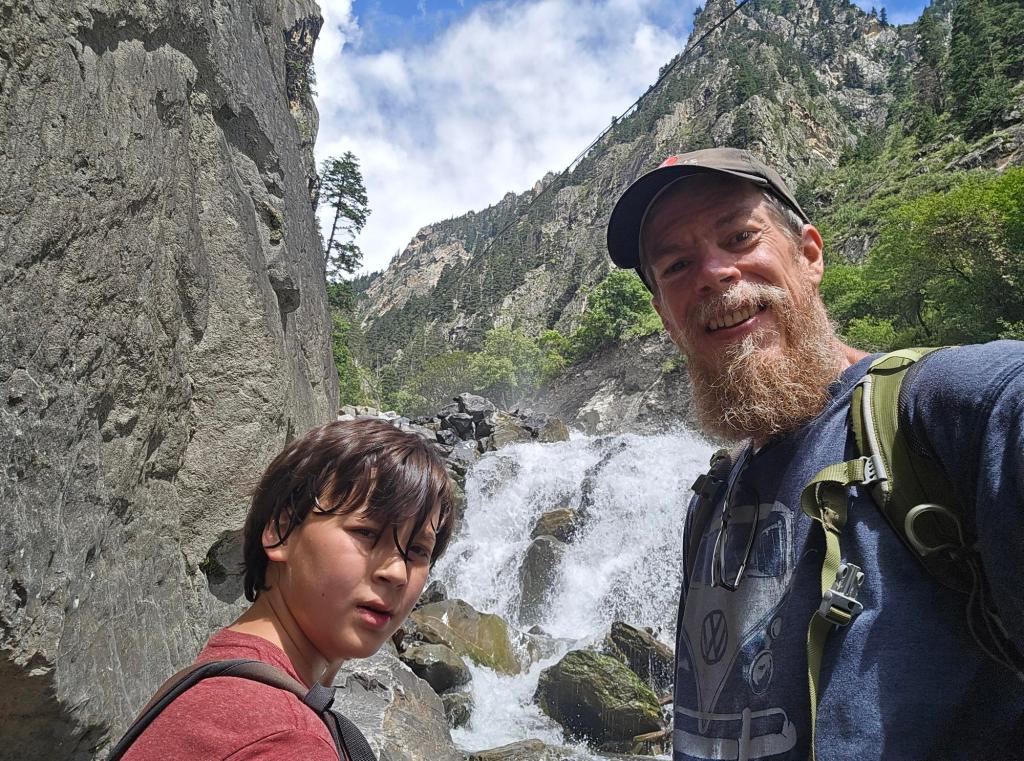
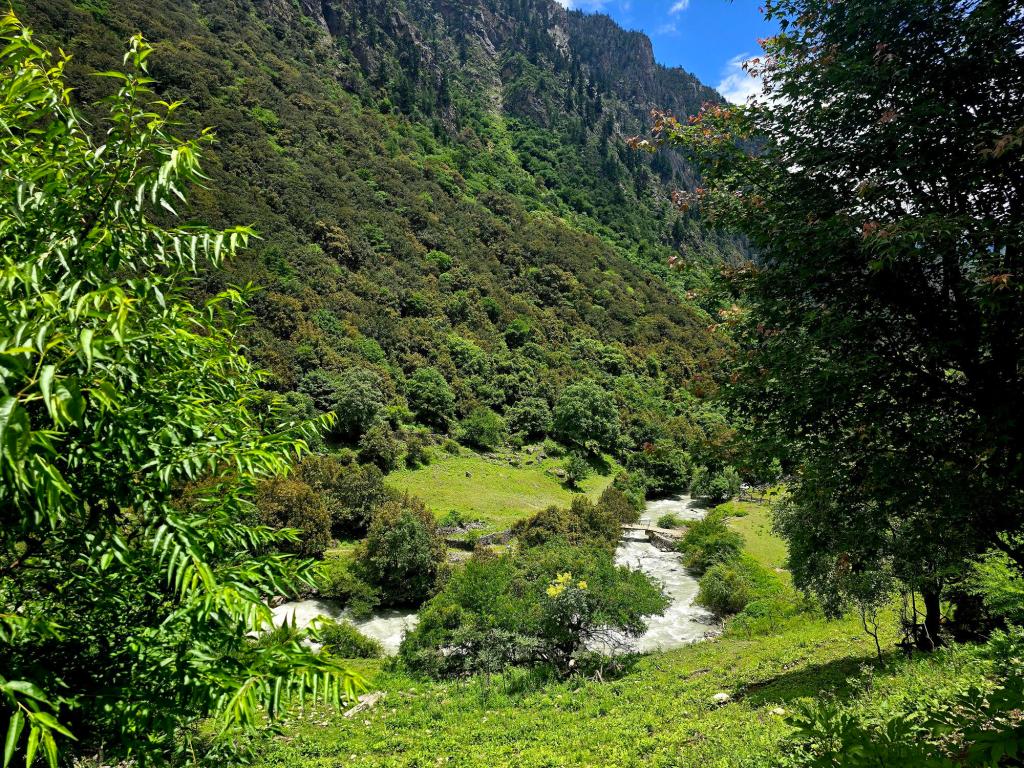
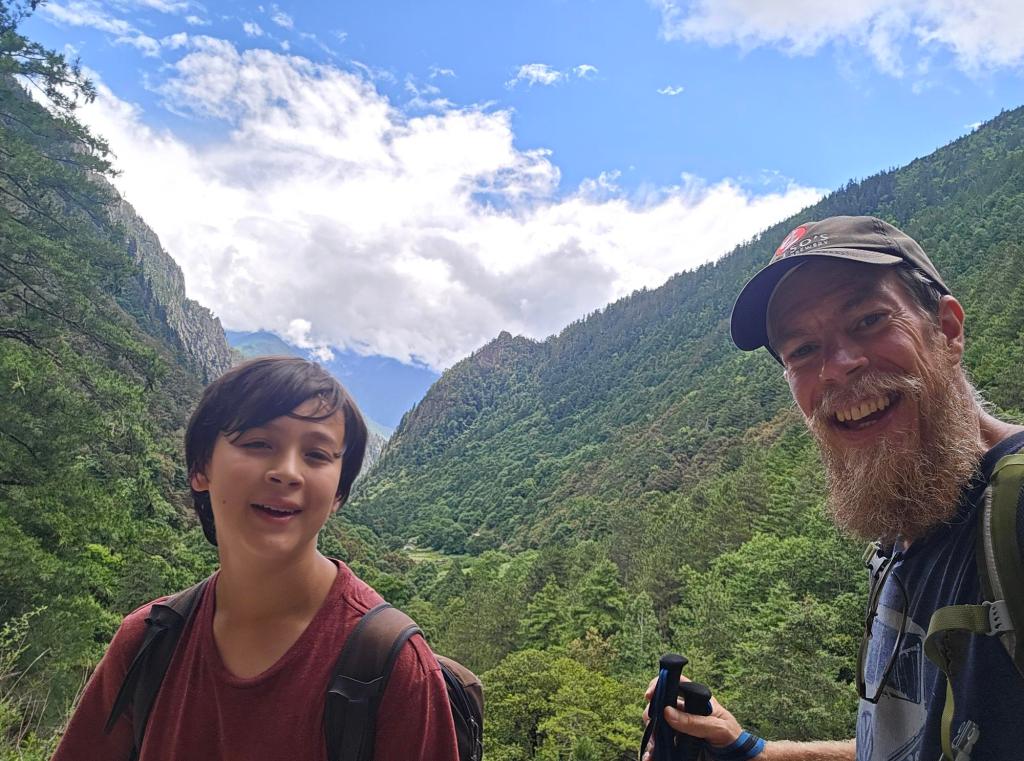
For a trail that climbs nearly 4,500 feet over ten miles, I was surprised by the number of hikers we shared it with — easily 150 people that day. The first few miles wind through a narrow canyon carved by the Yubeng River, the trail clinging to steep slopes high above the rushing water.
We paused briefly at the first tea house and then pushed on, leaving the main cluster of people behind. From mile three onward the trail carried the rhythm of modern Yubeng — motorbike taxis ferrying supplies and hikers in both directions. It wasn’t the solitary mountain pilgrimage I had imagined, but the canyon was still immense, the river still roaring below, and the climb still very real. After the second tea house the traffic thinned, and the forest began to close around us again. Snow-capped peaks started appearing through the trees — quiet reminders of where we were headed.
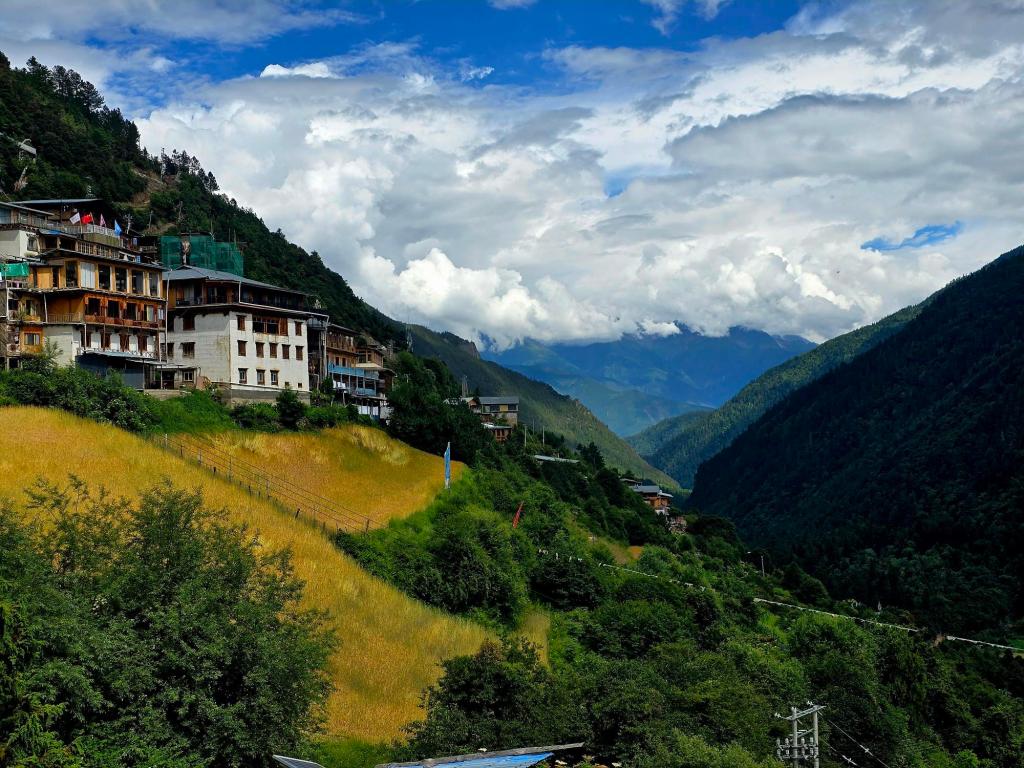
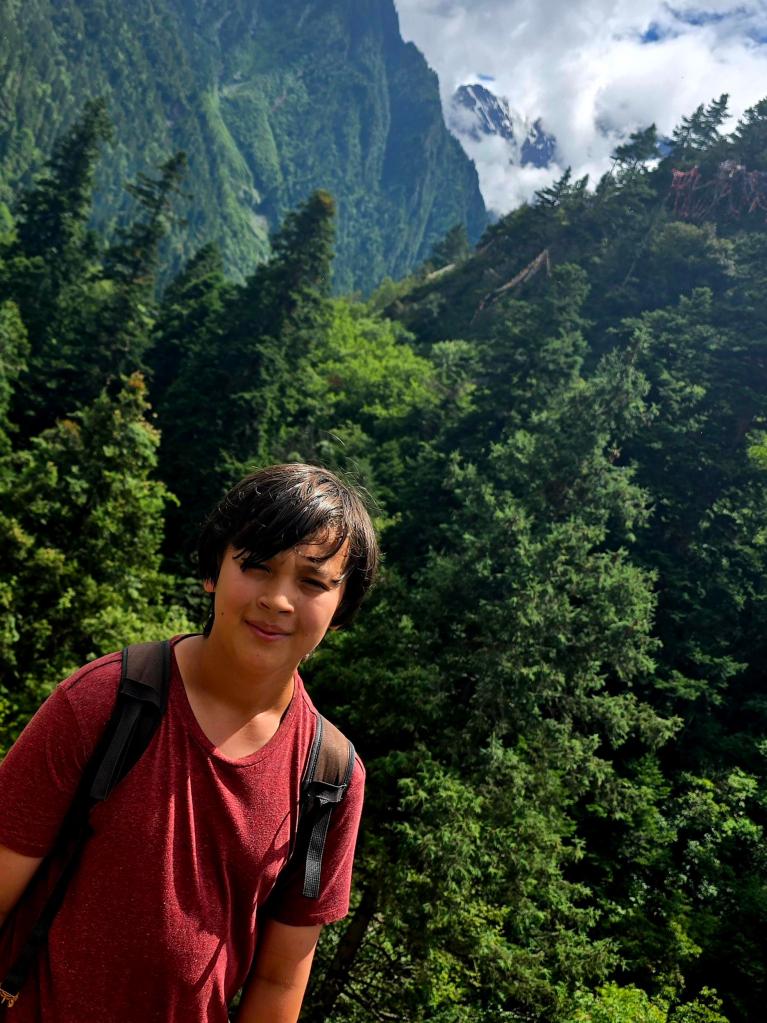
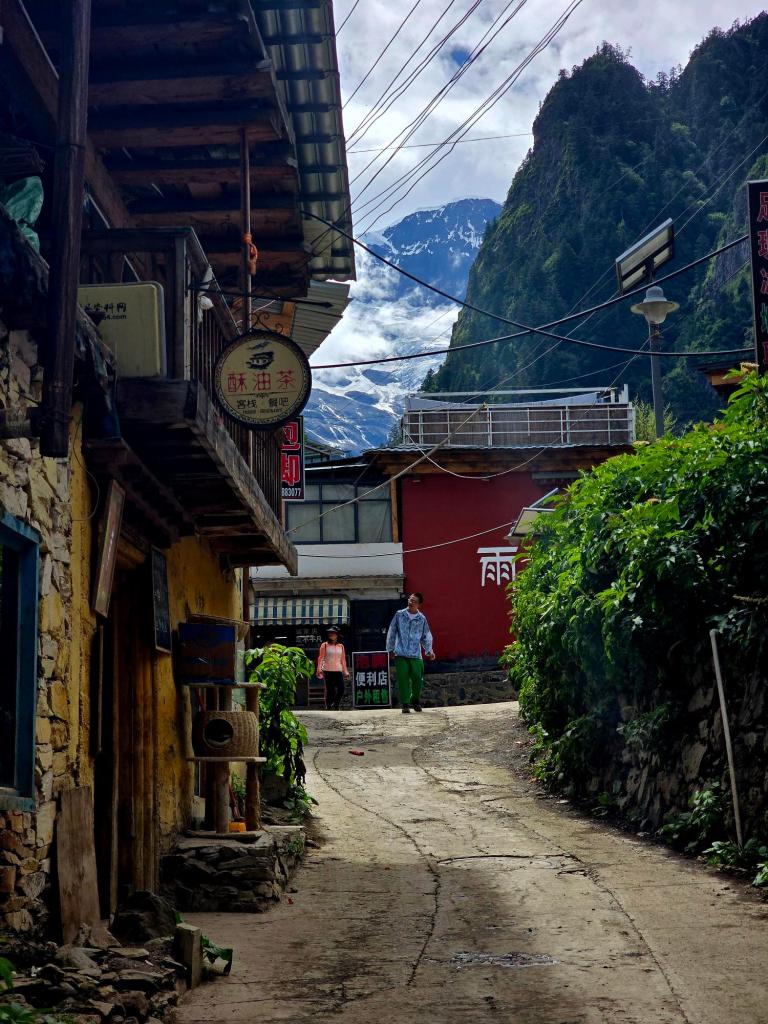
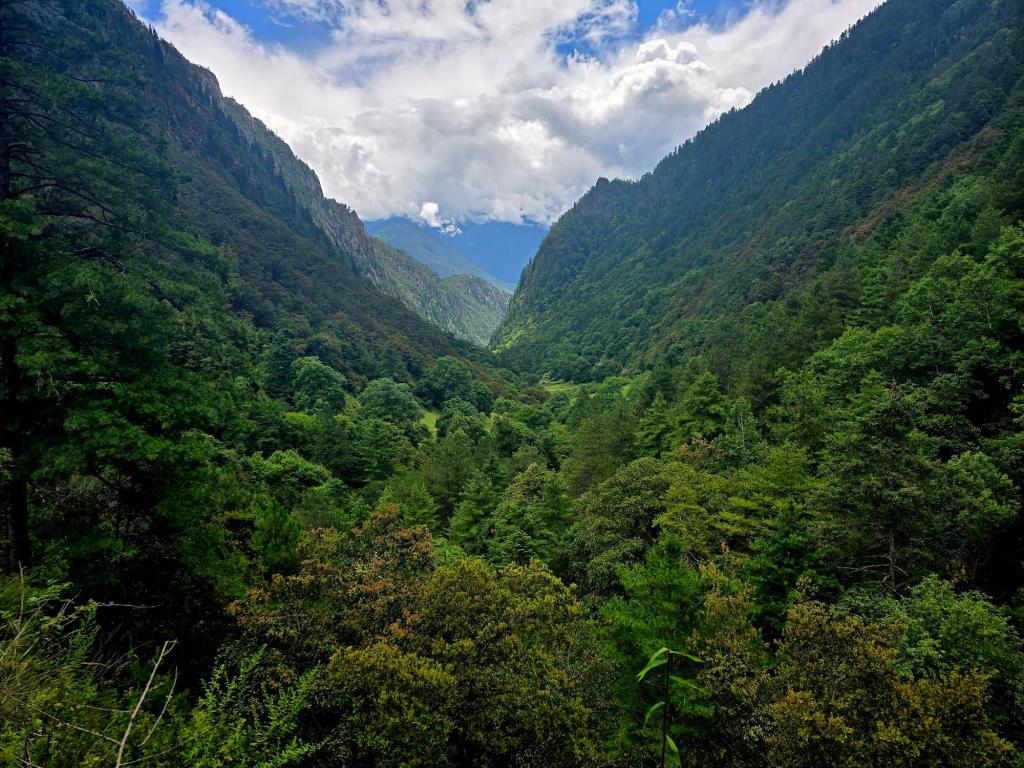
Gradually the canyon opened. The forest thickened. The air cooled. The sense of entering a hidden valley grew stronger with every step.
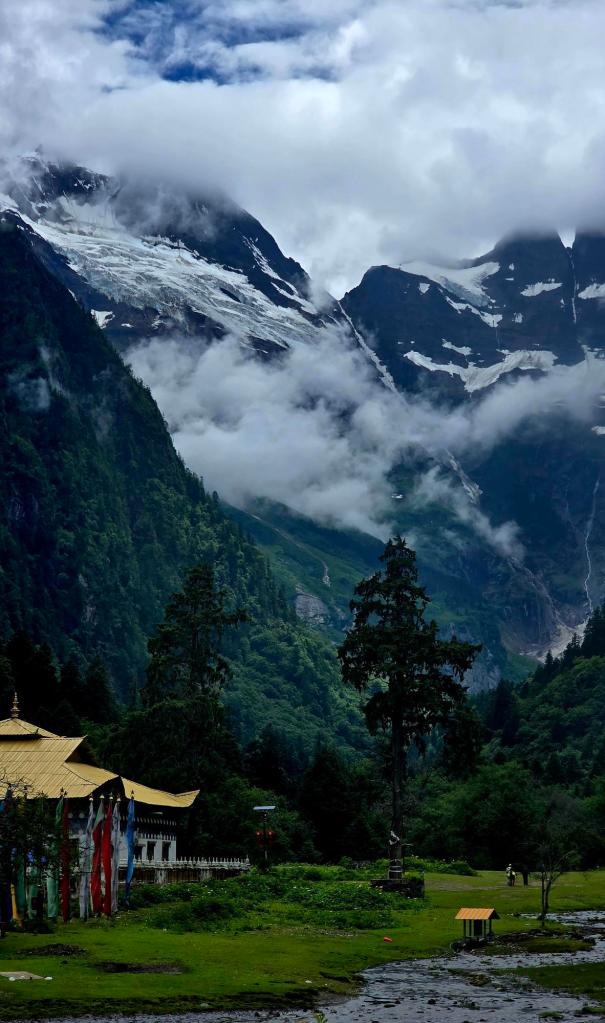
At around mile 9.5 we crested into Lower Yubeng.
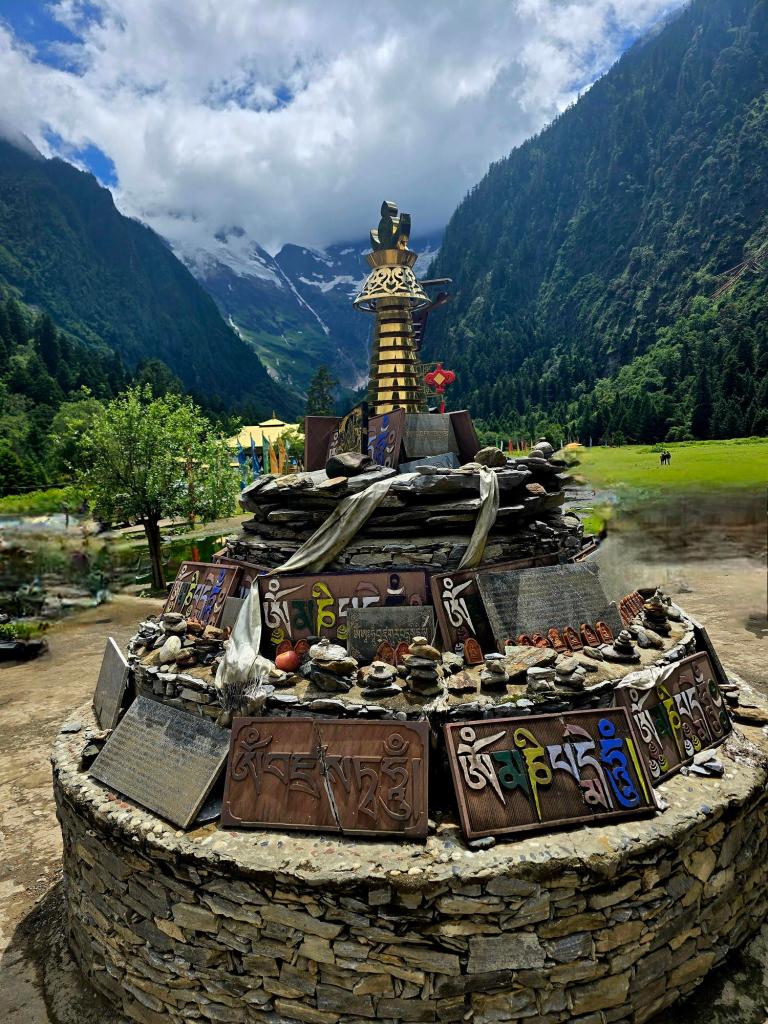
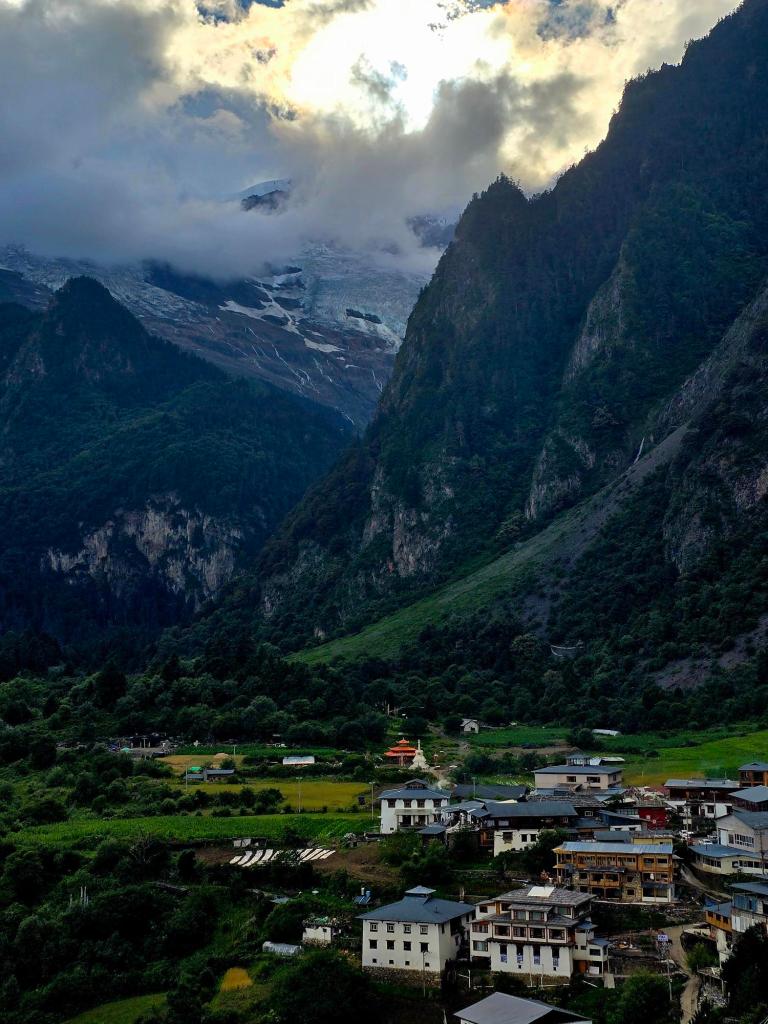
A broad alpine meadow spread before us — a temple, white stupas, and farmhouses scattered across the valley floor. Peaks rose sharply in every direction. It felt improbable. Earned.
Yubeng has long held a reputation as one of Yunnan’s most isolated villages — once accessible only by multi-day trek or horse caravan. Though motorbikes and improved trails have softened that isolation somewhat, arriving on foot still carries weight. You feel the geography that shaped it.
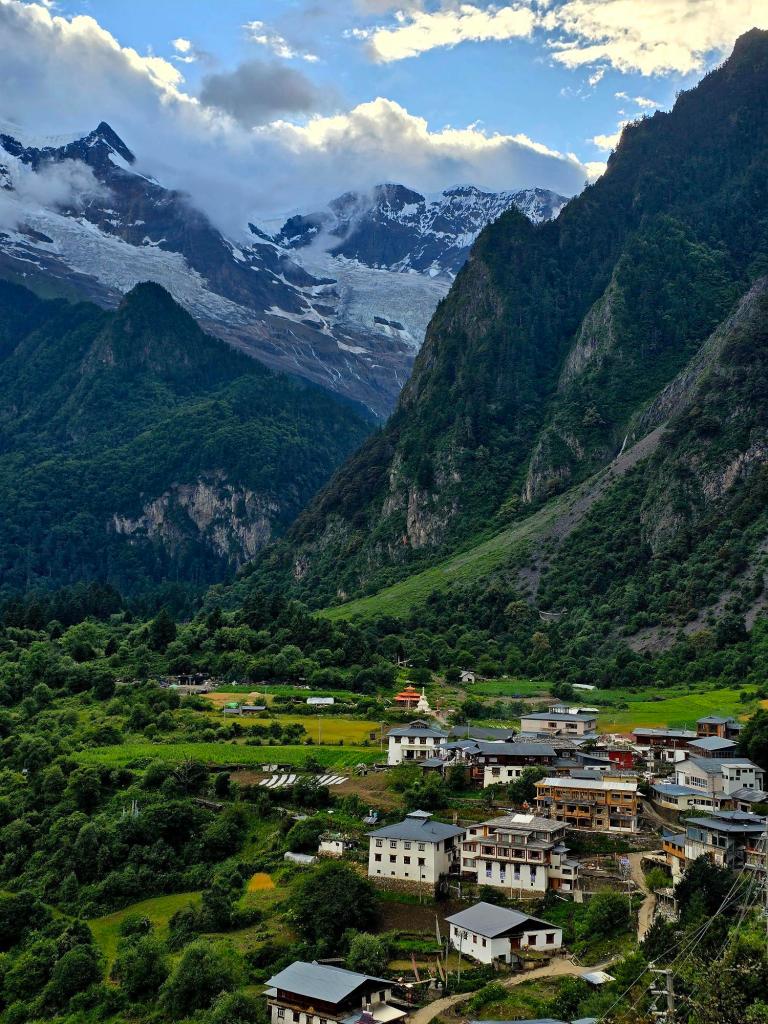
Looking up the hillside, we spotted Upper Yubeng — our home for the next couple nights — perched another mile above. Both of our legs immediately voted for staying in the lower village instead.
After cold drinks and a late lunch at a small restaurant, we rallied for the final climb. The last mile is steep but short. When we reached our guesthouse in Upper Yubeng, the view from the deck made the effort worthwhile — the entire valley stretched out below us, framed by forests and distant glaciers.
We ate dinner outside as the sun dropped behind the mountains, long shadows sliding slowly across the valley floor.
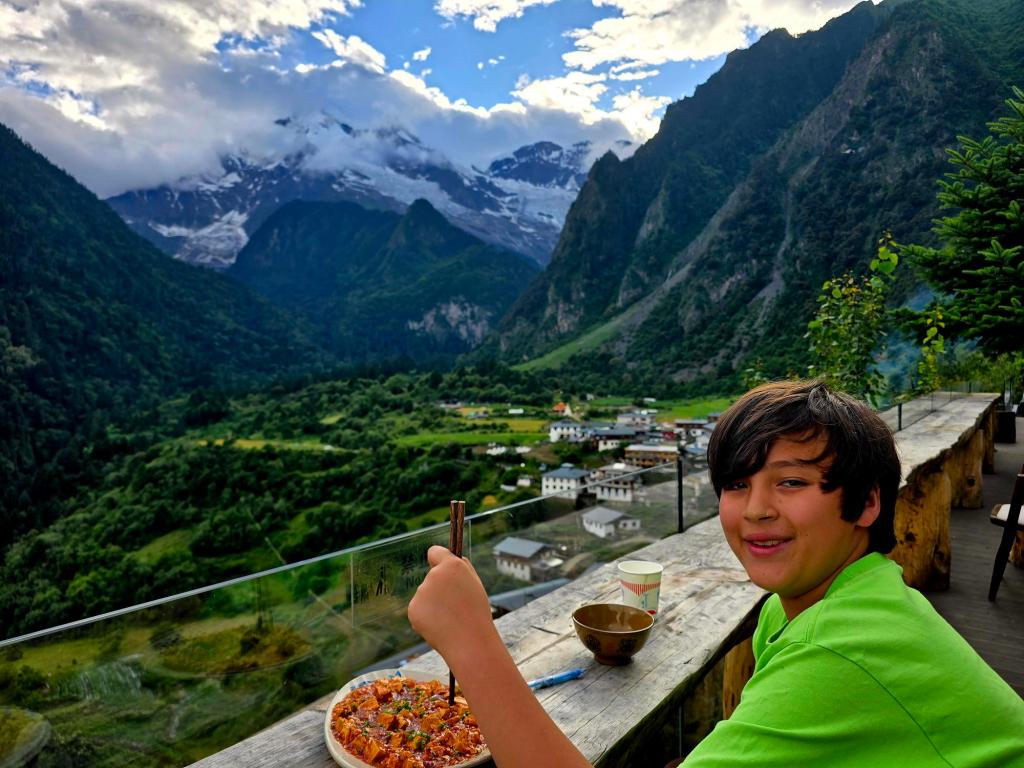
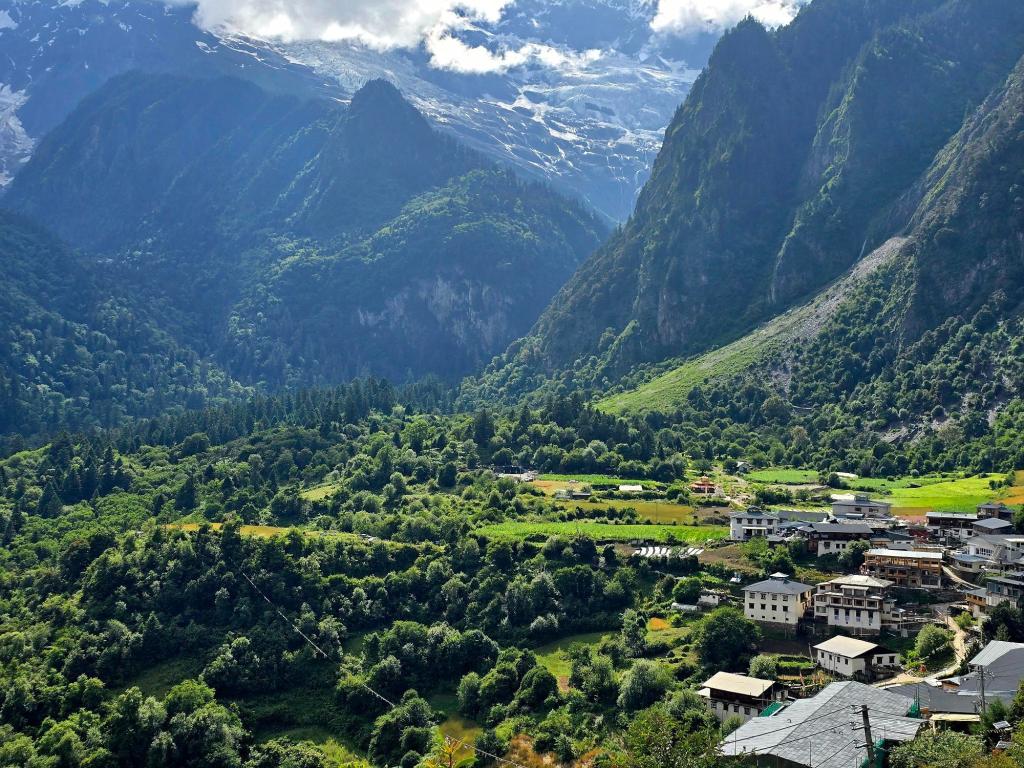
And maybe that was the best part of the whole trip.
Back in 2006, I was chasing mountains on my own, waiting for clouds to lift. This time I wasn’t revisiting an old adventure — I was stepping into something entirely new with my oldest son. Neither of us had ever walked into Yubeng before. Neither of us knew what the next bend would reveal.
There’s something powerful about sharing a first with your child — especially when that first requires sweat, uncertainty, and commitment. We weren’t retracing old footsteps.
We were carving our own.
Inside the shadow of Meili.
 Wise Clan in Stanland
Leave a comment