🧭 Tiger Leaping Gorge – At-a-Glance (2 Days)
📏 Total Distance: 14.0 miles
⬆️ Total Ascent: 3,317 ft
⬇️ Total Descent: 2,543 ft
⏱ Total Time on Trail: 10 hours 47 minutes
🥾 Total Moving Time: 6 hours
📅 Dates Hiked: July 22–23, 2025
⚖️ Difficulty Breakdown:
🟠 Day 1 – Moderate (steep climbing & exposure)
🟢 Day 2 – Easy (more gradual terrain & descent)
The first time I hiked Tiger Leaping Gorge was in 2006, on my first trip to Yunnan. I returned a couple more times over the years, but my last pass through was sometime before my oldest son Gavin was born. Last summer, nearly two decades after that first walk into the gorge, he and I came back together.
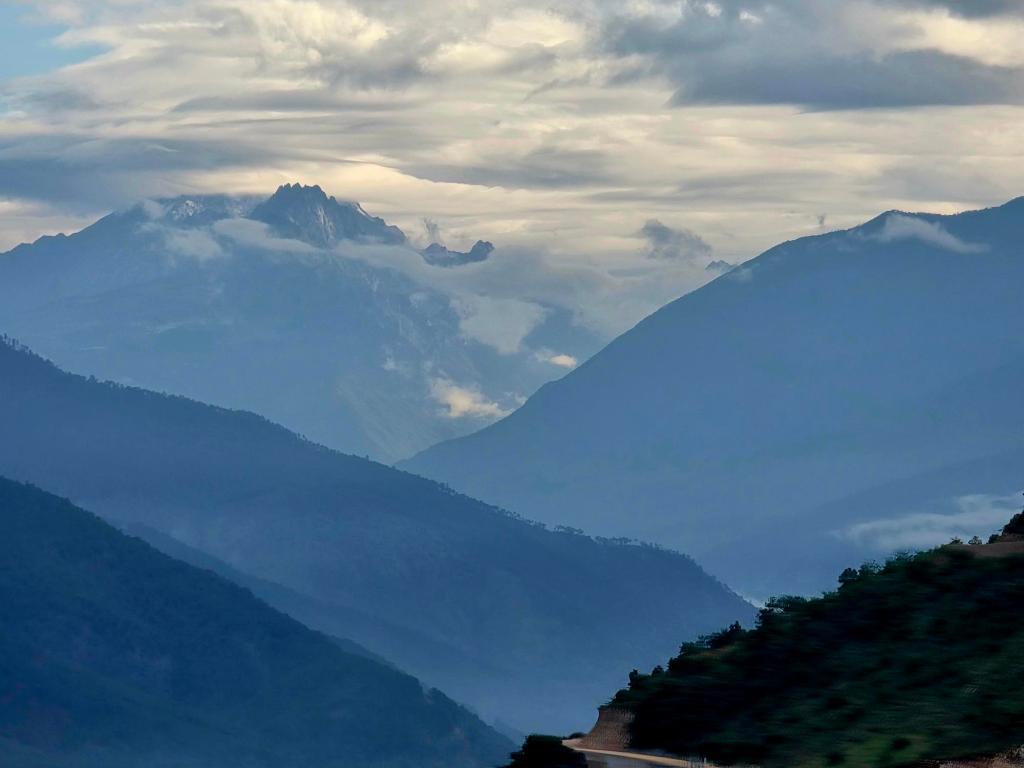
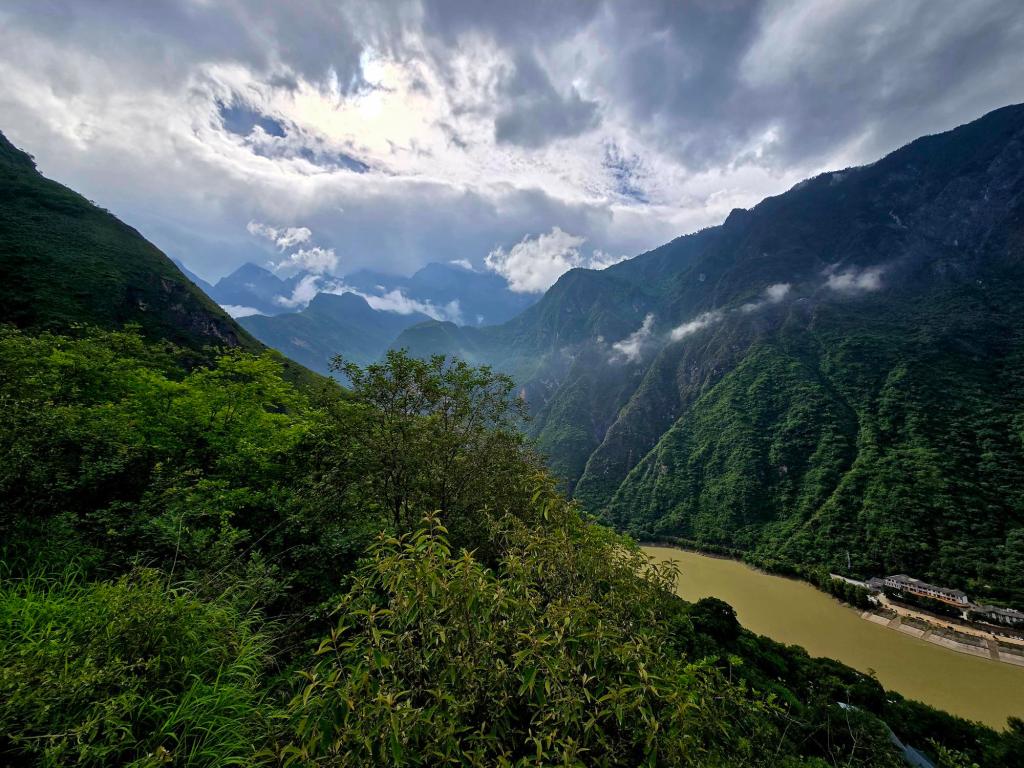
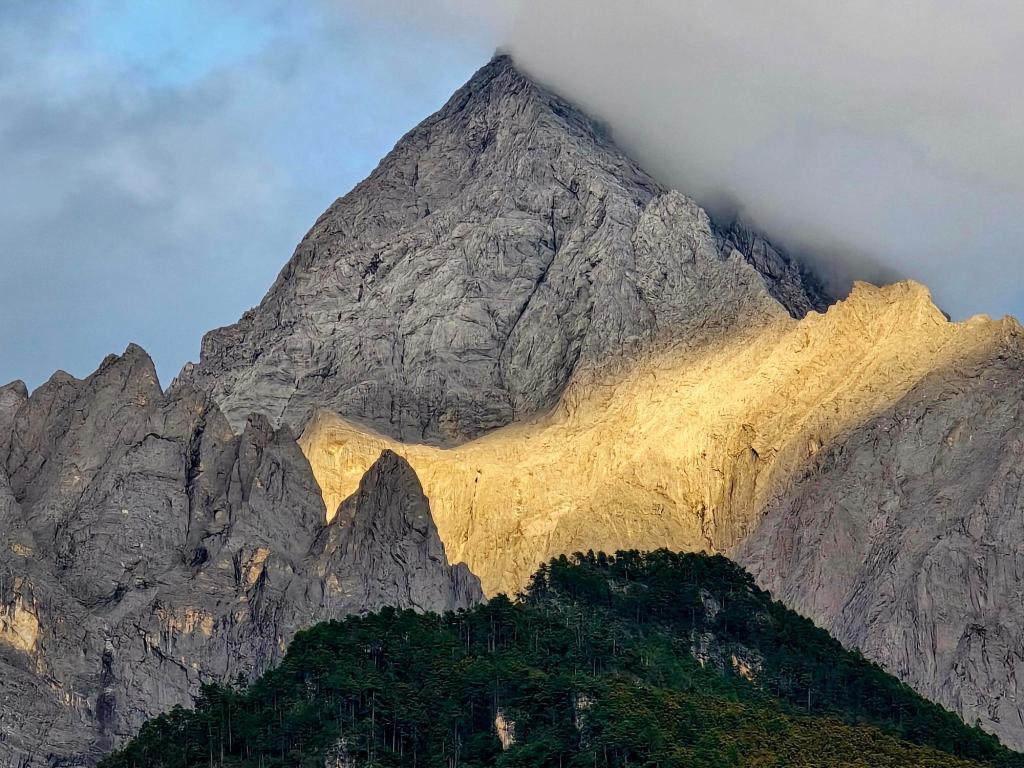
Tiger Leaping Gorge slices between Jade Dragon Snow Mountain and Haba Snow Mountain, where the Jinsha River — the upper reaches of the Yangtze — forces its way through one of the deepest river canyons in the world. At its most dramatic, nearly 3,800 meters of vertical relief separate river from summit. Even knowing that statistic, it still feels impossible when you’re standing on the edge.
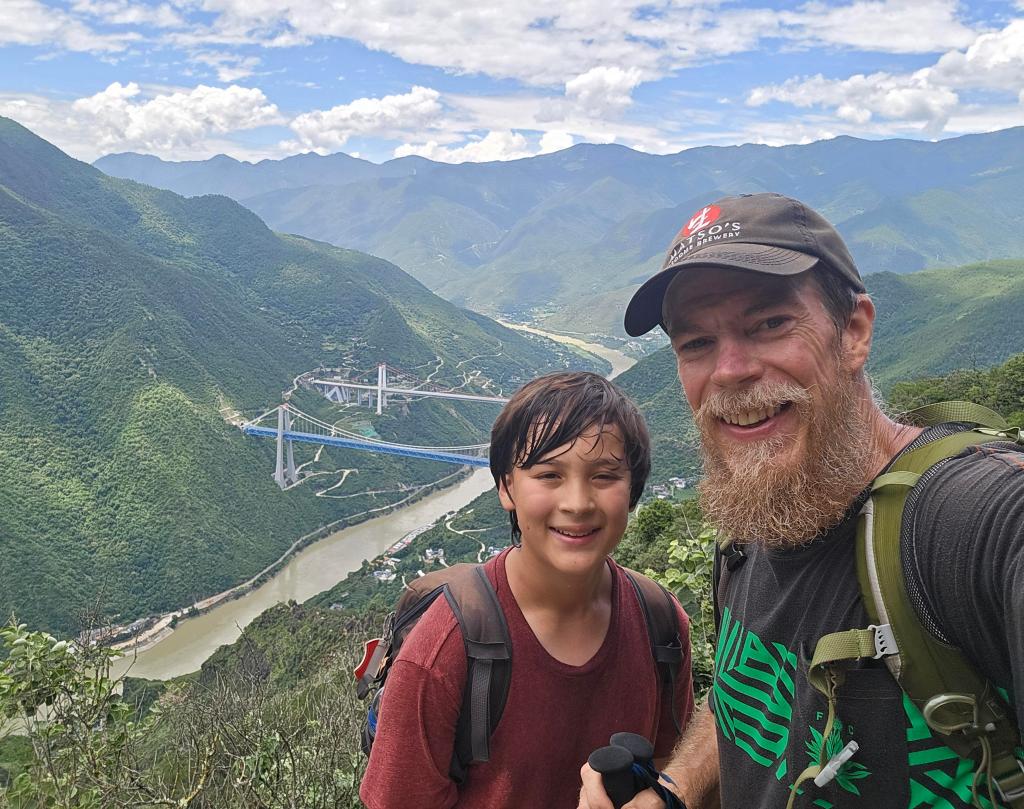
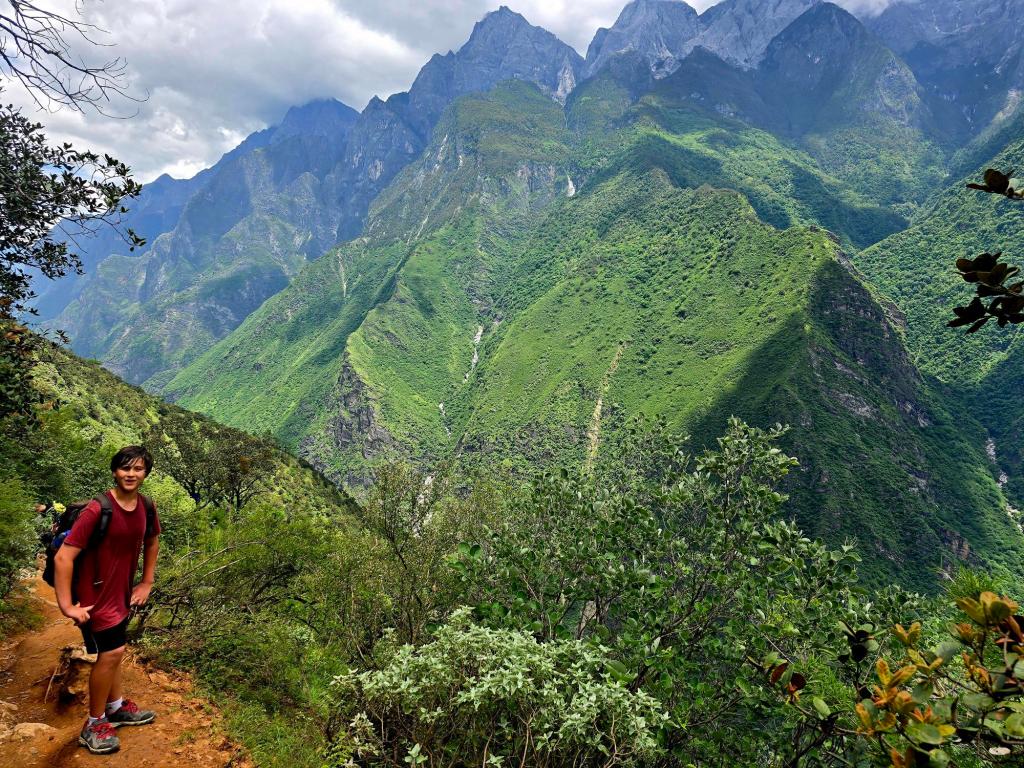
A lot had changed.
The old entrance shack is gone now, along with some of the early characters who gave the gorge its personality. I remembered Margo — one of those larger-than-life expats who seemed as much a fixture of the trail as the 28 Bends themselves. Time moves on, even in places that feel eternal. I had read years back that Margo herself had gotten turned around in the high country near Meli and passed away in the mountains she loved. That memory lingered as Gavin and I stepped off the bus just beyond the new gate.
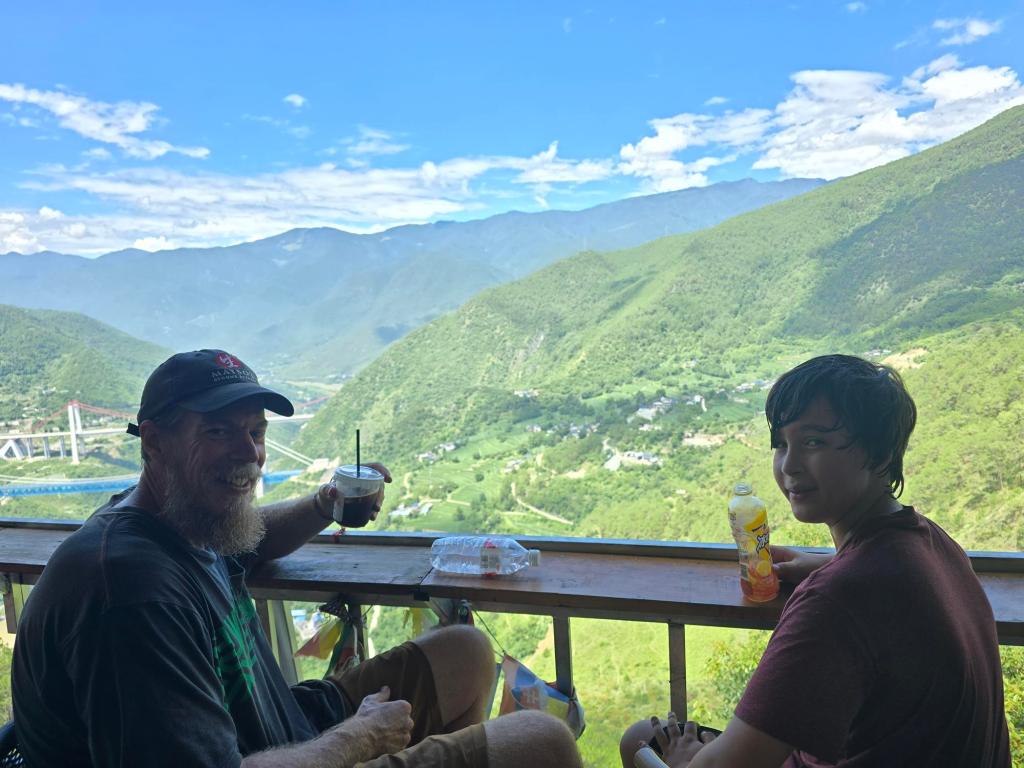
Instead of immediately hitting dirt trail, we climbed a paved access road toward a cluster of new guesthouses marking the official Upper Trail start. After lunch and snack resupply, we began in earnest. Gavin practiced his Mandarin with a group of local teenagers hiking with a guide. We all paused together at a small pop-up café at the top of the first sustained climb.
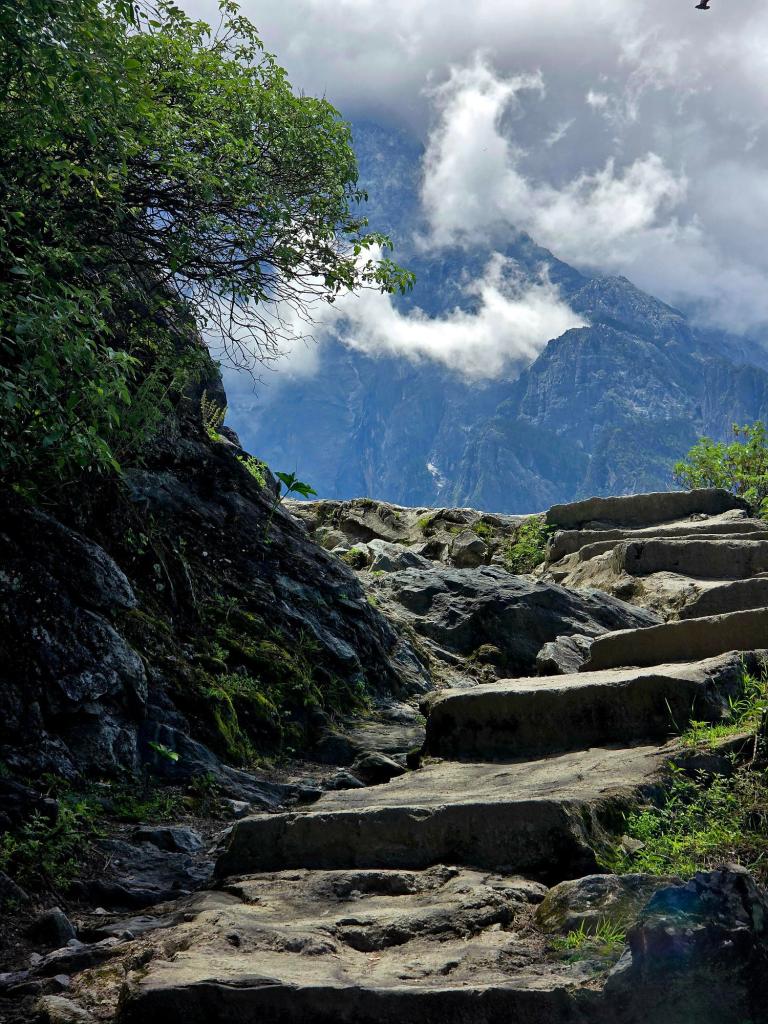
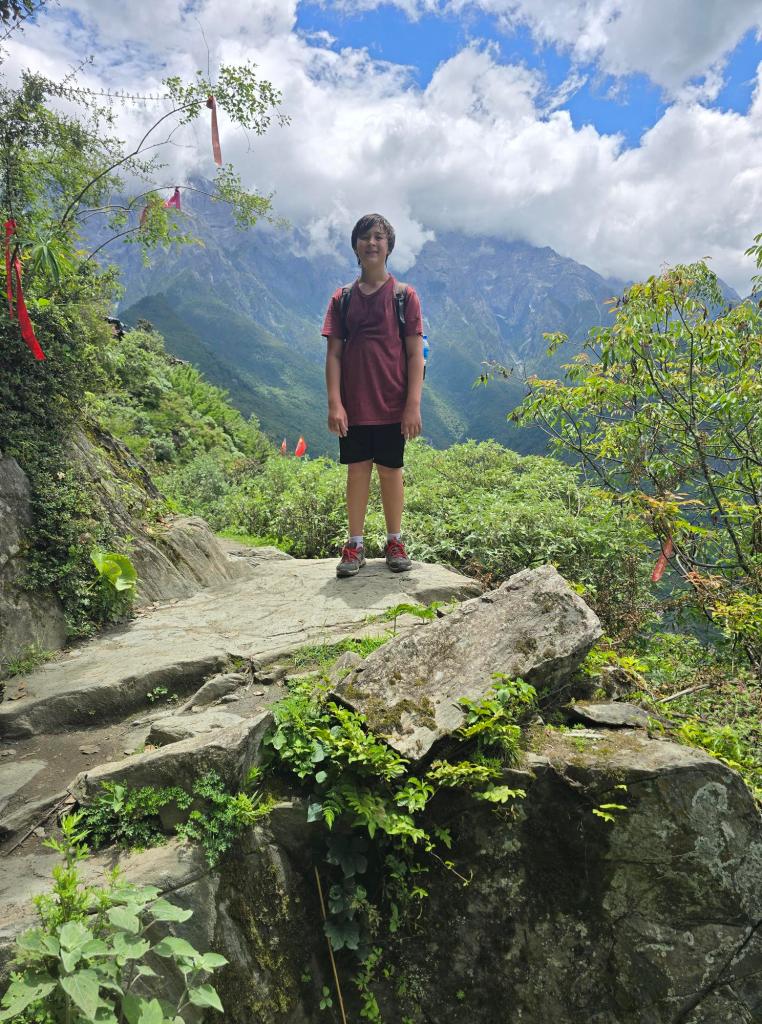
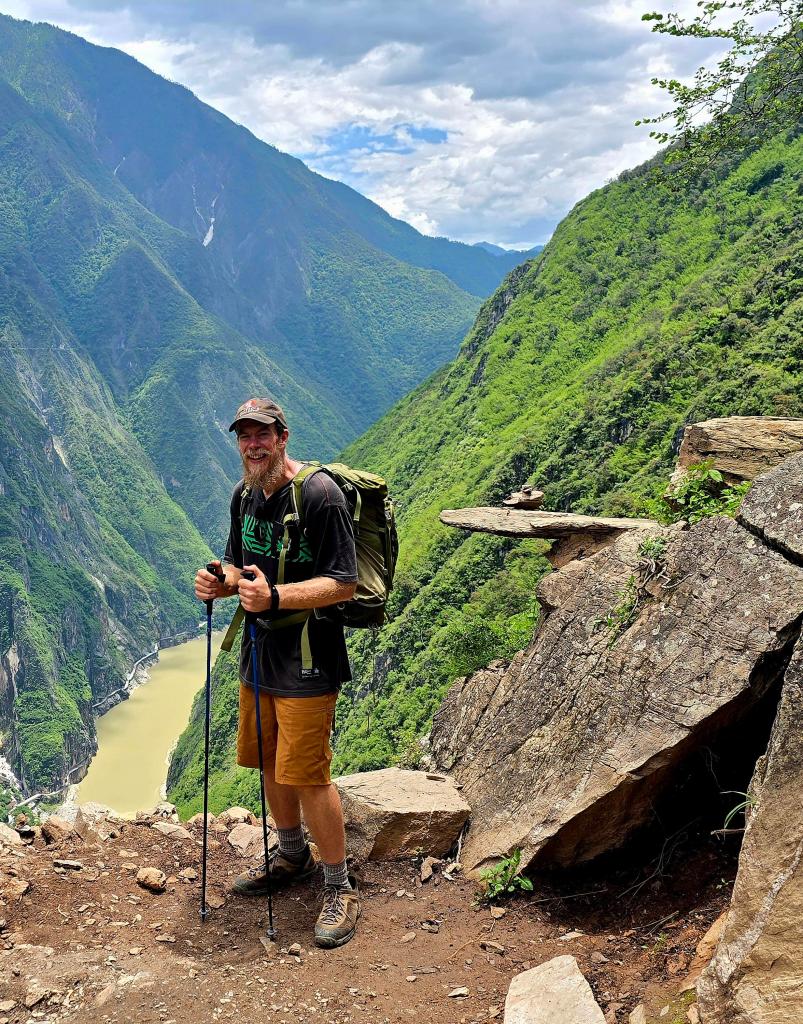
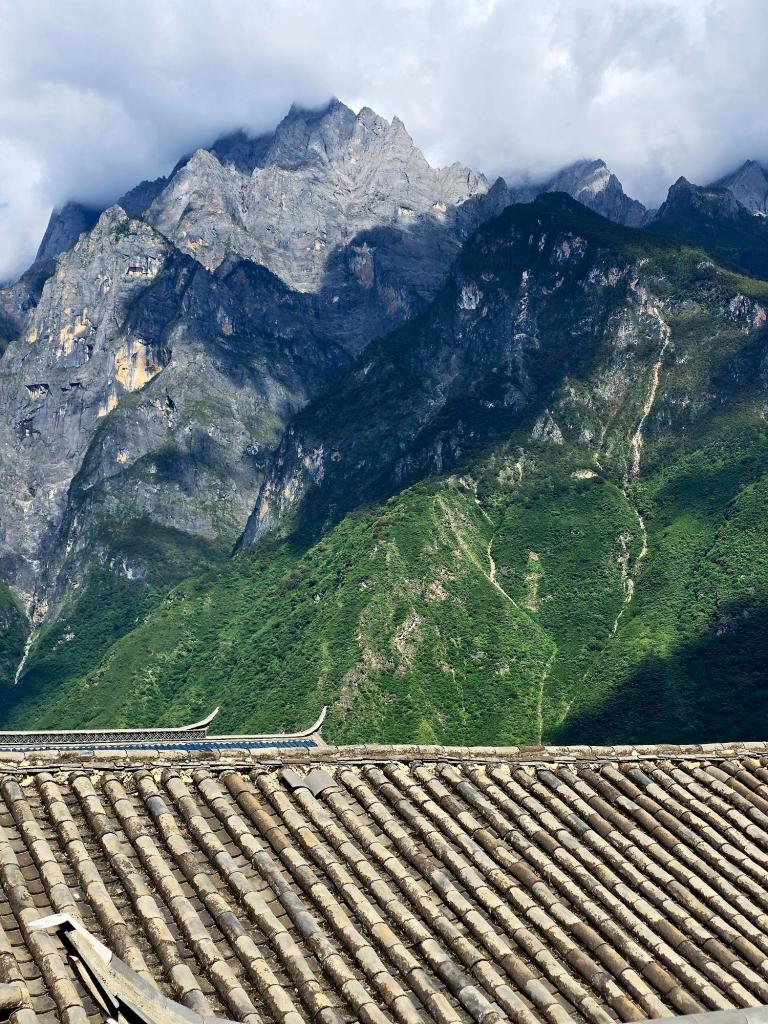
From there, the gorge begins to show its teeth.
The famous “28 Bends” switchback sharply up the mountainside. As we gained elevation, the Jinsha churned far below, carving relentlessly deeper. Across the abyss, the backside of Jade Dragon Snow Mountain rose in a wall of stone and forest at it’s lower reaches. The scale is dizzying — not scenic in a gentle way, but overwhelming.
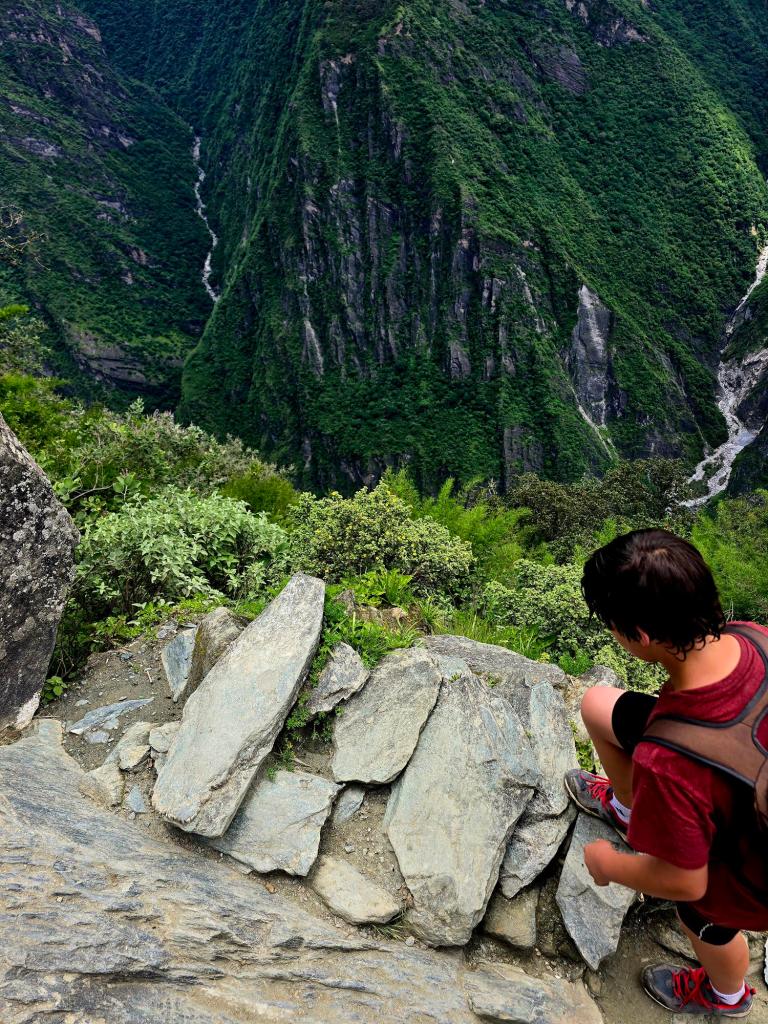
The Upper Trail has always felt like a balcony carved into a vertical world, and that hasn’t changed. What has changed is everything around it.
One of the more surprising differences was the total absence of the wild cannabis plants that used to line large stretches of trail — 12–15 foot giants crowned with heavy tops. Years ago, locals roasted the seeds as nutritional snacks. With the steady increase of foreign trekkers, that chapter appears to have closed. Eradicating it must have been no small undertaking.
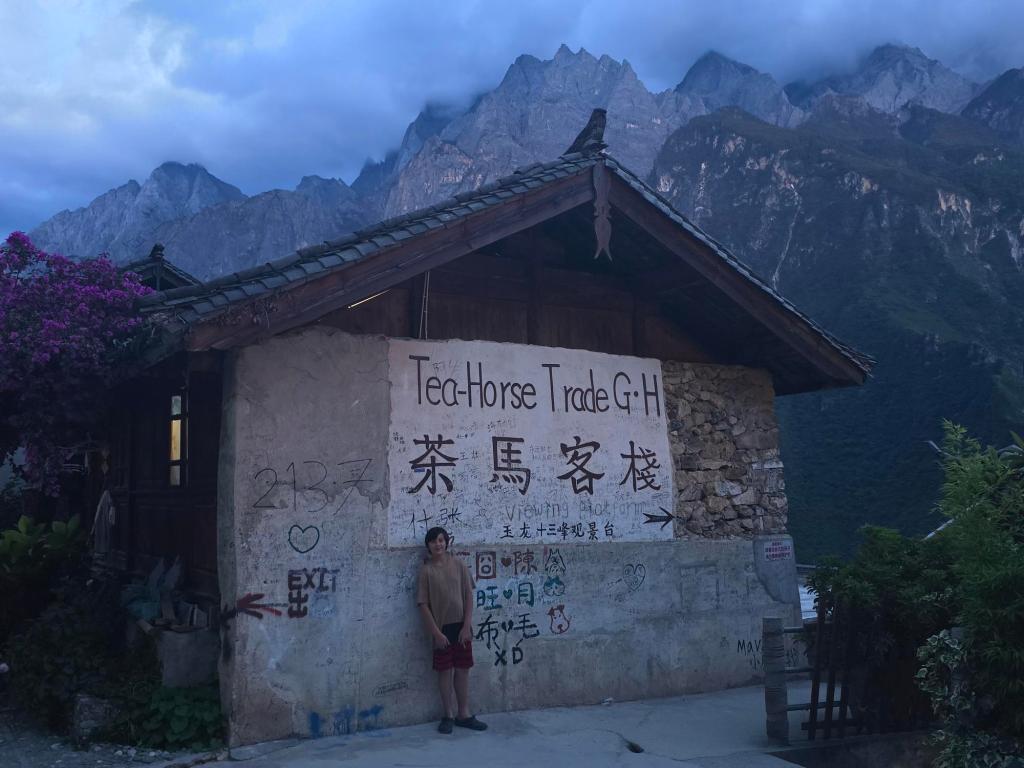
I had booked us a room at the Tea Horse Trade Guesthouse, historically the first guesthouse along the Upper Trail. The first glimpse stopped me in my tracks.
What used to be a modest family home and a small two-story annex has evolved into something far more substantial. A road now climbs from the lower highway, and an entire hillside village has grown above Middle Gorge. Multiple new guesthouses dot the slope, including a large four-story structure just before the Tea Horse itself.
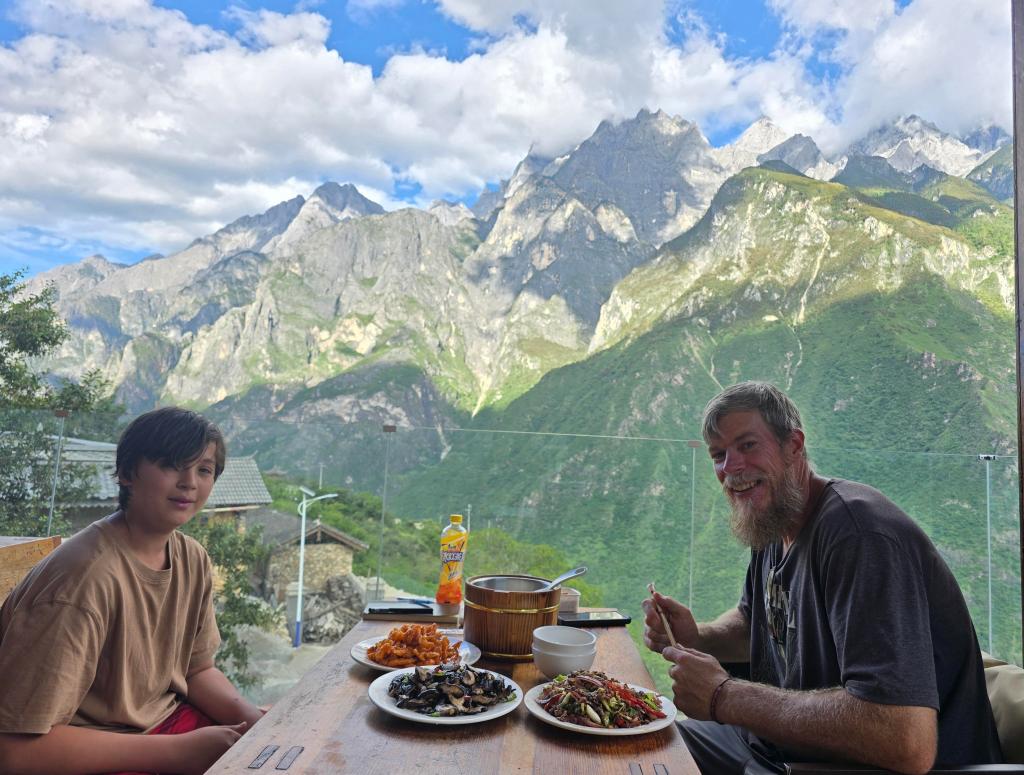
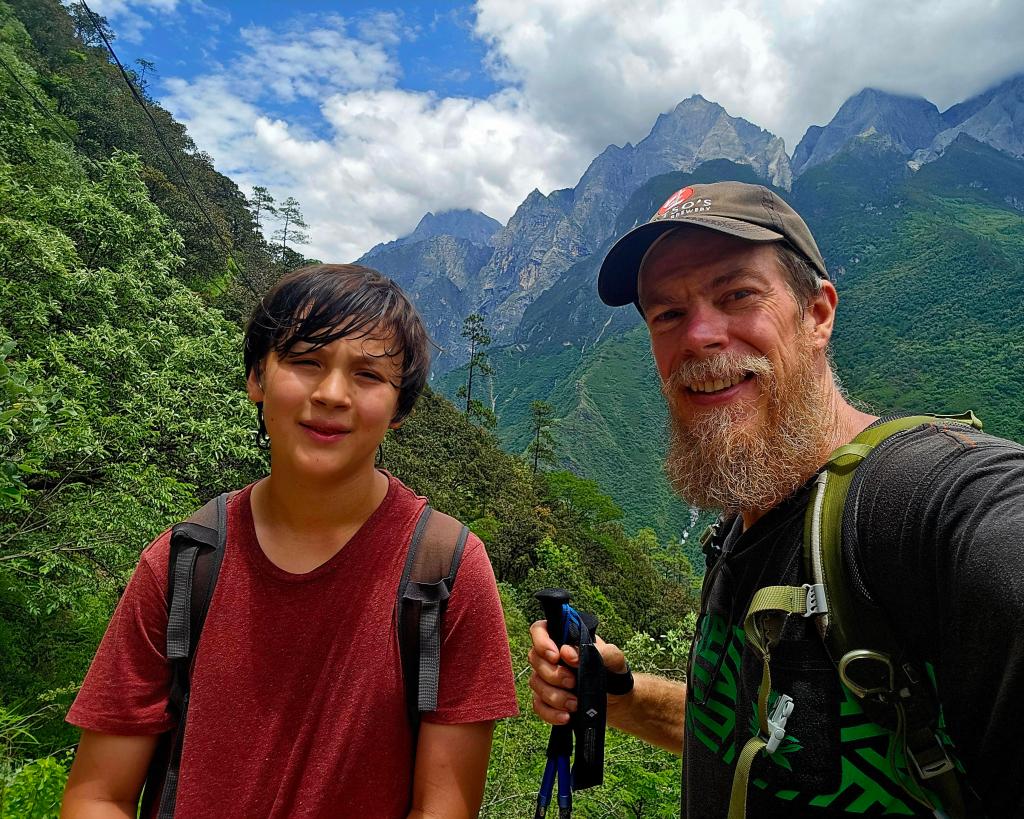
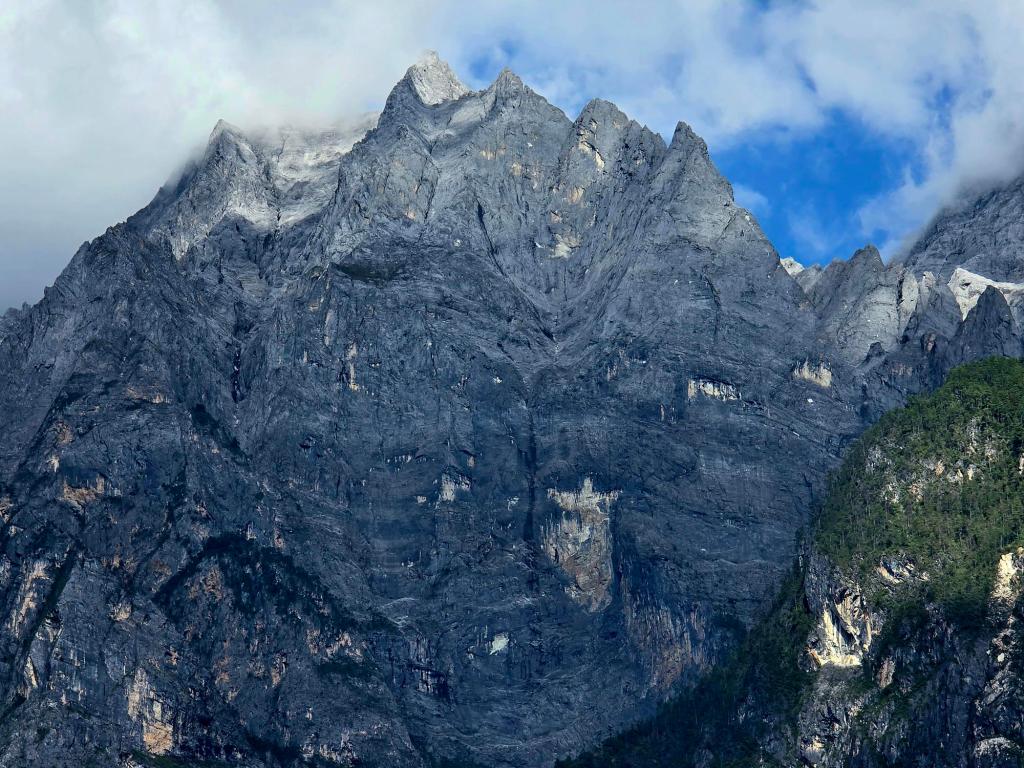
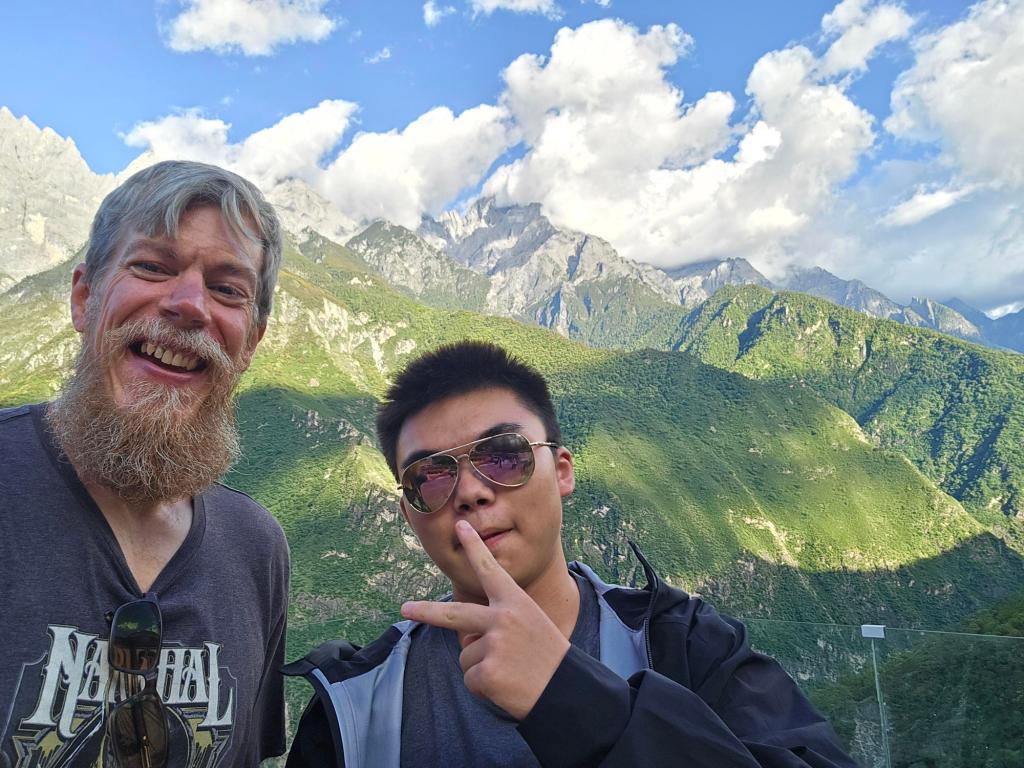
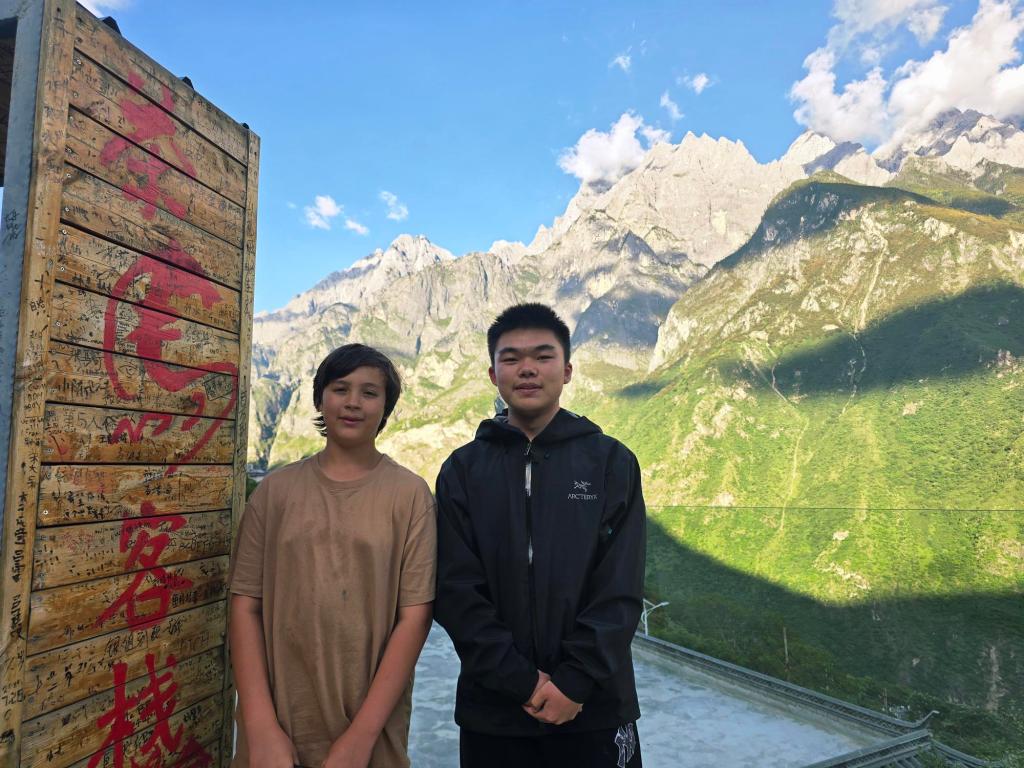
The lodge has expanded dramatically — new family quarters, laundry facilities, a restaurant level, a large covered wooden terrace, and an impressive rooftop deck enclosed in glass. A small café-bar sits tucked into the upper level with cozy chairs and lounge cats drifting between tables. Serious investment has reshaped the Middle Gorge.
My first reaction was nostalgia — a quiet sadness for the rougher, foot-access-only version I remembered. But sitting there with Gavin, watching families prosper from trekking tourism, it was hard not to feel that this evolution made sense. The prices remained reasonable. The hospitality was warm. And the views were still outrageous.
We had a great dinner, shared stories with other trekkers, and let the cats claim our laps. Experiencing this place — once part of my own wandering early thirties — now alongside my oldest son marked the beginning of what would become one of the most memorable weeks we’ve had together.
We were up early the next morning, ambitious plans in place: hike out to Tina’s, catch a bus to Shangri-La, then continue north toward Deqin near the edge of Eastern Tibet.
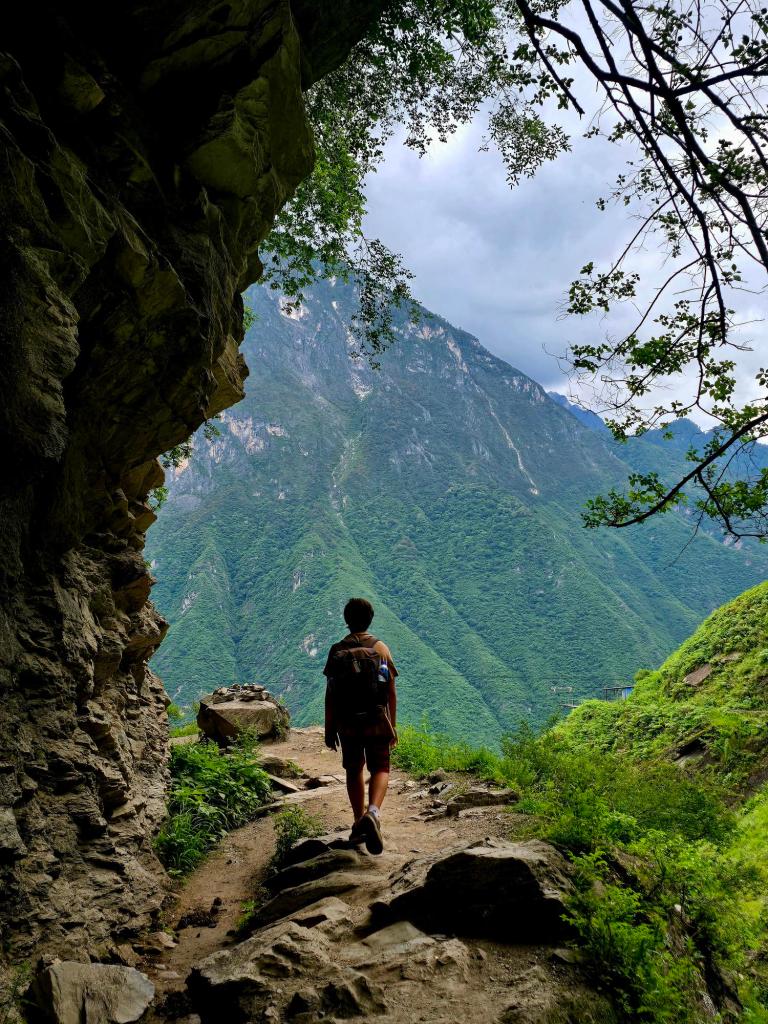
Coffee in hand, we set off. Within twenty minutes we reached the rebuilt Halfway House. Like Tea Horse, it has grown substantially, though parts of the old structure remain. We grabbed breakfast beside a massive window overlooking the gorge while I charged my phone — a modern ritual unimaginable on my first trek here.
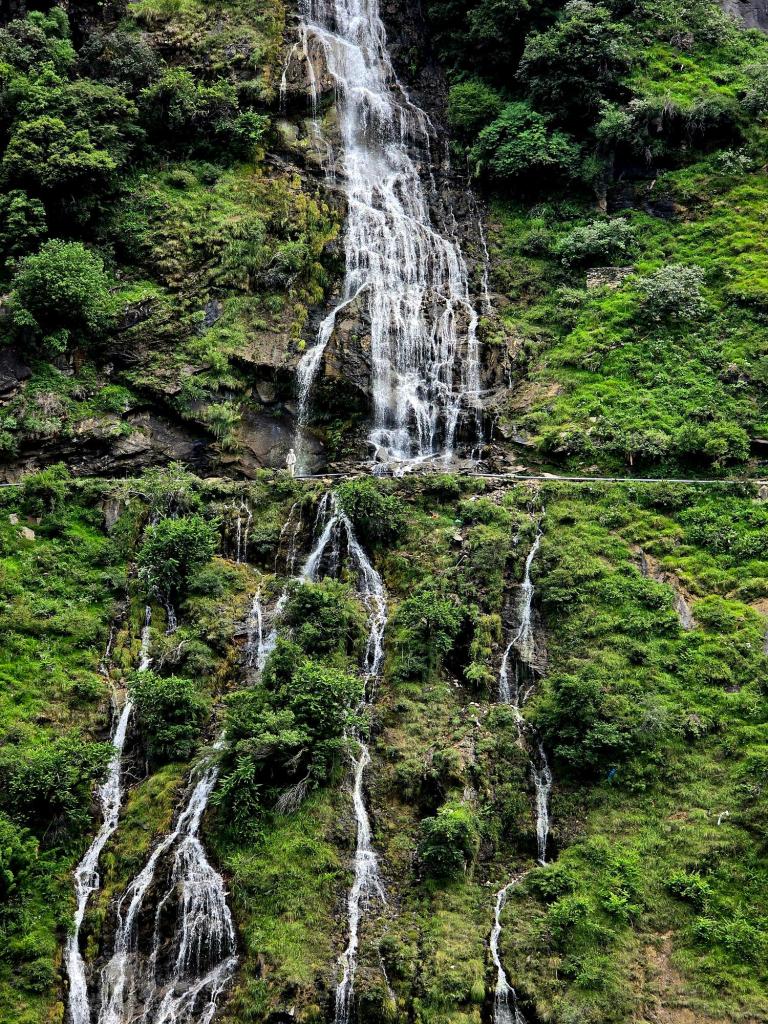
Day 2 of the Upper Trail opens up even more dramatically. Long stretches traverse exposed cliffside with yawning drops into the river corridor below. Seasonal vendors set up along busier sections during high season. At one point, a waterfall bursts from the cliffs high above, splashing across the trail before plunging hundreds of feet to join the Jinsha.
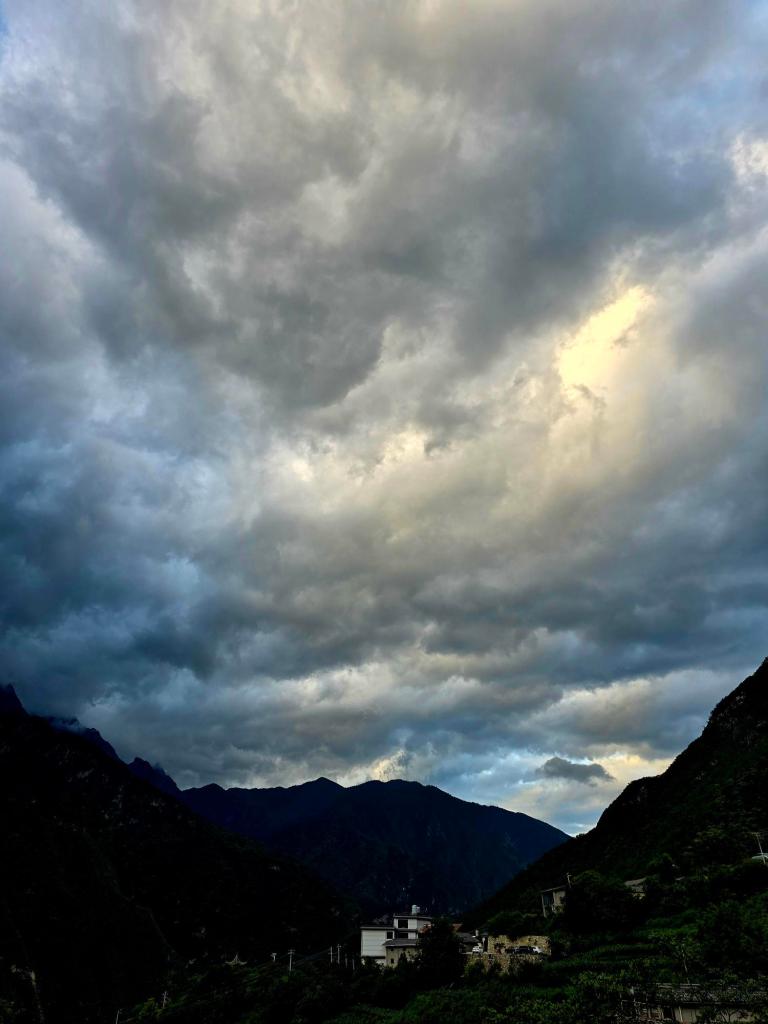
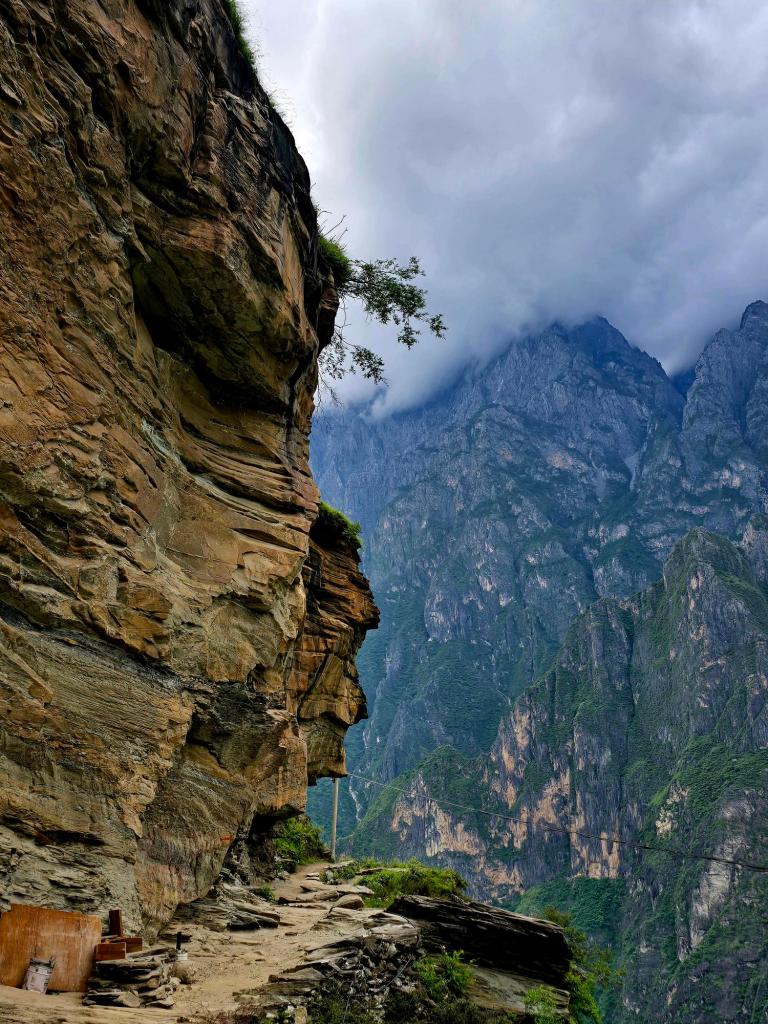
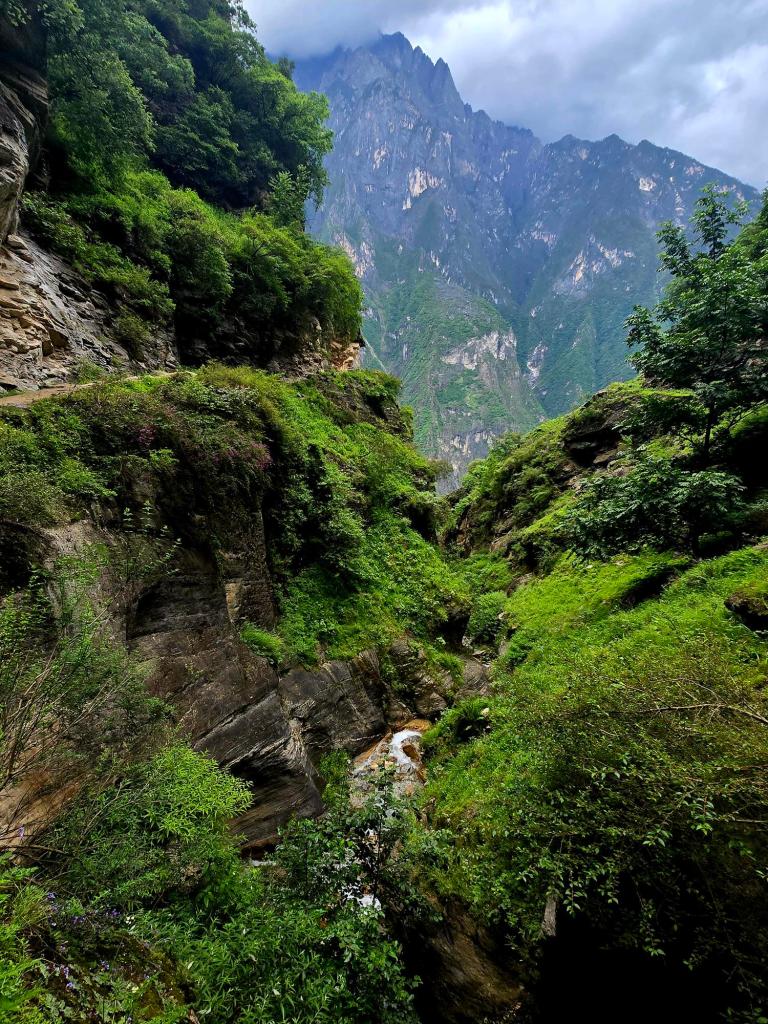
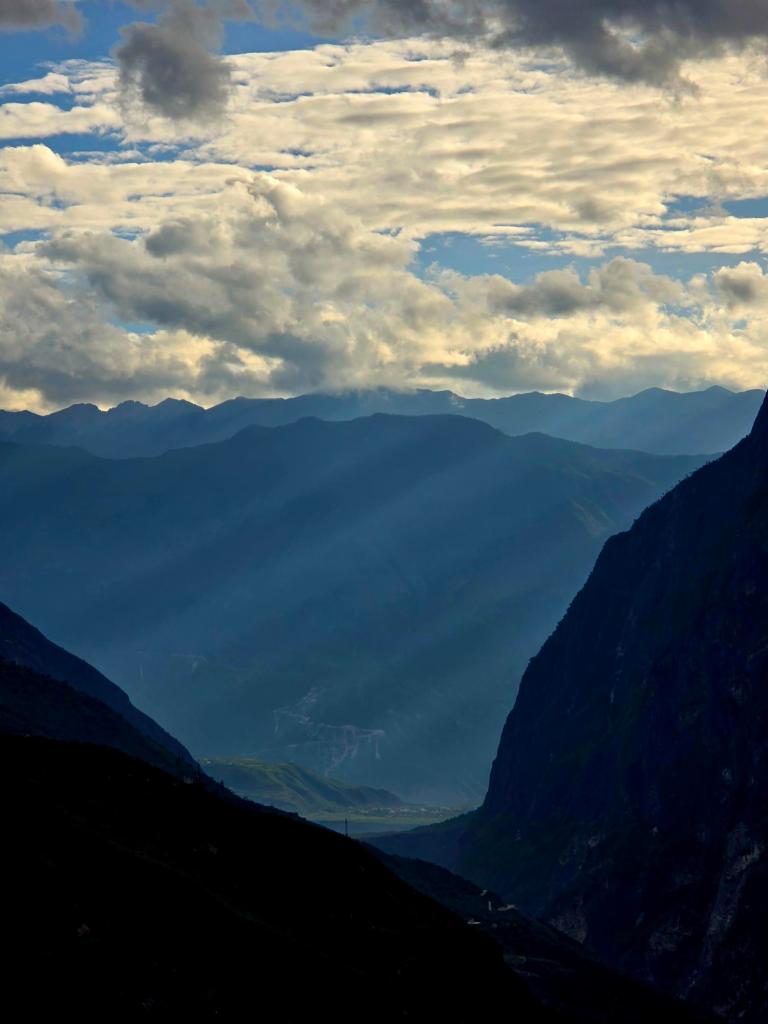
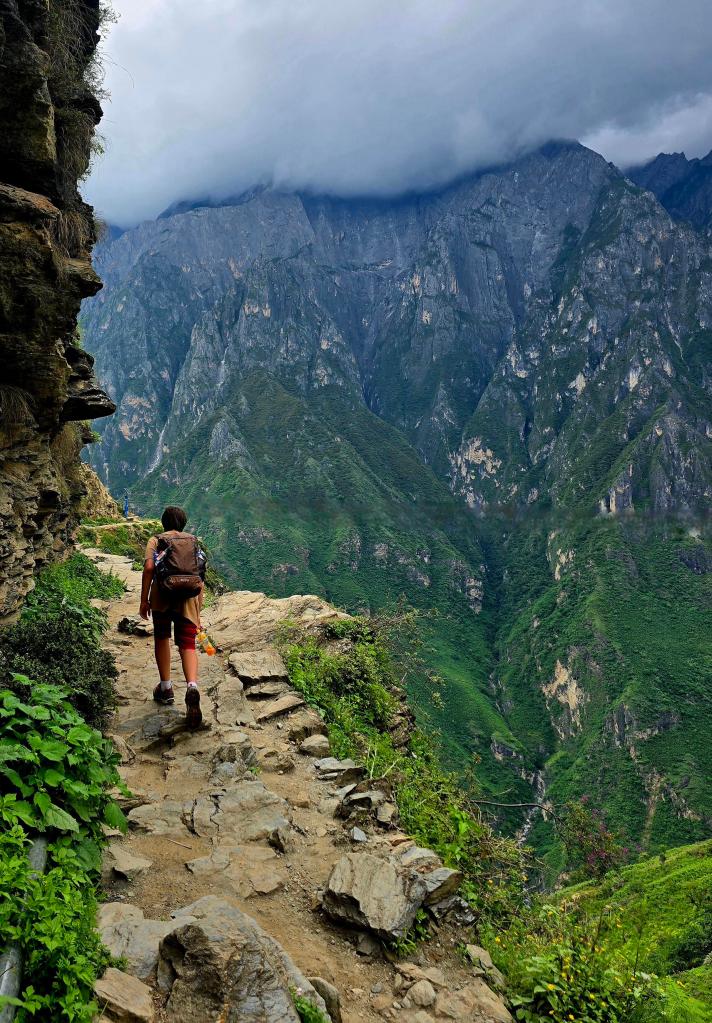
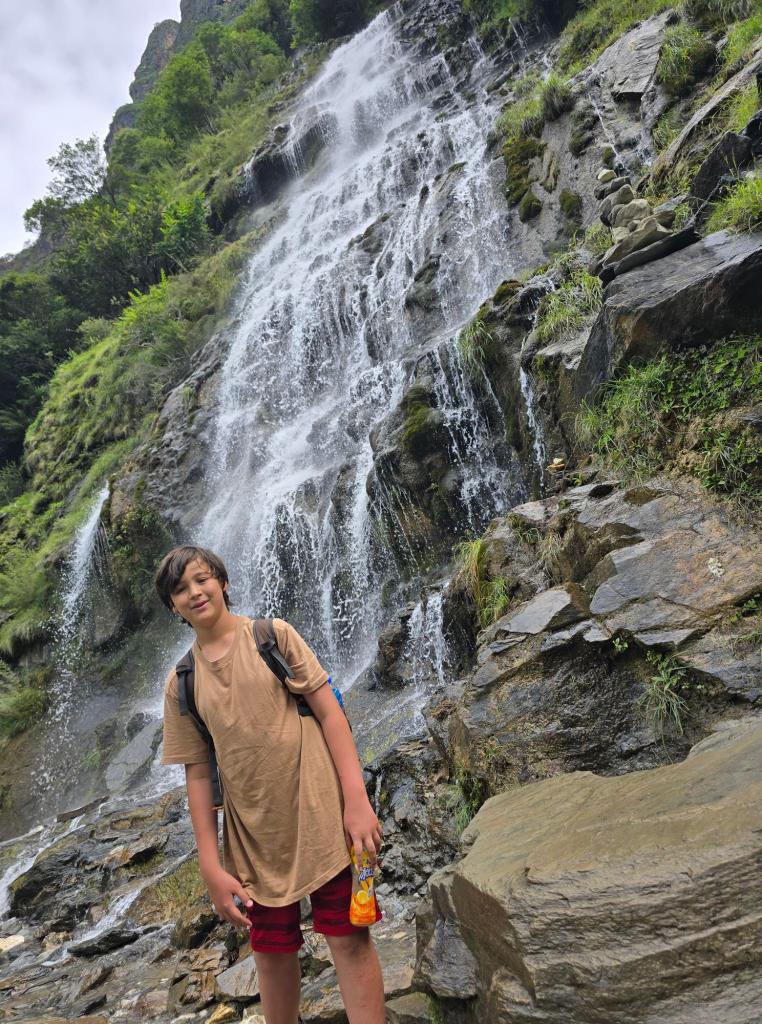
Historically, some hikers would descend to the river and climb back out via a notorious vertical ladder — a makeshift tangle of rebar, wire, planks, and faith bolted to a cliff face. I once climbed it with a friend, Roger, and a British backpacker we had met who ended up in tears halfway up. At the top of that ladder stood a sign saying Dangerous Ladder or Safe Path with respective arrows. We had seen no such signs or continuing trail coming from the bottom. That route has since been rerouted, and access from Tina’s is no longer what it once was.
When we reached Tina’s, we booked seats on the afternoon bus. While waiting, we explored nearby development, including a newly completed hotel designed to resemble stacked stone formations. Inside, massive glass walls framed the gorge like a moving painting — river below, peaks above.
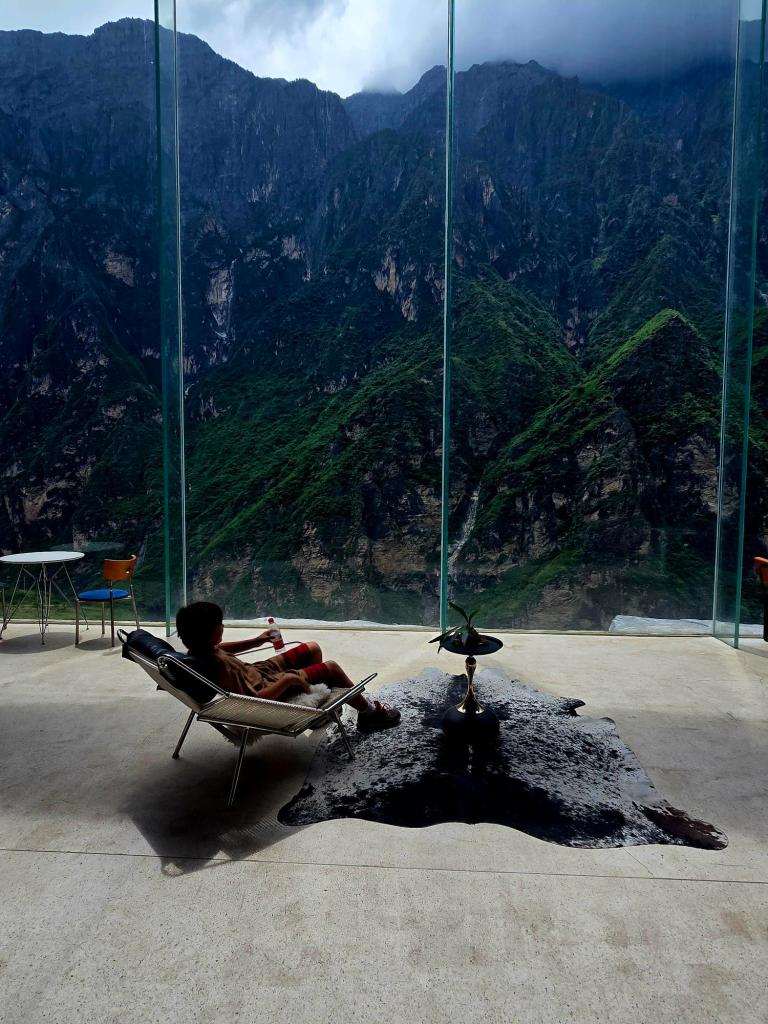
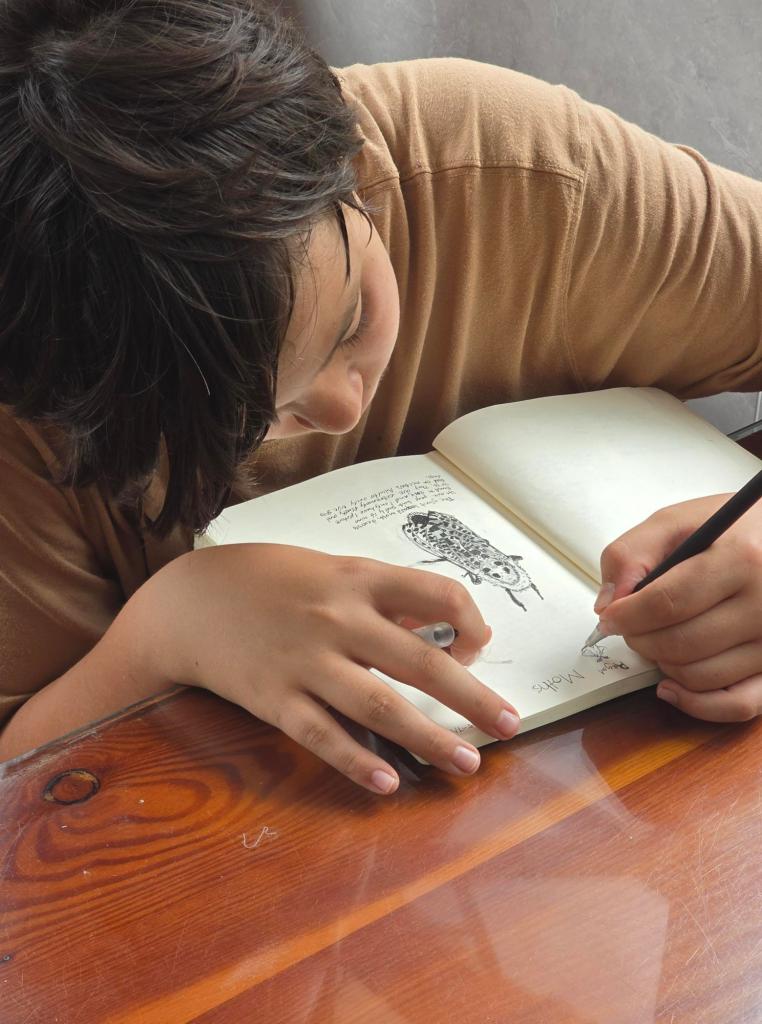
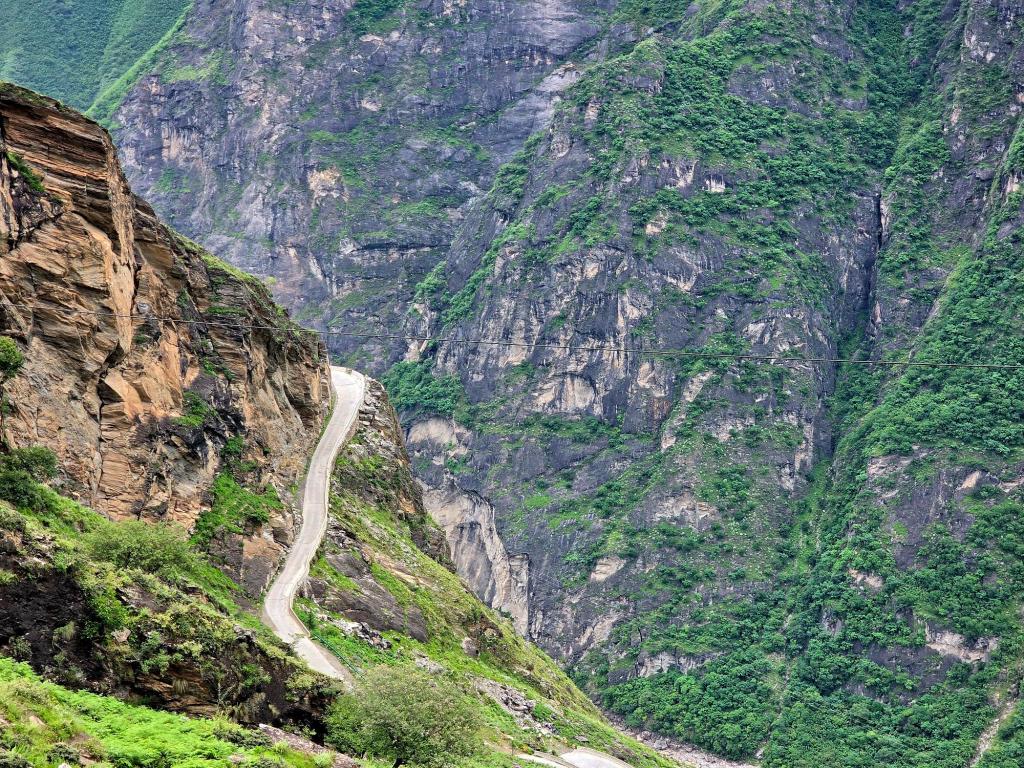
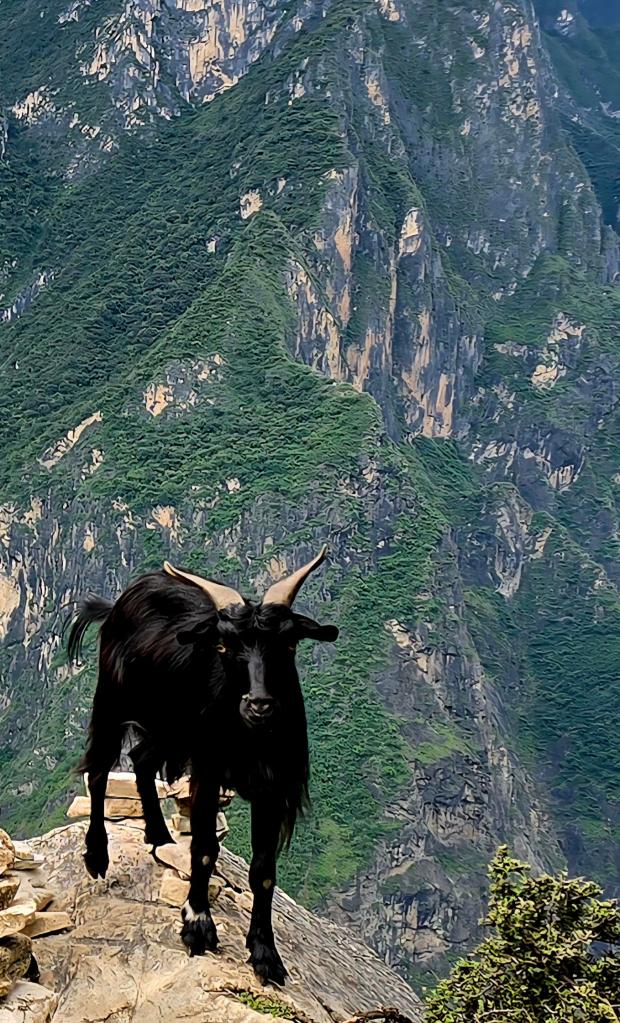
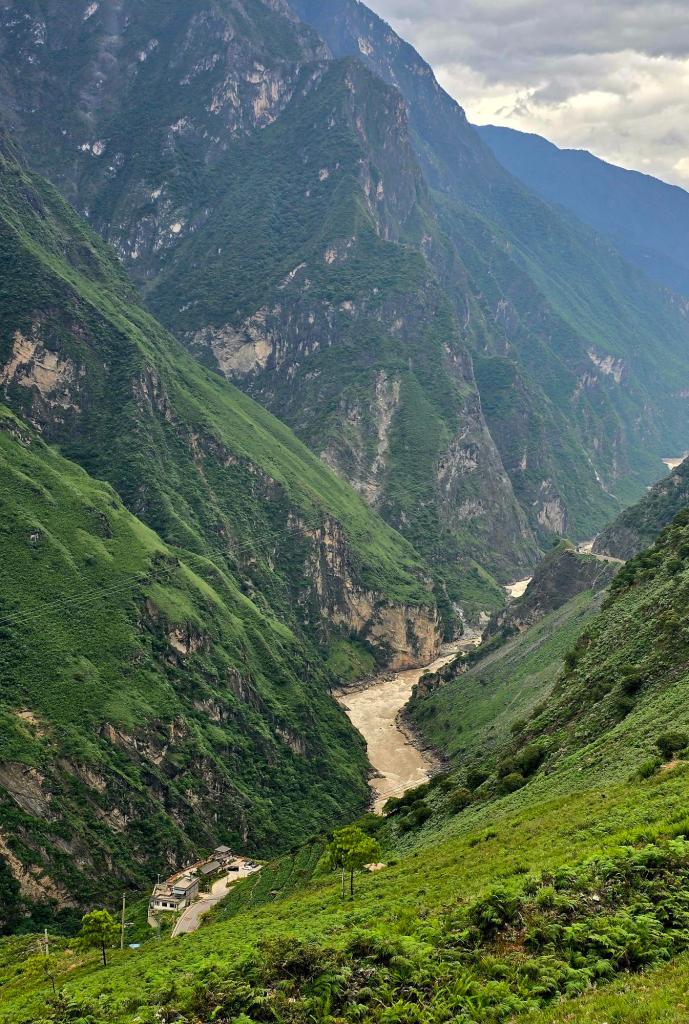
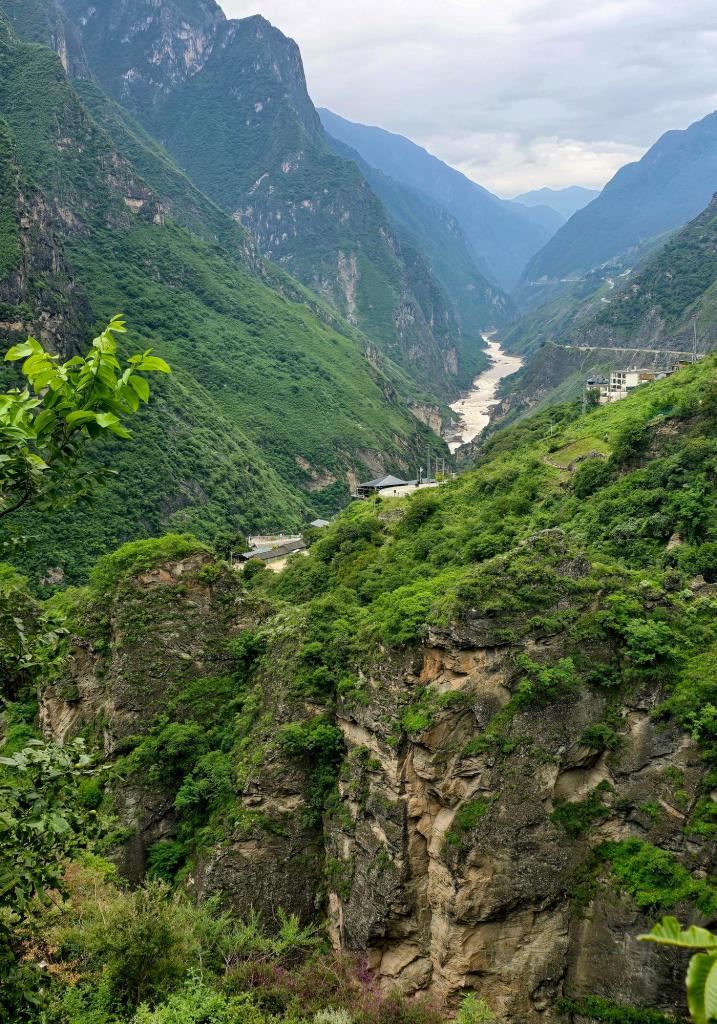
Tiger Leaping Gorge has changed. It is more organized, more accessible, more built up. Entry gates are formal. Roads reach high into what used to be exclusively foot country. Tourism infrastructure is polished.
And yet, the river still roars. The mountains still tower. The legend of the tiger leaping across the narrowest part of the gorge still lingers in the name. The canyon remains part of the greater Three Parallel Rivers region — a place where immense geology and human history intersect in spectacular fashion.
More than anything, what stood out to me wasn’t what had changed — but who was walking beside me.
The first time I hiked here, I was a young traveler chasing distant horizons. This time, I was watching my son step into that same sense of scale and possibility. The gorge felt just as big as it did in 2006.
Maybe bigger.
And as our bus wound its way toward Shangri-La and onward to Deqin, I realized that some trails aren’t just routes through mountains — they’re bridges between seasons of your own life.
 Wise Clan in Stanland
Leave a comment