July 22, 2019
We woke up in Garzê to crisp, clean air and bright white clouds drifting lazily past the windows. After the long road the day before, it felt like we’d finally exhaled. Thin air, sure—but the kind that clears your head rather than weighs it down.
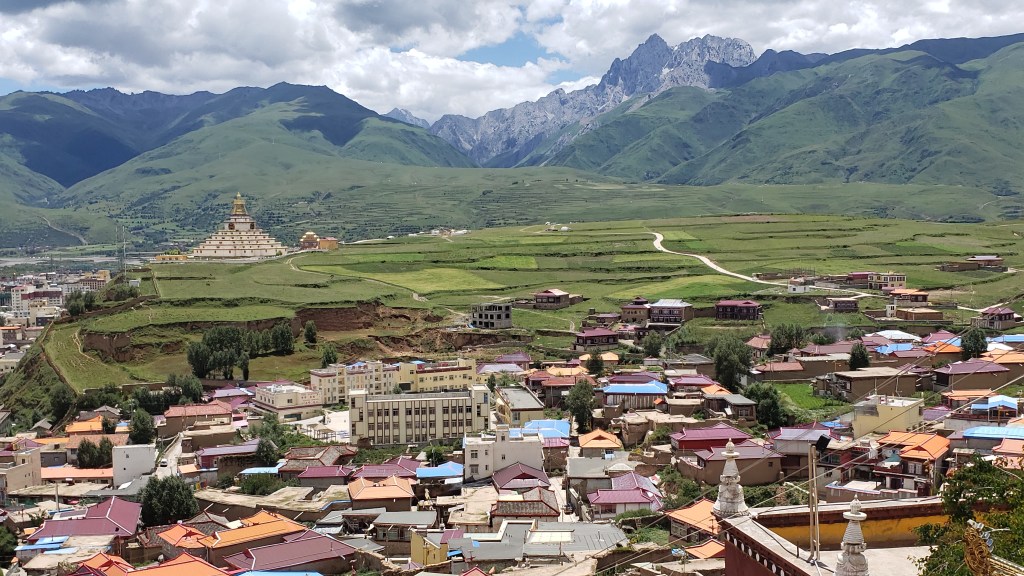
Breakfast downstairs was simple and exactly what it needed to be: porridge and hard-boiled eggs. We still had an hour or so before Jeremy was due to swing by and pick us up, so we made our way up to the rooftop to get a lay of the land. The moment we stepped outside, we knew it was going to be a good day. Garzê spread out below us, framed by mountains in every direction, the monastery climbing the hillside above town like a city stacked on top of itself.
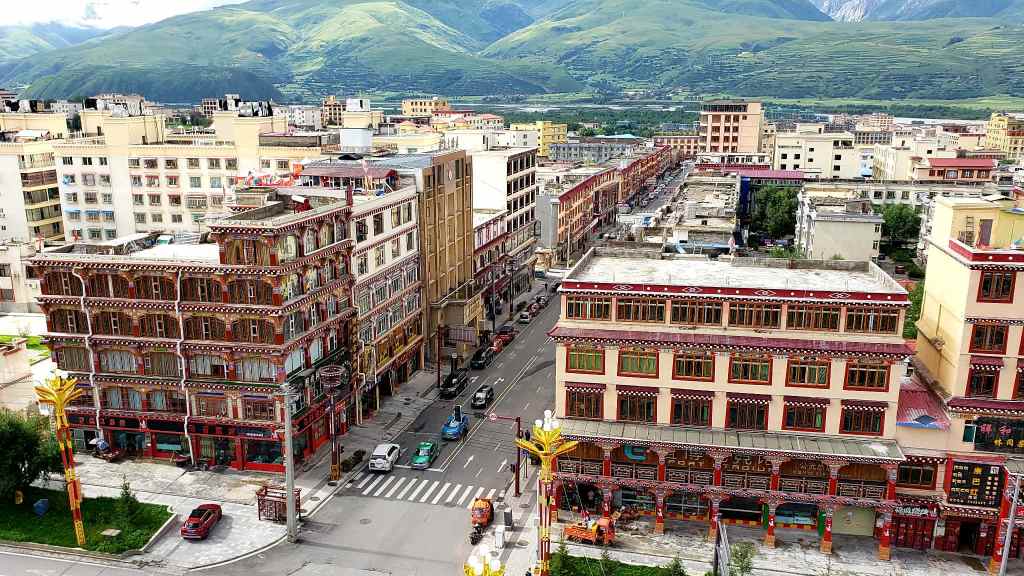
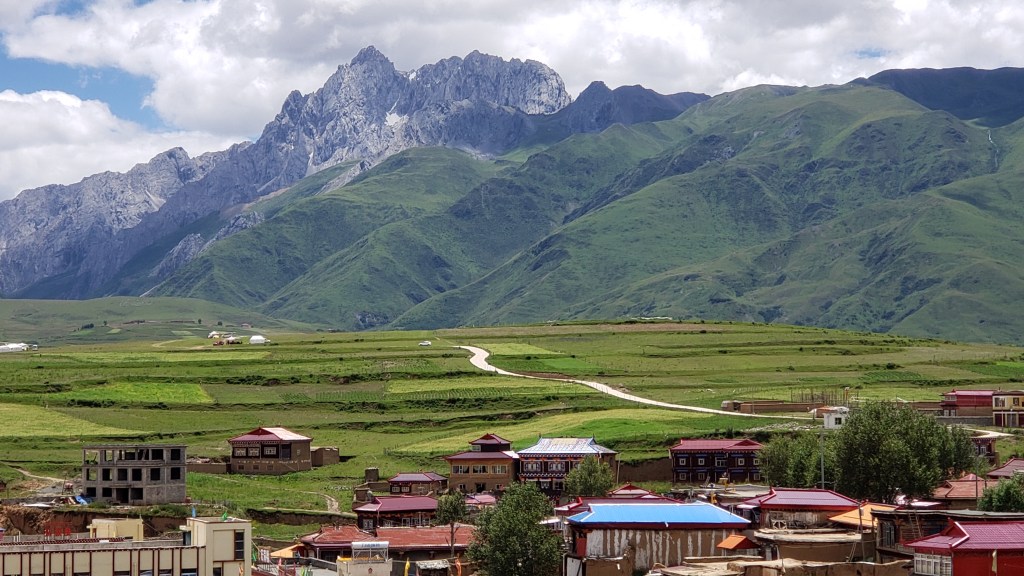
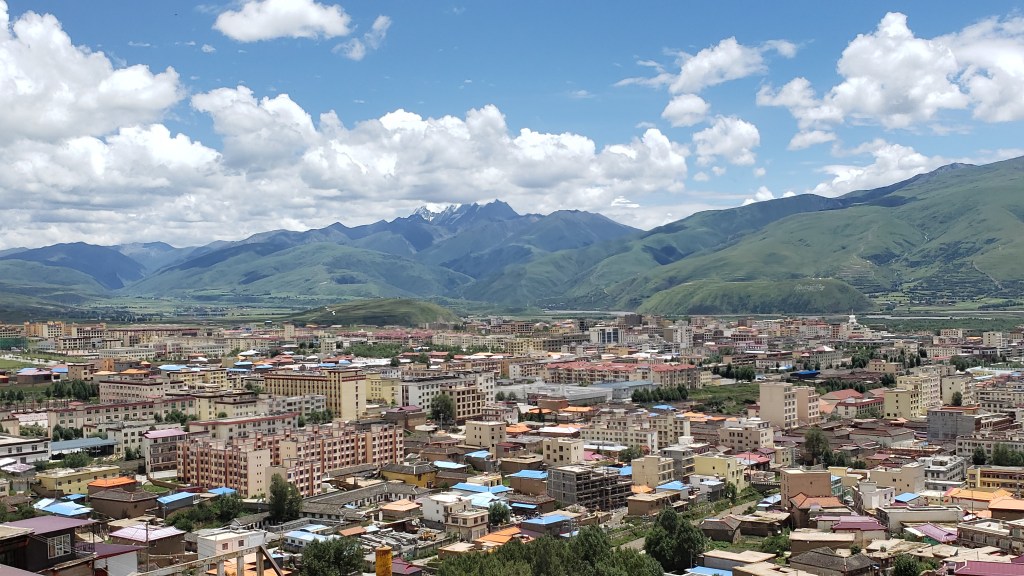
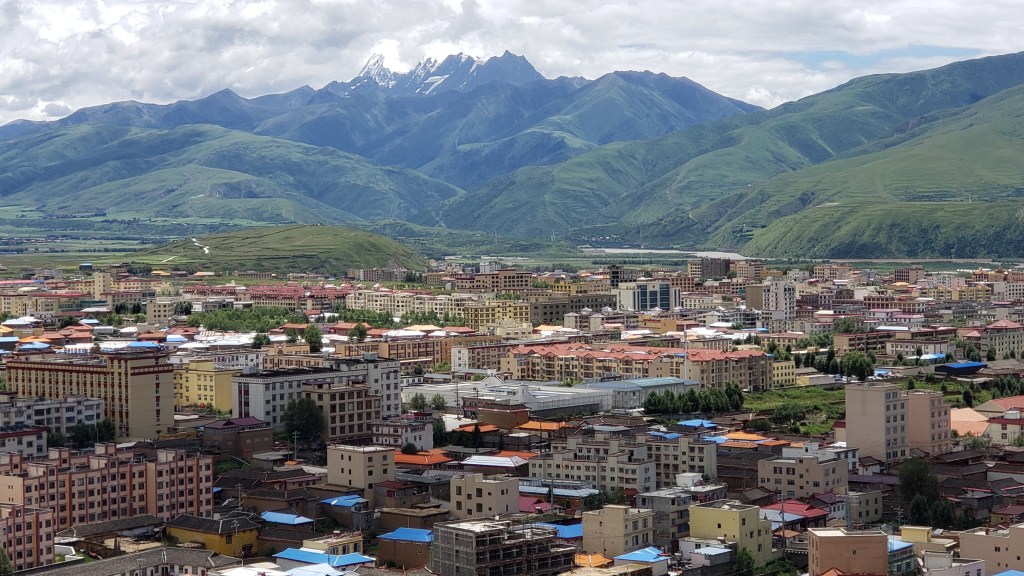
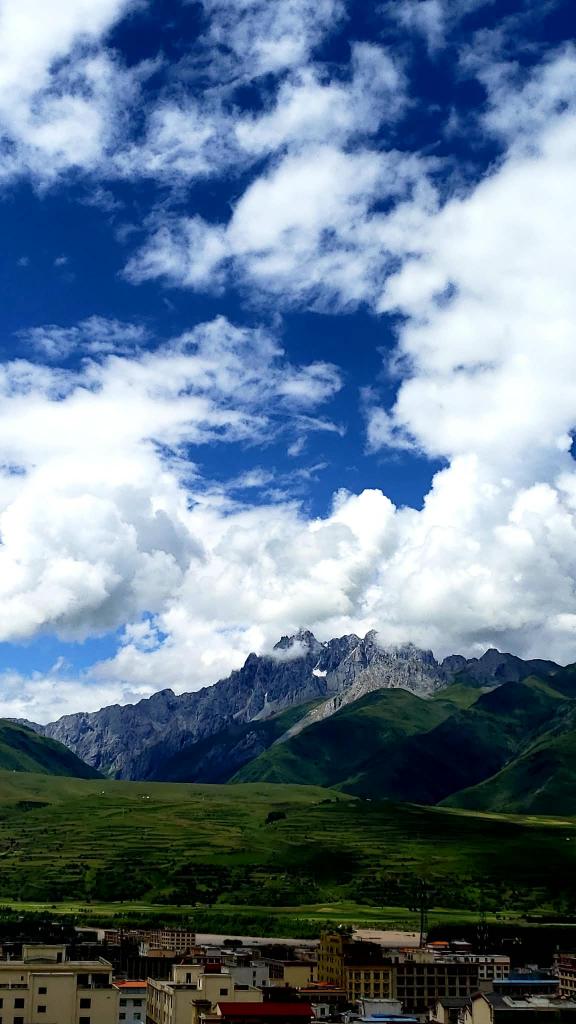
In the middle of the rooftop was a steel platform with a steep little staircase that rose another fifteen feet. Naturally, we climbed it. Standing there, we felt like we were on the highest point in the city proper. I pulled out my phone and recorded a short video of Gavin, asking him what he thought about the journey that had brought us here. I watched that clip again recently for the first time since 2019. Along with a handful of others from that trip, it was strange and comforting all at once—how much has happened since then, how close and distant it all feels at the same time. Yesterday and a lifetime ago don’t feel all that different anymore.
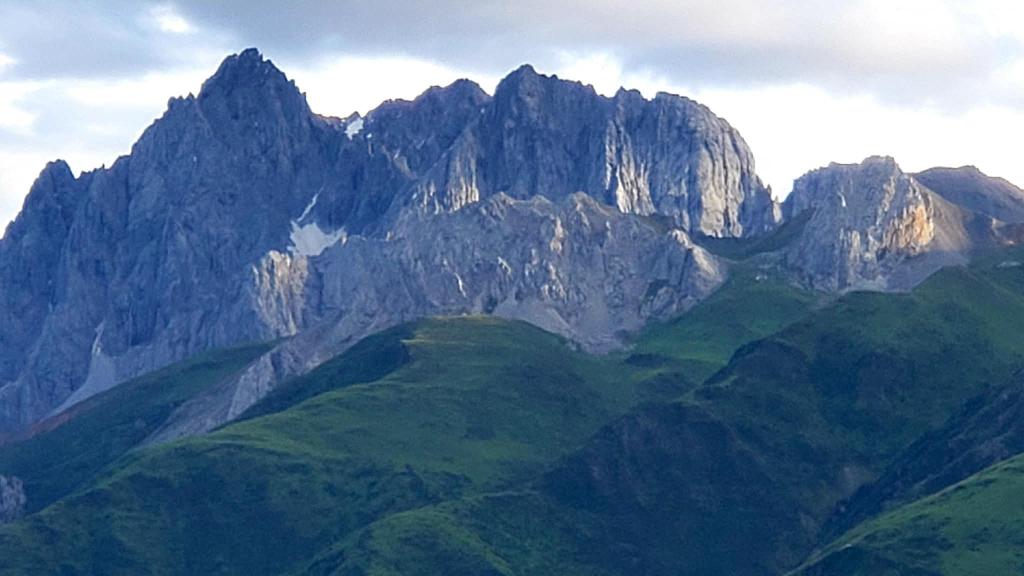
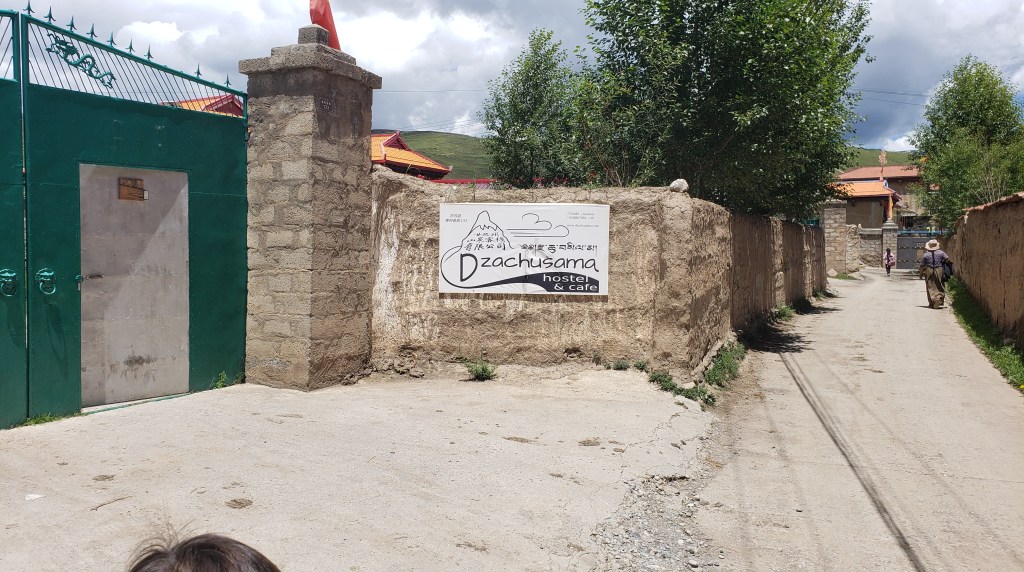
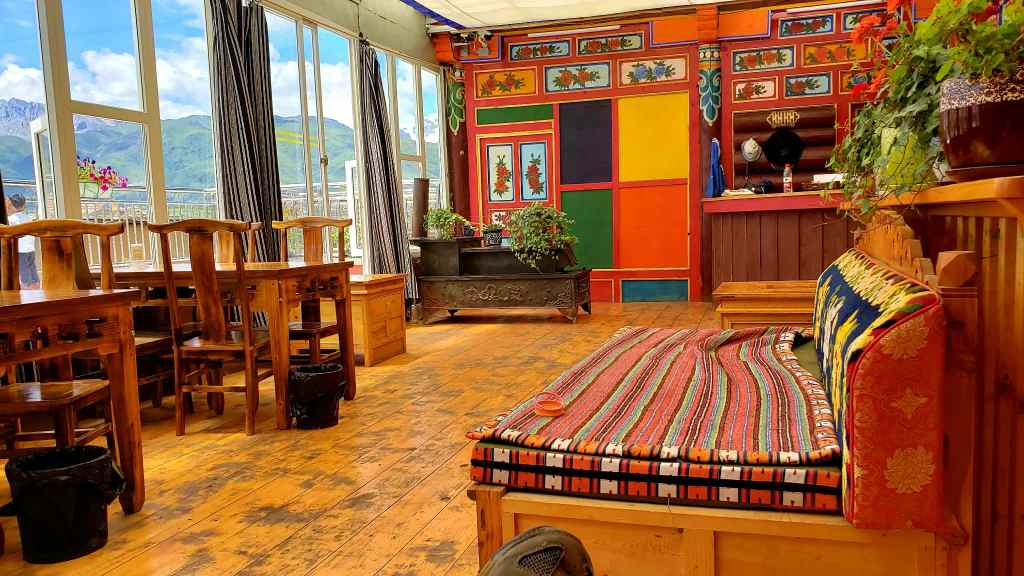
Jeremy showed up an hour later and we moved over to our new base for the short stay, Dzachusama Hostel and Café. The hotel from the night before had served its purpose, but this place immediately felt right—warm, family-run, and full of life. Kids were everywhere. Gavin made friends within minutes and disappeared onto the trampoline before our bags were fully unpacked.
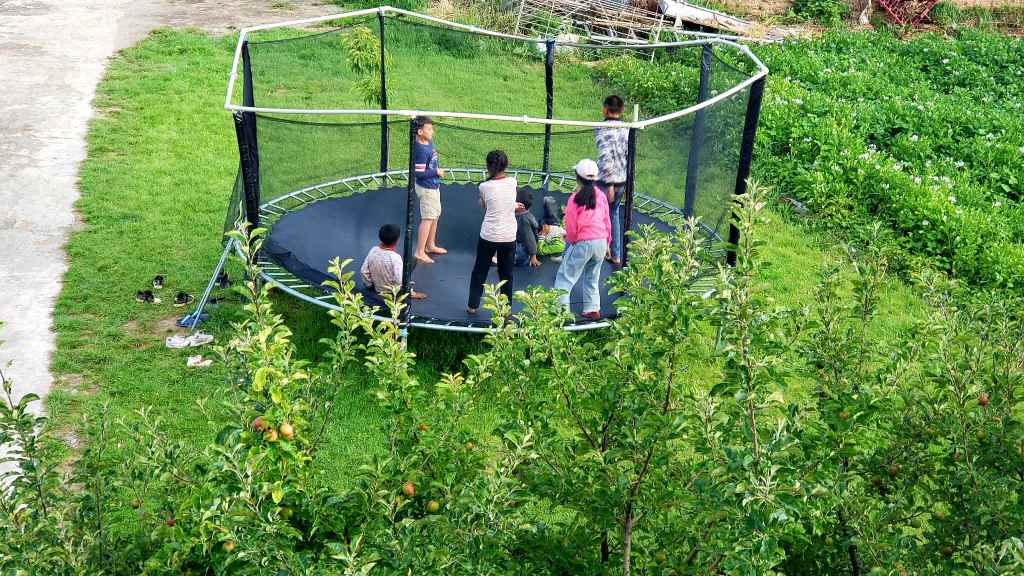
While he bounced, I met the rest of the group we’d be traveling with over the next couple of weeks. They’d already explored the monastery the day before and were heading off to take care of a few things around town, leaving Gavin and me free to wander without a schedule. In hindsight, that freedom was the real gift of the day.
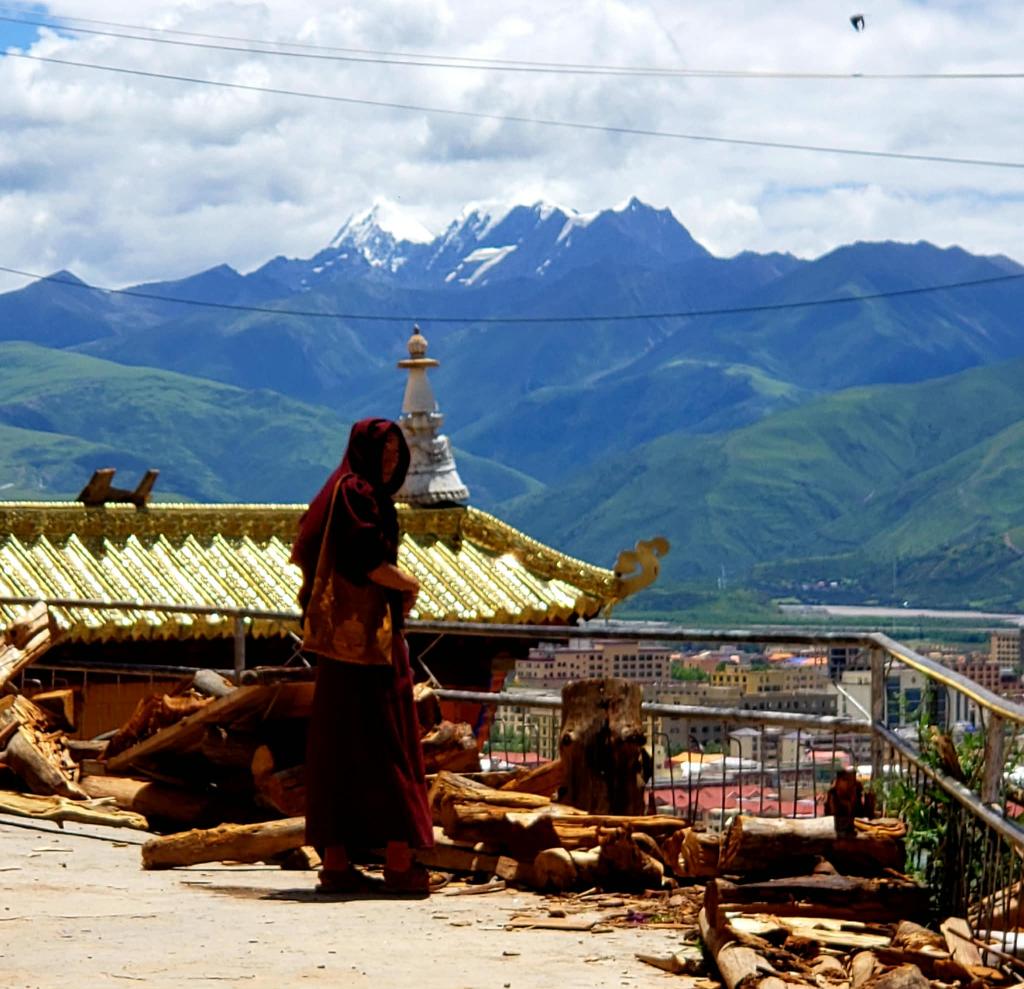
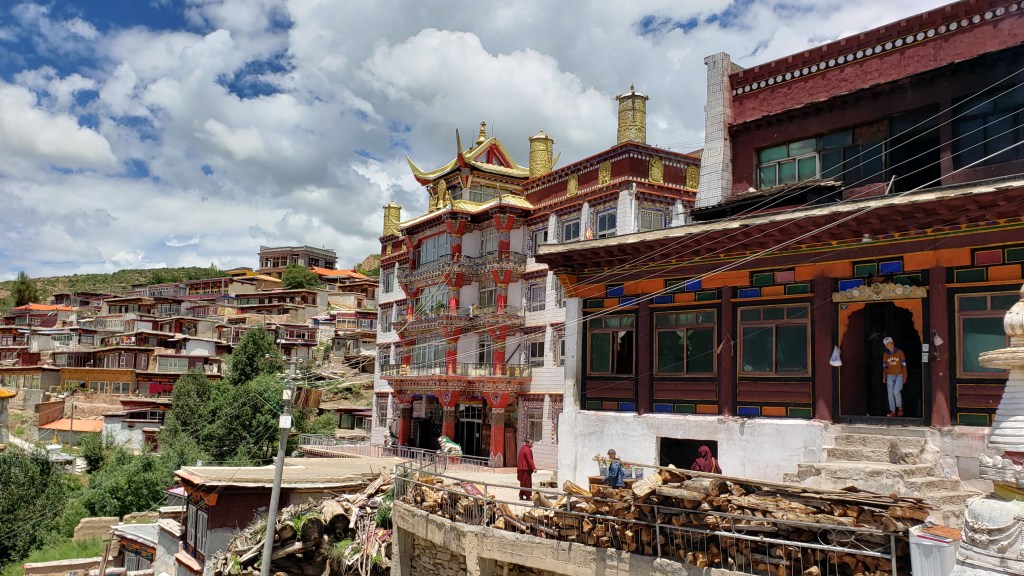
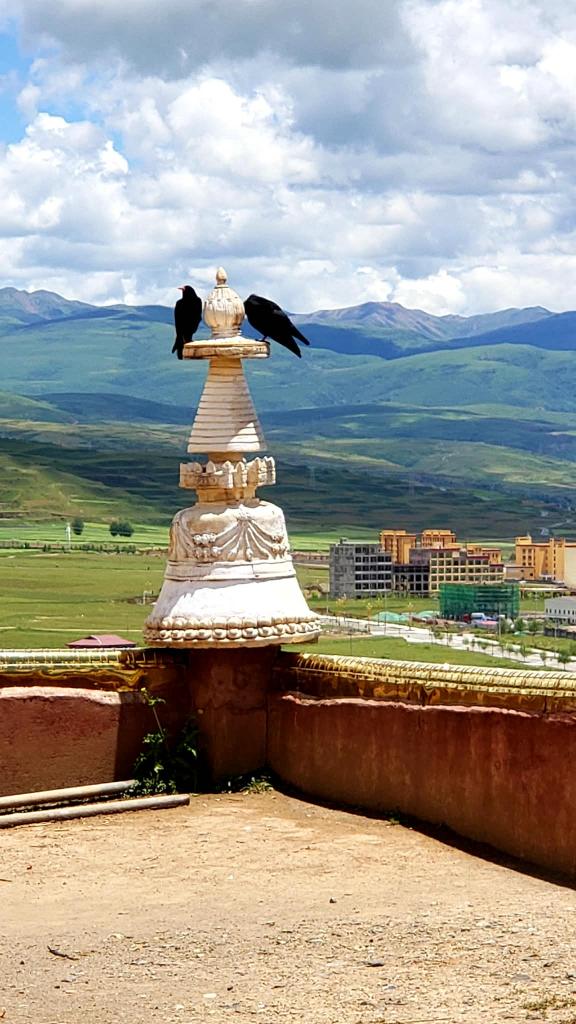
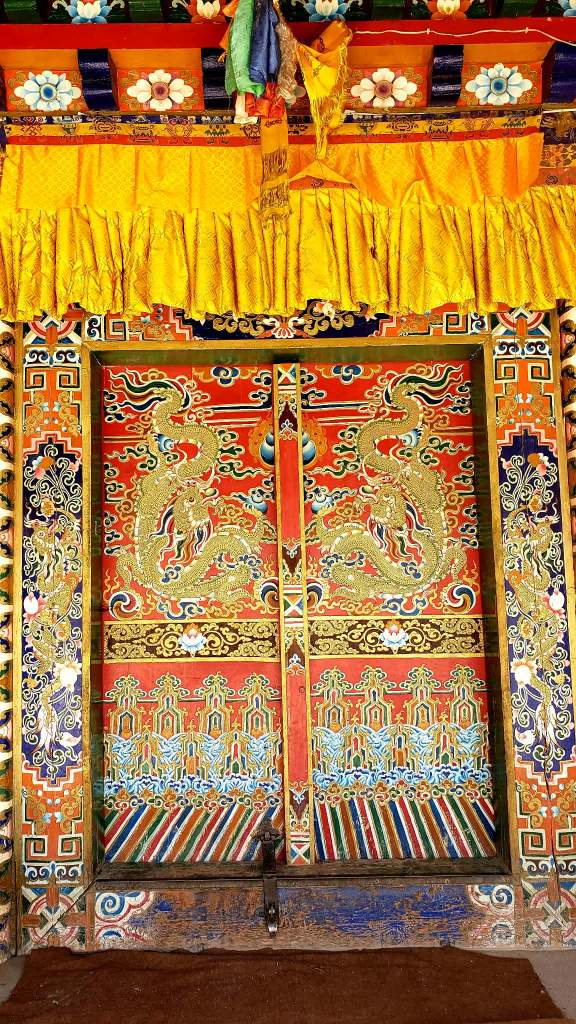
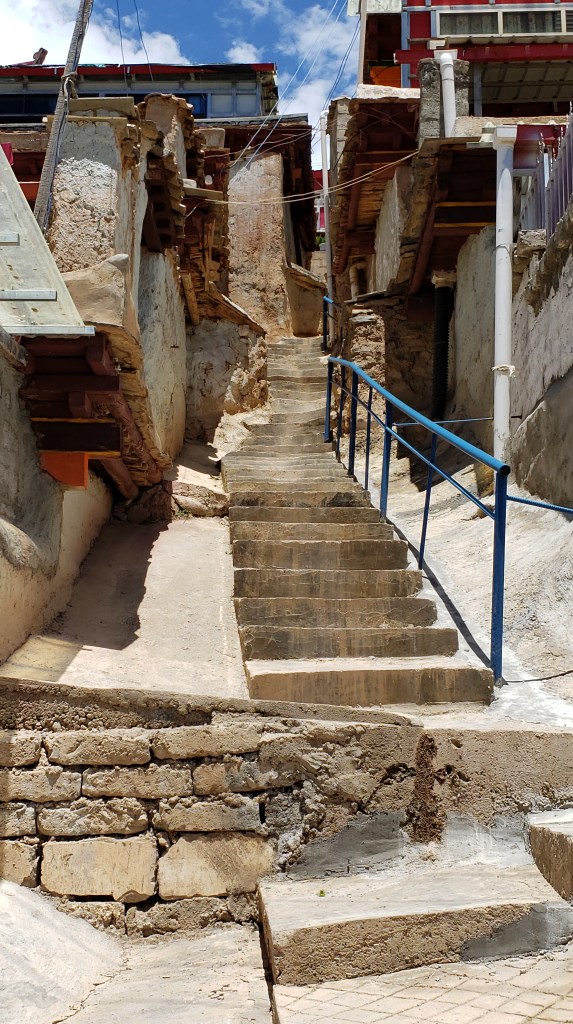
Gavin and I walked uphill toward Garzê Gönpa, the massive monastery that dominates the town. Calling it a monastery almost feels misleading. It’s closer to a monastic city, spreading across the slope in layers of red buildings, white walls, and narrow lanes that feel more like neighborhood streets than sacred corridors.
Garzê Gönpa sits in what was historically known as Kham Tibet, a region that has always occupied a slightly different space in Tibetan history. Unlike Central Tibet, which was more tightly bound to Lhasa and centralized authority, Kham remained fragmented and fiercely independent. Power here shifted between local leaders, monasteries, and nomadic groups, and places like Garzê grew influential not because of imperial control, but because they became anchors of learning and stability in a landscape defined by movement.
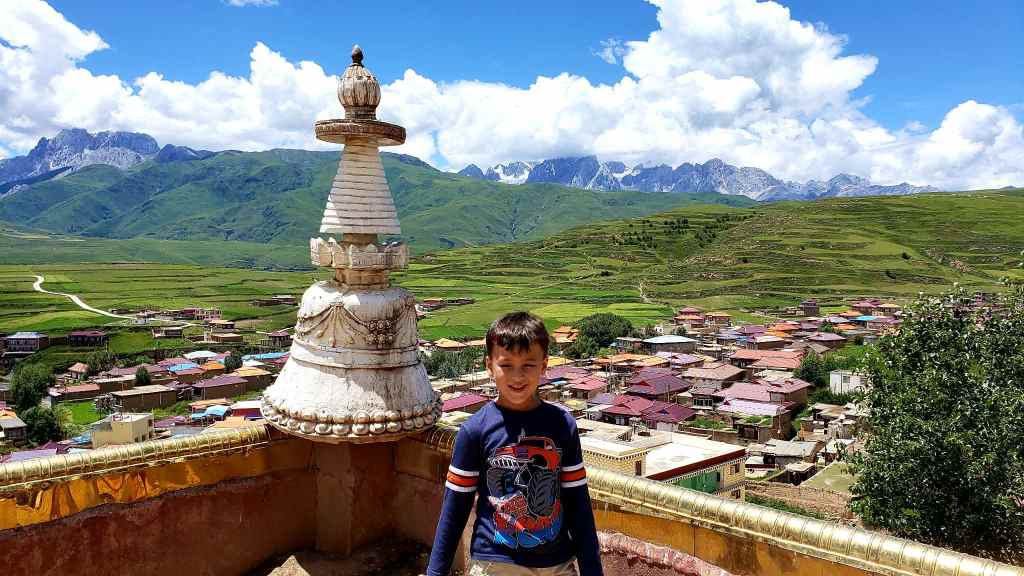
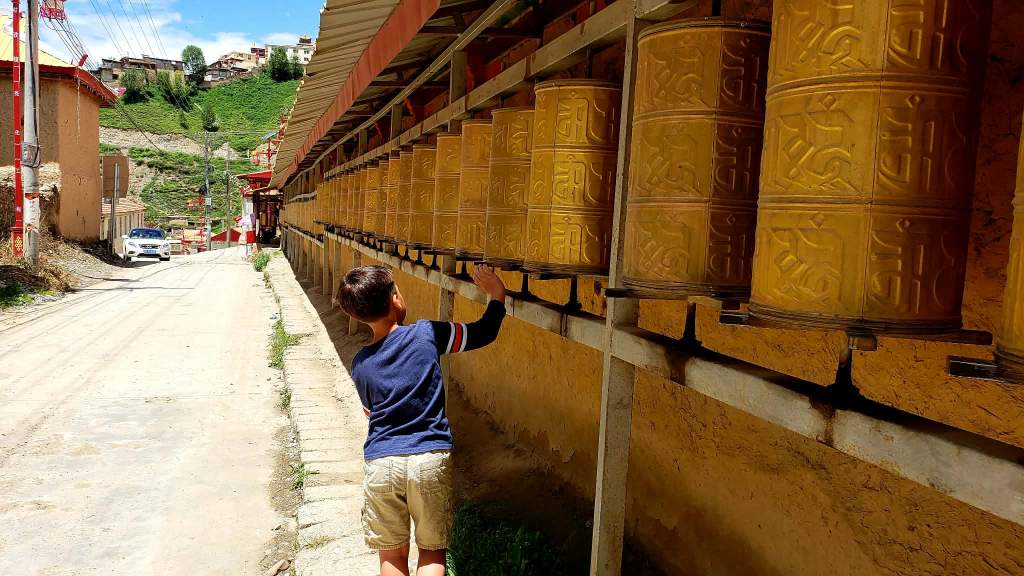
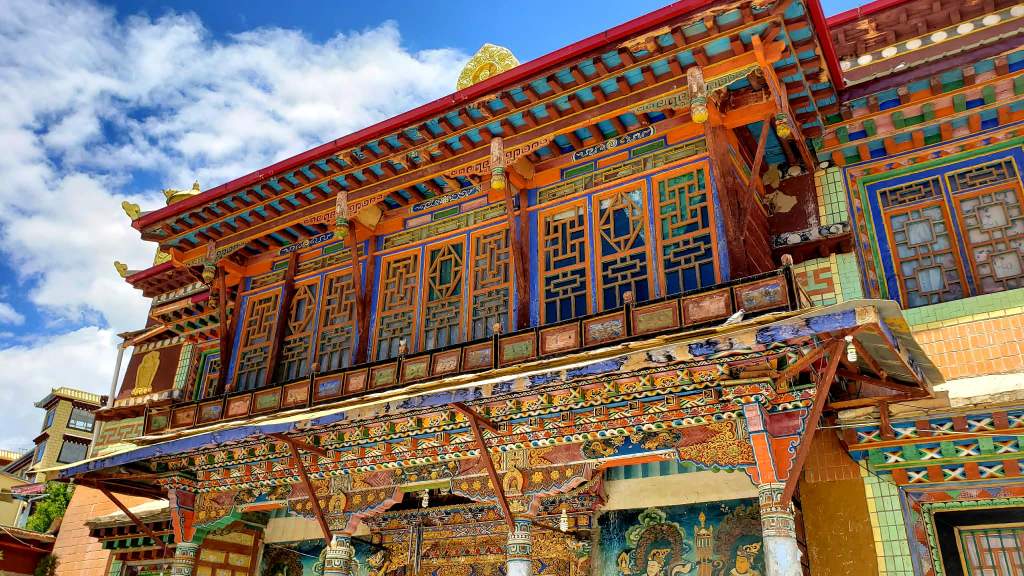
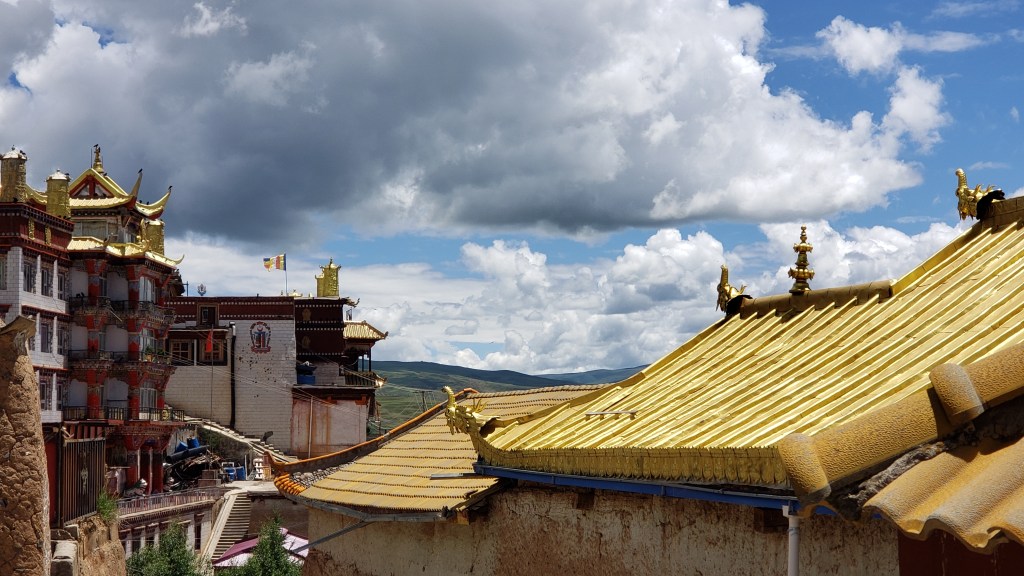
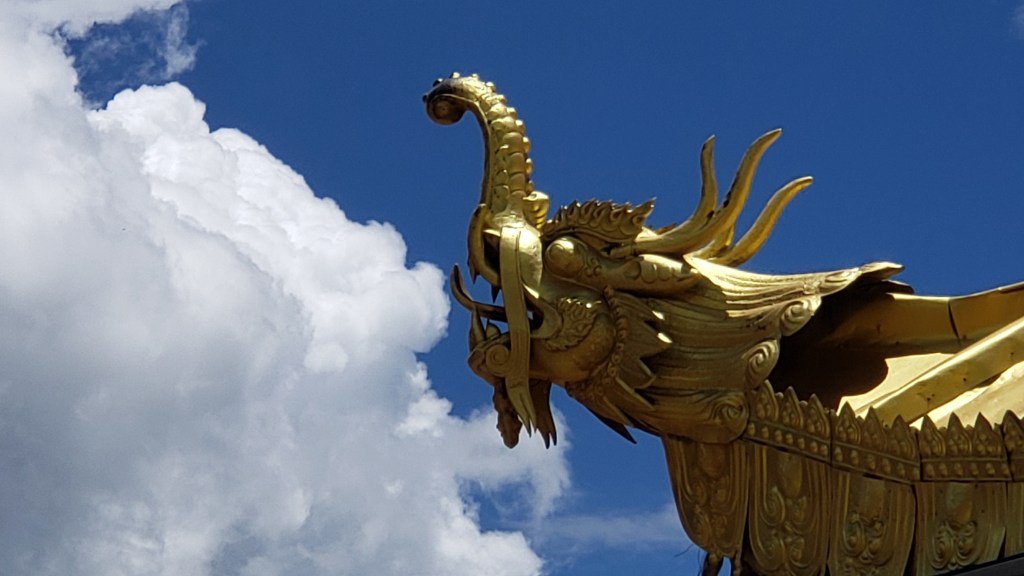
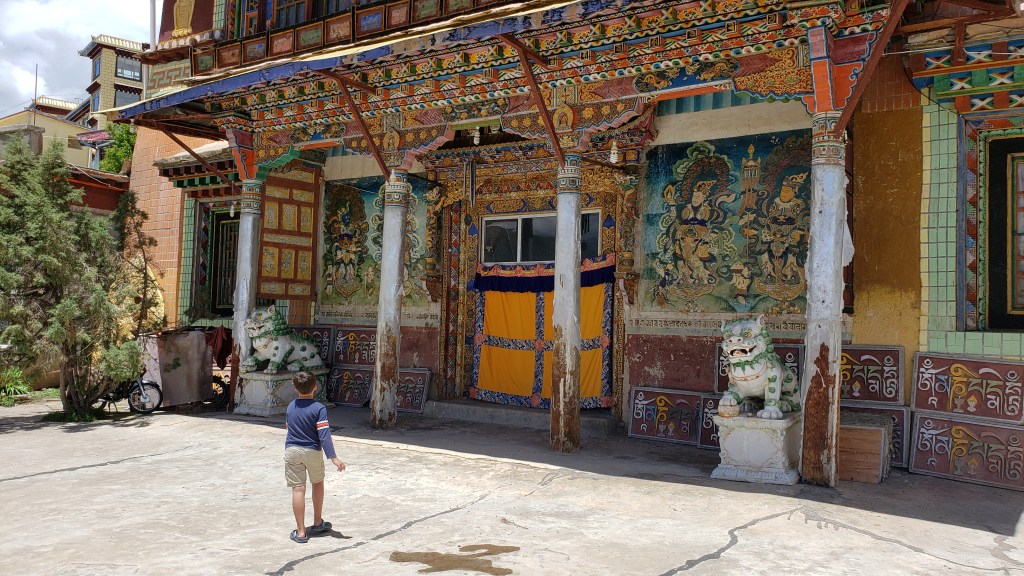
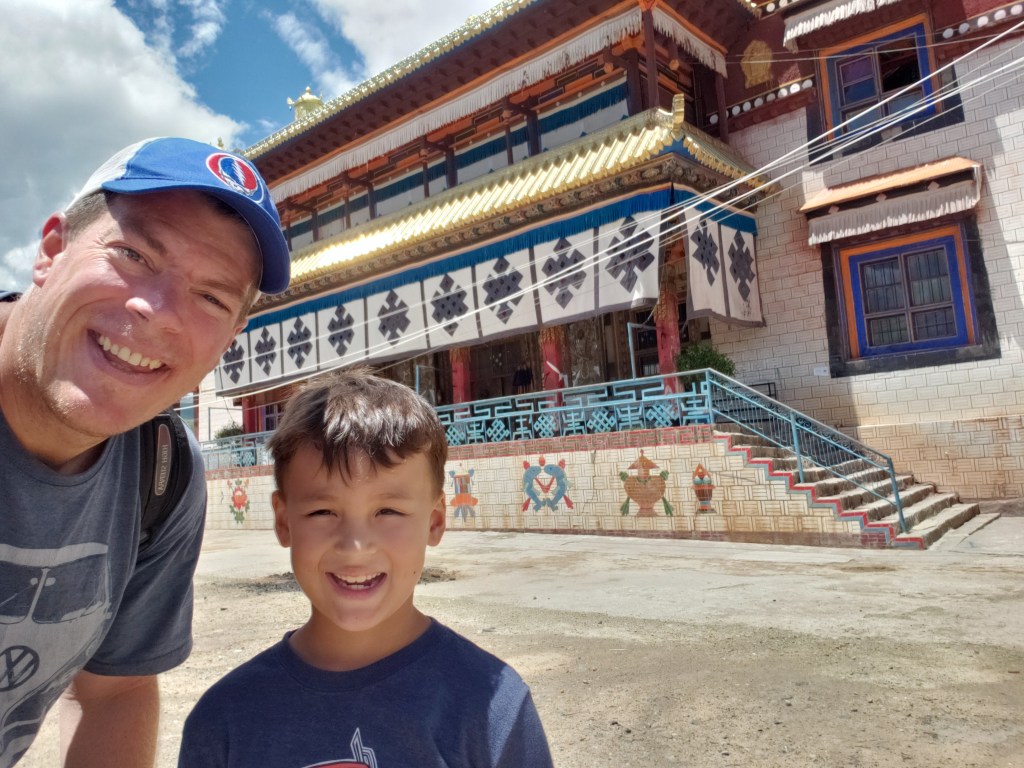
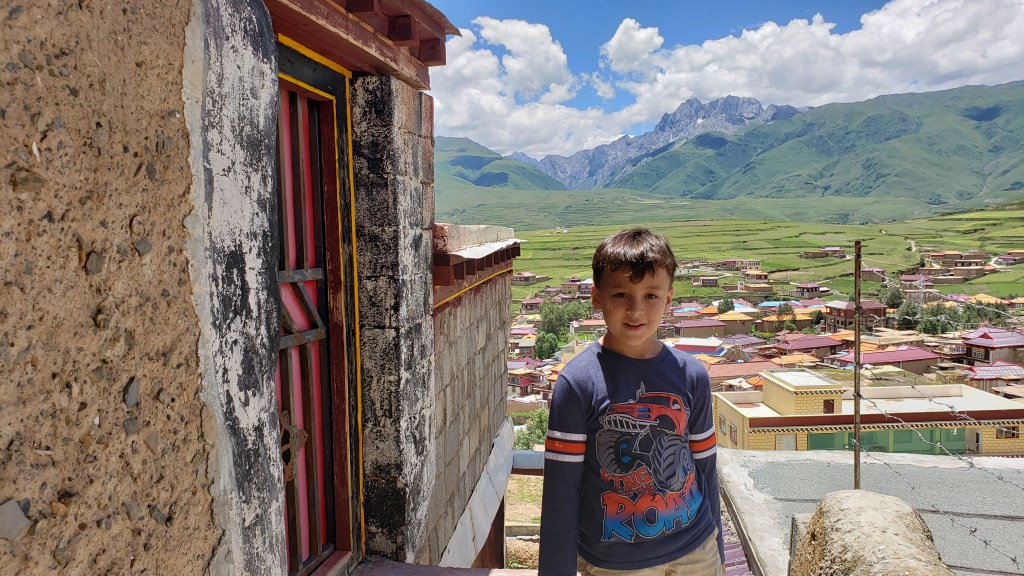
Long before modern borders were drawn across maps, Garzê was already a major monastic center, drawing students from across the eastern Tibetan Plateau. Many of the monks who came here arrived from nomadic families, trading life on the grasslands for years of study. The monastery’s affiliation with the Gelug, or Yellow Hat, school placed a heavy emphasis on debate and scholarship. Learning here wasn’t quiet or abstract—it was loud, physical, and public, sharpened through argument and repetition rather than ritual alone.
Walking through the monastery, that legacy was easy to see. Monks moved through the alleys in steady streams. Groups gathered in courtyards, debates unfolding with sharp claps and quick exchanges. Others slipped quietly in and out of temples, prayer beads moving almost without thought. Nothing felt staged or preserved for visitors. It felt lived in, functional, and ongoing.
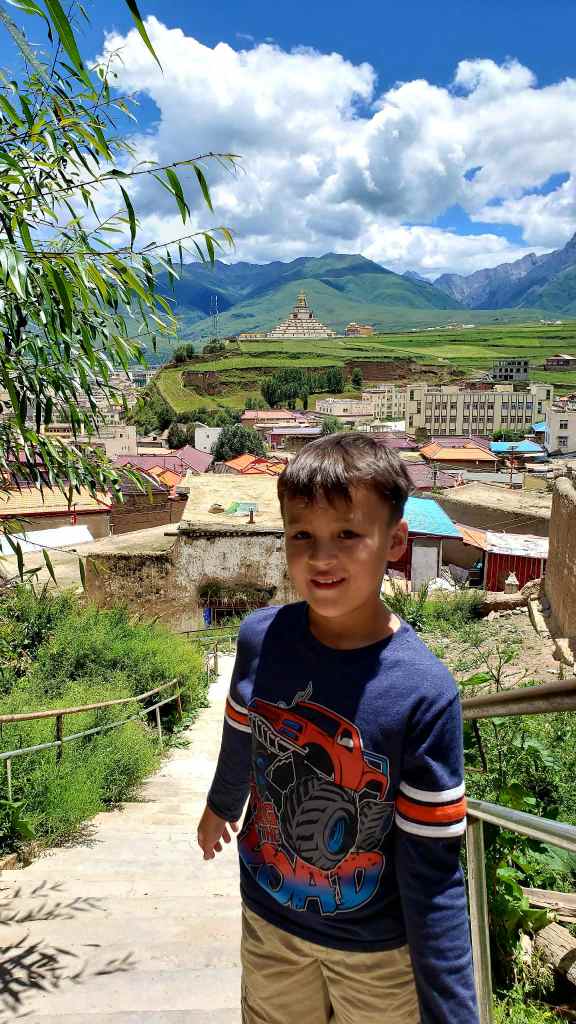
We wandered slowly, ducking in and out of small temples and side passages, pausing often just to take in the view. From the upper paths, the entire valley opened up below us—town, river, roads stretching outward toward distant passes. It was easy to see why this place had mattered for so long. Garzê has always been a crossroads, not just of roads, but of ideas, cultures, and ways of life.
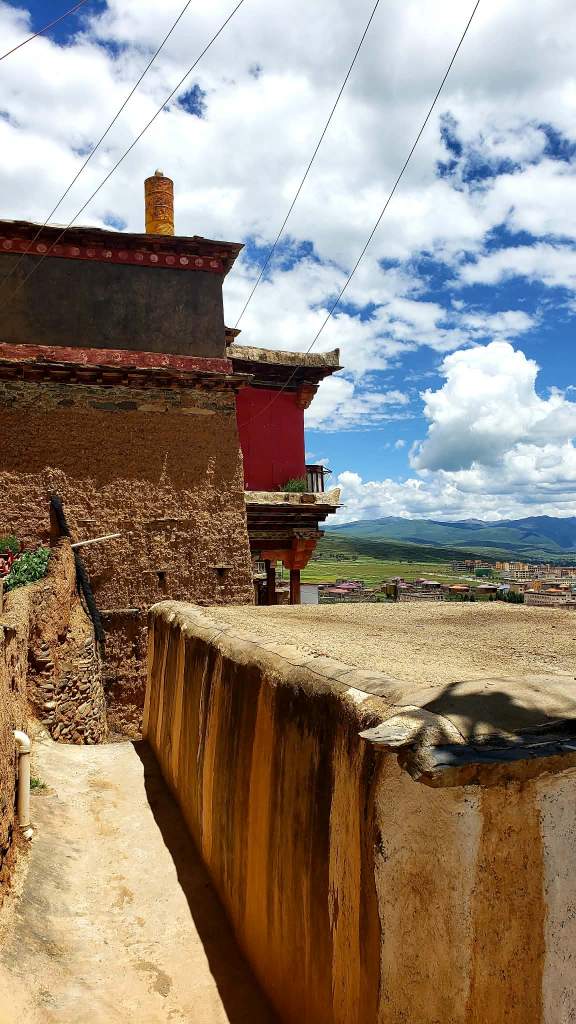
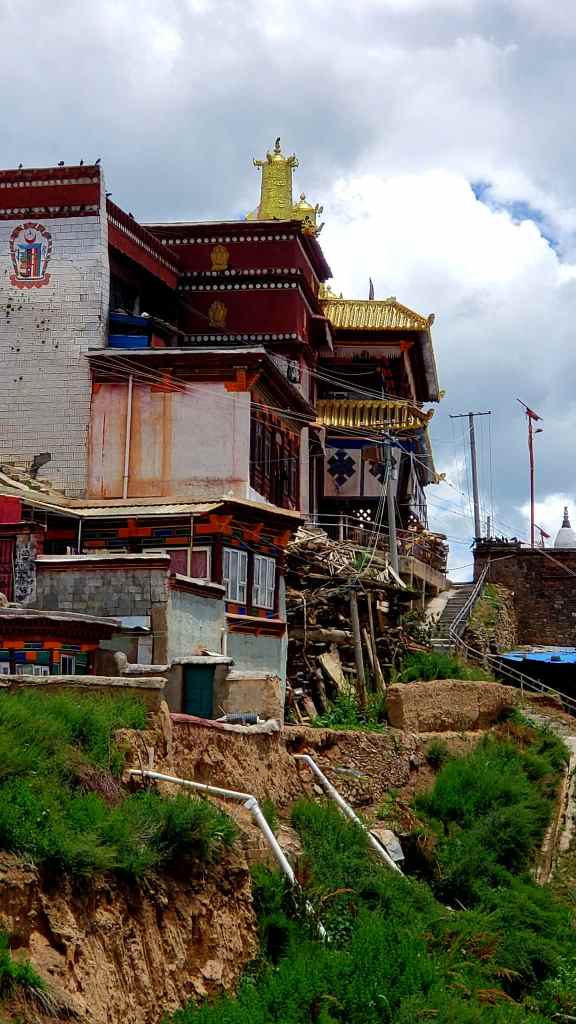
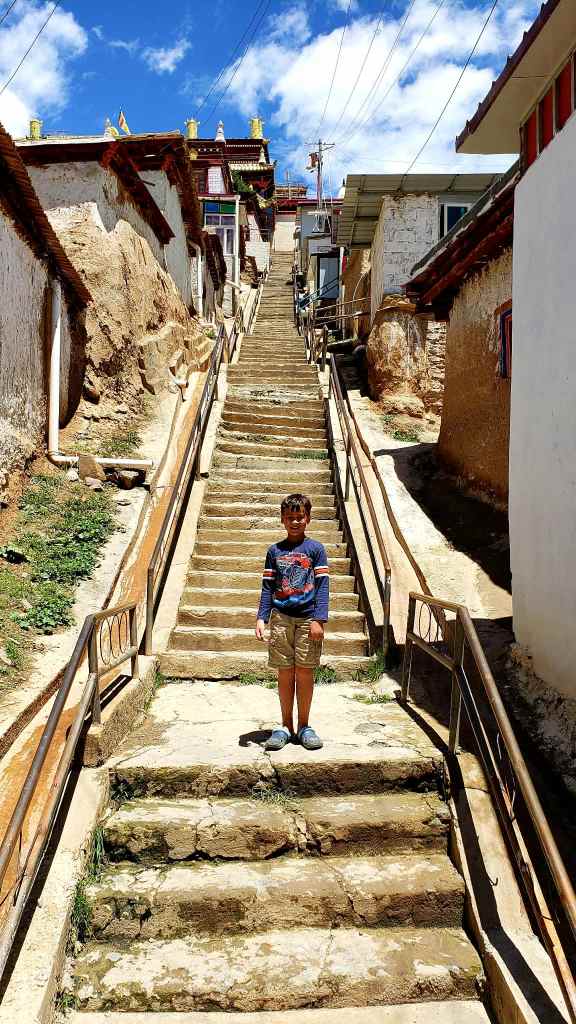
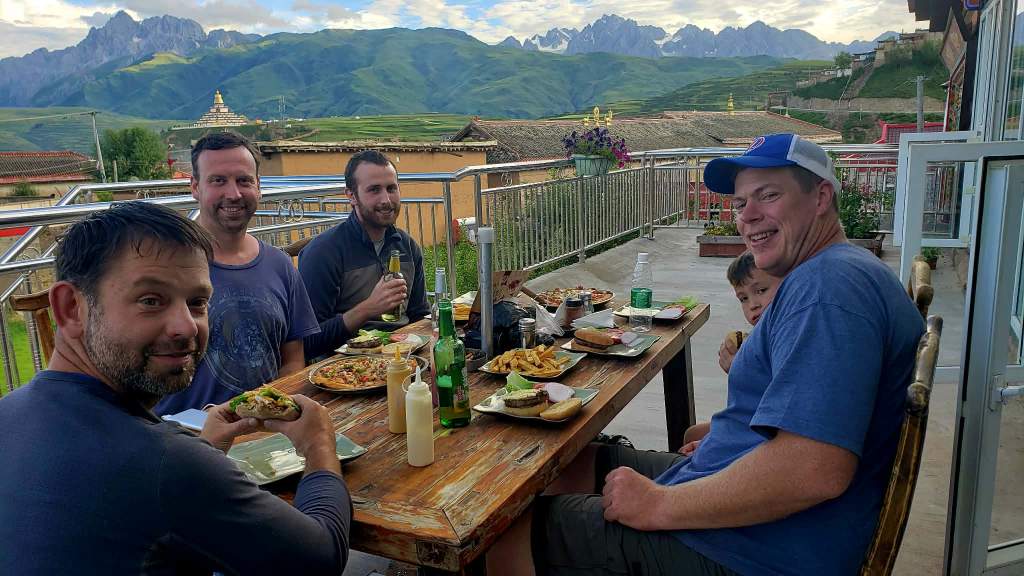
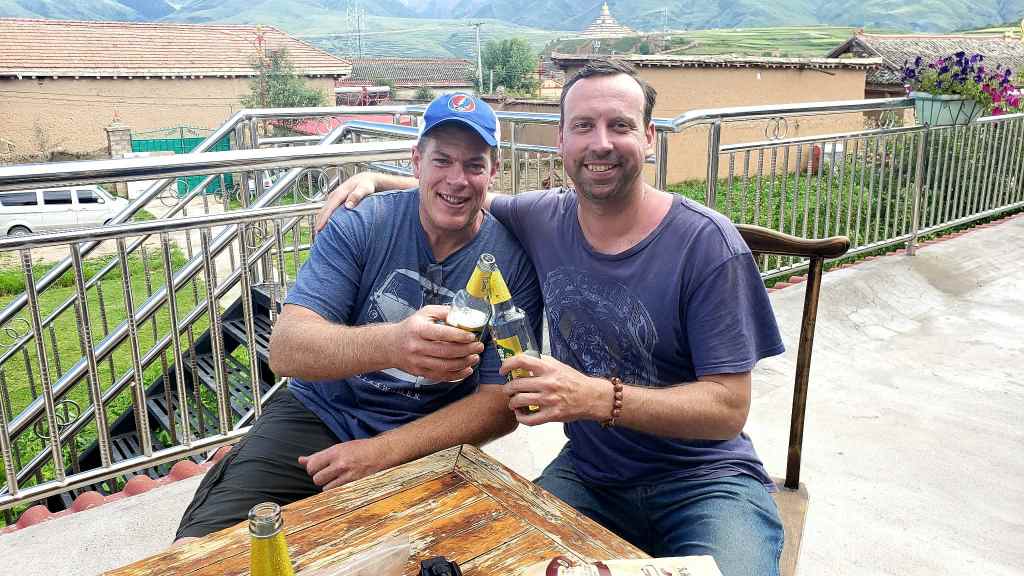
We reconvened back at the hostel in the early afternoon. Gavin rotated between the trampoline and various new friends, while the adults drifted out onto the deck and quietly declared happy hour. Dinner leaned heavily into comfort food—pizza and burgers—and nobody complained. Gavin, officially on his first boys’ trip, was allowed to stay up with us that night while I caught up with Jeremy under the high-plateau sky.
It wasn’t a big day by itinerary standards. No long drives. No miles logged. Just one full day in Garzê, moving slowly, paying attention. The monastery lights came on as dusk settled over the valley, and the town below folded quietly into itself. Tomorrow we would leave, but Garzê would not notice. Monks would debate. Kids would bounce on trampolines. Clouds would slide past the ridges. And that, somehow, felt like the right way to end a day here.
 Wise Clan in Stanland
Leave a comment