February 23, 2026
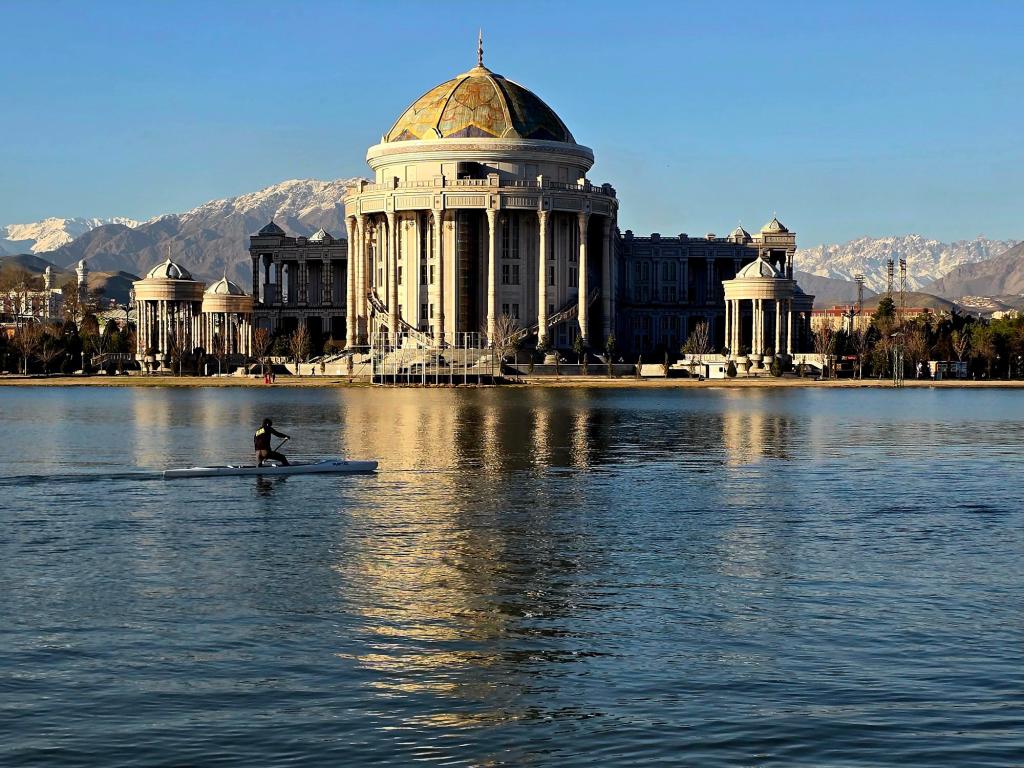
On a quiet Monday afternoon, I went for a walk around our city—a city quite literally called Monday.
A city called Monday?
It doesn’t exactly roll off a Westerner’s tongue as the most inspiring of names. Mondays usually come with a reputation: alarms, routines, the long stretch to the next weekend. But here, the name has nothing to do with the workweek and everything to do with trade.
The name Dushanbe comes directly from Persian. Dushanbe (دوشنبه) translates simply to “Monday.” The reason is wonderfully practical: long before this was a capital city, it was a gathering place for a Monday market, drawing people in from surrounding villages and valleys to trade goods, catch up on news, and connect with one another. Over time, the market day became the place, and the place became the name.
As far as I know, Dushanbe may be the only capital city in the world that is essentially named “market day.”
There was a brief interruption to that simplicity. Between 1929 and 1961, during the height of the Soviet period, the city was renamed Stalinabad. Like many things tied to that era, the name eventually fell out of favor, and the city returned to its original identity—back to Monday once again.
While the city itself is relatively young, the land beneath it is anything but. People have lived in and passed through this valley for over 2,000 years. Sitting at a natural crossroads between mountain valleys and lowland routes, this area has long been a hub for trade and movement across what is now Central Asia. Up until the early 1900s, Dushanbe was little more than a large village clustered around its market.
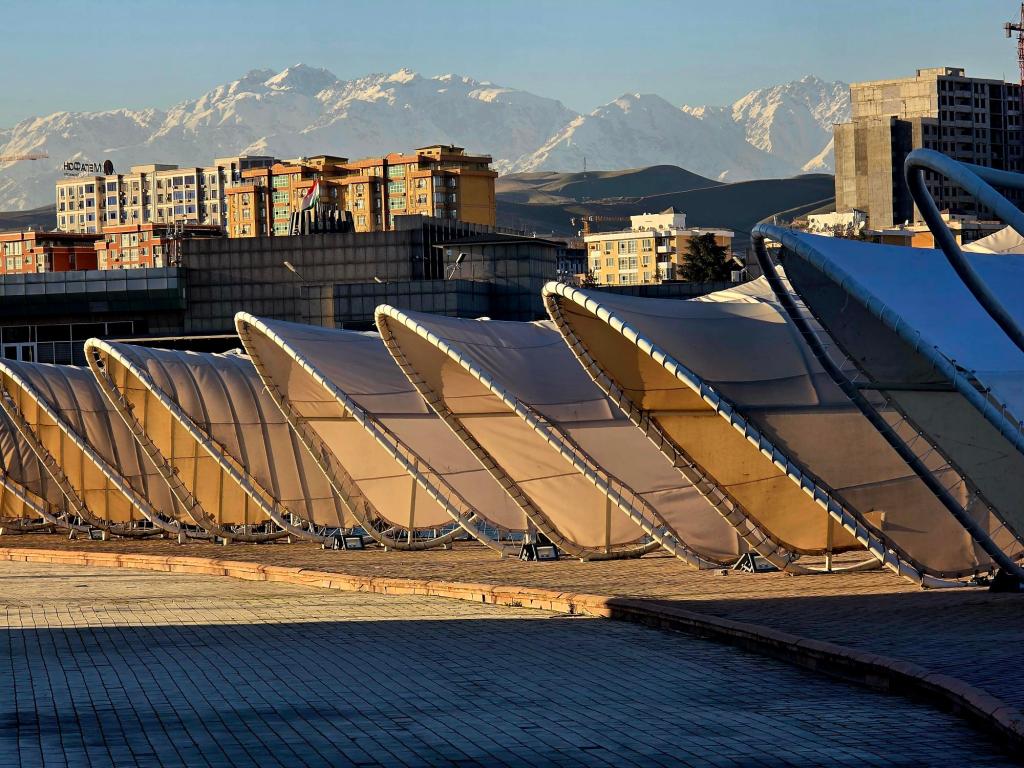
Everything changed in 1924, when the Soviets selected it as the capital of the newly formed Tajik Autonomous Soviet Socialist Republic. Development followed quickly and decisively. Entire neighborhoods were planned and built, government institutions rose from the ground, and the city expanded outward along wide, orderly lines.
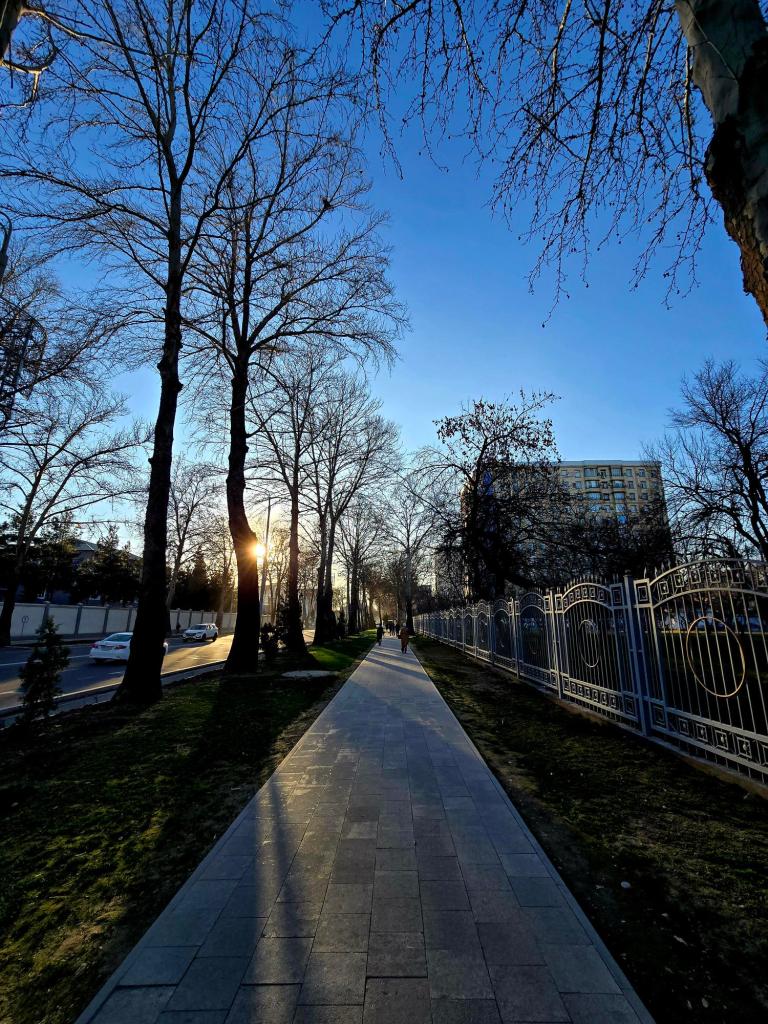
One thing the Soviets undeniably did well here was urban design. Dushanbe was laid out with broad boulevards and generous green space, and—most noticeably—trees. The plane trees lining Rudaki Avenue are enormous now, especially in the older neighborhoods, forming shaded tunnels that make walking the city a pleasure during much of the year. Even decades later, those early planning decisions still shape how the city feels at street level.
Living here, though, isn’t without its challenges. The biggest downside we’ve experienced is air quality, particularly in winter. There are stretches when the mountains—normally looming and ever-present—fade almost completely behind a gray veil of smog. Weeks can go by when the peaks are only hinted at, not seen.
That reality is one of the reasons we feel such a strong pull to escape the city whenever we can, heading up into the mountains on weekends to breathe clean air and remind ourselves what this place looks like without the haze.
Which brings me back to yesterday’s walk.
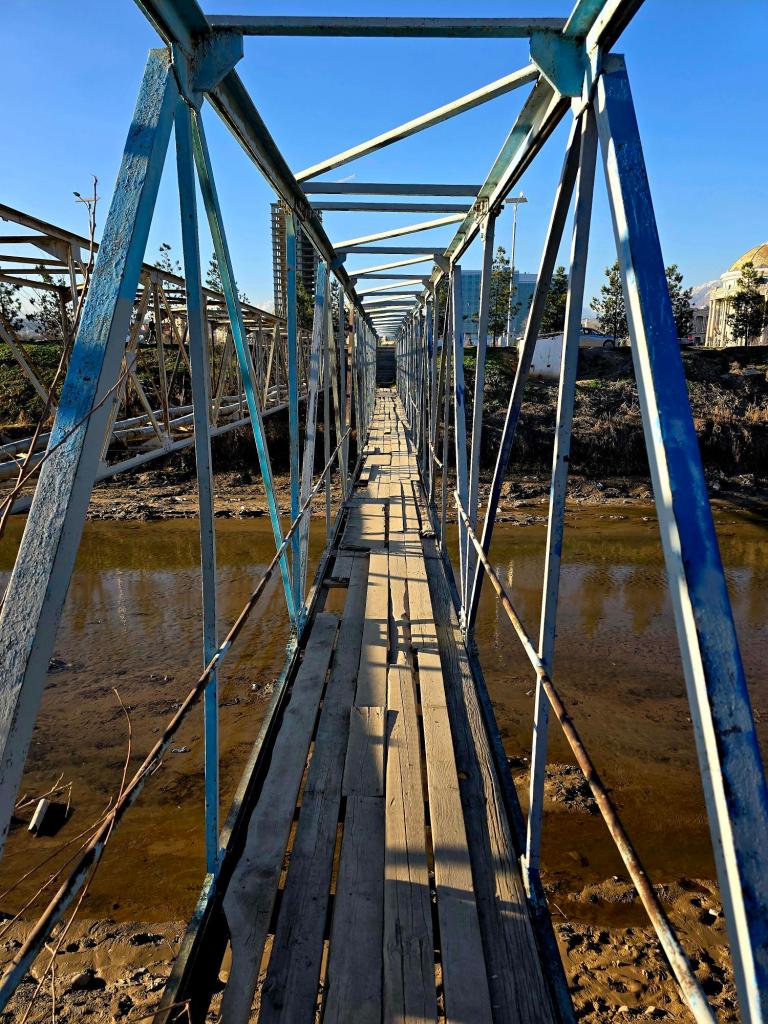
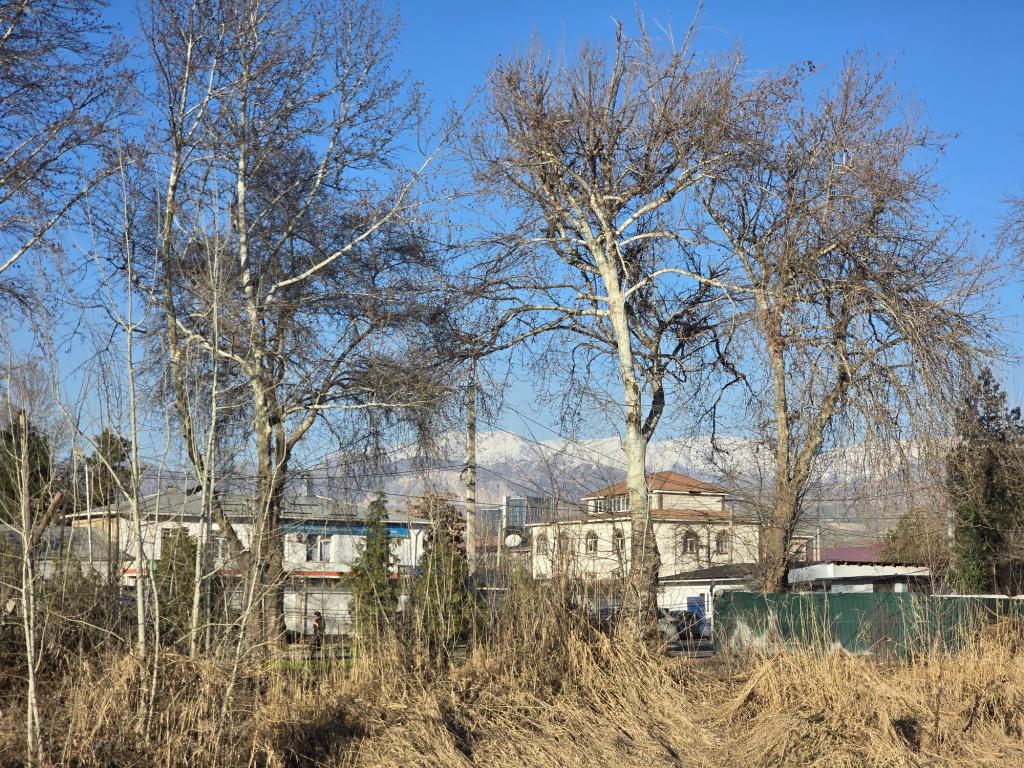
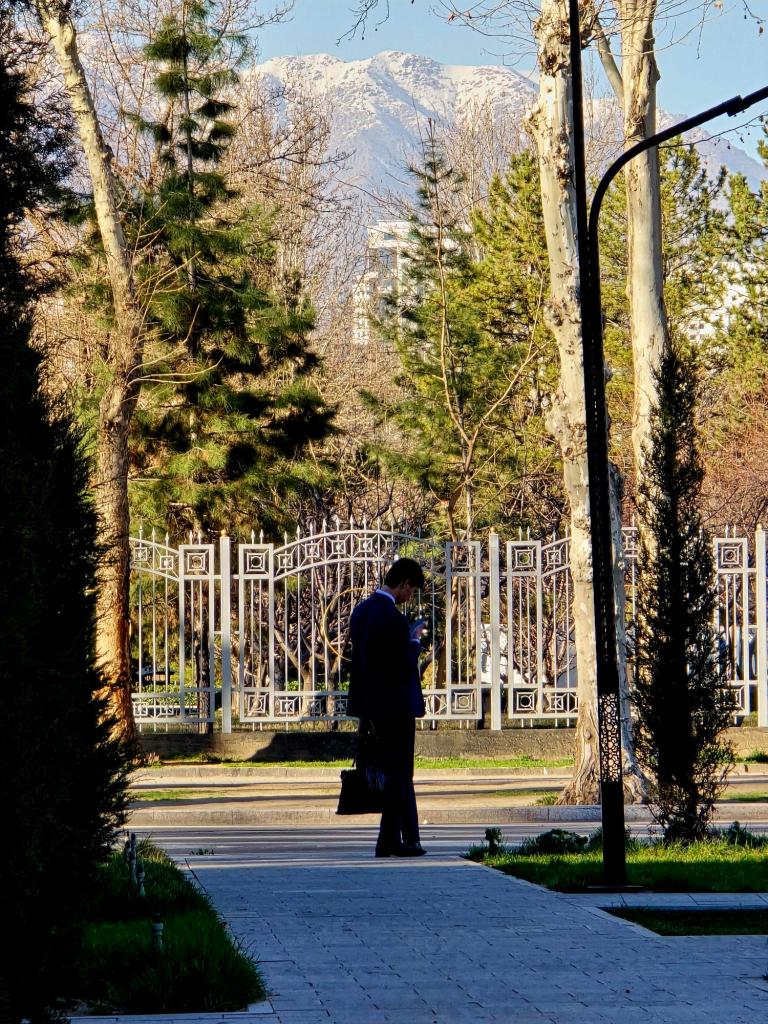
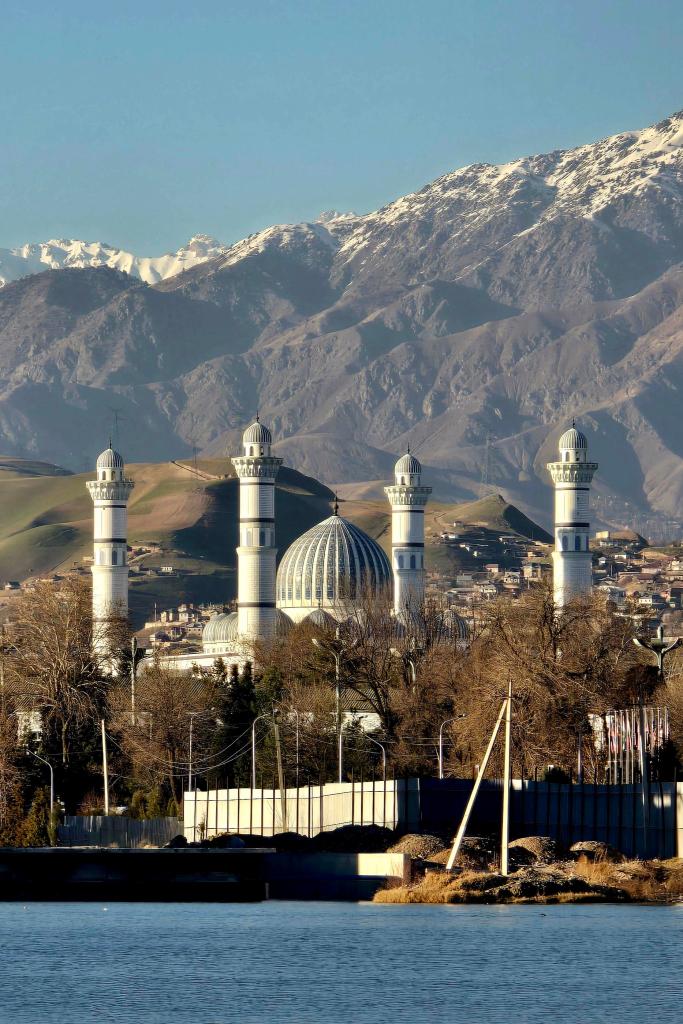
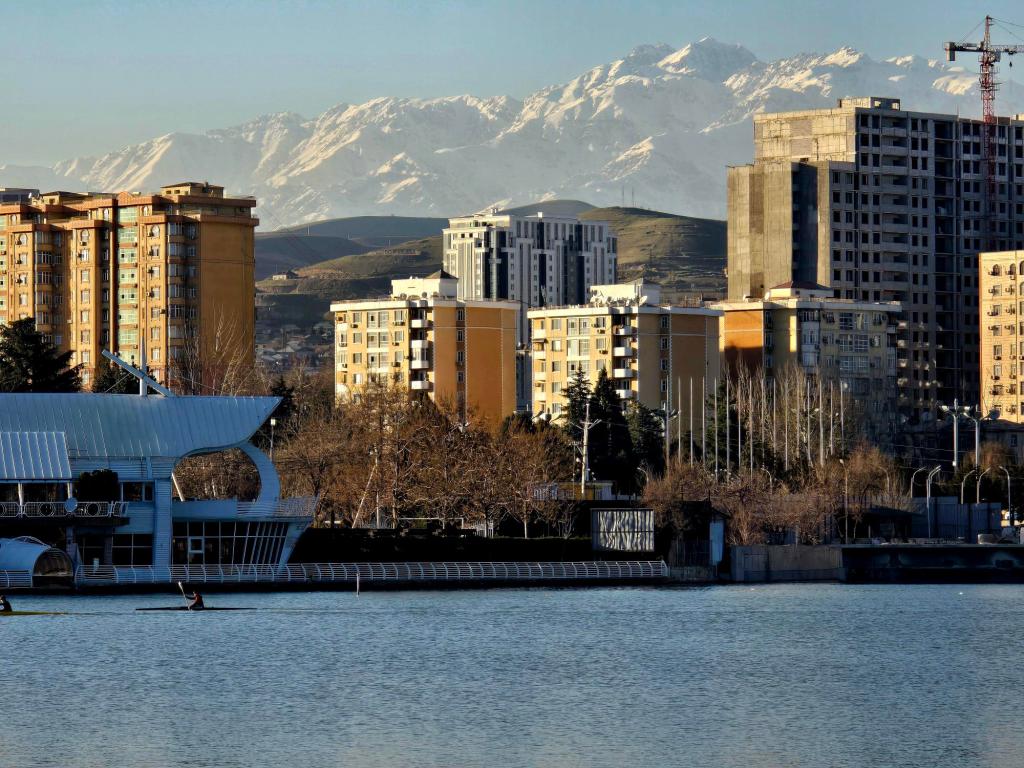
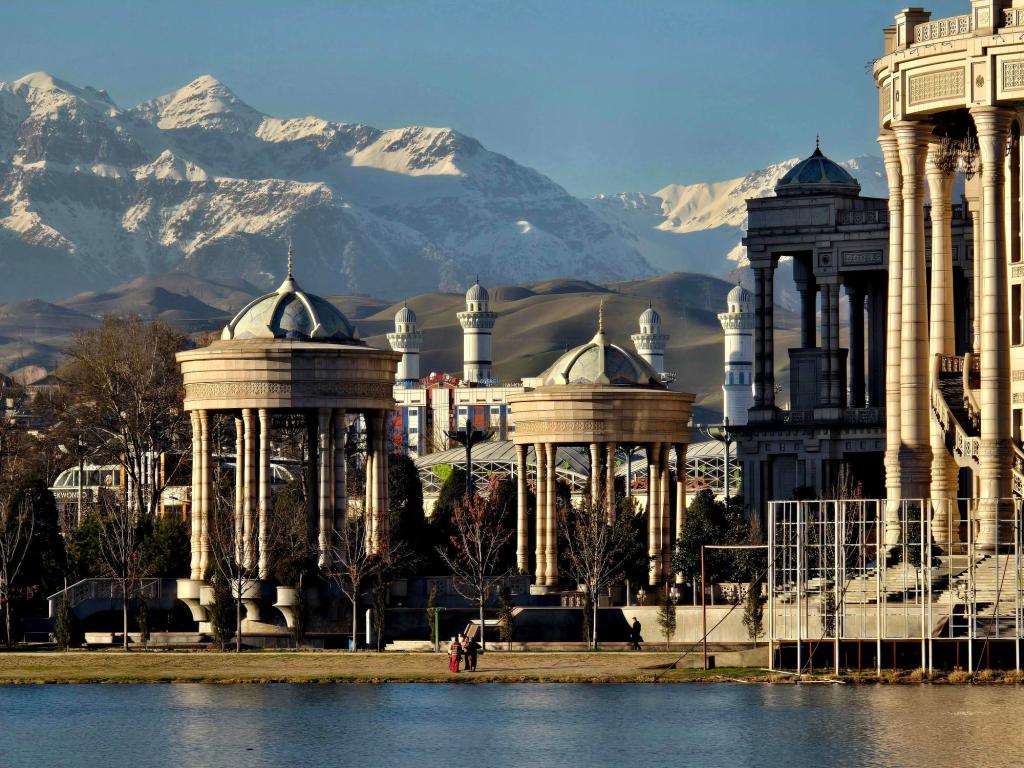
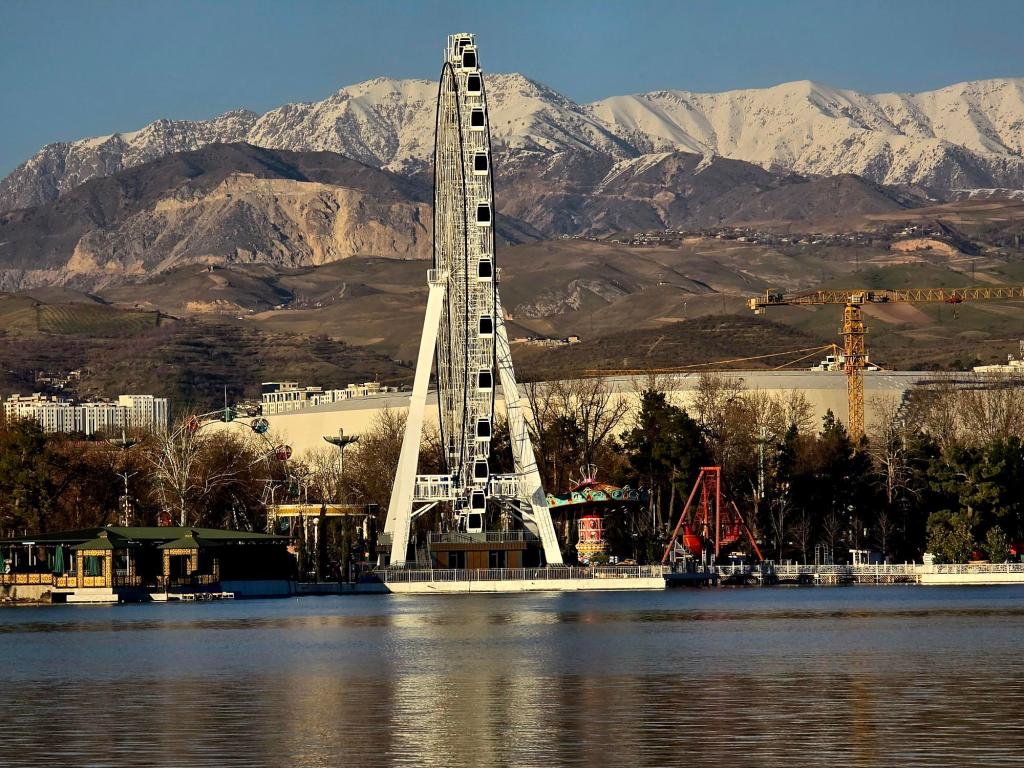
For the first time in a while, the air had been clear all day. By the time I finished work, the light was soft, the sky open, and the urge to get outside was impossible to ignore. I wandered down toward the lake behind the Hyatt Regency, where the city opens up just enough to let the mountains back into view. They sat there quietly in the distance, framing the city and reminding me why Dushanbe works so well when everything aligns.
On a Monday afternoon, in a city named Monday, with clear air and mountains in view—it felt like exactly the right way to end the day.
 Wise Clan in Stanland
Leave a comment