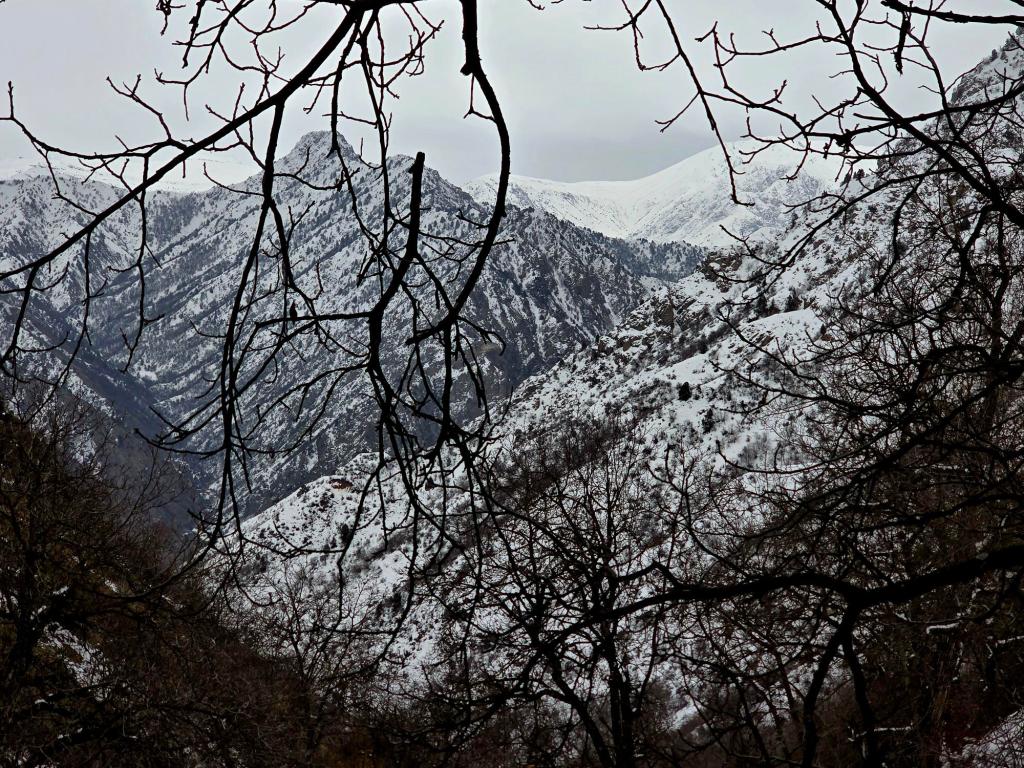
One morning early last March, while our older two were buried in schoolwork and my wife was getting ready for a market run and the week ahead, my youngest and I slipped out for a quieter plan. We met up with a small group of friends from Hike Tajikistan in the north of the city and drove about forty minutes up the Varzob Valley to Khushori, a small mountain village tucked just far enough off the main road to feel removed from the valley’s usual noise.
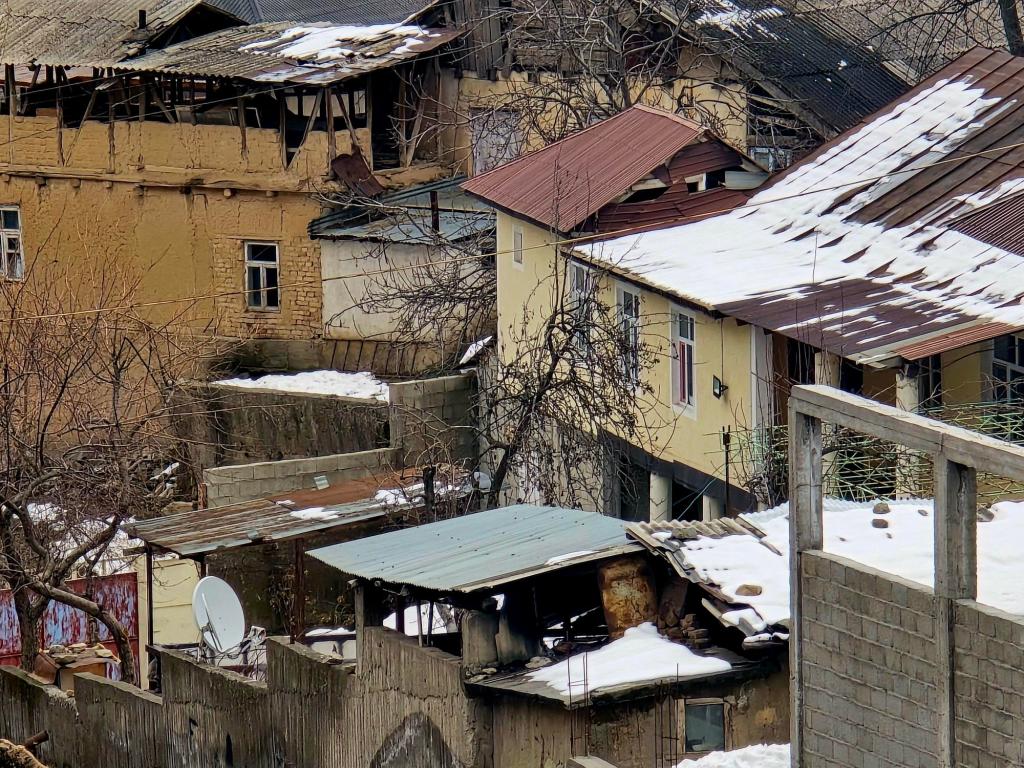
In early March, Khushori was still firmly in winter’s grip. Rooftops were rimmed with old snow, footpaths were packed hard and slick, and irrigation channels lay silent beneath ice. Down below, the valley floor hinted at spring, but up here the season lagged behind—cold mornings, long shadows, and that quiet stillness that comes before things finally thaw. A mile or two beyond the last homes, winter reasserted itself completely. Snow deepened quickly, swallowing the faint tracks that passed for a trail and forcing a slower, more deliberate pace. There was no real handoff between village and mountain—just a quiet transition from human space into open winter terrain.
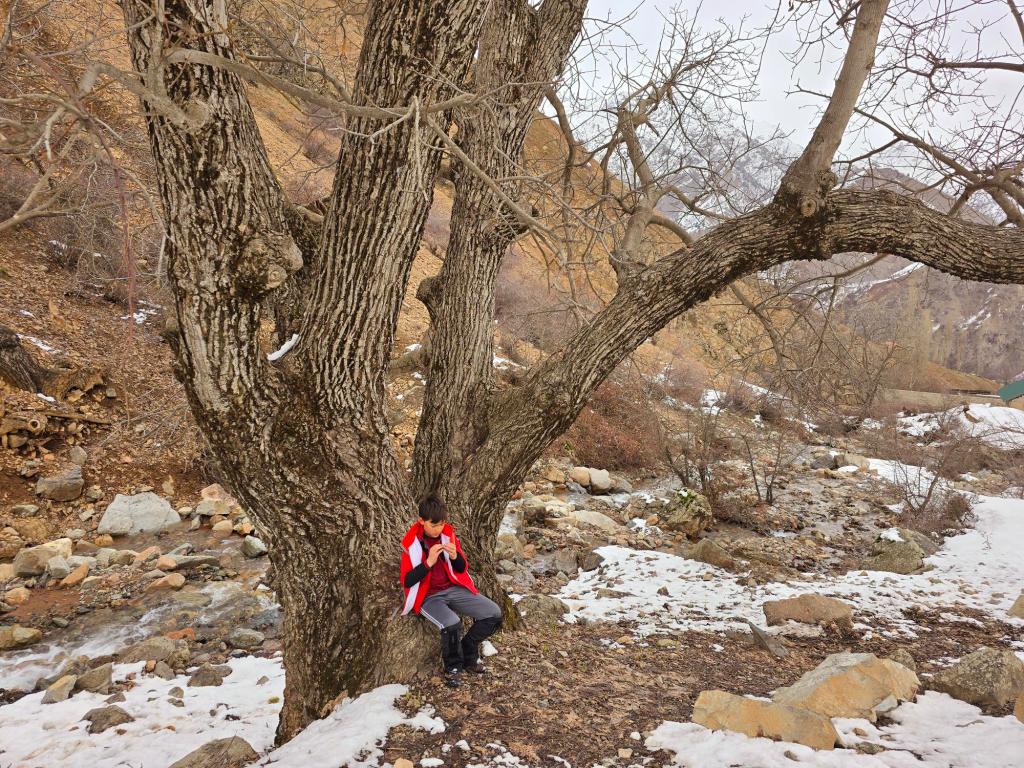
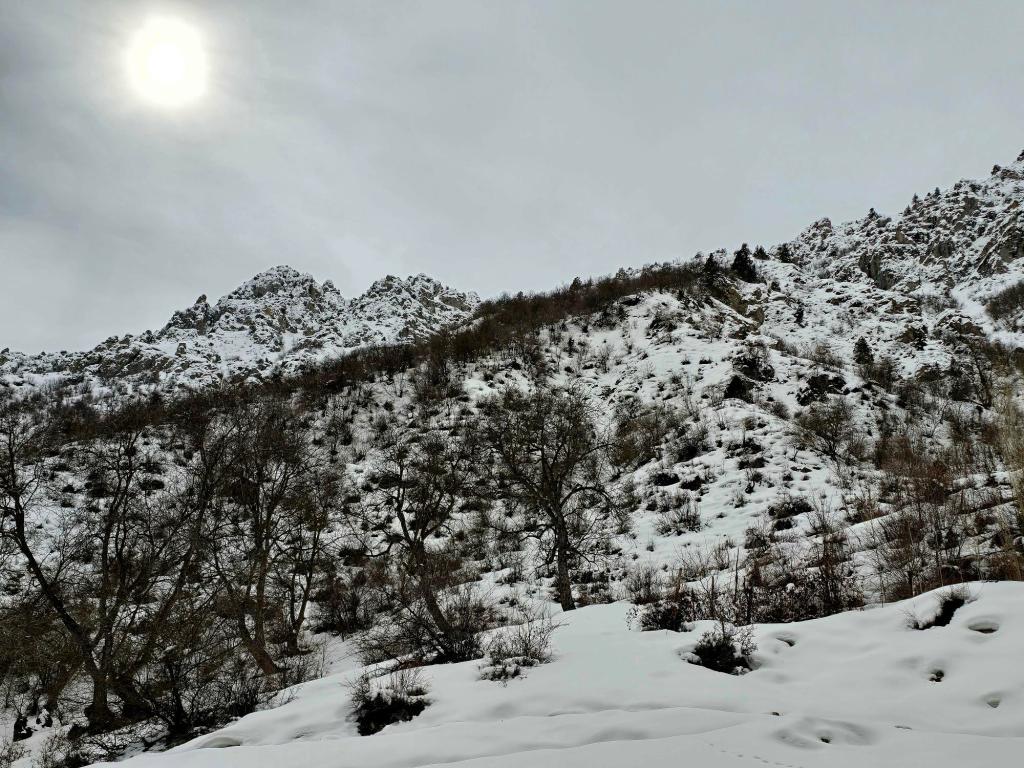
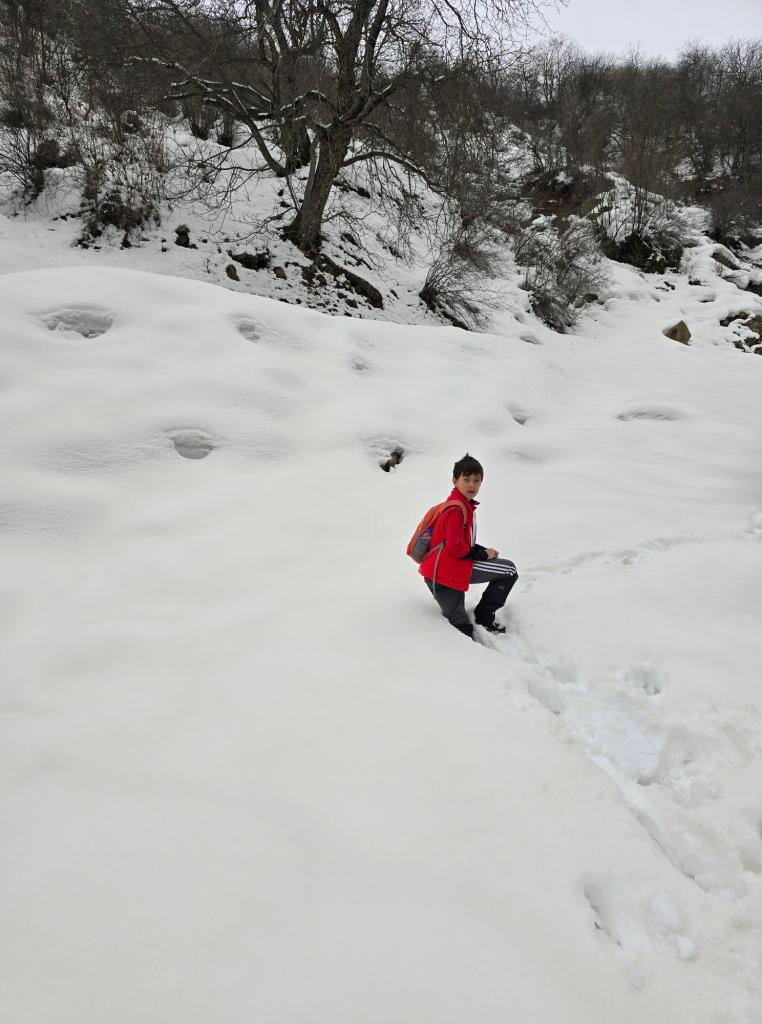
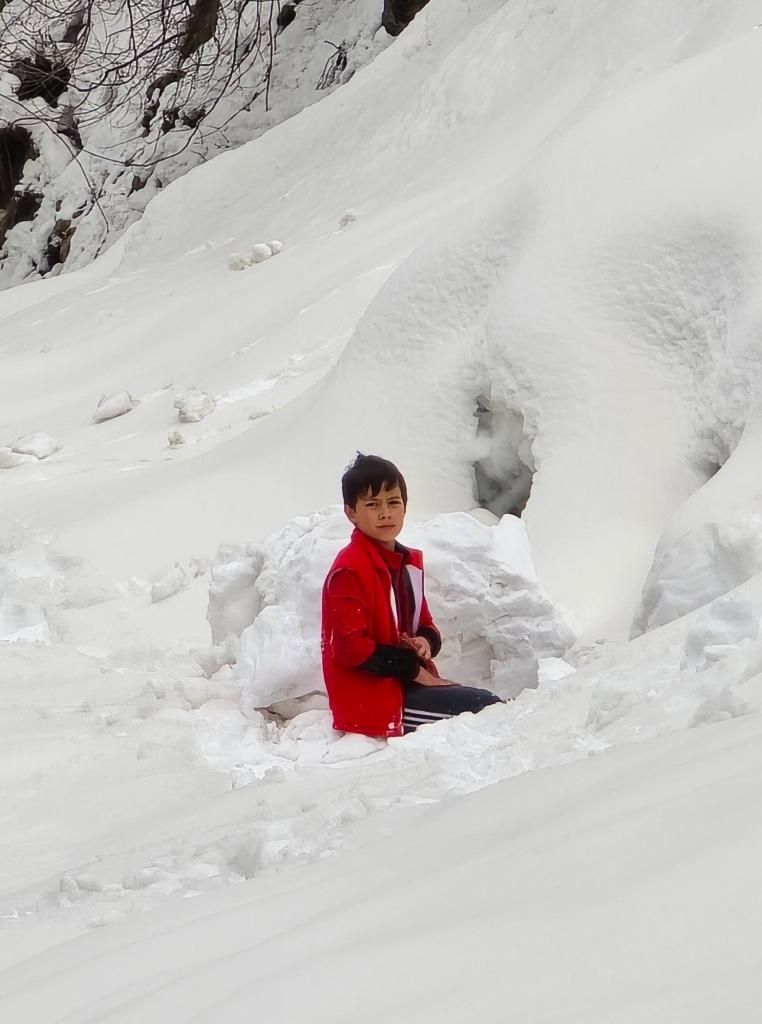
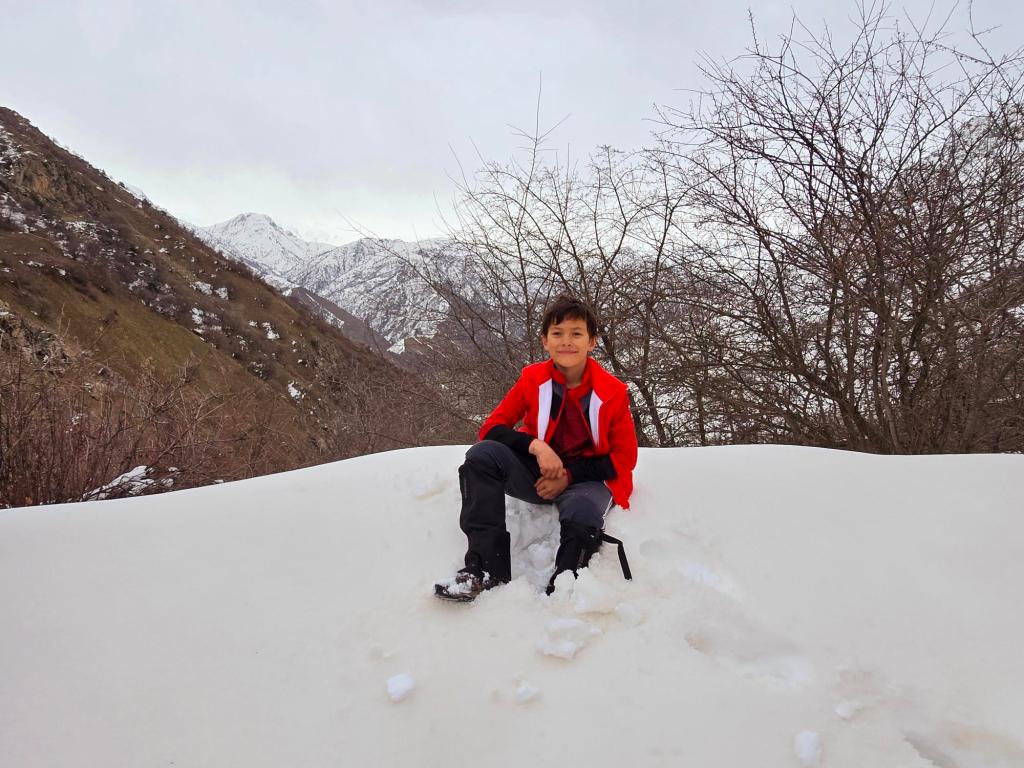
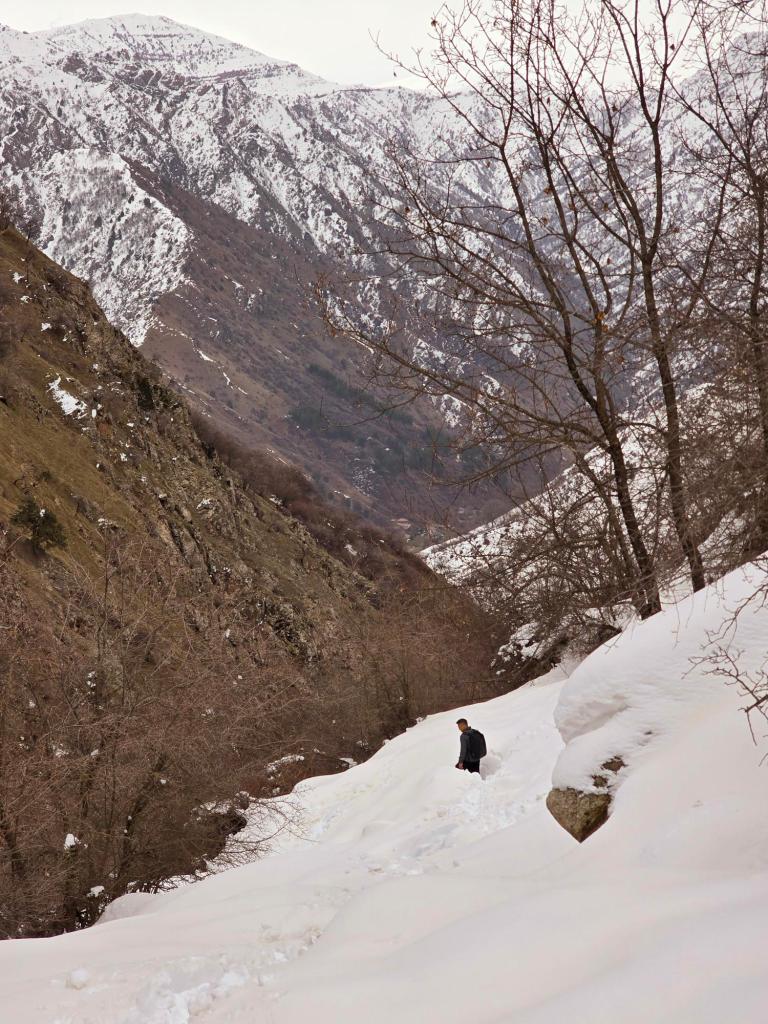
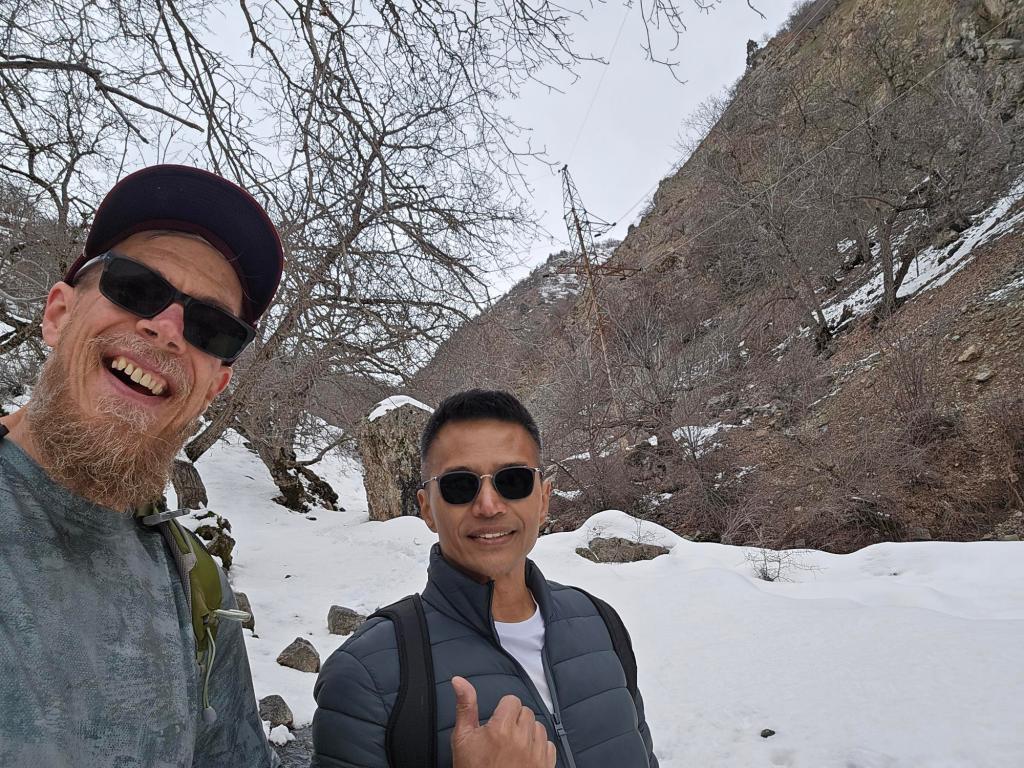
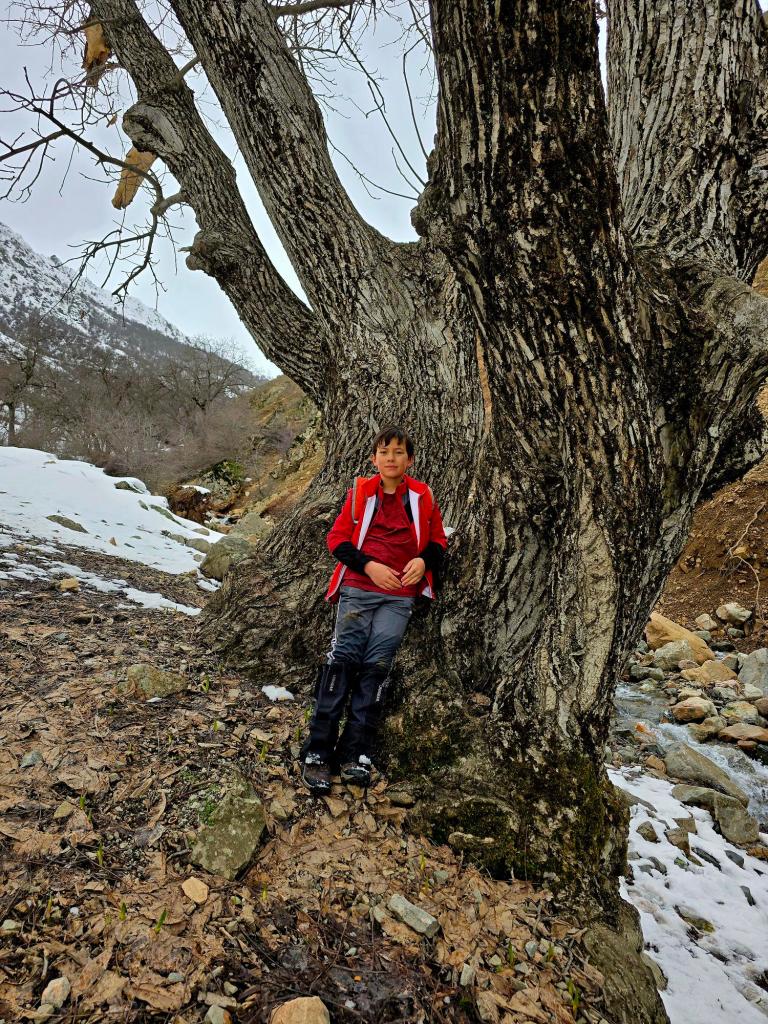
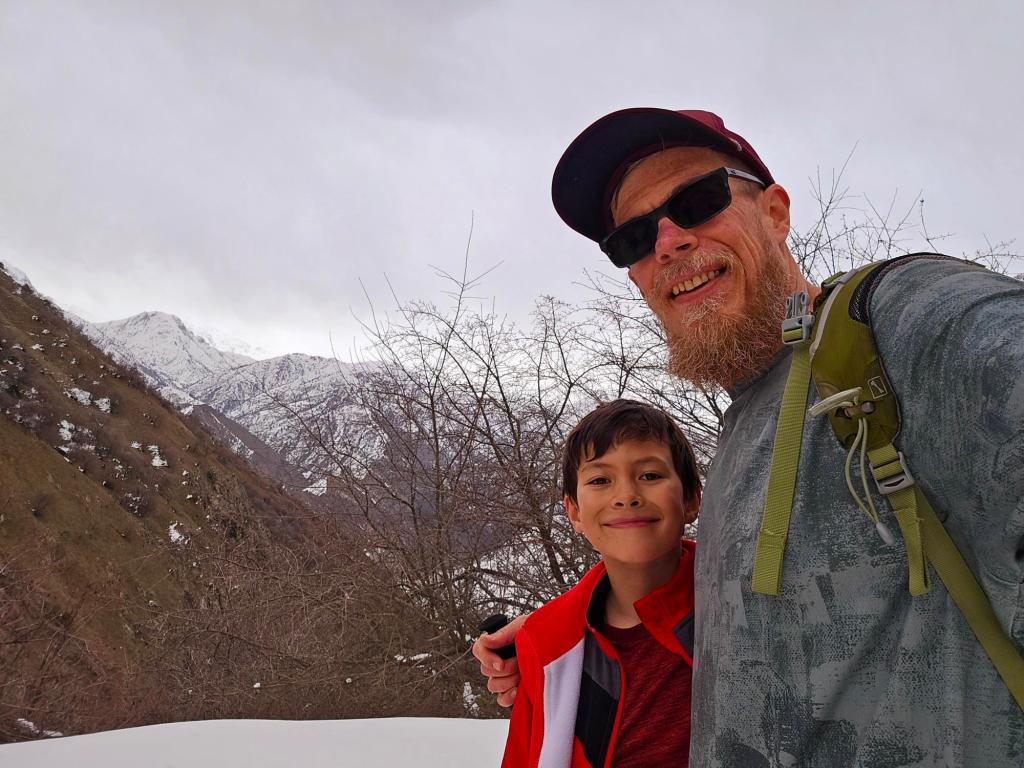
After passing the last house, we followed the river toward the base of the climb at a steady, manageable incline. The closer we got to where the slope steepened, the deeper the snow became. We stopped for a snack at the base of the climb, then set off hoping to reach the ridgeline, where the mountains stretch away in every direction. The snow had other ideas. By the second long switchback, it was already knee-deep on me and even higher on Rowan. I had him fall back so several people could break trail ahead of him, and we pushed on a bit farther before emerging onto a small perch with a clear view back down the valley. That was as far as ambition carried us that day. Lunch came out, spirits stayed high, and the mountains were more than enough without demanding a summit.
On the way back down along the river, the mood shifted from effort to play. Rowan and I took turns shoving huge blocks of snow over the edge, watching them roll and grow as they tumbled thirty or forty feet downhill before exploding into the river below. It was pure boys’ entertainment, the kind that requires no explanation and no memory beyond the moment itself.
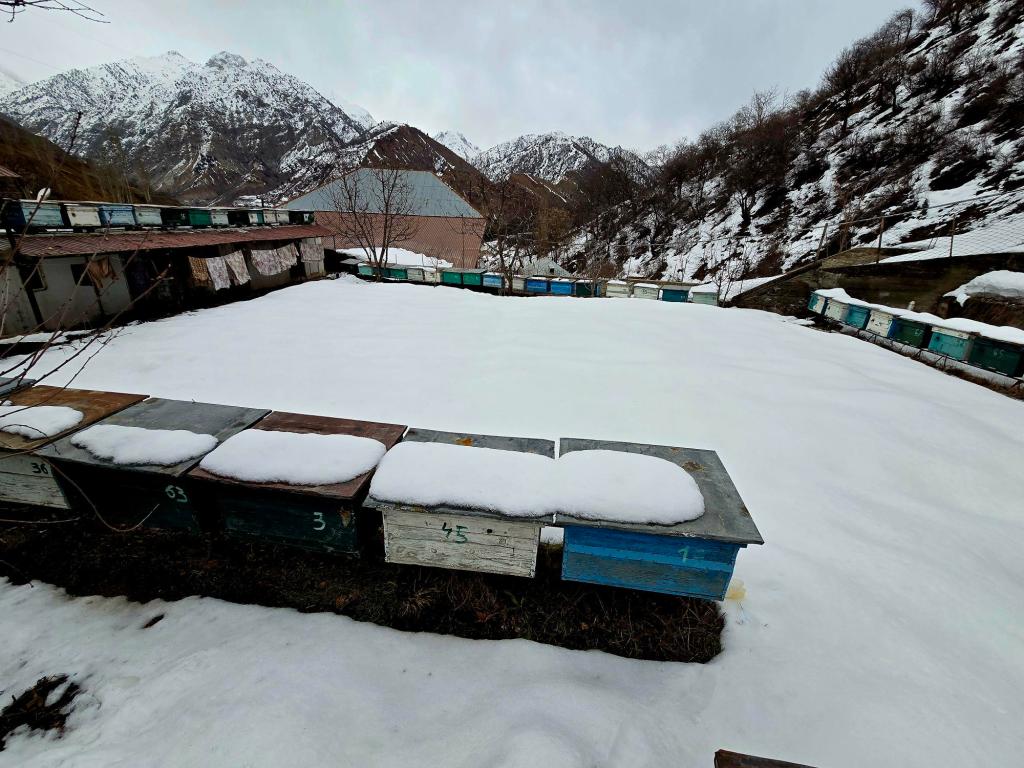
We slow-walked back into Khushori, boots wet and legs tired, when a gate swung open and a man stepped out with a warm smile and easy greetings. He invited our group into his courtyard, where we learned the family were beekeepers. Snow-capped bee boxes lined the yard, and before long fresh flatbread appeared, followed by bowls of pure, unfiltered mountain honey.
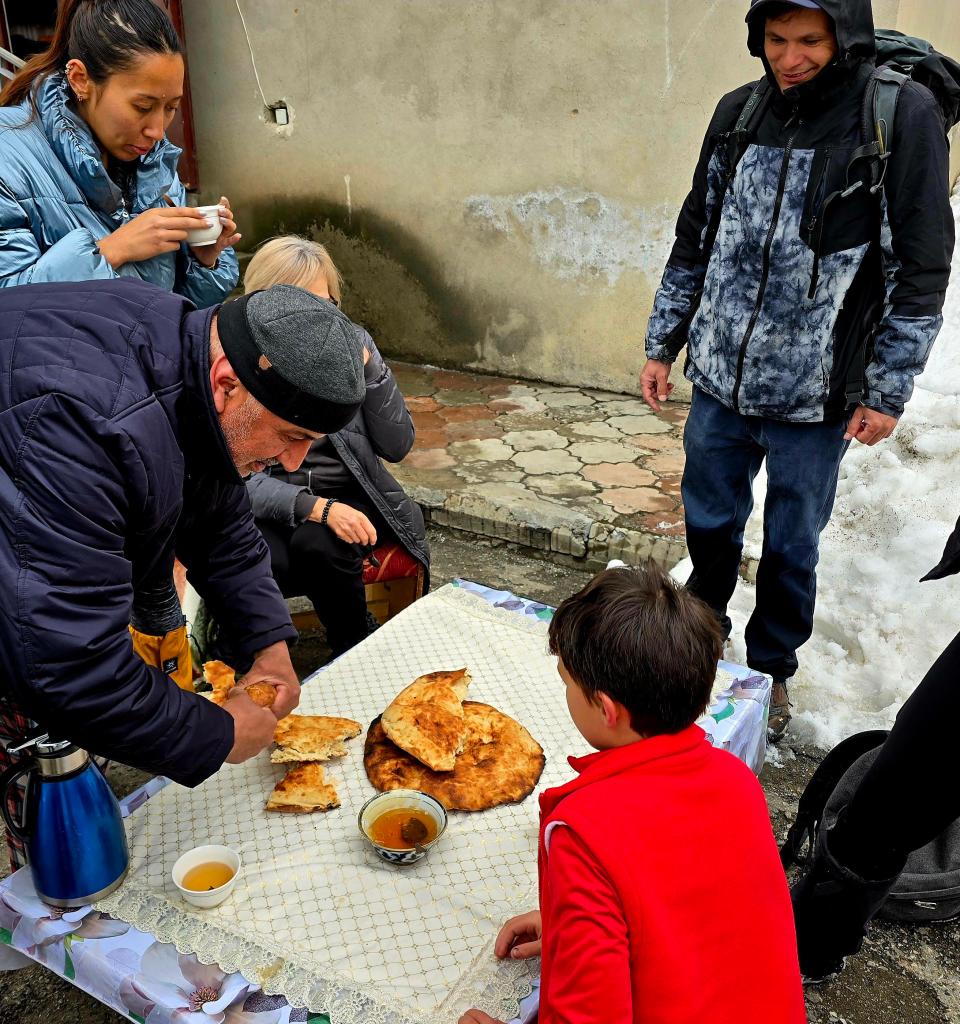
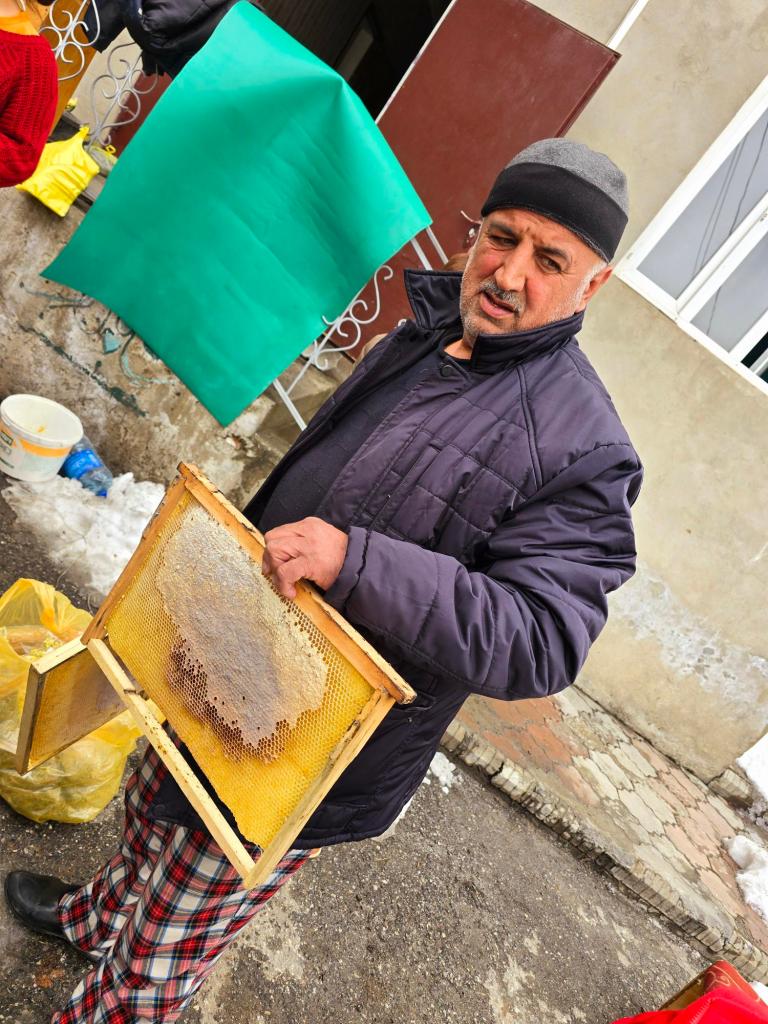
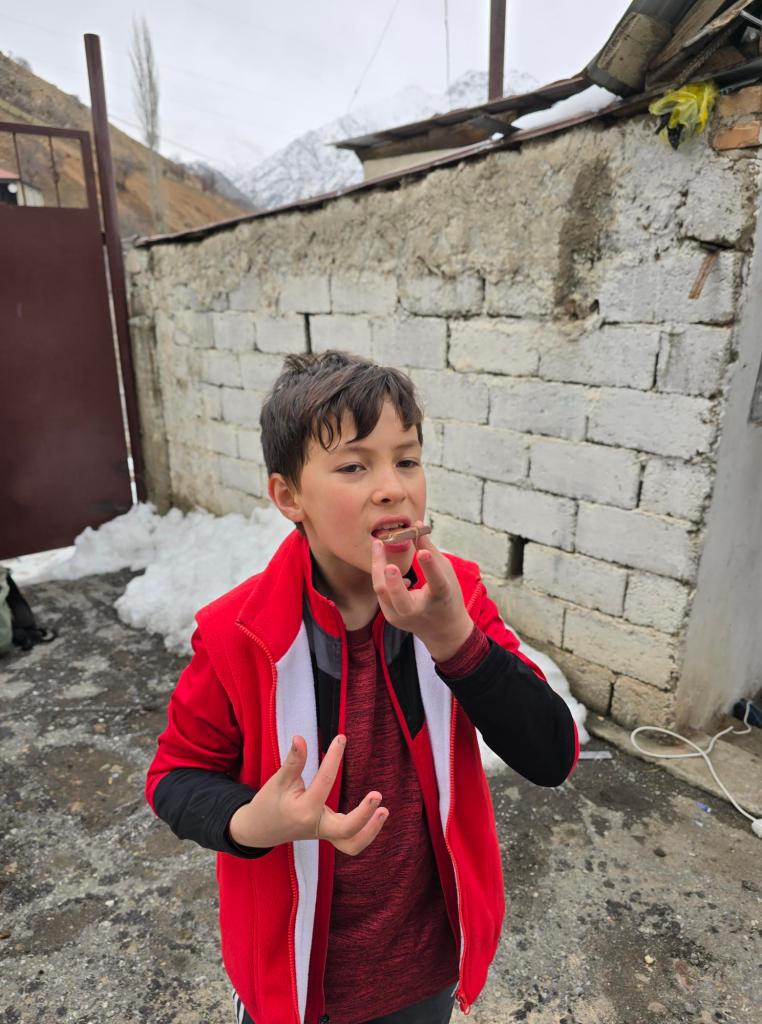
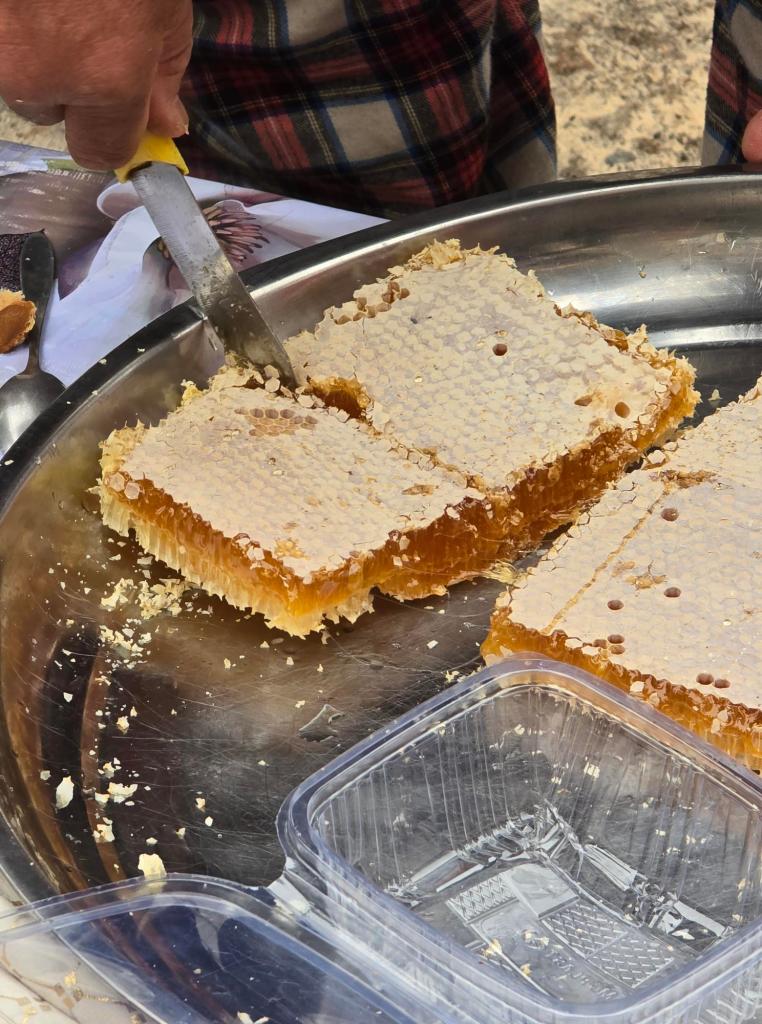
The first round of bread disappeared quickly, each torn piece buried under generous drizzles of honey. Then came a second round, and the process repeated itself without hesitation. Central Asian honey is hard to describe properly—rich, floral, and impossibly smooth—but it didn’t take long for all of us to start quietly calculating how many jars we could afford with the cash in our pockets. As those calculations were underway, the family patriarch returned holding a large rectangular honeycomb. He broke off bite-sized pieces and passed them around, smiling as we stood there chewing, sticky-fingered and happy.
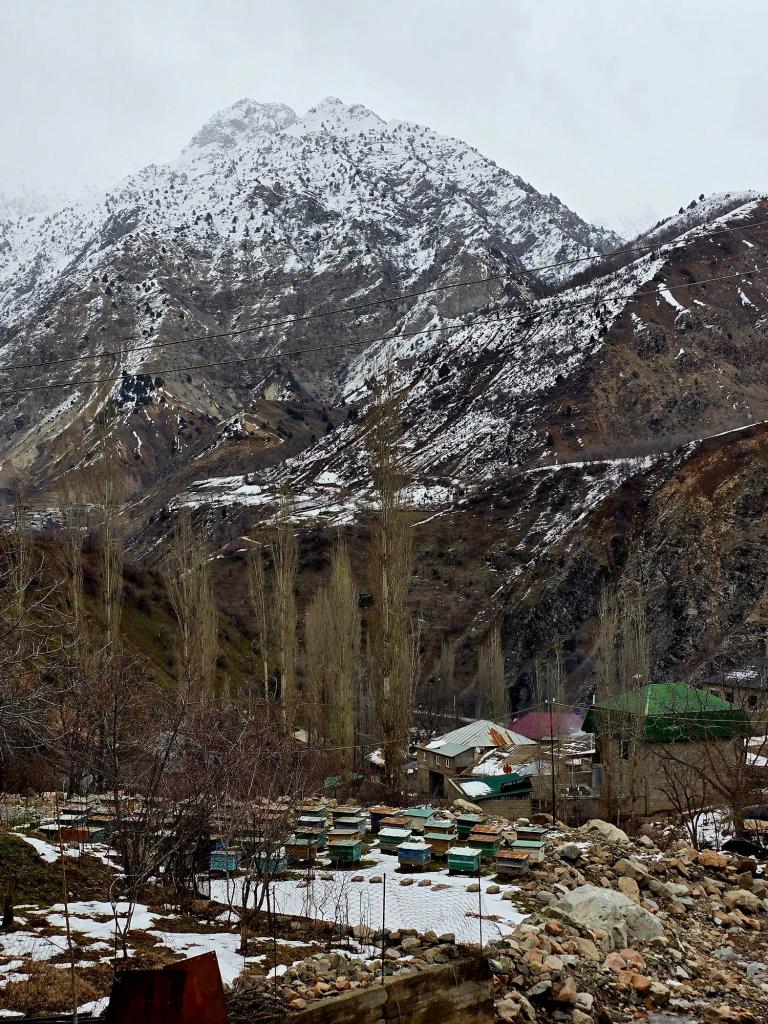
I left Khushori that day carrying three-liter bottles of honey and nearly a kilogram of honeycomb. It sounds excessive, but once the kids got hold of it, that haul lasted maybe six weeks. We promised ourselves we’d return in the fall, when the ridgeline would finally open up and the views toward Khoja Obi Garm would be waiting.
 Wise Clan in Stanland
Leave a comment