🥾 Trail Stats
- 📏 Distance: 6.8 miles (11 km)
- ⛰️ Elevation Gain: 2,330 ft
- ⬇️ Elevation Loss: 2,330 ft
- ⏱️ Total Time on Trail: 6 hours 45 minutes
- 🚶 Moving Time: ~4 hours
- 🔁 Route Type: Loop
- ❄️ Season: Winter
- 📅 Date of Hike: February 8, 2026
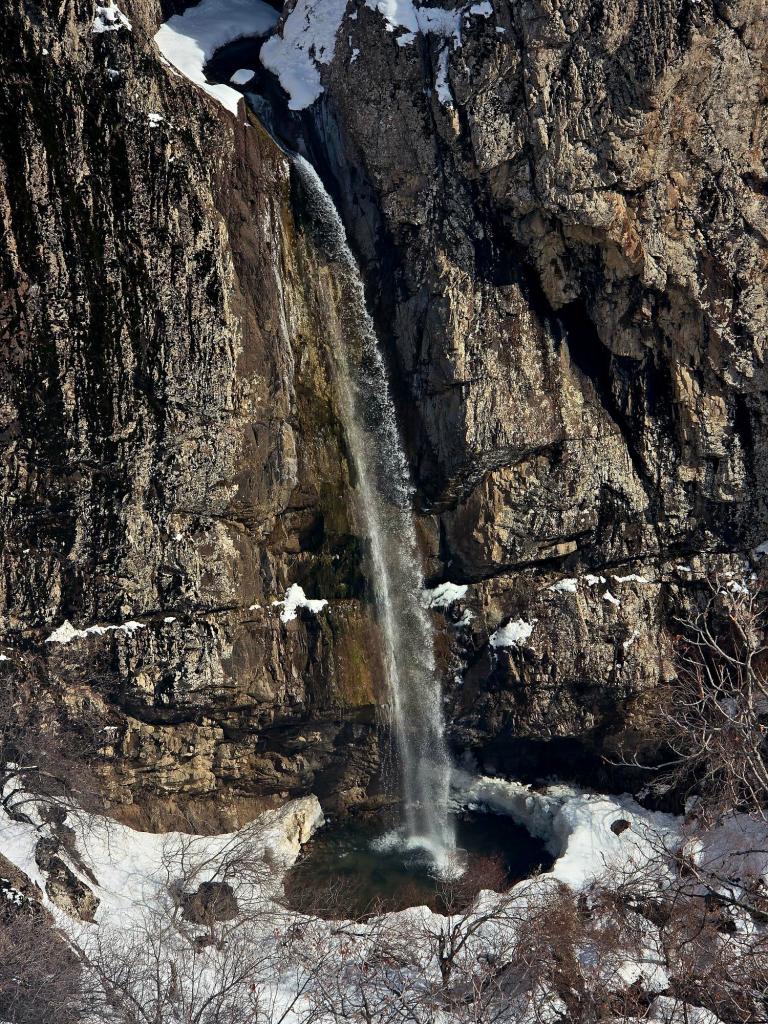
For some reason, I had it in my head that I’d already hiked this route in winter. Standing at the trailhead that morning, it became clear pretty quickly that wasn’t true—I would have remembered this one covered in snow.
The plan for the day was simple enough: hike out to Gusgarf Waterfall, then scout a new route back to the village to turn the standard out-and-back into a full loop. In summer or fall, that idea feels fairly straightforward. In winter, it becomes an entirely different beast.
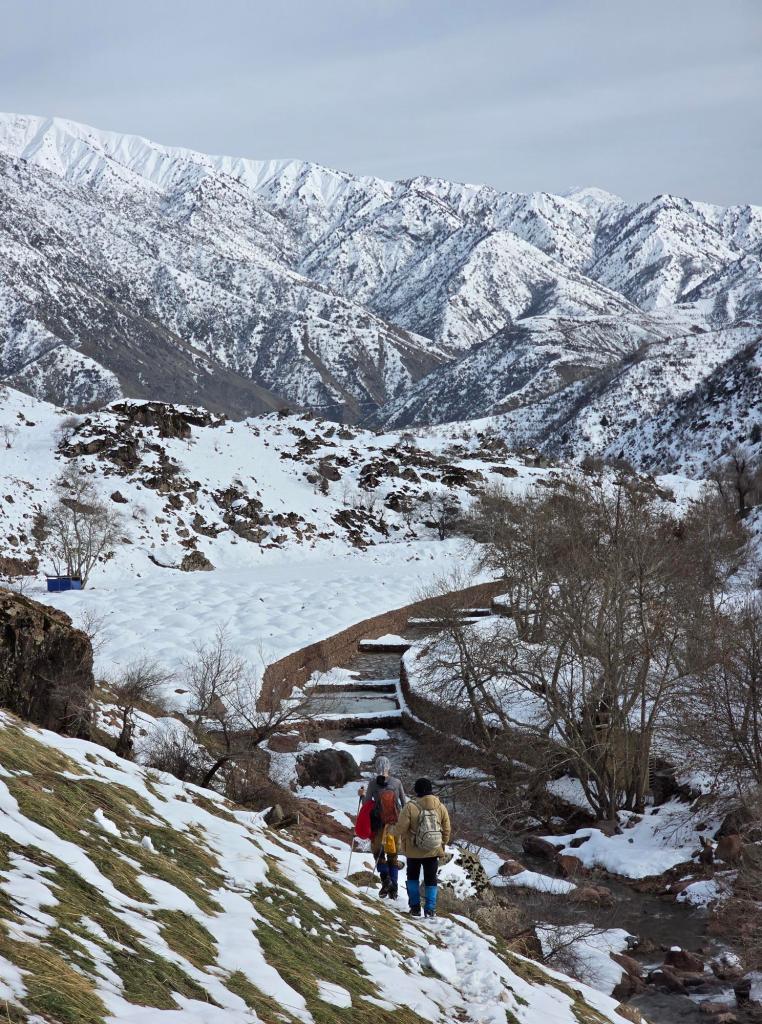
We parked a little lower down in the village than usual and set off on foot. The trail started climbing sooner than I remembered, and before long the valley behind us opened up with some excellent views. Snow was present right from the start, but on this side of the mountain it stayed manageable. For the climb up toward Pioneersky Pass, we didn’t even bother with gaiters—the snow rarely went past ankle deep.
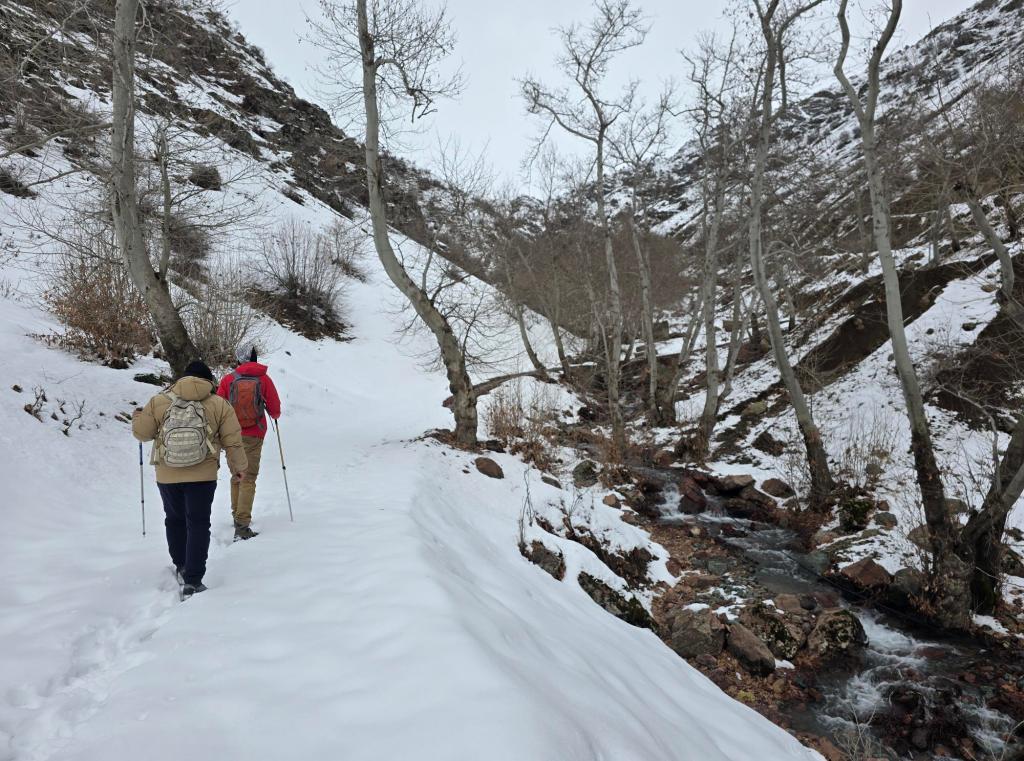
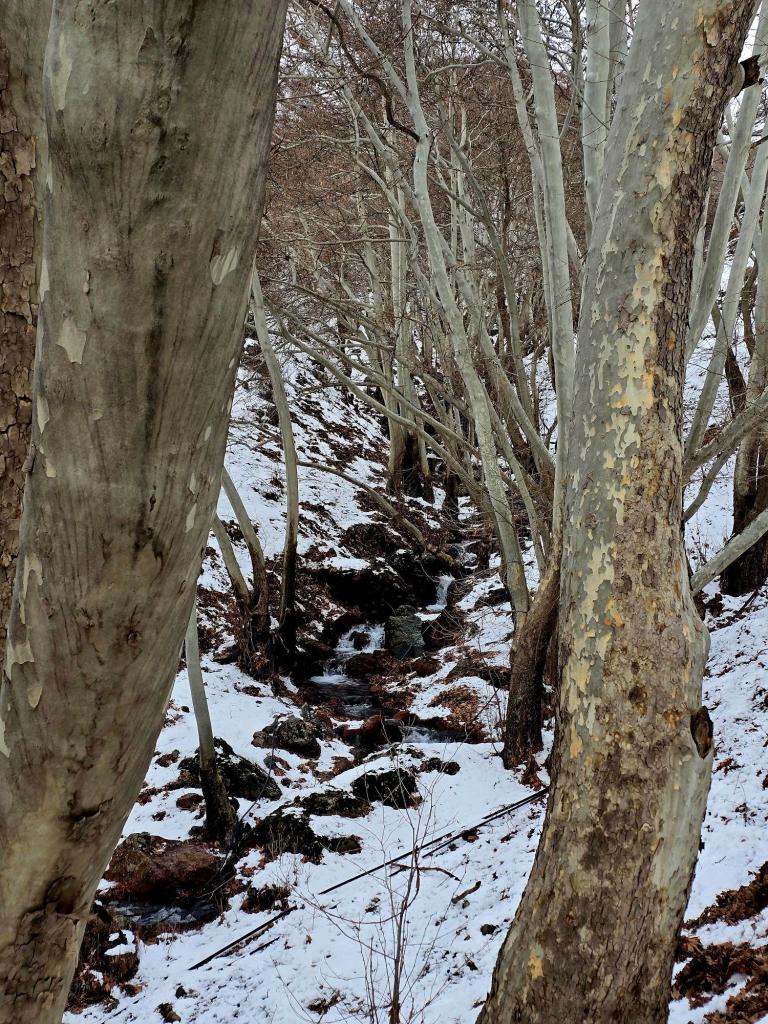
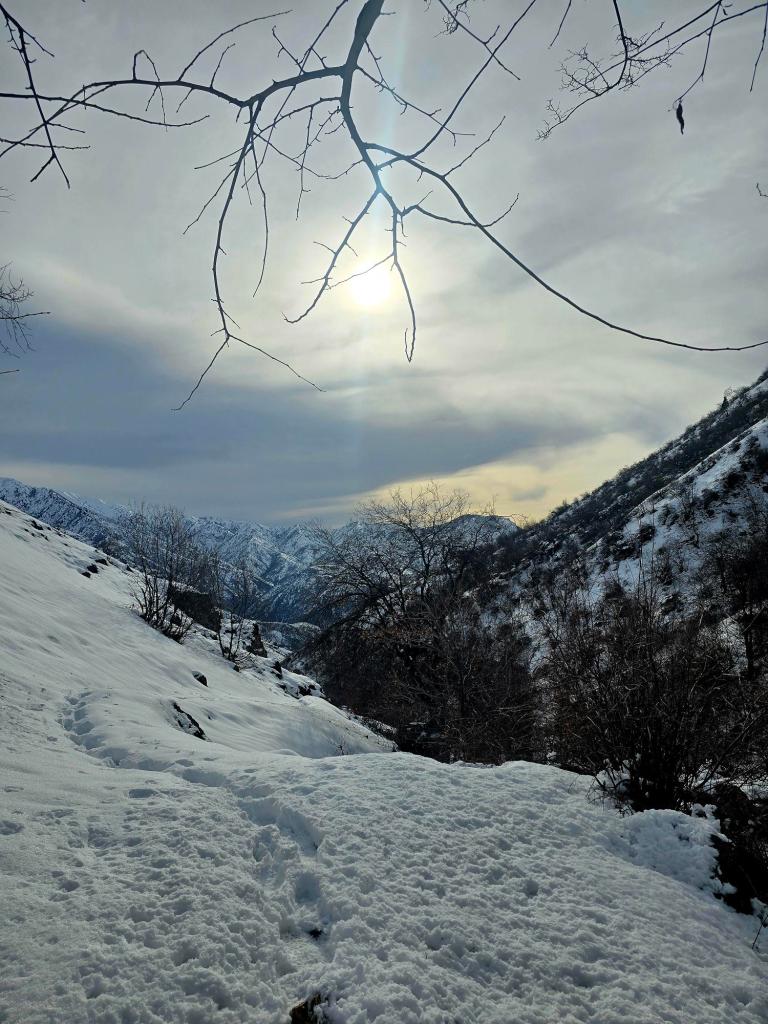
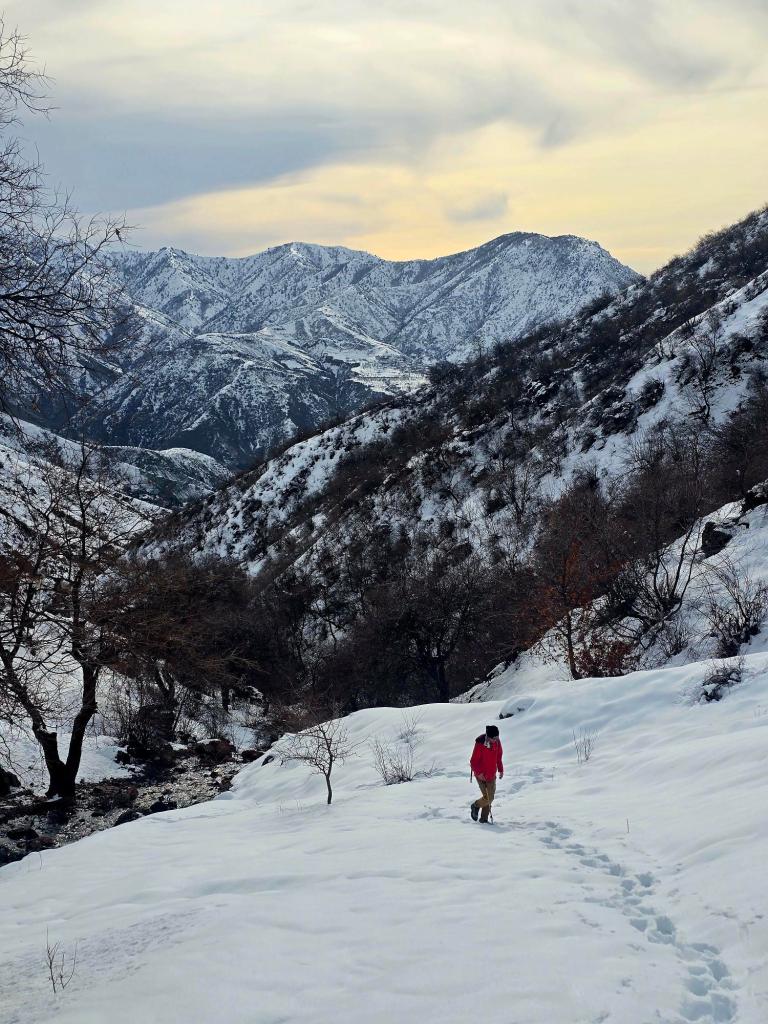
The approach to the pass is one of my favorite sections of this hike. After a long, peaceful stretch following the river and passing beneath large mulberry trees, the trail suddenly tilts upward. The incline comes fast and demands attention. Conversation faded away, and we pushed through the entire steep section in about an hour without taking a break. When we finally stepped onto the pass, the reward was immediate.
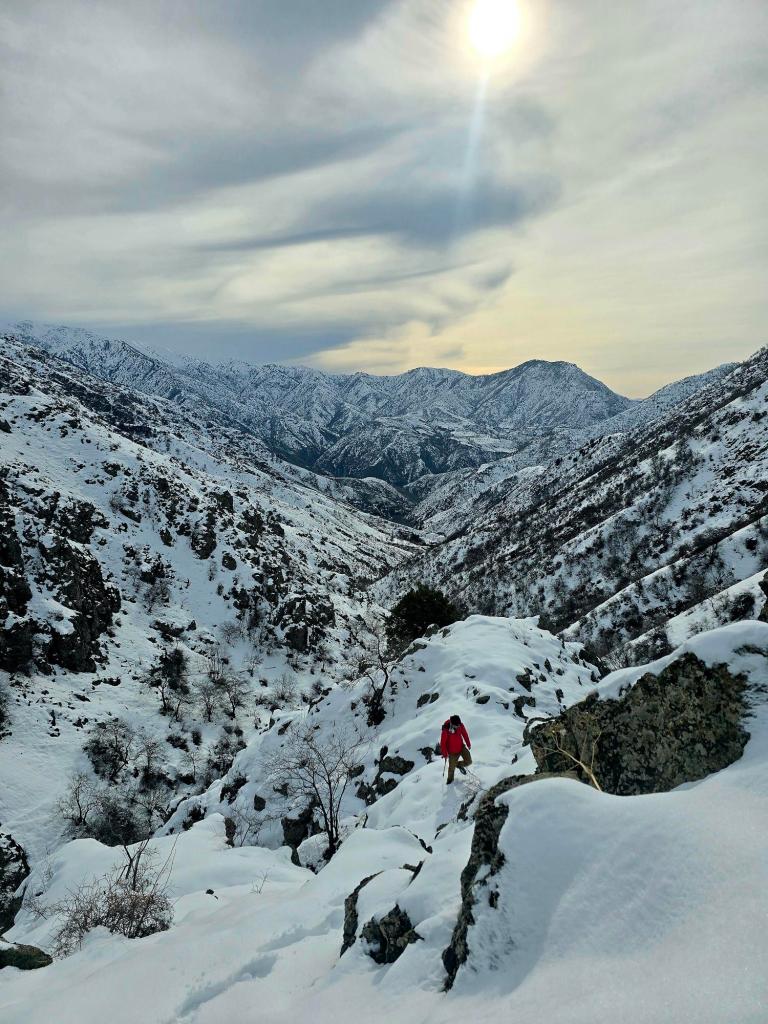
Snow-covered peaks stretched out in every direction. We stood there for a while, peeling off layers and taking it all in. The morning had started cloudy, with the sun playing off the clouds in soft colors, but by the time we reached the pass it had fully asserted itself. Sunscreen came out, jackets went away, and I stayed in short sleeves for the rest of the day.
Dropping down the far side of the pass, we crossed a river and made our way to a small roofed shelter where we settled in for an early—and long—lunch. It was immediately clear that conditions were changing. On this side of the mountain, the snow was already deeper. Gaiters went on across the board.
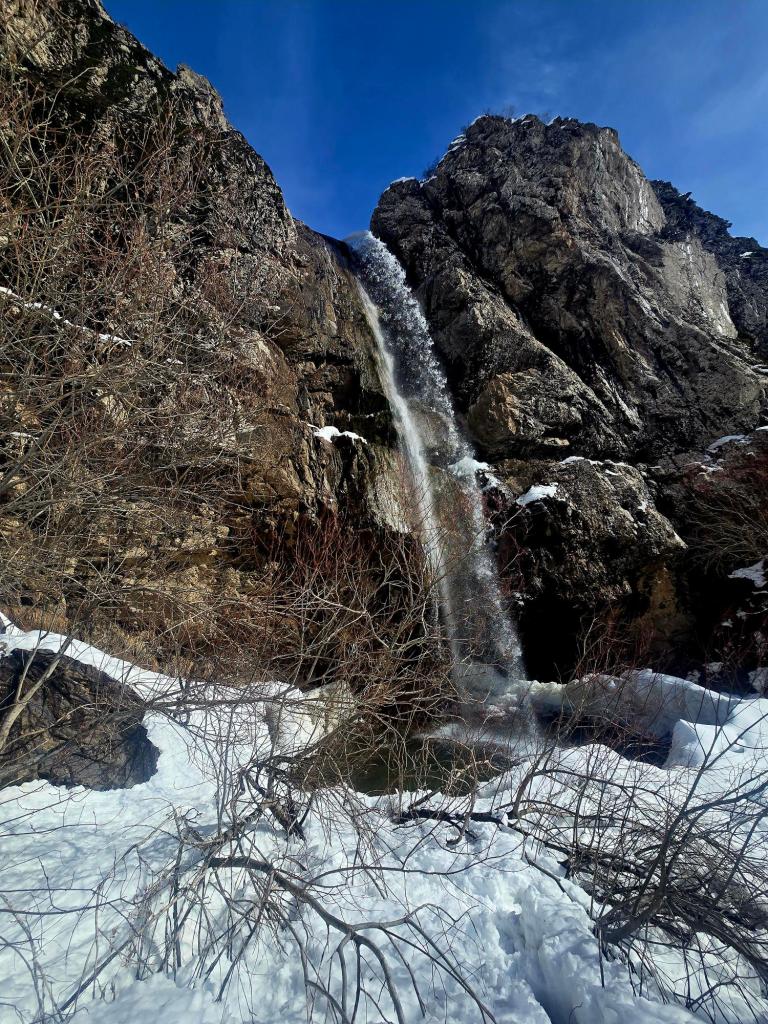
From the shelter, the trail climbed again for a few hundred meters before reaching the gorge that drops down toward the waterfall. The descent was slow and punishing. In several spots, I was sinking waist-deep into the snow, each step a full commitment. The effort was worth it, though. Standing at the pool below the falls—with feet of snow stacked along its edges and the water still flowing strongly—felt surreal. Winter strips the place down to its essentials, and it’s striking.
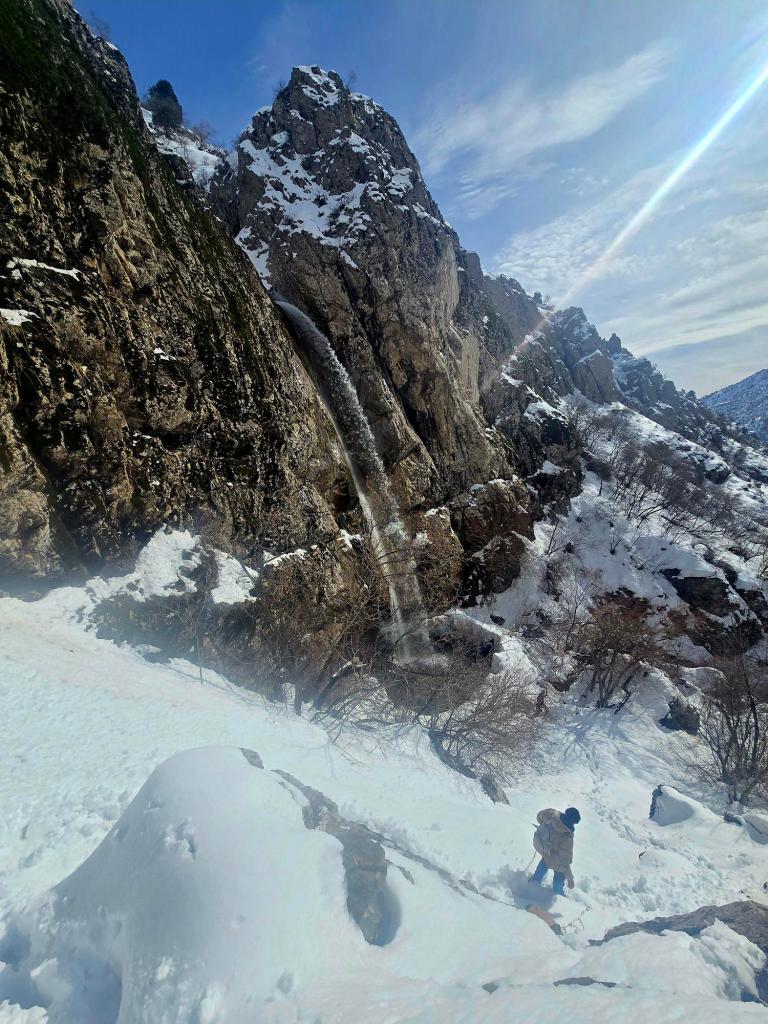
The climb back out of the side gorge was a leg-scorcher. Once we regained the main trail, we made the call to commit to the loop. Instead of retracing our steps, we pushed onward, breaking trail through deep snow higher up the mountain.
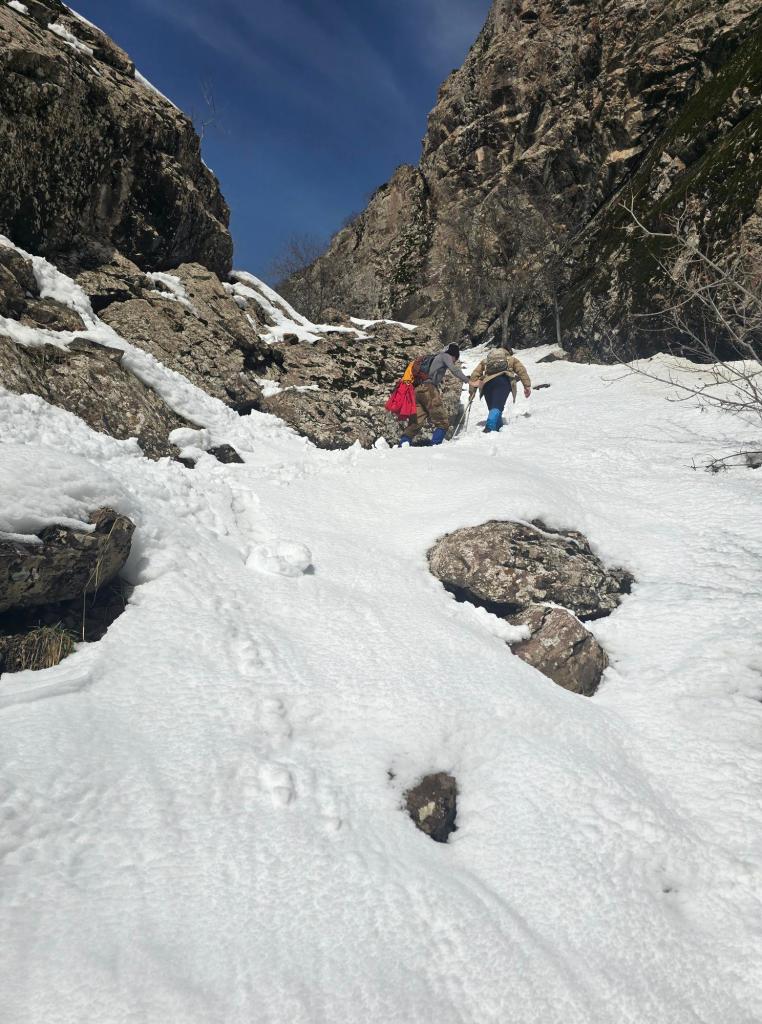
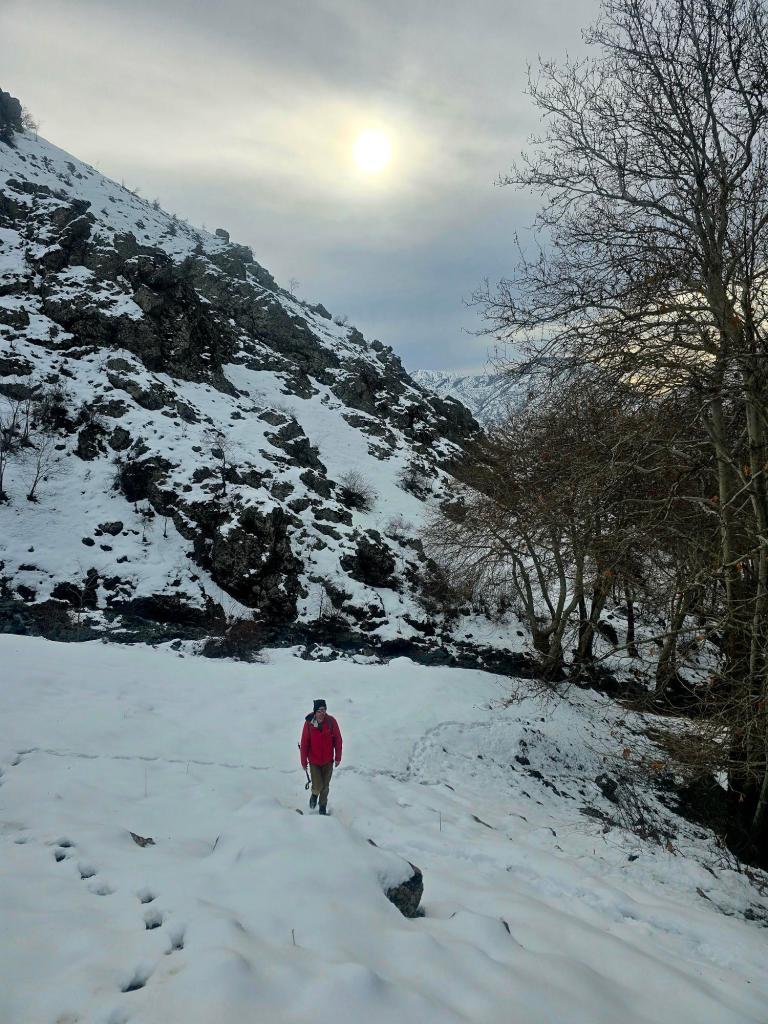
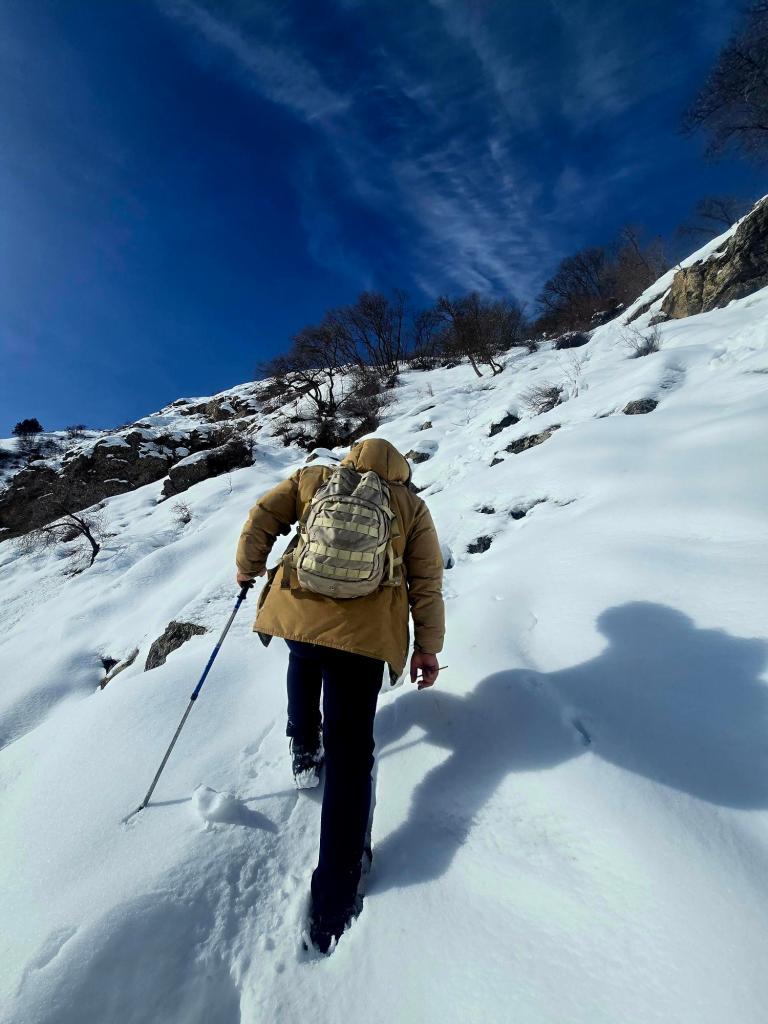
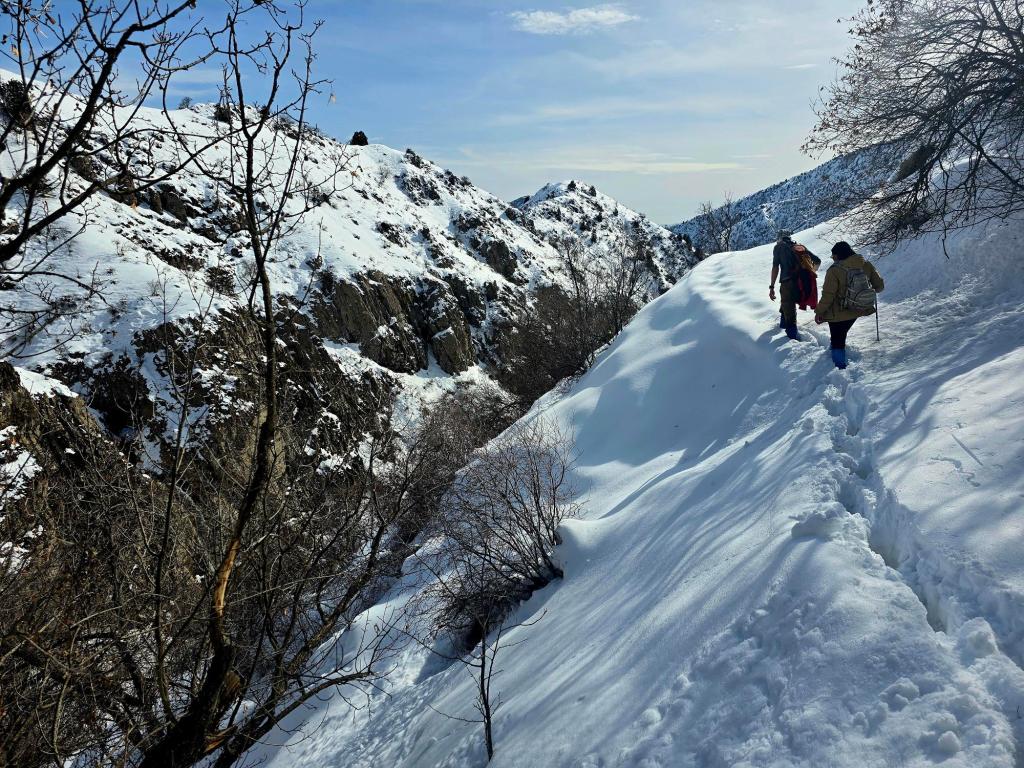
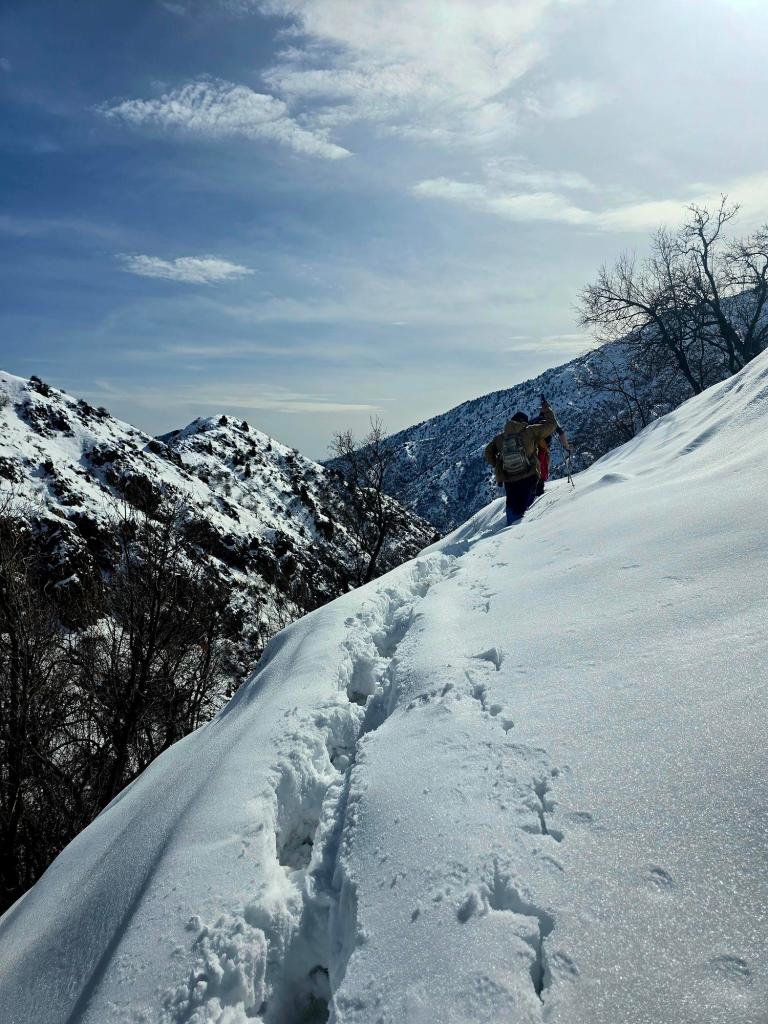
This section required focus. We were moving along what may have been a trail beneath the snow—or maybe not. It was impossible to tell. What was obvious was the steep slope dropping away to the left just inches from where we were stepping. Anyone with vertigo would have had a miserable time here. Slow, careful movement was the only option.
Eventually, the terrain eased and we began descending into a deep gorge on the return side. The lower we went, the softer and wetter the snow became. Slipping and sliding turned into the norm. As we dropped deeper, I found myself hoping we wouldn’t encounter anything impassable.
There were a couple of spots where the mental challenge far outweighed the physical one—narrow single-track cut into mud, with a 35–40 foot drop on one side and nothing reliable to grab on the other. At one point, I reached for a rock jutting out of the mud wall for balance, only to have it immediately dislodge and tumble down to the river below. That section required two very committed steps before the trail widened and returned to snow.
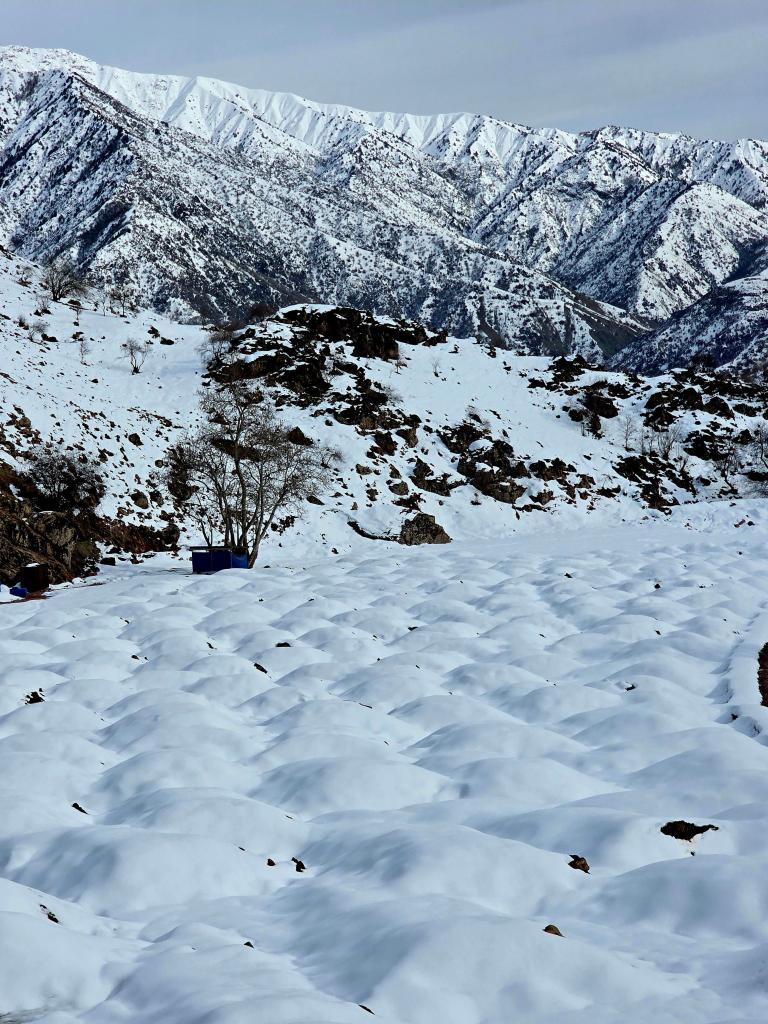
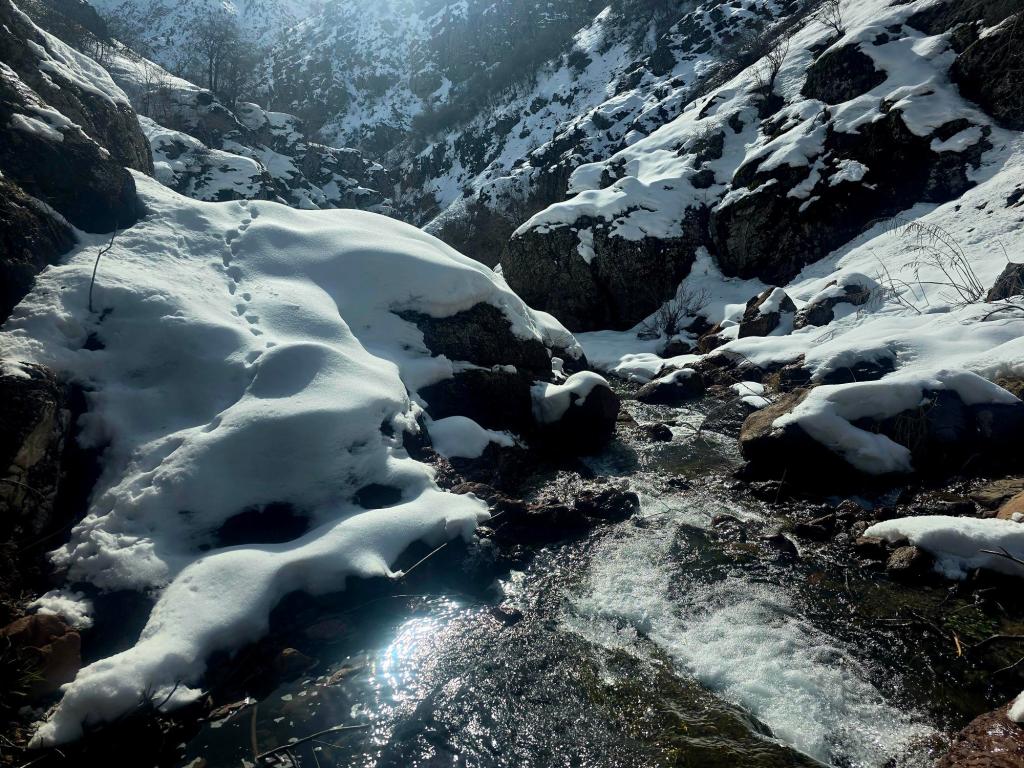
Not far after that, we reached the river itself, crossing it a couple of times as we worked our way down through the narrow gorge. Along the way, we picked up a set of wolf tracks and followed them for much of the remaining descent. Eventually, the gorge opened up into what looked like a mogul field and an area that appeared to have been recently developed—possibly a fish farm.
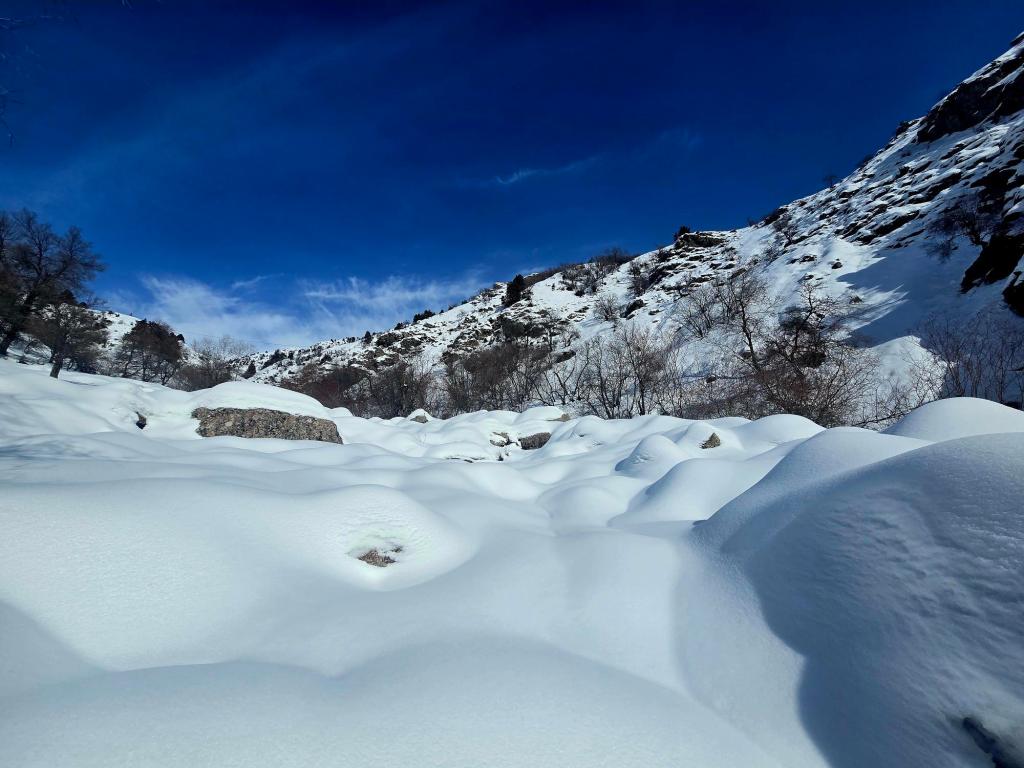
From there, the hard part was over. We picked up a snow-covered road and followed it the rest of the way down to the village. Coming in on this side, I noticed a cluster of small A-frame structures along the river. I asked Rasheed if they were rental cabins in the warmer months, but he explained they were geologists’ quarters from Soviet times. He pointed out a small structure tucked against the cliff wall behind them. Apparently, a deep shaft had been dug there while prospecting for uranium. They found it—but ultimately decided it wasn’t worth pursuing.
Twenty-five minutes later, we were back at the car—boots off, packs dropped, and reliving the day.
❄️ Winter Notes & Considerations
- Snow depth varies dramatically by aspect; one side of the pass was manageable, the other demanding
- Gaiters weren’t needed on the ascent but were essential beyond the pass
- Several exposed sections require comfort with steep drop-offs
This loop in winter is slow, deliberate, and demanding in ways the summer hike never hints at. It’s not about chasing miles—it’s about patience, conditions, and making careful decisions when the trail stops being obvious. If you’re looking for a true winter version of Gusgarf, this one will stay with you.
 Wise Clan in Stanland
Leave a comment