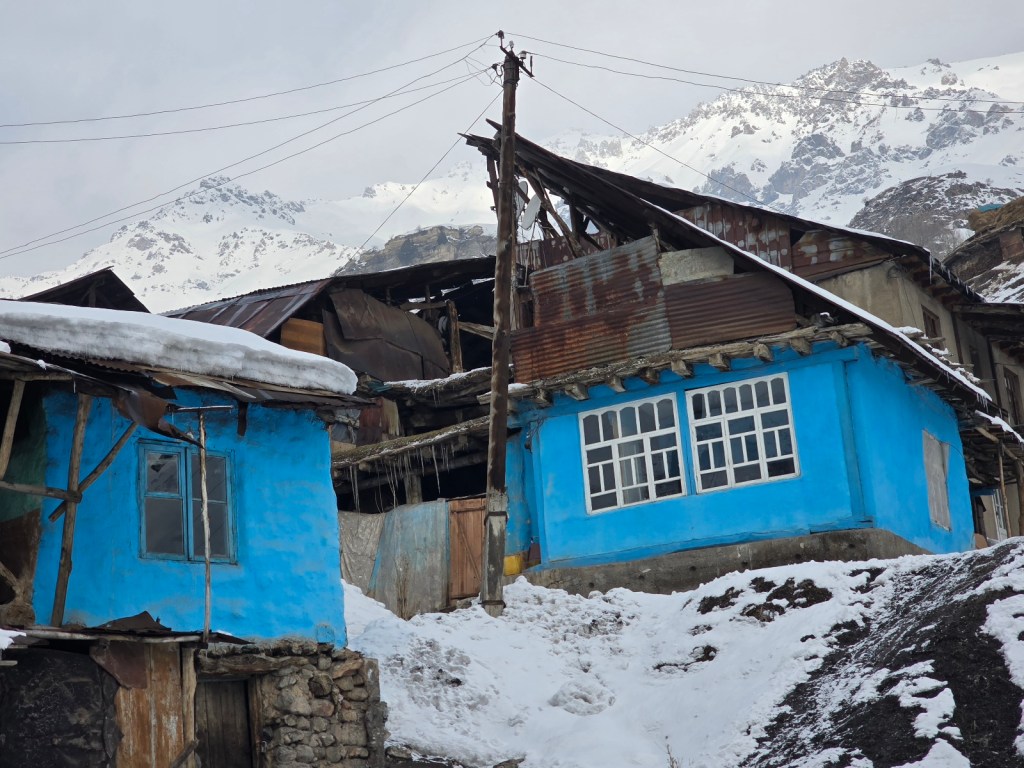
The Ziddi Valley is one of my favorite places in Tajikistan, and I never pass up an opportunity to explore it—or simply return and wander familiar ground. This day wasn’t about covering distance or chasing a summit. It was about spending time in the village of Ziddi—also known as Kalon, and often called the Blue Village—and seeing what it feels like in the middle of winter.
Visiting Kalon in mid-February is an extraordinary experience. Winter has fully settled in. The valley feels quieter, more inward-looking, wrapped in snow and long shadows.
The drive north takes just over an hour, following the Varzob Valley along a well-maintained, snow-cleared highway. The further you push up the valley, the deeper the snowbanks grow along the Varzob River—sometimes fifteen feet high or more. Avalanche paths scar sections of the surrounding slopes, stark reminders of how active this landscape remains even in winter. Along the way, you pass the first of a long series of avalanche and rockfall protection bridges—somewhere between twenty and thirty of them going all the way up to the Anzob tunnel—quietly guarding the road beneath steep mountain walls.
Once you turn off the main road toward Ziddi, winter immediately asserts itself. Pavement gives way to a snow-covered dirt road, and there’s a fleet of dump trucks waiting for nightfall to haul coal toward Dushanbe. Much of the city’s coal comes from this region. Along the dirt road are sorting pits where larger chunks are separated and loaded, and farther up-valley—five to ten kilometers beyond the village—a large mine continues to operate year-round.
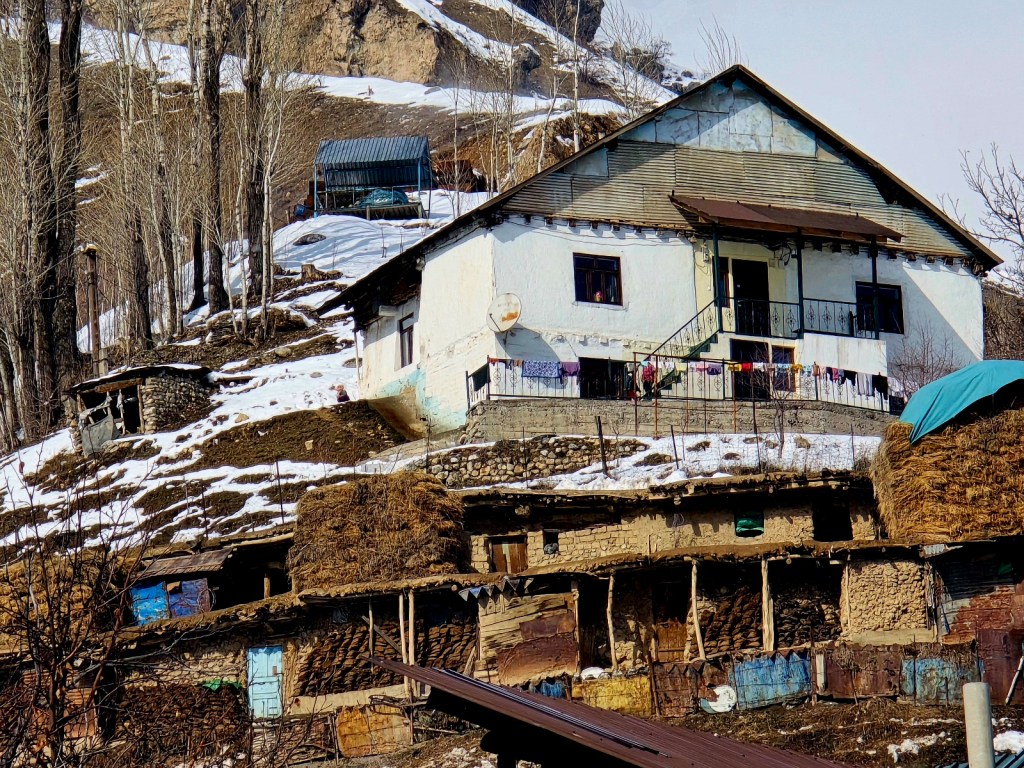
You only need to travel a few kilometers before Kalon comes into view.
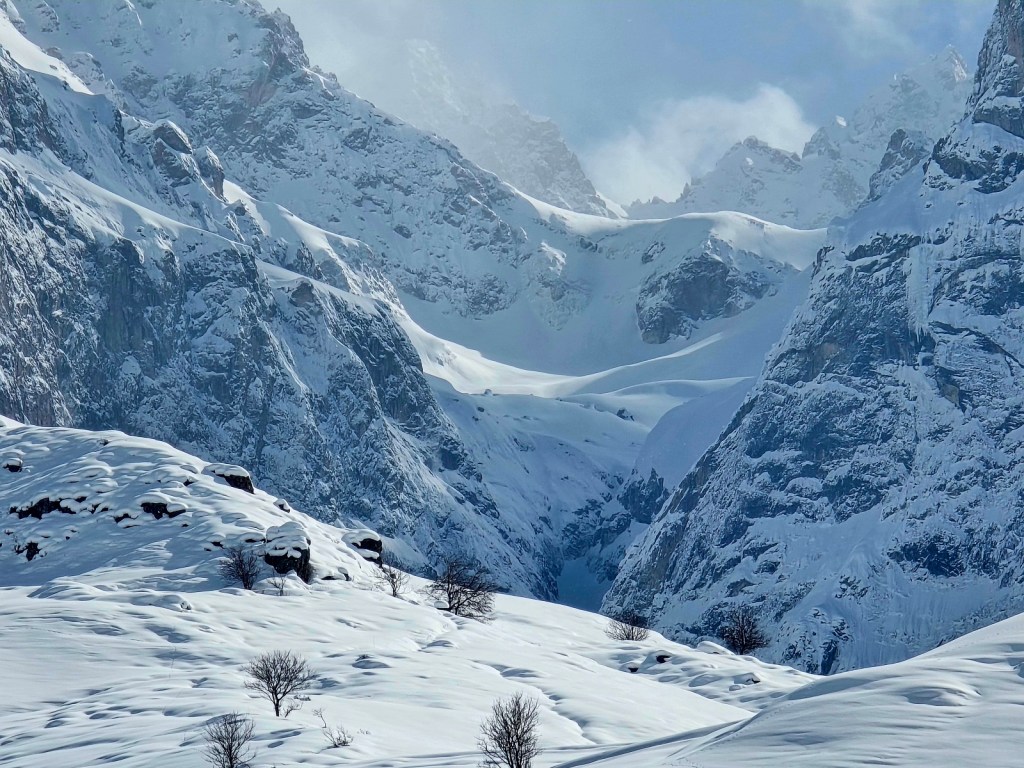
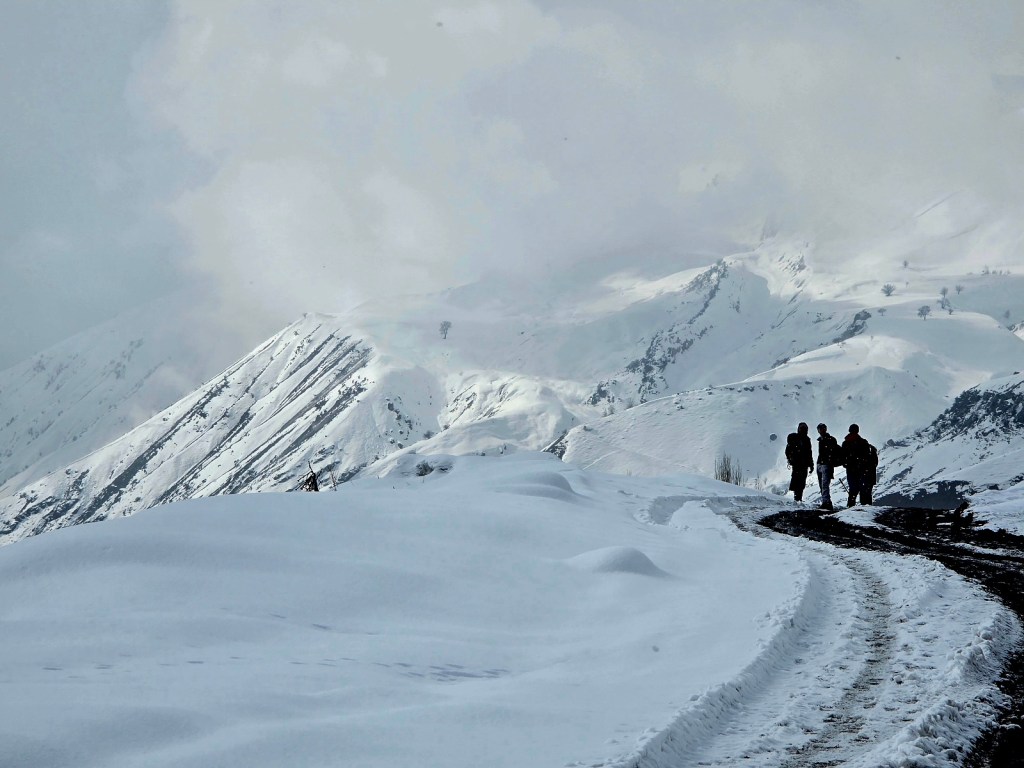
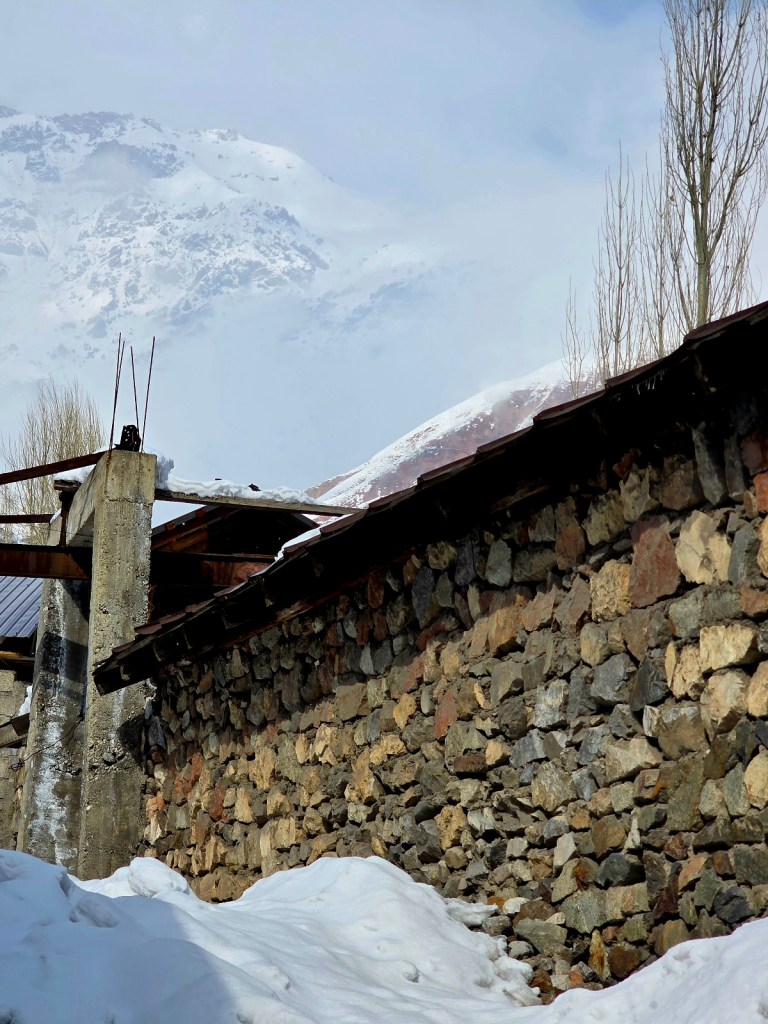
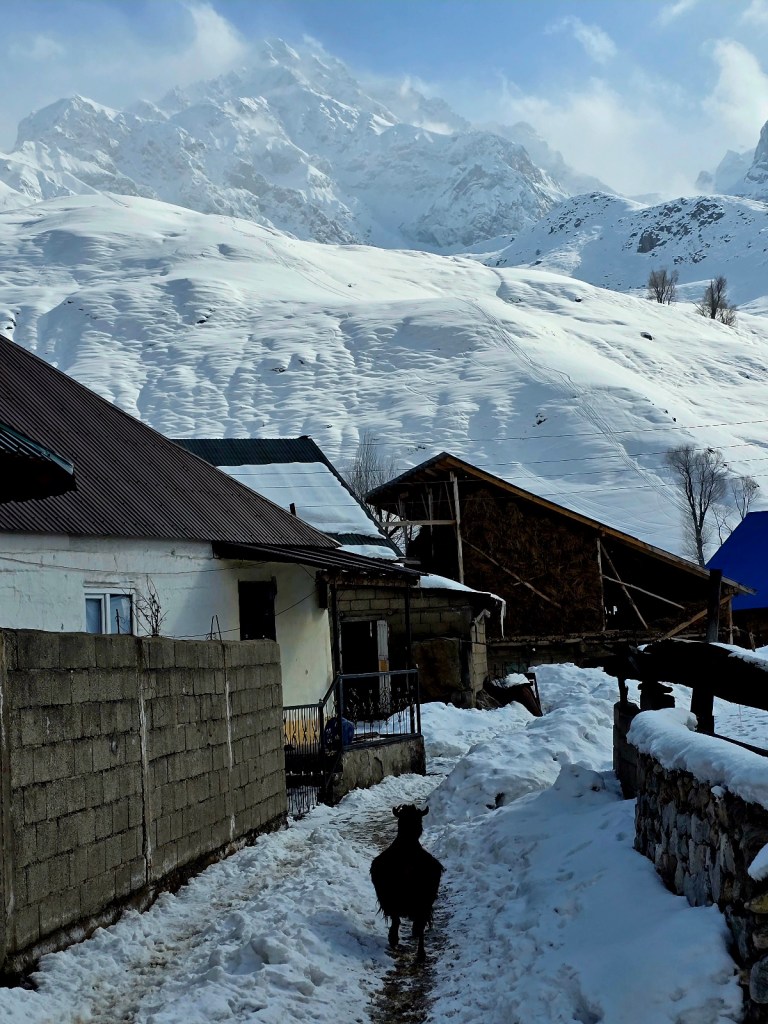
After a fresh snowfall, the village feels almost unreal. Massive mountains rise steeply on both sides of the valley, their slopes blanketed in white with dark stone cutting through in places. Snow is piled high everywhere—along fences, rooftops, and roadsides—and in the morning hours the village is quiet. Most people are indoors, tending wood-burning stoves, letting the day warm slowly.
As we walked through the village, small details began to stand out. Donkeys and cows wandered freely through the streets, nosing at snowbanks and moving unhurriedly between homes. In the open areas where the sun reached the road, groups of men stood together in long winter coats, chatting quietly and soaking up the early afternoon warmth. It felt unplanned and unhurried—people moving with the pace of the season rather than the clock.
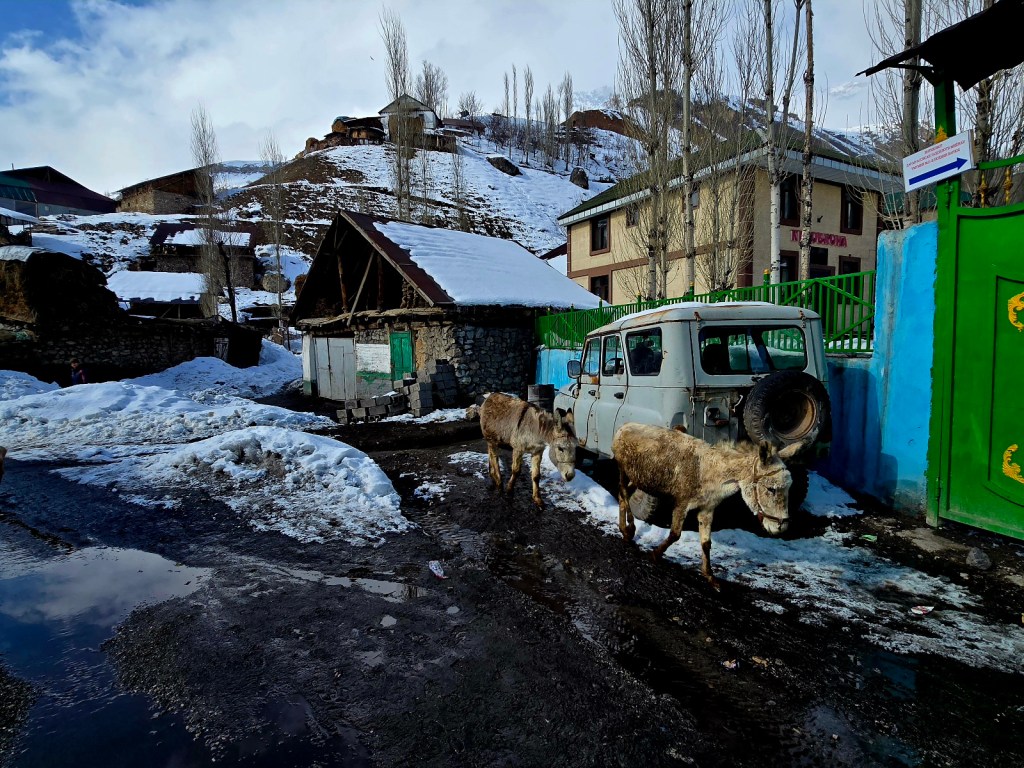
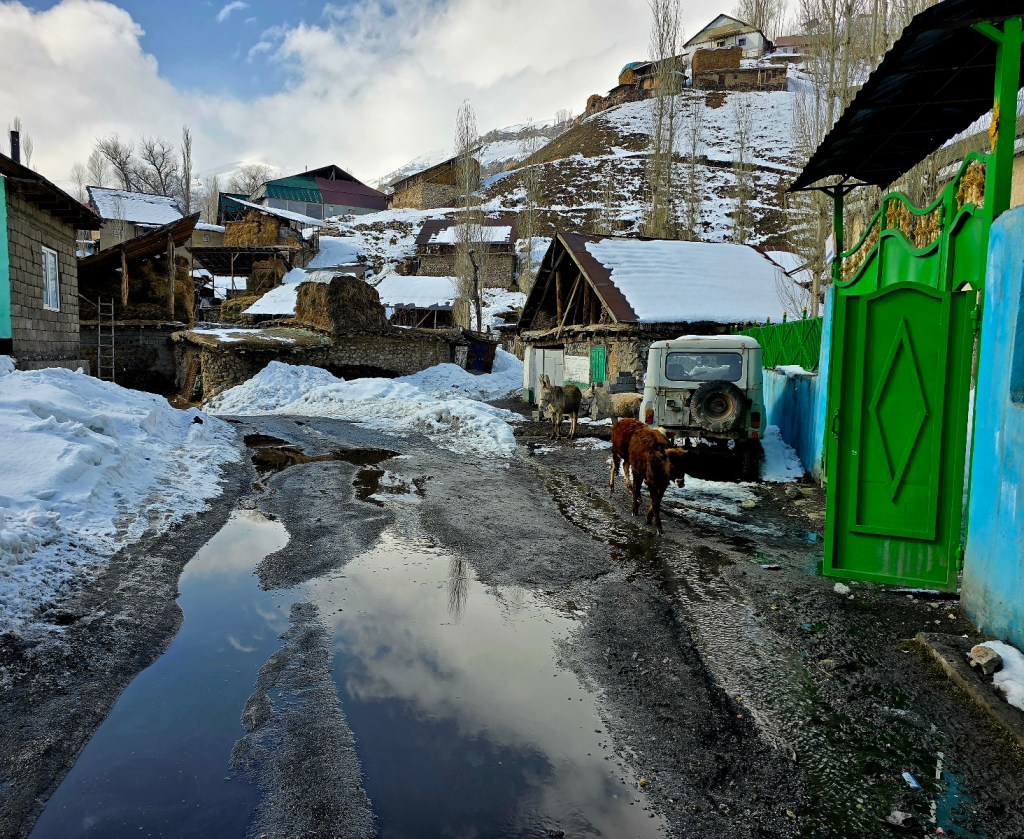
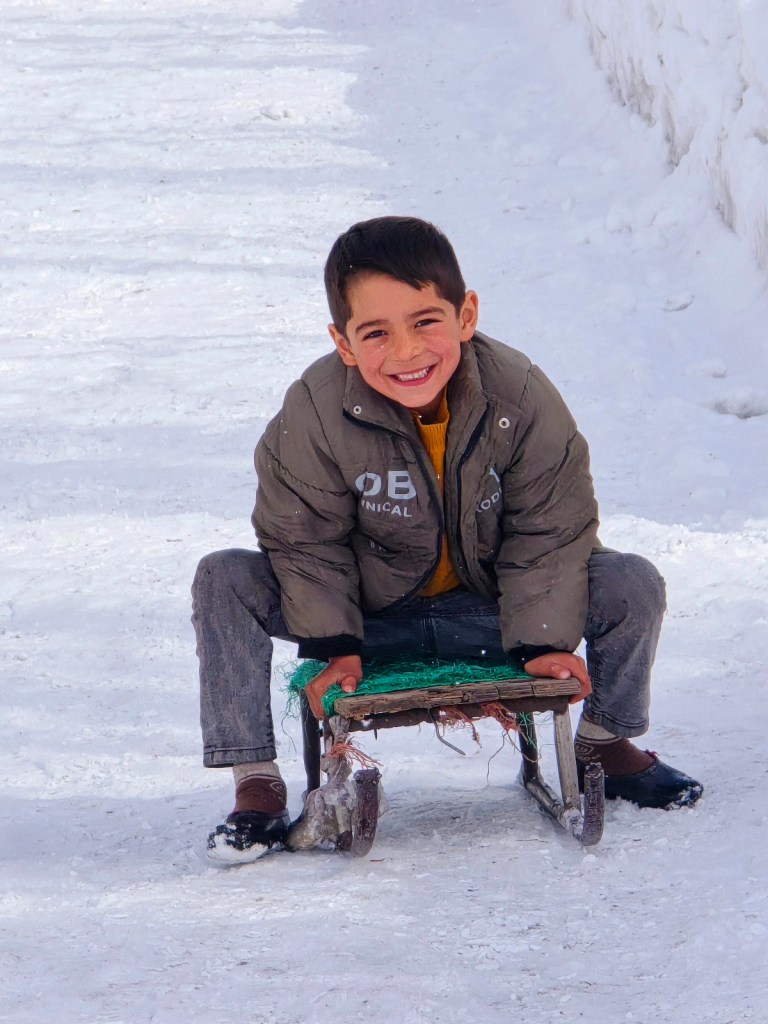
One small detail that stood out, especially against the snow, was how many of the kids had lighter hair and eyes—features that caught the winter light in a way that felt unexpected but completely at home here.
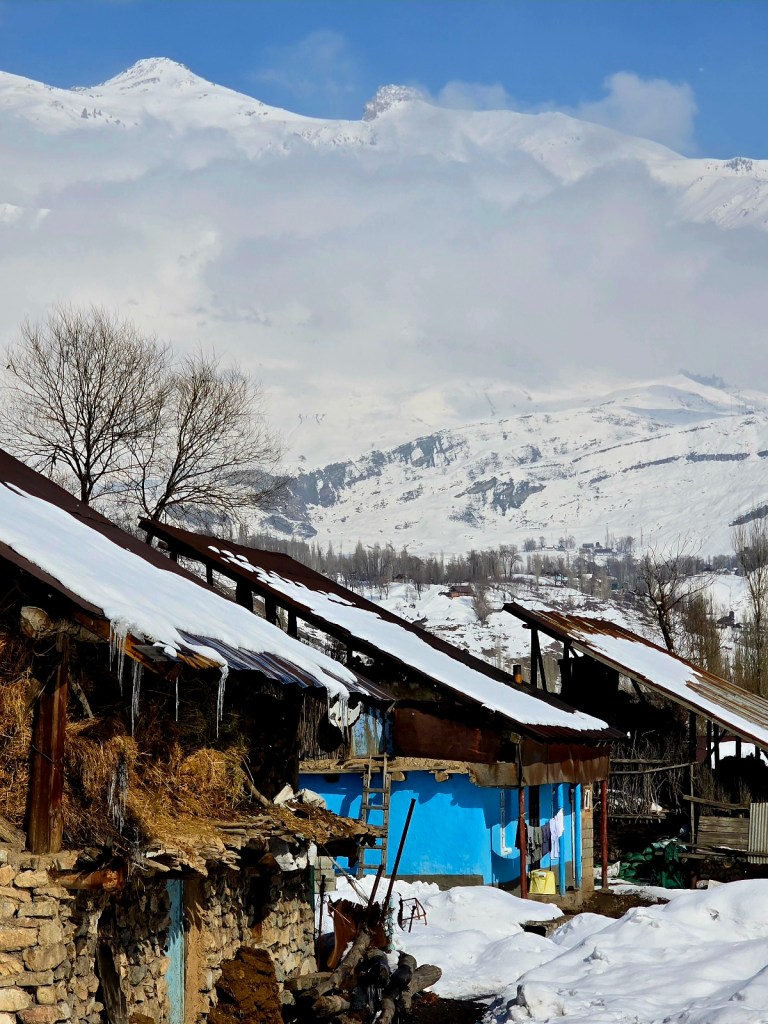
The weather kept us guessing. One minute snow was falling steadily, the next the clouds thinned to reveal deep blue sky and towering white formations still heavy with the promise of more snow.
While the village itself seemed content to stay tucked inside, we walked its length and continued straight out the far end. A light snow began to fall again. This wasn’t going to be a hike so much as a winter walk—a day spent moving slowly through a landscape softened by snow.
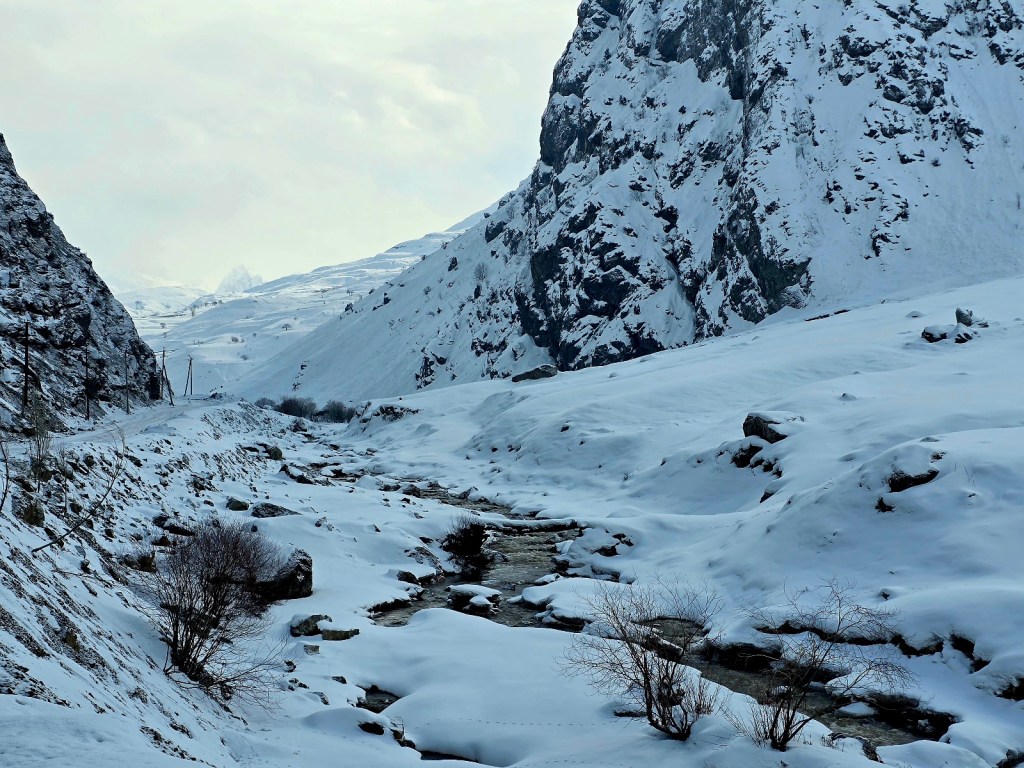
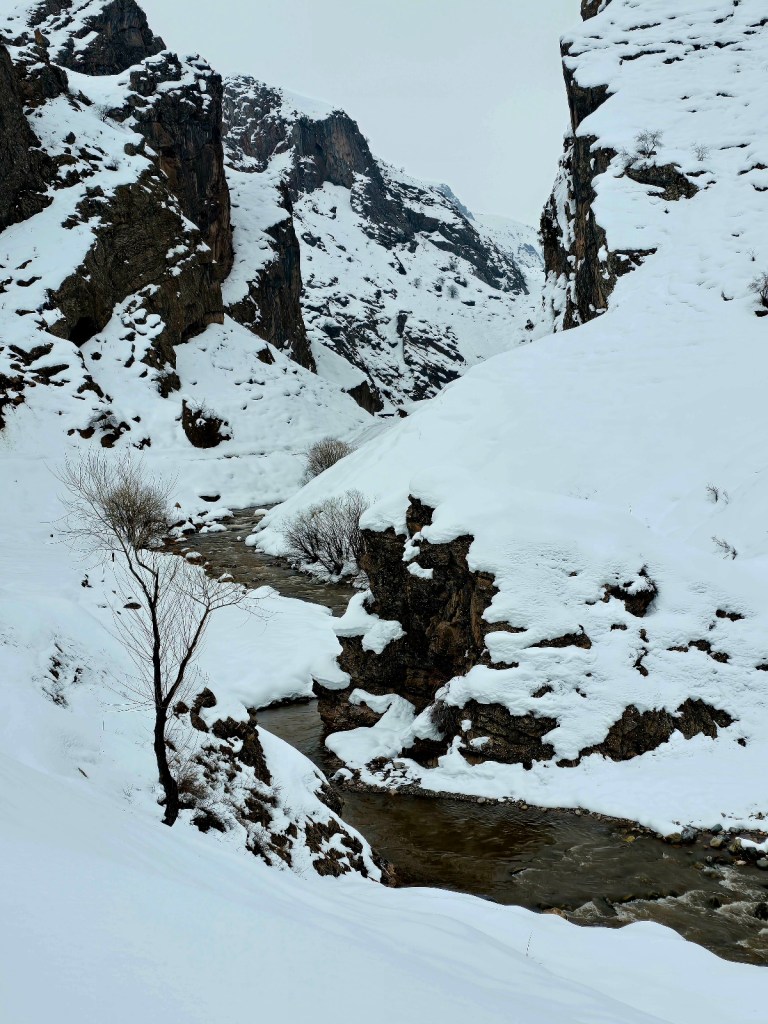
Beyond the village, the road lay unused after the recent storms, so we followed it for several miles toward the gorge and the upper coal road. It traces the river the entire way, sometimes pressed tight against its banks, other times skirting slightly above before dropping back down.
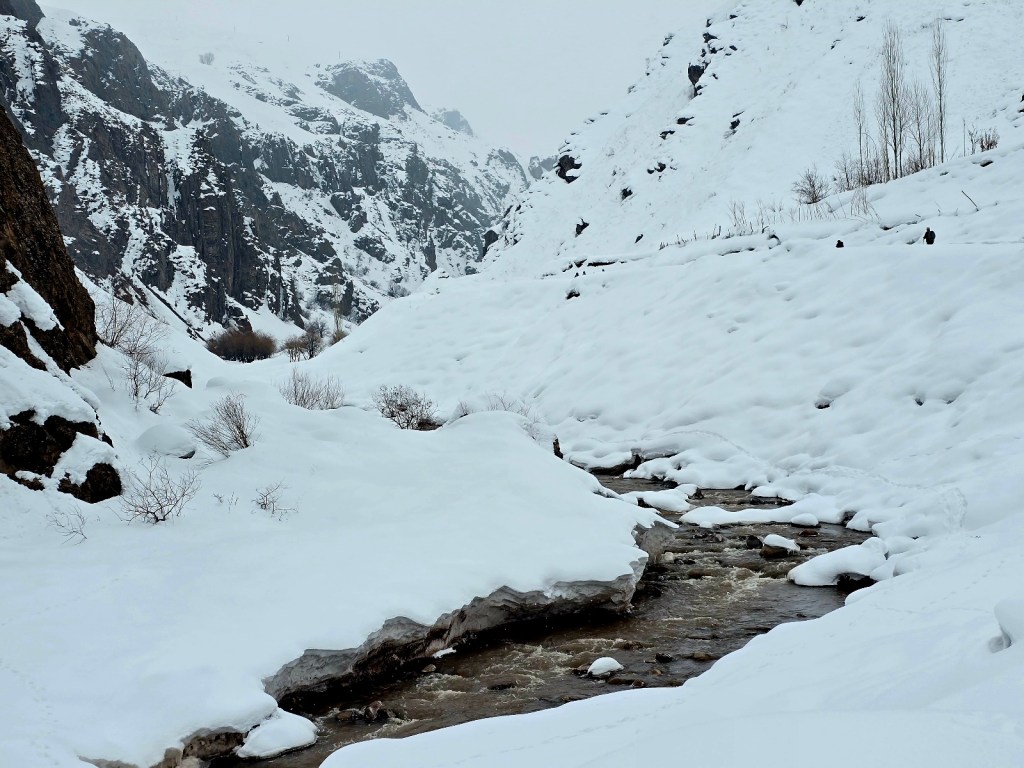
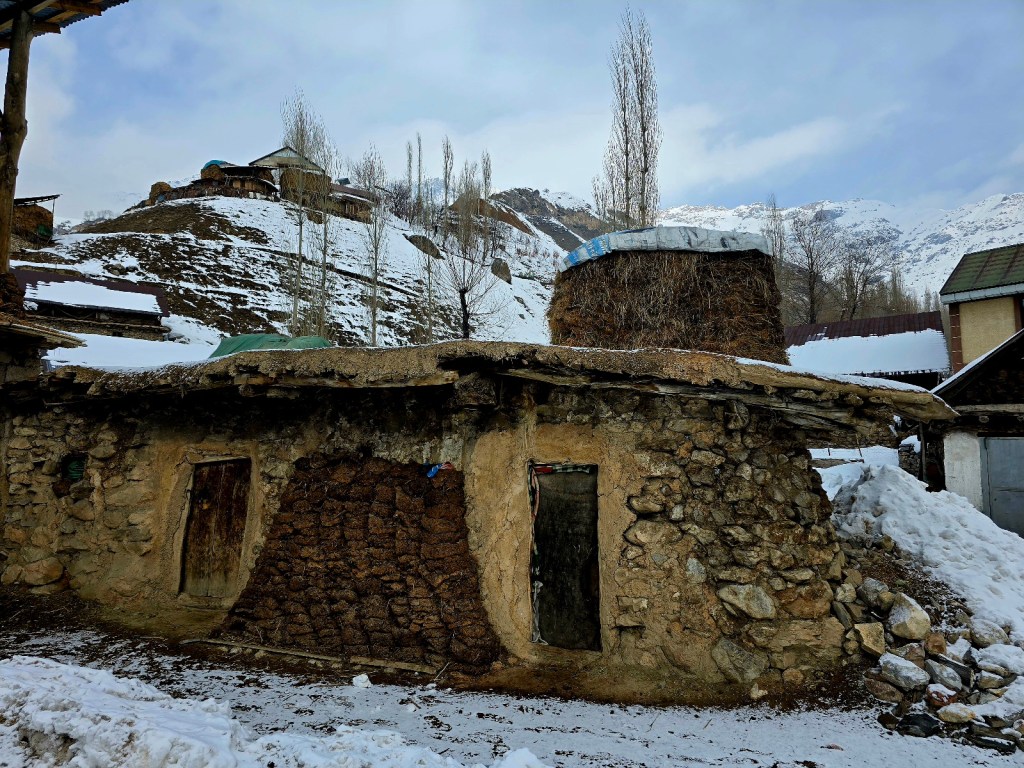
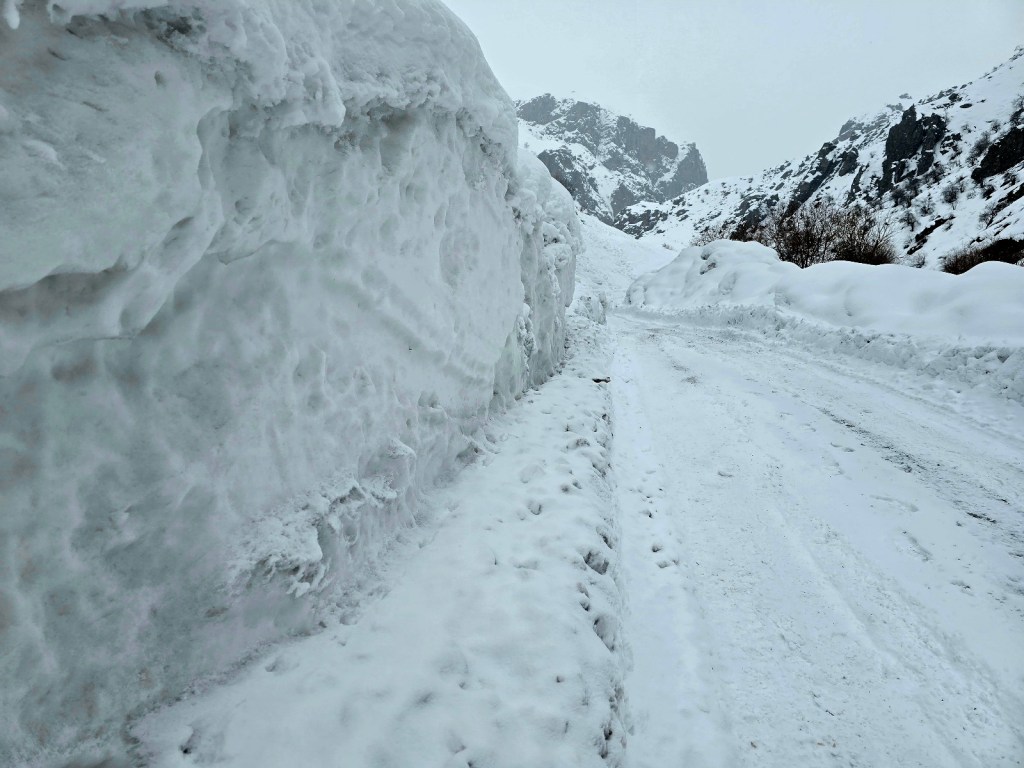
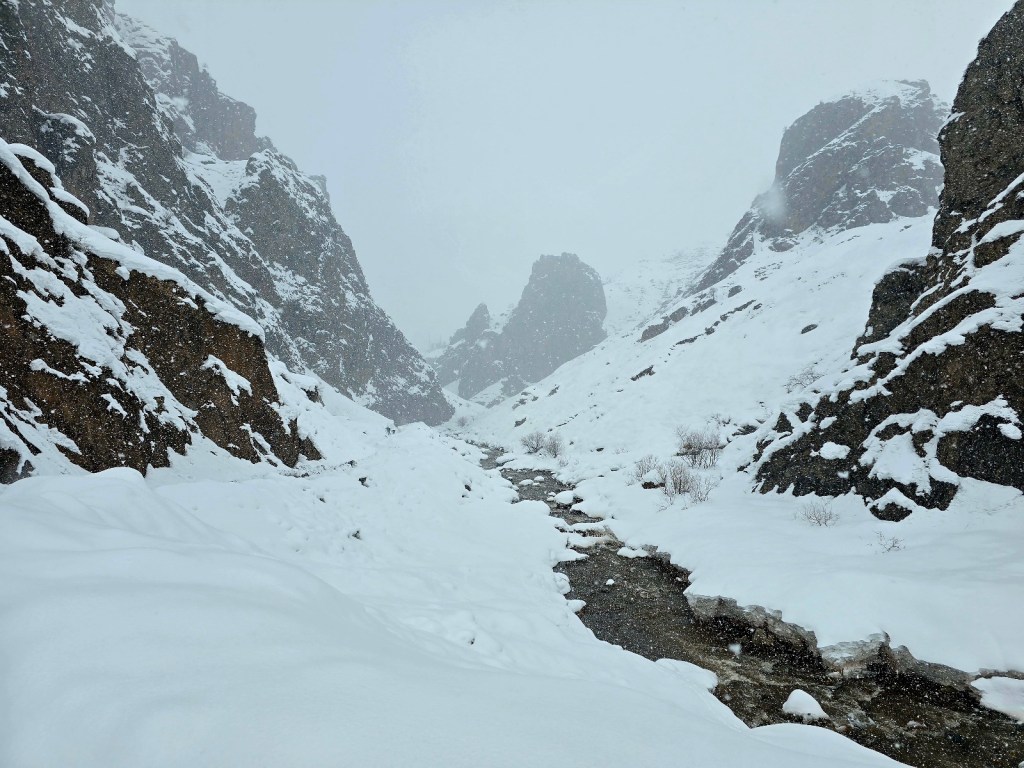
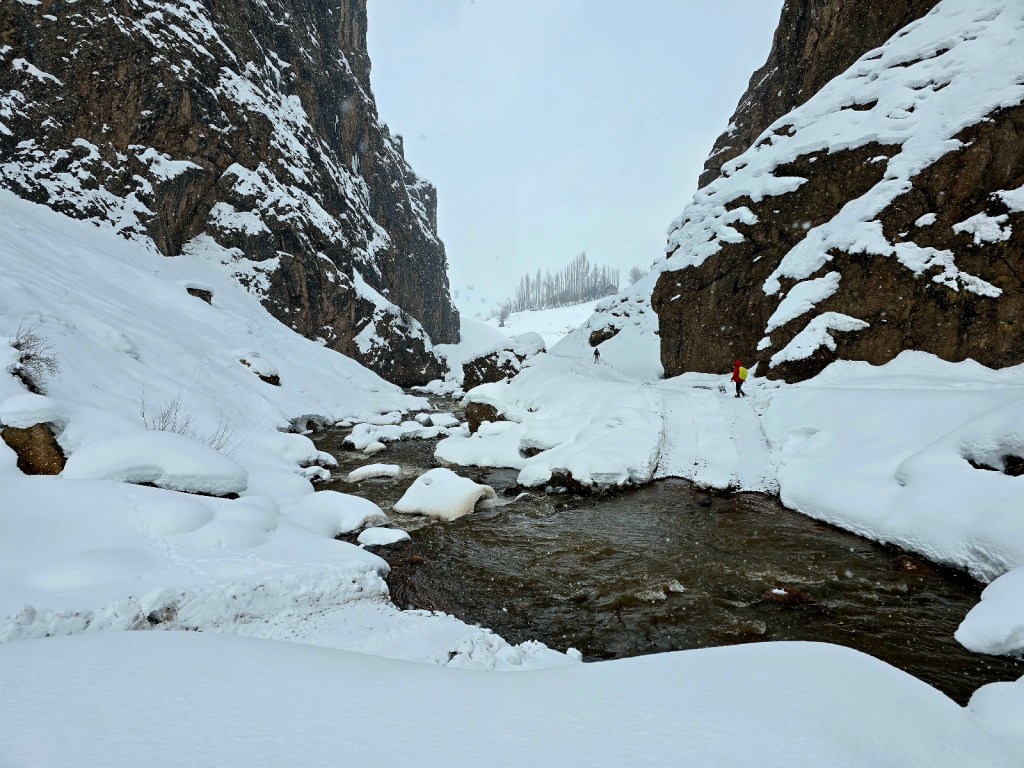
Just before the mouth of the gorge, we stepped down between tall snowbanks, crossed an old bridge, and entered a winter wonderland.
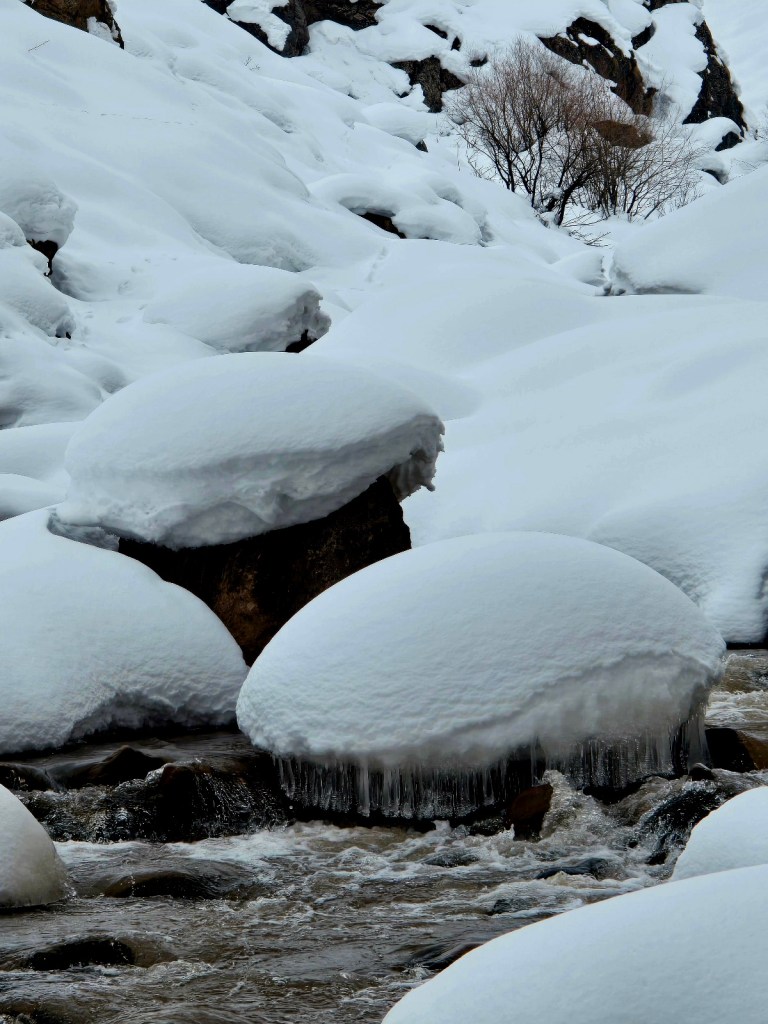
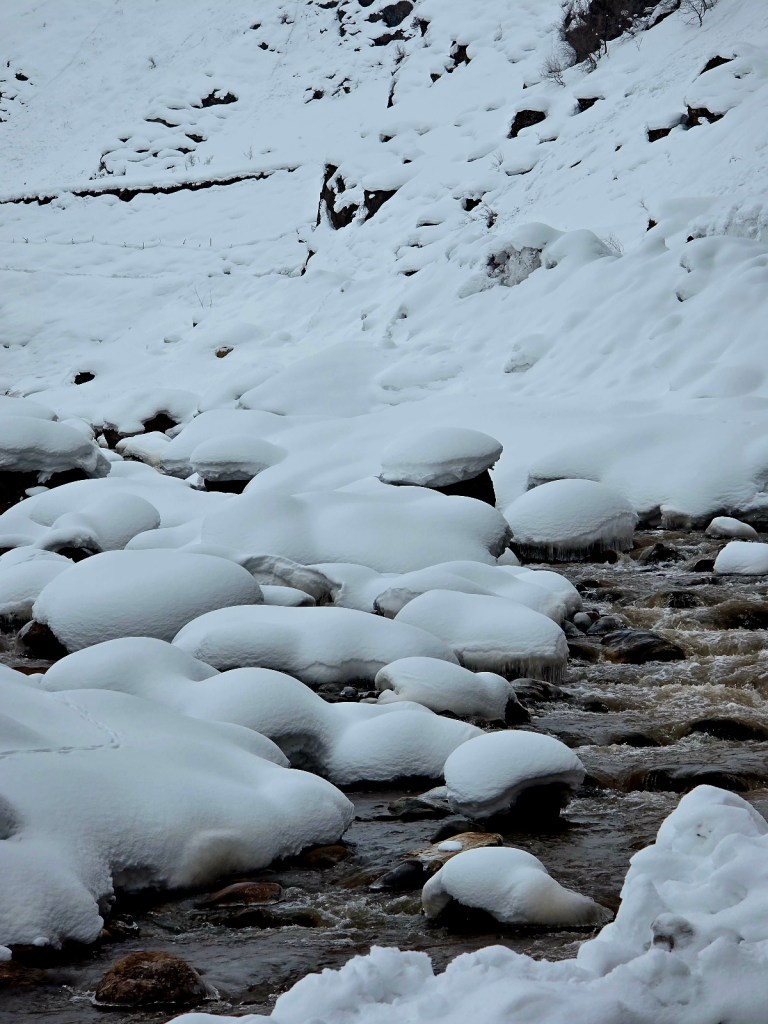
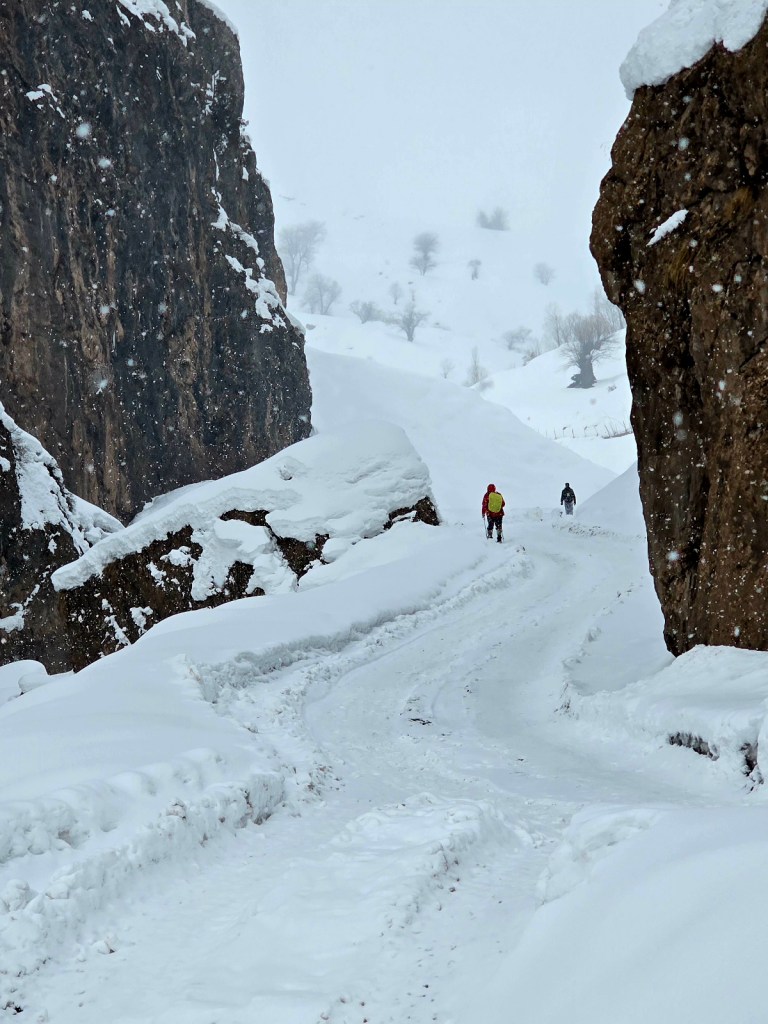
Inside the gorge, the snowfall intensified. Heavy flakes poured down, and every boulder scattered through the river was capped with perfectly rounded domes of snow. Many were ringed with delicate icicles hanging beneath, forming strange, otherworldly shapes—like white jellyfish floating just above the moving water.
We pushed on another couple of miles as the snow continued to fall, steadily muffling everything around us. Even the sound of the river struggled to escape. Eventually, we stopped for coffee and tea, standing quietly as snow collected on our packs and sleeves, watching the world soften even further.
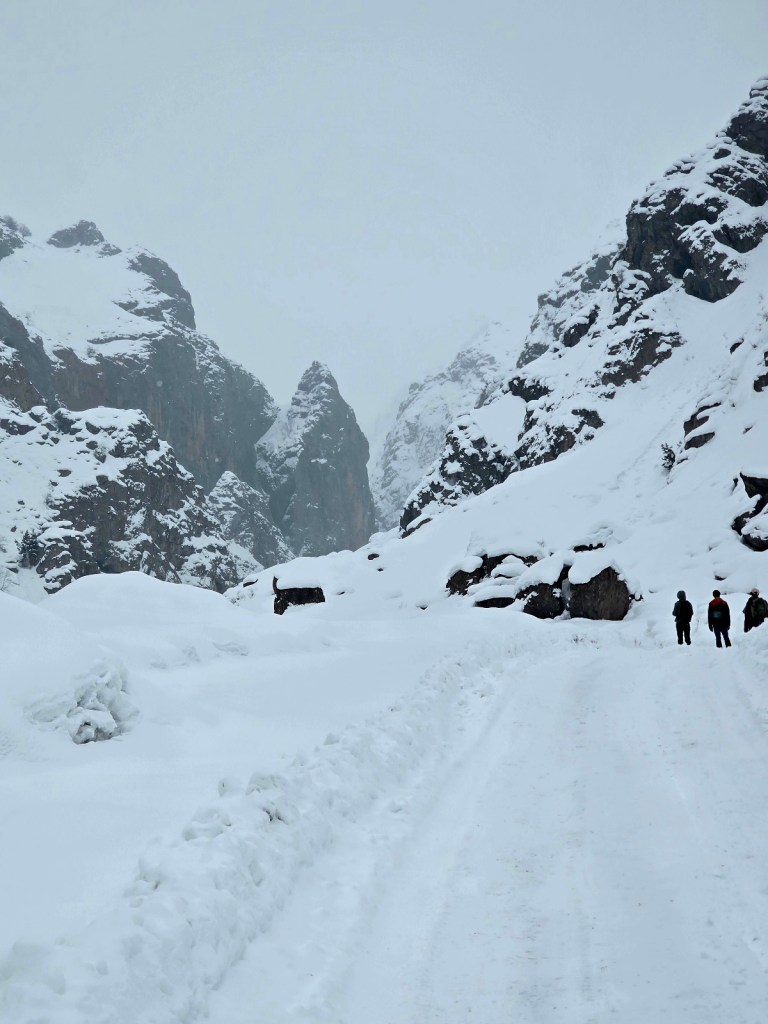
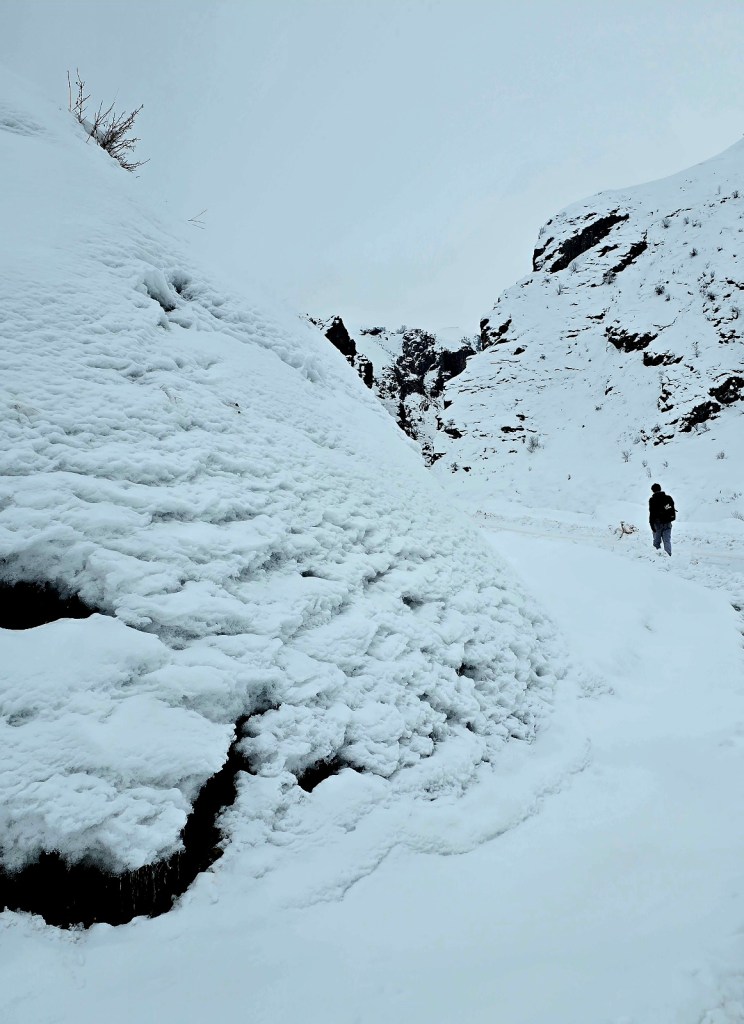
When we finally turned back, the change was gradual. Near the mouth of the gorge the snowfall lightened, and once we stepped back into the wider valley it stopped altogether. The sun broke through, working overtime to thin the dark clouds overhead.
By the time we reached the edge of the village again, sound had returned. Children’s laughter carried clearly across the snow. Walking back into Kalon, different groups of kids came out into the street to say hello—some pulling sleds, others darting through side lanes playing tag, their voices echoing between blue houses and snowbanks.
Days like this are easy to overlook on a map—no summit, no dramatic endpoint—but they stay with you. Kalon in winter isn’t about spectacle. It’s about quiet moments: animals wandering the streets, conversations warming in the sun, snow falling heavy enough to silence a river. It’s the kind of place that rewards slowing down, and one I’m always grateful to return to—especially when winter shows the valley on its own terms.
 Wise Clan in Stanland
Leave a comment