Around the time my wife first arrived in Tajikistan, one of the local women I work with told me about the best weekend market in the city — the place where you could buy directly from the farmers themselves. It ran on Saturday and Sunday mornings, from early on until around noon or one o’clock, and quickly became part of our weekly rhythm.
It was about a one-mile walk from our place, down a nicely shaded road, and once a week we’d make the trip to stock up on the essentials: meat, vegetables, fruit, and rice. The market sat behind the main railway station in Dushanbe, and by the time you reached the intersection of Rudaki Avenue and Ayni Street, the atmosphere shifted noticeably. The streets grew crowded and loud just outside the Sadbarg market, and that energy carried all the way toward the station.
Meat, bread, and dairy vendors lined the entire stretch of road, with the occasional person selling fruit harvested straight from the trees in their own backyard. Walking up along the right side of the station, you’d come across the first sellers of what turned out to be a multi-street open-air market on the far side of the tracks.
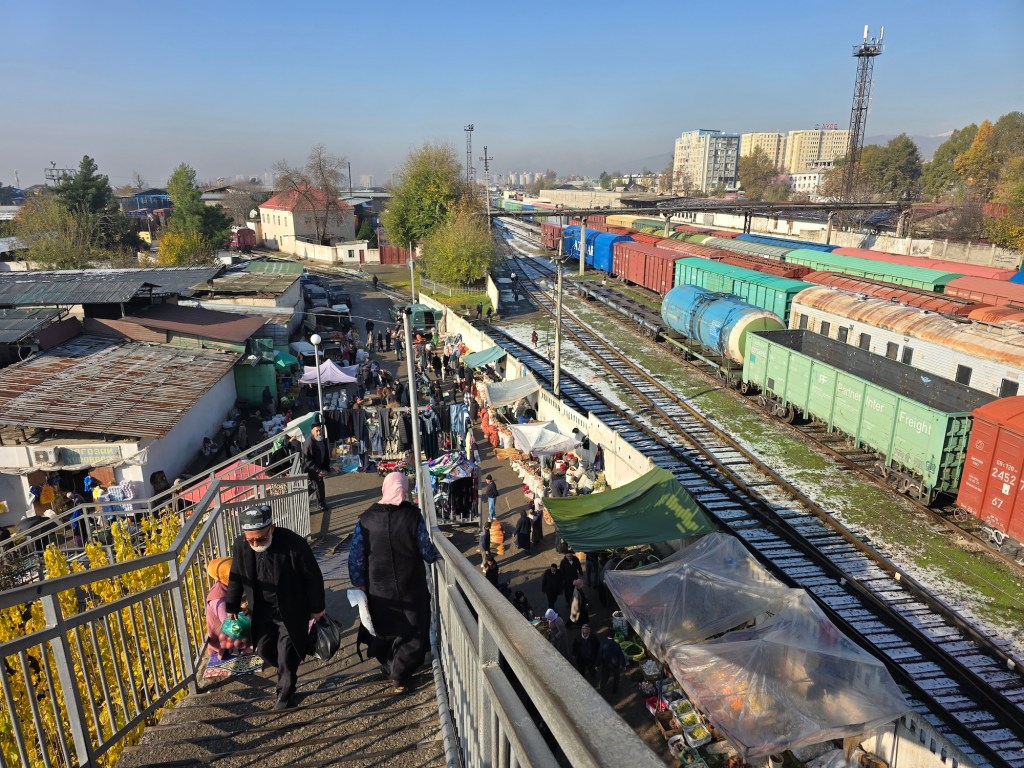
Pushing through the initial throng of vendors, you eventually reached the edge of the station building, where an old concrete bridge rose up and over a web of railway lines. Many of those tracks were still occupied by rusting trains from a completely different era. I always found that bridge a little sketchy — it had very clearly seen better days — but during market hours, the sheer volume of people flowing back and forth across it was wild. Vendors crowded the stairways on both sides, selling their goods all the way up and down, while streams of people shuffled carefully past one another on the not-so-wide span.
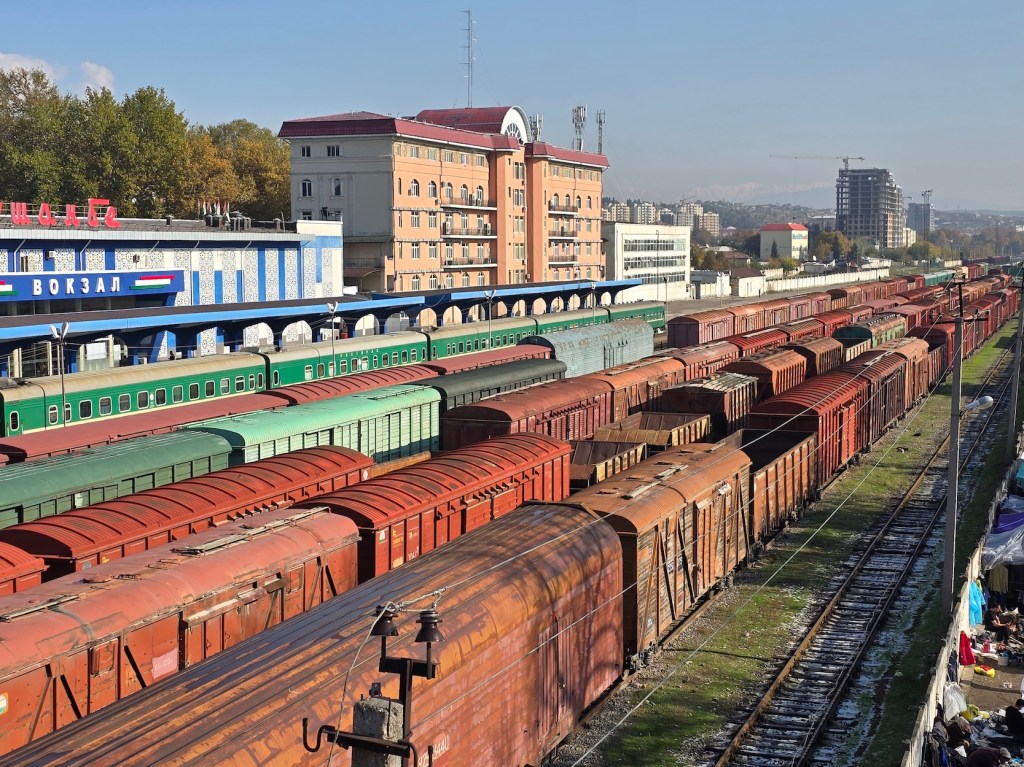
On the far side of the tracks, the city changed again. You emerged into an older, more traditional neighborhood, alive with a sprawling open-air market that felt equal parts farmer’s market and flea market. Hot food was also on offer just beyond the bridge, with several stalls simmering pots of beans and lamb, their smells pulling people deeper into the maze of side streets.
Tajiks eat a lot of potatoes and carrots, and they were always piled high here — sold straight out of the backs of trucks or stacked in massive mounds against the wall separating the neighborhood from the train tracks. Prices were consistently cheap. At the bottom of the bridge, a couple of guys sold fresh eggs by the bucket. We’d bring all of our empty cartons and fill them up for about ten cents an egg, and they were always excellent.
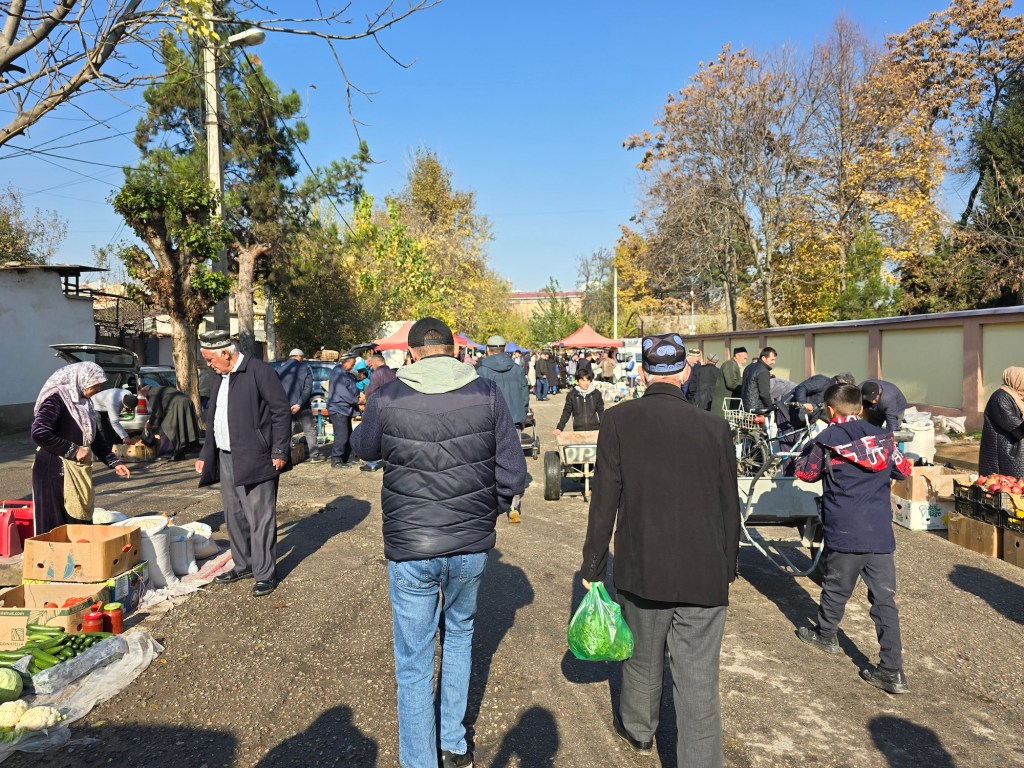
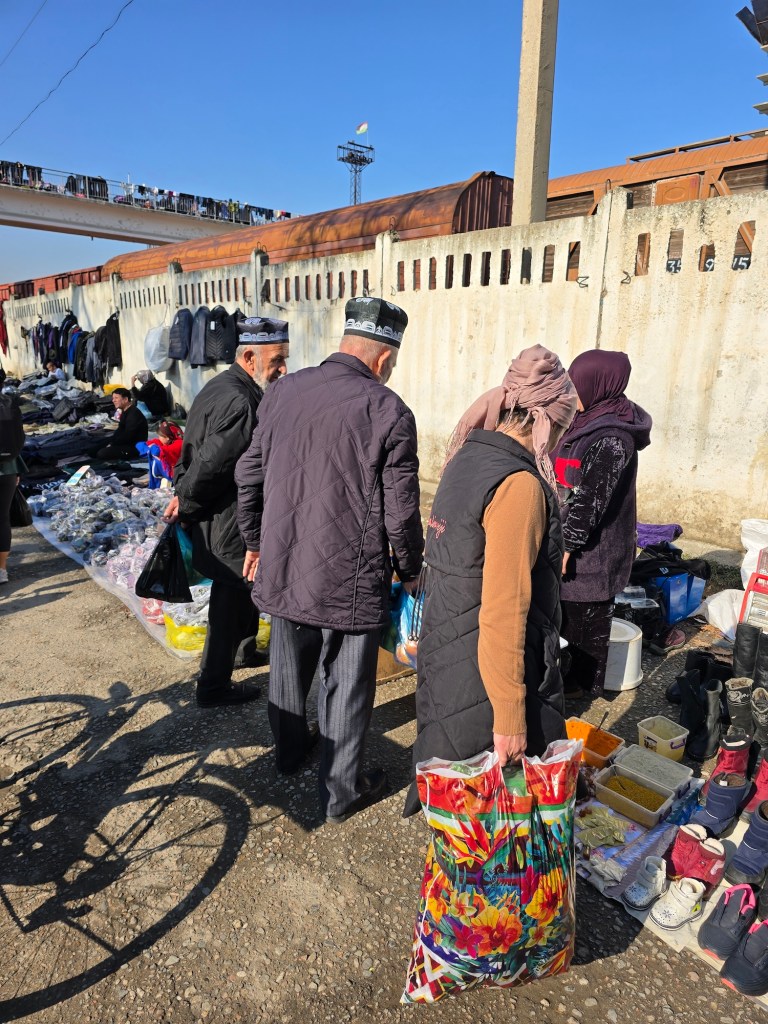
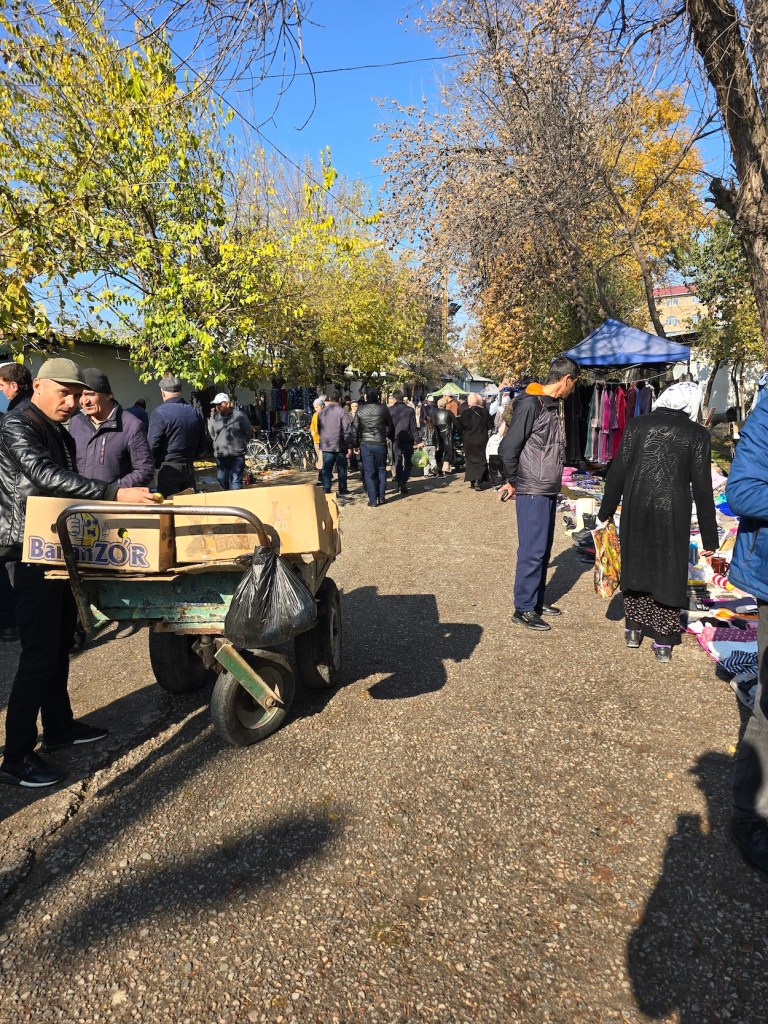
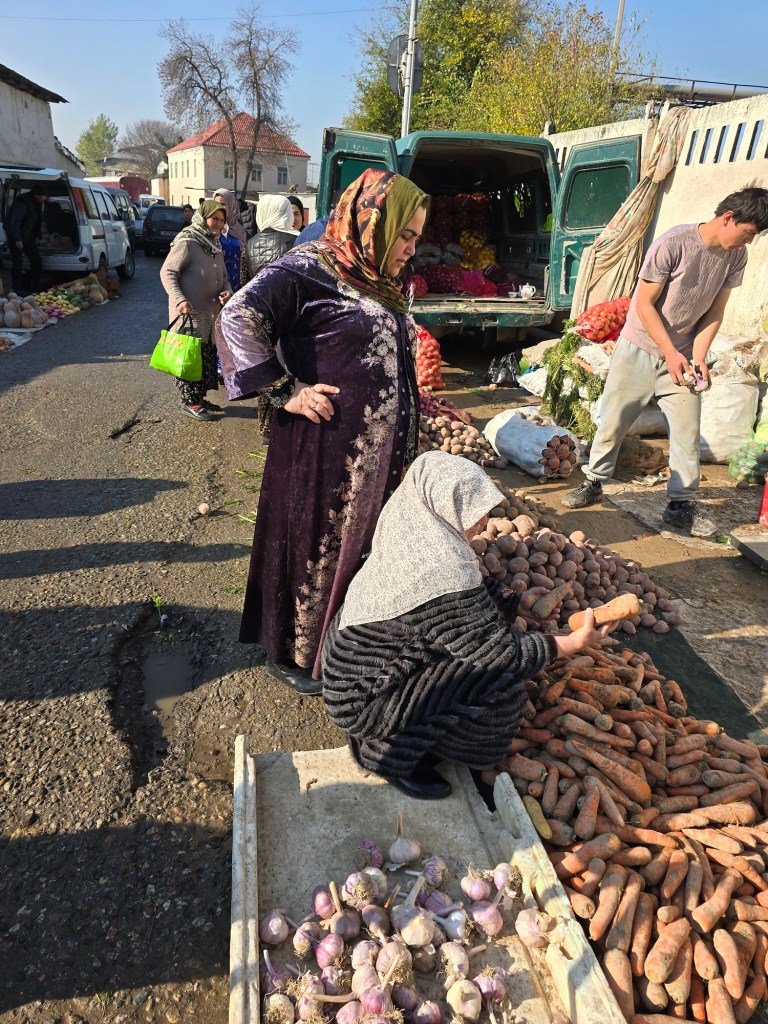
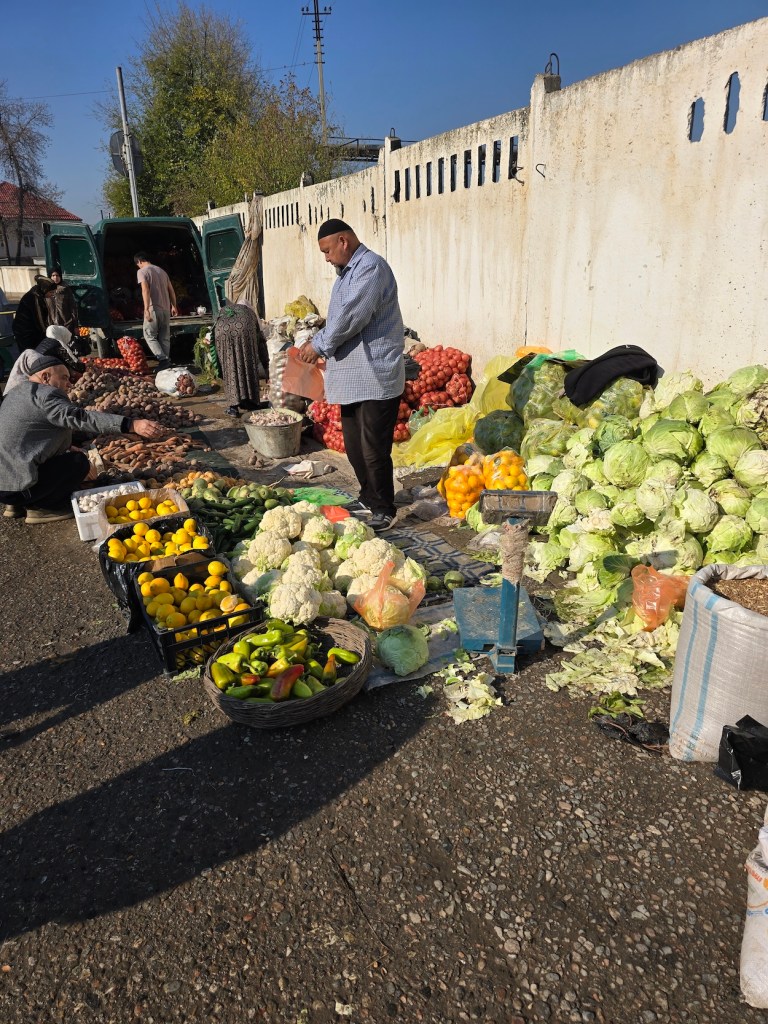
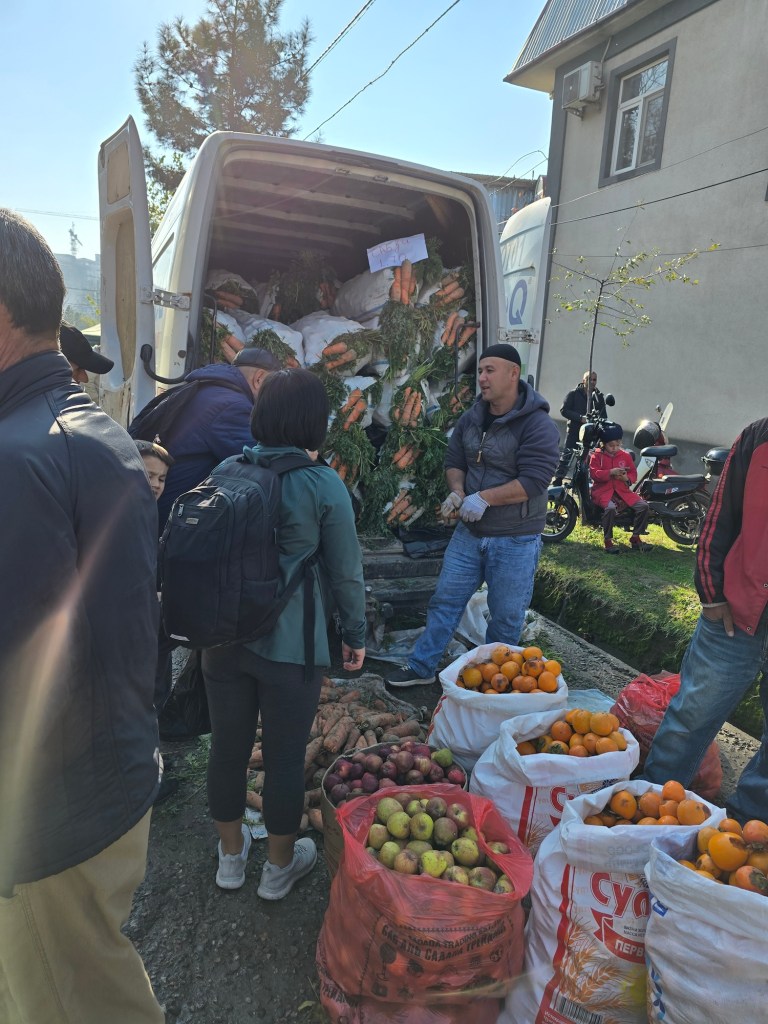
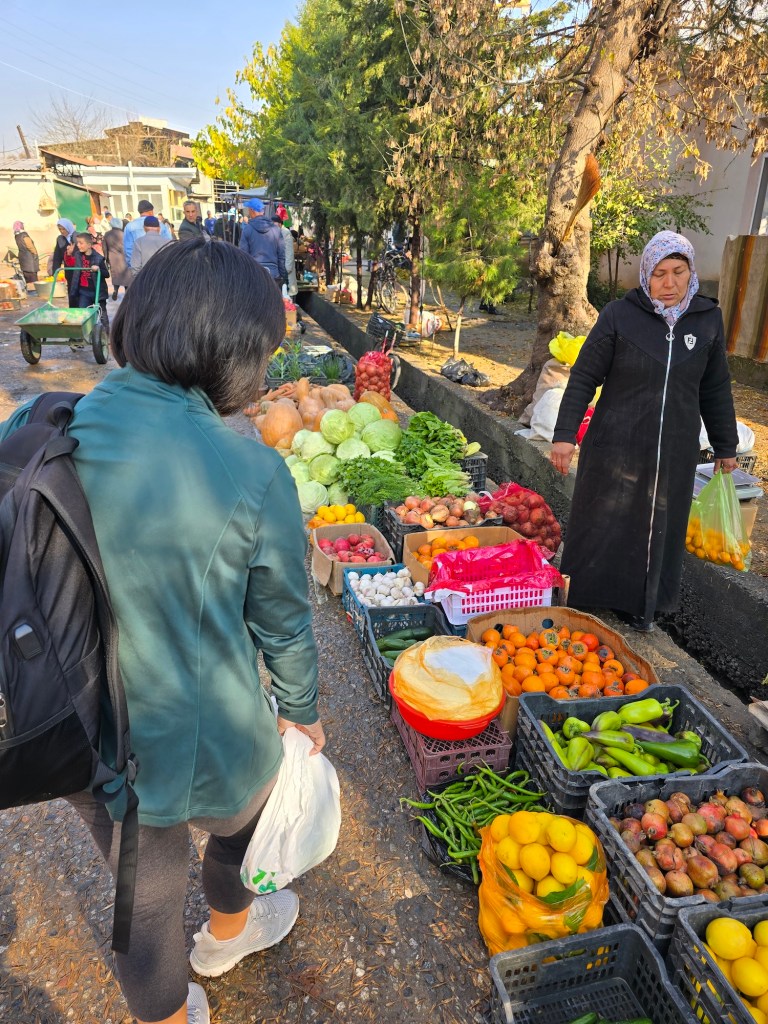
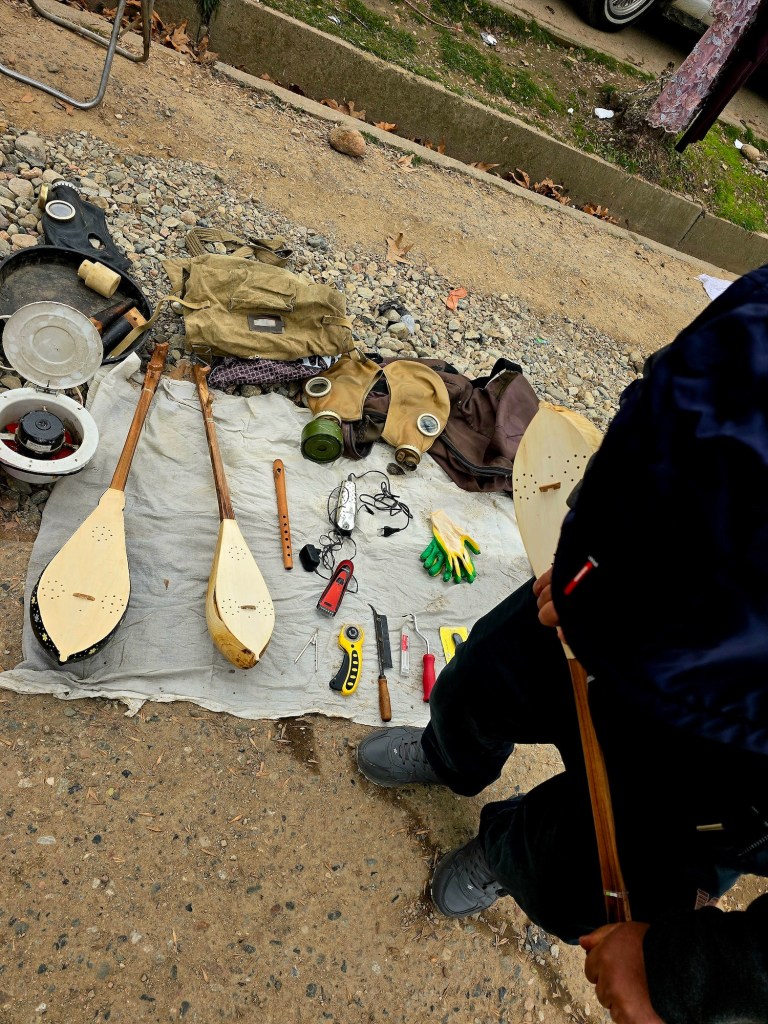
As you walked farther into the neighborhood, the market took on more of a flea-market feel. Cheap clothes, shoes, household goods, sewing supplies — just about anything you could imagine was laid out on tables or blankets. Interested in old Soviet coins or dishes? Head down the first alley on the right, where a row of men sold antiques and odds and ends from another time. Looking for honey? Just keep an eye out for the guy pushing his cart through the streets, filling containers straight from a five-liter bucket. Central Asian honey is outstanding, and this was the real deal.
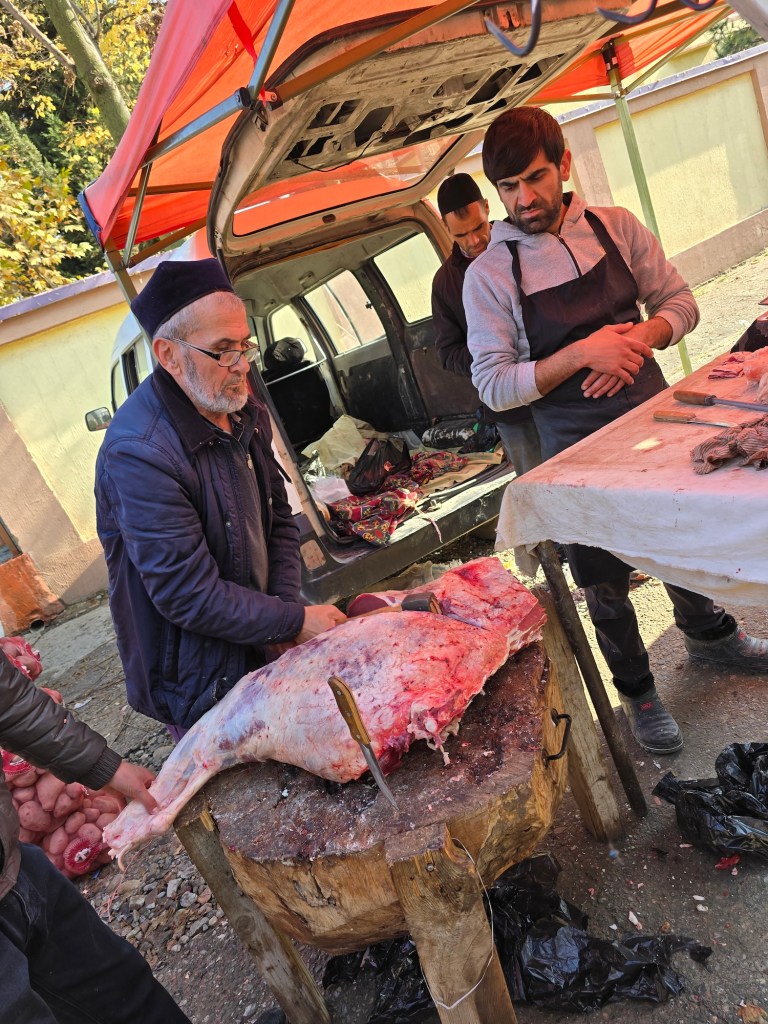
Down one of the side streets, we visited the same butcher every week for fresh cuts of meat. He worked on a massive chopping block right there on the street, cleaver rising and falling in a steady rhythm. Behind him was an open gate leading to a tucked-away railway and train museum, complete with a quiet little park — an unexpected pocket of calm just steps from the chaos of the market.
Bazaar Culture in Central Asia
Bazaars in Central Asia are more than places to buy food — they are social spaces that shape the rhythm of daily life. Long before supermarkets arrived, people came to markets not just to shop, but to catch up on news, maintain relationships, and take part in a shared public routine.
A few things to know:
- Markets are relational. Regular customers build trust with vendors over time. Prices, quality, and even small favors often improve the more familiar you become.
- Seasonality is front and center. What’s available — and what’s missing — tells you exactly what’s in season. The market reflects the land directly.
- Bargaining is contextual. Some goods are flexible in price, others are fixed. Knowing when not to bargain is just as important as knowing when to try.
- Cash is king. Small bills matter, and transactions are quick and informal.
- Food and shopping blend together. Fresh bread, hot meals, tea, and snacks are often part of the same market ecosystem.
- Markets shape identity. The name Dushanbe itself means Monday — a reminder that this city grew around a weekly market and still carries that legacy today.
Modern markets like Mehrgon Bazaar continue this tradition in a new form, but the heart of bazaar culture remains rooted in human connection, routine, and place.
Then one morning in early spring, we walked over as usual and found it completely silent. No people. No vendors calling out from the bridge. No pots bubbling with beans and lamb on the far side of the tracks. At first we thought it might be a holiday we hadn’t heard about, but it turned out to be something far more familiar. Like so many other markets, it was being shut down and moved into buildings somewhere else.
Who knows how long that neighborhood itself will last. The city is pushing outward in all directions, and there’s a constant cycle of tearing down the old and bringing in new high-rises. At times, the entire city feels like one big construction site.
We’ve definitely missed our weekend trips to the “train market,” as we always referred to it. It was more than just cheap groceries — it was a fascinating place to wander, to linger, and to get immersed in the daily rhythm of the city.
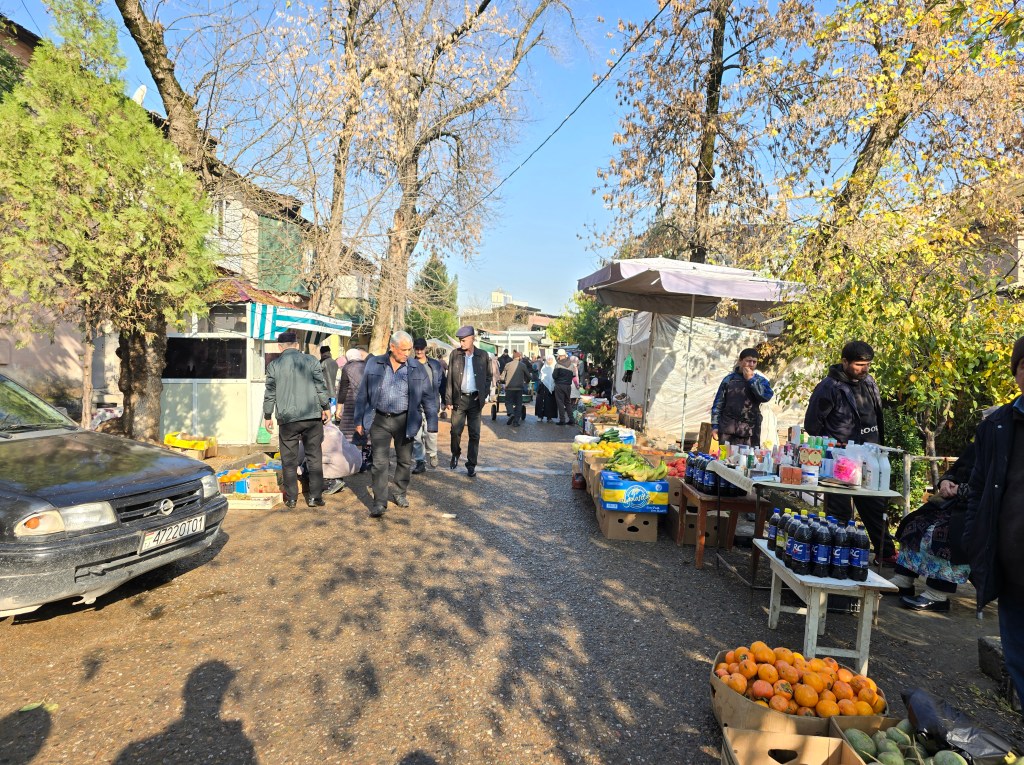
Markets tell you a lot about a place, but they also tell you where you are in your own story. The old train market gave us cheap food and full bags, but more than that, it gave us a weekly rhythm — familiar faces, practiced routes, and the feeling of being stitched, just a little, into the fabric of the city.
Mehrgon Bazaar represents where Dushanbe is heading now: modern, polished, and purpose-built. The old market showed us where it came from. I’m grateful we had time with both, because living somewhere long enough to miss what’s gone is often the clearest sign that it once felt like home.
 Wise Clan in Stanland
Leave a comment