📊 Drive Stat Box — High Pamirs to Khorog (Day Seven)
Route: Bulunkul → Bulunkul Lake → Yashilkul → Alichur Geyser → Alichur Valley → Khorog
Driving Distance: ~220–300 km (depending on detours)
Driving Time: ~8–12 hours (slow travel, stops, rough roads)
Elevation Range: ~3,700 m (Bulunkul) → ~4,000 m+ (high pass) → ~2,100 m (Khorog)
Road Conditions: Dirt tracks around lakes and geyser; paved Pamir Highway (M41) closer to Khorog
Highlights: Wetlands, yak and camel herds, Bulunkul Lake, Yashilkul, Alichur Geyser, dramatic descent to Khorog
Overnight: Hotel in Khorog
Bulunkul Village
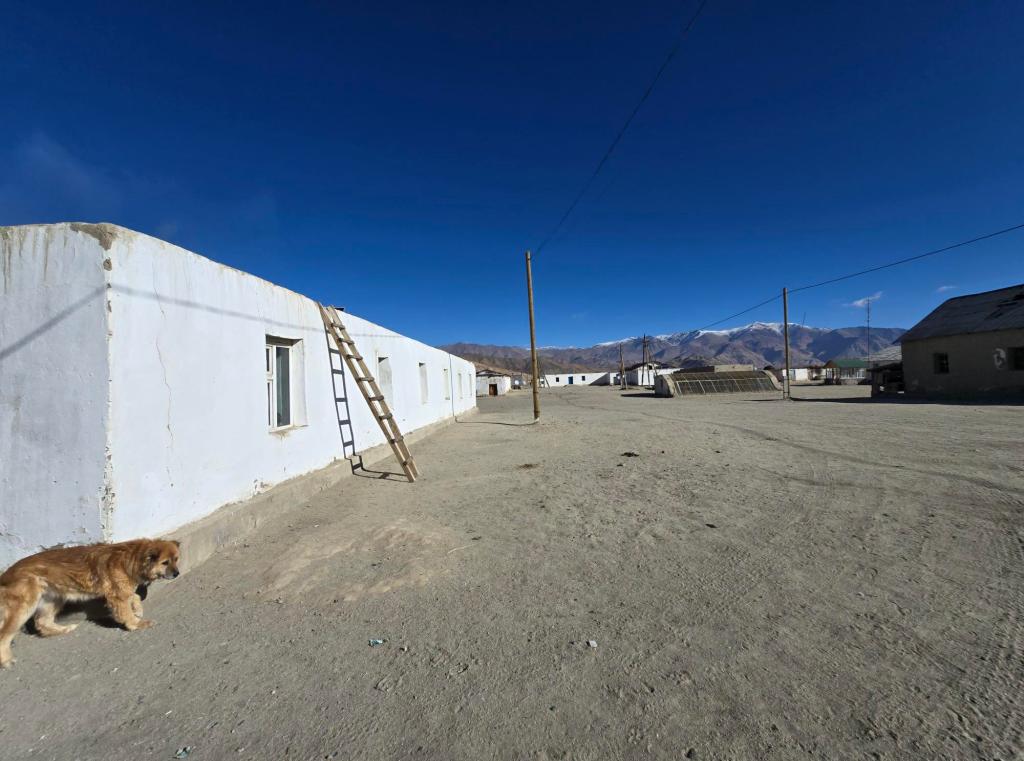
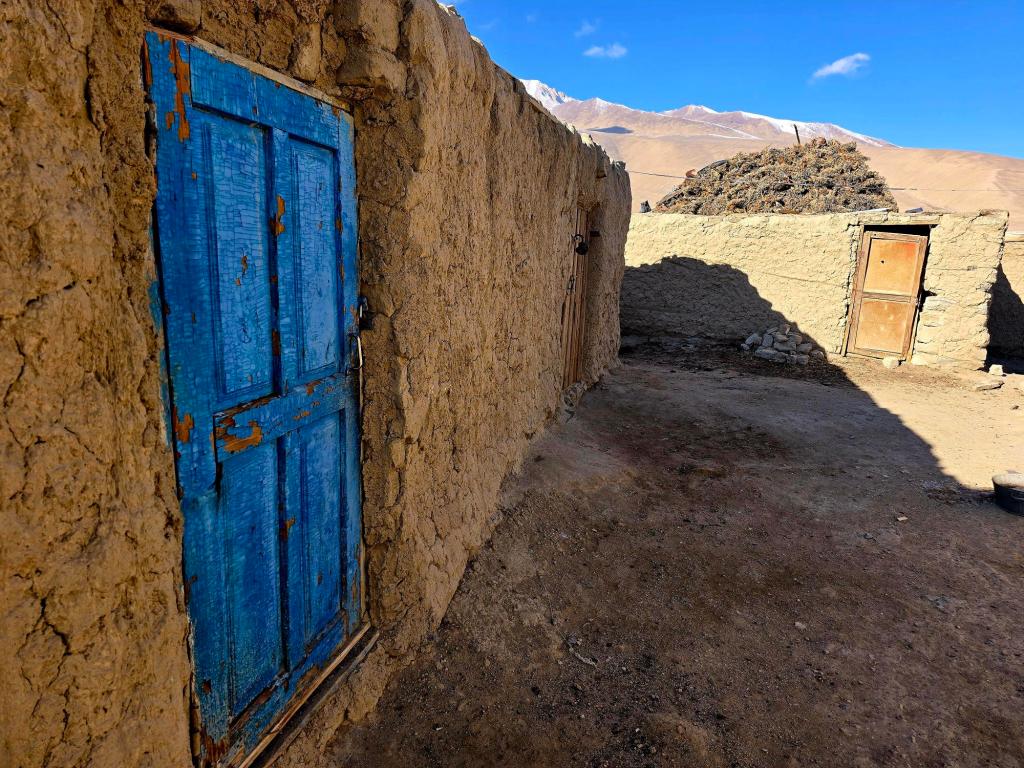
Bulunkul village has its own distinct vibe. The settlement itself is tiny, with roughly 40–45 houses lining a single road on the high plateau — mostly simple, white-washed rectangular homes, with a handful of older mud-brick structures tucked in among them. Most travel accounts put the population at around 300 people, living here year-round at nearly 3,800 meters above sea level in one of the coldest inhabited places in Central Asia.
This place is remote, and for parts of the year, completely cut off from the rest of the world. The roads in and out are treacherous, and in the depths of winter temperatures regularly plunge to –40°F, with a recorded low of –63°F. These are hardy people who call the high plateau home.
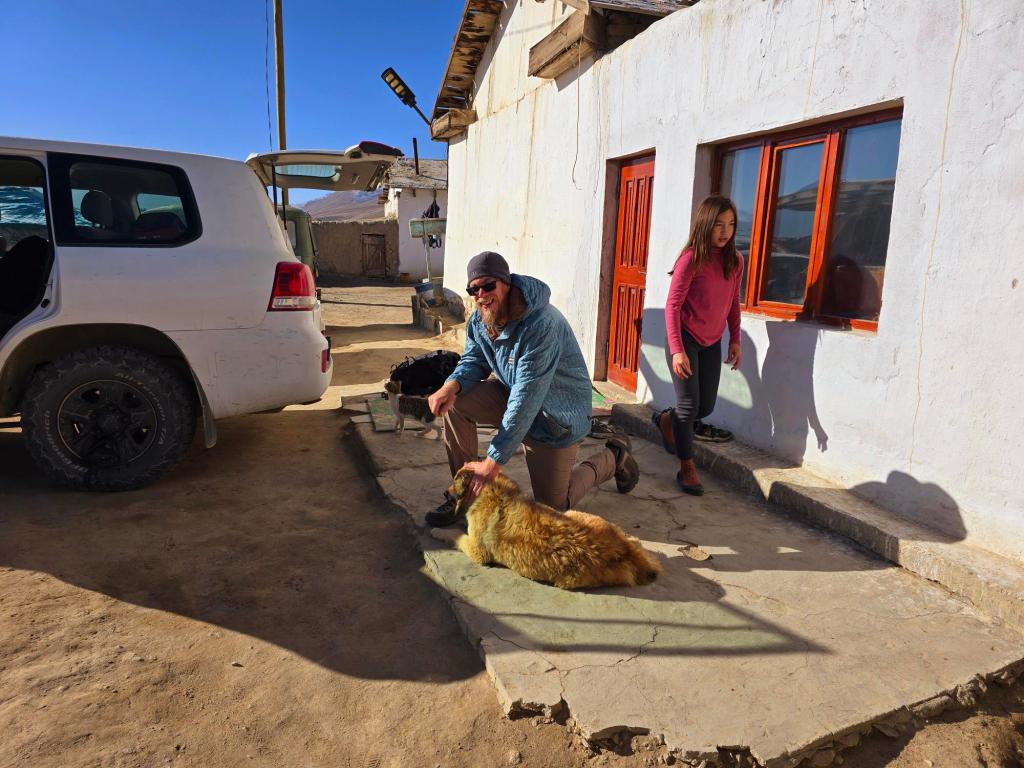
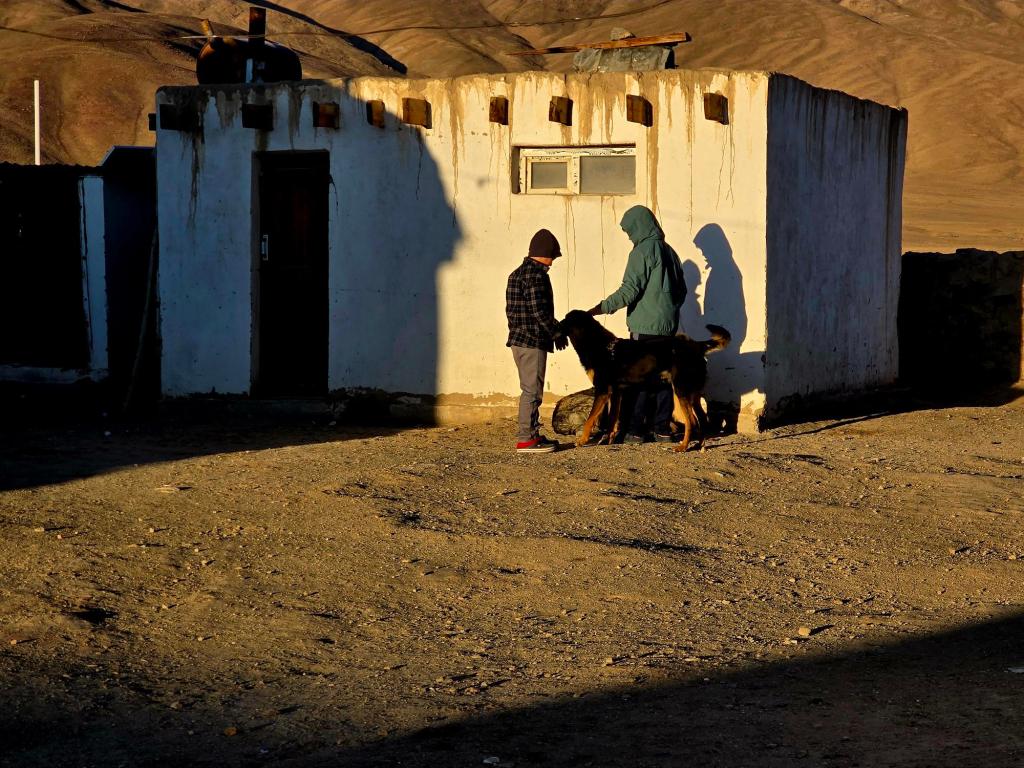
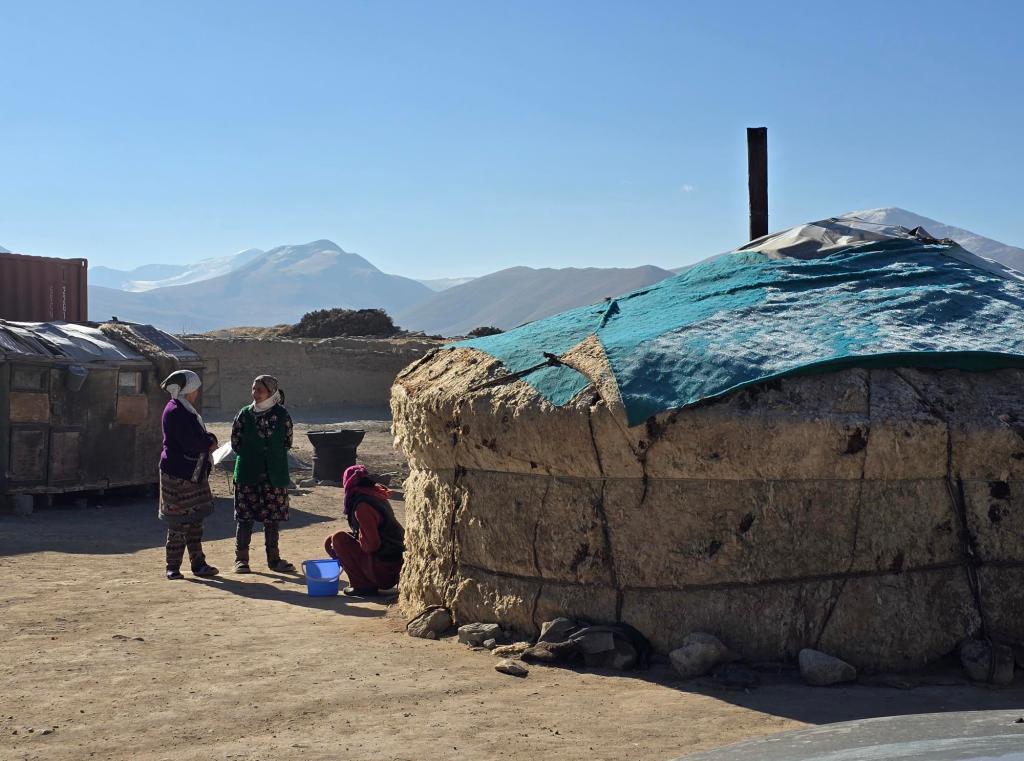
We woke early and stepped out into the sharp morning cold. Big dogs are everywhere in Bulunkul — serious animals built for guarding and protection from whatever bears down on the village from the surrounding wilderness. Most of them look large enough to swallow a cat in a couple of chomps, yet judging by the number of cats roaming freely around the village, they’ve clearly come to an understanding.
After breakfast and warm goodbyes to our hosts — and to the neighbors, the twelve cats lounging around the yurt, and the ever-watchful dogs — we loaded up our gear and pulled out of the village, heading toward the lake that shares Bulunkul’s name.
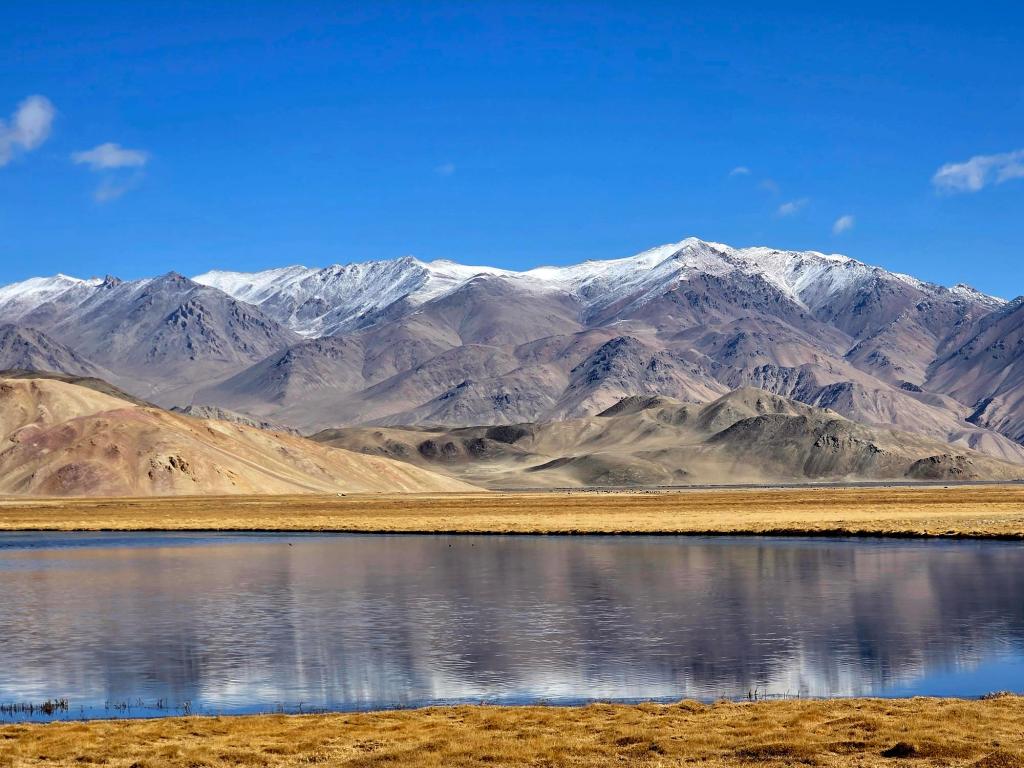
Bulunkul Lakes, the High Plateau, and the Long Road Back to Khorog
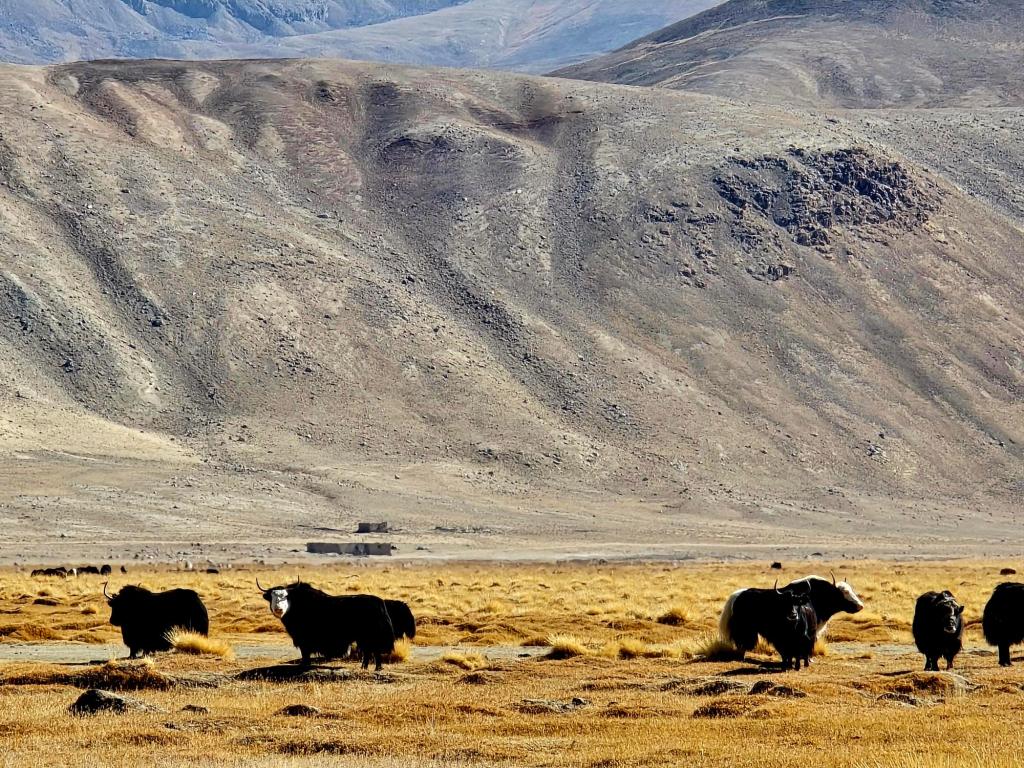
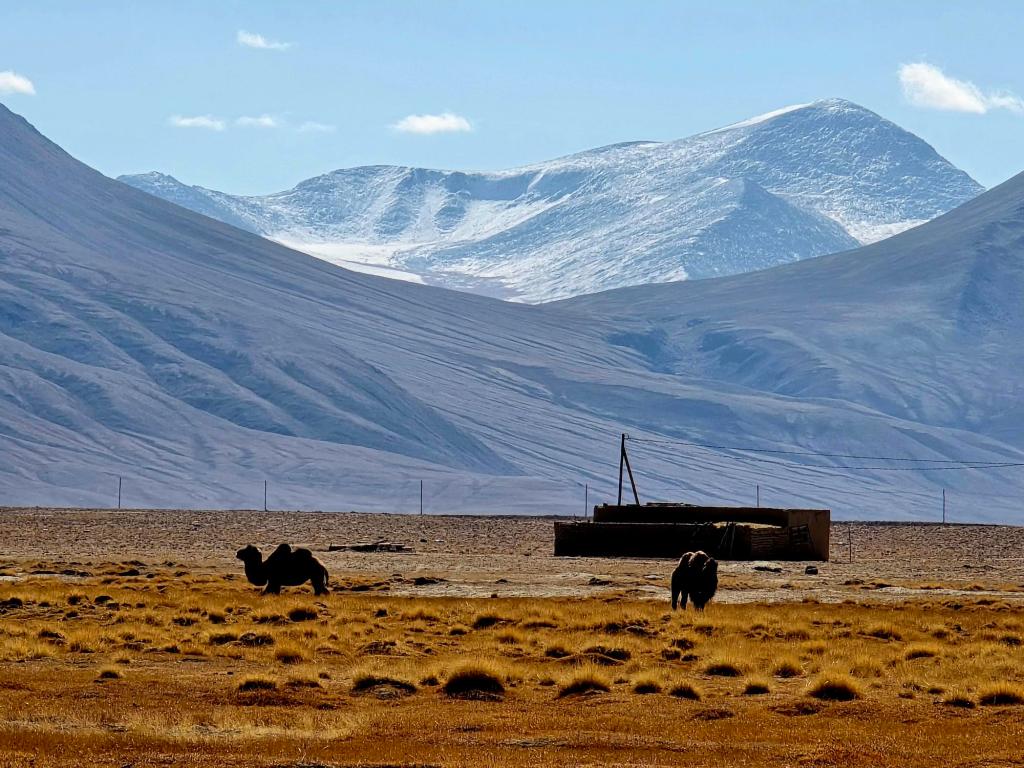
Not far outside Bulunkul village, we entered a broad wetlands area, where frozen patches crunched beneath the Land Cruiser’s tires. After a kilometer or so, the landscape opened fully onto the plateau and we came upon a large herd of yaks, grazing freely in the open expanse. These yaks looked noticeably different from the ones I’d seen along the Tibetan border in western China — these animals were heavier, broader through the shoulders, and carried themselves closer to the ground, as if shaped by wind and cold rather than pasture and people. There was nothing ornamental about them — no sense of being curated or softened by human presence. They looked built for endurance, for long winters and endless exposure, perfectly matched to the harsh openness of the high Pamirs. In a landscape this unforgiving, elegance feels like a liability, and the yaks seemed to embody that truth completely. Sharing the same grazing grounds were several camels, wandering casually across the grasslands as if they’d always belonged there too.
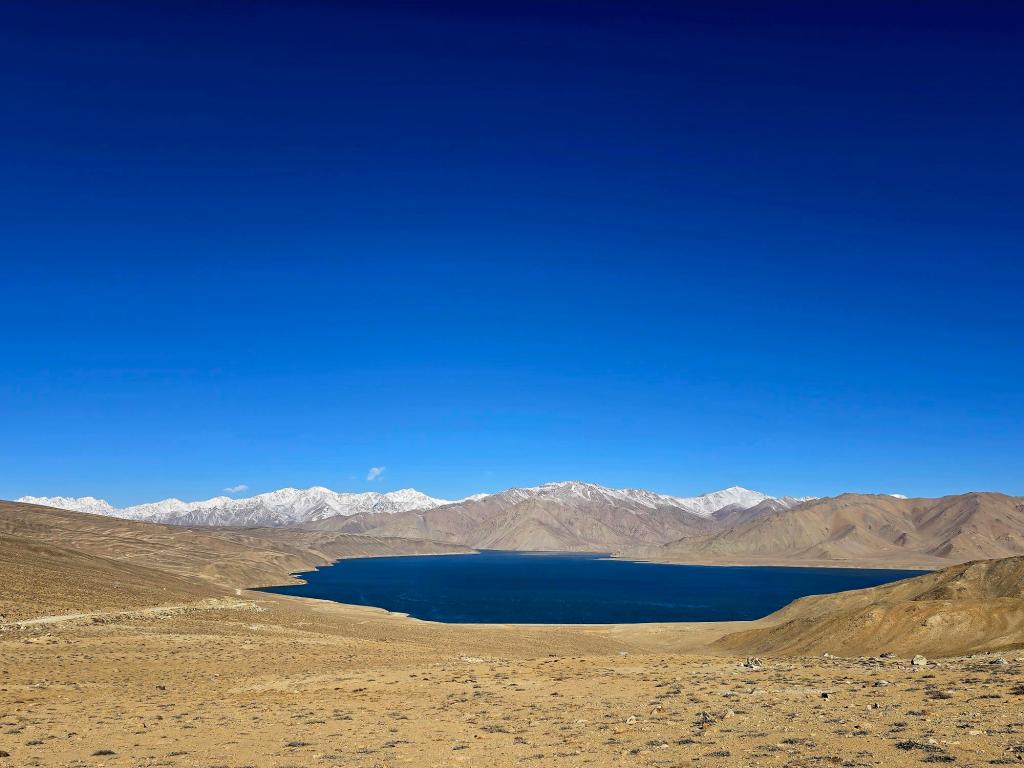
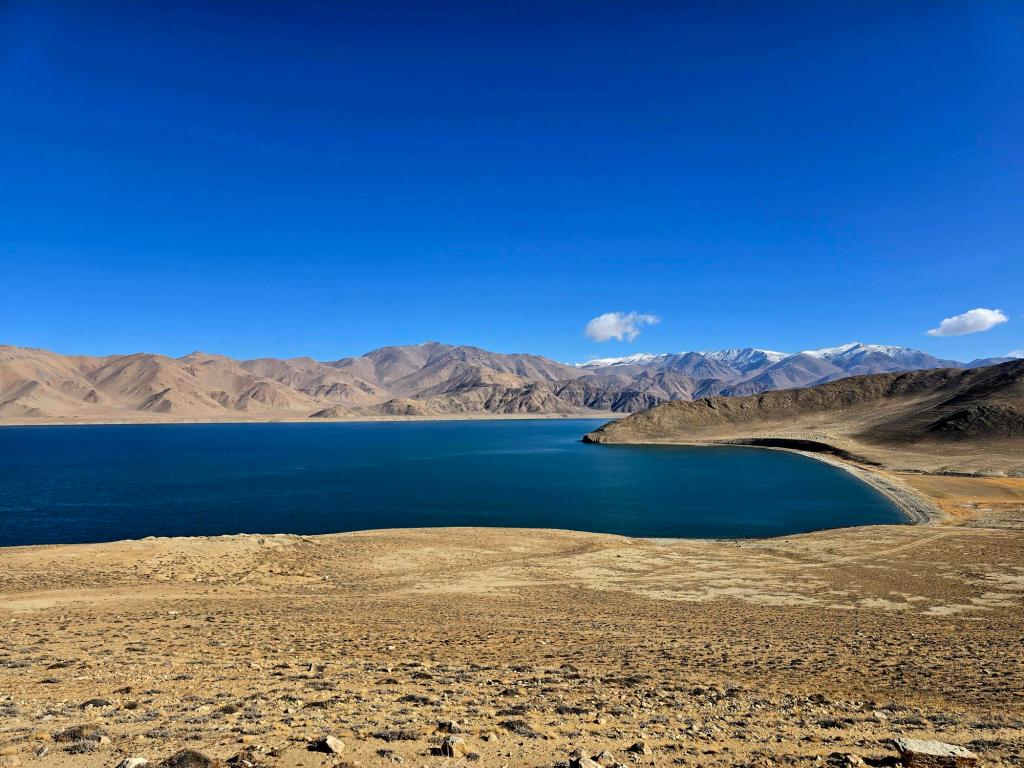
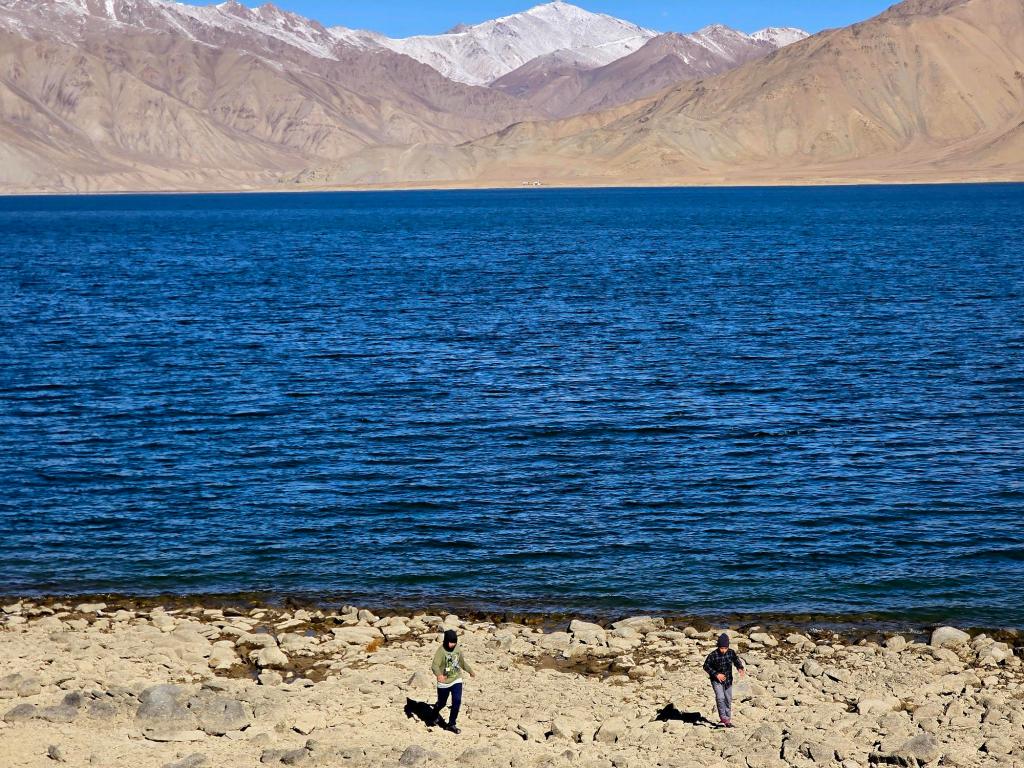
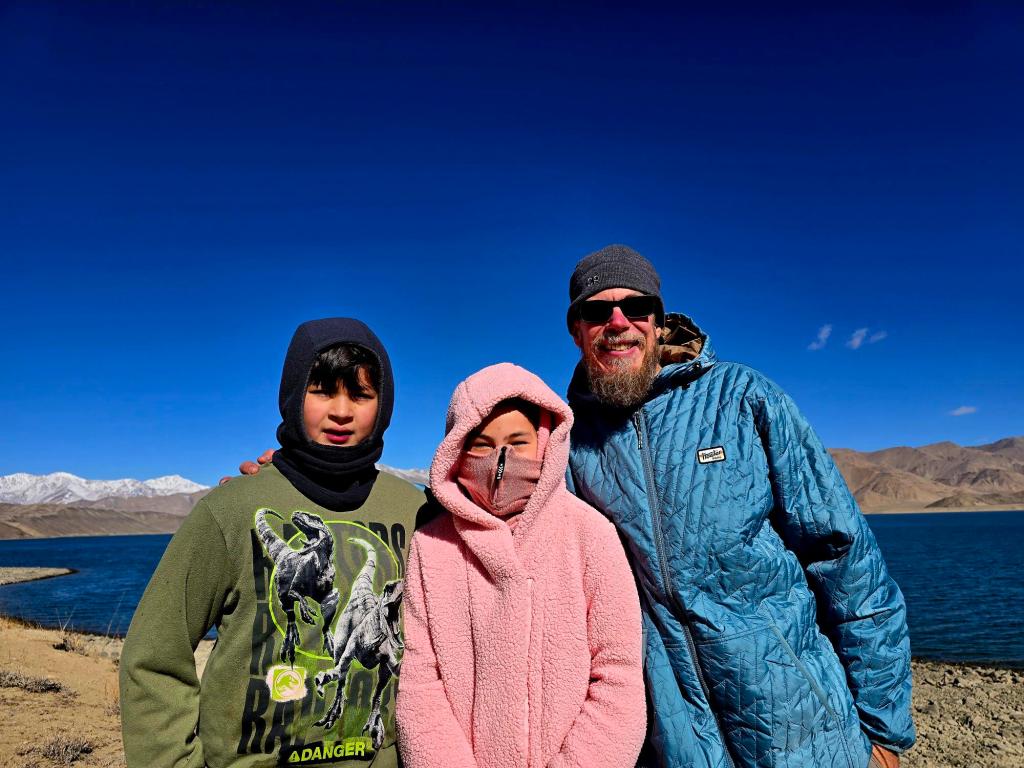
We pushed up and over a low rise, and suddenly a deep, dark-blue lake appeared ahead of us. Dropping down toward the shore, we parked and stepped out to wander along the beach, taking in the stillness and stark beauty of this high alpine setting. On the far side of the lake, wetlands stretched out into the distance, offering sanctuary to a wide range of migratory birds — their calls carrying easily across what was otherwise a quiet, wind-swept landscape.
When we finally pulled ourselves away, we continued on to a second lake nearby — Yashilkul, far larger at roughly 25 kilometers long and the defining feature of the Alichur Valley. Snow-dusted peaks ringed the water, and the scale of the place made it easy to just sit and stare for a while. Like Bulunkul Lake, Yashilkul is surrounded by wetlands, peat bogs, marshes, and open valleys that attract large numbers of birds. Bar-headed geese, ruddy shelducks, brown-headed gulls, Himalayan snowcocks, raptors, and other high-altitude species all pass through or linger here.
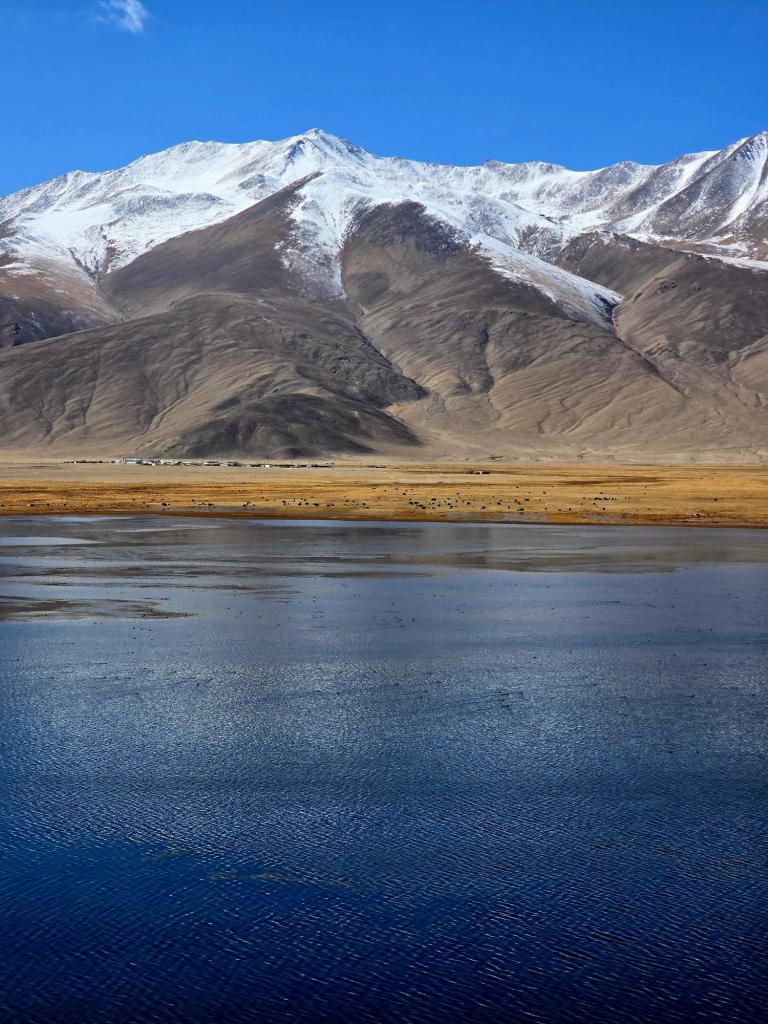
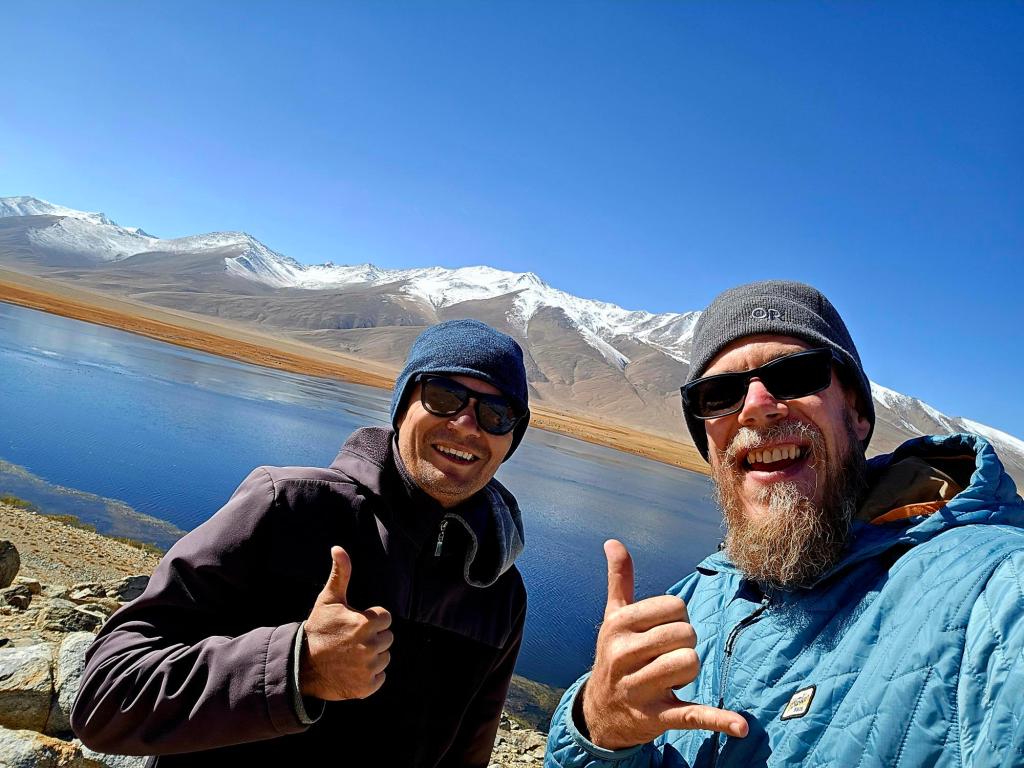
We parked above the lake and watched a flock of waterfowl erupt into motion — skimming across the surface, flapping hard, then diving under in bursts of coordinated chaos. It went on for some time, but the day was slipping by and we still had ground to cover.
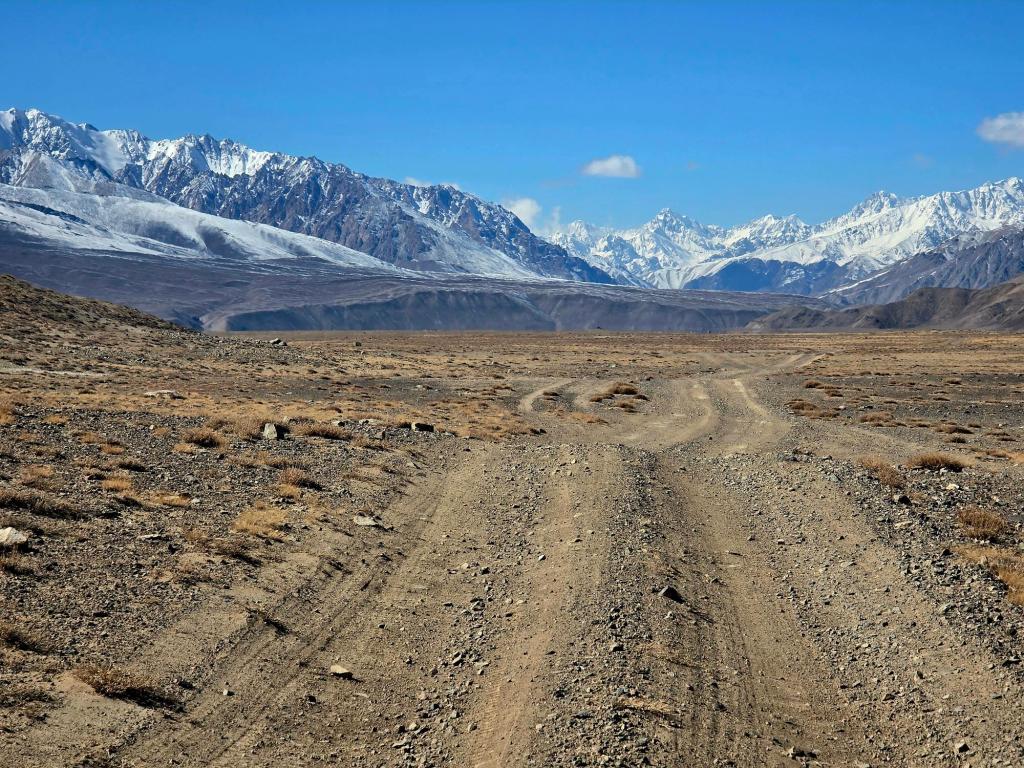
Our next stop was a small geyser, hidden out in the middle of nowhere. The drive carried us across a wide valley floor, with mountains rising straight up along either edge, the dirt road running dead center through the emptiness. After a while, we turned off onto another rough track that descended into a narrower gorge before following yet another riverbank. Along the way, we passed a large herd of yaks being watched over by a lone shepherd and his big dog, both resting quietly just off the road.
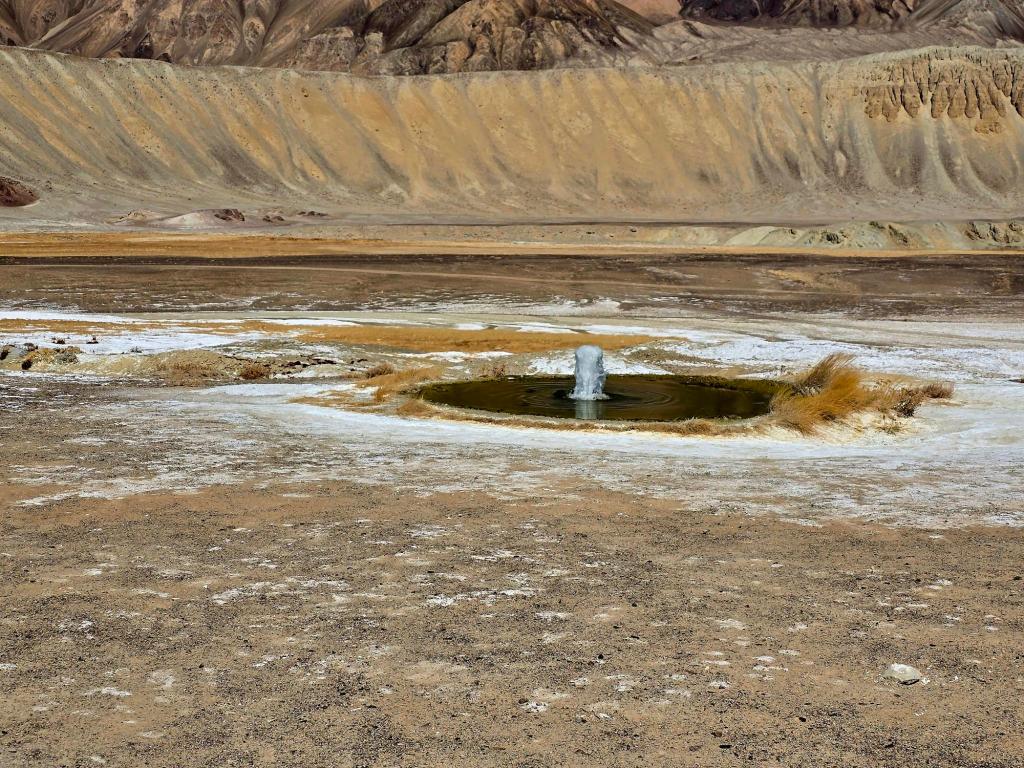
You could spot the geyser from a surprising distance — not because it erupted dramatically, but because the ground surrounding it was coated in white mineral deposits, stark against the darker earth. The pool itself was small, maybe six to eight feet across. Every so often it would bubble up and spit water a couple of feet into the air, then settle again. It felt like a subtle reminder that even this seemingly lifeless plateau is still very much alive beneath the surface.
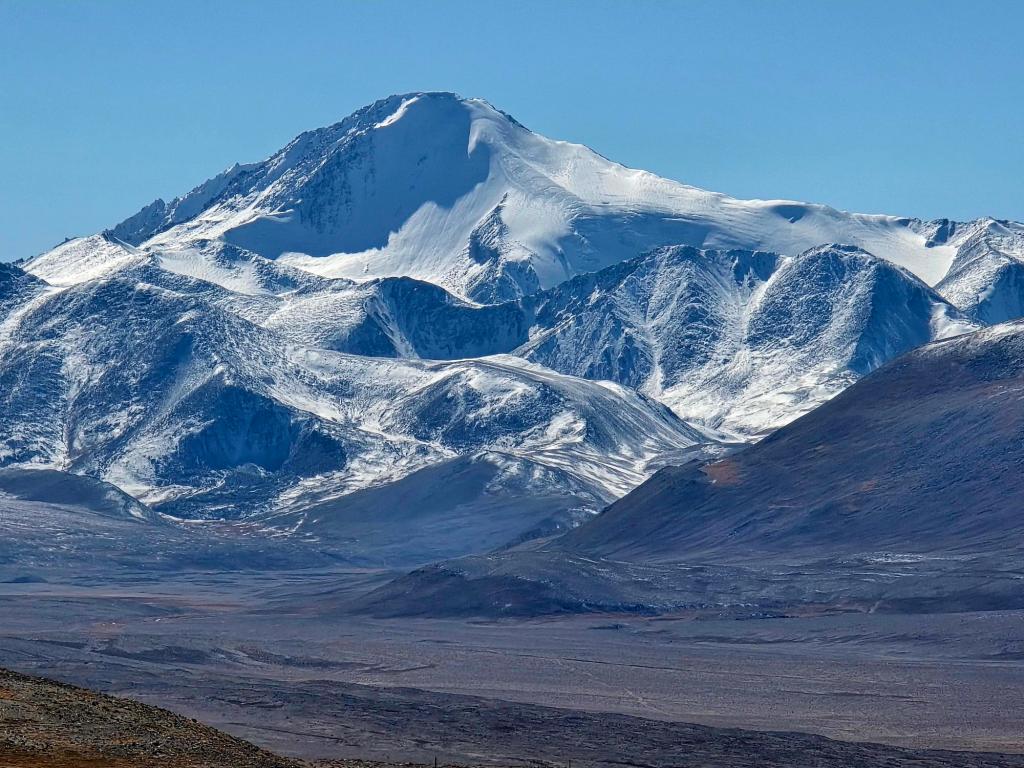
From there, we began the long push back toward Khorog. We crossed another high pass near the 4,000-meter mark, with a massive peak looming off to the left, before starting a steady descent. Eventually, pavement returned, and with it traffic — more cars, more people, more signs of daily life. After days spent in near-total isolation, the gradual reintroduction of civilization felt oddly jarring.
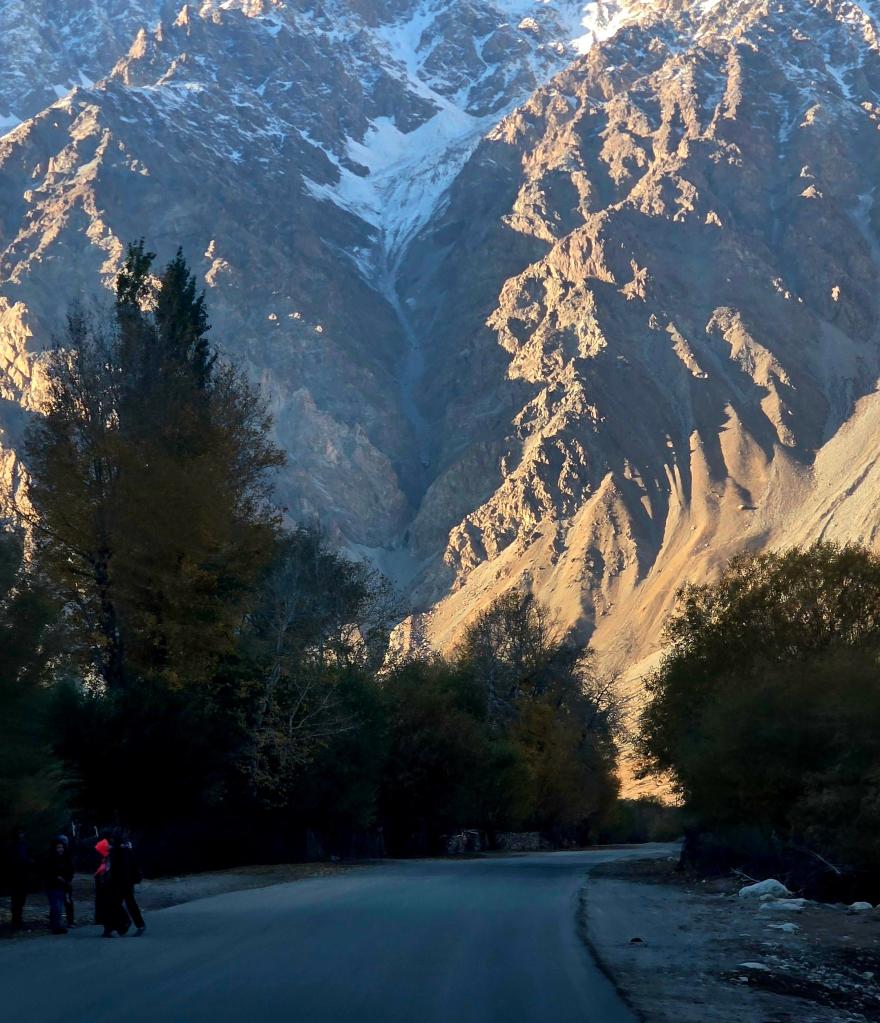
We rolled into Khorog in the early evening and checked into a hotel above the National Plov restaurant. Downstairs, we sat down to a well-earned dinner of shashlik and salads before heading upstairs for something that now felt like a luxury — mattress beds, and a good night’s rest without everyone sharing the same space.
 Wise Clan in Stanland
Leave a comment