Bartang Valley, Jizew, and Onward to Ishkashim
📊 Trip Stat Box — Pamir Highway (Days Three & Four)
Route: Rushan → Bartang Valley → Jizew →Rushan→ Khorog → Ishkashim
Driving Distance: ~300 km total
• ~60 km Rushan → Bartang Valley trailhead
• ~60 km Trailhead → Rushan
• ~180 km Rushan → Khorog → Ishkashim
Hike Distance: ~5 miles (8 km) one way
Hike Time: ~3–3.5 hours up / ~1.5–2 hours down
Elevation Range: ~2,080 m (bridge) → ~2,500 m (upper Jizew)
Elevation Gain (Hike): ~2,500 ft (760 m)
Difficulty: Moderate (steady climb, non-technical)
Highlights: Bartang Valley drive, alpine lakes of Jizew, traditional Pamiri homes, Khorog stop, Garm Chashma hot springs
Overnights: Homestay in upper Jizew village; homestay in Ishkashim
Dates: October 14-15, 2024
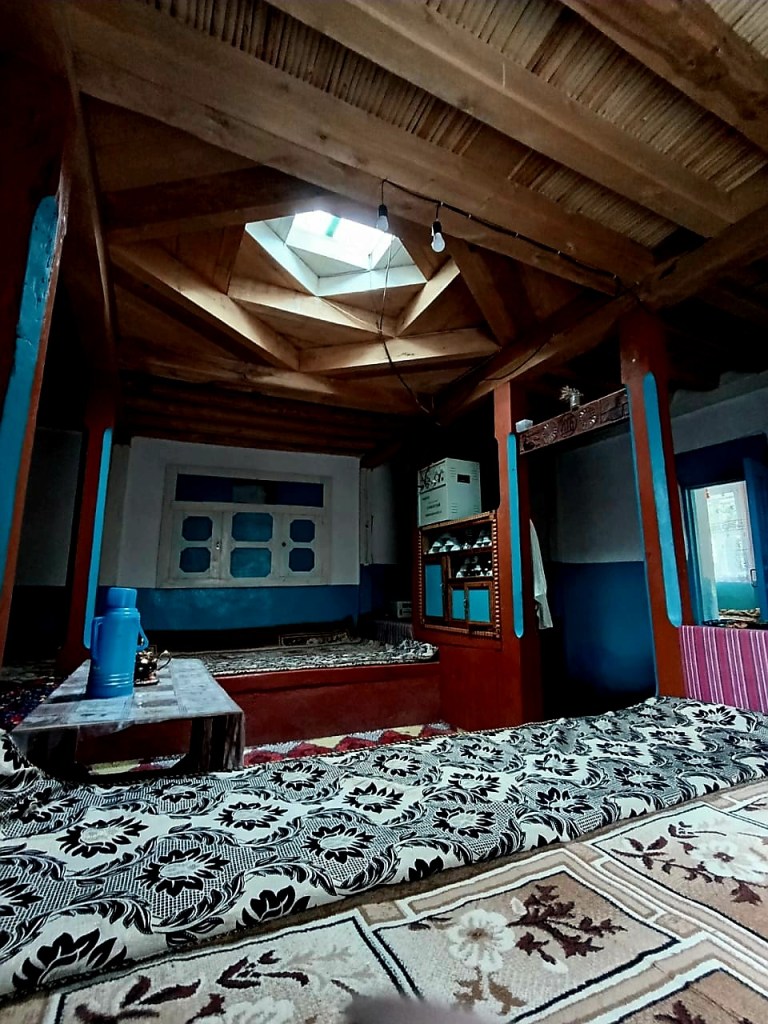
Waking in Rushan — A Pamiri Home
We awoke in our homestay in Rushan with morning light already filtering through the traditional skylight above the room we all shared.
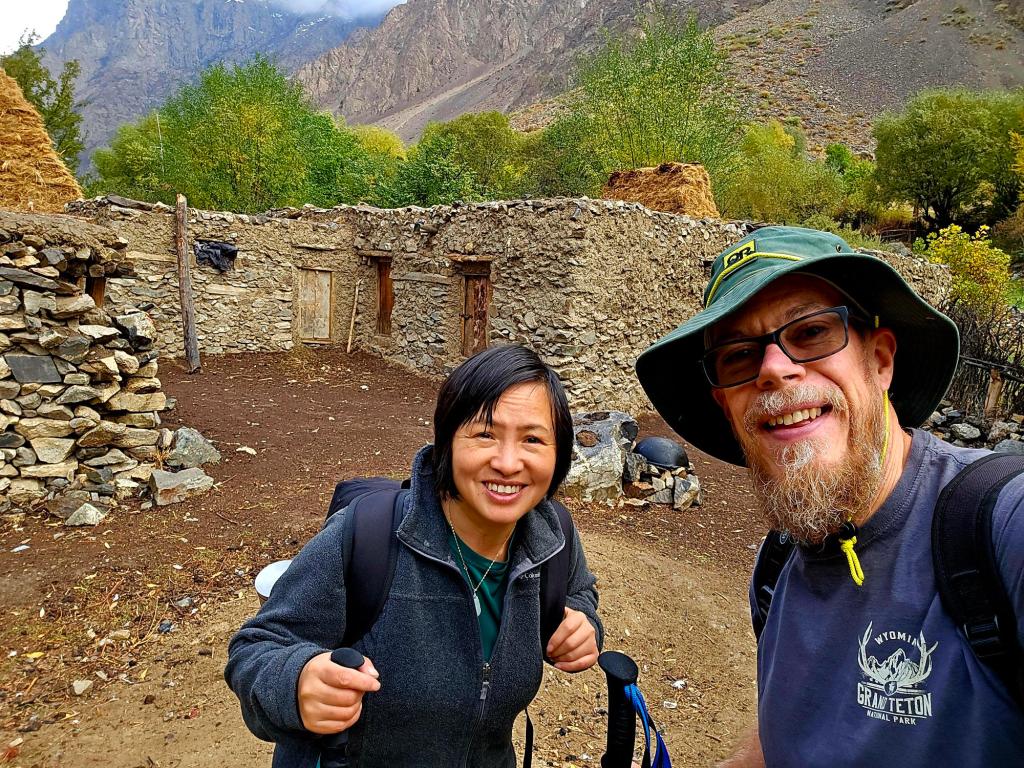
Traditional Pamiri homes, known as chid, are built around a central roof opening—not just for light, but for ventilation, warmth, and social life. In many parts of the Pamirs, that opening is framed by wooden beams arranged into four offset squares, a design believed to represent the four elements—air, water, earth, and fire—or cardinal principles rooted in ancient cosmologies, including pre-Islamic and Zoroastrian influences. The skylight marks the symbolic center of the home, tying everyday life to the natural and spiritual world beyond its walls.
Inside, the layout followed a familiar pattern. Raised platforms, roughly six feet wide, ran along three sides of the room. During meals, a tablecloth is spread in the center and everyone sits cross-legged around the food. There are always trays of nuts, candies, cookies, and dried fruits within reach, and breakfast never appears without flatbread and generous bowls of fruit compote. The cherry and apricot compotes, in particular, were outstanding.
In one corner, thick mats and bedding were stacked neatly, pulled out each evening for sleeping. Our family of five fit easily along one side of the room, with plenty of space left over. We were the only guests that night, though there would have been room for many more.
Hospitality in Tajikistan is remarkable wherever you go, but the Pamiri people elevate it to something special—warm, generous, and deeply genuine. Our kids spent part of the morning playing with the family’s son while we lingered over breakfast, in no hurry to leave.
Into the Bartang Valley
After a short walk around the village, we left some of our luggage behind and had the father of the household drive us roughly 60 kilometers up into the Bartang Valley, following the course of the Bartang River—a powerful tributary of the Panj, but a world apart in character.
After two long days in the vehicle, it was time to get some hiking in.
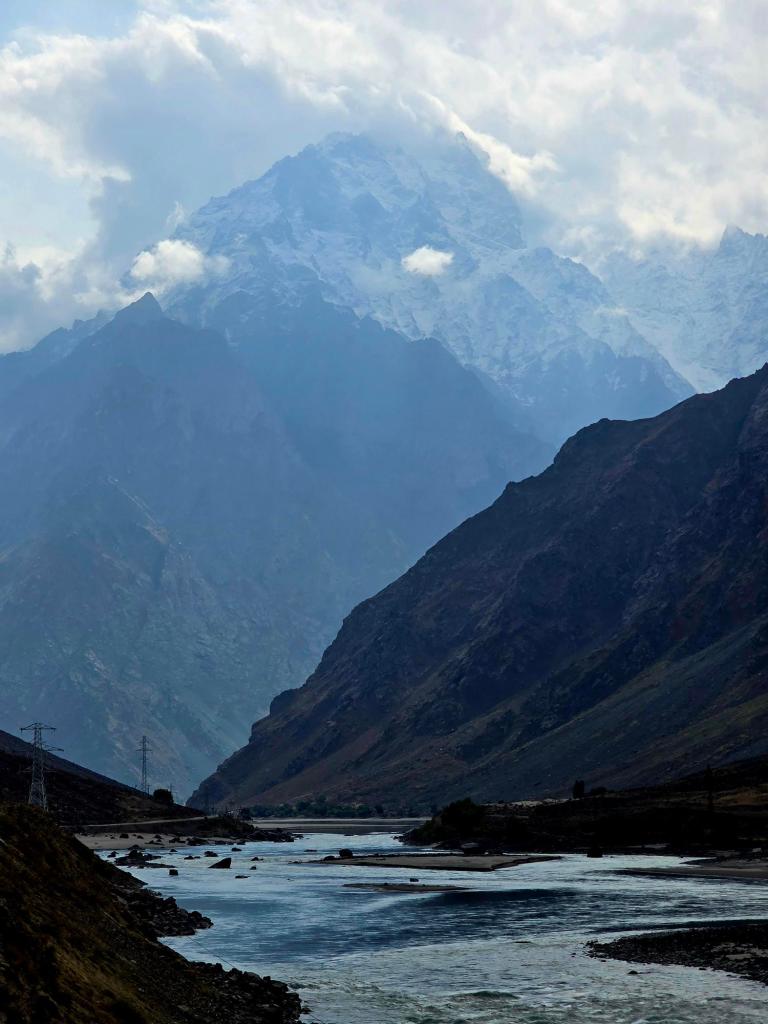
The drive itself was stunning. The Bartang Valley is one of the most remote and dramatic corners of the Pamirs. Its name is often translated as “narrow passage,” and it doesn’t take long to see why. The valley walls rise steeply from the river, and even today the road feels like a fragile thread carved into rock. Before the Soviets pushed a vehicle route through here, travel depended on footpaths, rope bridges, and cliff-side platforms.
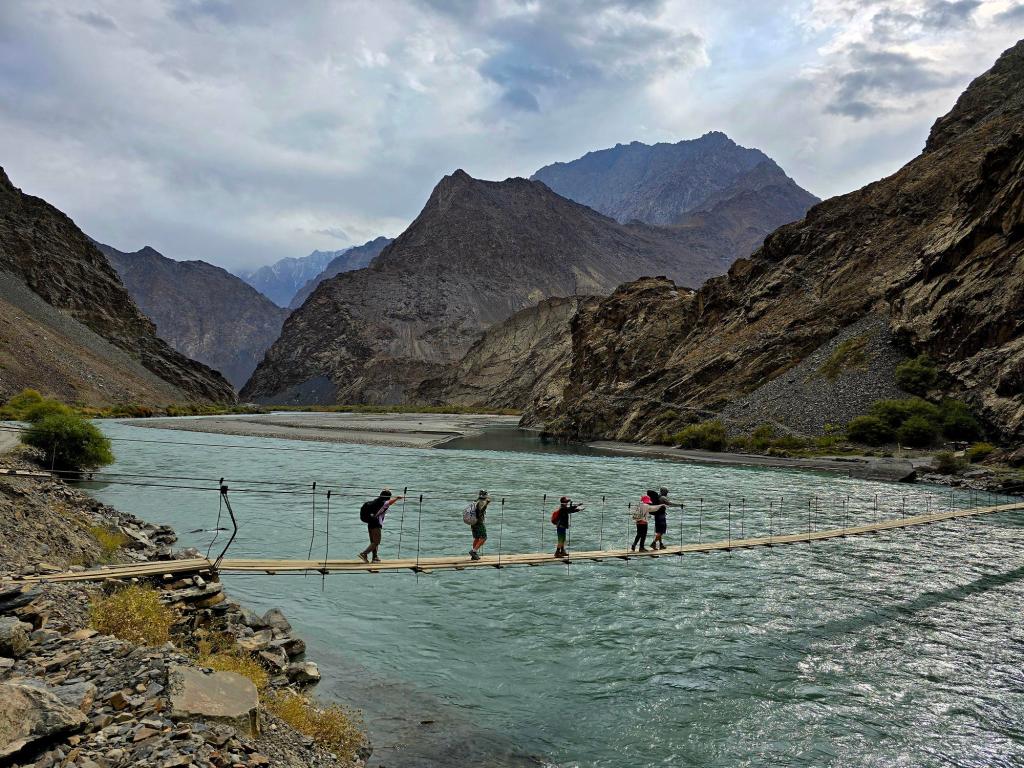
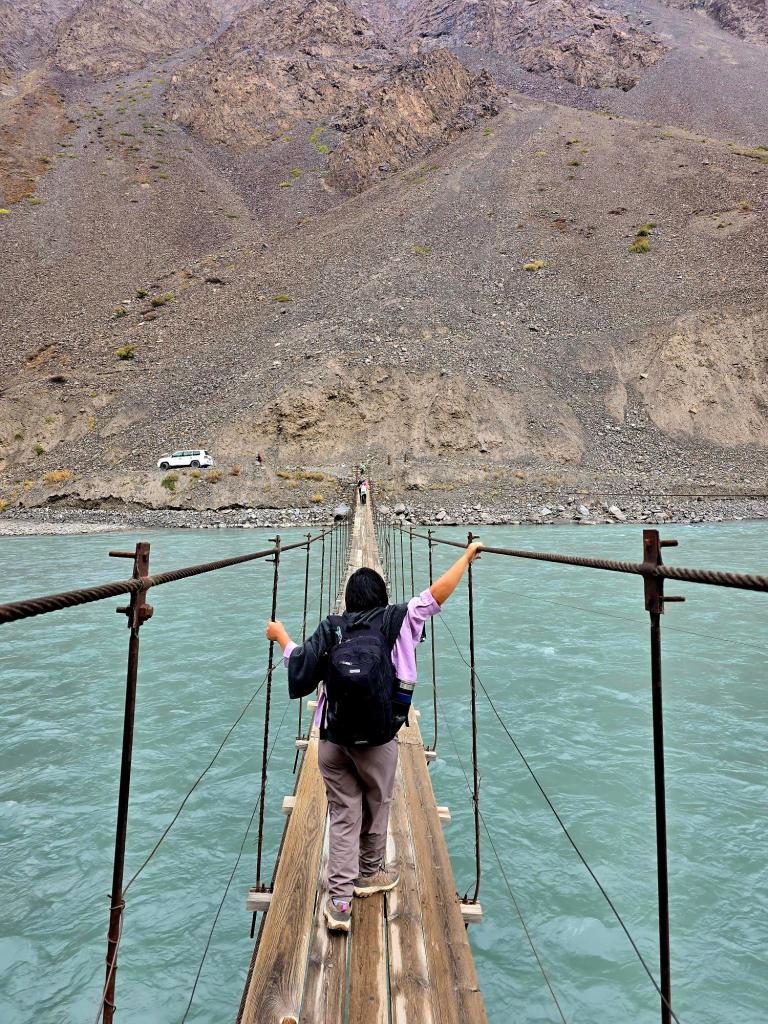
Eventually, we reached a long suspension bridge crossing the river. This would be our trailhead. We agreed to meet back here the following day around noon, double-checked our provisions, and stepped onto the bridge, the river flowing swiftly beneath our feet.
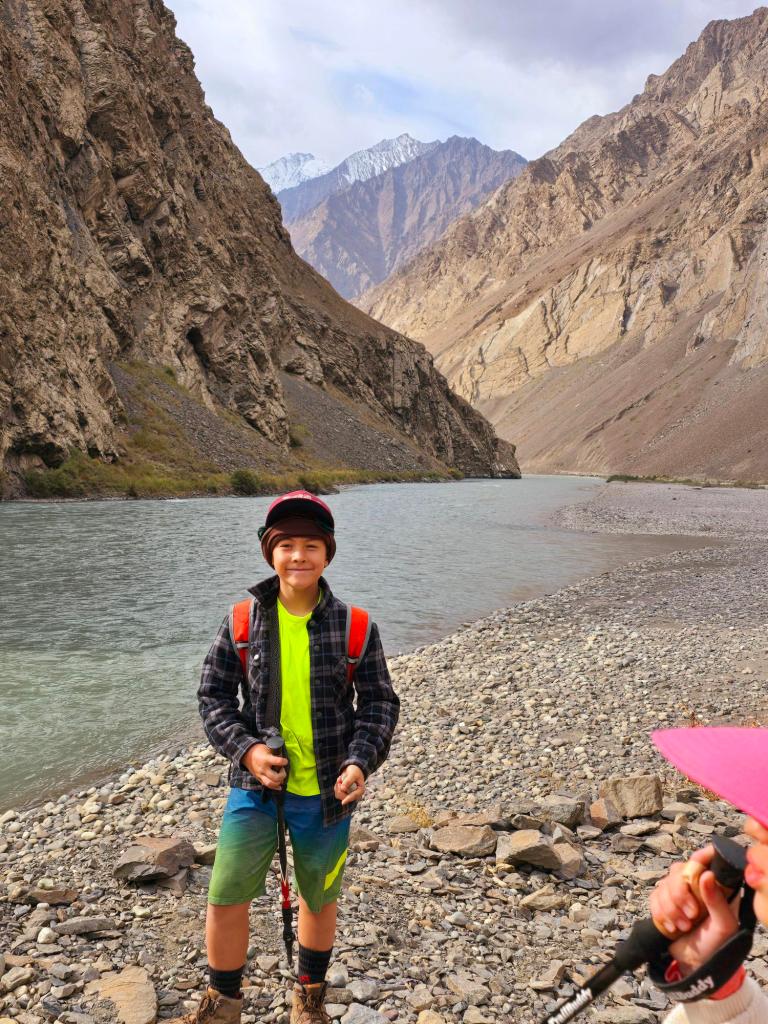
On the far side, we dropped down to the water’s edge for a few moments, watching the large volume of water racing past. Then we turned toward the mountains and began the climb.
The Hike to Jizew
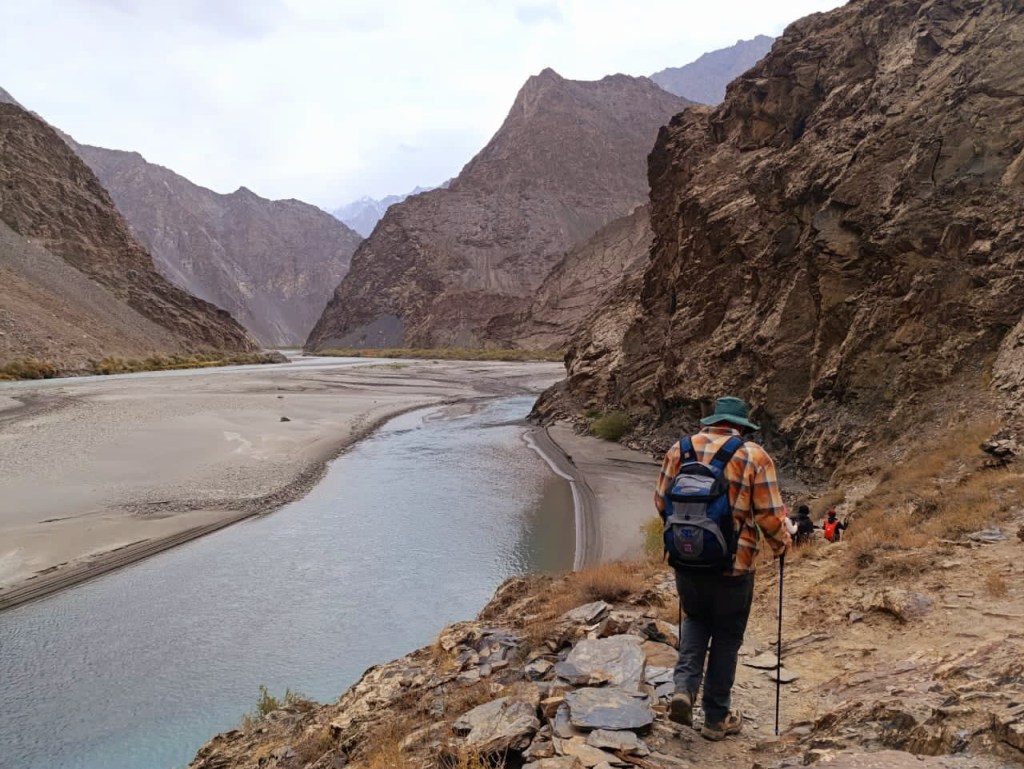
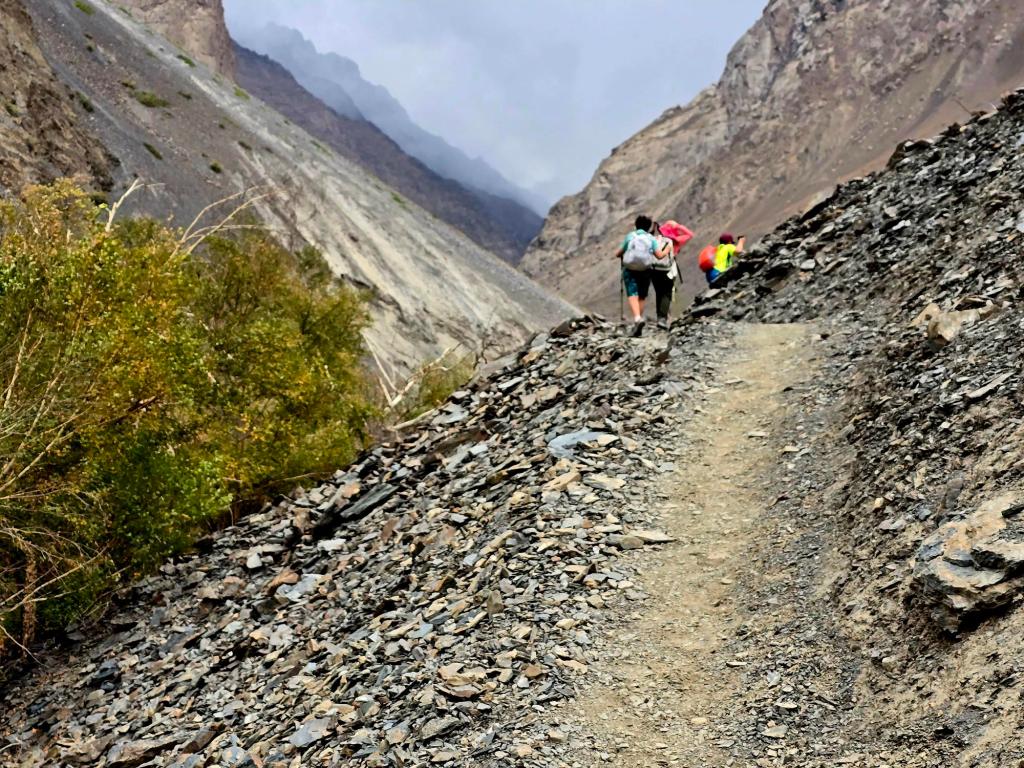
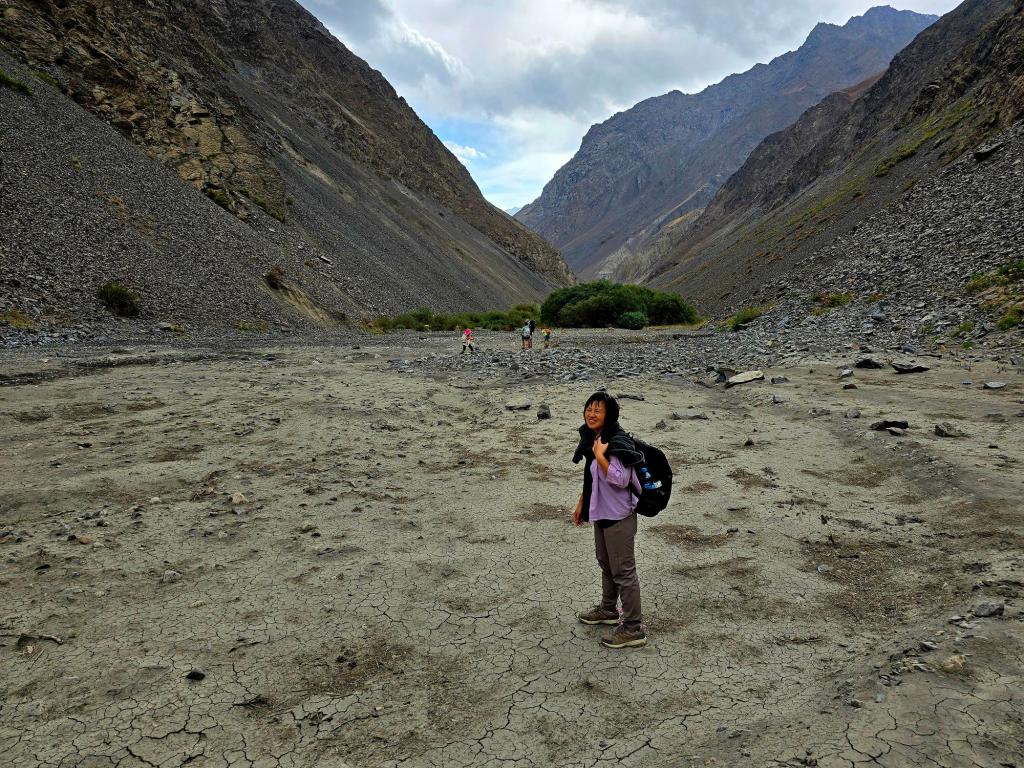
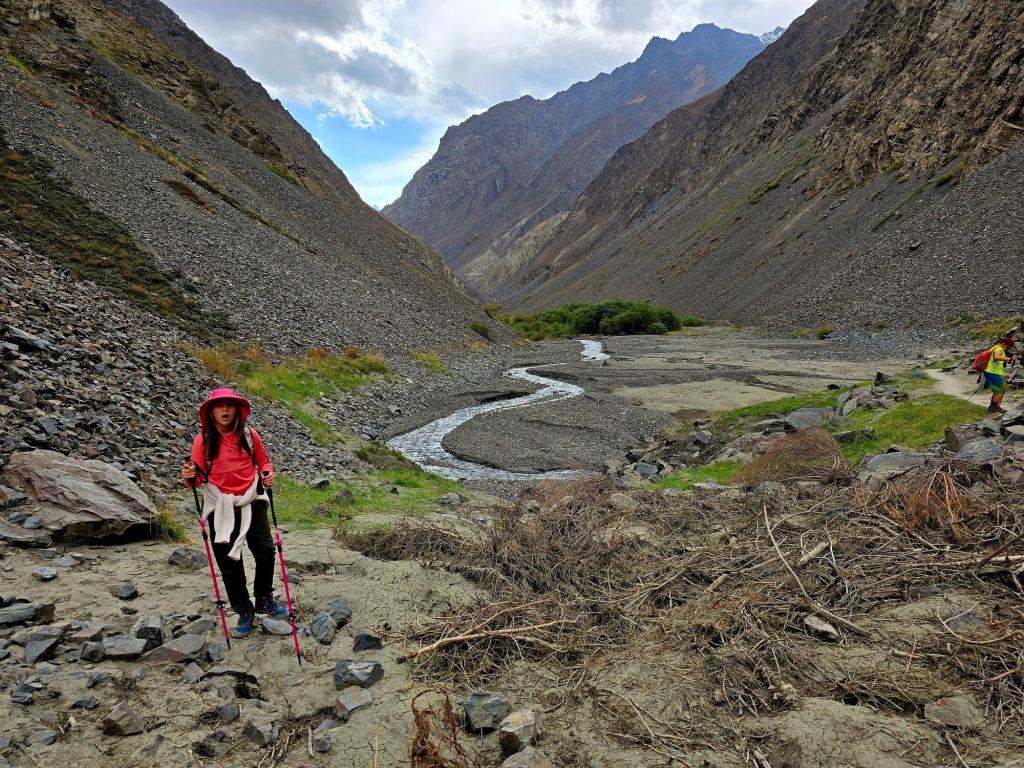
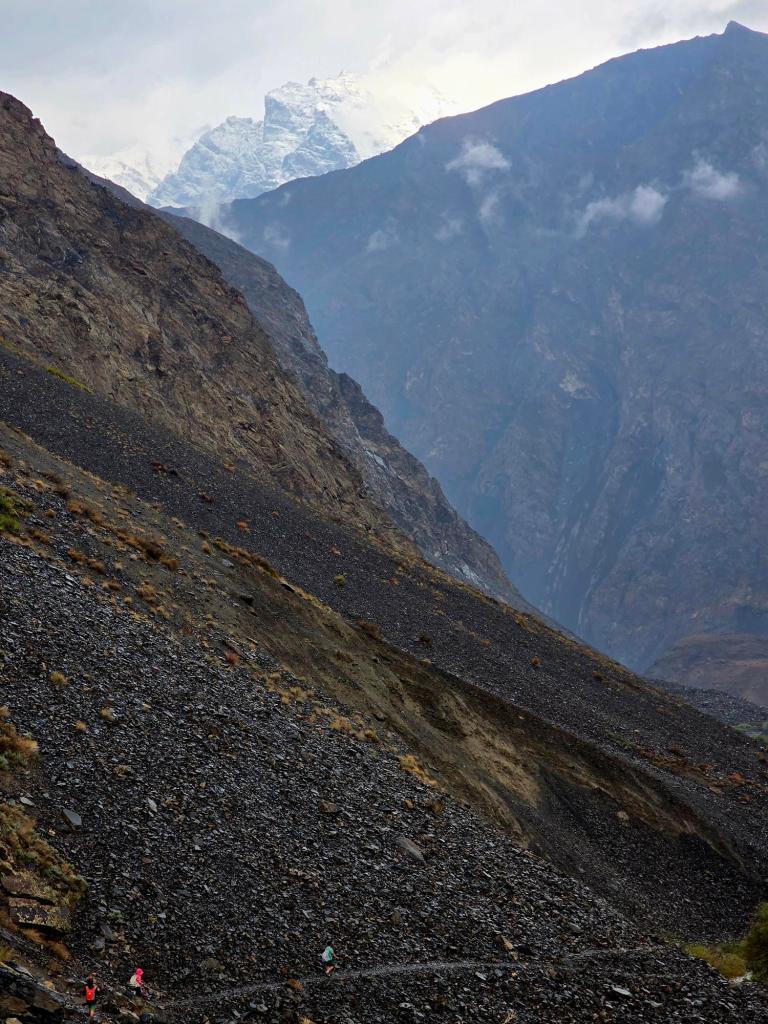
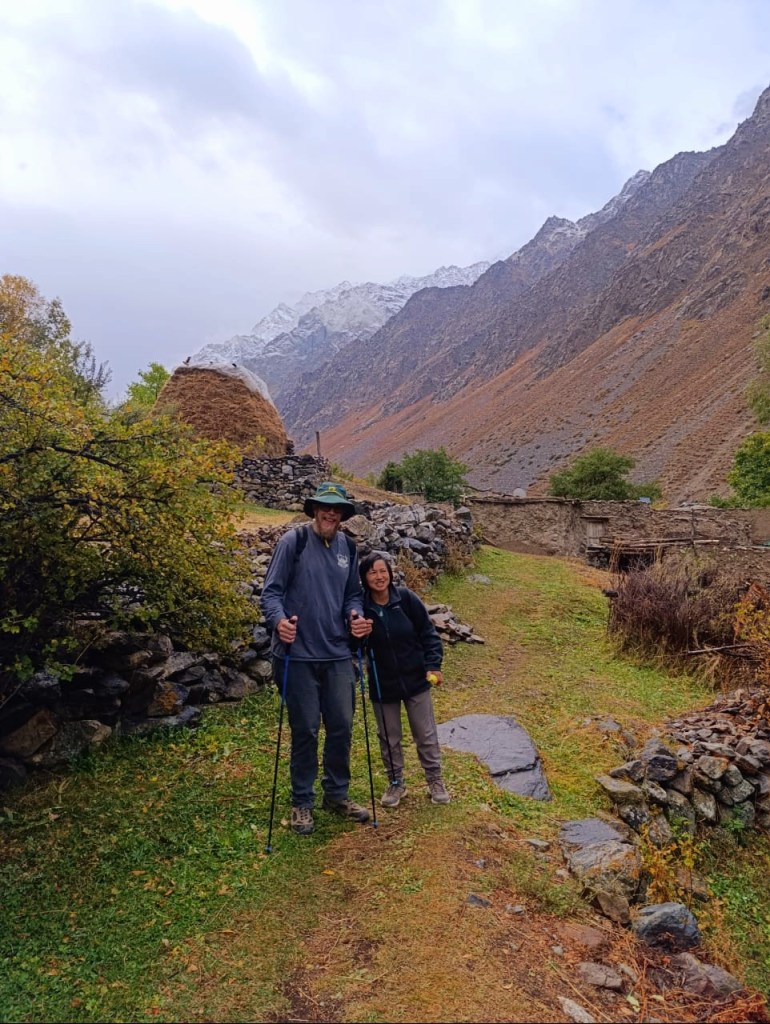
The trail started gently, easing us in with a mild incline for the first kilometer. In several wide, open sections, it was easy to imagine how different this place must be in late spring. Snowmelt runoff likely turns the small streams into roaring torrents before they spill into the Bartang River. With steep walls on all sides, this valley must be both spectacular and dangerous during that season—landslides large and small a constant threat.
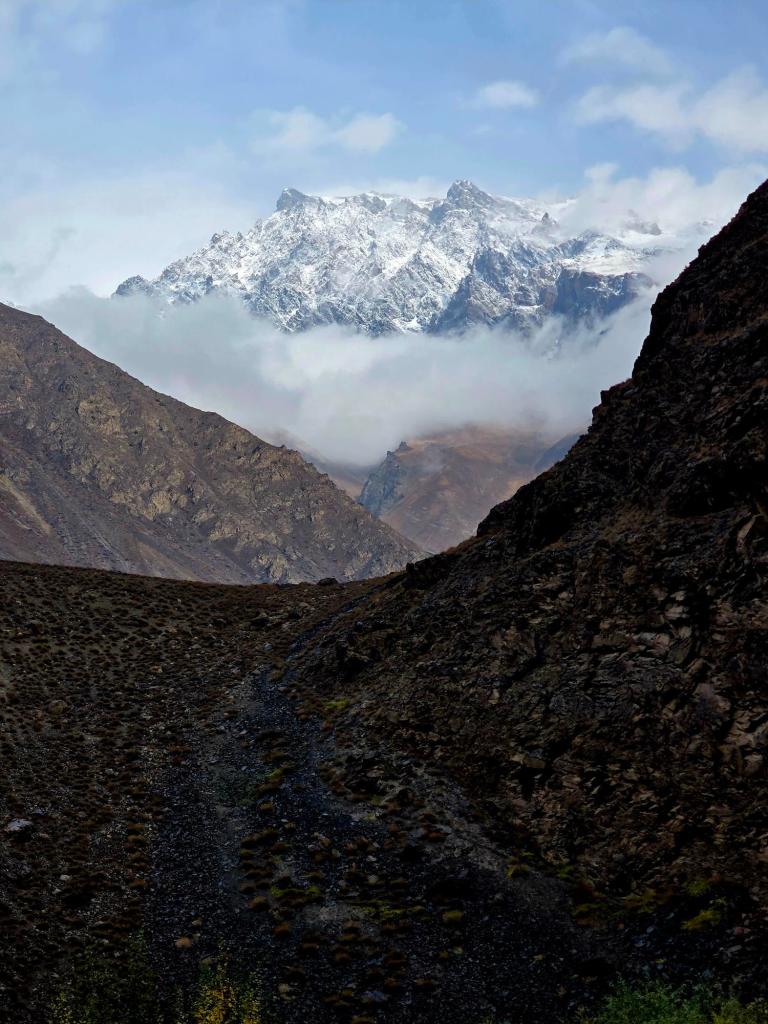
By mid-October, conditions were nearly perfect: cool air, sunshine filtered by passing clouds, and a steady rhythm to the climb.
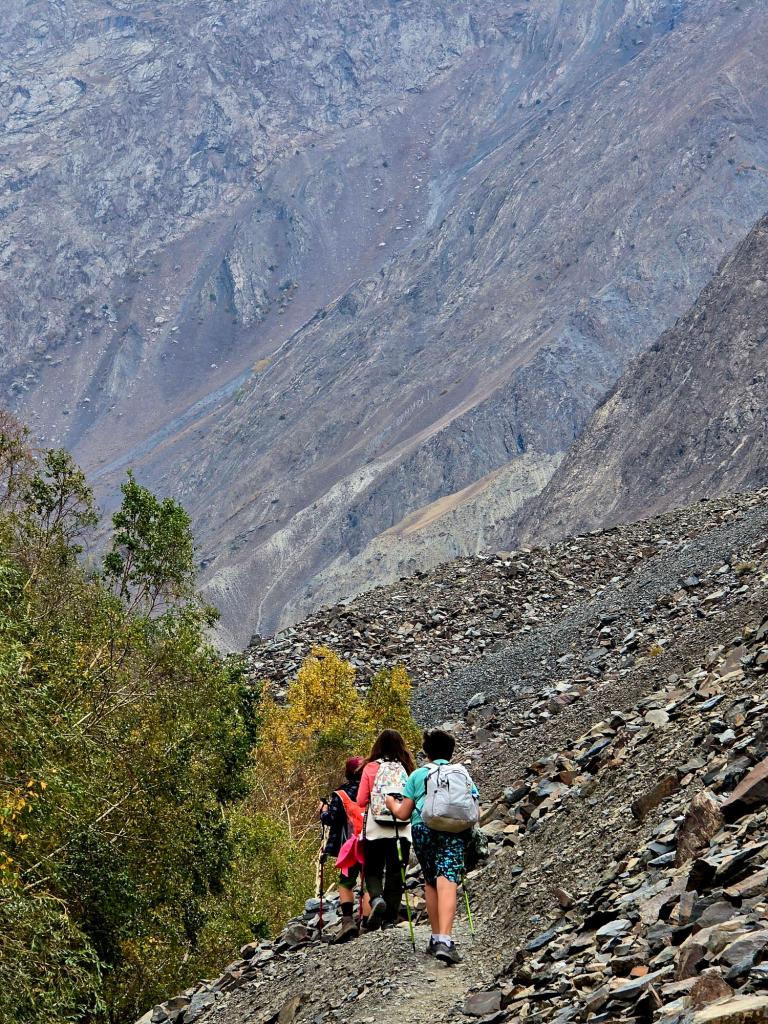
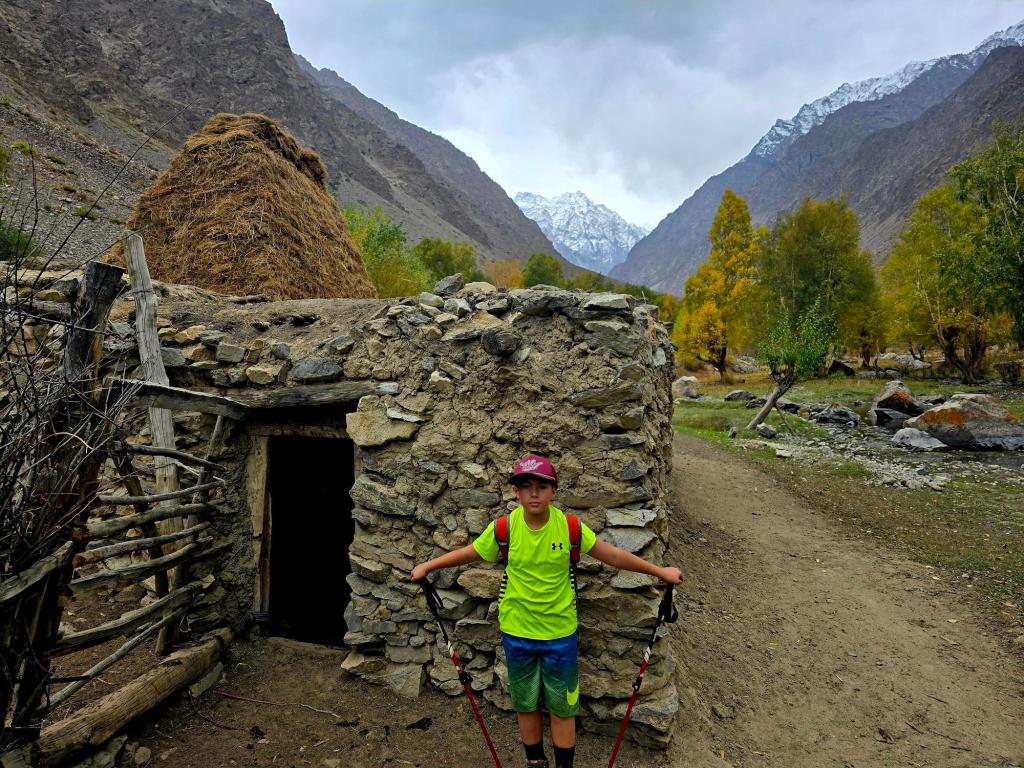
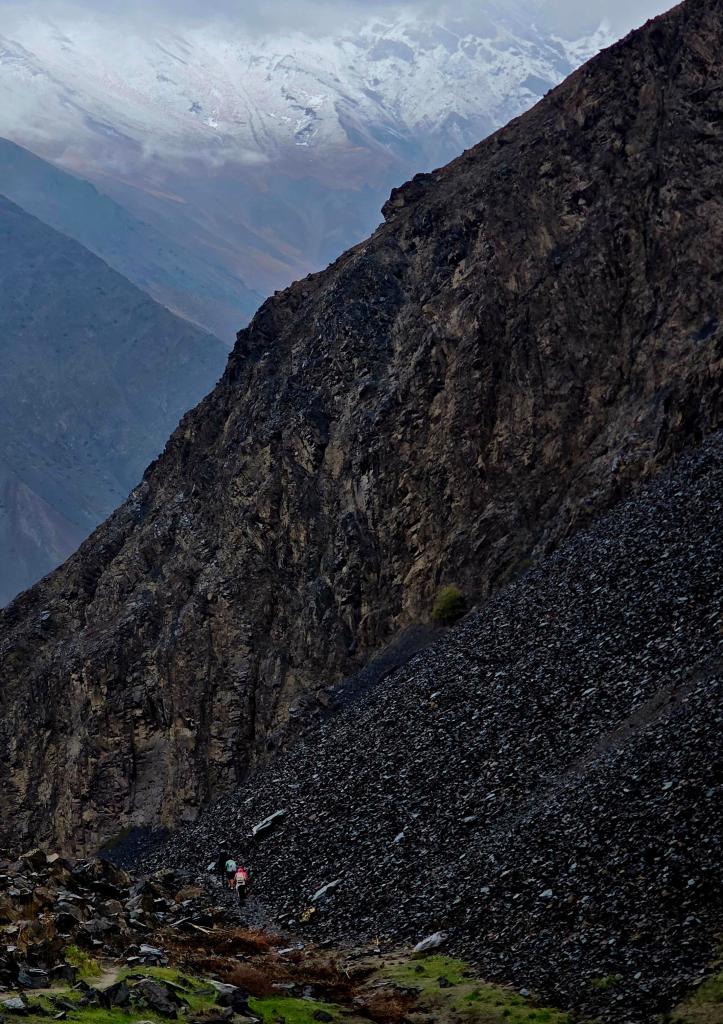
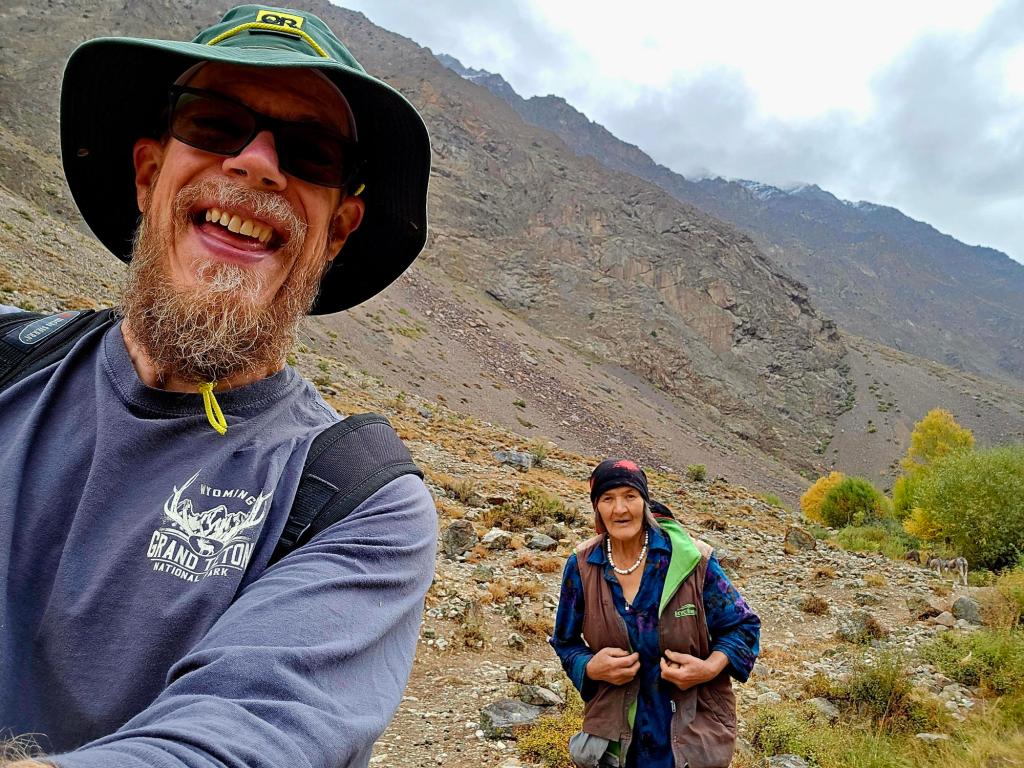
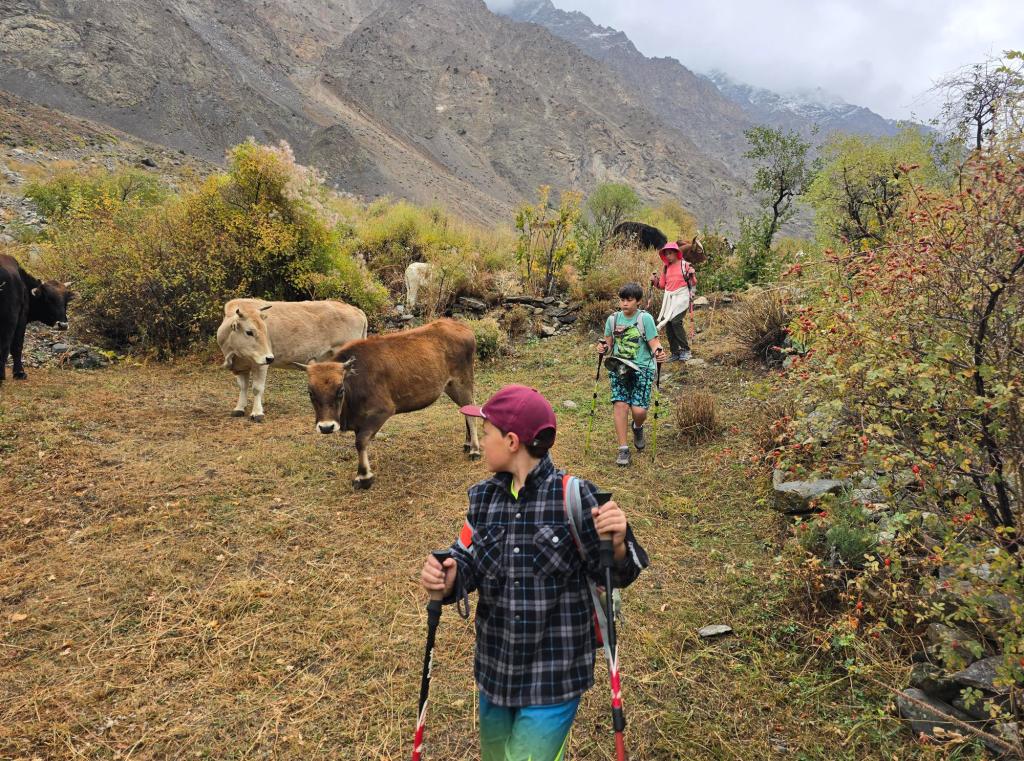
After the open section, the trail hugged the right wall of the valley and the incline increased. From there, it was a steady ascent—about five miles with roughly 2,500 feet of elevation gain. The trail wasn’t technical, making it a moderately easy hike, but the views were nothing short of spectacular.
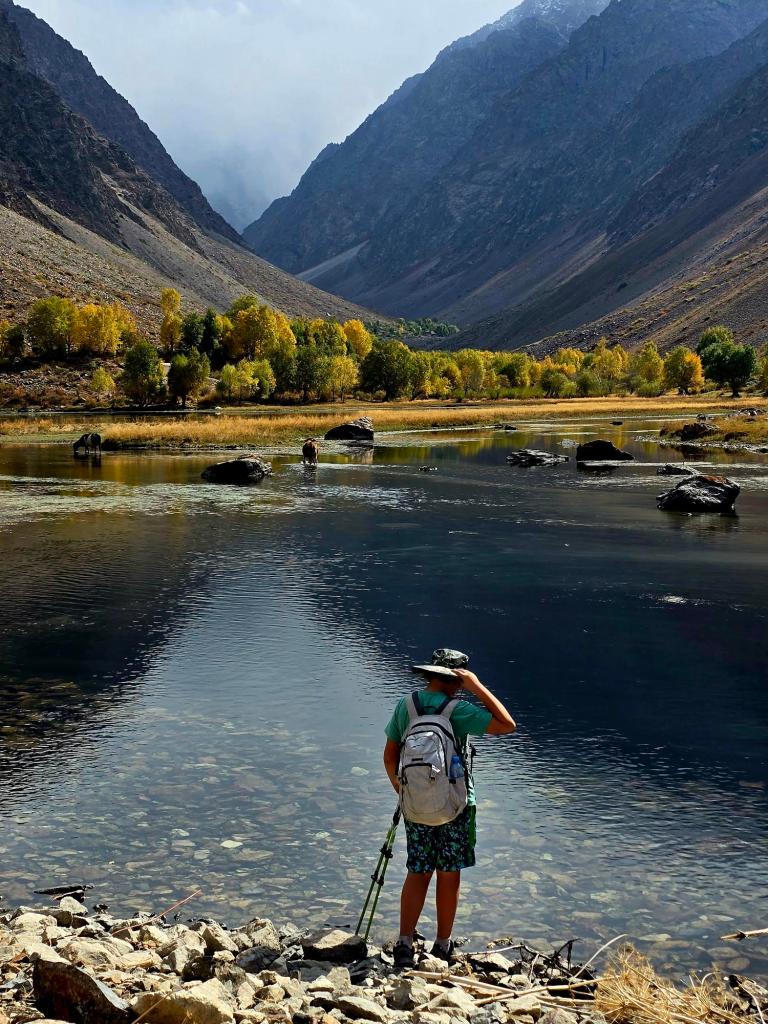
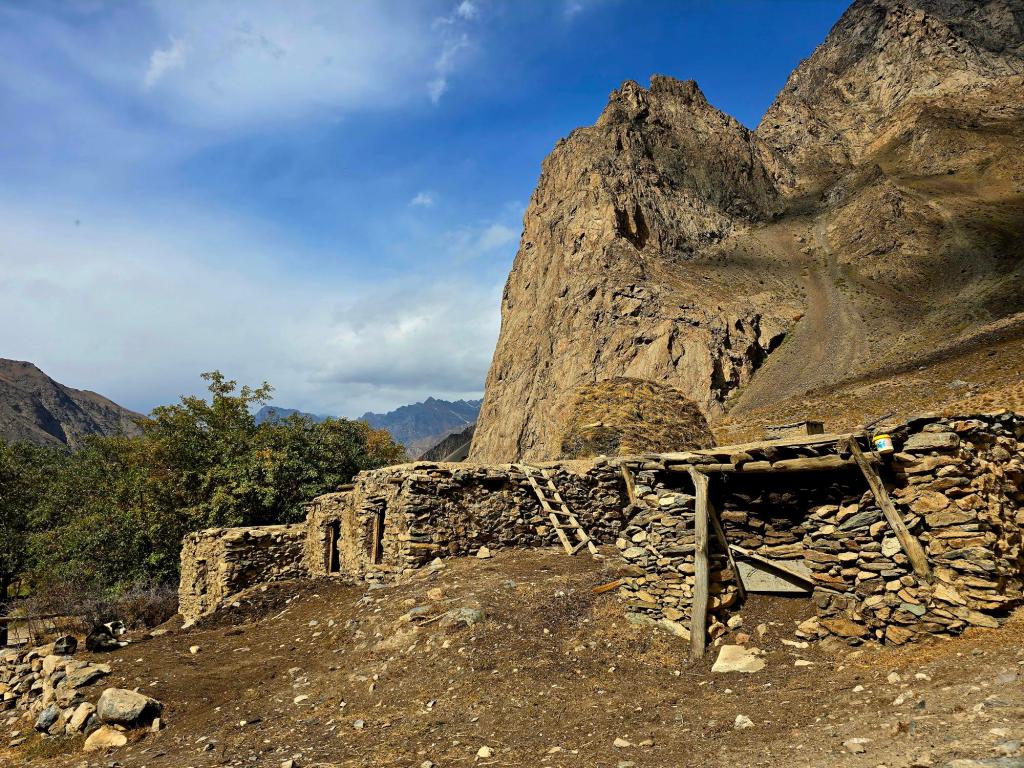
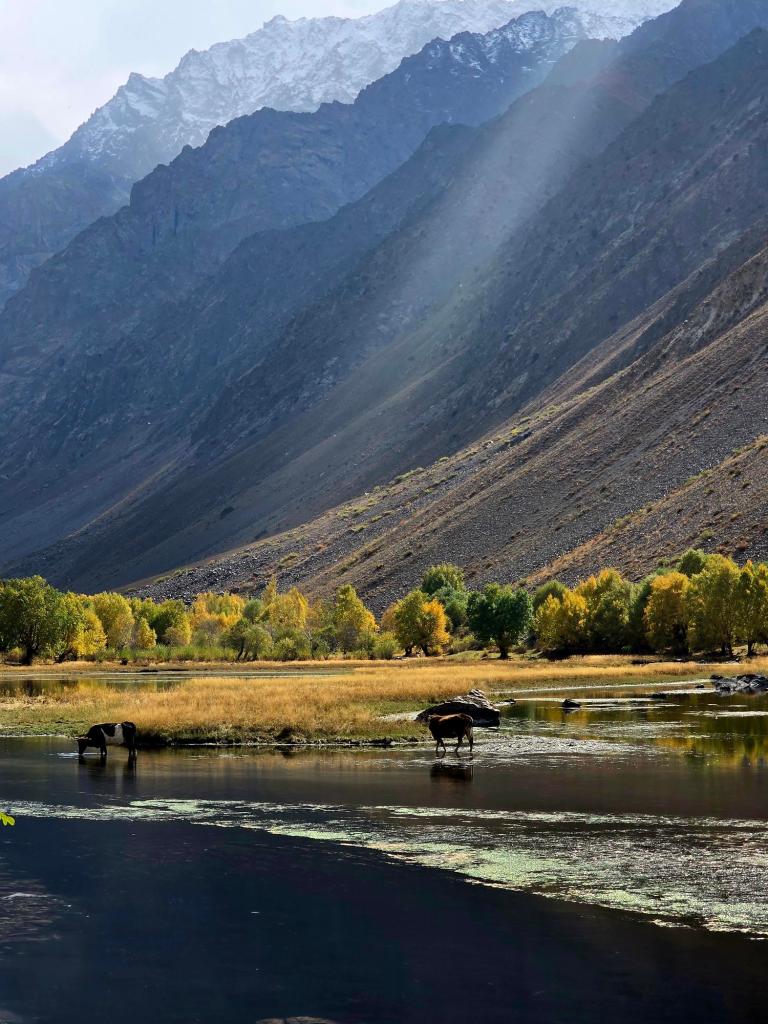
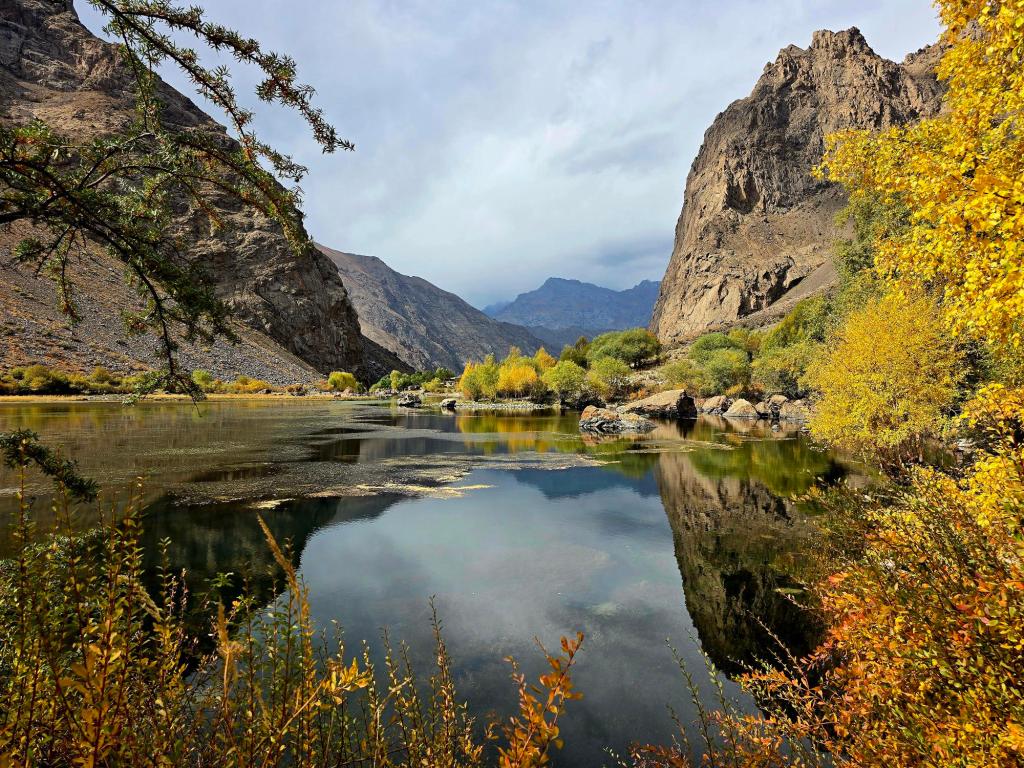
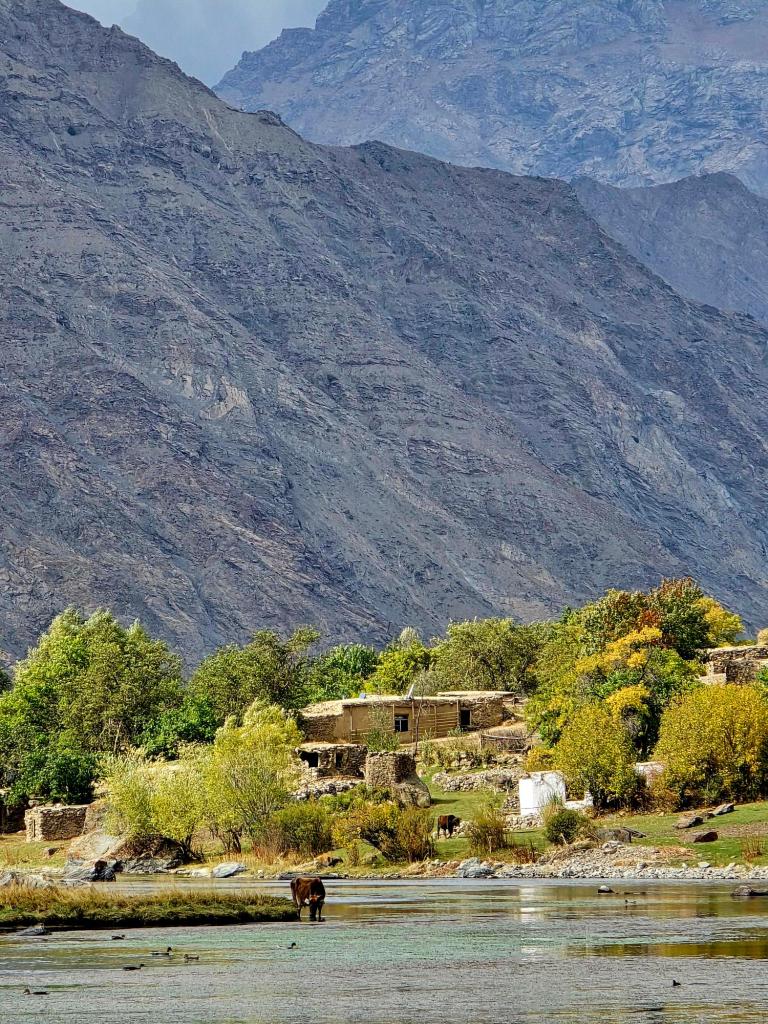
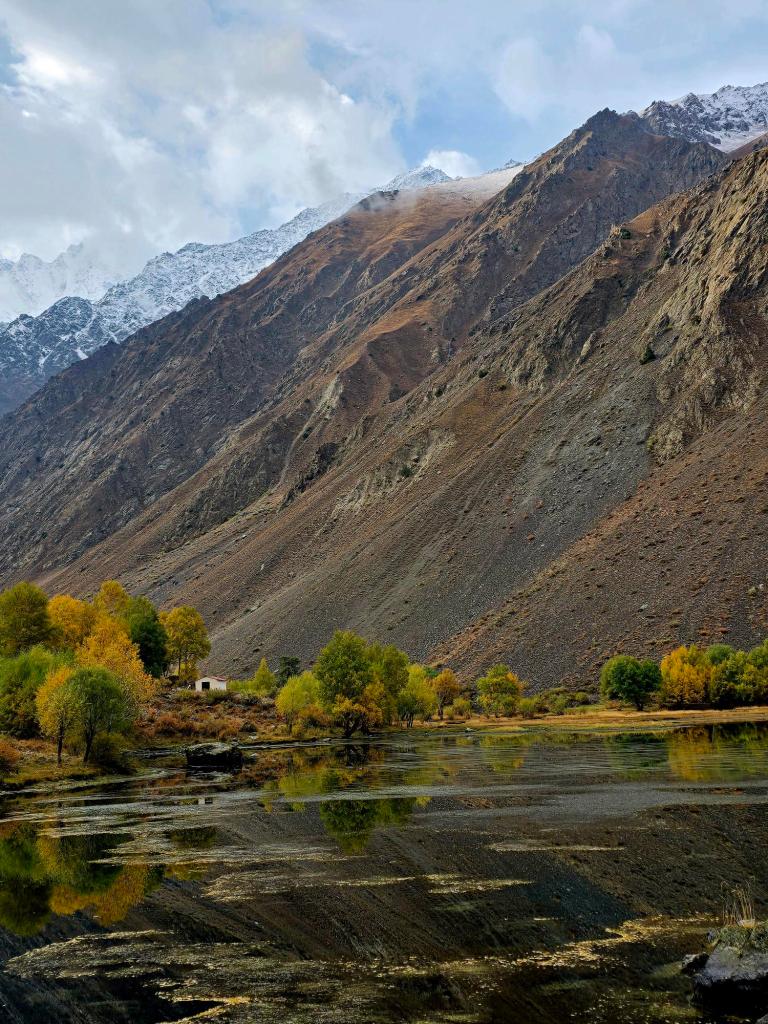
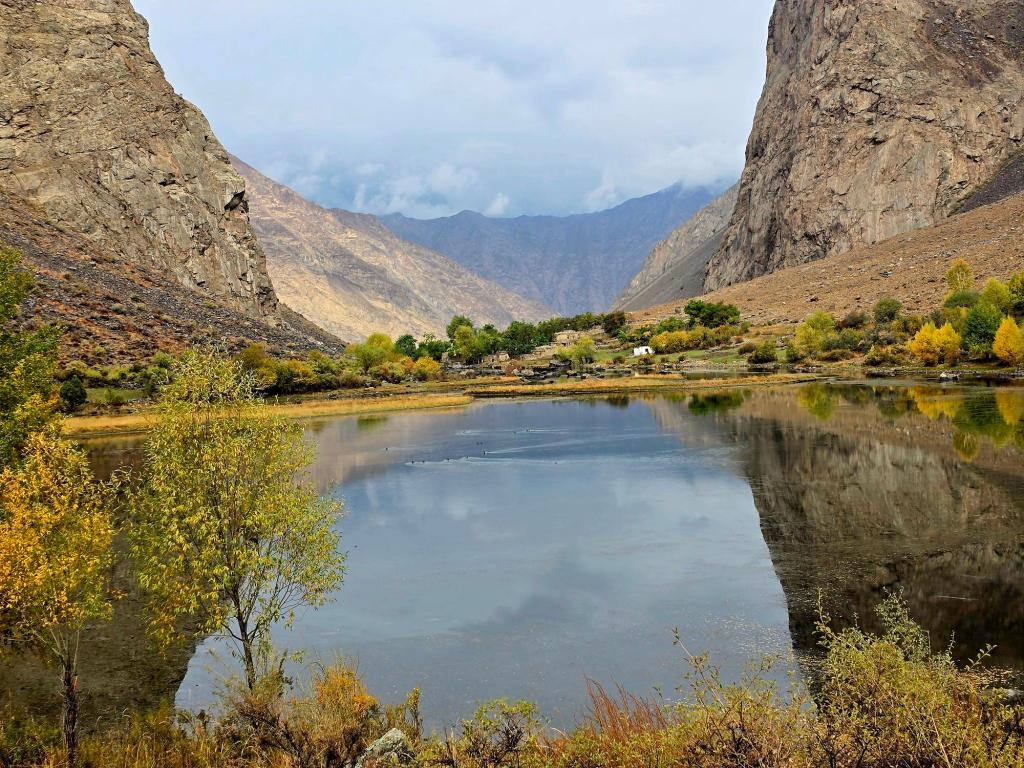
Once we crested the main climb, the trail opened onto a plateau where the lower part of Jizew village lies. Perhaps seven or eight homes are scattered across the area. Just beyond them, a beautiful alpine lake spread out beneath the mountains, its dark, clear water reflecting the surrounding peaks. A few cows stood knee-deep along the far shore, perfectly content.
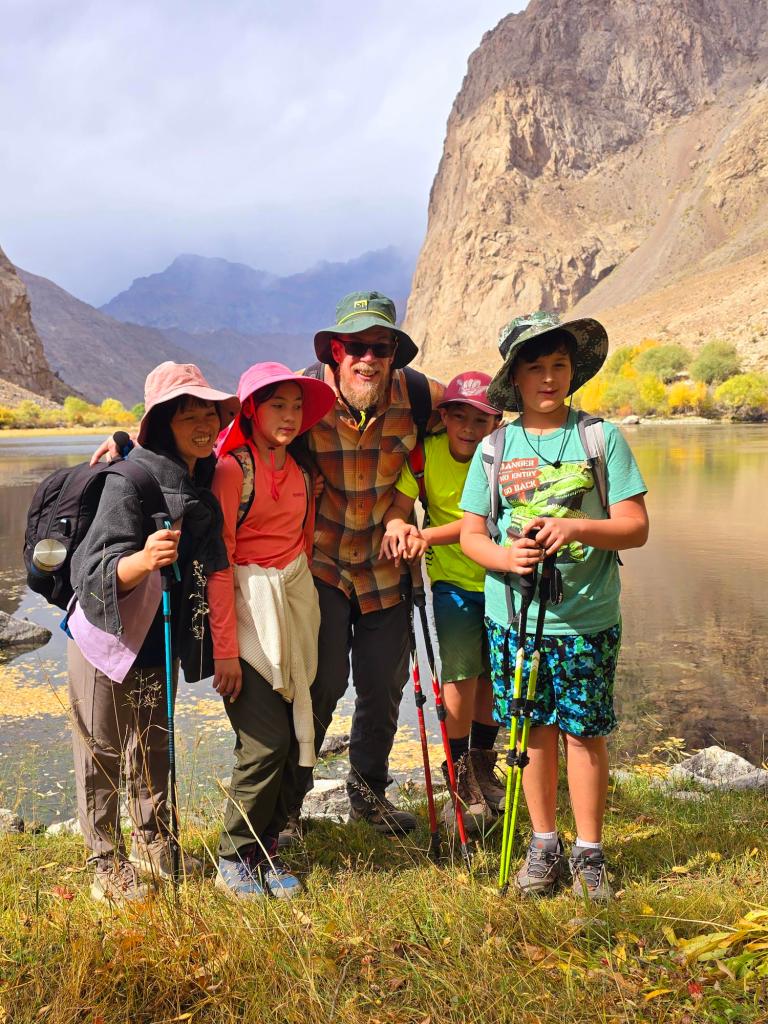
We lingered by the lake before continuing another forty minutes up to the upper village, where our homestay awaited. Moving at a deliberately slow pace and taking a long break by the water, the hike took us about three and a half hours.
High in Jizew
Only a few families live year-round in the upper village. One of them welcomed us in immediately, offering tea and snacks while we rested. We were now at around 2,500 meters (8,200 feet), and as late afternoon settled in, the temperature dropped quickly.
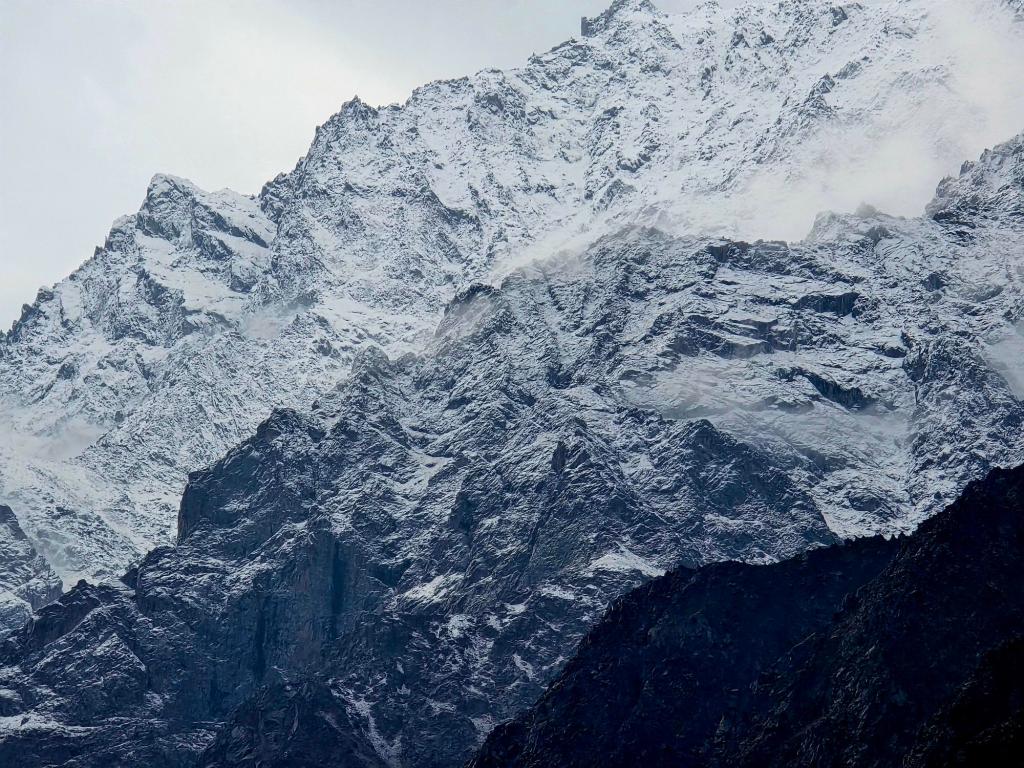
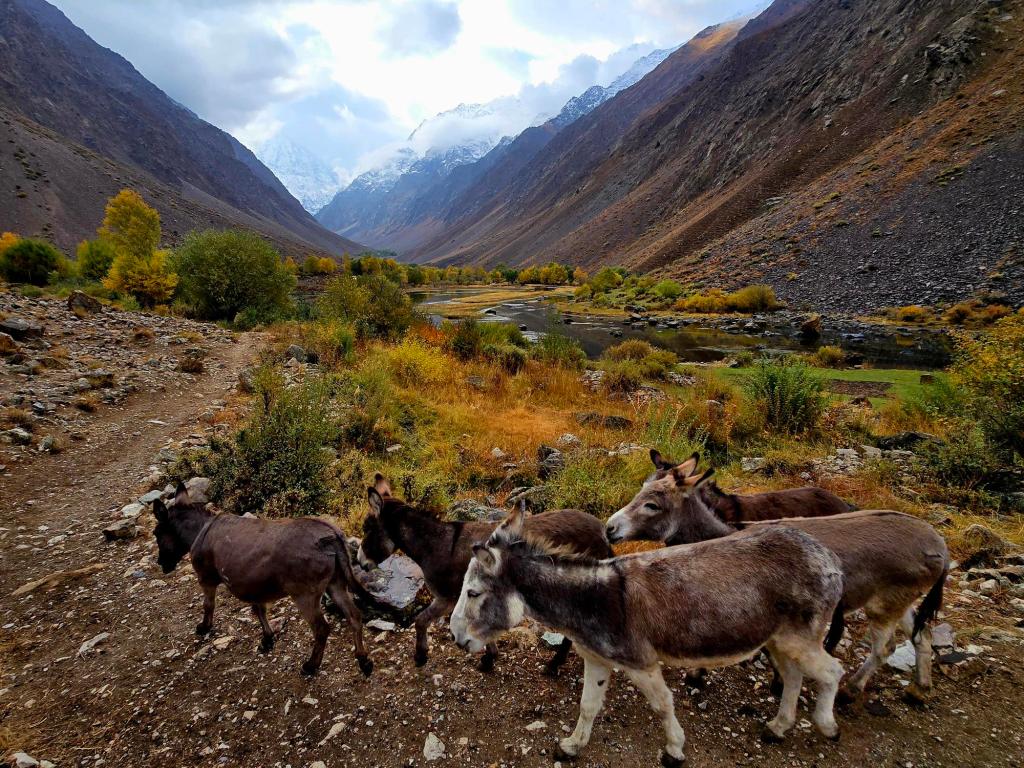
After a short break, we continued hiking another couple of kilometers farther up the valley. The snow-capped peaks felt closer now, and the slow-moving river we followed glowed with brilliant color under the shifting light.
Dinner back at the homestay was simple and comforting: a potato and noodle dish, flatbread, salads, and the familiar assortment of snacks that seem to accompany every Central Asian meal.
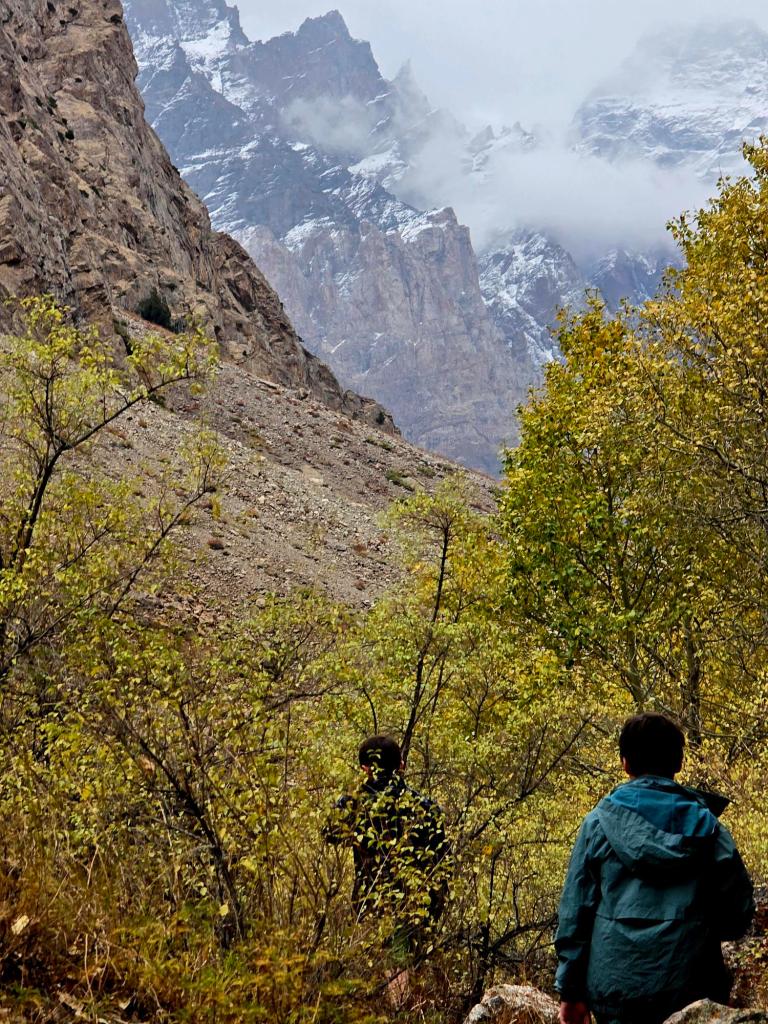
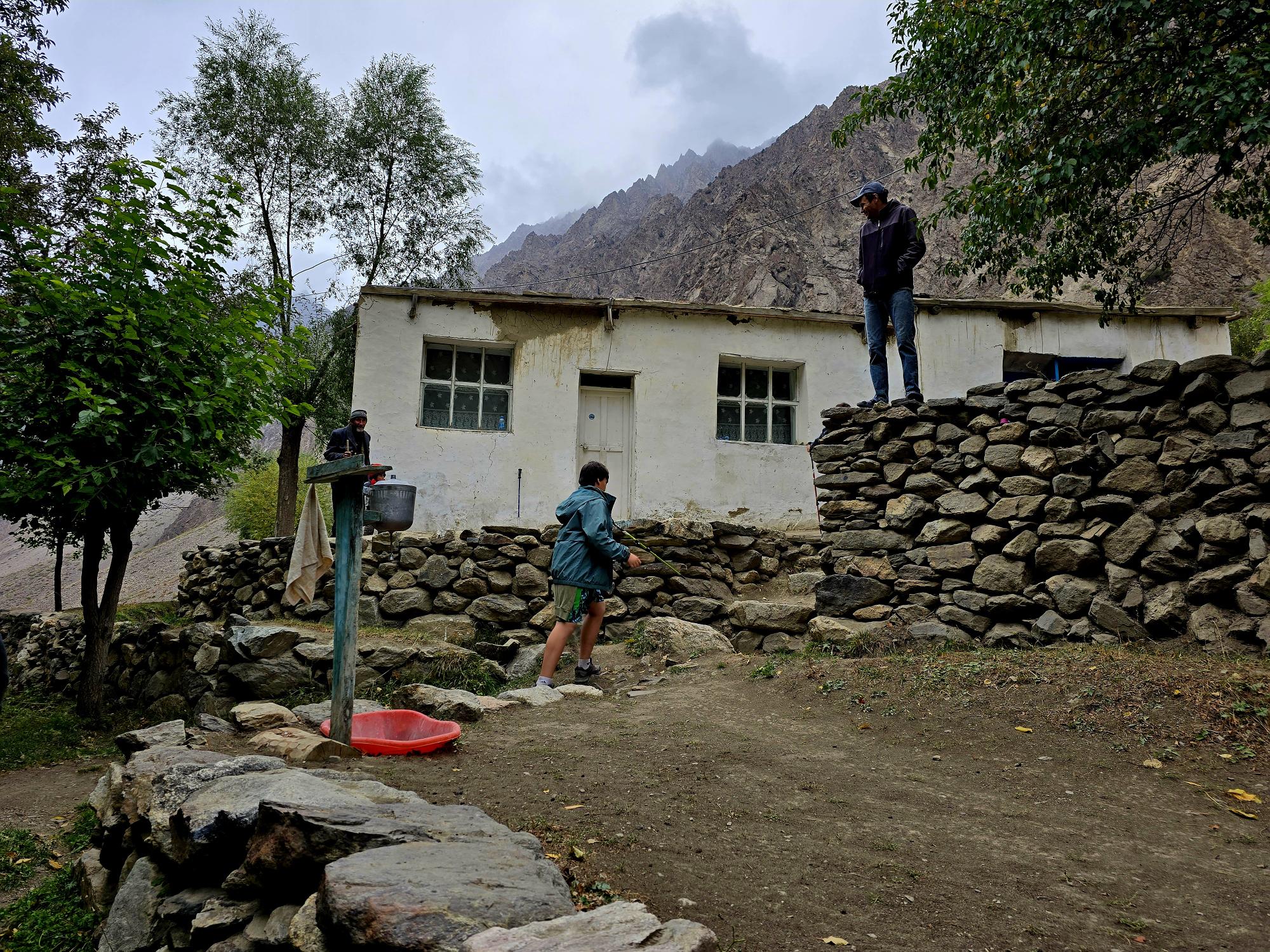
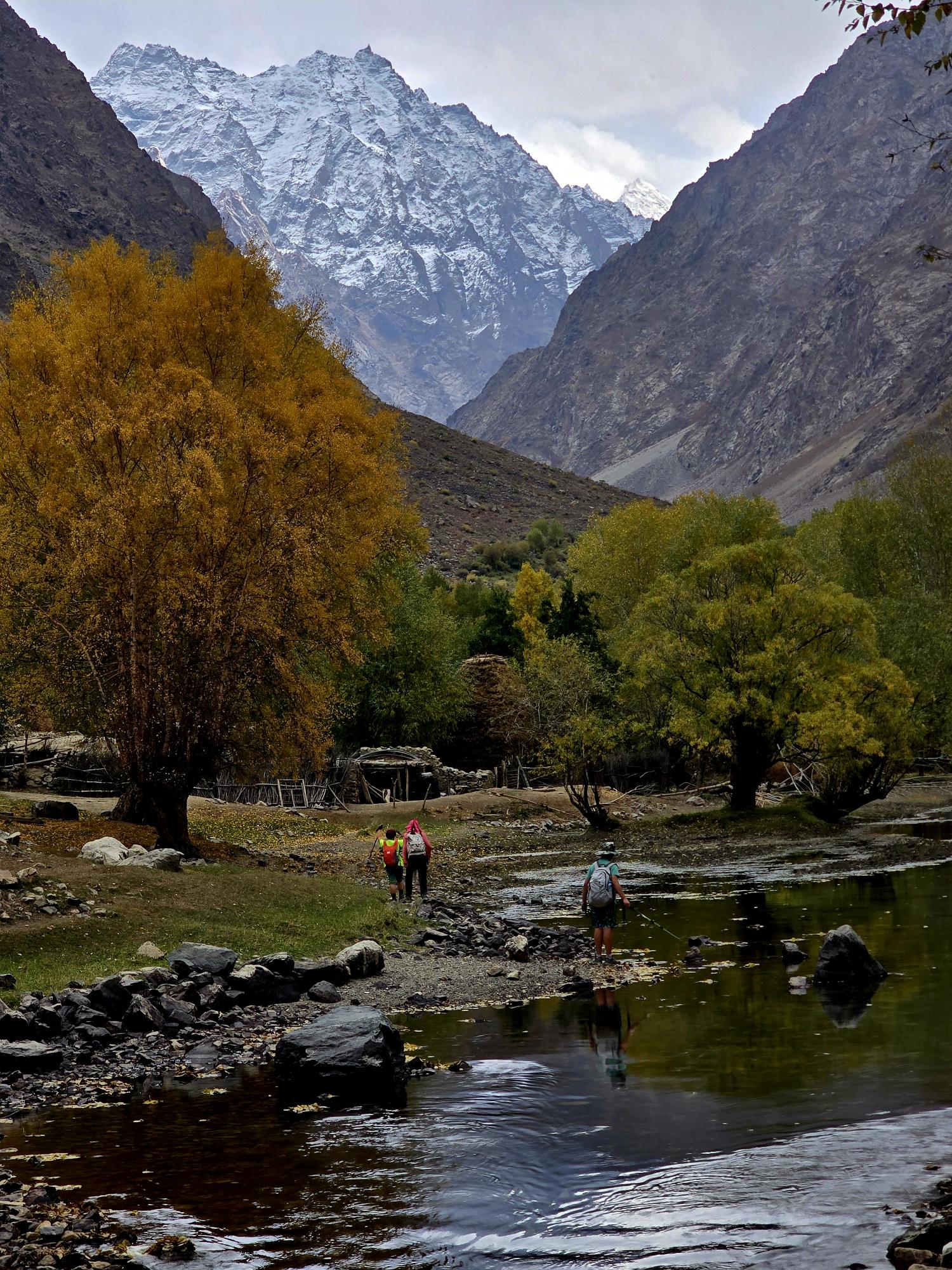
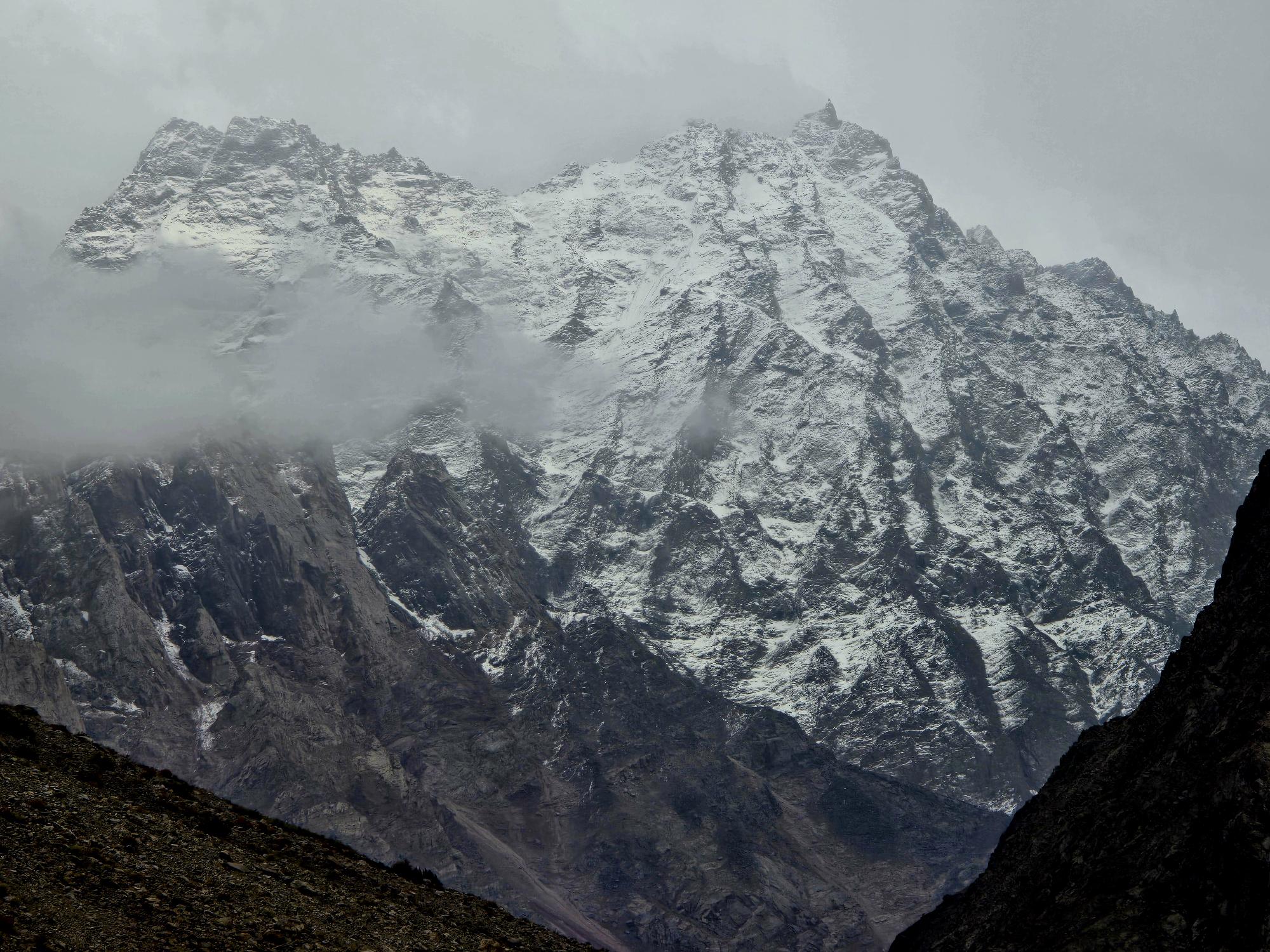
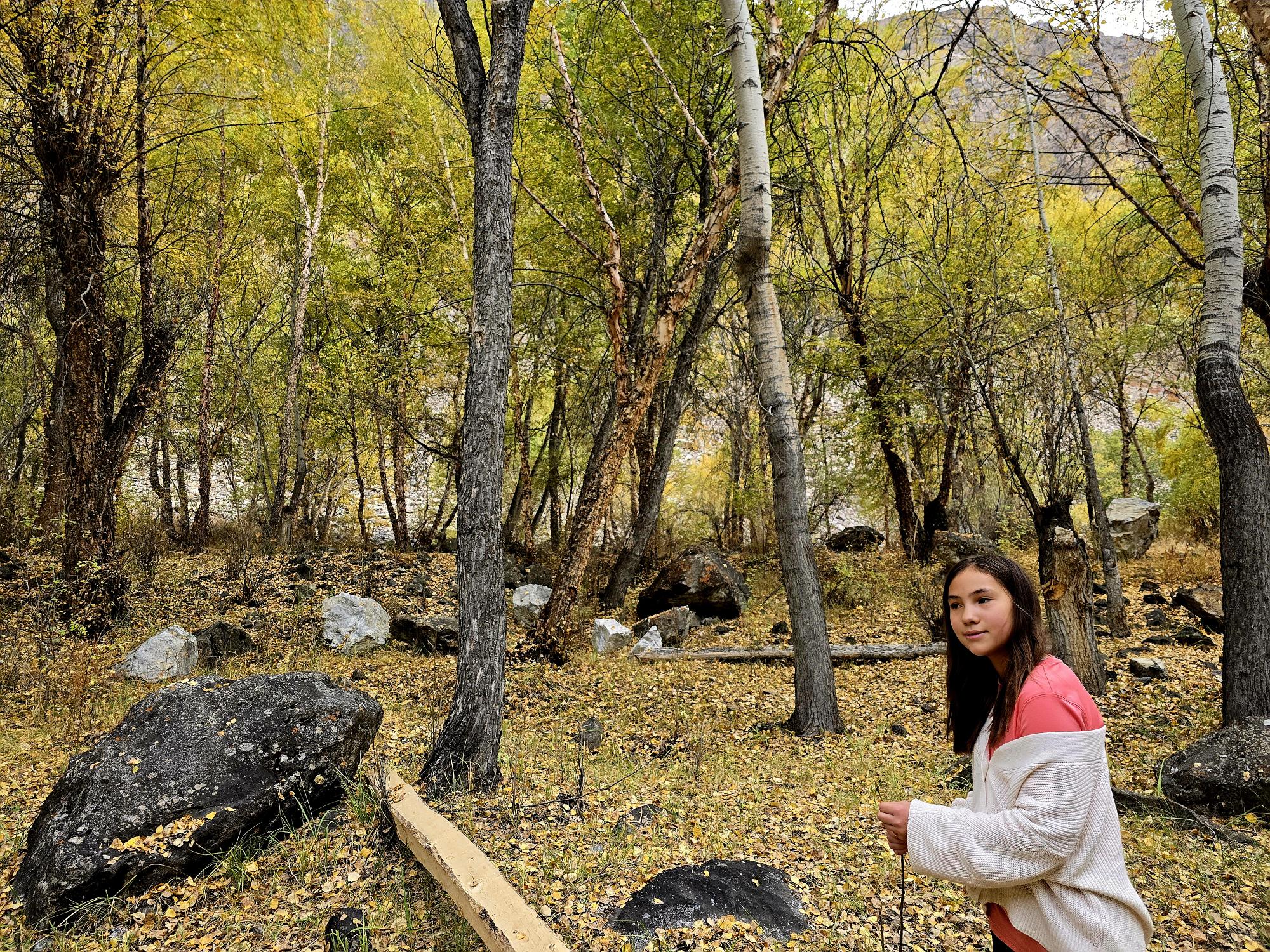
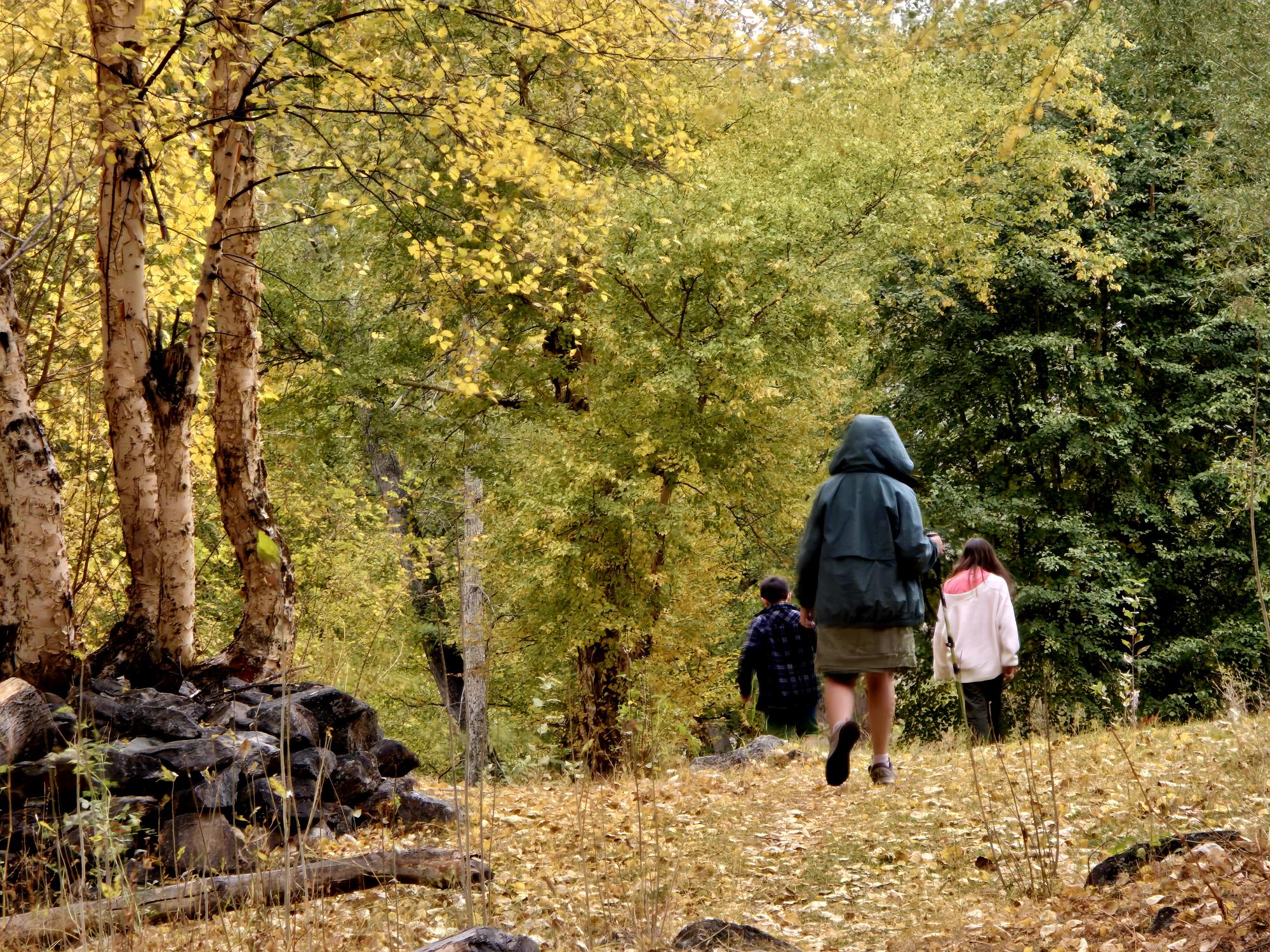
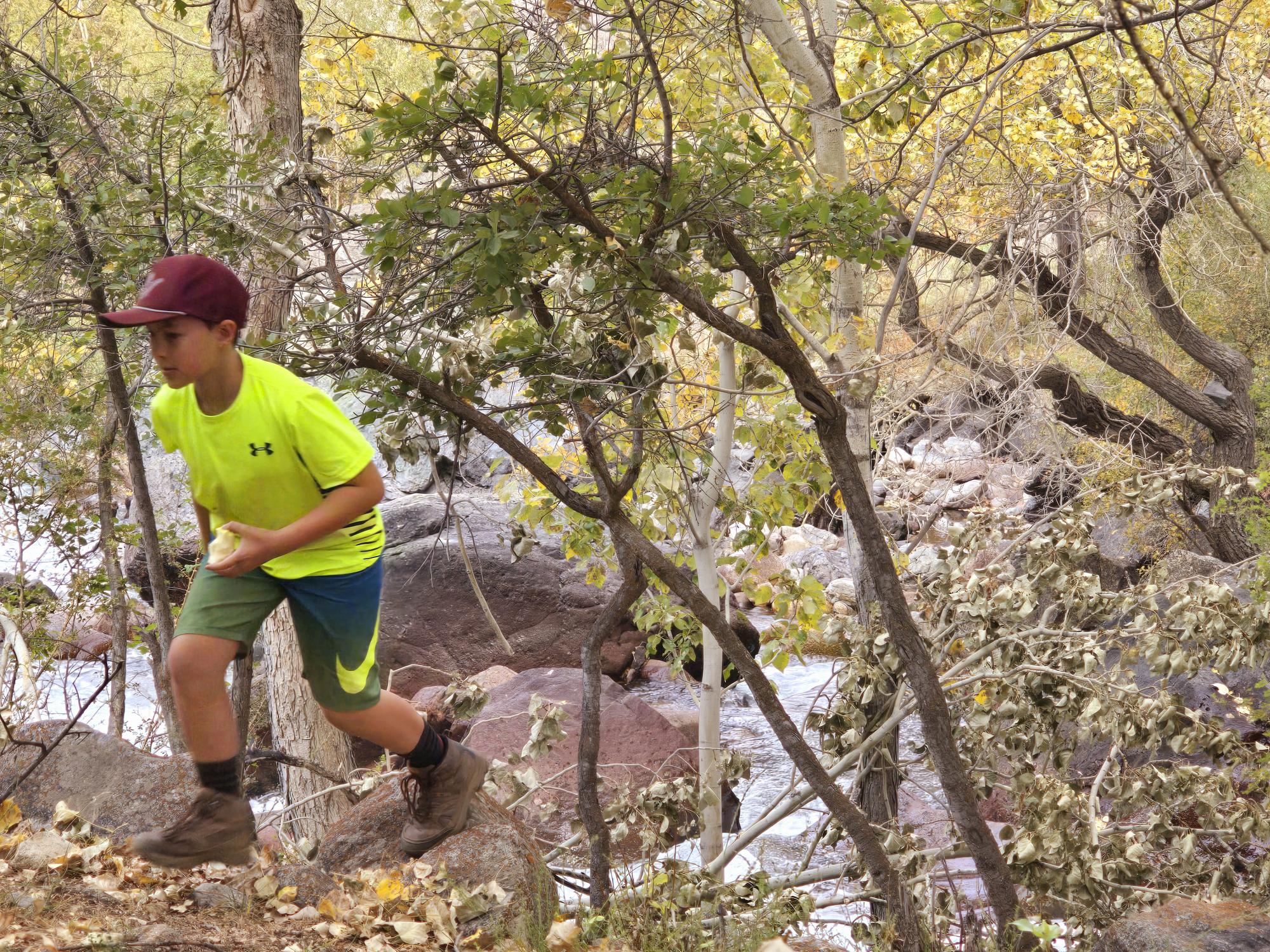
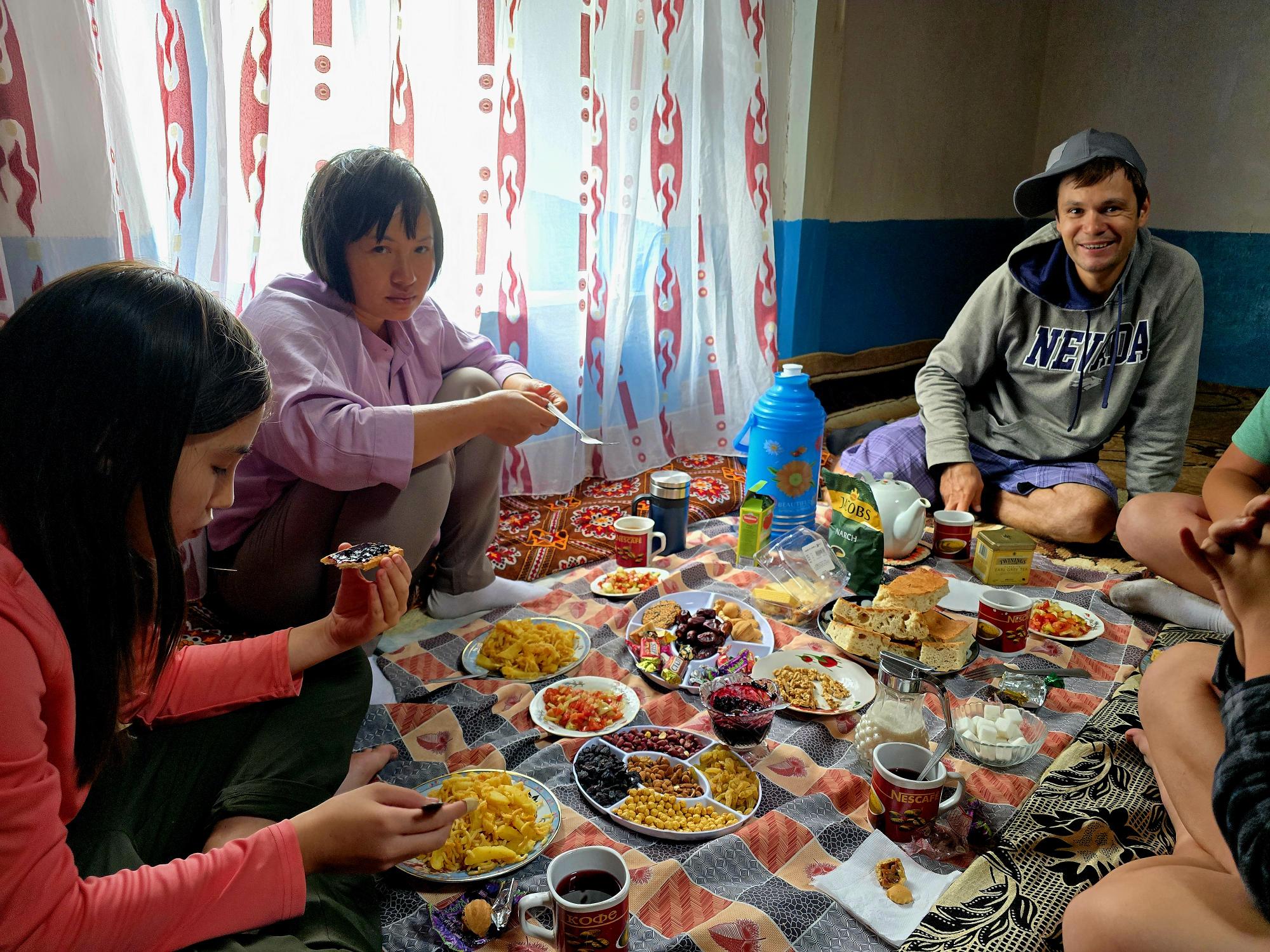
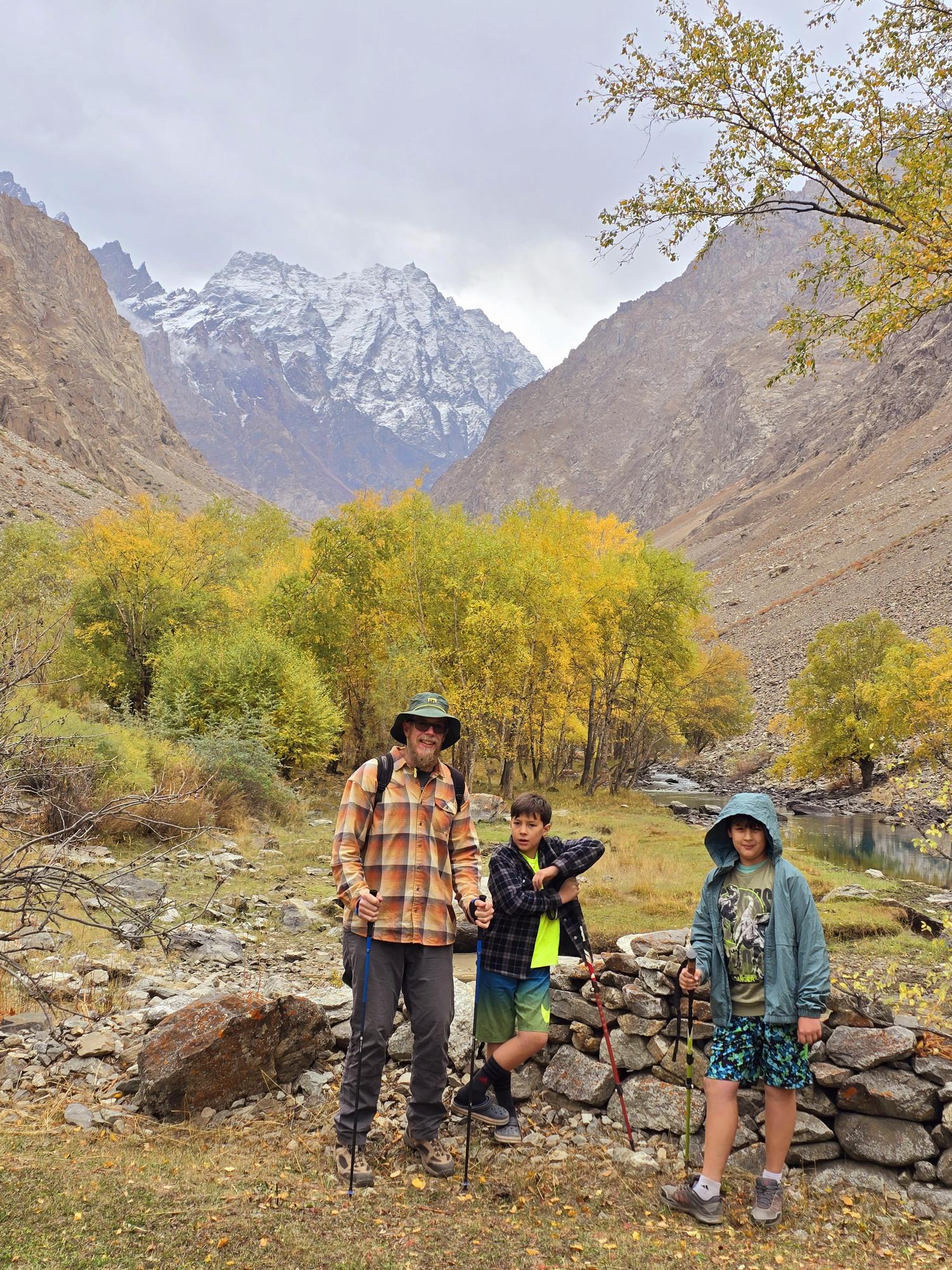
That evening, we sat outside with the host family, looking back down the deep valley we had climbed and up toward higher peaks fading into moonlight. Inside, the sleeping room mirrored the one in Rushan—raised platforms, thick bedding, and a skylight overhead. We slept deeply in the thin mountain air, waking early to the call of a rooster just outside the window.
The hike down the next morning was quick and easy, the views just as wild in reverse. By 10:30 a.m., we were back at the bridge, where our driver was already waiting.
Back to the Road — Rushan to Ishkashim
We returned to Rushan, gathered our belongings, said our goodbyes, and continued on. As we made our way back toward the main road, we caught sight of the president’s helicopter passing overhead in the distance—a reminder of how closely travel, politics, and infrastructure are intertwined here. Fortunately, the road remained open, and we turned east toward Khorog.
The scenery along this stretch remains stunning the entire way. Khorog sits in a lush bowl of mountains and feels almost metropolitan after the remoteness of the Bartang. We stopped for burgers at Yak Burger—surprisingly excellent, and especially satisfying after days of similar meals. After lunch, we wandered through the park and along the river, once again looking across into Afghanistan.
We weren’t staying the night this time, but we’d be back.
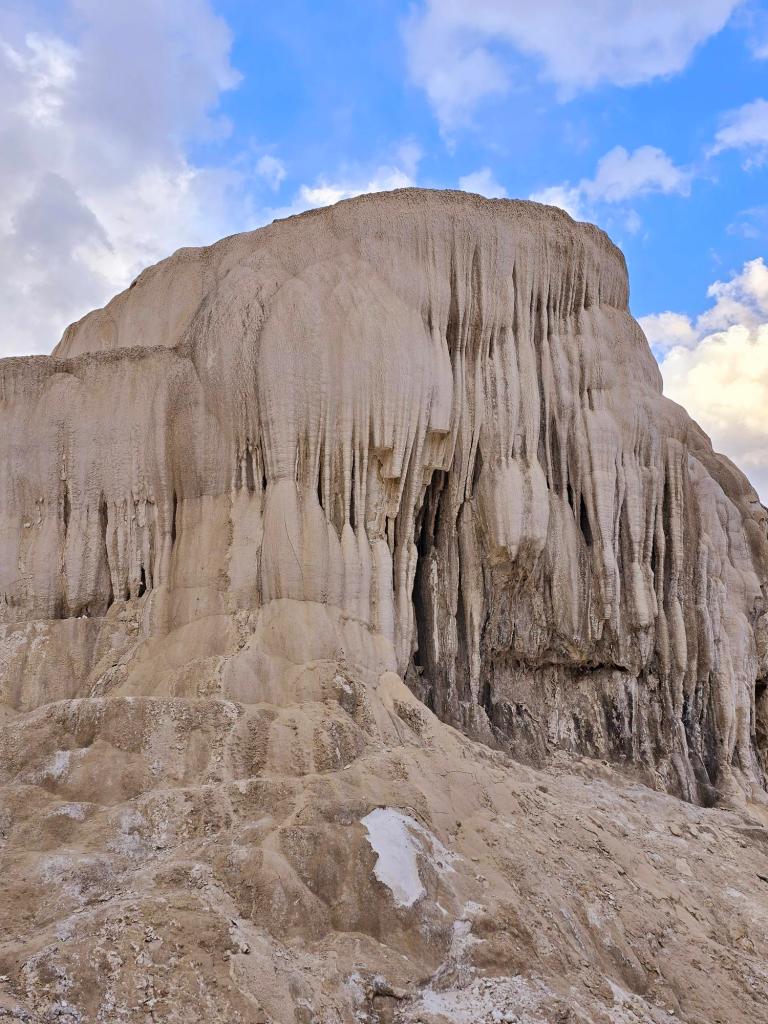
Continuing south toward Ishkashim, we followed the river deeper into the Pamirs. About halfway, we took a side road up to Garm Chashma, a set of natural hot springs long used by locals. We rented a private pool and soaked for about fifteen minutes—the recommended maximum, as the mineral-rich waters release small amounts of radon gas, similar to the springs at Khoja Obi Garm. Warm, relaxed, and rinsed off, we continued on.
We arrived in Ishkashim just after dark. Pulling up to a large gate, we gave the horn a few blasts. A short while later, a man and his large dog appeared, welcoming us into the homestay. This one had separate rooms and actual beds—a small luxury.
Dinner followed, then rest. The next day promised what Denis had hinted would be the most jaw-dropping views of the entire journey.
 Wise Clan in Stanland
Leave a comment