📊 Trip Stat Box — Pamir Highway (Day Two)
Route: Kalai Khum → Rushan
Distance: ~180 km
Driving Time: ~8 hours (normally ~6 hours without roadwork)
Elevation Range: ~1,300 m (Kalai Khum) → ~2,000 m (Rushan)
Road Conditions: Rough mountain road with active construction, delays, and rockfall zones
Highlights: Continuous Panj River border views, Afghan villages across the river, dramatic canyon walls, waterfalls, first high Pamir peaks
Notable Stops: Roadside trucker villages, informal mantu lunch spots
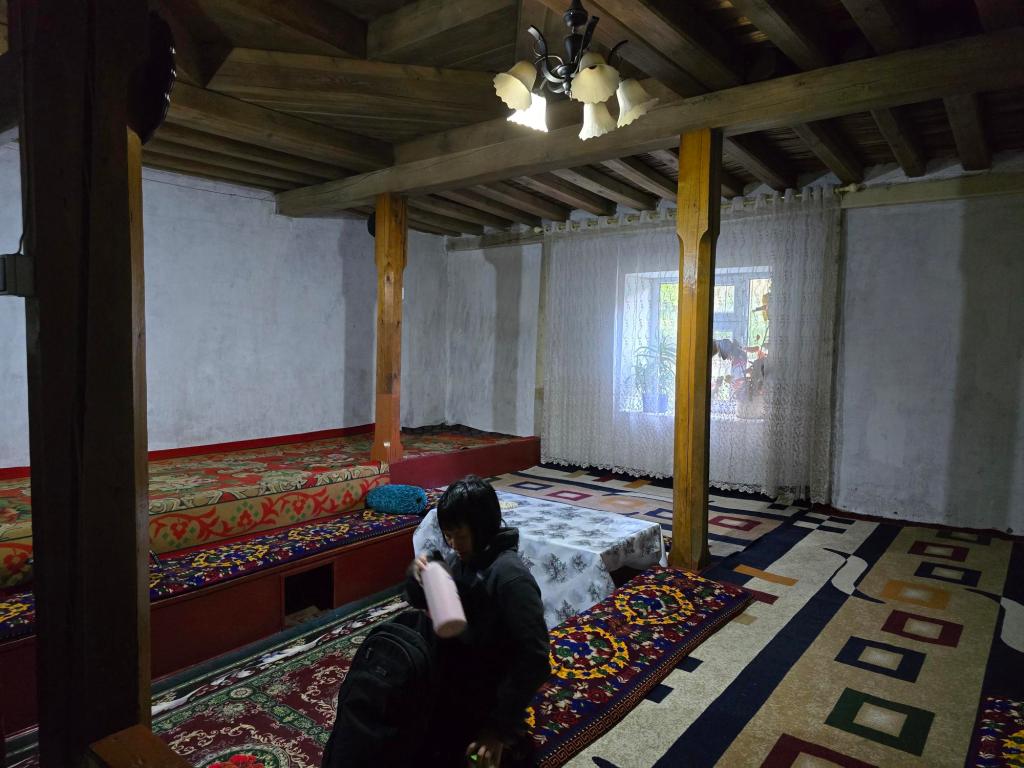
Overnight: Homestay in Rushan
Date: October 13, 2024
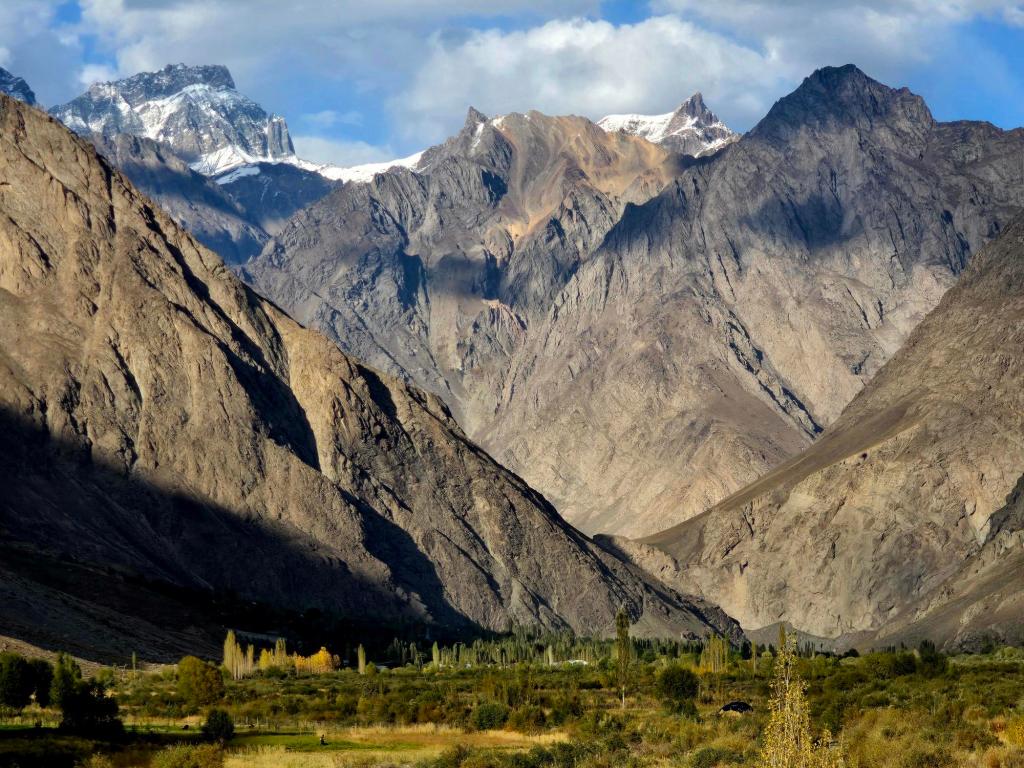
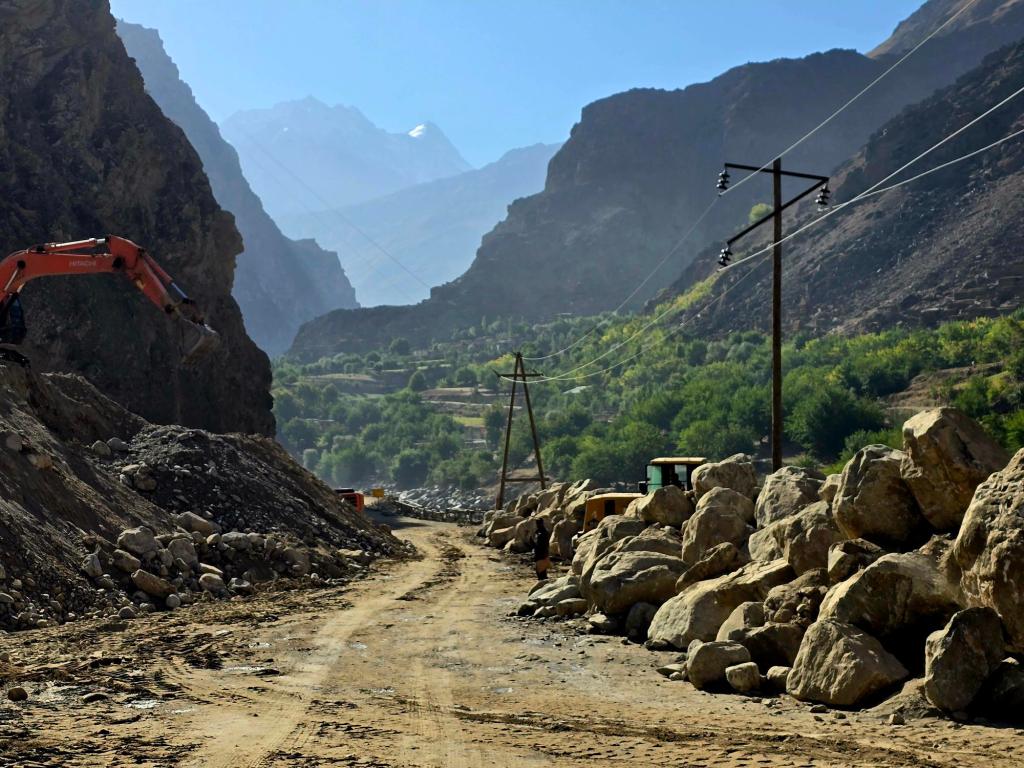
Day two began early, with cool mountain air and crisp blue skies spilling into the valley. We knew this stretch of road would be slow going. A massive road-widening and paving project was underway, part of a long-term plan to fully pave the entire route between Dushanbe and Kashgar, China. When it’s finished, the highway will be smoother, faster, and far more accessible. Some of the wild charm will be lost, no doubt—but the payoff is real. Better roads mean easier travel, more tourism, and more opportunity for the remote communities scattered along the route.
I’ve seen this transformation before. Ten years ago, I traveled extensively through Uzbekistan when tourism infrastructure was minimal and foreign travelers were rare. When I last passed through in early 2018, things were still much the same. From everything I’ve heard since, that has changed dramatically. With new leadership and heavy investment, tourism there is now thriving. While I’ll always carry some nostalgia for wandering the quiet streets of Bukhara nearly alone, the benefits to local communities far outweigh that solitude.
Change comes fast once it arrives.
We’d been told that this section of road was typically closed from 6 a.m. to 6 p.m., allowing construction crews uninterrupted access. The only way through was to leave from either end before dawn or wait until evening. Our original plan was a 5 a.m. departure, but word came in that the president would be touring the region over the next couple of days, and roadwork would be paused. That bought us time—and a slower morning.
We headed back out onto the deck overlooking the river, where Bahrom brought us a hearty breakfast: fried eggs, chicken sausages, homemade yogurt, flatbread, and fruit compote. An hour later, we were loading up the Land Cruiser and rolling out of Kalai Khum.
By the time we reached the far edge of the village, our oldest started looking a little green around the gills. Moments later, he needed out of the vehicle for a full purge. From everything I’d read, not many people make it through the Pamirs without getting sick at some point, and we already had our first casualty. Thankfully, he felt better almost immediately, with no lingering symptoms—lucky, based on past experience.
Not far up the road, we caught our first clear sight of a Taliban outpost on the Afghan side of the river. At least ten white flags with black lettering snapped in the wind. A small group—mostly men and children—stood about out front. Denis mentioned that the compound had at one point been occupied by American forces. Now it stood as a stark reminder that this border, while quiet, is anything but simple.
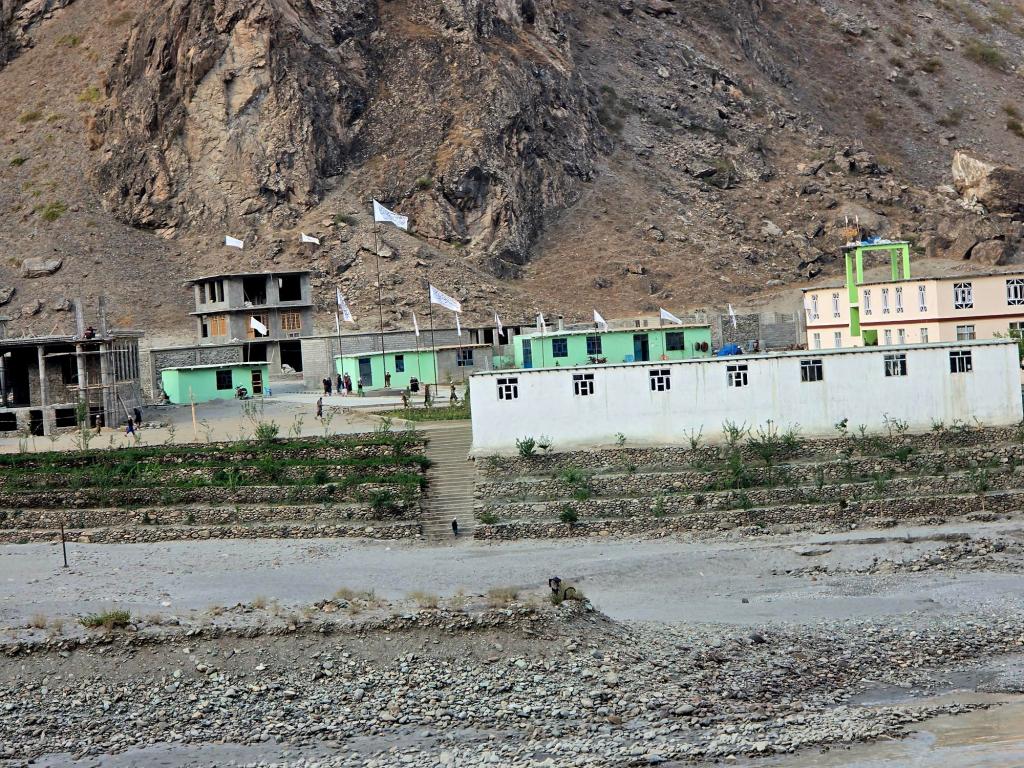
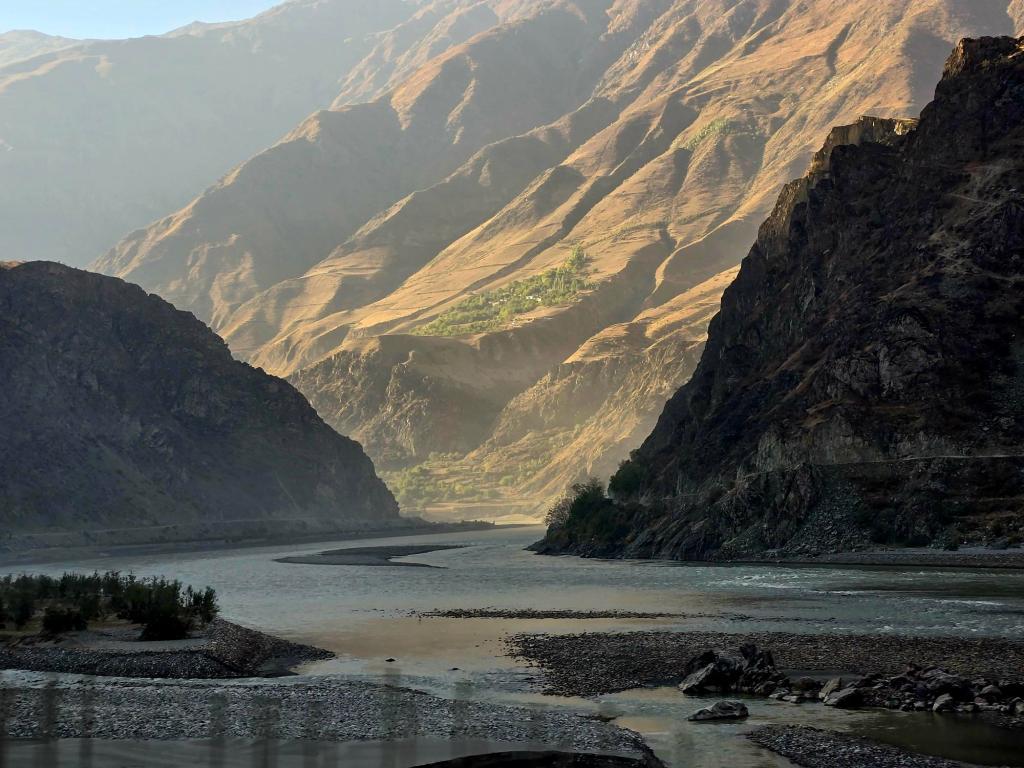
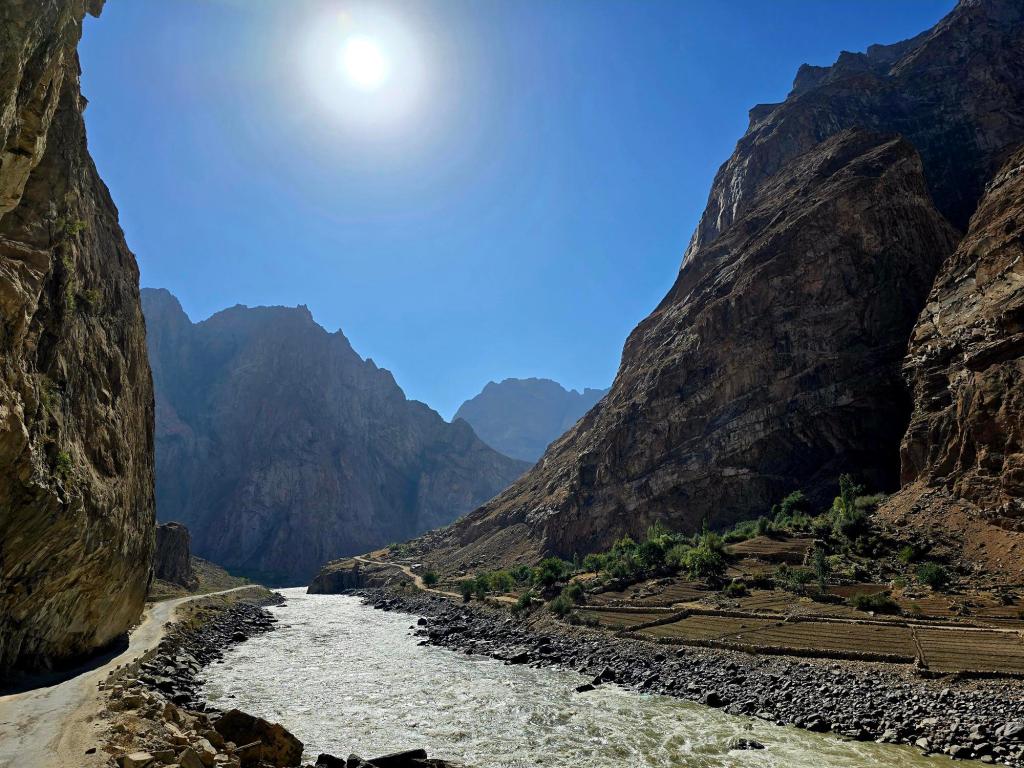
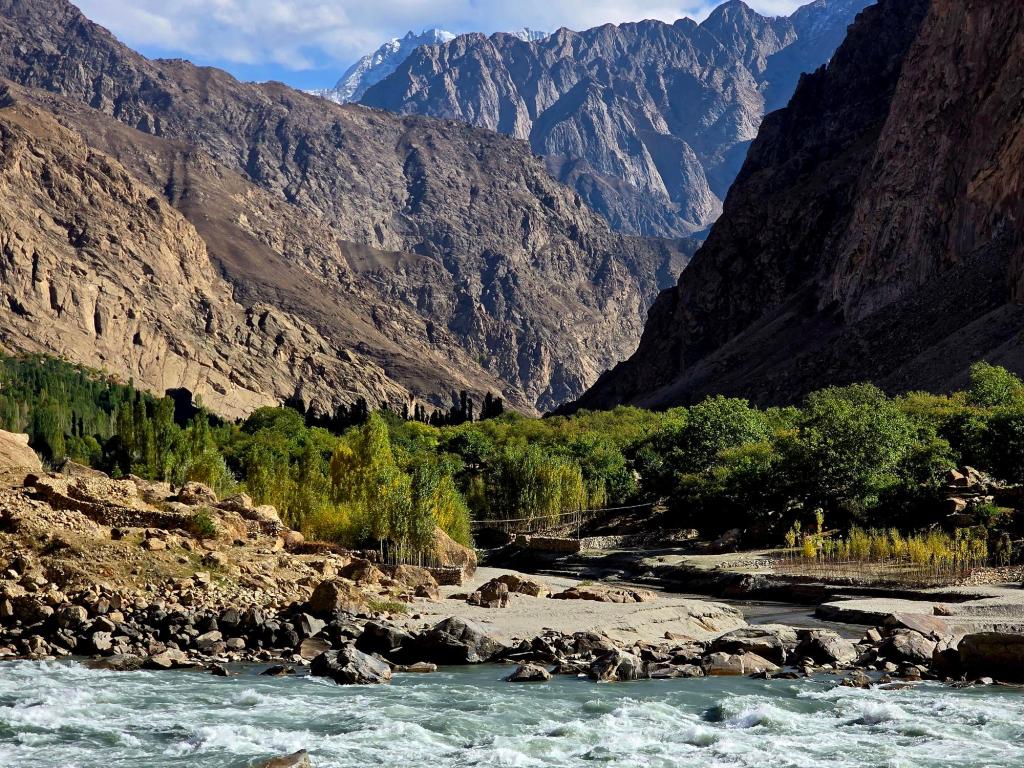
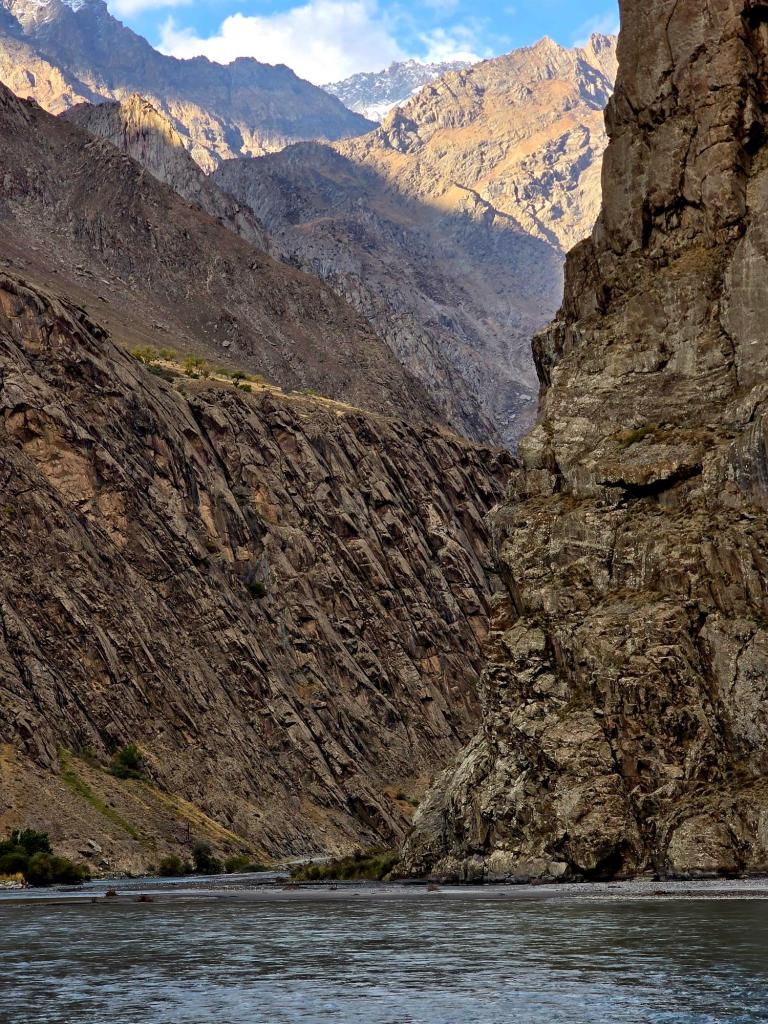
The road continued along the Panj River, with a steady stream of small Afghan settlements visible across the water. Life over there felt close—houses, footpaths, fields—yet entirely unreachable. On the Tajik side, things were quieter. Settlements were fewer and more spread out. Many of the Afghan homes were built of mud brick and stone, similar to what you see in rural Tajikistan, and Denis explained that many were likely seasonal shepherd settlements, occupied during parts of the year.
Roughly 25 miles farther on, the mountains began to change character. Peaks rose higher and sharper, and the valley walls on our left steepened dramatically, climbing straight up from the road and creating a constant rockfall hazard. In this stretch, we also began seeing regular Tajik military patrols—usually four or five soldiers carrying Kalashnikovs, with one man shouldering a long sniper rifle. We would see similar patrols regularly over the next several days.
At the time of our trip, there hadn’t been any recent reports of incidents along this section of the border. In recent weeks, however, there have been reports of armed incursions from the Afghan side, including attacks largely targeting Chinese workers involved in regional mining operations. Gold and other minerals are extracted in parts of this border region, though the deeper details of those conflicts are still murky.
Despite that tension, the scenery was extraordinary. As the day progressed, the culture began to feel distinctly Pamiri—subtle shifts in architecture, dress, and the rhythm of village life. The roadwork hadn’t fully stopped after all, and we were held up multiple times, climbing out of the vehicle to wait while machinery cleared sections ahead.
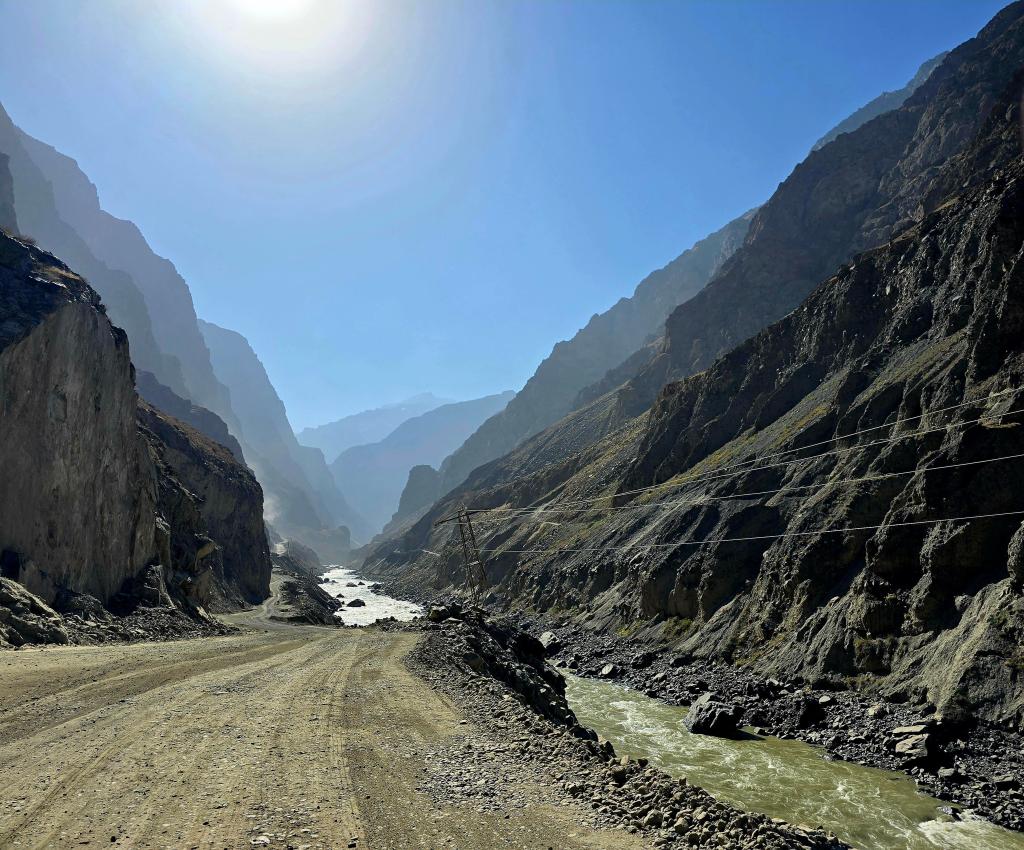
On one such stop, an older couple from Oregon pulled up behind us. As we waited, they entertained us with stories of traveling through northern Pakistan in the late 1970s—another reminder that these mountains have long drawn in a particular kind of traveler.
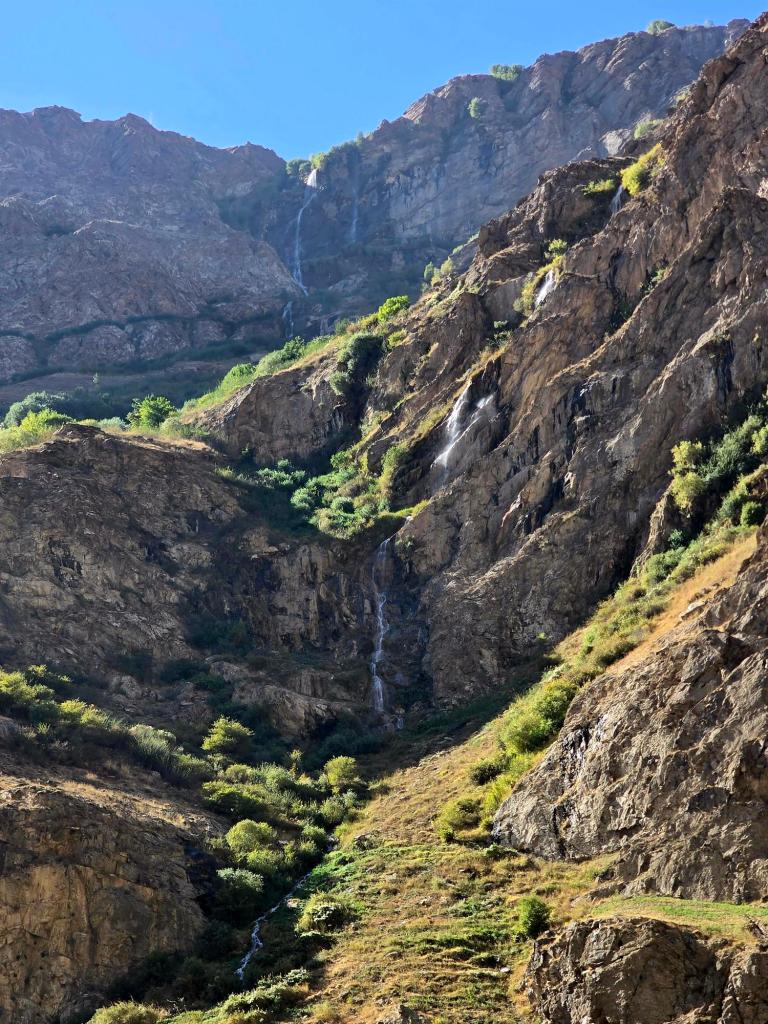
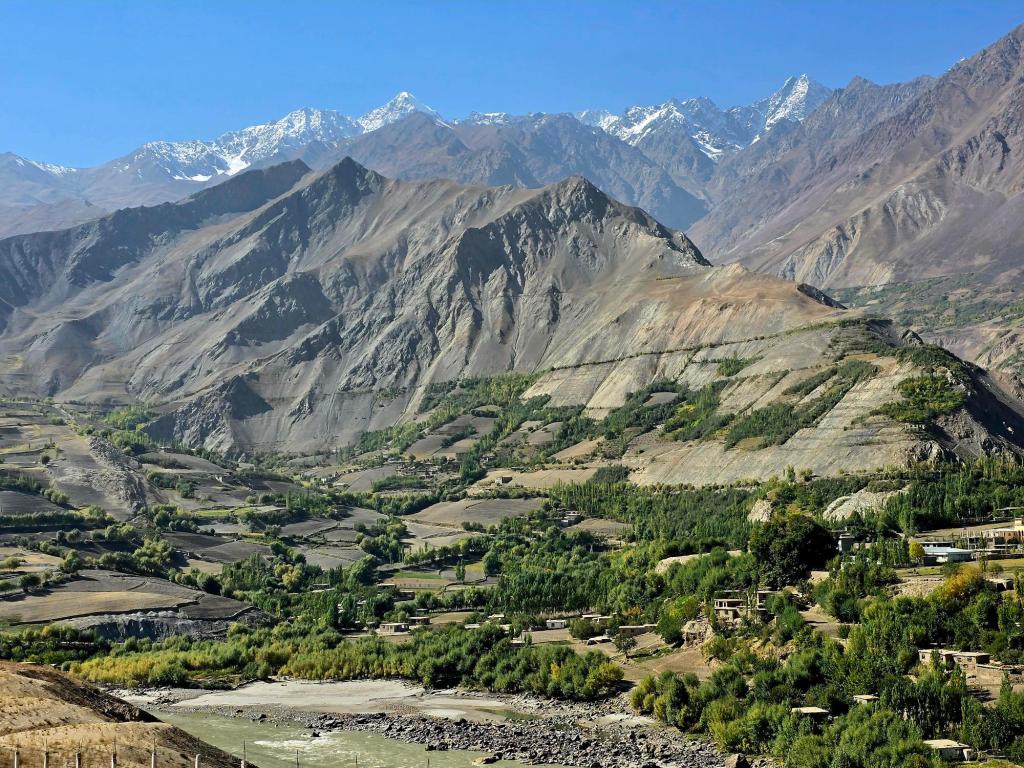
Back on the move, we began spotting waterfalls spilling straight off the tops of the mountains across the river, turning sections of what is usually a dusty, rocky landscape into pockets of lush grass and greenery. In the distance, peaks rising above 6,000 meters began to show themselves, their snow-capped ridgelines cutting sharply into the sky.
Every now and then, we’d spot a vehicle creeping along the dirt road on the Afghan side of the Panj. Occasionally, music drifted across the water—an apparent violation of local laws over there, but impossible not to smile at when it reached us.
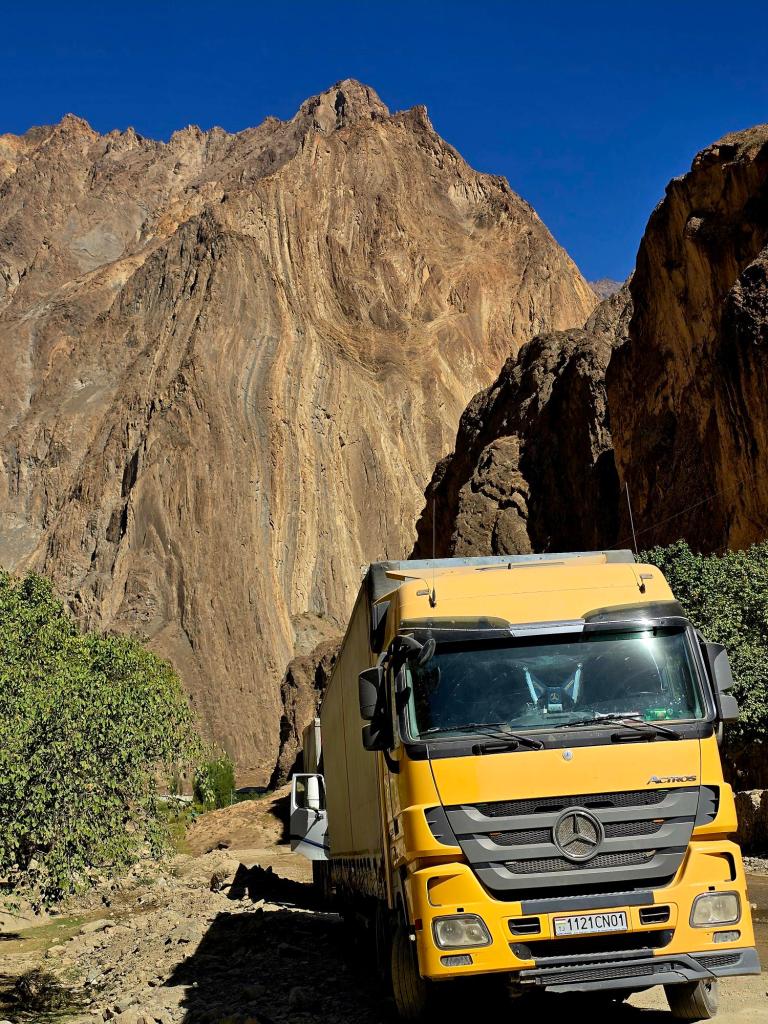
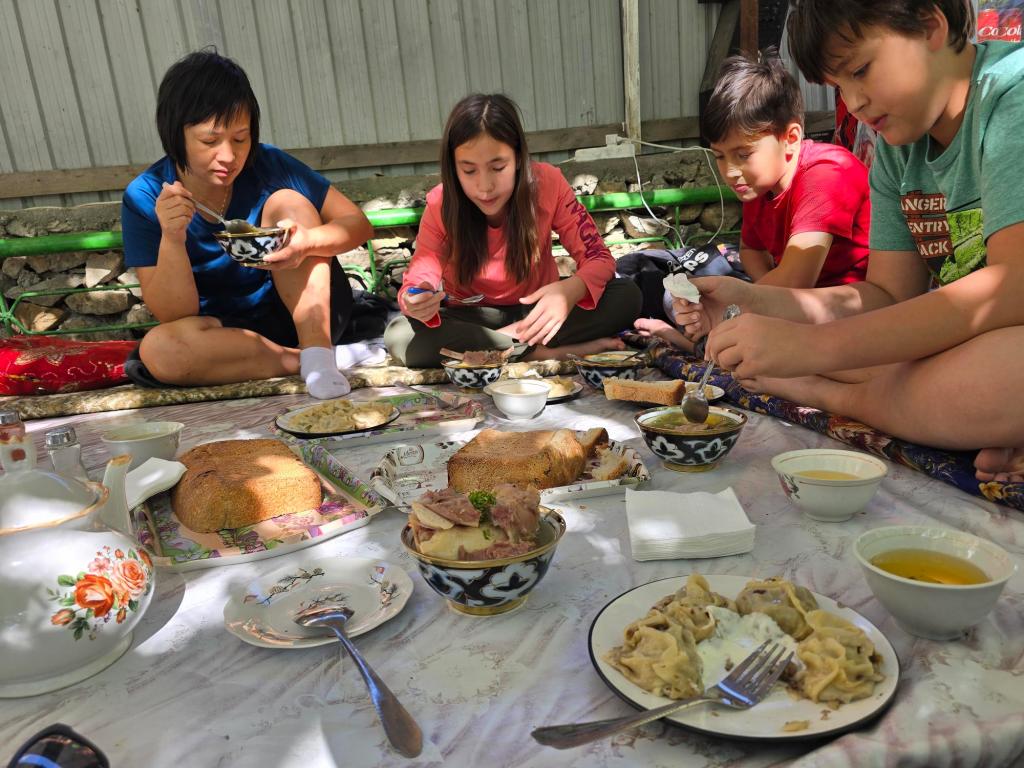
We stopped briefly in a small village where truckers were topping off water and checking their vehicles. A few homes doubled as informal eateries, offering lunches of mantu (dumplings) and hearty bowls of meat, potato, and carrot soup. After refueling ourselves, we pressed on.
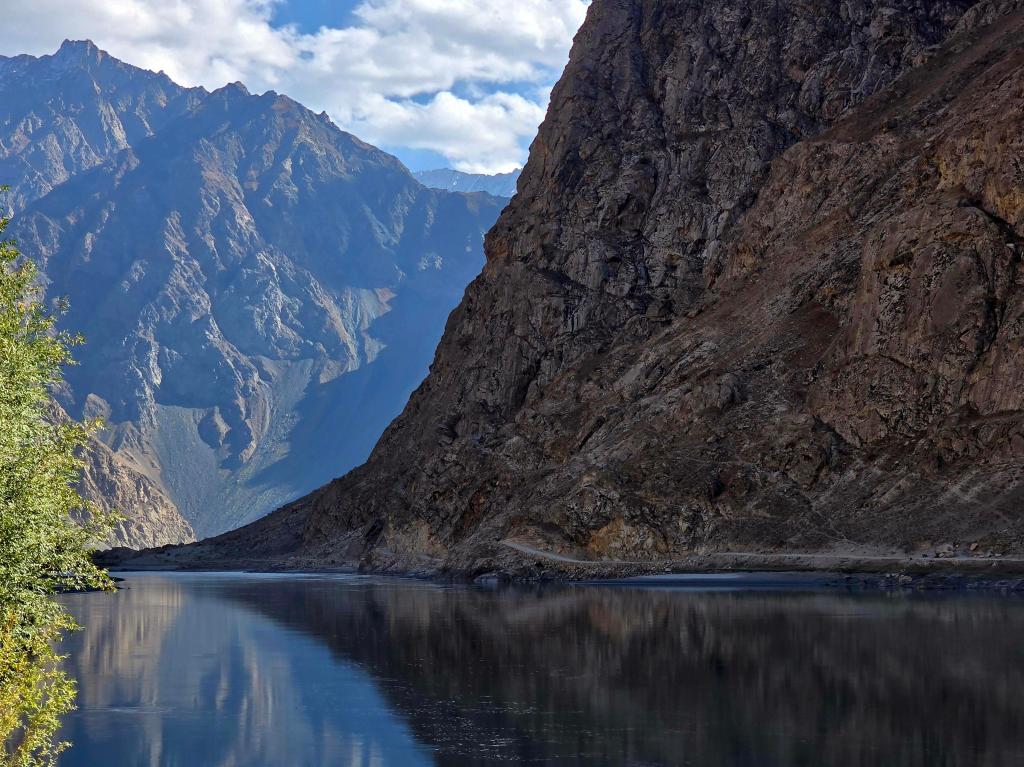
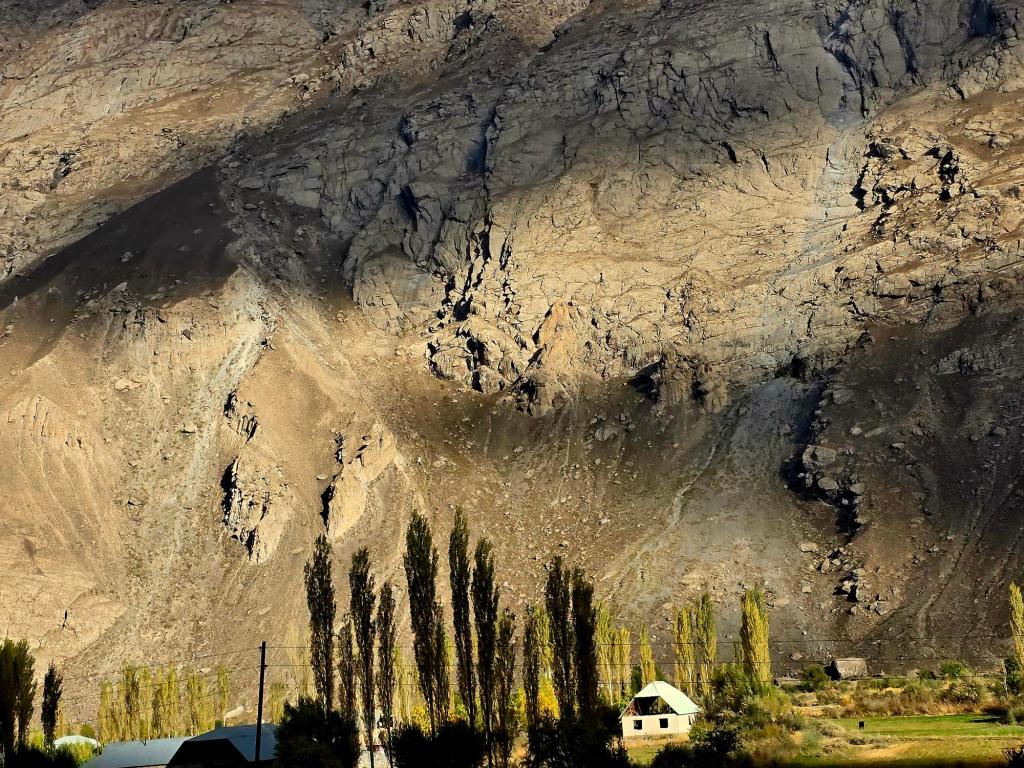
As we approached Rushan, the landscape grew even more dramatic. Fall colors had begun to creep in, and long stands of poplar trees lined parts of the road. In one broad section, the river widened until it resembled a lake, its smooth, glassy surface reflecting the surrounding mountains and sky.
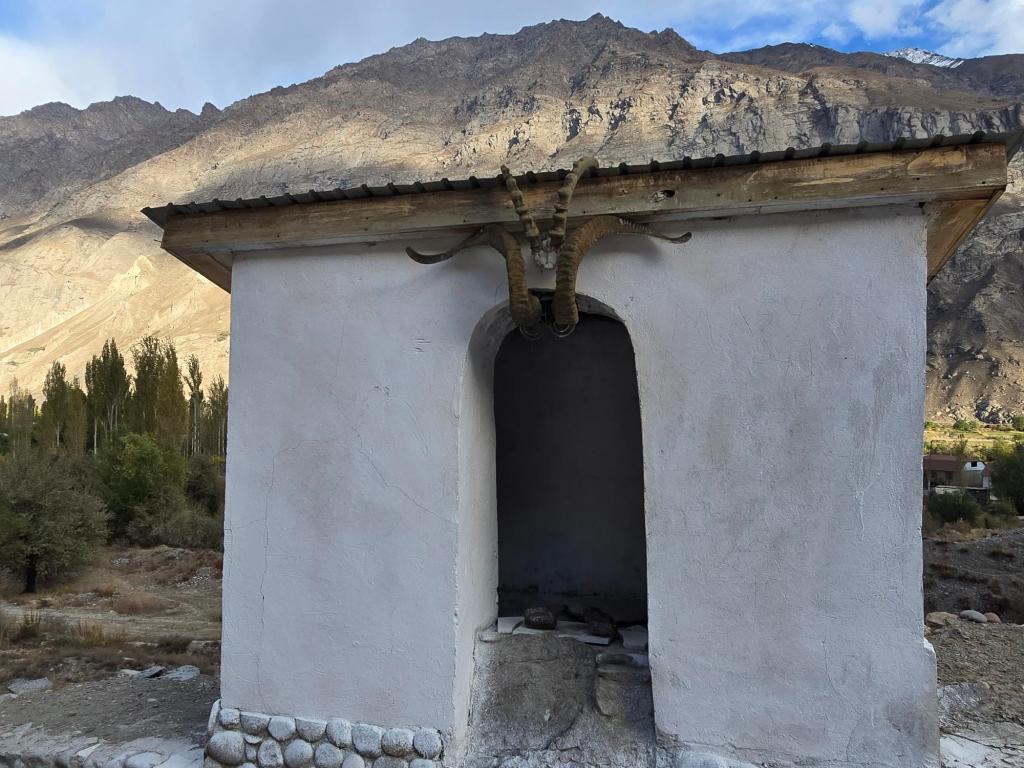
We rolled into Rushan later that afternoon, passing an old Zoroastrian site near the edge of town before pulling in at our homestay for the night.
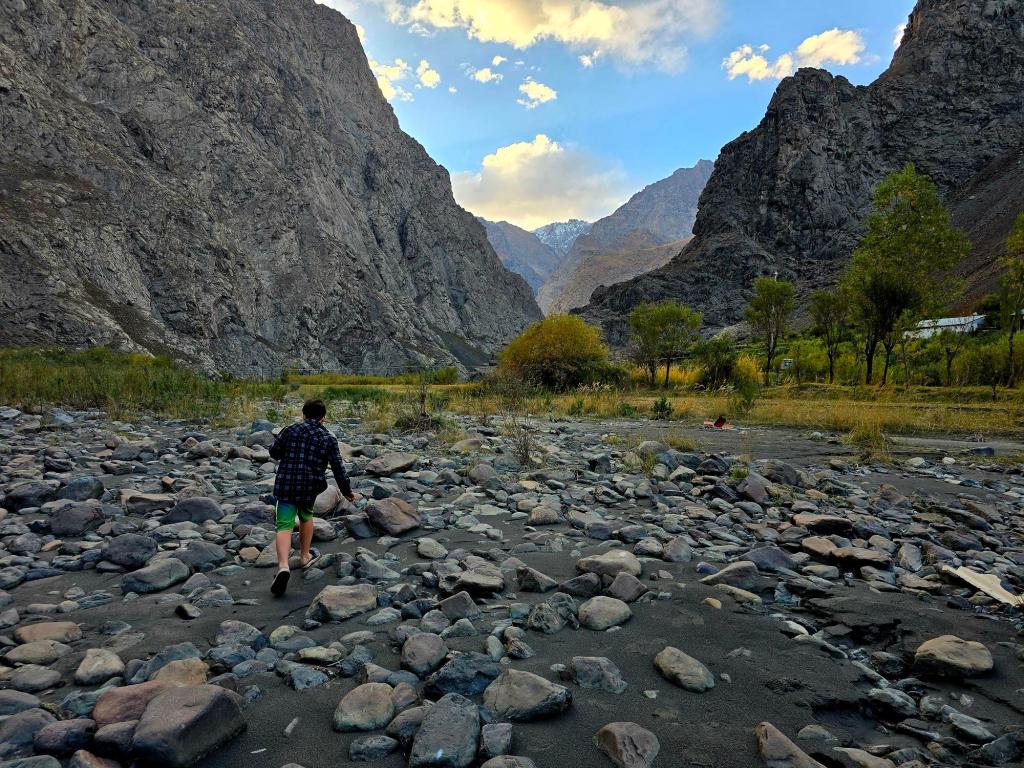
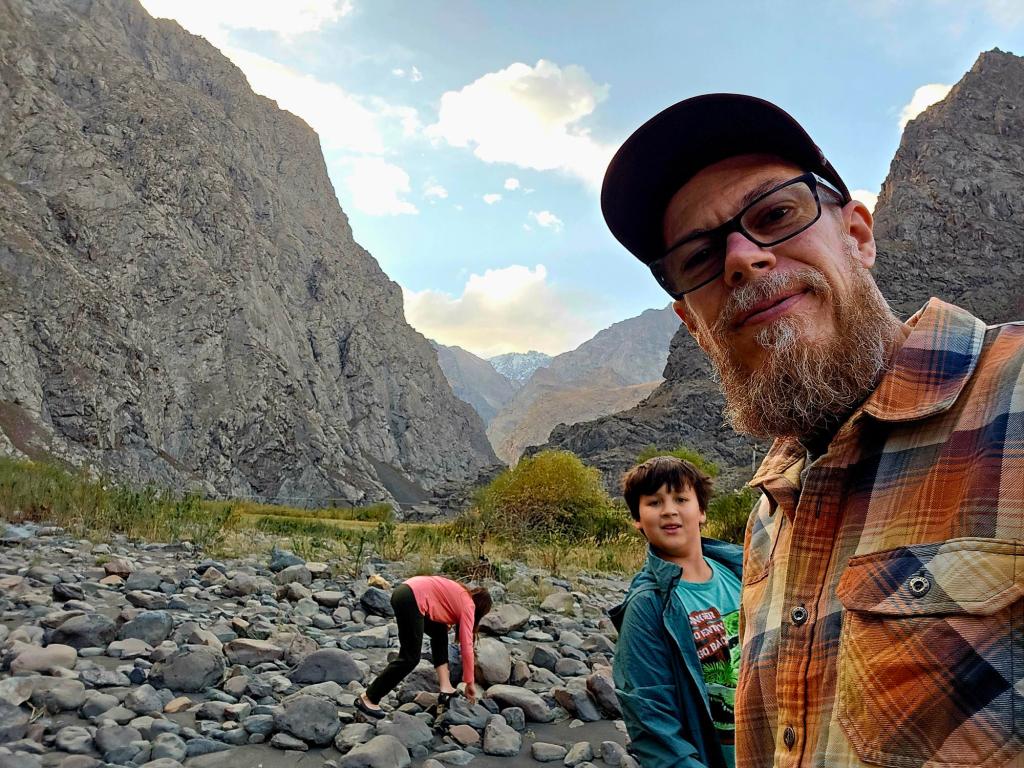
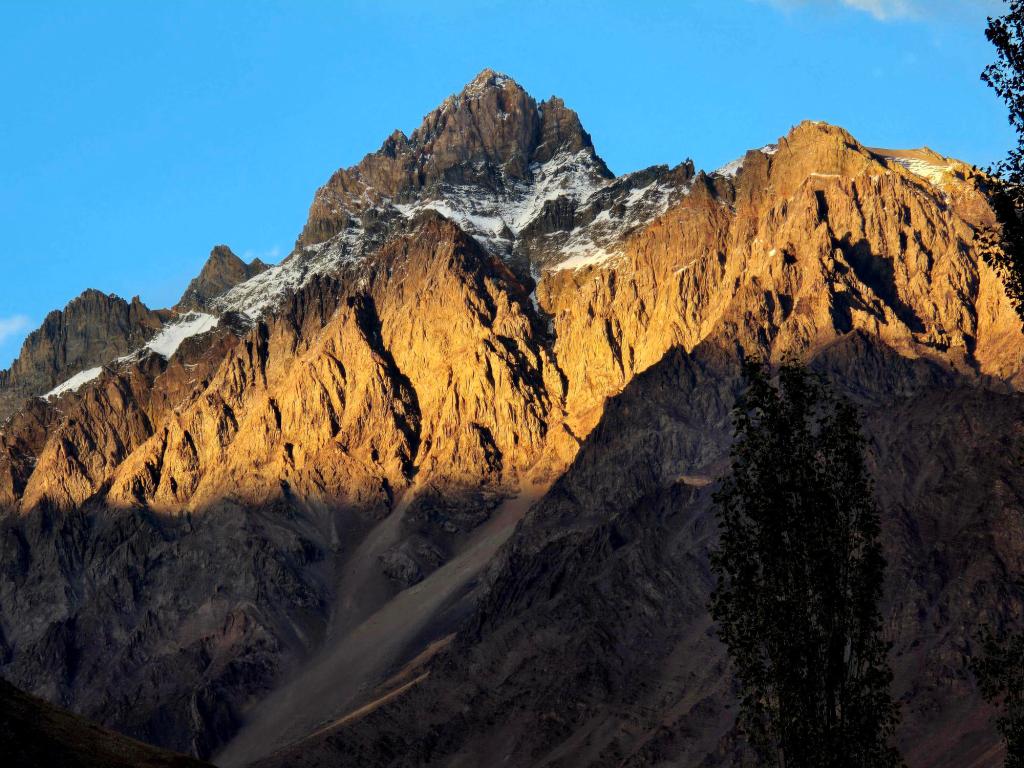
Day two had delivered everything the Pamirs promised—beauty, complexity, and the quiet understanding that out here, the road is never just a road.
 Wise Clan in Stanland
Leave a comment