September 14, 2024
The kids and I had been in Tajikistan for just over a month, slowly settling into new routines and unfamiliar surroundings. Some of the newness was beginning to fade, and we were all starting to miss Mama Tan more and more. She had stayed behind in the States, tying up loose ends, and we still had another month to go before she would finally join us in this new chapter of life.
In the meantime, I made it a point to get us out exploring every weekend—learning the landscape, finding our bearings, and reminding ourselves just how lucky we were to be here. On this particular weekend, we made our first excursion to Iskanderkul.
We had already made a few trips up through the Varzob Valley, but this would be our first time climbing the far end of it and driving through the infamous Anzob Tunnel, which I mentioned in an earlier post. The tunnel is a five-kilometer shot straight through blasted rock, and it doesn’t really feel like it was ever finished. There’s no proper ventilation system, so the routine is simple: roll up the windows, shut off the vents, and pray you don’t break down—or worse.
There are no overhead lights. You just follow the trucks ahead of you, their hazard lights blinking faintly through thick, toxic fumes. Oncoming headlights diffuse into the murk, and every so often some reckless driver throws caution to the wind and tries to pass a whole line of cars and trucks, squeezing back in at the last possible second. Horns blast in furious recognition of passing stupidity.
When daylight finally appeared at the far end of the tunnel, we all let out a collective breath. That single stretch of darkness had just saved us roughly four hours of driving time—back when the tunnel wasn’t usable, you had to go up and over the pass, crossing briefly into and back out of Uzbekistan.
The descent on the other side of the mountain is dramatic, with incredible scenery and nerve-wracking corners where traffic seems to automatically swap lanes to give the big trucks a wider berth. As you reach the bottom, the valley opens up and you can see far up the landscape toward Yagnob, a place that feels like it belongs to another century.
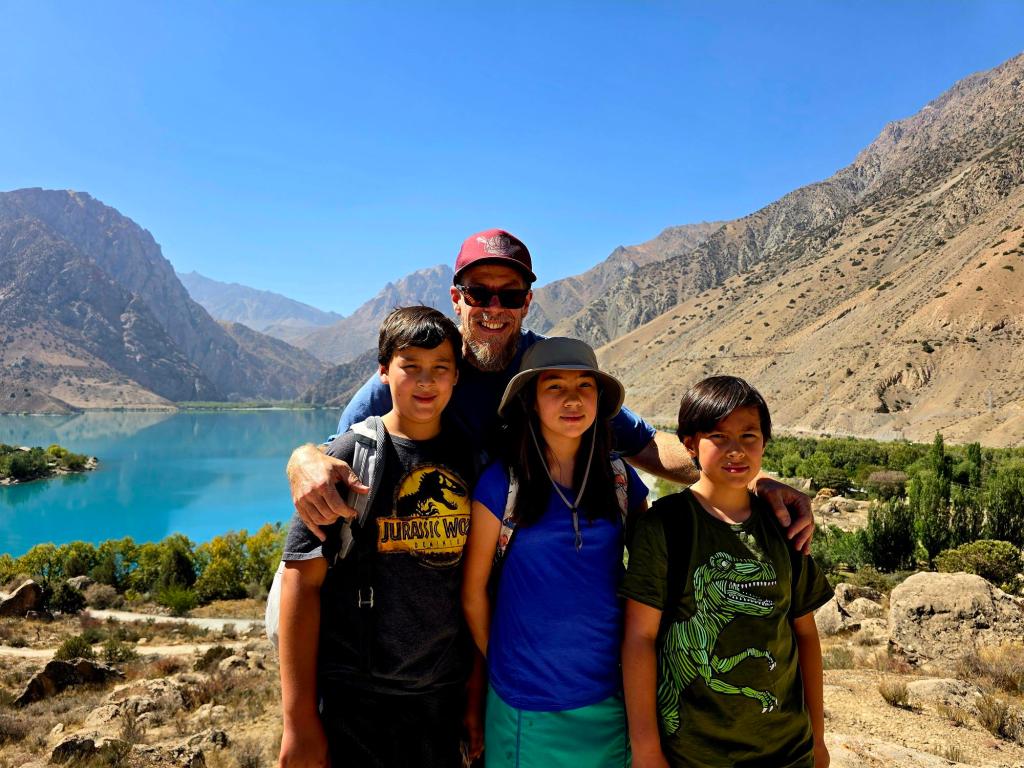
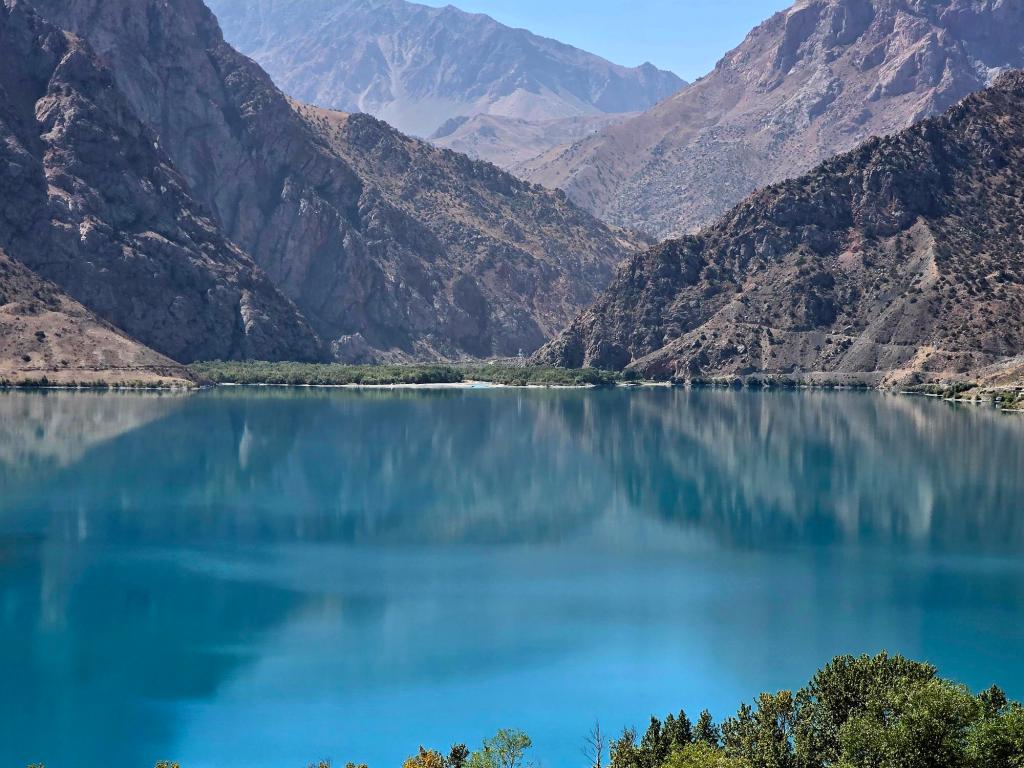
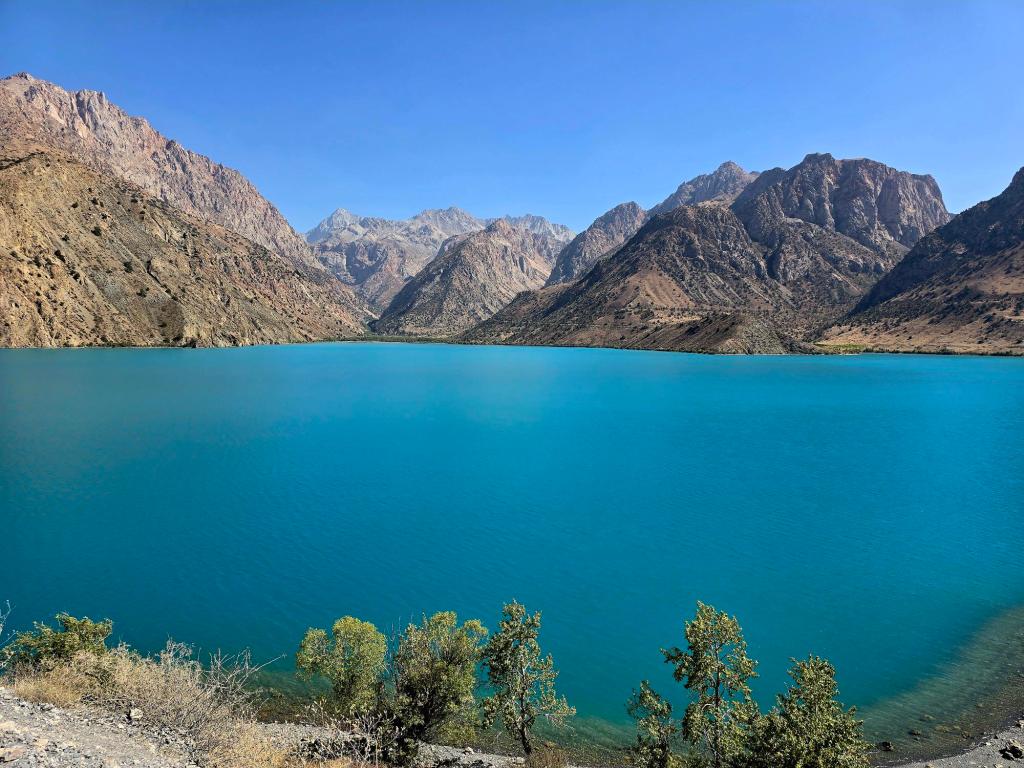
About half an hour later, we reached the turnoff for Iskanderkul. After passing an old Soviet-era cement factory—still decorated with surprisingly beautiful mosaic tilework—we crossed the river and hit a long, bumpy, dusty dirt road. Roughly twenty kilometers in, there’s one final climb. From the top, we got our first glimpse of the Fann Mountains and the unmistakable turquoise waters of Iskanderkul far below.
We made our way down to the northern edge of the lake and climbed out of the car to stretch our legs. All told, the drive took about three hours, including a short stop just before the tunnel.
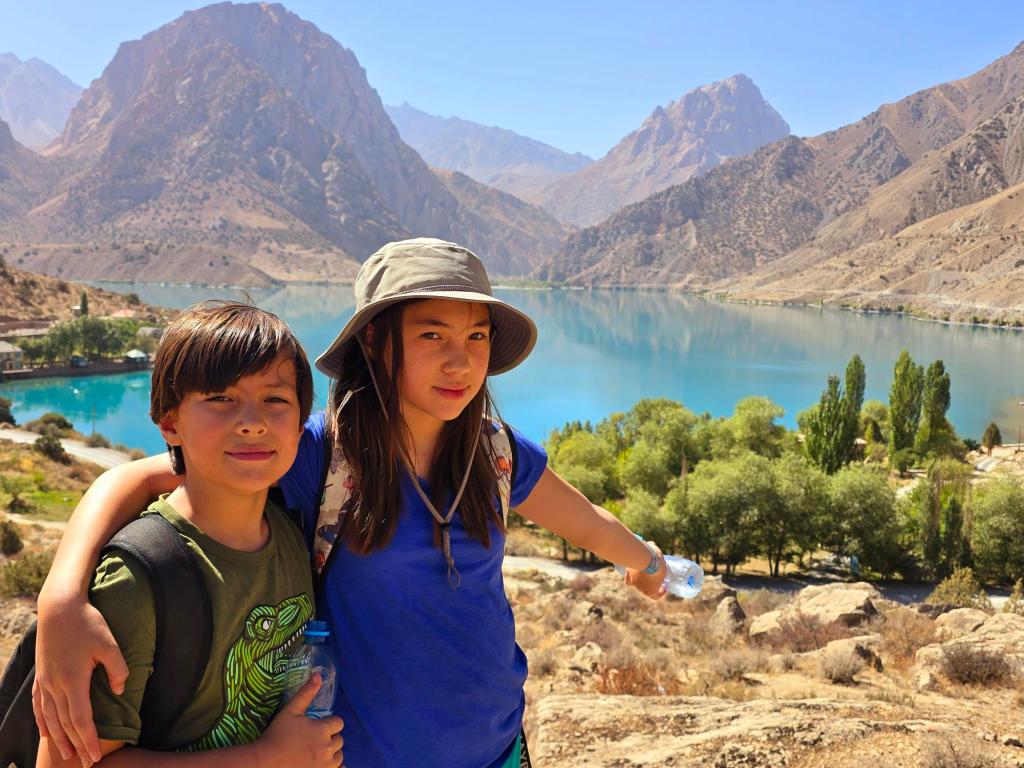
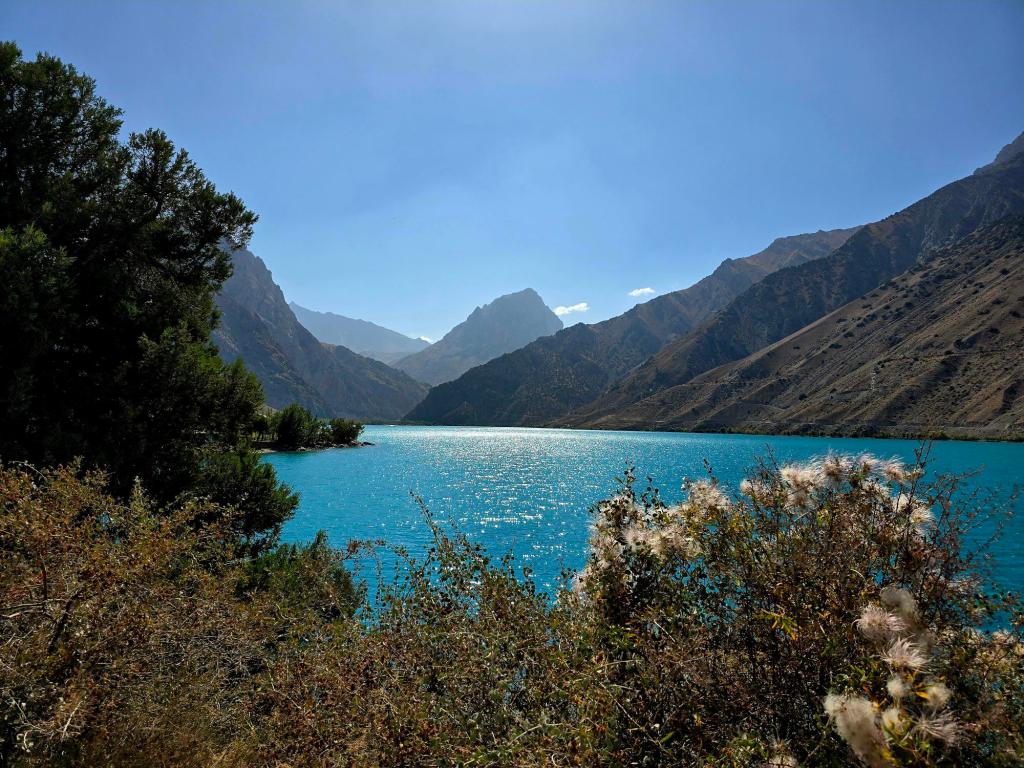
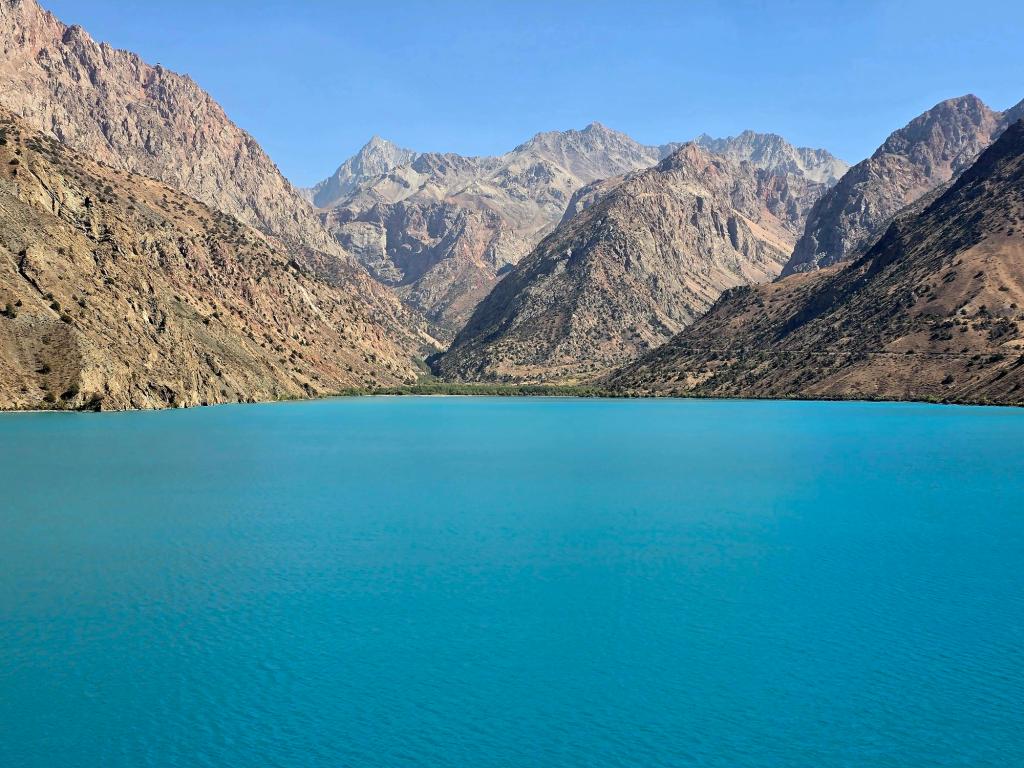
Iskanderkul sits high in the Fann Mountains at over 2,000 meters above sea level and is one of the most iconic lakes in Tajikistan. The name “Iskander” is the local form of Alexander the Great, and like many places in Central Asia, the lake is wrapped in legend. Some stories claim that Alexander dammed a river here in punishment, flooding a valley. Others say his horse, Bucephalus, drowned in the lake. Science points to glacial forces and massive landslides shaping the basin—but standing on the shore, it’s easy to believe both explanations at once.
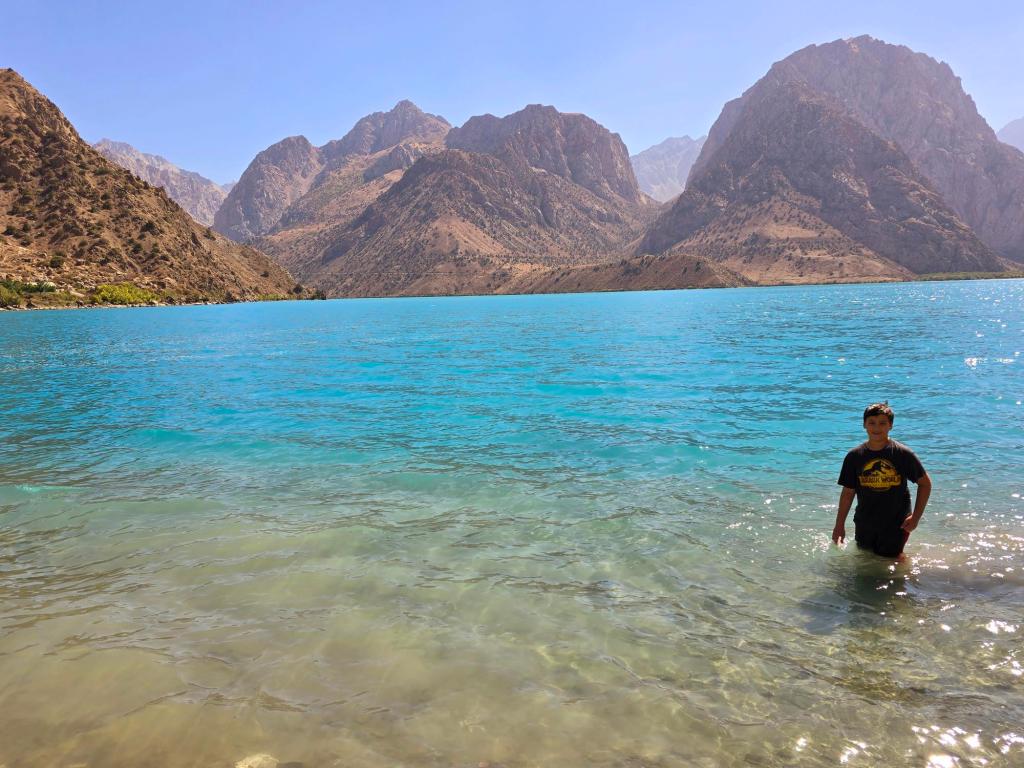
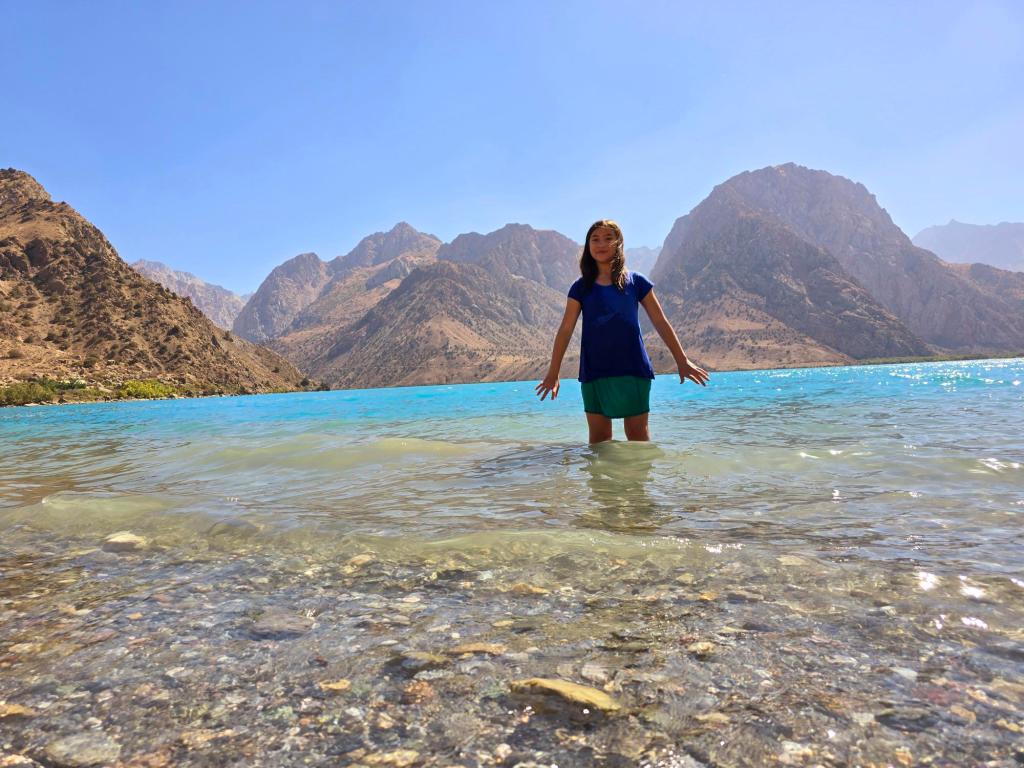
From the northern shore, there are several hiking options. We first climbed up and away from the lake to get a higher, more aerial view of the surroundings. Iskanderkul is large and over 200 feet deep at its deepest point, and the way the turquoise water contrasts with the jagged mountains that ring the entire lake feels almost unreal.
We continued a little farther until we reached a flat area overlooking another smaller lake about seventy meters below us. This is Snake Lake. The water here is much darker, the shoreline completely ringed with reeds, and a forest surrounds it on all sides. We hadn’t seen much forest since arriving in Tajikistan, so the trees were a welcome sight.
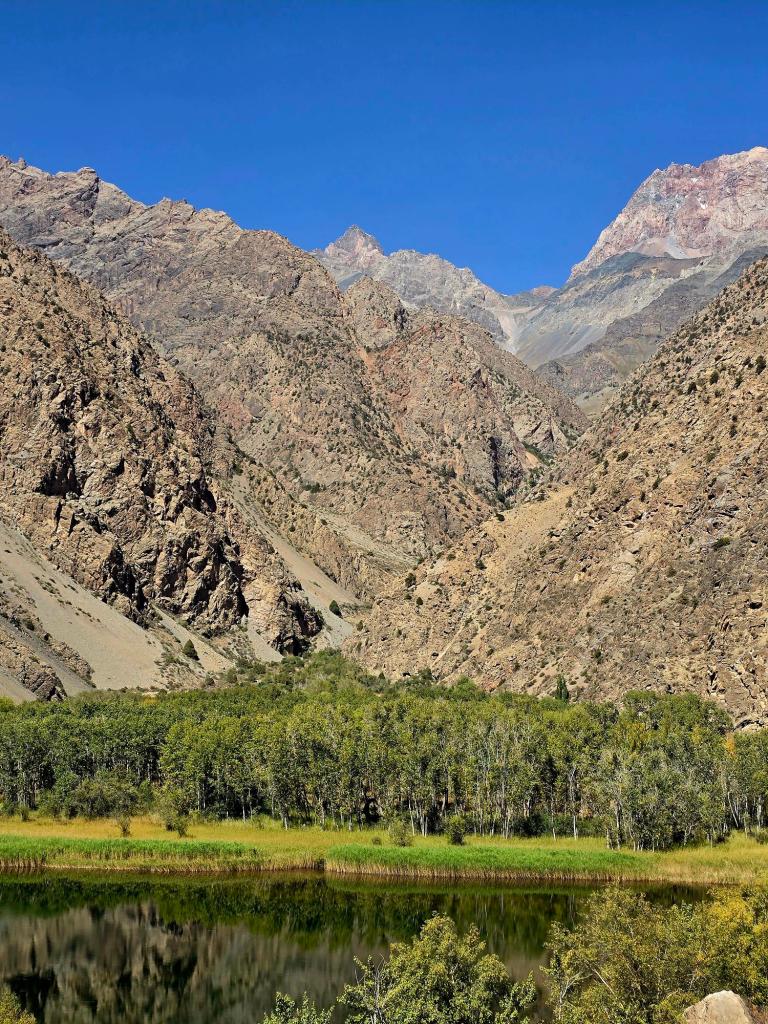
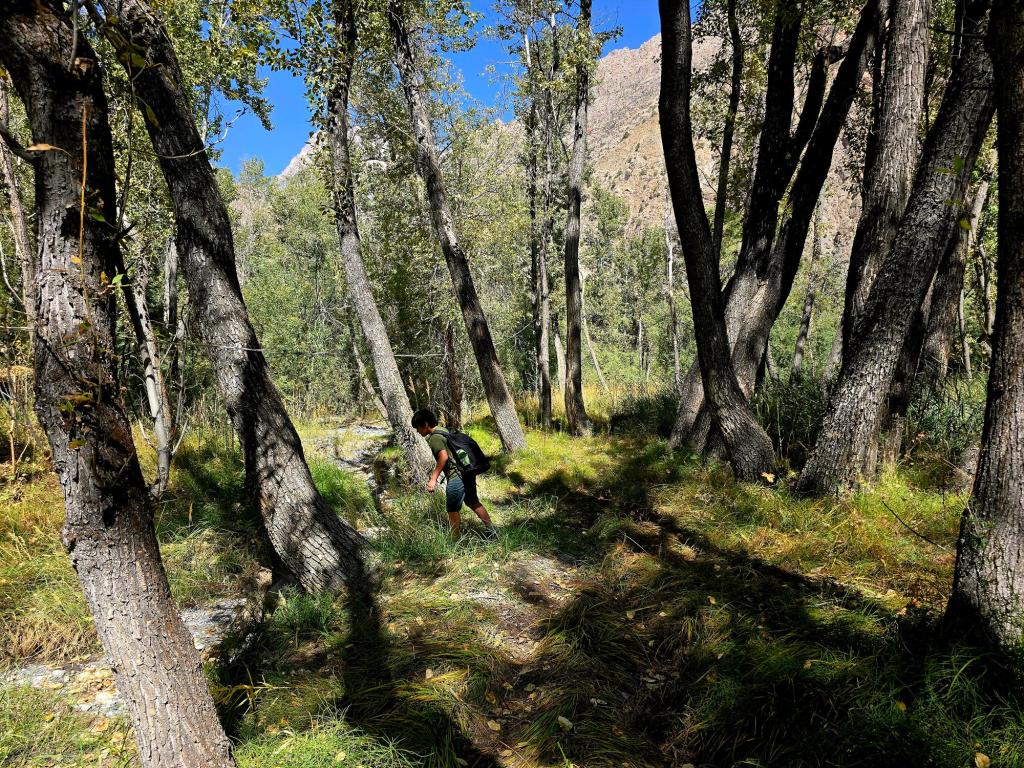
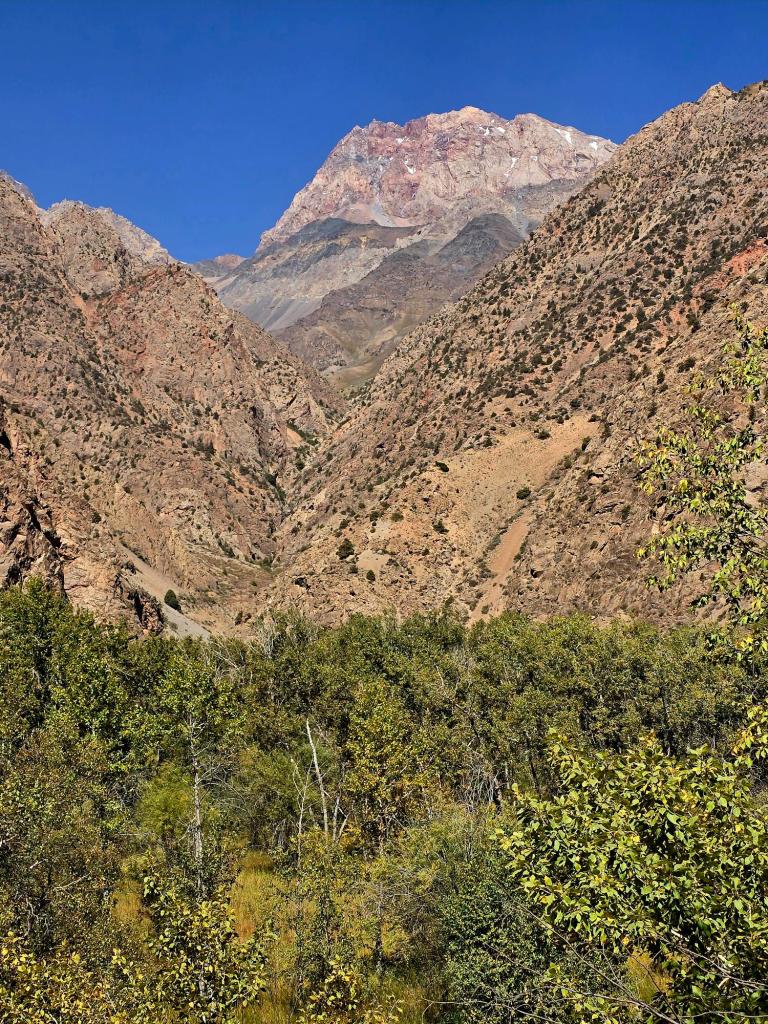
We dropped down into the woods, cutting across the far side of Snake Lake, where small openings in the trees revealed distant views of the Fann peaks rising sharply against the sky. The air felt cooler and fresher here. The loop around Snake Lake is short and easy—maybe a mile or so—and as we climbed back up the opposite side, we got a closer look at the reed-lined shore and some of the waterfowl that call the lake home.
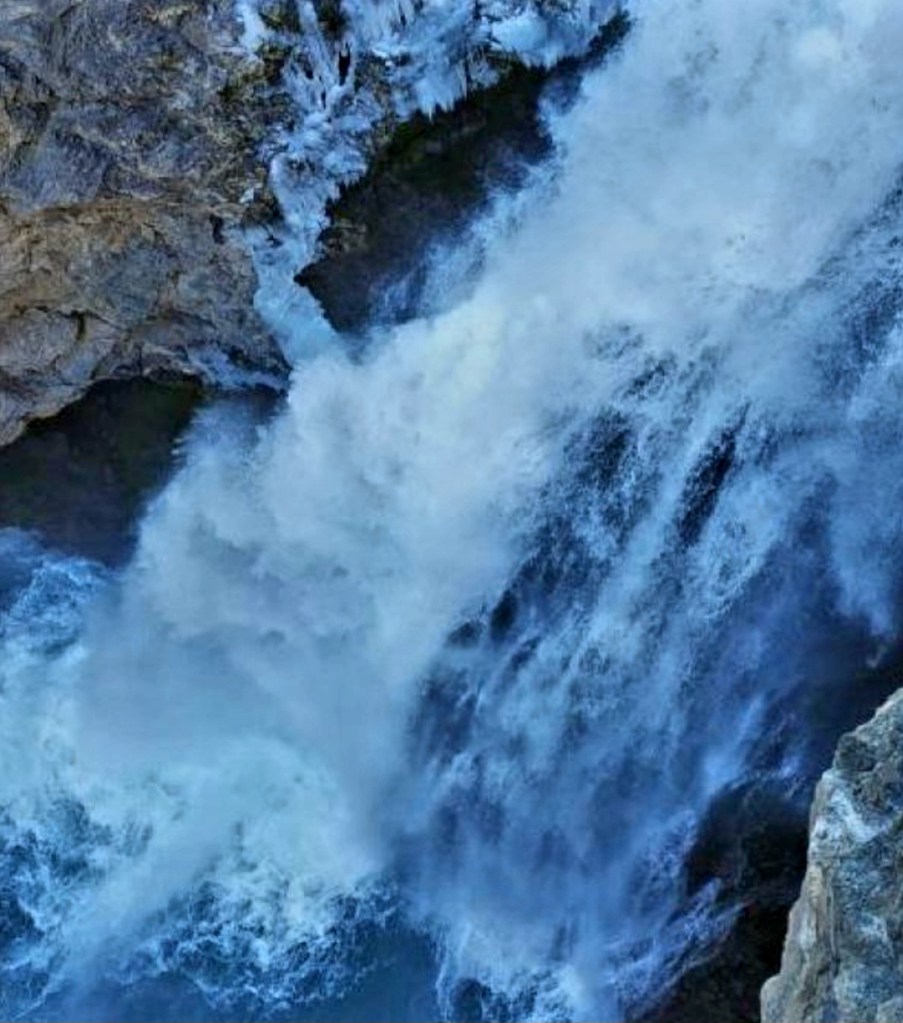
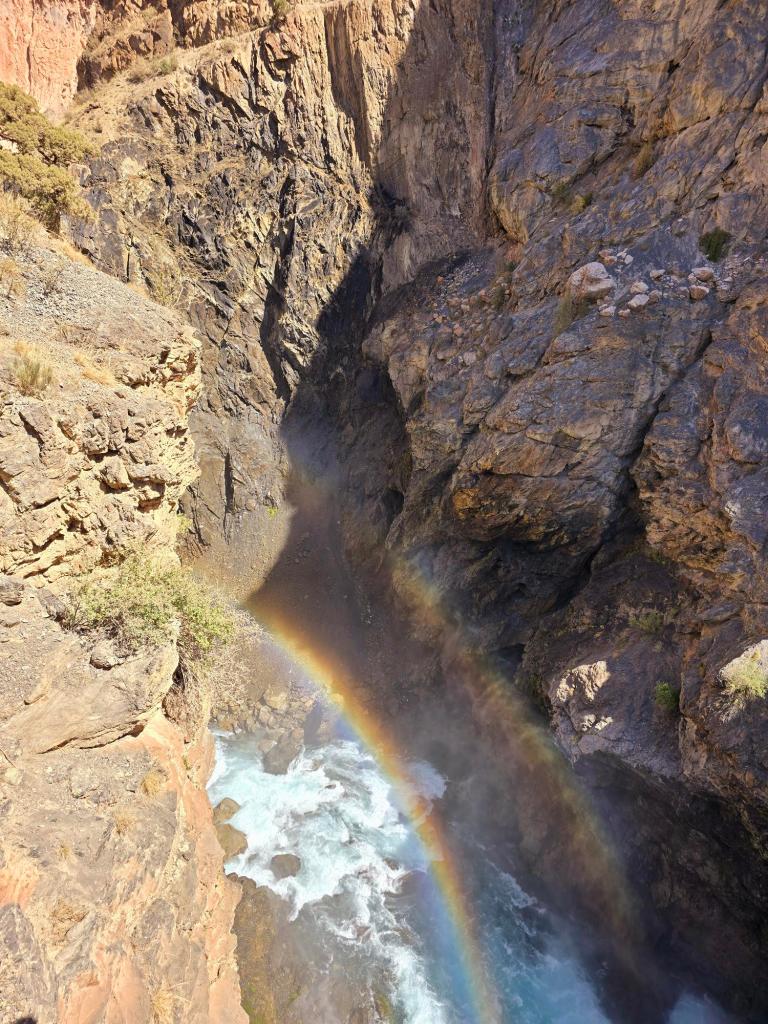
Back up top, we headed to the trail that drops down to Fann Niagara, a massive waterfall formed by the outflow of Iskanderkul. The river funnels into a tight canyon and plunges nearly forty meters, actively carving the rock below. The color of the fast-moving water is just as striking as the lake itself.
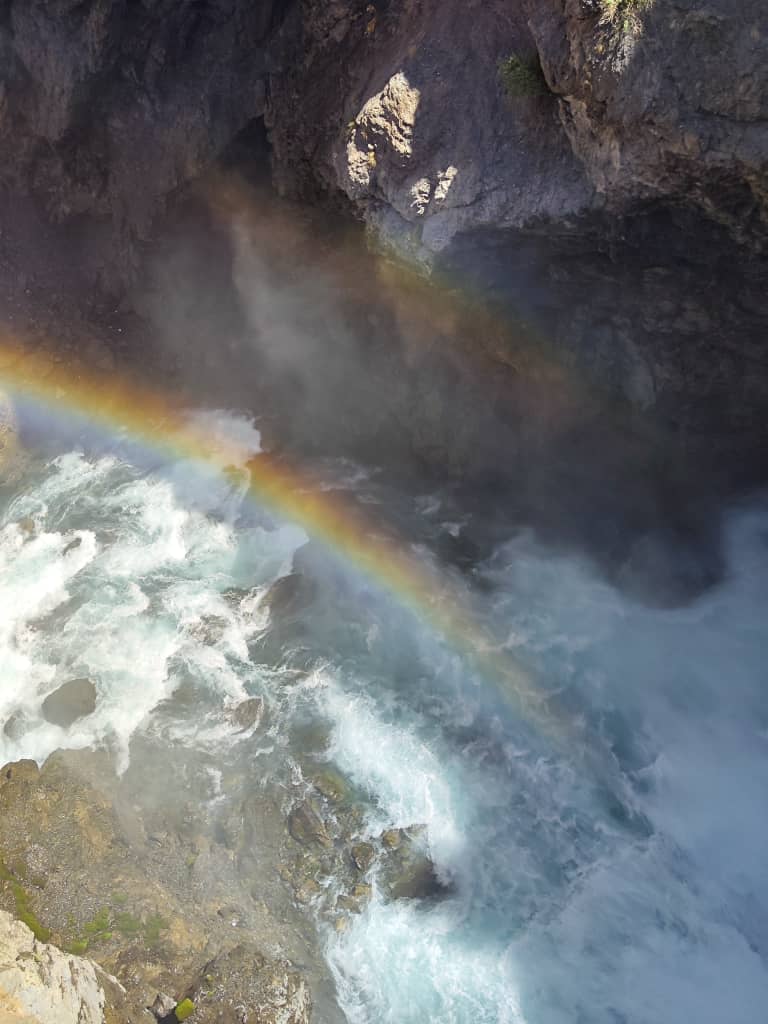
The hike down into the canyon is about 2.5 miles round-trip. A steel-grate platform juts out over the gorge roughly 120 feet above the river, offering a heart-pounding view straight down at the falls. Mist swirls through the canyon, and rainbows form and vanish below your feet.
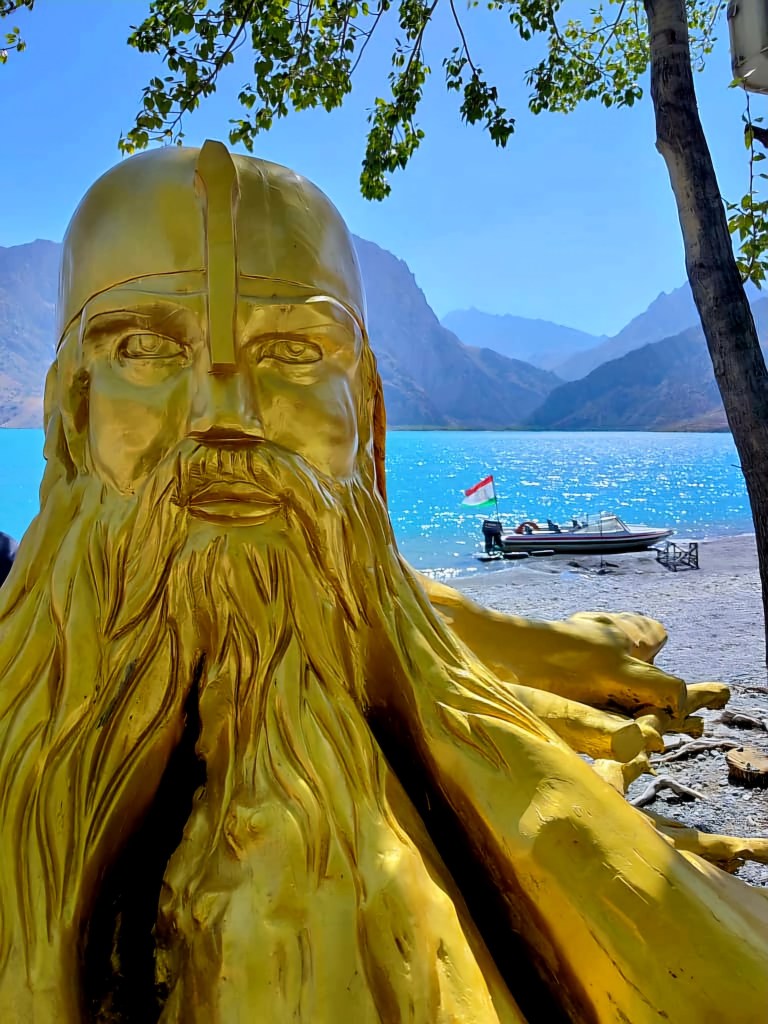
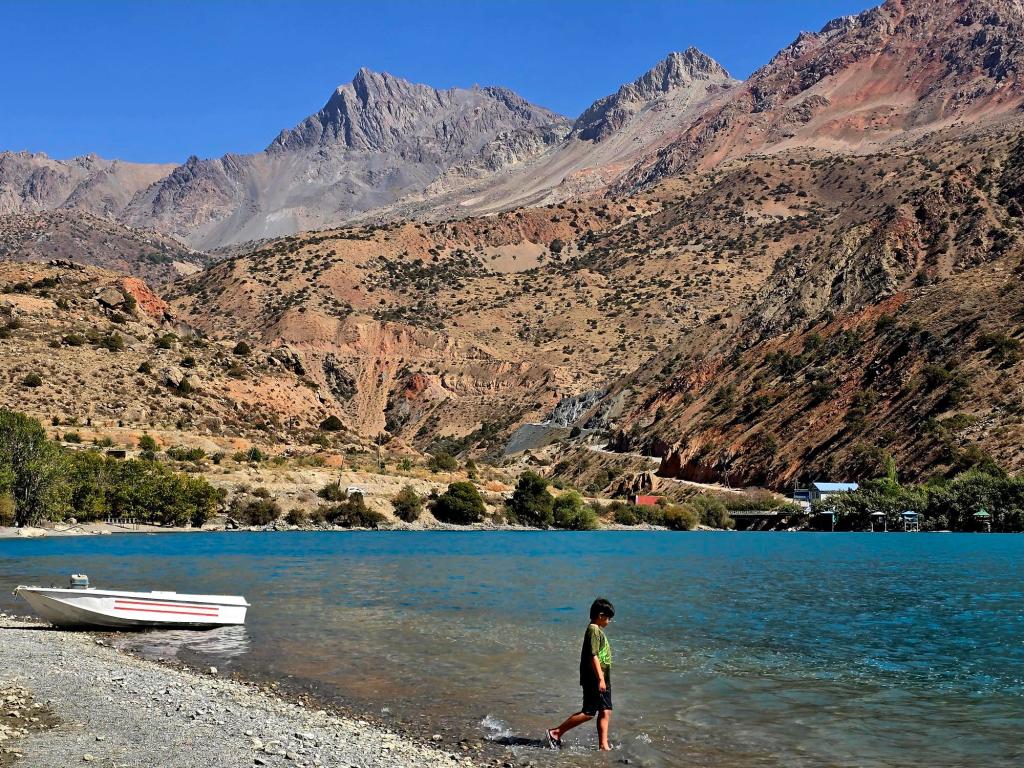
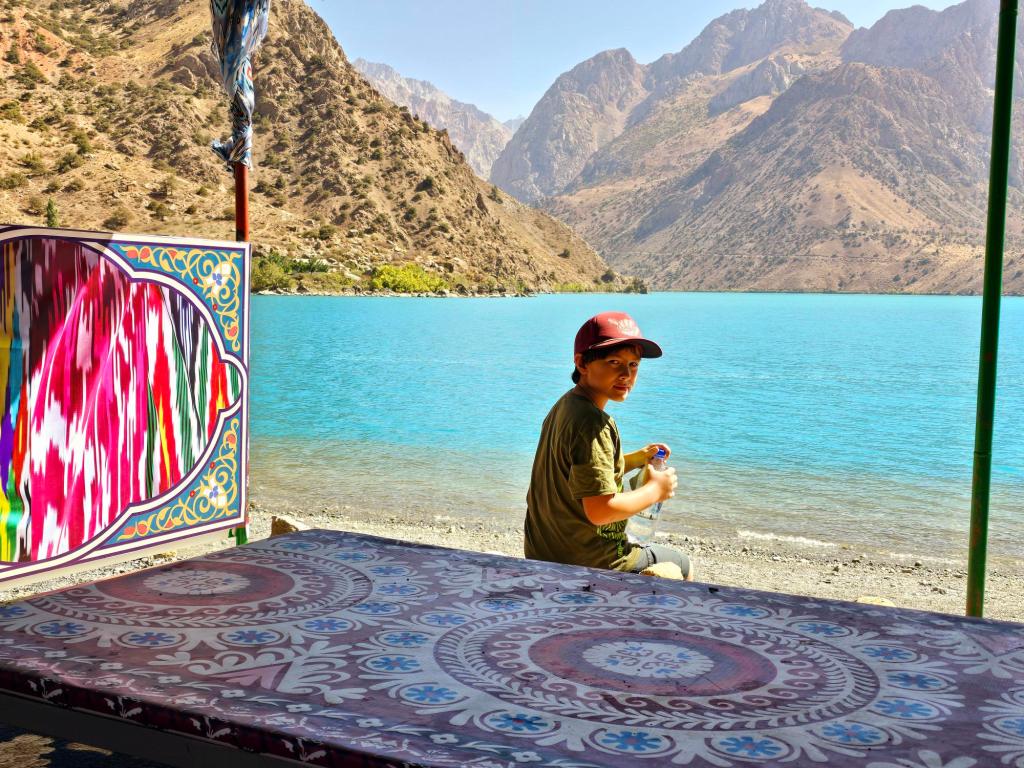
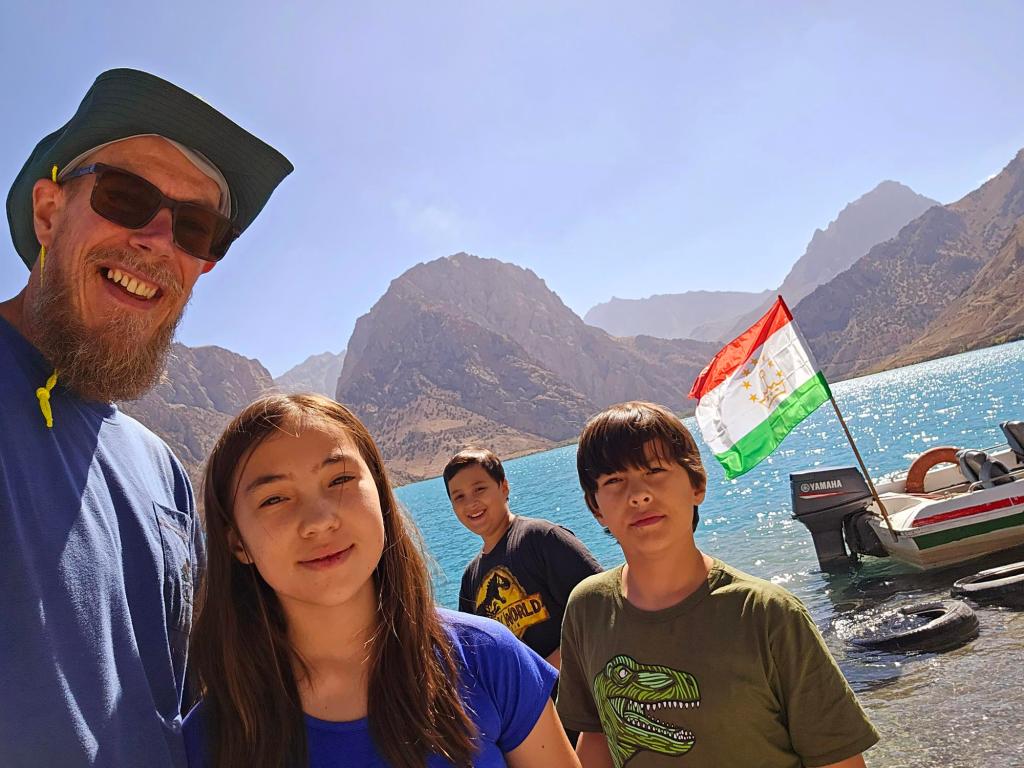
After hiking back out, we made our way to the shoreline near a small restaurant and rocky beach area, where there are also cabins for rent. We couldn’t resist going for a swim—and quickly discovered just how cold a late-summer glacier lake can be. The kids loved it, charging in and out of the water again and again.
We spent about ninety minutes at the lake before gathering ourselves for the return trip to Dushanbe.
Iskanderkul is an incredible destination that can be done as a long day trip, where your time in the car roughly equals your time outside. If you’re only in Tajikistan briefly, it’s absolutely worth it. But if you have more time, I’d recommend camping on a tucked-away beach on the southeast side of the lake, or pushing another five kilometers to the village of Sarytag, where there are welcoming guesthouses and endless hiking opportunities into nearby valleys.
 Wise Clan in Stanland
Leave a comment