Trail Stats: Mt. Kurmushkhon from Honako Village (Jan. 11, 2026)
Route: Out-and-back
Start Point: Honako Village
Peak: Mt. Kurmushkhon
Distance: ~8 km round trip
Elevation Gain: ~2,800 ft (855 m)
Highest Point: 7,070 ft
Difficulty: 7/10 (short, steep, sustained climb)
Total Time: ~6.5 hours
Time in Motion: ~3.5 hours
Style: Steep ascent with equal descent (out-and-back)
Season Notes: Snow present near the upper slopes in colder months
Water: Ok-Bulok Spring (frozen during our hike; reliable in warmer seasons)
A Short Trail with Sharp Teeth: Mt. Kurmushkhon from Honako Village
Some hikes look harmless on a map. Short distance. A clean line. Nothing dramatic at first glance. The climb out of Honako Village is a reminder that numbers don’t always tell the whole story—and that in the mountains of western Tajikistan, even a “short” hike demands respect.
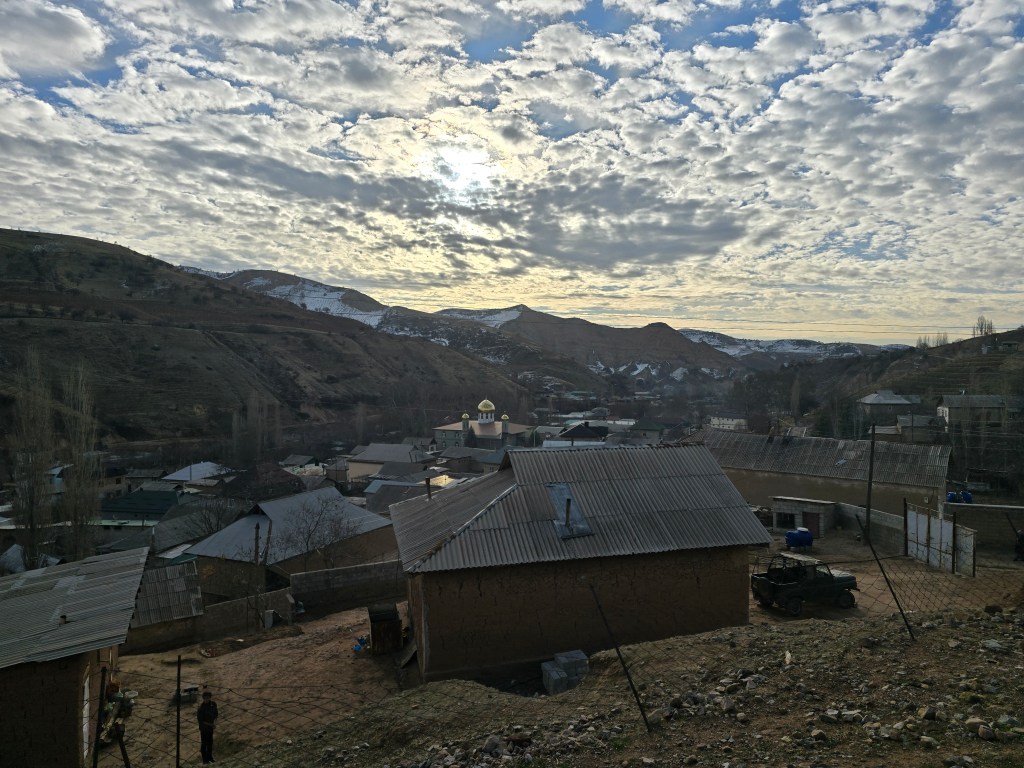
This route clocks in at just 8 kilometers, but it gains 855 meters (about 2,800 feet) in a brief 4 km stretch. That kind of math doesn’t allow for easing into the day. From the start, the trail points upward and stays there, earning its 7/10 difficulty rating not through distance, but through relentlessness. The destination is Mt. Kurmushkhon, a local peak rising to 7,070 feet, and it makes you work for every meter.
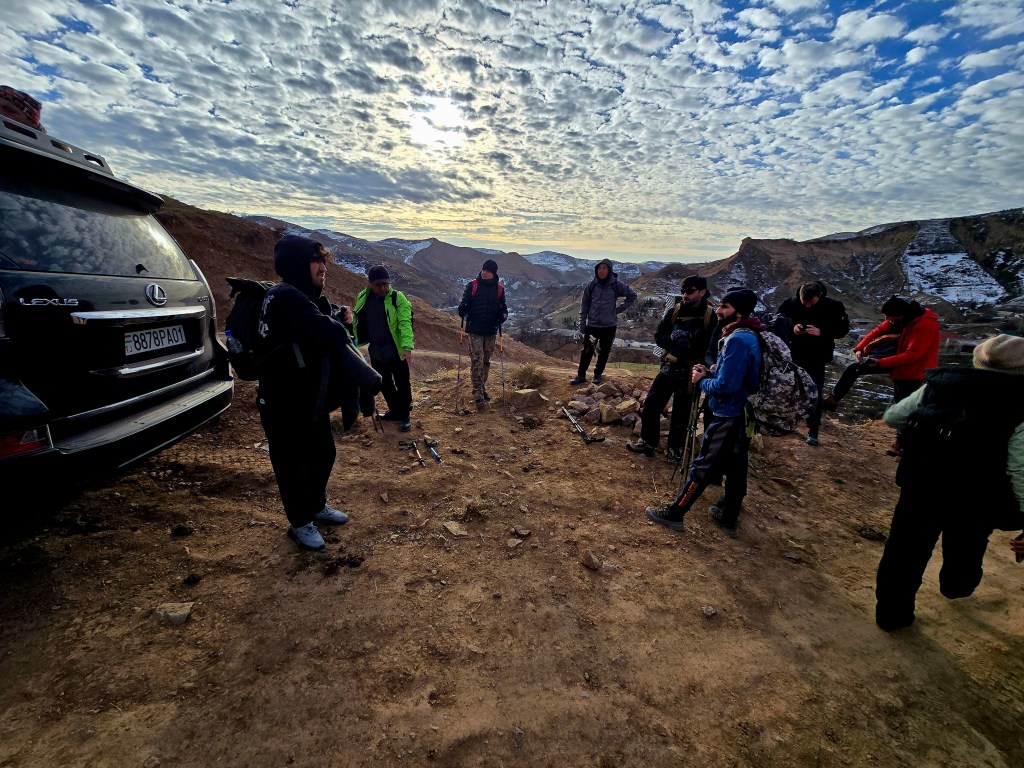
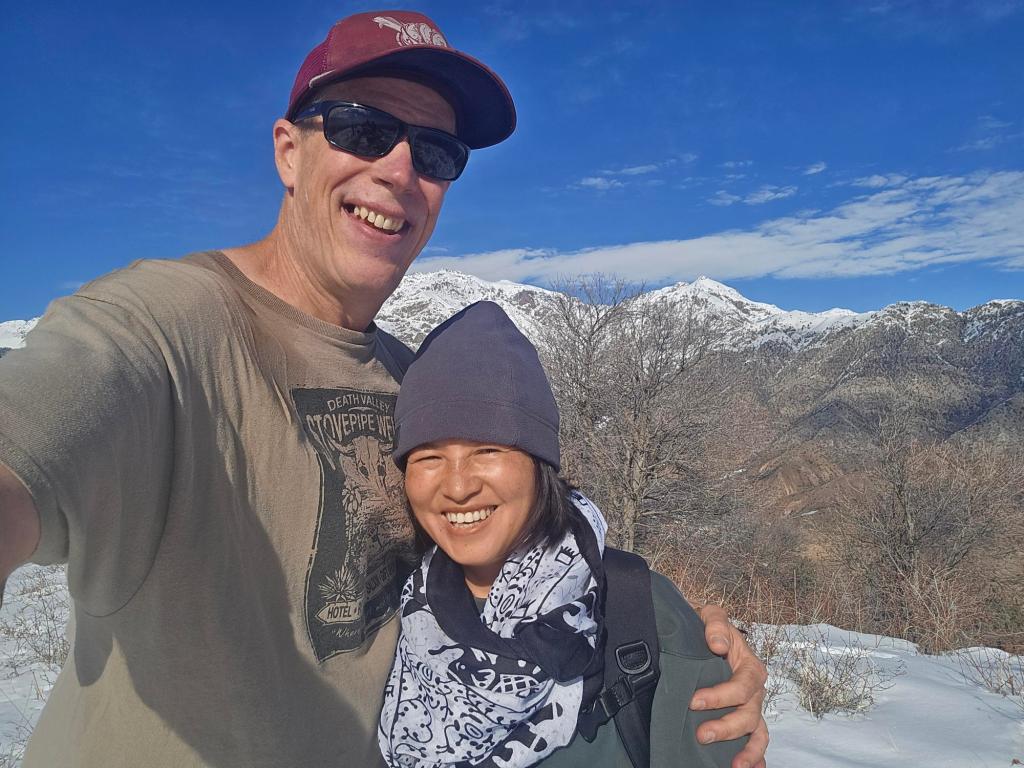
We set out with Daidushki, a local hiking group known for steady pacing and no-nonsense routes. I’ve been on many hikes with them over the past year, from mediums to quite difficult outings, and have become friends with many of the guides. About twelve of us gathered for the hike that morning, including my wife and I—boots laced, layers adjusted, everyone quietly aware that this would be a climb, not a stroll.
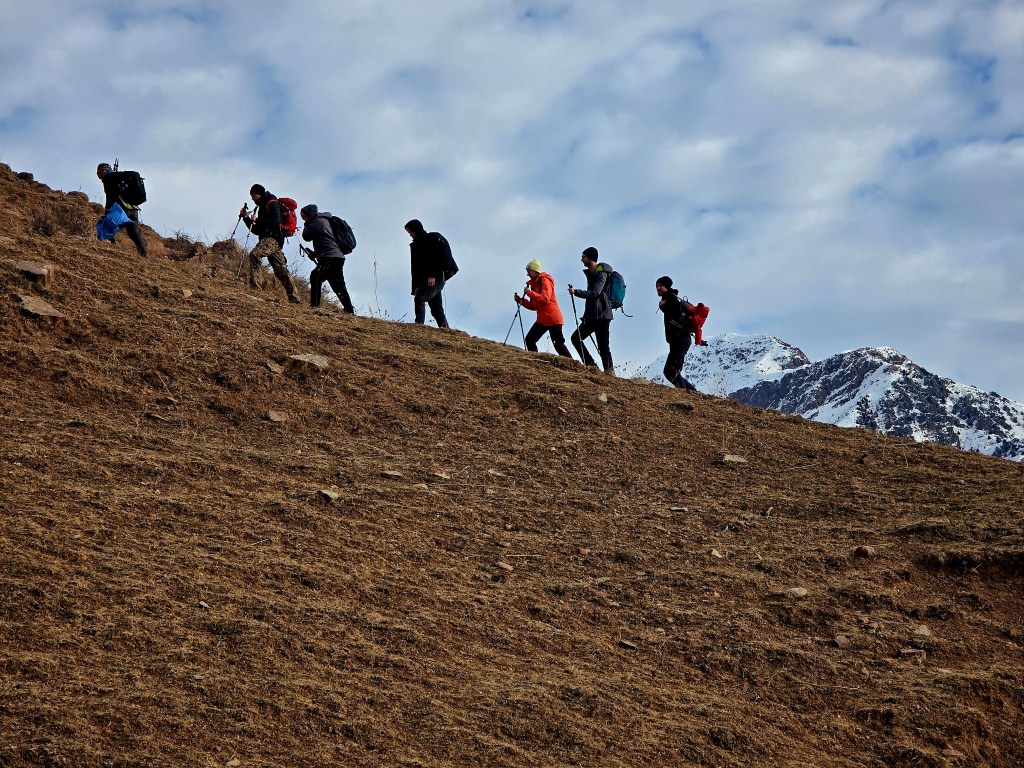
The trail wastes no time. It rises quickly above the village, trading rooftops and fields for open slopes and rocky ground. There’s very little flat terrain to lull you into comfort. Instead, the climb forces a rhythm—step, breath, step, breath—and conversations thin out as lungs take priority. It’s the kind of ascent where you feel altitude not because it’s extreme, but because it accumulates fast.
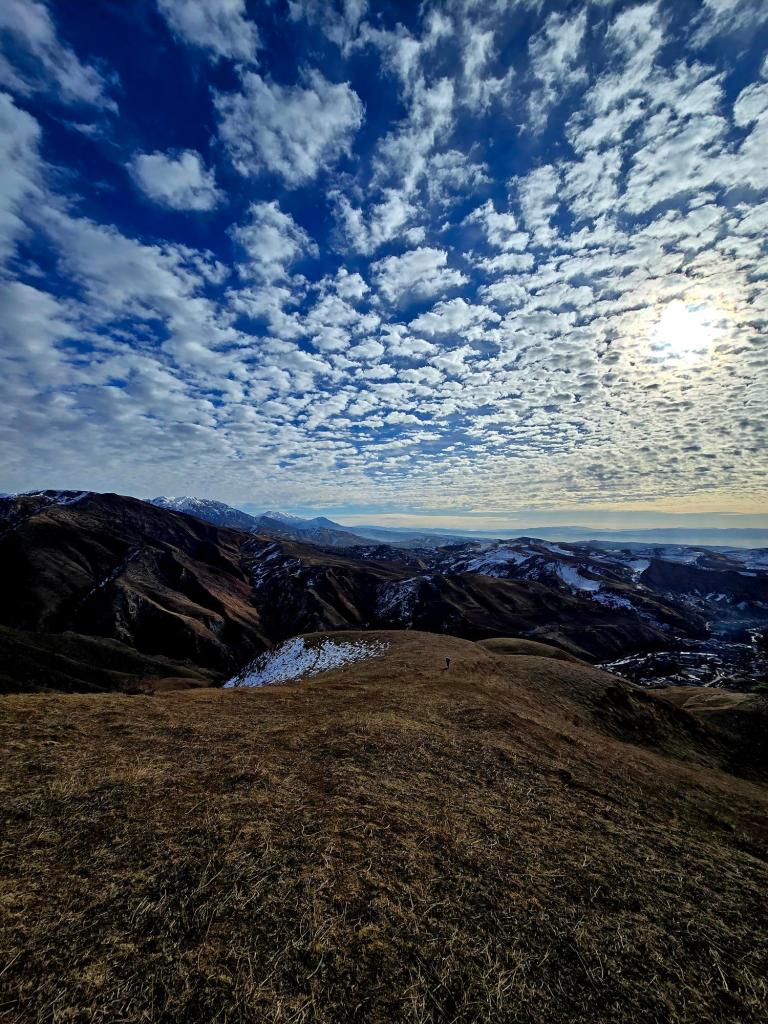
As we gained elevation, the views expanded in layers. Villages shrank below us, hills folded into ridgelines, and the Almosy landscape opened wide and quiet. This region has a rugged honesty to it—no dramatic signage, no manicured viewpoints, just land shaped by weather, time, and use. Hiking here feels less like consuming a destination and more like earning access to it.
Higher up, winter still held its ground. Snow began to appear in shaded patches, then more consistently as we approached the upper slopes of Mt. Kurmushkhon. Boots crunched. The air sharpened. The temperature dropped just enough to remind us that it is winter (it’s been quite mild so far this year). As the dry land shifted to snow covered slopes, a few sections of super slick mud had to be navigated. There’s something grounding about snow on a hard climb—it slows you down, focuses your footing, and reinforces the reality of where you are.
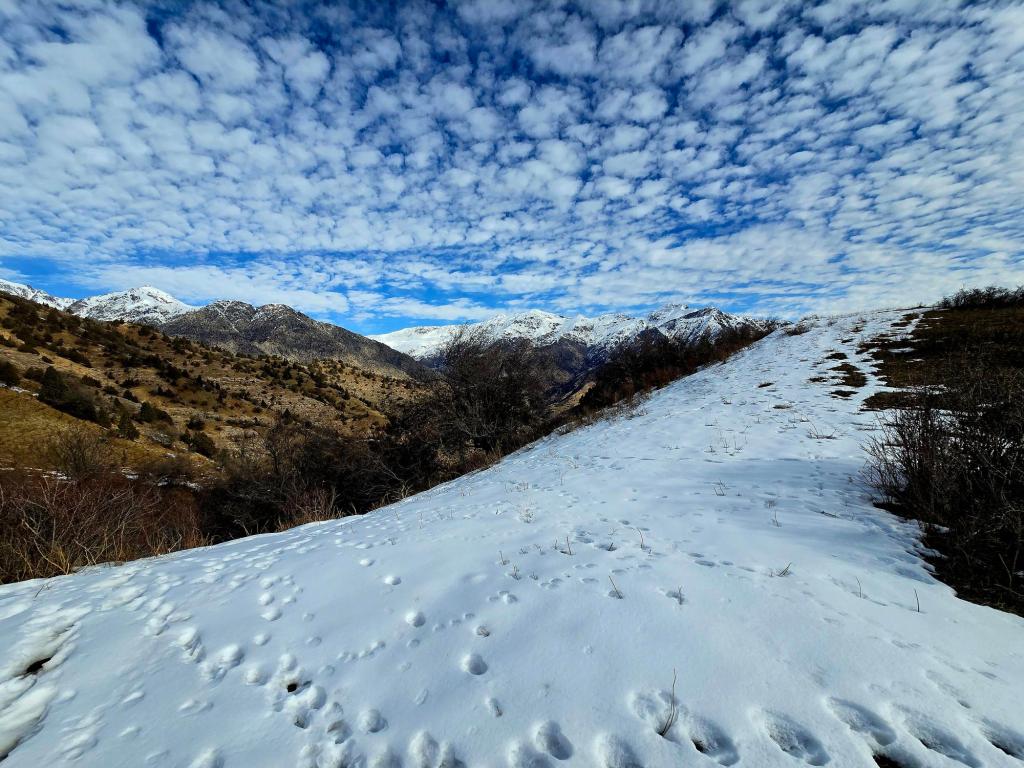
Reaching the high point didn’t come with fanfare, but it didn’t need to. The reward was space and silence. From roughly 7,070 feet, the world felt broader and simpler—mountains rolling away in every direction, the trail behind us etched clearly into the slope. It was the kind of summit that doesn’t shout but stays with you, precisely because it was earned through effort rather than spectacle.
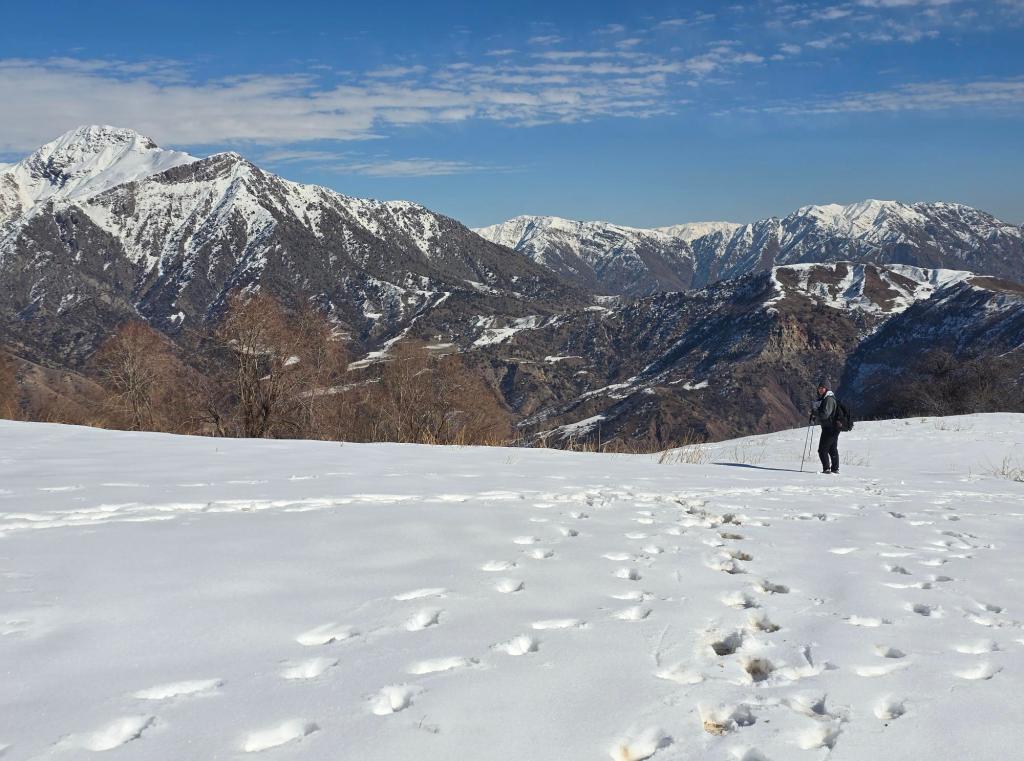
The descent brought its own challenges. Steep downhills demand just as much attention as the climb, and even more so if you have beat up knees like mine. Still, the mood lightened as gravity began to work in our favor. The group stretched out along the trail, everyone settling back into their own pace, sharing observations, snacks, and the quiet satisfaction that follows a solid effort.

On the way down, we stopped at Ok-Bulok Spring, a place that, in warmer months, would be an obvious highlight. This time, the spring was frozen solid—no flowing water, no chance to refill bottles. Winter had sealed it shut. Even so, the area was worth the pause.
Large, ancient trees surround the spring, their thick trunks and spreading branches hinting at how vital this place must be during the heat of summer. You could easily imagine the local shepherds resting here, escaping the sun, sharing food, and passing the day as the flocks grazed. Even frozen, Ok-Bulok felt timeless—one of those places shaped more by continuity than change.
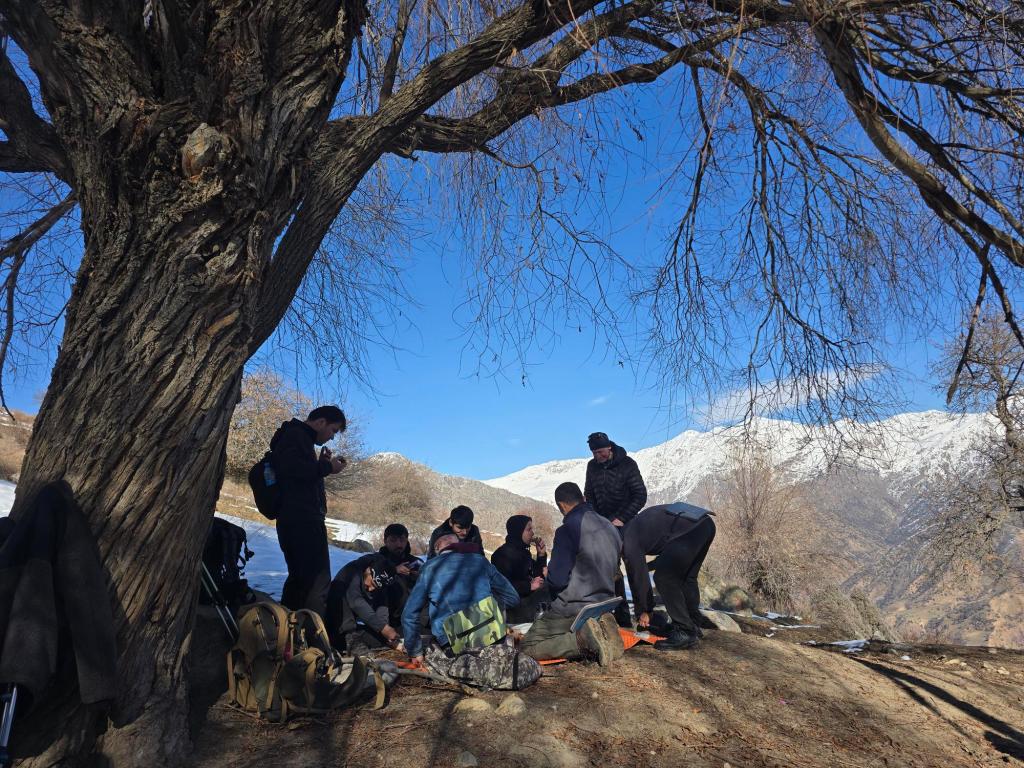
What stood out most about the day wasn’t just the climb or the views, but the simplicity of the experience. No crowds. No noise. Just a small group moving steadily through a demanding landscape, sharing effort and space. Hiking with Daidushki reinforced something I’ve learned repeatedly while living abroad: local knowledge matters, and good company makes hard terrain more enjoyable.
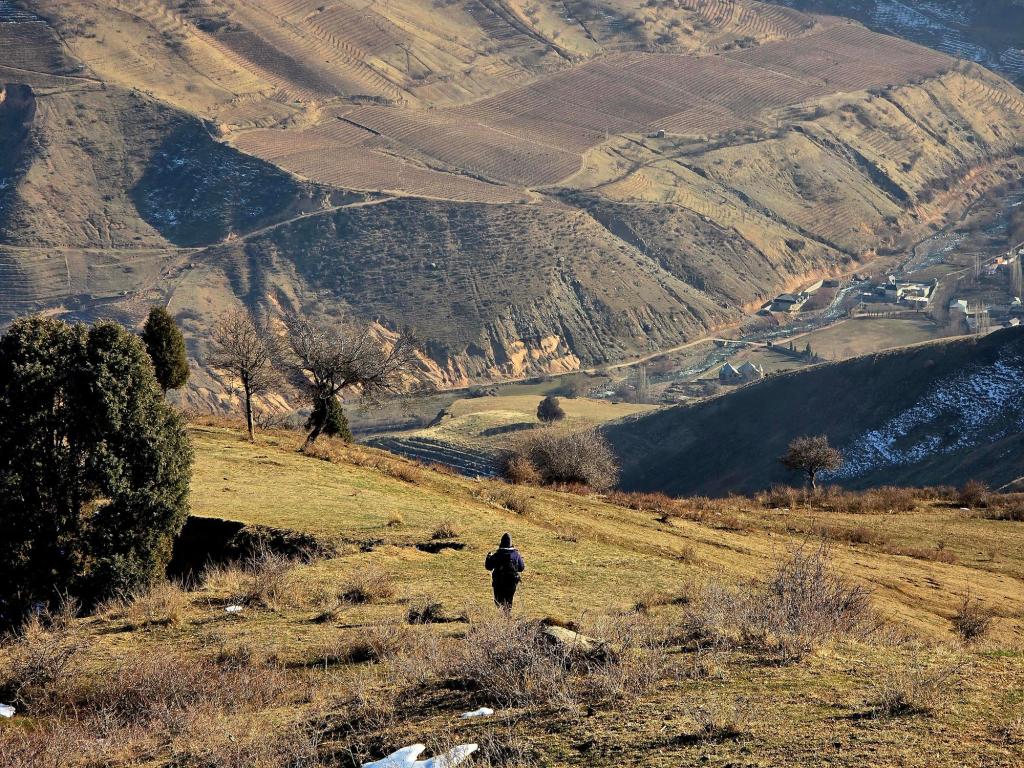
By the time Honako Village came back into view, legs were tired in the best way—the deep, honest fatigue that comes from sustained effort. This hike may be short on paper, but it delivers far more than its distance suggests, and it’s only about an hours drive outside of Dushanbe. It’s a reminder that adventure doesn’t require epic mileage or famous summits. Sometimes it’s found in compact climbs, quiet mountains, and trails that don’t advertise themselves.
If you’re looking for a hike that tests your legs, rewards persistence, and offers a genuine taste of western Tajikistan’s rugged terrain, the route to Mt. Kurmushkhon is worth your time. Just don’t underestimate it. In these mountains, even the small hikes have sharp teeth.
 Wise Clan in Stanland
Leave a comment