Layla-Kul & Layla-Kul Pass: One of the Best Day Hikes from Dushanbe
Layla-Kul is one of our favorite hikes in Tajikistan, and one that will always hold a special place for us. It was the very first hike we did after arriving in the country—just the kids and me—setting out to explore our new home one trail at a time. High alpine lakes, wide open valleys, and a feeling of remoteness that far exceeds the distance from the city make this hike unforgettable.
While it’s often described as a day hike from Dushanbe, it’s not a casual outing. Getting there takes time, effort, and commitment—but the reward is more than worth it.
🏔️ Hike Stats
Location: Ziddi Valley, northeast of Dushanbe
Distance: 9.3 miles / 15 km (round trip, to the pass)
Elevation Gain: ~3,000 ft / 915 m
Starting Elevation: ~9,600 ft / 2,925 m
Highest Point: ~12,600 ft / 3,840 m
Time: ~6.5 hours total (about 4.5 hours moving)
Difficulty: Moderate to strenuous
Date Hiked: September 20, 2025
Getting There: The Long Road In
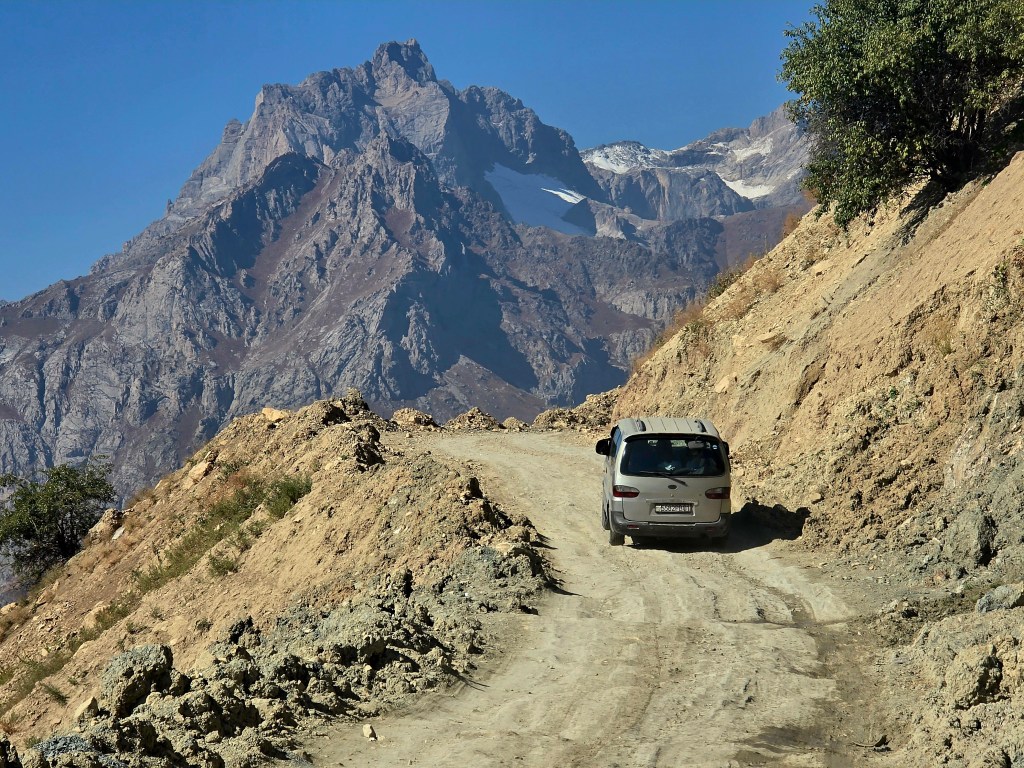
Layla-Kul lies about three hours northeast of Dushanbe. The first hour is an easy drive north along the main road through Varzob, a beautiful stretch that gradually trades city life for steep valleys, rivers, and mountain villages.
After that, the pavement ends.
The final two hours follow a rough dirt road that cuts eastward up the Ziddi Valley, winding deeper and deeper into the mountains. It’s slow going, but incredibly scenic. Eventually, the road reaches a dead end at the Qarotobon Mineral Springs, which serves as the informal parking area and trailhead.
From here, gather your gear—it’s time to head up the mountain.
Best Season, Water, and Valley Life
This hike is best in spring, summer, and fall. Winter conditions make access very difficult, with deep snow and potentially dangerous road conditions in the valley.
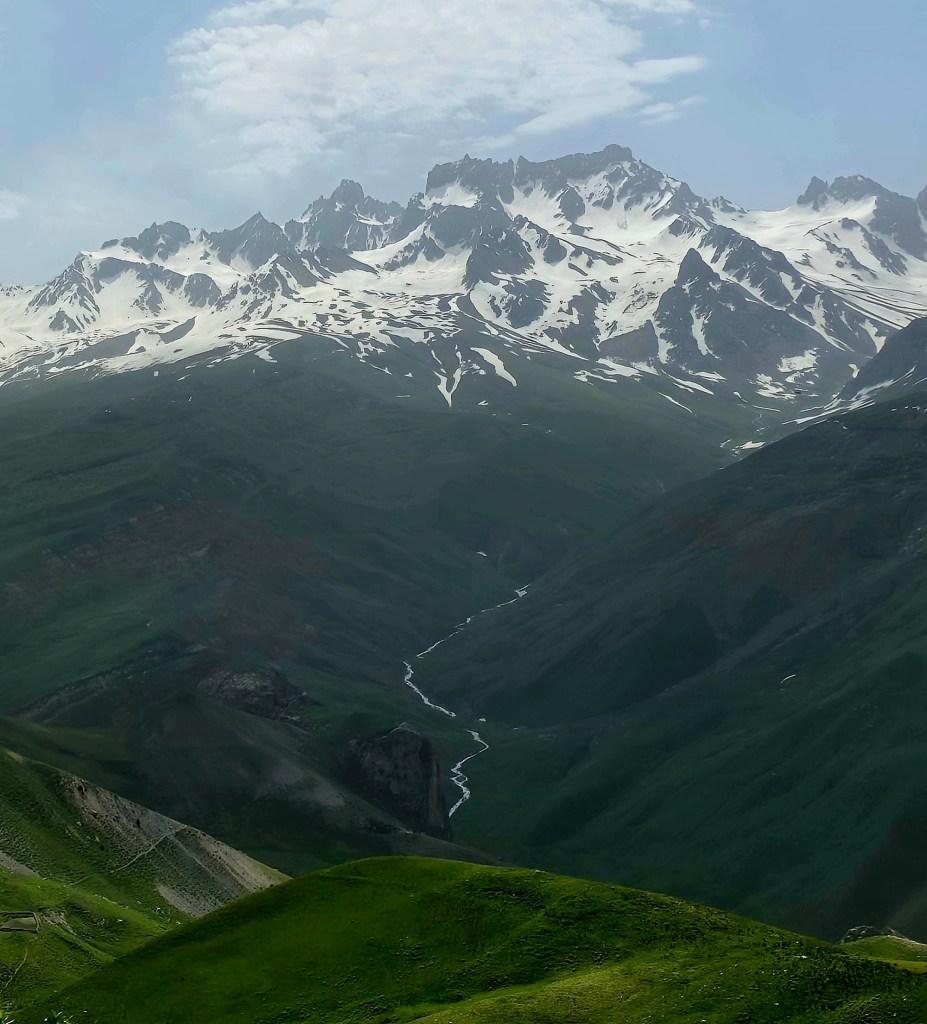
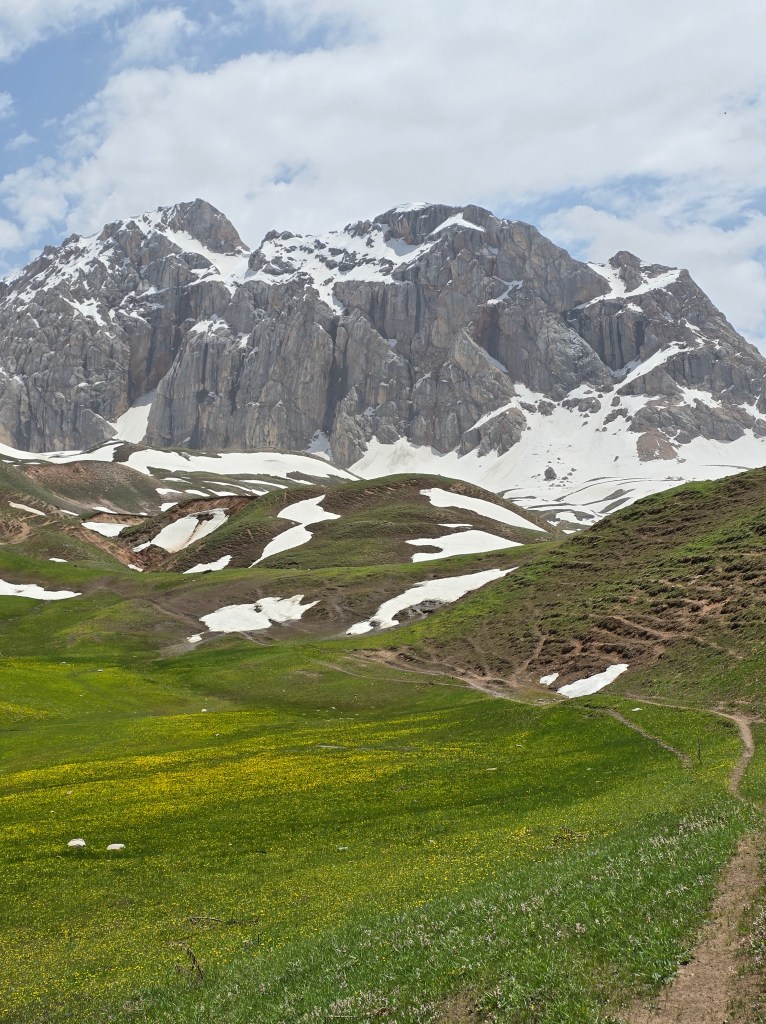
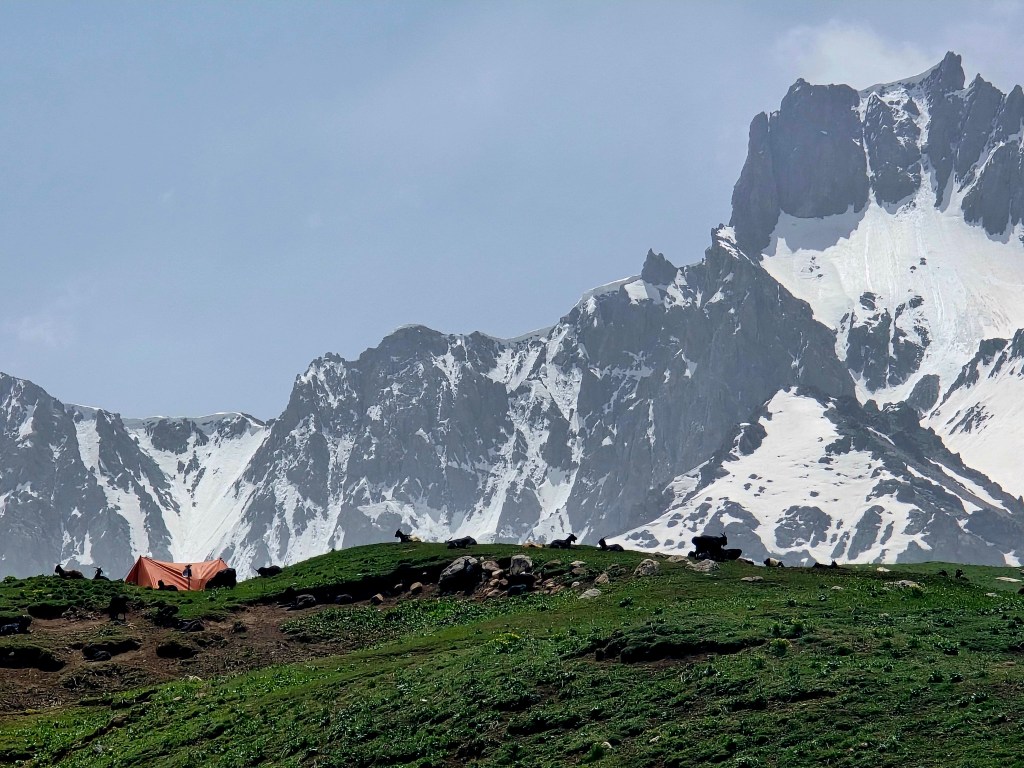
For me, mid to late spring is the ideal time to go. Snowmelt fills the lakes to their fullest, tall walls of snow still cling to shaded slopes, and the grasslands you climb through are green as far as the eye can see. Jagged, snow-covered peaks surround the valley in every direction.
It honestly feels like a scene straight out of The Lord of the Rings.
Bring empty water containers with you—on your way back out, you can fill them at the Qarotobon Mineral Springs. The water is cold, clean, and incredibly refreshing after a long day on the trail.
Also, bring some cash. Local beekeepers often sell fresh mountain honey in the valley, and it is superb. We buy several kilos every time we come up here.
Depending on the season, you’ll likely see shepherds moving massive flocks to and from the high pastures, along with bands of semi-wild horses roaming the valley. And like so much of Tajikistan, there is the constant sound of running water—streams and rivers seem to be everywhere, giving the landscape a feeling of life and motion.
The Climb to Layla-Kul Lakes
The hike begins immediately with a steady climb. Reaching the lakes takes about 1½ hours, and while it’s a solid workout, it’s a climb the kids have been able to do as well.
You start at roughly 9,600 feet, so the thinner air is noticeable right from the beginning. The lakes sit at around 11,500 feet, tucked into a dramatic alpine bowl. It’s a perfect place to stop for a break, enjoy a picnic, and take in the views.
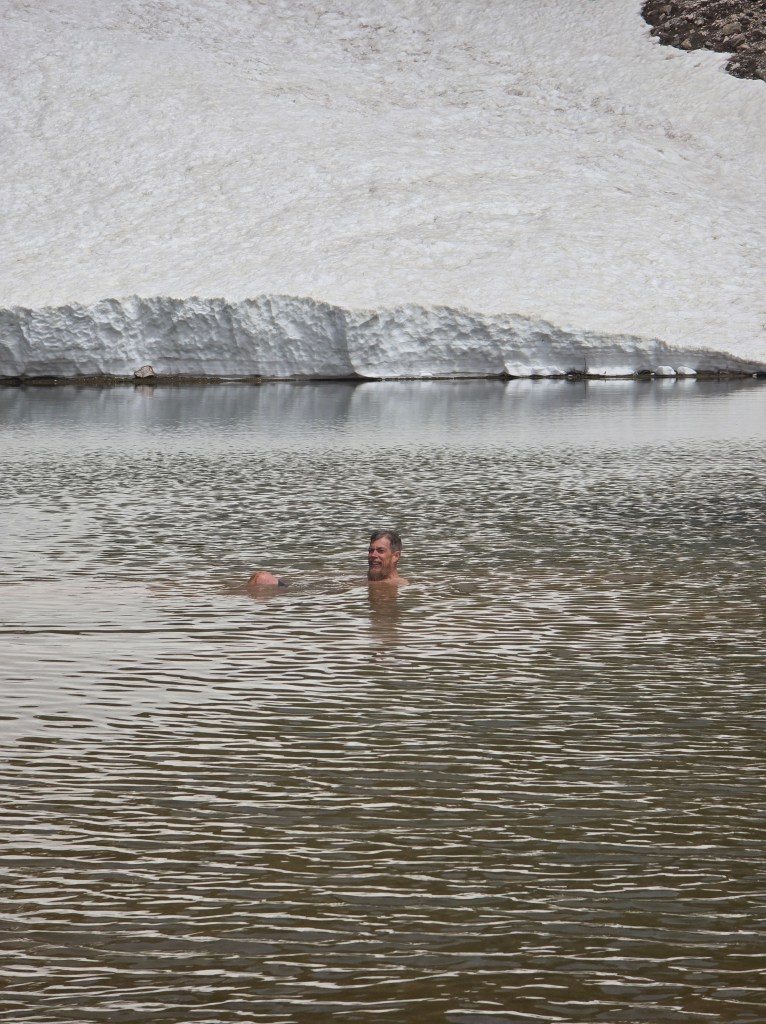
If you don’t mind cold water, it’s also a fantastic spot for a quick dip—I never regret jumping in.
Onward to Layla-Kul Pass
If you’re feeling strong and want to turn this into a true alpine adventure, keep going.
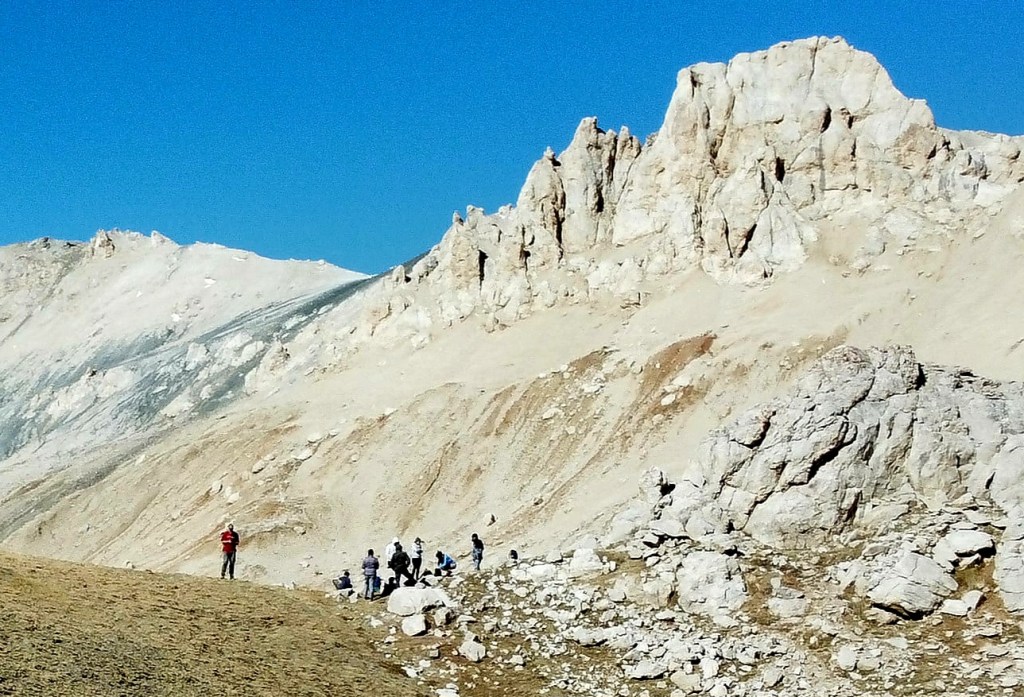
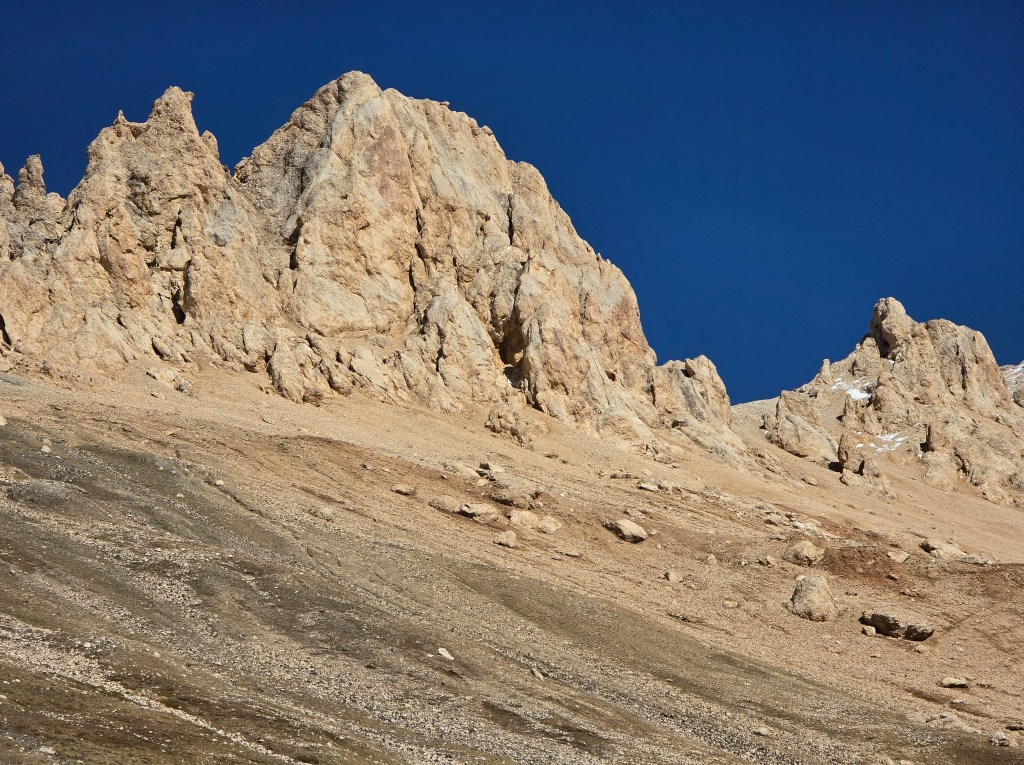
From the lakes, it’s another 1½ hours of tough climbing to reach Leila-Kul Pass. Not far beyond the lakes, the terrain shifts into a rock-strewn moonscape, with jagged, rugged peaks rising in every direction.
The payoff at the top is extraordinary.
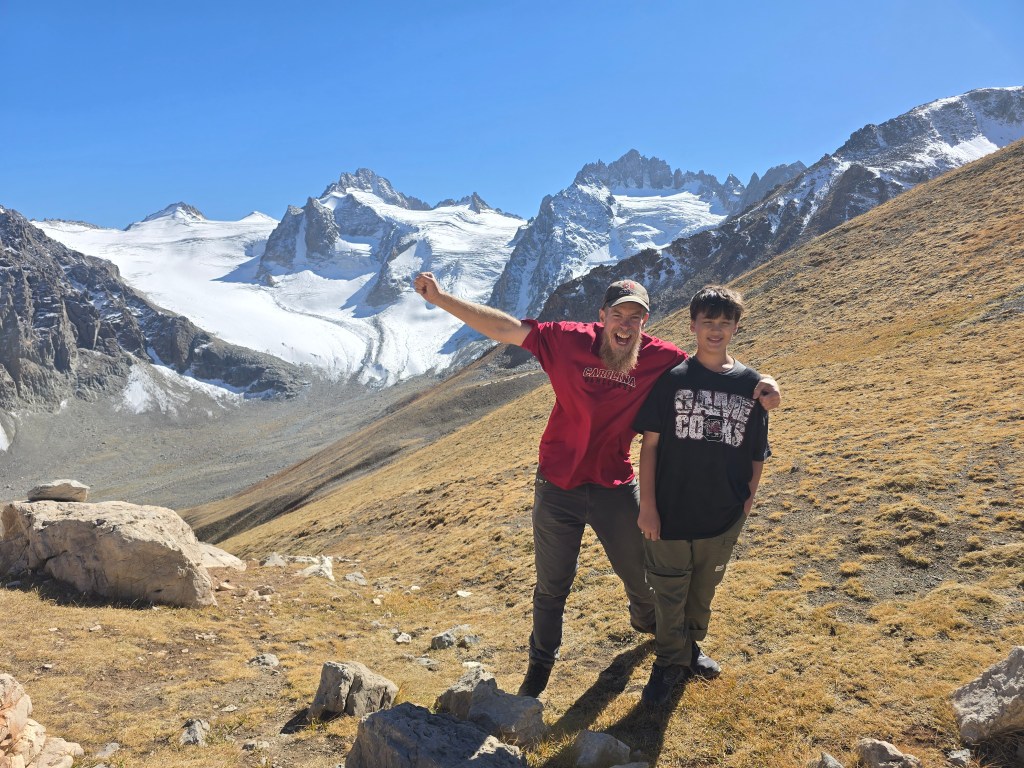
From the pass, you can see far down into the Yangob Valley, with deep glaciers clinging to the mountains on the far side. The scale of the landscape is immense, and the views are nothing short of epic.
It’s one of the finest rewards you can earn on a single-day hike anywhere near Dushanbe—and a place that stays with you long after you’ve descended back to the valley.
 Wise Clan in Stanland
Leave a comment