Trail Stats: Lake Timurdara
Route: Out-and-back
Trailhead: End of dirt road beyond the trout farm (southern Fann Mountains)
Destination: Lake Timurdara
Distance: ~6 miles (≈ 9.5 km) round trip (to the far side of the lake)
Elevation Gain: ~1,550 ft (≈ 470 m)
Difficulty: Moderate (steep initial climb, otherwise well graded)
Time to Lake: ~2.5 hours
Return Time: ~1 hour 15 minutes
Total Time: Half day minimum; full day recommended
Trail Type: Single track, forested, river-side sections
Season Notes:
• Summer: Best access, cold water, excellent camping
• Winter: Lake frozen; deep snow possible (4–5 ft near lake)
• Spring: Raging river, icy water, muddy sections
Water: Natural springs along trail; lake water is ice cold year-round
Key Features: Swinging bridge over Qaratoqh River, alpine lake, surrounding peaks, camping
Bonus Stop: Trout farm before trailhead (fish cleaned, seasoned, and foil-wrapped)
Lake Timurdara: A Quiet Alpine Reward on the Edge of the Fann Mountains
Some places don’t announce themselves. They don’t sit beside highways or show up easily on curated travel lists. Lake Timurdara is one of those places—a small, serene alpine lake tucked along the southern edge of the Fann Mountains, reached only by commitment, patience, and a willingness to slow down.
Getting there from Dushanbe already feels like the start of the adventure. The drive begins with about an hour heading west out of the city before turning off the main road and angling north into the mountains. From that point on, conditions matter. In good weather, with a high-clearance vehicle, the mountain road can take roughly an hour. Add snow, ice, or spring melt, and that same stretch can easily stretch to two hours or more.
The final 5 kilometers, after passing a trout farm, are the slowest of all—rocky, uneven, and demanding full attention. But that trout farm is worth stopping for. It’s become part of the ritual for us. You can buy farm-raised trout—or wild-caught if available—and they’ll clean and prepare the fish on the spot, seasoned with lemon and herbs and wrapped in foil. It means that when you finally reach the lake, all that’s left to do is build a fire, let the coals settle, and place the foil packets right on top. Few meals taste better than fresh trout cooked beside an alpine lake you worked to reach.
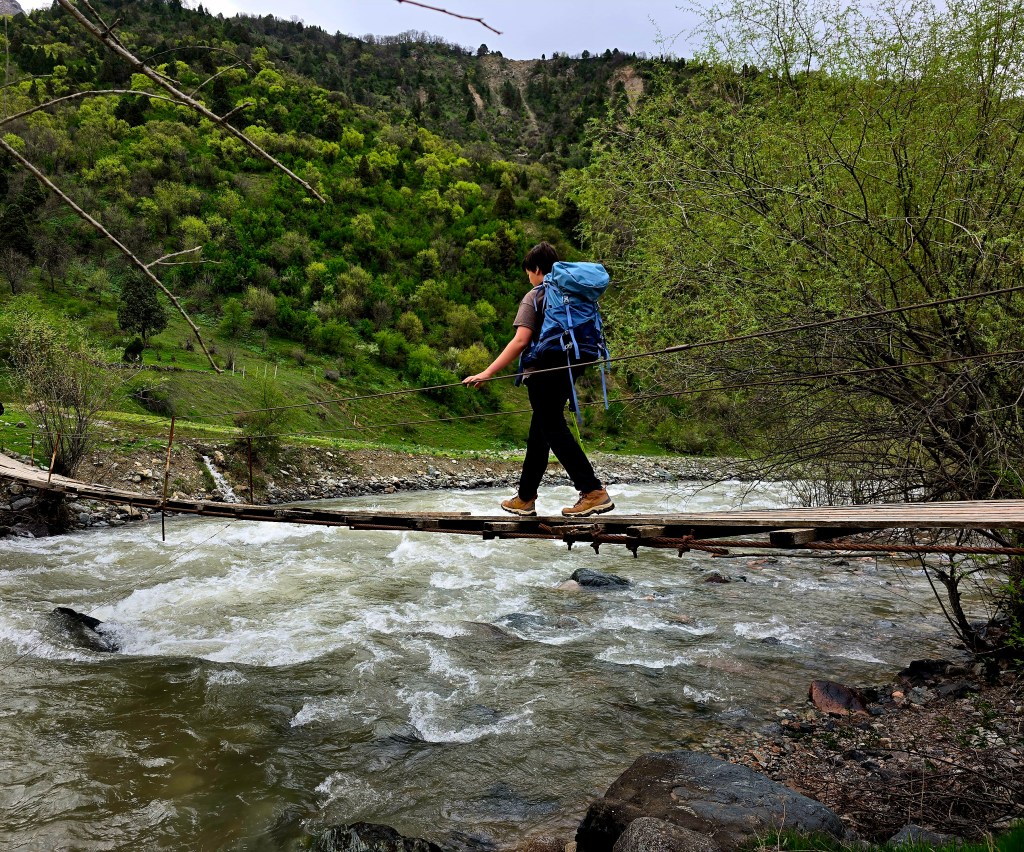
The hiking trail begins exactly where the dirt road ends—and it makes a memorable first impression. Almost immediately, you must cross the Qaratoqh River on a sketchy, swinging bridge. In spring, the river is loud, fast, and unforgiving, fed by snowmelt from higher elevations. It’s not a crossing you rush.
Once across, turn left and follow the north bank of the river for about three-quarters of a mile. You’ll pass the remains of an old Soviet-era border patrol fort—a quiet reminder that this area lies close to the Uzbekistan border and has seen far more history than its current calm suggests. Keep an eye out for a well-defined trail breaking sharply to the right and heading straight up the slope.
This is where the work begins.
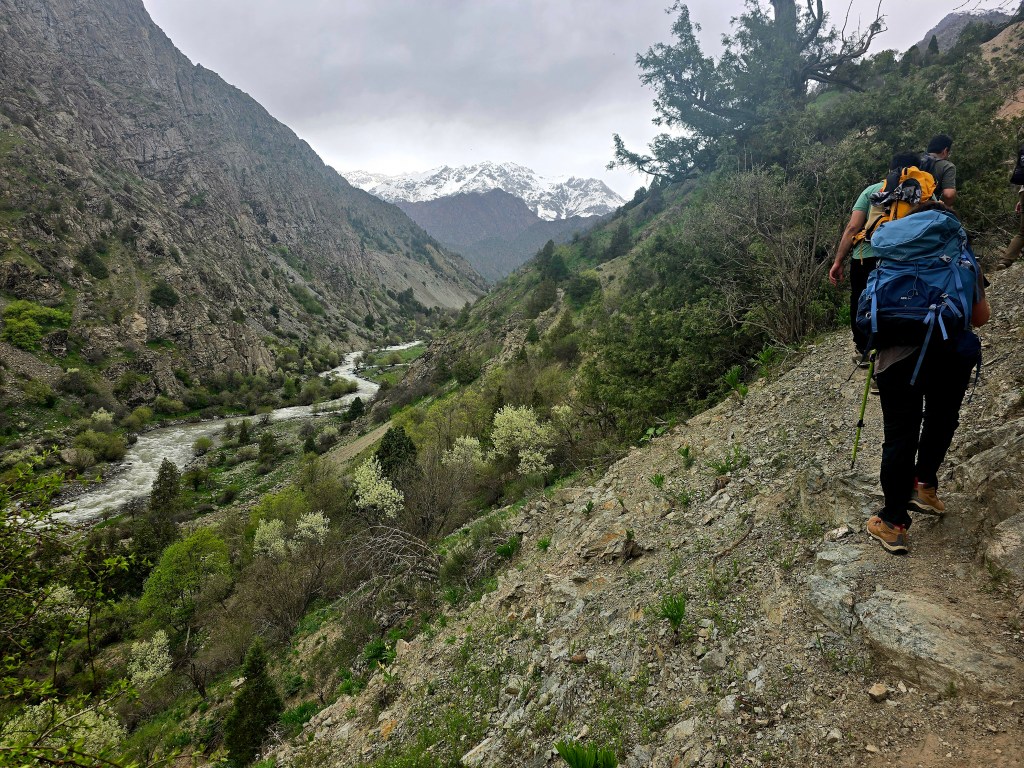
That first climb—about half a mile—accounts for most of the 1,550 feet of elevation gain on the hike. It’s a leg burner, but a manageable one if you settle into a steady pace. One good push gets you to the ridge, where you’re rewarded with expansive views down into the river valley below. It’s the kind of pause that reminds you why elevation gain is worth earning rather than avoiding.
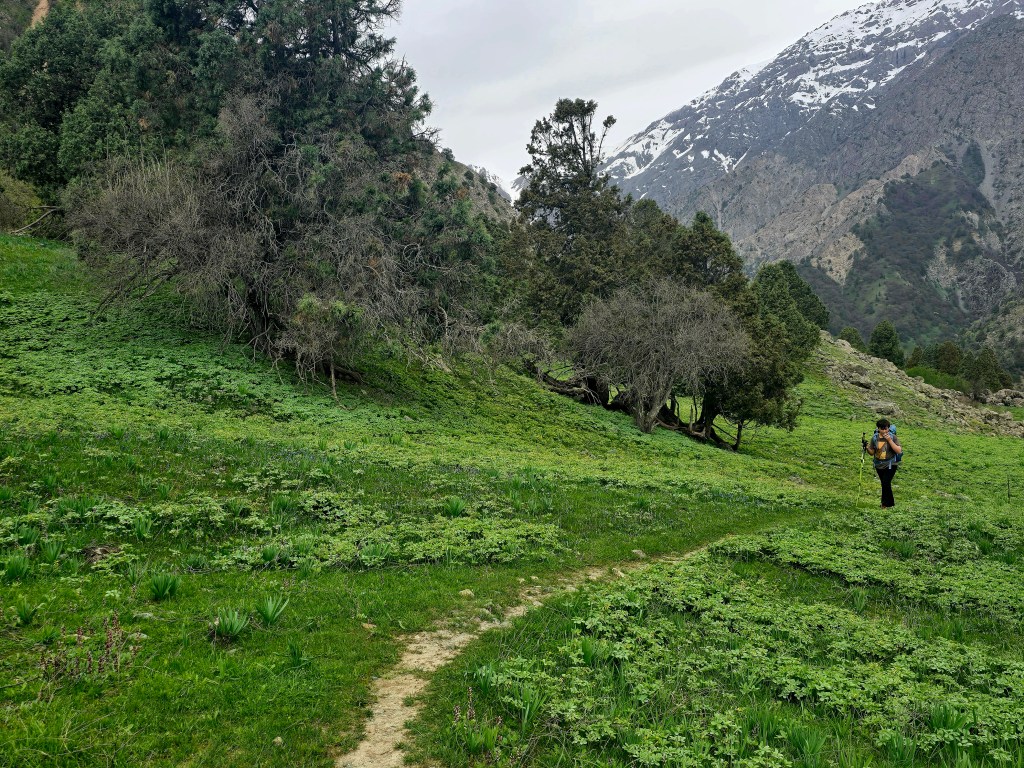
From there, the trail eases. The route becomes a well-graded single track winding through forests of pinyon and juniper, following an out-flowing river from the lake high above. As you get closer, natural springs spill in from the western bank, feeding the stream and adding a constant soundtrack of moving water. A final short, steeper incline signals that you’re nearly there.
Cross a small bridge made of logs and branches, and the landscape opens. Lake Timurdara sits quietly ahead—clear, cold, and framed by a ring of rugged peaks that give it a naturally dramatic backdrop without feeling overwhelming.
The hike to the lake takes about 2½ hours, while the return can be done in around 1 hour and 15 minutes, depending on conditions and pacing. But this isn’t a place to rush. You’ll want several hours at the lake itself.
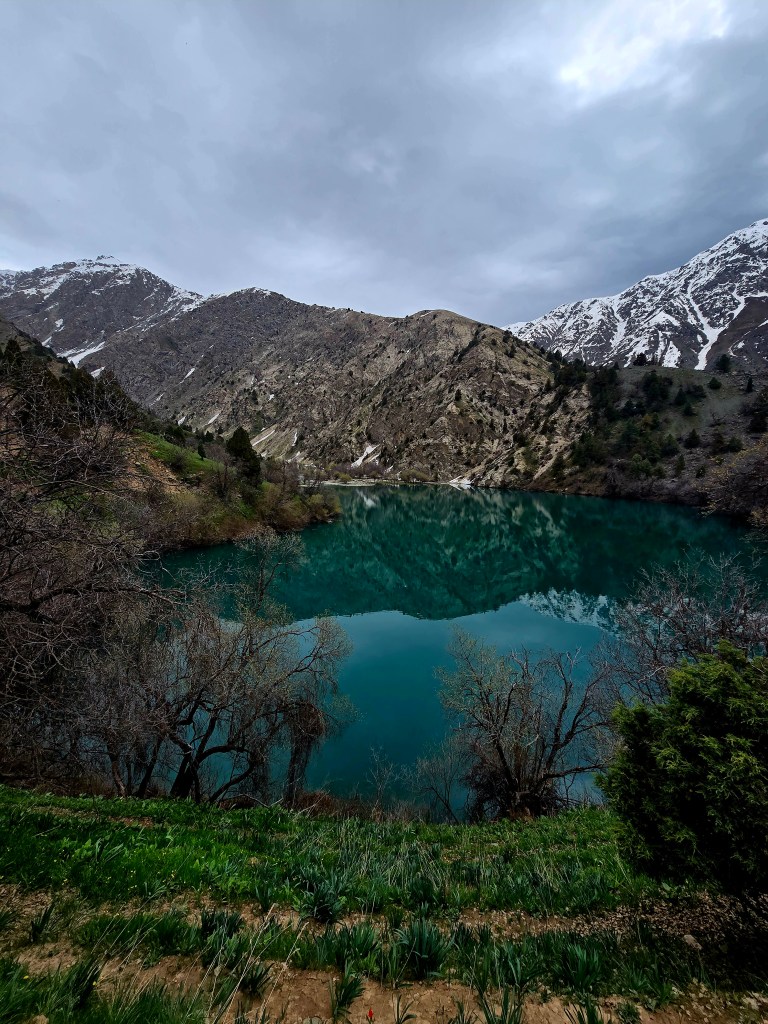
Camping is excellent on both the near and far sides of the lake, though the far side is my preference. The closer shore sees more day visitors, and with them, occasional trash left behind. Crossing to the far side offers more solitude, cleaner ground, and a better sense of having truly arrived somewhere special.
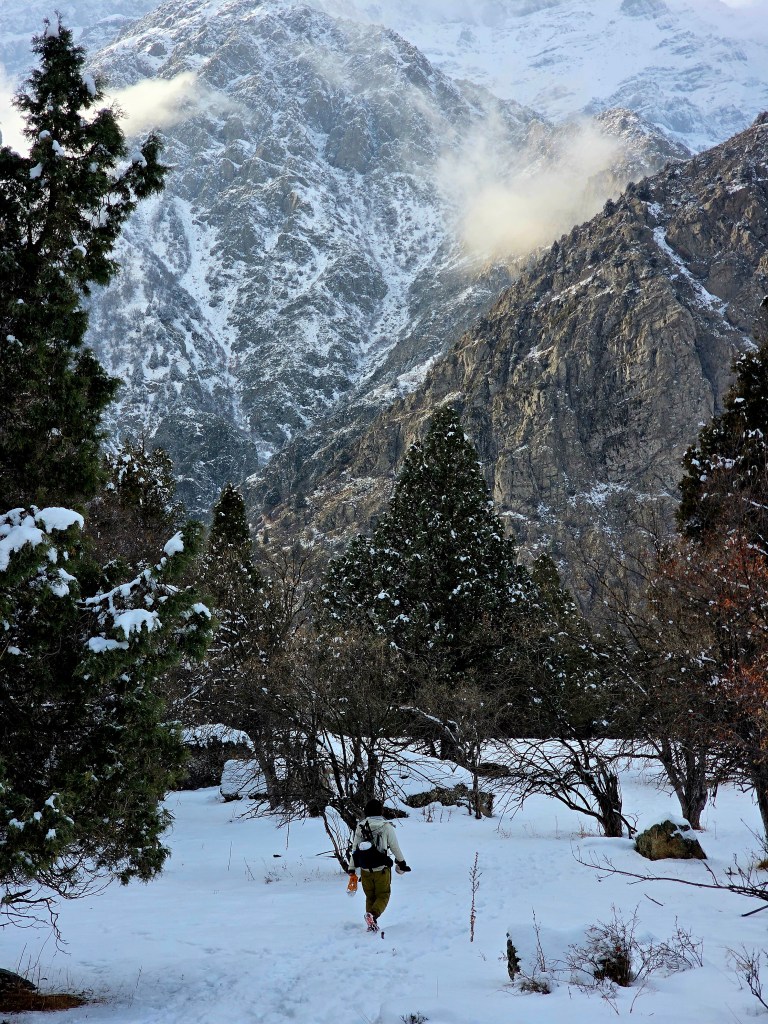
The lake is stunning in every season, but conditions change dramatically. One February attempt stands out—we made it to within about a mile and a half of the lake before encountering 4–5 feet of snow on the trail. Progress slowed to a crawl, and we eventually turned around. In winter and early spring, the lake is locked in ice; in spring, the water is brutally cold from snowmelt; in early winter, it’s ice-cold right up until it freezes solid.
And yet, that cold is part of the appeal. On the right day, with snow blanketing the surrounding peaks and silence stretching in every direction, Lake Timurdara becomes an unforgettable place for a polar plunge—sharp, shocking, and deeply invigorating.
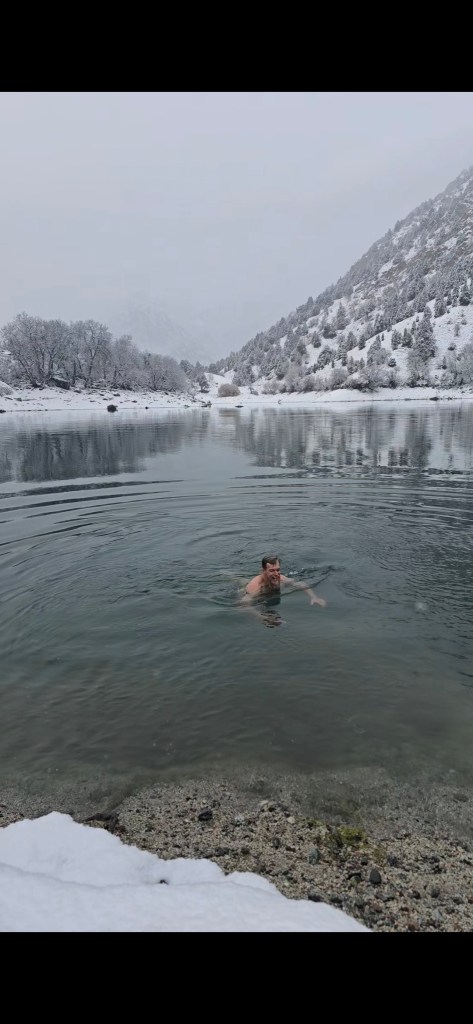
This is not a destination built for convenience. There are no facilities, no signs, and no guarantees. What it offers instead is quiet, effort, and reward in equal measure. Relax. Eat well. Enjoy the company you came with—or the solitude if you came alone. Then hike back out the same way you came in, carrying the calm with you.
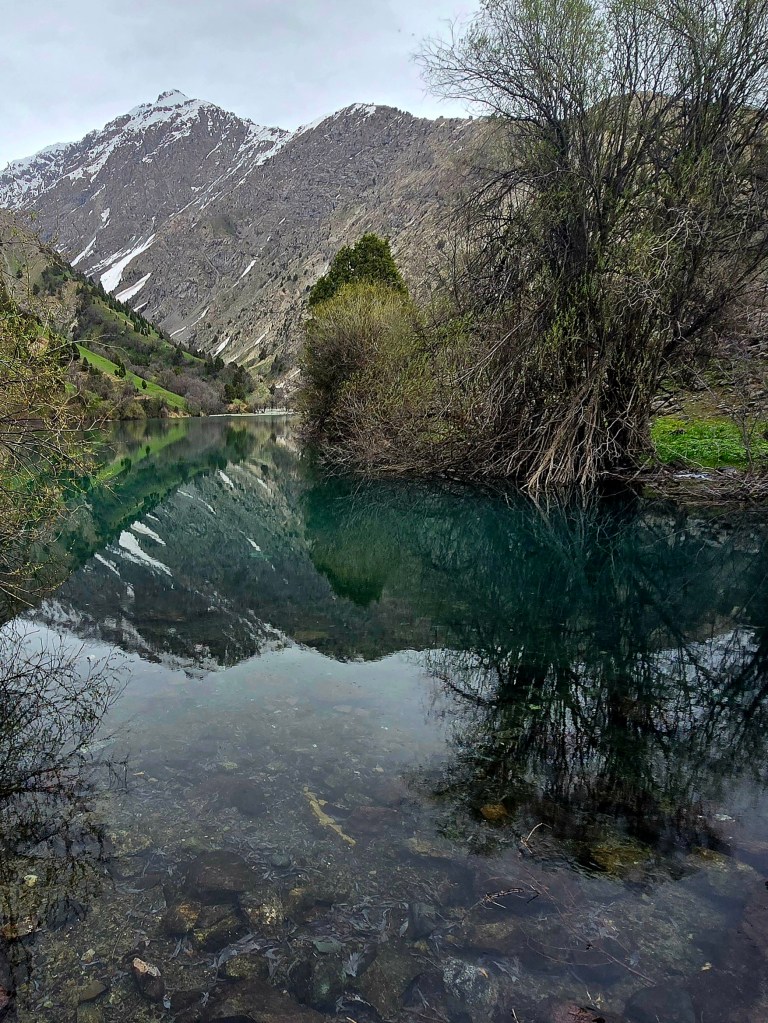
Lake Timurdara isn’t flashy. It doesn’t need to be. It’s a place you earn—and one that stays with you long after the road turns smooth again.
I took the photos in this post on hikes we did to Timurdara on April 13th and December 6th, 2025.
 Wise Clan in Stanland
Leave a comment